Connect with us

News

Banditry: Abdulrazaq pushes back as PDP demands emergency rule in Kwara

Published

on

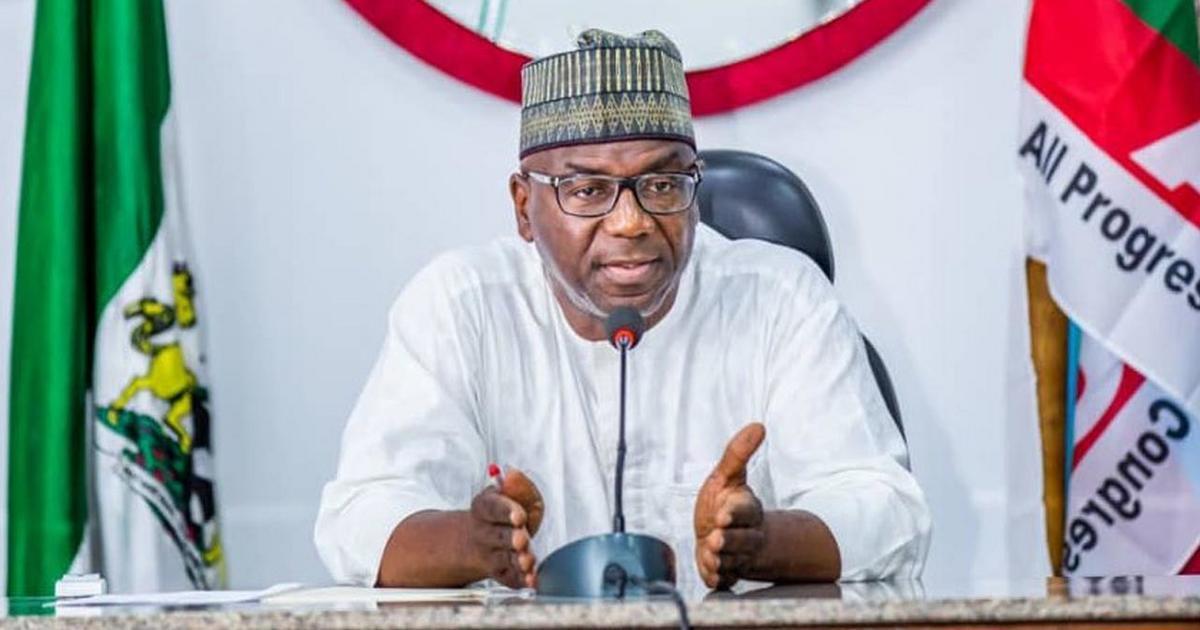
Kwara State Governor, Abdulrahman Abdulrazaq, on Monday pushed back against calls by the state chapter of the Peoples Democratic Party for President Bola Tinubu to declare a state of emergency over allegations linking the state government to banditry.

The PDP made the call during a press conference at its secretariat along Pipeline Road, Ilorin, addressed by its state Secretary, Abdulrahman Kayode.

The PDP described the claims as “grave and disturbing,” citing a viral video of suspected bandits arrested by the Nigerian Army in Auchi, Edo State. In the video, the suspects allegedly claimed that officials of the Kwara State Government supplied them with AK-47 rifles and a government-branded patrol vehicle.

But Governor Abulrazaq’s Senior Special Assistant on Communications, Ibraheem Abdullateef, described the call for emergency rule as baseless and dead on arrival.

But the PDP insisted that President Tinubu must treat the situation as a matter of urgent national concern, warning that the allegations, if left unaddressed, could erode public trust and worsen insecurity in the state.

“We call on the President of the Federal Republic of Nigeria to immediately intervene and treat the situation in Kwara State as a matter of urgent national importance,” he said. “In the interest of justice, public safety and national security, it is reasonable to demand the declaration of a state of emergency in Kwara State to allow for a thorough, transparent and unhindered investigation into these allegations.”

Kayode stressed that the video raised serious questions that Governor Abdulrazaq, as the Chief Security Officer of the state, must answer.

See also  Ebola emergency watch begins in Lagos, FCT, eight states

“This is a direct allegation of state-sponsored criminality that must not be swept under the carpet. In the video, the suspects did not say they stole the weapons or bought them from the black market. They repeatedly stated that the arms and the patrol vehicle were supplied by officials of the Ilorin Government,” he said.

The PDP highlighted a recent surge in violent attacks across several local government areas, including Ifelodun, Patigi, Edu, Ekiti, Isin, and Irepodun.

Kayode recalled the September 28 attack on Oke-Ode community, where more than 15 people were reportedly killed.

He claimed that a government agent, allegedly a military officer, had visited the community the day before to disarm local hunters and vigilantes for supposed maintenance of their weapons—hours later, the bandits struck.

He noted that the name “Oga Victor,” mentioned by one of the suspects in the Edo State video, was also linked to that incident, calling the coincidence “too grave to be ignored.”

The PDP demanded answers from Governor Abdulrazaq, asking: “Who is ‘Oga Victor’? What official role does he play for the Kwara State Government? Why were AK-47 rifles allegedly released to non-state actors? How did a government-customised patrol vehicle assigned to Ifelodun Local Government end up in the hands of bandits in Edo State?”

Kayode also urged the Office of the National Security Adviser and other federal security agencies to launch an independent investigation into the allegations.

He further called on state security agencies, particularly the Nigeria Police Force, to retrieve all patrol vehicles allocated to local governments for a full audit.

See also  Retired police officer offers viral navy officer, Yerima part of his pension

“This process must be transparent, with full public disclosure, to restore public confidence in the security architecture of the state,” he said.

He challenged the media to intensify investigative reporting, insisting that the people of Kwara deserved the truth.

“The families and communities devastated by repeated attacks are counting on the media to ask hard questions and uncover the facts,” he said.

However, Governor Abdulrazaq’s Senior Special Assistant on Communications, Ibraheem Abdullateef, accused the PDP of politicising security issues to advance a “dead-on-arrival” bid for the 2027 gubernatorial election.

He said: “This desperation is nauseating and stands condemned by the people of Kwara State. The Kwara people understand that the call for a state of emergency is baseless and lacks sincerity. Having suffered acute political atrophy, the party has long resorted to incitement and fake news to cause unrest in the state. This is the latest of their ploys to assail democracy and subvert the will and mandate of the people in Kwara.”

Abdullateef added that President Tinubu would not act on the PDP’s demand, saying he has more pressing governance issues. “President Tinubu knows that Governor AbdulRahman AbdulRazaq is an honest leader, a trustworthy ally and a patriot. This is why he was backed to emerge as Chairman of the Nigerian Governors’ Forum and enjoys strong support from his colleagues. The PDP’s call is dead on arrival,” he declared.

The PUNCH had earlier reported that the Kwara State Government dismissed similar claims circulating on social media. In a statement issued on Sunday night by the Commissioner for Communications, Mrs. Bolanle Olukoju, the state said no security agency, including the Nigerian Army, arrested armed bandits in Ifelodun or any other part of Kwara.

See also  Malami, wife, son granted N200m bail in EFCC trial

“The Nigerian Army did not arrest any armed bandits in any part of Ifelodun. No security agency ever reported such arrests in Kwara,” Olukoju said. She also debunked claims that the state government supplied weapons, stressing that no state government has the authority to issue AK-47 rifles. “At no point did the individuals in the video state that the Kwara State Government gave them any weapon,” she added.

punch.ng

FOLLOW US ON:

FACEBOOK

TWITTER

PINTEREST

TIKTOK

YOUTUBE

LINKEDIN

TUMBLR

INSTAGRAM

Continue Reading
Click to comment

Leave a Reply

Your email address will not be published. Required fields are marked *

News

Amupitan reveals INEC’s verified voters register exceeds 100 million, read details

Published

on

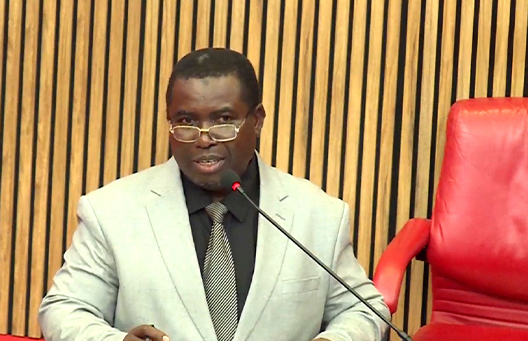
The Chairman of the Independent National Electoral Commission (INEC), Prof. Joash O. Amupitan, SAN, has said that the Commission’s verified voters’ register stands at over 100 million following an audit.

Amupitan disclosed this on Wednesday, 25 November 2026, during a strategic consultative meeting with Resident Electoral Commissioners (RECs) in Abuja.

He said the figure followed three phases of Continuous Voter Registration (CVR), which added over 10.77 million new registrants, and an Automated Biometric Identification System (ABIS) and claims-and-objections audit, which removed over 1.6 million invalid, duplicate or deceased records.

“The register includes 232,658 persons with disabilities (PWDs) requiring accessible polling layouts and assistive materials,” he said.

Amupitan said there were 51 days to the Presidential and National Assembly elections scheduled for 16 January 2027, while the Governorship and State Houses of Assembly elections would hold on 6 February 2027.

He said INEC would conduct a nationwide mock accreditation and result transmission exercise on Saturday, 28 November 2026, across the 36 states and the Federal Capital Territory.

The INEC Chairman warned RECs that minor administrative lapses would not be tolerated, noting that general elections were of a different magnitude.

“In an exercise of that scale, even minor administrative lapses in one state can trigger national headlines and cast doubt on otherwise solid work elsewhere. Margin for error simply does not exist,” he said.

He listed six non-negotiable priorities for RECs.

He said Saturday’s mock exercise, which would take place in two polling units per ward, was a live stress test of the 57,000 newly procured BVAS devices and the upgraded INEC Result Viewing Portal (IReV), which now has automated arithmetic and over-voting checks on Form EC8A before upload.

See also  Ebola emergency watch begins in Lagos, FCT, eight states

He directed RECs to personally oversee preparations and submit a technical audit to the headquarters by Monday, 30 November 2026, detailing network dead zones, device anomalies and bottlenecks.

On logistics, he said RECs must audit transport arrangements with the National Union of Road Transport Workers (NURTW), marine and aviation partners, verify Registration Area Centres (RACs) and enforce end-to-end tracking of materials.

He said the BVAS threshold had been lowered from 1,250 to 850 voters per machine to prevent crowding, with multiple units to be provided in high-population polling units.

On security, Amupitan said RECs must activate “ICCES Tentacles” down to the local government and ward levels, working with the police, Department of State Services (DSS), Nigeria Security and Civil Defence Corps (NSCDC) and Office of the National Security Adviser (ONSA). He also urged them to use Election Risk Management (ERM) maps to identify flashpoints and resolve conflicts over rally venues under Section 95(4) of the Electoral Act 2026.

He said over 1.41 million ad hoc staff, including National Youth Service Corps (NYSC) members and academics, must be properly trained on the Electoral Act 2026, BVAS operations and Form EC8A validation, with their allowances paid promptly.

The Chairman called for regular engagement with the Inter-Party Advisory Council (IPAC), election observers, civil society organisations and the media to counter disinformation and avoid communication vacuums.

He stressed that there would be zero tolerance for partisan compromise, warning that INEC would not shield any official who compromised the Commission’s neutrality or facilitated malpractice.

“Under the Electoral Act 2026 — including the deterrence provisions of Sections 96, 97 and 148 — the Commission will not shield any staff member or official who compromises neutrality, facilitates malpractice or breaches statutory rules,” he said.

See also  Malami, wife, son granted N200m bail in EFCC trial

He also emphasised the need for disciplined record-keeping, immutable BVAS logs, authenticated IReV uploads and the timely issuance of Certified True Copies (CTCs) to ensure clarity for voters and election tribunals.

Source: tribuneonlineng.com

FOLLOW US ON:

FACEBOOK

WHATSAPP CHANNEL

TWITTER

PINTEREST

TIKTOK

YOUTUBE

LINKEDIN

INSTAGRAM

Continue Reading

News

Read lessons from US visa ban on Supreme Court justices

Published

on

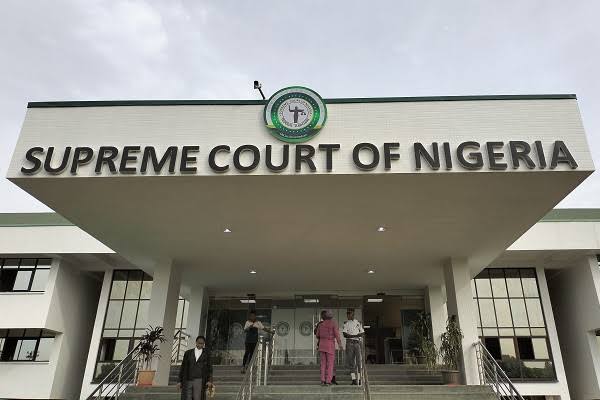
ONCE again, the Supreme Court of Nigeria is under an uncomfortable spotlight. This time, the trigger is an extraordinary revelation by retiring Justice Uwani Abba-Aji at her recent valedictory session. She lamented that the United States imposed visa restrictions on members of a Supreme Court panel over a controversial judgement.

This is no trivial diplomatic gesture. Visa restrictions against serving justices of a country’s highest court carry grave implications for the reputation of the institution and the credibility of its decisions. US authorities would hardly take such a step without serious grounds for concern. More troubling, the sanctions have apparently endured.

Recounting her experience, Abba-Aji said: “My time on the Supreme Court bench was filled with challenges, some of which have served as additional opportunities to stand firm on the side of justice, regardless of the consequences. One of such challenging judgements was widely misinterpreted and led to a travel ban to the United States of America being imposed on all members of the panel; a ban which still holds till today.”

For Abba-Aji, the judgement was merely “widely misinterpreted.” But that is hardly a sufficient explanation for a decision that has continued to cast a shadow over the country’s highest judicial institution. The public, and apparently the US authorities, are entitled to a different assessment. More importantly, the controversy demands introspection rather than defensiveness.

The Supreme Court and the judiciary should recognise that their proceedings and decisions are subject to increasingly intense domestic and international scrutiny. Judicial authority does not confer immunity from criticism. Neither does the sanctity of the bench excuse decisions that raise troubling questions about fairness, consistency and the integrity of the electoral process.

The controversies surrounding the 2023 senatorial elections involving Godswill Akpabio and Ahmad Lawan are cases in point. Both had contested the All Progressives Congress presidential primaries in 2022 before subsequently seeking senatorial tickets in Akwa Ibom North-West and Yobe North, respectively. The Electoral Act 2022 prohibits a candidate from participating in more than one primary election within the same electoral cycle.

Yet, relying on jurisdictional and procedural grounds, the Supreme Court overturned earlier decisions and cleared the way for both men to secure their respective senatorial tickets. Whatever the technical legal reasoning, the outcome reinforced public suspicion that political heavyweights enjoy judicial accommodation unavailable to ordinary Nigerians.

More troubling was the January 14, 2020, Imo State governorship judgement. A seven-member panel of the Supreme Court, including the present Chief Justice of Nigeria, Kudirat Kekere-Ekun, and Abba-Aji, overturned the election of Emeka Ihedioha of the Peoples Democratic Party and declared Hope Uzodimma of the APC governor. Uzodimma had initially placed fourth in the election.

See also  Malami, wife, son granted N200m bail in EFCC trial

The court arrived at its conclusion after adding 213,295 votes from 388 polling units, based on documents tendered by a police witness but reportedly disowned by the Independent National Electoral Commission. In effect, the Supreme Court’s intervention overturned the decisions of both the election tribunal and the Court of Appeal.

The judgement raised fundamental questions that have never been satisfactorily laid to rest. Should the Supreme Court assume the responsibility of sorting, counting and declaring election results? Is it an electoral umpire? Where discrepancies in results arise, should the court not direct the appropriate electoral authority to establish the authentic figures in accordance with the law?

When Ihedioha subsequently sought a review of the judgement, the application was dismissed. In a dissenting opinion, the late Justice Centus Nweze warned that “this decision of the Supreme Court will continue to haunt our electoral jurisprudence for a long time to come.”

His words have proved difficult to dismiss. Indeed, such controversial judgements have helped institutionalise the cynical belief that elections are merely preliminary battles, with the real contest taking place in court. Politicians have consequently made “go to court” a familiar refrain, undermining confidence in the ballot and weakening the foundations of electoral democracy.

The Orji Kalu case is another troubling example of judicial controversy. On May 8, 2020, the Supreme Court set aside the 12-year prison sentence imposed on the former Abia State governor by a High Court and upheld by the Court of Appeal over a N7.1 billion money-laundering charge.

The Court held that the trial judge, Mohammed Idris, lacked jurisdiction because he had been elevated to the Court of Appeal when the proceedings were concluded. It ordered a retrial.

Before it was voided in Udeogu v. Federal Republic of Nigeria, Section 396(7) of the Administration of Criminal Justice Act 2015 provided that a High Court judge elevated to the Court of Appeal may continue sitting as a High Court judge to conclude part-heard criminal matters. This provision was designed precisely to prevent the kind of disruption that could arise from judicial elevation.

More fundamentally, setting aside a conviction on procedural grounds does not extinguish the underlying allegations of financial wrongdoing. The public was entitled to expect that the substantive case would be resolved without further unnecessary delay.

Beyond controversial judgements, the judiciary’s growing proximity to the political establishment has also become a source of concern. Judges are expected to maintain a degree of restraint and distance from the executive, particularly when politically sensitive cases are before them. Yet, the spectacle of judicial officers fraternising with political power has repeatedly undermined that expectation.

Lawyers, for instance, criticised the then Acting Chief Justice of Nigeria, Tanko Muhammad, and other judicial officers for attending an Iftar dinner hosted by President Muhammadu Buhari at the Presidential Villa while presidential election petitions were still pending. Even if no impropriety was established, the optics were damaging. Justice must not only be done; it must be seen to be done.

The late Justice Kayode Eso, one of Nigeria’s most respected jurists, had sounded the alarm years earlier. Following the disputed 2007 elections, he lamented the emergence of “billionaire judges” and described a legal profession increasingly divided between “those who know the law and those who have contacts”. That indictment remains painfully relevant.

See also  FG secures $11.4bn World Bank loans in three years

The era of courageous, intellectually rigorous and landmark judgements associated with Justices Chukwudifu Oputa, Eso and Niki Tobi appears to be receding. Their legacy was not built on proximity to political power but on judicial independence, moral courage and fidelity to the law. The present generation must demonstrate that the judiciary is still capable of producing such men and women.

Unfortunately, the rot is not confined to the Court. It has filtered through the lower judiciary, as reflected in disciplinary actions by the National Judicial Council.

At its 112th meeting, the council suspended three judicial officers — Hannatu Mohammed of the Nasarawa State High Court, Mohammed Sani Salihu of the Jigawa State Sharia Court of Appeal and Sobere Biambo of the Rivers State High Court — for one year without pay over various acts of misconduct. Eight others were cautioned, while warning letters were approved for three judges following investigations into their handling of cases.

These sanctions are necessary, but they also expose the scale of the institutional challenge.

Judicial misconduct cannot be treated as an occasional embarrassment to be managed through discreet disciplinary measures. It is a direct assault on the rule of law and the confidence of citizens in the justice system.

The public perception of judicial integrity has suffered from troubling political disclosures. At a valedictory session in the Senate in June 2023, former senator Adamu Bulkachuwa claimed that he had approached his wife, Justice Zainab Bulkachuwa, a former President of the Court of Appeal, to influence election petition cases involving his political colleagues. Although he subsequently recanted, the damage to public confidence was considerable.

Transparency International’s 2025 Corruption Perceptions Index and concerns raised by the Civil Society Legislative Advocacy Centre further underscore the damage corruption does to public trust in Nigerian institutions, including the judiciary. CISLAC has identified judicial corruption as a major weakness in the country’s anti-corruption campaign, noting that both the CJN and the Nigerian Bar Association have acknowledged its threat to public confidence.

See also  MSF raises alarm as diphtheria deaths exceed 1,260 in Nigeria

The NJC should therefore move beyond occasional disciplinary interventions. It should strengthen its investigative capacity, impose firm and transparent sanctions on erring judicial officers and ensure that accountability extends to the highest courts. No judge should be considered too senior, influential or politically connected to face scrutiny.

If foreign governments are concerned about judicial integrity, Nigerian authorities should not dismiss their actions as interference. The US visa restrictions may be controversial, but they should serve as a wake-up call. Indeed, scrutiny should not stop at the Supreme Court. No level of the judiciary should be beyond examination where credible allegations of misconduct arise.

More fundamental, however, is the need for structural reforms that insulate judicial appointments from political patronage. The appointment of the Chief Justice of Nigeria, the President of the Court of Appeal and chief judges should not remain so vulnerable to the influence of the President and state governors.

An independent, transparent and broadly representative appointments commission should play a decisive role in identifying, screening and recommending judicial candidates on the basis of competence, integrity and professional merit.

There should be meaningful public participation in the appointment process, with appropriate safeguards to protect judicial independence. The objective is not to turn judges into political contestants or subject their decisions to popular approval, but to ensure that those entrusted with dispensing justice command public confidence from the outset.

Ultimately, the judiciary is too important to Nigeria’s democracy to be allowed to decay under the weight of political interference, corruption and questionable judgements.

As the country approaches the 2027 general elections, the Supreme Court and the wider judicial establishment must undertake a serious institutional soul-searching exercise. The credibility of the next elections will depend not only on INEC but also on the integrity of the courts that will adjudicate disputes arising from them.

A judiciary whose integrity is questioned at home and abroad is a liability to the country. It weakens democracy, emboldens impunity, discourages investment and erodes faith in the rule of law.

Investors are unlikely to repose confidence in a country where the impartiality of the courts is in doubt, and commercial disputes can be coloured by political connections.

The lesson from the US visa restrictions should, therefore, be unmistakable: judicial prestige cannot be sustained by constitutional status or the grand trappings of office. It must be earned through impartiality, courage, transparency and fidelity to the law. Nigeria cannot build a credible democracy on a compromised judiciary.

Source: punchng.com

FOLLOW US ON:

FACEBOOK

WHATSAPP CHANNEL

TWITTER

PINTEREST

TIKTOK

YOUTUBE

LINKEDIN

INSTAGRAM

Continue Reading

News

Reps probe alleged N2bn in ex-mining commander’s account, read details

Published

on

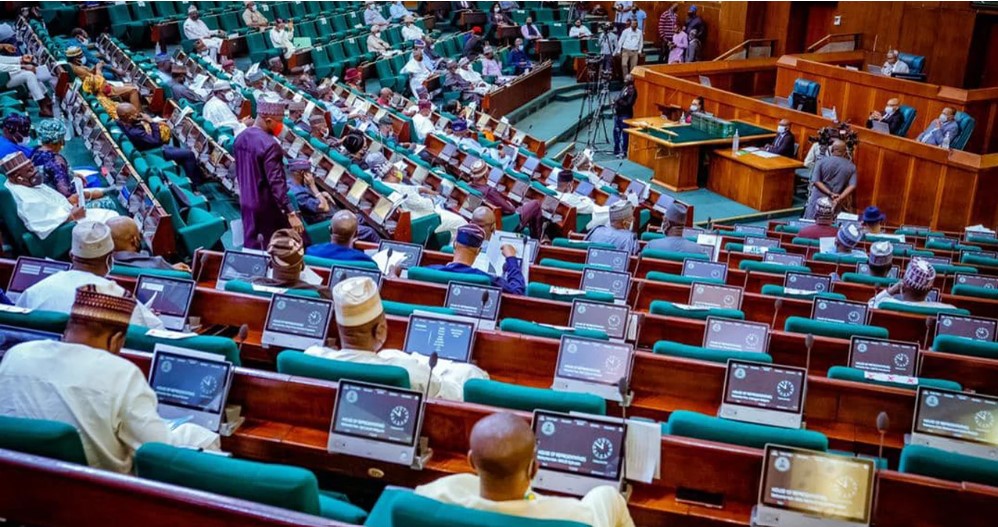
The House Committee on Solid Minerals Development has questioned the legal basis for the operations of the Mining Marshals, insisting that the unit lacked specific legislative backing to operate in its current form.

The committee, chaired by Jonathan Gbefwi, raised the concern during an investigative hearing involving the Nigeria Security and Civil Defence Corps at the National Assembly Complex, Abuja. It is probing allegations of extortion, harassment of licensed mining operators and financial impropriety.

Lawmakers are examining the unit’s funding, procurement of operational vehicles and allegations that more than N2bn was found in the account of a former state commander.

Gbefwi, a Labour Party member from Nasarawa State, said the committee was exercising its constitutional powers under Sections 88 and 89 of the 1999 Constitution, as amended, and Sections 2 to 5 of the Legislative Houses (Powers and Privileges) Act, 2017.

He faulted the NSCDC’s failure to submit requested documents despite the appearance of its Commandant-General, Ahmed Audi.

According to him, “the committee served Audi with a formal statutory demand on October 20, 2026, requiring the Corps to submit a comprehensive response under oath.”

The demand required 10 bound and paginated hard copies, alongside an identical electronic version of relevant documents, by 2 pm on November 3. However, Gbefwi said the documents had not been delivered when proceedings commenced. He stressed that Audi’s appearance did not discharge the Corps’ obligation to provide the records.

He said Audi’s responses under oath would be the NSCDC’s official position. He directed the Corps to preserve operational and financial records, including arrest registers, banking documents, vehicle registers and CCTV footage across the 36 states and the Federal Capital Territory.

Gbefwi warned that destroying, concealing, altering or backdating records, or intimidating officers and witnesses, would attract legal consequences.

“Any alteration, backdating, concealment, removal, or destruction of responsive records, or any intimidation, coaching, or retaliation against any officer or witness, constitutes a grave statutory offence under Section 14 of the Legislative Houses (Powers and Privileges) Act, 2017, and Section 19 of the NSCDC Act,” he said.

See also  Hundreds storm EFCC headquarters, demand El-Rufai prosecution

He also referred to a letter dated July 24, 2026, written by the Commander of the Mining Marshals, Attah Onoja, to the Speaker of the House. The letter reportedly contained allegations against a member of the House and questioned the legislature’s integrity.

Gbefwi said Audi had to clarify whether the Corps endorsed the allegations or the letter reflected Onoja’s personal position. Audi was required either to adopt the allegations with documentary evidence or formally disown the letter under oath.

The NSCDC delegation, led by Audi, defended the establishment and operations of the Mining Marshals, maintaining that the unit had a legal basis. Audi undertook to submit the requested documents. Onoja answered questions about the reported N2bn transaction involving a former state commander.

Established by the Federal Government in 2024 as a special enforcement unit within the NSCDC, the Mining Marshals were tasked with tackling illegal mining, protecting mining sites and enforcing mining regulations. Their operations have raised questions about their statutory powers, funding, and alleged harassment and extortion of licensed operators.

In another development, the House of Representatives has called for urgent repairs to failed box culverts along the East-West Road in Rivers State.

The road resolutions followed a motion by Yenagoa/Opokuma Federal Constituency member Oboku AbonsiOforji on Wednesday.

The House urged the Federal Ministry of Works to direct Rock Result Nigeria Limited to return to site and rehabilitate or reconstruct failed box culverts at Iheke in Ahoada East Local Government Area of Rivers State. It also called for an independent engineering assessment of the damaged structures.

See also  Retired police officer offers viral navy officer, Yerima part of his pension

Moving the motion, Oforji recalled that the House had, on October 3, 2023, adopted a resolution drawing attention to the deplorable condition of the Iheke section, prompting government interventions.

He commended the government for constructing culverts, approving rehabilitation funds and re-awarding the contract to Setraco Nigeria Limited.

However, he expressed concern that the culverts had deteriorated despite the financial commitments. He blamed alleged substandard execution, questioning the materials, engineering specifications, supervision and value for public funds.

Oforji said the road linked Bayelsa, Rivers and Delta states.

He said the damaged culverts could “endanger lives, disrupt the movement of people and goods, and aggravate flooding and erosion in the region if urgent remedial action was not taken.”

The motion highlighted delays in dualising the Ahoada-to-Bayelsa and Patani sections. According to Oforji, the project, “initially scheduled for completion in April 2025, was subsequently extended to November 2025 but remained unfinished as of November 25, 2026.”

The House urged the ministry to ensure Rock Result Nigeria Limited repaired the culverts and Setraco Nigeria Limited completed the dualisation works on the Ahoada-to-Bayelsa and Patani sections.

It mandated its Committee on Works and Legislative Compliance to monitor implementation and report back within four weeks for further legislative action.

Source: punchng.com

FOLLOW US ON:

FACEBOOK

WHATSAPP CHANNEL

TWITTER

PINTEREST

TIKTOK

YOUTUBE

LINKEDIN

INSTAGRAM

Continue Reading

Trending