A carpenter, Papa Eve Amossou, has narrated how he lost his three-week-old daughter, Morenikeji, during last week’s demolition carried out by the Lagos State Government in the Makoko area of the state.
Amossou, who spoke with PUNCH Metro during a visit to the community on Tuesday, said his wife fell into the lagoon with their newborn while trying to escape the chaos that followed the tear gas fired by policemen attached to the task force team.
According to him, “On that day, the police officers fired tear gas because they said they did not want people to gather in groups. My wife tried to move away from the area with my daughter, and she fell into the lagoon with her.
“When we rescued them from the water and got to the hospital, I was told that my daughter had died before we arrived.
“It was God who saved my apprentice, who also fell into the lagoon. The incident has left my family devastated.”
The carpenter added that his workshop was among the structures pulled down during the exercise, leaving him jobless.
“I am a carpenter, and I have lived here all my life. My workshop was demolished, and I have no job at the moment,” he said.
Some community leaders who also spoke with PUNCH Metro alleged that at least five residents lost their lives during and after the demolition exercise. They claimed two children and three adults reportedly died within the period.
A community chief, Francis Samson, told our correspondent that he received reports of deaths from different sections of the waterfront community during and after the exercise.
He added that although there was an earlier agreement with the government to demolish structures within 30 metres of the power line along the lagoon, the demolition extended to about 520 metres from the high-tension poles.
Another community leader, Oluwo Fasinu Felix, corroborated the claims, adding that repeated appeals to the government to clearly mark the boundary had yielded no result.
When contacted, the Lagos State Commissioner for Information and Strategy, Gbenga Omotoso, said the state government was not aware of the reported deaths, adding that the allegations would be investigated.
Similarly, the Chief Press Secretary to the Governor, Gboyega Akosile, insisted that there were no such incidents linked to the demolition.
“During the demolition? Please, go and get your facts right. ‘During’ the demolition, you said? Nothing of the sort happened during the exercise,” Akosile said.
Recall that Lagos State Governor, Babajide Sanwo-Olu, had defended the demolition of structures in Makoko, saying it was carried out to avert tragedy.
The exercise has continued to generate reactions from stakeholders across the country.
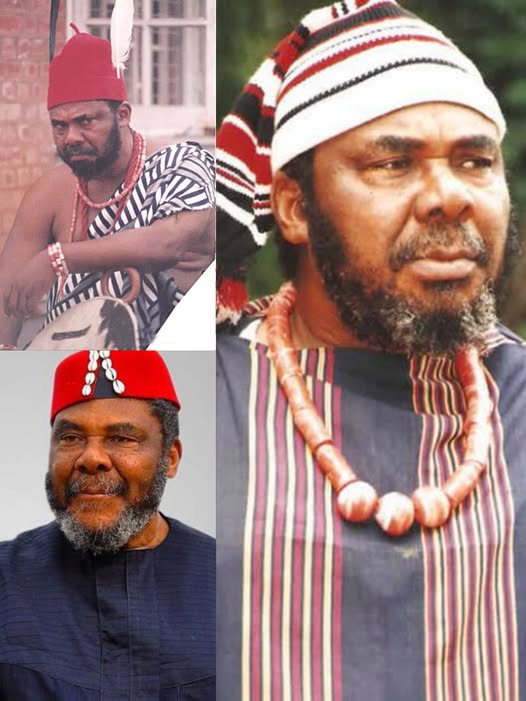
For decades, veteran Nollywood actor Pete Edochie has remained one of the most recognisable faces in Nigerian cinema. His commanding voice, powerful delivery and ability to bring traditional rulers, wealthy patriarchs and influential elders to life have earned him a special place in the hearts of movie lovers.
From his iconic portrayal of Okonkwo in Things Fall Apart to his memorable appearance in Genevieve Nnaji’s Lionheart, Edochie has featured in several productions that continue to attract attention.
Here are 10 popular movies that remind viewers of the actor’s remarkable talent and screen presence.
1. Things Fall Apart (1987)
Edochie’s portrayal of Okonkwo in the Nigerian Television Authority’s adaptation of Chinua Achebe’s classic novel remains one of the defining performances of his career. His interpretation of the proud, fearless and troubled warrior helped bring the literary character to life and established him as a household name.
2. Igodo (1999)
In this classic adventure film, Edochie played an influential elder in a community facing a deadly curse. The story follows seven warriors on a dangerous mission to find a mystical weapon that could save their kingdom. His commanding presence added weight to the production.
3. Rituals (1997)
The film explored the dark side of the pursuit of wealth and political power. Edochie played Don Pedro, a member of a secret society, in a story that examined the consequences of greed, ambition and the abuse of power.
4. Billionaire’s Club (2003)
Edochie featured as Billion, a wealthy businessman involved in a secret society that uses occult practices to pursue wealth and influence. His performance reinforced his reputation for portraying powerful and influential characters.
In Genevieve Nnaji’s directorial debut, Edochie played Chief Ernest Obiagu, a respected businessman and owner of Lionheart Transport Company. The film follows his daughter, Adaeze, as she takes charge of the family business when her father falls ill. It offered audiences a glimpse of Edochie in a contemporary family and business drama.
6. Across the Niger (2004)
This drama is among the titles associated with Edochie’s extensive film career. It remains one of the productions viewers can revisit when exploring the veteran actor’s body of work.
7. Narrow Escape (1999)
Edochie featured in this Nollywood production as Odumodu. The film is among his earlier works, reflecting the period when he became a familiar face in the industry’s home-video era.
8. Idemili (2014)
In this production, Edochie played an Igwe, a traditional ruler. The role drew on the authoritative and regal screen presence that has become a familiar feature of many of his performances.
9. Foreigner’s God (2019)
Edochie appeared as a storyteller in this production, which explores a colonial-era encounter between a foreign documentary photographer and a community in Igbo land. The film offered him a different role from the traditional ruler and wealthy patriarch characters for which he is widely known.
10. Unroyal (2020)
In Unroyal, Edochie played the King of Kings. The film added to his collection of productions featuring royal characters and demonstrated his continued presence in Nollywood.
Whether playing a traditional ruler, a wealthy businessman, a strict patriarch or a troubled character, Pete Edochie has consistently brought a distinctive presence to the screen. These films offer movie lovers an opportunity to revisit some of the performances that have helped make him one of Nollywood’s enduring acting figures.
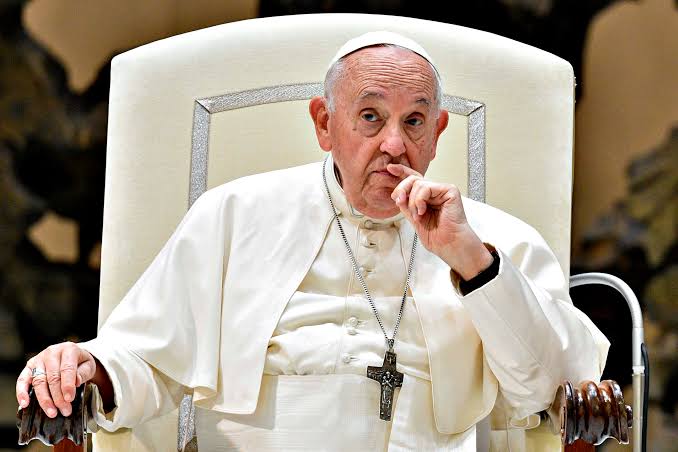
Pope Francis claimed to have encountered the devil on three separate occasions during his lifetime, describing frightening experiences that included seeing what he called the “gates of hell”, according to extracts from his newly published private diary.
The accounts are contained in The Private Diary of Pope Francis, released on Tuesday, with a 2021 entry detailing three encounters he interpreted as visions of the devil. He said one occurred while he was travelling in a car, another during Mass in a choir loft, and the third at a meeting with Vatican officials.
“I can’t forget the powerful raspiness of his voice,” Francis wrote, recalling one of the visions.
The late pontiff also described the devil’s appearance, particularly his eyes, which he said looked menacing.
“He looked at me with flaming eyes… more intense than the previous one. They were like flashes of fire,” he wrote of his second vision that he said happened inside a Carmelite chapel while he was archbishop of Buenos Aires.
According to the diary, the experiences also affected him during his travels, including his 2018 visit to Chile, which became controversial after he defended a bishop accused of covering up sexual abuse committed by a priest.
Francis later expressed regret over his handling of the matter, admitting that he had initially underestimated the seriousness of the situation.
“Devastated because of the situation in Chile,” Francis wrote in a 2021 entry.
“It was hard for me to admit what happened in Chile; I didn’t think it was so serious.”
Following the controversy, the late pope apologised and invited Chile’s bishops to Rome, where they collectively offered to resign.
He also recounted another encounter with what he believed was the devil shortly after returning from the Chilean trip, saying the experience left a lasting impression on him.
“I saw him and heard his voice, triumphant, possessing everything,” he wrote, adding that “the Lord gave me the chance to free myself from these encounters”.
Beyond the three encounters, Francis disclosed that he once saw what he described as the gates of hell while preparing to sleep in June 2018.
“I watched a little, and it terrified me,” he said, adding that he “took the rosary as a weapon”.
“It’s dangerous to get close to the gates of hell, because flames can spring out and burn,” he wrote.
The diary, which covers the period between 1992 and 2024, also offers personal reflections on events during Francis’s time in the Catholic Church.
Cardinal Victor Fernandez, head of the Vatican’s Dicastery for the Doctrine of the Faith and a friend of the late pope, edited the publication. The diaries are reportedly the first writings of their kind by a pope to be made publicly available since the 1960s.
Francis became head of the Catholic Church in 2013 and served for 12 years before dying in April 2025 at the age of 88.
The death of veteran actor Pete Edochie has added another painful chapter to the history of Nollywood’s older generation, whose performances helped shape Nigeria’s film and television industry over several decades.
Edochie, who died on Wednesday at the age of 79 after a prolonged battle with prostate cancer, was among the actors whose commanding screen presence, distinctive delivery and memorable characters made them household names across the country.
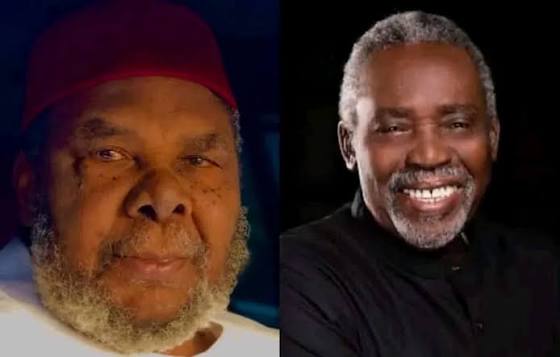
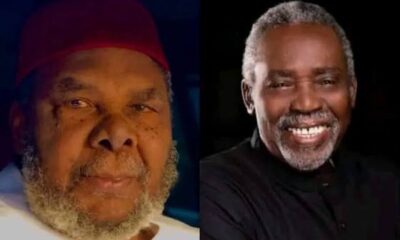
His death comes barely two months after the demise of another veteran actor, Olu Jacobs, who died at the age of 84 on September 16, 2026. Both actors were widely recognised for their contributions to Nigerian theatre, television and film.
From traditional rulers and wealthy patriarchs to comic characters and village elders, their performances became familiar features of Nigerian home videos and television productions.
Pete Edochie
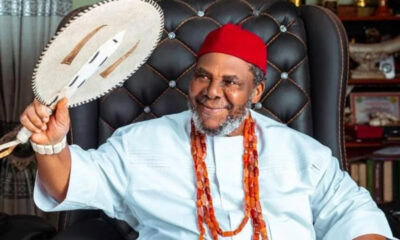
Edochie was one of Nollywood’s most recognisable faces, particularly for his portrayal of traditional rulers, wealthy men and authoritative family heads.
He gained widespread recognition for playing Okonkwo in the Nigerian Television Authority’s adaptation of Chinua Achebe’s classic novel, Things Fall Apart. His performance in the production established him as one of Nigeria’s leading actors.
Nollywood legend Pete Edochie. Photo credit: Web
Over the years, his deep voice, expressive delivery and use of proverbs became defining features of his performances.
His contributions to Nigerian entertainment also earned him the national honour of Member of the Order of the Niger.
Olu Jacobs
Jacobs was another towering figure whose career spanned theatre, television, international cinema and Nollywood.
Born on July 11, 1942, in Kano, the actor developed an interest in performing arts at a young age before travelling to the United Kingdom to study at the Royal Academy of Dramatic Art in London.
He subsequently worked with repertory theatres in Britain and appeared in several television productions, including The Goodies, Till Death Us Do Part and The Professionals.
His international film credits also included The Dogs of War, Baby: Secret of the Lost Legend and Pirates. After returning to Nigeria, he became a prominent figure in the country’s growing film industry.
In Nollywood, Jacobs became particularly known for playing traditional rulers, wealthy patriarchs and influential men.
His commanding performances and theatrical training made him one of the industry’s most respected actors.
He won the Africa Movie Academy Award for Best Actor in a Leading Role in 2007 and received the Industry Merit Award at the 2013 Africa Magic Viewers’ Choice Awards.
He was also conferred with the national honour of Member of the Order of the Federal Republic in 2011.
Jacobs was married to fellow veteran actress Joke Silva. Together, they founded the Lufodo Group, with interests in film production, distribution and performing arts education.
Sam Loco Efe
Unlike Edochie and Jacobs, Sam Loco Efe was particularly celebrated for his comic performances and ability to bring humour to Nigerian films.
The actor, who died in 2011, was one of the most recognisable comic actors of his generation.
Sam Loco
His performances, often characterised by expressive facial gestures, distinctive delivery and comic timing, made him a favourite among audiences.
In a 2018 interview with PUNCH, his son, Omoruyi, described him as a playful but strict father who made the home lively.
He also recalled how his father combined his acting career with family life despite spending much of his time on film locations.
Adibe was another veteran actor whose contribution to Nigerian television and film spanned several decades.
He was particularly remembered for his role as Ogbuefi Uzowulu in the television adaptation of Things Fall Apart, where he acted alongside Edochie, who played Okonkwo.
In a 2022 interview with PUNCH, Adibe recalled that the audition process for the production lasted almost a year.
File Copy: Nollywood Actor Fabian Adibe
He also spoke about his childhood, acting career and experiences in the Nigerian movie industry.
Adibe said he featured in the 1985 production and also worked as its art director.
He later featured in other productions, including Living in Bondage. He died on August 20, 2025, at the age of 81.
Justus Esiri, Enebeli Elebuwa and Dejumo Lewis
The television series The Village Headmaster also produced some of the most recognisable faces in Nigerian entertainment, including Justus Esiri, Enebeli Elebuwa and Dejumo Lewis.
Esiri became widely known for playing the headmaster in the popular television drama, which began airing in 1968 and ran until 1988.
Justus Esiri
Elebuwa was remembered for his role as a police officer, while Lewis played Kabiyesi.
Enebeli Elebuwa
The series was among Nigeria’s influential television productions and featured actors whose work became part of the country’s entertainment history.
Dejumo Lewis
In a retrospective on the programme, a column by PUNCH noted that several of its notable cast members, including Esiri and Elebuwa, had died, while Lewis remained one of the surviving figures associated with the production then.
A generation that shaped Nollywood
Beyond their individual achievements, the contributions of these actors helped create the foundation upon which contemporary Nollywood has continued to grow.
Their performances introduced audiences to memorable characters and storytelling styles that remain influential in Nigerian entertainment.
The Village Headmaster, for instance, connected generations of television viewers to a cast of performers whose work became part of the country’s entertainment history. Several of its notable actors have since died.
Similarly, Edochie, Adibe and Jacobs represented a generation of actors whose careers connected traditional theatre and television with the development of modern Nigerian cinema.
Their performances in productions that became household favourites helped establish Nigerian actors and stories before the expansion of the home-video industry.
While the industry has evolved with new production techniques, streaming platforms and younger performers, the works of the older generation remain an important part of its history.
For many Nigerians, their films and television appearances provided some of the most memorable entertainment experiences of their childhood and helped establish Nigerian productions as a major part of popular culture.
With Edochie’s death, Nollywood has lost another prominent figure from a generation whose influence continues to be felt in the industry.