Connect with us

Business

Lagos enforces 5% tax on gaming winnings

Published

on

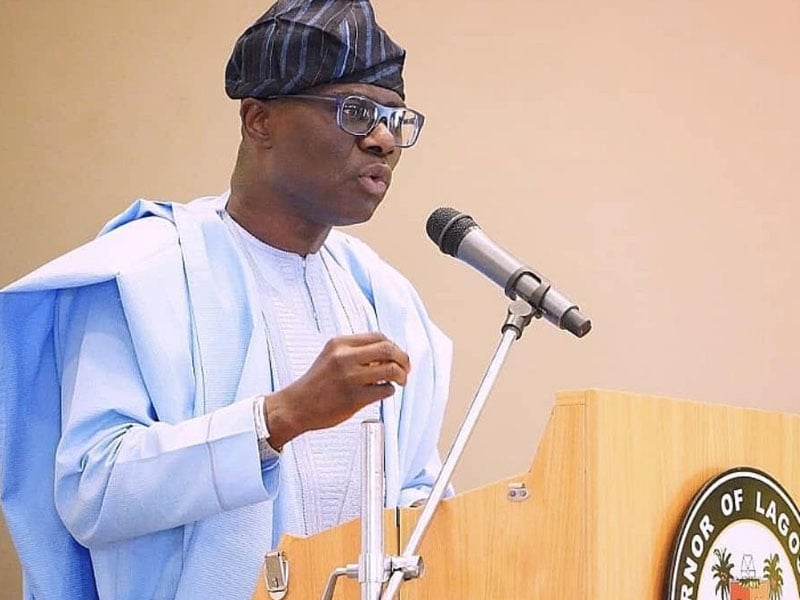
The Lagos State Government has begun enforcing a five per cent withholding tax on gaming winnings from licensed gaming platforms operating within the state.

The Chief Executive Officer of the Lagos State Lotteries and Gaming Authority, Are Bashir, made this known in a public notice issued on Friday.

He stated that the policy, which takes immediate effect, applies to players’ net winnings and is to be deducted at the point of payout.

Bashir directed all licensed gaming operators in the state to comply immediately with the new tax framework in line with existing Nigerian tax laws and regulatory directives governing the gaming industry.

According to the notice, the five per cent deduction will be automatically withheld before winnings are paid to players and remitted to the Lagos State Internal Revenue Service as the statutory tax authority.

Bashir said the initiative is part of the state’s wider efforts to improve tax compliance, transparency and accountability in the fast-growing gaming sector.

“The measure forms part of Lagos’ broader drive to strengthen tax compliance, transparency, and accountability in the rapidly expanding gaming sector,” the notice read.

He said under the new arrangement, players are required to provide their National Identification Number (NIN) in line with Know Your Customer (KYC) regulations.

Bashir clarified that all deductions and remittances will be handled strictly by licensed gaming operators in accordance with regulatory requirements, adding that players will receive their winnings net of the statutory deduction, with proper records maintained to ensure transparency.

See also  CBN orders banks to freeze six terror suspects’ accounts

He further noted that the withholding tax deducted will serve as a tax credit to the player.

“All licensed gaming operators in Lagos State have now been formally directed to commence the deductions with immediate effect,” the notice said.

Bashir reiterated that the policy is aimed at ensuring effective regulation of the gaming industry while aligning both operators and players with existing tax obligations in the state.

Continue Reading
Click to comment

Leave a Reply

Your email address will not be published. Required fields are marked *

Business

WHY DO WE VALUE FOREIGN PRODUCTS MORE THAN OUR OWN? THE MINDSET HOLDING AFRICA BACK

Published

on

Africa is rich in natural resources, creativity, culture, and entrepreneurial talent. Yet one uncomfortable question continues to deserve our attention: **Why do we sometimes trust products made abroad more than products made by our own people?**

Consider this scenario: a Nigerian entrepreneur produces shoes, clothing, cosmetics, food, or household products locally. Some consumers immediately question the quality. But when a similar product carries a foreign label, those same consumers may suddenly see it as more fashionable, prestigious, or desirable.

Is the foreign product necessarily better, or have we developed a mindset that automatically associates foreign with quality and local with inferiority?

## The Psychology of Foreign Products

In many African markets, foreign brands are associated with prestige, social status, and international recognition. For some consumers, owning imported products is not merely about functionality; it is also about how those products make them appear in the eyes of others.

This creates a difficult environment for local entrepreneurs. They must compete not only on price and quality but sometimes also against perceptions that are deeply rooted in consumer behaviour.

However, it would be unfair to claim that all foreign products are better or that all locally made products meet acceptable standards. Consumers have legitimate reasons to demand durability, safety, reliability, attractive packaging, and value for money.

The real challenge is to ensure that local manufacturers can compete on a fair playing field.

## How This Mindset Can Affect African Economies

When locally produced goods struggle to attract consumers, businesses may find it harder to expand, invest in modern equipment, hire workers, and develop new products.

See also  79,323 killed, 34,773 abducted in Nigeria in six years – Read Revealed Report

Strong local industries can create employment, develop technical skills, support farmers and suppliers, and keep more economic activity within a country. Countries that successfully build globally competitive industries generally combine investment, innovation, infrastructure, quality control, and consumer confidence.

Africa cannot build a stronger manufacturing base through slogans alone. It requires practical action from governments, businesses, financial institutions, and consumers.

## Local Manufacturers Must Also Take Responsibility

Supporting African businesses should not mean accepting poor-quality products simply because they are locally made.

Manufacturers must take responsibility for improving their standards, customer service, packaging, product safety, and innovation. Governments must tackle barriers such as unreliable electricity, expensive financing, inadequate infrastructure, and unfair competition.

Consumers, meanwhile, should judge products by their actual quality and value rather than automatically dismissing them because of their country of origin.

**Patriotism should encourage excellence, not protect mediocrity.**

## Can Africa Change This Mindset?

The answer begins with education, investment, accountability, and a willingness to give good local products a fair chance.

African entrepreneurs need opportunities to prove themselves. Consumers need reliable products they can trust. Governments need policies that make local production more competitive.

The goal should not be to reject everything foreign. International trade brings technology, ideas, competition, and useful products. The goal should be to build African industries strong enough to compete with the best in the world.

## The Big Question for Our Readers

Why do some consumers proudly display foreign brands but hesitate to support products made in their own countries?

Is it a genuine concern about quality, a desire for social status, a lack of trust in local manufacturers, or a combination of these factors?

See also  Factories spend N1.3tn on alternative power due to blackouts

**Newsbreak365 wants to hear your opinion.**

Would you choose a quality Nigerian-made product over an imported alternative if both offered similar quality and value for money?

Join the discussion in the comments. Your perspective matters.

*Newsbreak365 — Real News. Real People. Real Issues.*

FOLLOW US ON:

FACEBOOK

TWITTER

PINTEREST

TIKTOK

YOUTUBE

LINKEDIN

INSTAGRAM

Continue Reading

Business

AFRICA, WAKE UP! WHY SHOULD A CONTINENT WITH SO MUCH LAND STILL STRUGGLE TO FEED ITS PEOPLE?

Published

on

Africa, we must confront an uncomfortable question: **How can a continent with enormous agricultural potential continue to depend on food imports while millions of its people search for jobs and farmers struggle to make a living?**

We cannot talk about economic independence while neglecting the very industry that puts food on our tables.

From Nigeria to Ghana, Kenya to Uganda, agriculture has the potential to create jobs, build businesses, empower young people, and strengthen local economies. Yet this potential cannot be fully realised without investment, modern technology, reliable infrastructure, and policies that support farmers.

FARMING IS NOT A SIGN OF FAILURE. DEPENDING TOO HEAVILY ON OTHERS FOR ESSENTIAL FOOD CAN BECOME A NATIONAL RISK.

Imagine what Africa could achieve if more young people entered commercial farming, local industries processed more homegrown produce, and farmers had access to affordable financing, irrigation, modern equipment, and profitable markets.

The answer is not simply to tell Africans to return to the farms. Governments must make agriculture productive and profitable. Investors must support food production. Communities must respect farmers, and young people must be given the tools to build successful agricultural businesses.

A STRONGER AFRICA BEGINS WITH THE ABILITY TO FEED ITS PEOPLE.

The continent has opportunities worth developing. The real challenge is turning agricultural potential into practical results.

LET’S TALK!

If African countries invested seriously in agriculture, would it create more jobs, reduce dependence on imported food, and help make food more affordable?

Drop your opinion in the comments. Is Africa neglecting one of its greatest economic opportunities, or are deeper problems holding agriculture back?

See also  Power outages, insecurity top business challenges – CBN survey

Share this post and follow **Newsbreak365** for more thought-provoking discussions about Africa’s future.

#Newsbreak365 #Africa #Agriculture #FoodSecurity #AfricanDevelopment #SupportFarmers #EconomicDevelopment

FOLLOW US ON:

FACEBOOK

TWITTER

PINTEREST

TIKTOK

YOUTUBE

LINKEDIN

INSTAGRAM

Continue Reading

Business

Nigerian, Indonesian firms sign $10m business deals

Published

on

Nigerian and Indonesian companies have signed business agreements worth a combined $10m to strengthen trade and economic cooperation between the two countries.

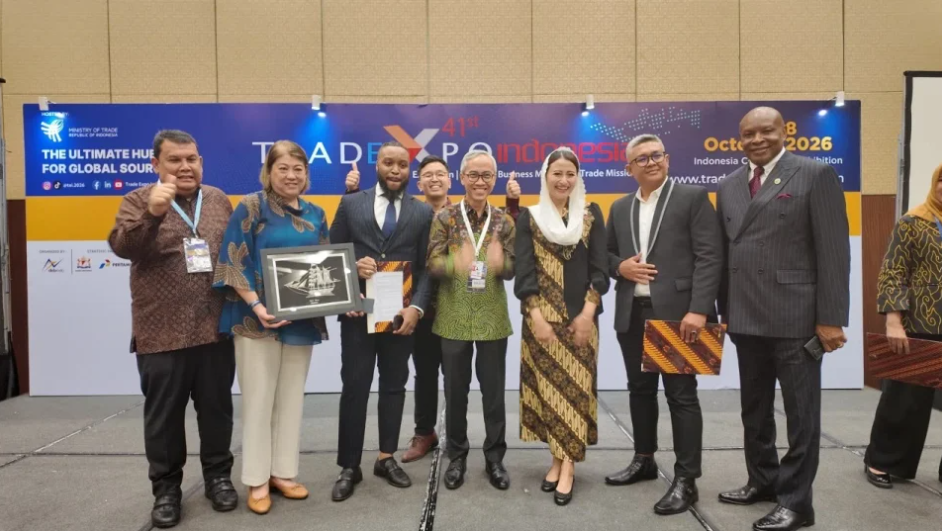
The Indonesian Ambassador to Nigeria, Bambang Suharto, disclosed this on Thursday during a memorandum of understanding signing ceremony involving Nigerian investors and their Indonesian counterparts at the 2026 Trade Expo Indonesia.

The agreements were among a broader collection of business commitments at the expo, where 55 memoranda of understanding involving Indonesian companies and international business partners were signed.

The participating countries included Nigeria, Australia, Canada, Chile, Germany, Hungary, Malaysia, Mexico, the Netherlands, Romania, South Africa, South Korea, Thailand, the United Arab Emirates and Vietnam.

The event had present ambassadors, diplomatic representatives, international buyers and business partners.

The occasion was highly praised as one of the significant moments of the 2026 Trade Expo Indonesia which kickstarted and was declared opened on Wednesday.

Suharto speaking to Journalists described the agreements involving Nigerian and Indonesian companies as a historic development, expressing optimism that the partnerships would expand bilateral business relations and deliver economic benefits to both countries.

“Today we are witnessing a very historical moment for this year. We have two companies who are having signing ceremony, the MOU, a business contract with their counterpart in Indonesia. So, the amount reached in total 10 million USD or 5 million USD each,” the ambassador said.

He explained that the agreements covered the dental equipment and pharmaceutical sectors, describing them as important areas with significant implications for public welfare.

The ambassador urged Indonesian businesses to look beyond commercial trading and explore investment opportunities in Nigeria, noting that some Indonesian companies already operating in the country had demonstrated the benefits of long-term business engagement.

See also  Factories spend N1.3tn on alternative power due to blackouts

“I mentioned that there are now some Indonesian companies operating in Nigeria. So, they are a good example. For so many years, they have been doing business in Nigeria, creating job opportunities for the locals and also absorb the local resources that can be produced in their factory and bring, of course, for the benefit of Nigeria as well,” he said.

Suharto encouraged Nigerian companies to invest in Indonesia, highlighting the countries’ large populations, available human resources and investment potential.

“We have 280 million people and Nigeria has 230 million people. In both countries, we have a demographic bonus. So, we have also attractive manpower, which is good for investment,” he said.

He added that Indonesia remained open to Nigerian businesses seeking opportunities in its market.

One of the Nigerian investors who signed an agreement, Ralph-Michael Simon-Michael of Irad Investment Limited, said his company had partnered with Indonesian firm PT Winn Appliance to introduce domestic gas appliances into the Nigerian market.

Simon-Michael, whose company is headquartered in Port Harcourt, Rivers State, said the partnership was aimed at making the products accessible to ordinary Nigerians through established distribution channels.

“So, we’re based in Port Harcourt, our headquarters. So, we’re an oil and gas servicing company. We’ve come to Indonesia to partner with a company called Win Appliances. So, we’re going to be bringing gas, domestic appliances into Nigeria,” he said.

He explained that the products would be targeted at everyday consumers and distributed nationwide through established retail outlets and cash-and-carry distributors.

“The appliances that we’re bringing are for domestic use, for the everyday consumer. So, the everyday man can essentially afford these appliances that we’re bringing in,” he said.

See also  NMDPRA cracks down on filling stations for petrol under-dispensing

Simon-Michael named Shoprite, Next cash-and-carry distributors among other outlets, through which he said the products would be distributed across Nigeria.

He said the company’s long-term plan was to establish a factory in Indonesia, and expand its operations into other African countries.

The investment agreements also formed part of broader efforts to deepen trade relations between Nigeria and Indonesia, according to Sheye Oyetade, Executive Director of Invest Nigeria, who said the Nigerian delegation was working to translate existing cooperation agreements into practical business opportunities.

Oyetade said the delegation’s participation was linked to the memorandum of understanding between Invest Nigeria and the Developing Eight (D-8) countries, a grouping of countries that includes Nigeria and Indonesia.

“We actually came to service our Memorandum of Understanding with D8 to make sure that trade is actually seamless between Nigeria and Indonesia,” he said.

He added that economic reforms in Nigeria had created opportunities for cross-border trade and investment, while the country’s growing population offered businesses access to a large consumer market.

“The signing of the MOU is key, simply because, whether you like it or not, Africa is becoming the major darling of the world in terms of the market,” Oyetade said.

He projected that Nigeria’s population would rise to about 400 million by 2050, arguing that the expansion would increase its importance as a destination for investment and consumer goods.

“So, where the people are, there the market is. So, that’s exactly what we are doing here today,” he said.

The agreements are expected to strengthen commercial links between businesses in both countries, with participants expressing hope that the partnerships would encourage further investment, job creation and the exchange of products and expertise.

See also  Police reveals Terrorists, informants spying on schools, other targets for coordinated attack across Nigeria

Source: punchng.com

FOLLOW US ON:

FACEBOOK

WHATSAPP CHANNEL

TWITTER

PINTEREST

TIKTOK

YOUTUBE

LINKEDIN

INSTAGRAM

Continue Reading

Trending