Connect with us

News

India deports over 2,356 Nigerians in five years

Published

on

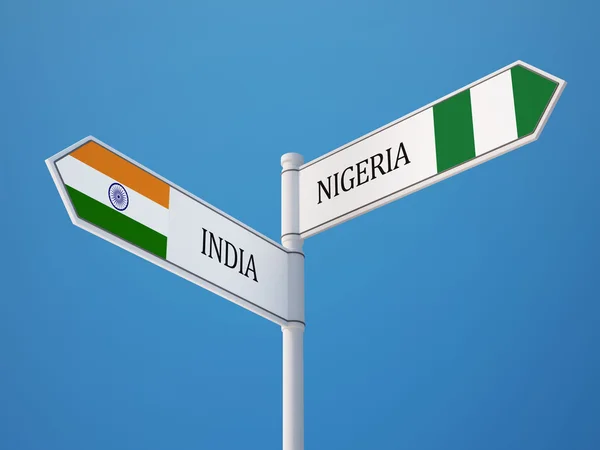
The Government of India deported at least 2,356 Nigerians between 2019 and 2024, with removals quadrupling from 339 in 2021 to 1,470 in the 2023-2024 fiscal year.

This is according to data obtained by The PUNCH from India’s Ministry of Home Affairs.

The figures were drawn from three separate MHA annual reports for which Nigeria-specific data is publicly available.

In the most recent reporting period from April 1, 2023, to March 31, 2024, Nigerians emerged as the most deported nationality from India, accounting for nearly two-thirds of all foreign nationals removed from the South Asian country.

Indian authorities deported over 2,331 persons during the period, with Nigerians representing 63 per cent of all removals carried out by the Foreigners Regional Registration Offices across seven major Indian cities.

They include: Kolkata, Mumbai, New Delhi, Chennai, Amritsar, Bangalore, and Hyderabad.

The figure places Nigeria ahead of neighbouring Bangladesh, which recorded 411 deportations (17.6 per cent), and Uganda, with 78 deportations (3.3 per cent).

Breaking down the annual figures, an average of 122.5 Nigerians were deported monthly from India during the 2023-2024 review period, translating to approximately four deportations per day.

A review of available MHA data shows that the trend of Nigerians topping India’s deportation list is not new but has worsened.

In 2019, India deported 547 Nigerians out of a total of 1,233 foreign nationals removed, 44.3 per cent of all deportations that year.

Bangladesh ranked second with 230, and Afghanistan third with 94.

In 2020, deportations dropped due to the COVID-19 pandemic, with only 258 foreigners deported between April and December.

However, Nigeria did not feature among the top three nationalities for that period.

By 2021, as international travel resumed, 339 Nigerians were deported out of 821 total removals, representing 41.3 per cent. Bangladesh again ranked second with 246, and Afghanistan third with 105.

Deported Nigerians rose from 339 in 2021 to 1,470 in 2023-2024, representing a 333 per cent increase.

See also  UN demands probe after 17 protesters killed in Nepal

Also, Nigeria’s share of total deportations rose from 44 per cent in 2019 to 63 per cent in 2023-2024.

The data shows Uganda as the only other sub-Saharan African country among the top three deported nationalities in the latest report.

Recent data put the total number of Nigerians living and working in India at over 60,000, making it the largest West African community in the country.

However, the high deportation numbers have emerged against the backdrop of strengthening diplomatic ties between the two countries.

President Bola Tinubu visited India in September 2023 to attend the G20 Summit in New Delhi as a guest nation, where he met with Indian Prime Minister Narendra Modi to discuss bilateral cooperation in defence, agriculture, trade, and investment.

Just over a year later, in November 2024, Prime Minister Modi made his first visit to Nigeria in 17 years, the first by an Indian prime minister since 2007.

During the two-day visit, Modi was conferred with Nigeria’s second-highest national honour, the Grand Commander of the Order of the Niger, making him only the second foreign dignitary after Queen Elizabeth II to receive the award.

The leaders signed three Memoranda of Understanding on cultural exchange, customs cooperation, and survey cooperation, and discussed expanding the India-Nigeria Strategic Partnership established in 2007.

Also, in November 2024, the National Security Advisers of both countries convened for the India-Nigeria Strategic and Counter-Terrorism Dialogue, where they addressed shared threats from terrorism, organised crime, and illicit activities impacting bilateral relations, including those linked to irregular migration and drug networks involving Nigerian nationals in India.

Indian companies have invested $27bn cumulatively in Nigeria, with 200 companies operating in the country.

Bilateral trade between India and Nigeria stood at $7.89bn in 2023-24, down from $11.8bn in 2022-23, primarily due to reduced crude oil imports from Nigeria.

The GOI says most of the deportations were tied to expired visas and drug trafficking cases.

See also  Kano gov to present 2026 budget proposal Wednesday

The Ministry of Home Affairs report indicates that deportation typically results from entering the country without valid documentation or remaining after visa expiration, with many Nigerian deportees having originally entered India on student visas that subsequently expired.

Data from India’s Narcotics Control Bureau showed that some deportations were based on drug-related cases.

In its 2024 annual report, unveiled by Union Home Minister Amit Shah at the second National Conference of Anti-Narcotics Task Force heads, the NCB disclosed that 106 Nigerians were arrested in India for drug trafficking offences in 2024, making them the second-highest group of foreign nationals implicated after Nepalese citizens, who topped the list with 203 arrests out of a total of 660 foreign drug arrests that year.

In December 2025, Indian authorities deported 32 Nigerians following a multi-state narcotics raid in Delhi by the EAGLE anti-narcotics unit.

The operation saw 124 EAGLE officers and 100 Delhi Crime Branch personnel raid locations across Delhi, Greater Noida, Gwalior and Visakhapatnam on November 27, 2025, arresting 50 Nigerians allegedly linked to a transnational drug trafficking and money-laundering syndicate.

Of the 50 arrested, 32 were deported within 10 days “on priority,” while seven remain in custody facing prosecution after drugs were recovered from them. The remaining suspects may also be deported pending documentation review.

Weeks earlier, in November 2025, Hyderabad police deported Onyeukwu Victor, who had entered India on a student visa in 2021 but remained after it expired in 2024.

The Hyderabad Narcotics Enforcement Wing alleged he coordinated drug supplies to customers in Hyderabad and Bengaluru, though no drugs were found on him at arrest.

Another Nigerian, Victor Obasi, was deported from Hyderabad in January 2026 for illegal stay and alleged drug trafficking links. Indian authorities described his continued presence as “a potential threat to public safety and national security.”

Hyderabad’s specialised H-NEW narcotics unit disclosed in November 2025 that it had deported 56 foreigners since 2022, including 35 Nigerians.

See also  State police will bring security closer to Nigerians – IGP

Twenty were deported for drug trafficking, and 15 for overstaying without valid documents.

In October 2022, the western coastal state of Goa, a popular tourist destination, disclosed that approximately 650 Nigerians had been deported from the state between 2019 and 2022.

In April 2025, India’s Parliament passed the Immigration and Foreigners Act, 2025, which replaced four colonial-era laws: the Foreigners Act of 1946, the Passport (Entry into India) Act of 1920, the Registration of Foreigners Act of 1939, and the Immigration (Carriers’ Liability) Act of 2000.

The new law, which came into force on September 1, 2025, increased the penalty for unauthorised entry or stay to five years’ imprisonment or a fine of up to 500,000 rupees (approximately N4.3m), mandated the establishment of holding centres in every state, and required educational institutions to report foreign student admissions to immigration authorities.

India received 9.84 million foreign visitors between April 2023 and March 2024, with Bangladesh accounting for the highest number at 2.1 million arrivals, followed by the United States (1.7 million) and the United Kingdom (900,000).

Speaking with our correspondent, Research Director, Centre for China Studies, Abuja, Charles Onunaiju, argued that a lack of local opportunities was driving Nigerians abroad.

He said, “We have a challenge. Since Nigeria is becoming inhospitable, especially for young people with no opportunities, there is desperation to go abroad.”

Meanwhile, the Nigerians in Diaspora Commission said it is ready to welcome Nigerians deported from anywhere in the world.

“The Federal Government has set up an inter-agency committee, comprising the Ministry of Foreign Affairs, NiDCOM, Ministry of Humanitarian Affairs and Office of the National Security Adviser, for mass deportations of Nigerians from anywhere,” NiDCOM’s Director of Media and Corporate Affairs, Abdur-Rahman Balogun, said in an interview.

punch.ng

FOLLOW US ON:

FACEBOOK

TWITTER

PINTEREST

TIKTOK

YOUTUBE

LINKEDIN

TUMBLR

INSTAGRAM

Continue Reading
Click to comment

Leave a Reply

Your email address will not be published. Required fields are marked *

News

Buni presents N532bn 2027 budget to Yobe assembly

Published

on

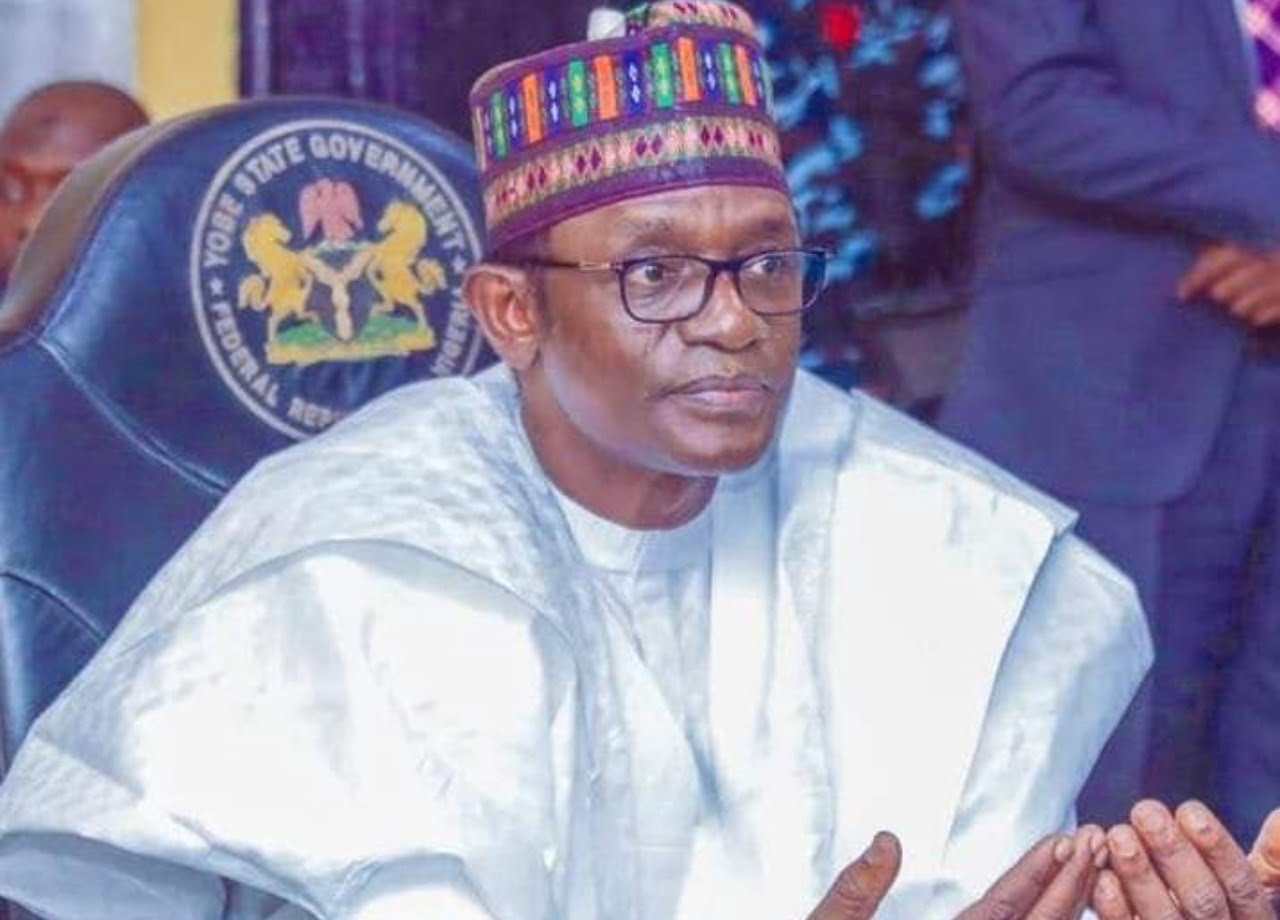
Yobe State Governor, Mai Mala Buni, has presented a proposed budget of N532.27bn for the 2027 fiscal year, with recurrent expenditure taking the largest share of the estimates.

Buni presented the 2027 Appropriation and Finance Bills before the Yobe State House of Assembly in Damaturu on Tuesday, describing the proposal as the final budget of his administration.

Tagged the Budget of Consolidation, Sustainability and Inclusive Growth, the proposed budget represents an increase of N16.739bn, or 3.2 per cent, over the N515.532bn approved for the 2026 fiscal year.

A breakdown of the estimates shows that N288.426bn, representing 54.2 per cent, is allocated to recurrent expenditure, while N243.845bn, representing 45.8 per cent, is earmarked for capital projects.

Presenting the budget, Buni said it was designed to consolidate the achievements of his administration, complete ongoing projects and ensure the sustainability of existing investments.

He said, “Today, with a sense of humility and fulfilment, and in accordance with Section 121(1) of the 1999 Constitution of the Federal Republic of Nigeria (as amended), I once again stand before this Honourable House of Assembly to present the Eighth and last Finance and Appropriation Bills by this administration for your kind consideration and approval for the 2027 fiscal year.”

The governor said the administration would prioritise project completion, improved service delivery and prudent management of public resources.

“The 2027 budget is therefore designed to balance immediate service delivery with the long-term development interest of the state,” he said.

Buni disclosed that the education sector would receive N99.792bn, while N80.543bn was allocated to healthcare.

See also  Asylum seekers to pay £10,000 before settlement in UK

He said the education allocation would support the completion of ongoing school construction and rehabilitation projects, the provision of teaching materials, assistance to tertiary institutions and scholarship programmes.

On healthcare, the governor said the government would sustain investments in hospital upgrades, maternity and emergency services, medical equipment and healthcare training institutions.

He also identified the establishment of a modern kidney centre in Gashua as one of the administration’s priority projects.

“We are equally committed to advancing the ongoing establishment of a modern Kidney Centre in Gashua, with emphasis on a safe, accessible, patient-centred treatment environment, appropriate dialysis equipment and the clinical and operational arrangements required for sustainable service delivery,” Buni said.

The governor said infrastructure development would remain a major priority, with emphasis on completing ongoing road, drainage, electricity and commercial infrastructure projects.

He specifically mentioned the Gashua-Masaba, Balanguwa-Kumagannam and Dumbulwa-Lailai roads among the projects requiring attention.

Other priority areas include agricultural development, livestock production, water supply, environmental protection, peacebuilding and the rehabilitation of communities affected by insurgency.

Reviewing the performance of the 2026 budget as of September 30, Buni said the state recorded revenue receipts of N347.078bn, representing 67.3 per cent of the annual projection.

He said the approved 2026 budget stood at N515.532bn, comprising N291.904bn for capital expenditure and N223.628bn for recurrent expenditure.

According to him, recurrent expenditure during the first nine months amounted to N139.346bn, while capital expenditure stood at N94.280bn.

The governor said the administration remained committed to the payment of salaries, pensions and gratuities despite prevailing economic challenges and the demands of post-insurgency recovery.

See also  EU-Iran Tension Escalates As Tehran Labels European Militaries Terrorists

Buni, who described the 2027 proposal as the final budget of his administration, said the government would ensure an orderly transition and preserve ongoing development projects.

“Development must not depend entirely on the presence of any individual in public office. It must be supported by strong institutions, competent public servants, credible planning frameworks and effective systems of accountability,” he said.

The governor assured residents that his administration would continue to discharge its responsibilities until the final day of its tenure.

“We shall continue to work, supervise, deliver and remain accountable until the final day of our mandate. There will be no abandonment of our responsibilities and projects,” he said.

He urged the House of Assembly to give the proposed budget timely consideration and passage.

In a political appeal towards the end of his address, Buni urged the people of Yobe to support President Bola Tinubu’s second-term ambition, arguing that the state’s membership of the ruling All Progressives Congress had created opportunities for it to benefit from the Federal Government.

He also commended Tinubu for approving the Federal Government’s takeover and reimbursement of the Muhammadu Buhari International Cargo Airport project in Damaturu, saying the intervention would free up resources for other development projects.

Source: punchng.com

FOLLOW US ON:

FACEBOOK

WHATSAPP CHANNEL

TWITTER

PINTEREST

TIKTOK

YOUTUBE

LINKEDIN

INSTAGRAM

Continue Reading

News

US military base shooter seeks halt to firing squad execution

Published

on

Nidal Hasan, who is set to be executed by firing squad next month for his 2009 massacre at a US military base, asked a court on Tuesday to halt his execution, according to documents obtained by AFP.

The former US Army major and military psychiatrist asked a federal court to delay his execution, which is set for December 3, while he prepares a case to challenge it on constitutional grounds.

If the execution goes ahead, Hasan will be the first person killed by a US military firing squad since 1945.

A furore over plans to livestream the killing erupted in early October.

US Defence Secretary Pete Hegseth initially said the execution would be “public” before a Pentagon spokesperson added it would be available online.

Concerns mounted far and wide about making the execution into a spectacle and turning Hasan into a martyr.

After days of debate and condemnation, US President Donald Trump cancelled the plans to broadcast the killing, while allowing some witnesses to observe it in person.

Hasan killed 13 people, including 12 soldiers, and wounded 30 others in his November 2009 rampage.

He was shot by a civilian police officer and is paralysed from the waist down.

During his trial, Hasan chose to conduct his own defence, and court-appointed attorneys raised concerns that he was seeking to be executed.

Ultimately, he was sentenced to death by a military jury in 2013.

AFP

Source: punchng.com

FOLLOW US ON:

FACEBOOK

WHATSAPP CHANNEL

TWITTER

PINTEREST

TIKTOK

YOUTUBE

LINKEDIN

INSTAGRAM

See also  Suspend constitution amendment, seek referendum, Olanipekun tells N’Assembly
Continue Reading

News

Kwara unveils five-year strategy to tackle malnutrition, read full details

Published

on

The Kwara State Government has unveiled a five-year nutrition strategy aimed at tackling the social, cultural and behavioural factors contributing to malnutrition, particularly among women and children.

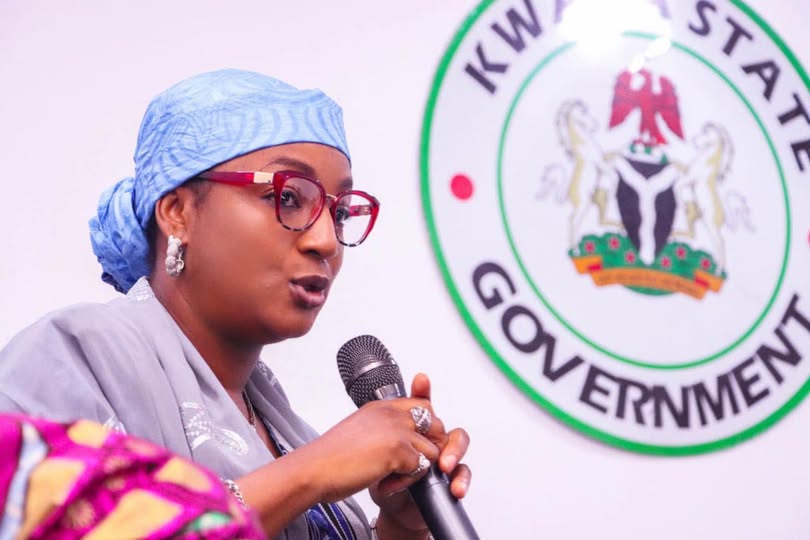
The development was contained in a statement issued on Tuesday by the Assistant Press Secretary, Ministry of Health, Funke Olutemilehin, following the unveiling of the strategy by the Commissioner for Health, Amina El-Imam.

The State Social and Behavioural Change Strategy for Nutrition Across the Life Cycle was unveiled at a dissemination meeting held at the ministry’s headquarters on Monday, with representatives of the United Nations Children’s Fund, government ministries, departments and agencies, religious organisations and civil society groups in attendance.

Speaking at the meeting, El-Imam said addressing malnutrition required interventions beyond the provision of healthcare services and nutrition commodities.

“Poor nutritional knowledge, harmful traditional beliefs, inadequate dietary practices, gender norms, poor health-seeking behaviour and weak community engagement remain major contributors to malnutrition,” the commissioner said.

El-Imam explained that the ministry, with financial and technical support from UNICEF, had successfully domesticated, costed and validated the National Social and Behavioural Change Strategy for Nutrition Across the Life Cycle.

“The framework will promote positive nutrition practices through strategic communication, advocacy, community mobilisation, social norm transformation and stronger intersectoral collaboration,” she added.

Highlighting the state’s progress, the commissioner disclosed that findings from the Mini Nigeria Demographic and Health Survey 2025/26 showed that stunting prevalence in Kwara had declined from 40.8 per cent to 35.5 per cent.

“Stunting prevalence has reduced from 40.8 per cent to 35.5 per cent, wasting from 6.1 per cent to 3.5 per cent and underweight from 24.5 per cent to 14.8 per cent,” she said.

See also  Nigerian broadcaster Rufai Oseni tackles government over alleged negotiation with bandits

El-Imam attributed the improvements to sustained government commitment and interventions, including Accelerating Nutrition Results in Nigeria 1.0, nutrition promotion campaigns, dietary diversification and micronutrient supplementation.

She also listed the distribution of oral rehydration salts and zinc at primary healthcare facilities and community levels among the interventions contributing to the progress recorded.

The commissioner called on ministries, departments and agencies, development partners, traditional and religious institutions, the media and community structures to support the transition to ANRiN 2.0.

She urged stakeholders to ensure effective implementation of the strategy, stressing the importance of collective action in addressing the factors responsible for malnutrition.

In his remarks, the Acting Chairman of the State Committee on Food and Nutrition, Mohammed Ibrahim, representing the Ministry of Planning and Economic Development, reaffirmed the state government’s commitment to improving nutrition outcomes.

Ibrahim disclosed that the government had contributed N100m to the Child Nutrition Fund, which UNICEF leveraged at a one-to-one ratio to procure 3,964 cartons of Ready-to-Use Therapeutic Food.

He also highlighted advocacy for six-month paid maternity leave and sustained investments in primary healthcare as part of the state’s efforts to improve maternal and child nutrition.

The acting chairman said, “We need adequate budgetary provisions and stronger multisectoral collaboration to further accelerate improvements in the nutrition indices of the state.”

Earlier, the Nutrition Focal Person in the Ministry of Health, Dr Habib Abayomi Lawal, commended members of the multisectoral committee for their contributions towards improving nutrition outcomes.

Lawal urged stakeholders to sustain their collaboration and demonstrate continued commitment to the successful implementation of the strategy.

See also  Kano gov to present 2026 budget proposal Wednesday

Source: punchng.com

FOLLOW US ON:

FACEBOOK

WHATSAPP CHANNEL

TWITTER

PINTEREST

TIKTOK

YOUTUBE

LINKEDIN

INSTAGRAM

Continue Reading

Trending