Nigeria’s telecommunications network is capable of supporting the real-time electronic transmission of election results, major telecommunications operators have confirmed.
The Independent National Electoral Commission also said 93 per cent of polling units across the country have mobile network coverage, following a joint technical assessment with the Nigerian Communications Commission and major telecom operators.
Major telecom operators, who spoke with The PUNCH, said that Nigeria’s telecommunications network was capable of supporting the real-time electronic transmission of election results, but the process remains largely paper-based.
In a position paper obtained by The PUNCH over the weekend, INEC maintained that electronic transmission of election results is both feasible and supported by existing telecommunications infrastructure, but stressed that implementation hinges on a clear legal framework.
The document, titled Position Paper No.1/2021 on Electronic Transmission of Election Results, was signed on September 9, 2021, by Prof Mahmood Yakubu, the immediate past Chairman of INEC.
INEC stated in the paper that it had “developed adequate structures and processes to successfully transmit election results electronically,” adding that “the technology and national infrastructure to support this are adequate.”
The commission explained that ahead of the 2019 general election, it set up the INEC/NCC Joint Technical Committee on Electronic Transmission of Election Results to evaluate the readiness of the country’s telecommunications infrastructure.
The committee, co-chaired by NCC’s Commissioner for Technical Services, Ubale Maska, and INEC National Electoral Commissioner, Dr Mustapha Lecky, submitted its report on August 9, 2018.
According to INEC, the committee found that mobile networks “adequately covered 93 per cent of INEC polling units with capacity to cover the outstanding 7 per cent.”
The report also assigned polling units to Airtel, Glo, 9Mobile and MTN for result transmission and recommended the use of secure configurations, including Access Point Name and Virtual Private Network integration, to connect to INEC’s backend systems.
Despite these findings, INEC said it did not proceed with electronic transmission in 2019 because it lacked a clear legal mandate at the time.
The commission stated that while the technical committee’s work “profoundly convinced” it that electronic transmission was achievable, the Electoral Act amendment process then underway did not provide the unambiguous authorisation required for full deployment.
In the paper, INEC described electronic transmission as “desirable and doable,” arguing that much of the public debate had generated “a lot of heat but throwing very little light,” and was driven by “unsubstantiated fears” and “profound misconceptions.”
It identified “trust, efficiency and safety” as the key benefits of transmitting results electronically.
According to the commission, faster result management would reduce delays that fuel “feelings that outcomes could be undermined,” while also limiting opportunities for “result jacking” during the physical movement of result sheets.
INEC also addressed what it termed widespread misconceptions about the process.
It clarified that electronic transmission of results is not the same as electronic balloting or internet voting, stating, “They are not the same thing,” and emphasising that it was “not contemplating” internet voting.
The commission distinguished between electronic transmission and the INEC Result Viewing portal, explaining that while the portal allows scanned polling unit result sheets to be uploaded for public viewing, electronic transmission would involve “the electronic collation of those results to determine the outcome of the election.”
INEC further rejected attempts to link challenges experienced with the Smart Card Reader to its capacity to transmit results electronically.
It stated that the SCR “is not used for result transmission” and is not permanently connected to any data network.
On network quality, the commission described as “simply incorrect” claims that 2G networks cannot transmit election data.
It noted that the telecom operators and the NCC were aware that only 2G coverage existed in some areas when they concluded in 2018 that transmission was possible.
INEC also pushed back against proposals that it should be subjected to certification or attestation by the NCC before transmitting results electronically.
Citing Section 160 of the Constitution, it argued that making its procedures subject to another agency’s approval “will be in breach of the Constitution,” adding that it retains constitutional authority to regulate its own processes.
The commission urged lawmakers to provide a legal framework that “enables rather than inhibits” electronic transmission and cautioned against embedding specific technologies in the law.
The renewed attention on the 2021 position paper comes amid ongoing debate over the electronic transmission of results and recent amendments to the Electoral Act signed by President Bola Tinubu.
The amended law has sparked arguments among political stakeholders and civil society groups over whether real-time electronic transmission from polling units should be made mandatory.
Supporters of compulsory real-time upload argue that it enhances transparency and reduces manipulation during collation, while critics cite logistical and security concerns.
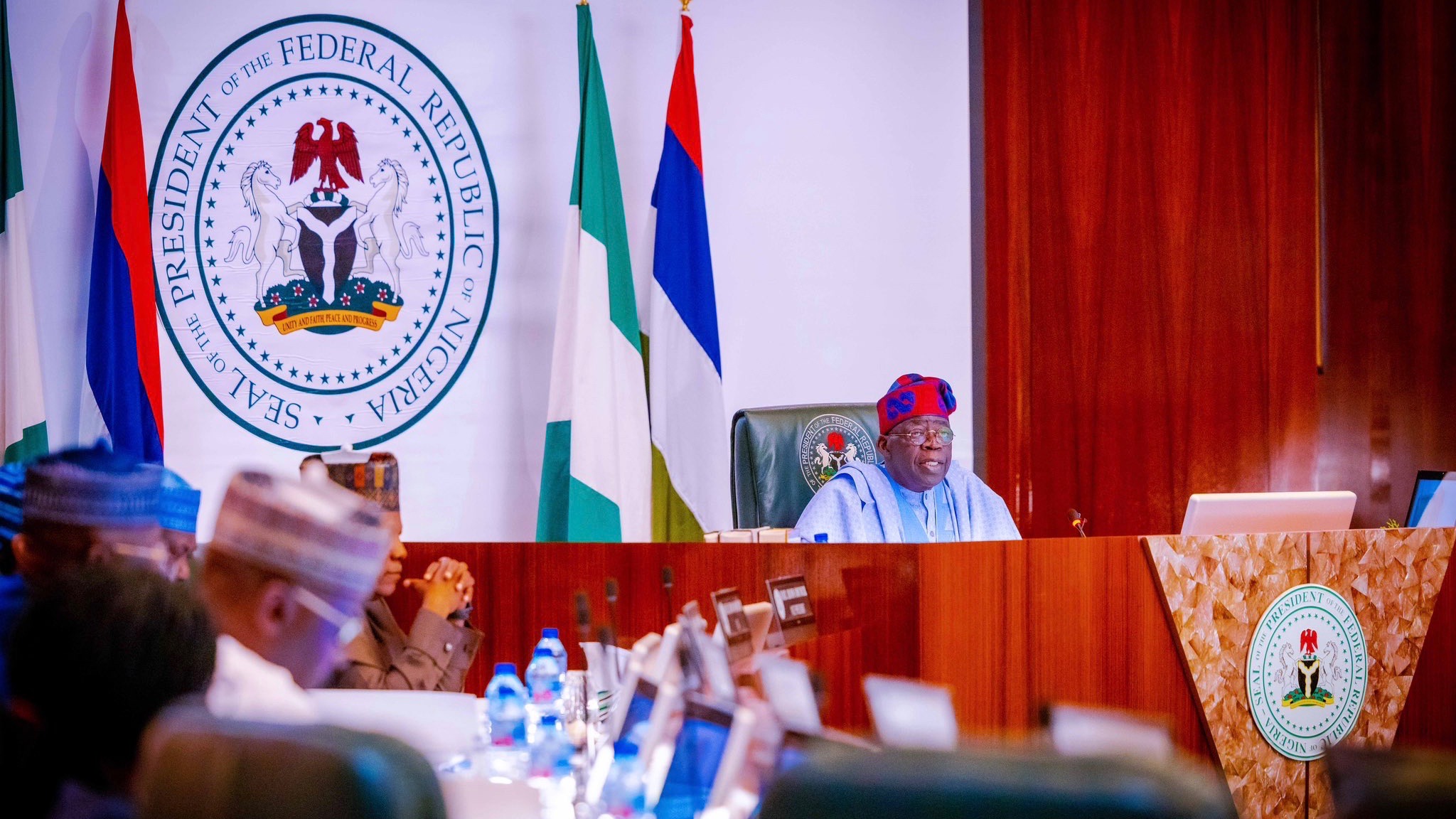
President Bola Tinubu signed the Electoral Act 2026 on February 18, ahead of the 2027 general elections.
While the law allows the use of digital tools, including the Bimodal Voter Accreditation System and an online results portal, it does not mandate electronic transmission, leaving the Independent National Electoral Commission to decide how results are transmitted.
Physical result sheets, known as Form EC8A, remain the legal basis for collation where technology fails. Observers say reliance on paper preserves a hybrid system that could slow result announcements and increase the risk of disputes, even as Nigeria’s digital infrastructure continues to improve.
“The network is there. We have coverage maps and bandwidth data across the country to make real-time transmission feasible. The repository of that information is the Nigerian Communications Commission,” the Chairman of the Association of Licensed Telecommunications Operators of Nigeria, Gbenga Adebayo, told The PUNCH.
The telecom executive said the NCC is best positioned to advise the government based on verified coverage maps and network performance data.
“So, in my view, as an operator, we have what is required to do what is needed. But it depends on what they are looking for. It depends on what the government or INEC is looking for,” he added.
The presidential and National Assembly elections are scheduled for February 20, 2027, while governorship and state Houses of Assembly polls will follow on March 6, 2027. A revised timetable may be issued in the coming weeks.
An industry executive who did not want to be named said telecom operators are not seeking special government support for the 2027 elections, noting that satellite technology can fill gaps in remote or poorly covered areas.
The source explained that some BVAS machines might not work using GSM SIM cards but could still transmit data via satellite interfaces, adding that as long as the devices could access the sky, they would be able to send results.
“Under the circumstances of the current coverage map, the current availability of solutions and technologies around the world and in the country, what the telcos have should be sufficient enough if that is what the government wants to do.”
The executive added, “The decision to deploy real-time electronic transmission rests with policymakers, not telecom operators. They cannot sit in political discussions and say it is not available.”
According to INEC, IReV had been deployed in the Edo and Ondo governorship elections, six senatorial and three federal constituency by-elections, 15 state assembly constituencies, and one councillorship constituency in the FCT.
The commission concluded that electronic results management added transparency and credibility.
Hacking concerns
While signing the amended Electoral Act 2026 into law, Tinubu commended the National Assembly for handling the process without confusion or disenfranchisement, saying that no matter how good a system was, it would ultimately be managed, promoted, and finalised by the people.
He urged Nigerians to trust the electoral process, pointing to the manual components of voting such as ballot counting and thumbprinting, while also questioning whether the country’s current broadband capacity could support real-time electronic transmission of results.
The president emphasised the need to avoid glitches, interference, or hacking during result transmission, expressing confidence that Nigeria would overcome its challenges and flourish.
The INEC position paper, however, said the remarks contradicted the commission’s earlier assessment.
It noted that INEC’s systems had passed comprehensive security tests, including ethical hacking simulations, and that the commission had successfully transmitted results in real time from densely populated cities to remote areas, islands, and conflict-affected regions such as Borno, Zamfara, Bayelsa, Edo, Bauchi, and Imo states.
The paper added that since August 2020, INEC had transmitted results from 20 states and the Federal Capital Territory, covering 27 constituencies, 84 local government areas, 925 wards, and 14,296 polling units involving nearly 10 million registered voters.
“The commission used the IReV portal to test the security of our systems if they are deployed for the electronic transmission of results. Again, our systems have passed all necessary security tests, including ‘dummy hacking’ by ethical hackers,” the commission noted.
No special intervention required
Adebayo stressed that telecom operators are not seeking any special government intervention specifically for election result transmission, noting that existing infrastructure is adequate.
“I can’t say to you that we need any special intervention for this purpose. What we have is sufficient,” he noted.
He added that current technologies and network solutions available in Nigeria and globally make real-time transmission feasible.
“Under the circumstances of the current coverage map, the current availability of solutions and technologies around the world and in the country, what we have should be sufficient enough if that is what the government wants to do,” he said.
Addressing concerns about network black spots and remote areas without terrestrial connectivity, Adebayo said satellite technology can fill coverage gaps.
“There is no way under the sun that you cannot communicate in any area by satellite, depending on the terminals and devices you have,” he said.
He explained that election devices such as the Bimodal Voter Accreditation System could be configured to work via satellite where GSM coverage is unavailable.
“You can have some BVAS machines that are not working with GSM SIM cards but are working by satellite interface. So long as they can see the sky, they will transmit data,” he said.
Adebayo said the country’s network infrastructure could be mapped into tiers to guide deployment strategies during elections.
He suggested that areas with strong mobile coverage could use standard connectivity, while remote zones could rely on hybrid GSM-satellite devices.
“You can map Tier 1 available coverage at about 80 per cent of the country and Tier 2 at about 20 per cent, where coverage is uncertain.
“If you are deploying devices, most can run on regular mobile services, while some can use special satellite interfaces,” he said.
punch.ng
FOLLOW US ON: