Connect with us

Politics

ADC constitution review targets women, youth inclusion

Published

on

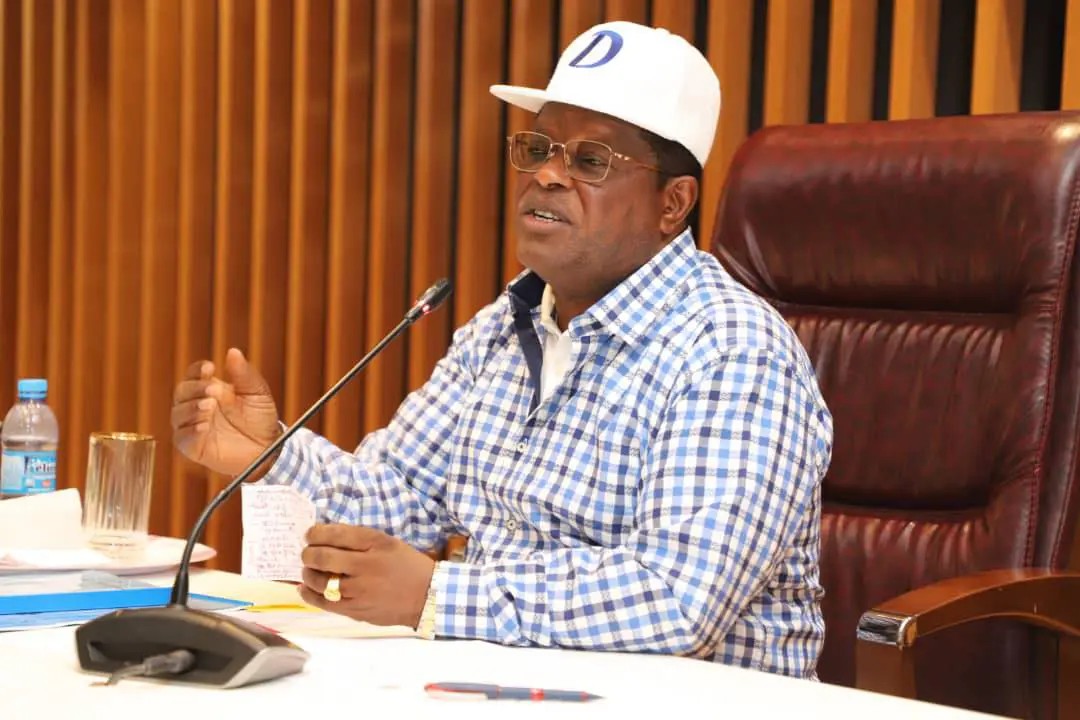
The National Chairman of the African Democratic Congress (ADC), David Mark, on Tuesday received the report of the party’s Constitution Review Committee, promising a stronger, more disciplined and united party.

Mark, represented by the party’s National Legal Adviser, Prof Oserheimen Osunbor, received the report of the Etigwe Uwa (SAN)-led committee at the ADC office in Wuse, Abuja.

The party is reviewing the constitution to enhance women, youth inclusion, technological modernisation, internal democracy and discipline, among others.

Mark formally inaugurated the 22-member committee on January 8, 2026.

The committee’s mandate is to review the party’s constitution to reflect global best practices, strengthen internal democracy, improve dispute resolution mechanisms, and promote greater transparency.

Speaking while receiving the report, Mark described the party’s constitution as the soul of its aspirations, defining its identity, values, and service to Nigerians.

He noted that the task of reviewing the constitution must reflect the realities of time, the expectations of members, and the urgent need to strengthen internal democracy, transparency, and accountability.
“I am particularly encouraged that this review process involved wide consultations across the states, zones, and critical stakeholders of our party. This inclusive approach reinforces our belief that the ADC belongs to all its members, irrespective of status or position.

“As we receive this report today, let me assure you that the National Working Committee will carefully study its recommendations with utmost seriousness.

“We shall ensure that every proposal is examined in line with our core values of fairness, justice, and equity, and in the best interest of the party and our dear nation,” he said.

See also  I’ll change Nigeria’s constitution, end corruption in one month as President – Amaechi

The national chairman added, “Let me also use this opportunity to remind us that no constitution, no matter how well crafted, can substitute for the discipline, loyalty, and commitment of members.

“The strength of any political party lies not only in its rules but in the willingness of its members to abide by them.

“At this critical juncture in our national life, Nigerians are looking up to credible alternative parties that are organised, principled, and people-oriented.

“The ADC must continue to position itself as that viable platform. A strong, clear, and forward-looking constitution is central to achieving this objective.”

He urged party members to stay united and committed, setting aside personal interests to build a party that reflects Nigerians’ aspirations.

While presenting the report, the committee chairman stated that they tackled key systemic challenges, introducing a preamble that reflects the party’s shared history, sense of nationhood, and vision for a united, prosperous, just, and transparent Nigeria with an inclusive, grassroots-based political structure.

Uwa stated, “The party motto has also been streamlined to: ‘A united and flourishing Nigeria’. This reflects our recognition that disunity remains a major national challenge and that national progress must extend beyond economic growth to all areas of life.

“Membership provisions have been restructured to incorporate digital registration. Recognising that technology evolves faster than regulation, we have proposed that the NWC and NEC be empowered to issue guidelines that bridge the gap between technological advancements and constitutional provisions.

“Nigeria is rapidly digitising. The Electoral Act now requires digital registers, and the trajectory points towards electronic voting, expanded electronic transmission, and increased reliance on data-driven tools such as opinion polling.

See also  Anambra decides: Live Updates, Results from governorship election (PHOTOS)

“In response, we have proposed the creation of the Office of the National Technology Secretary to drive the party’s technological strategy. Any party that neglects technology risks being outpaced by more agile competitors.

“We have also introduced affirmative action provisions, proposing 30 per cent representation for women and 20 per cent for youths, alongside measures to ensure inclusion of persons living with disabilities.”

He said the grassroots structures had been strengthened, building on existing frameworks such as polling unit executives that are vital for effective engagement at the community level.

Uwa added, “In addition, we have introduced provisions for virtual and hybrid meetings. Given the geographical spread of members and the cost of physical meetings, this approach proved effective during our work and will enhance efficiency going forward.

“A major reform is the streamlining of disciplinary procedures. State Disciplinary and Reconciliation Committees have been established, replacing ward- and local government-level disciplinary actions.

“These committees are designed not only to adjudicate but also to reconcile disputes where possible. Appeals will lie to the National Disciplinary and Reconciliation Committee, with further escalation to the NEC where necessary.”

He added, “This system is intended to eliminate arbitrary disciplinary actions and strengthen internal cohesion. We have also introduced a robust arbitration framework in response to evolving legal constraints on internal party litigation.

“This provides members with structured mechanisms for resolving grievances, reducing the likelihood of defections arising from unresolved disputes. Recognising that we operate in an era of disruption, we have emphasised adaptability.”

punch.ng

FOLLOW US ON:

FACEBOOK

TWITTER

PINTEREST

TIKTOK

YOUTUBE

LINKEDIN

Continue Reading
Click to comment

Leave a Reply

Your email address will not be published. Required fields are marked *

Politics

Atiku will never learn, Tinubu’s aide tackles ex-VP over zoning comments

Published

on

The Special Adviser to the President on Information and Strategy, Bayo Onanuga, has criticised former Vice President Atiku Abubakar over his comments on the North-South power rotation ahead of the 2027 election.

He said President Bola Tinubu must complete two terms in office, insisting that the South should retain the presidency till 2031.

“Since Buhari completed his eight years, Tinubu too must complete his own,” Onanuga wrote in a post on X on Thursday.

He added, “All Atiku needs to do is to bury the thought of running again, as it is still the South’s turn in the 2027 election.”

The presidential aide accused Atiku of advancing a “self-serving argument” to justify what he described as an attempt to disrupt Nigeria’s informal zoning arrangement.

“This Atiku will never learn. Once again, Abubakar Atiku has put forward a self-serving argument to justify his attempt to disrupt Nigeria’s power rotation arrangement,” he said.

Onanuga further stated, “In 2023, as a member of the PDP—a party that, like others, practices zoning—Atiku disregarded the established formula and sought to succeed a fellow northerner, who had spent eight years in office.”

“His ambition fractured the PDP, leading to his resounding defeat at the polls,” he added.

The presidential aide’s reaction followed Atiku’s interview on Prime Time on Arise TV on Wednesday, where he addressed the zoning debate in response to questions about his potential 2027 presidential bid.

During the interview, Atiku dismissed claims of a binding national agreement on power rotation.

“No, I think this is an error and a mistake to say that there is an agreement on the issue of zoning in Nigeria.

See also  APC may pick Ganduje’s successor at make-or-break NEC meeting

“Let me tell you, the only political party that has a zoning provision in its constitution is the PDP. All the rest don’t have it.

“So if anything, all the other political parties are borrowing or learning from PDP’s zoning formula,” he said.

Atiku, however, said he supports the principle of rotation.

“I agree with the principle. In fact, I will even go further. Let me tell you what happened. In 2004 during the National Political Reforms Conference under President Obasanjo, there was an argument between the late Dr. Alex Ekwueme, who proposed rotational presidency,” he said.

On the balance of power since 1999, Atiku argued that the South had held office longer than the North.

“But if we are talking about the zoning formula in the PDP, the South has governed for 18 years and the North has governed for 10. So who is in a deficit if you want to be fair?” he said.

He also said he would support a consensus candidate for the 2027 election.

“The most practical option is to have a consensus,” Atiku said, adding that he would back whoever emerges, even if it is Peter Obi or any other aspirant.

Atiku further indicated that the 2027 election would likely be his final attempt at the presidency.

Responding, Onanuga described Atiku’s position as “dubious.”

“His political arithmetic is dubious,” he said.

“He conveniently overlooks the fact that the North’s shorter tenure was due to the untimely death of President Umaru Yar’Adua, which led to President Goodluck Jonathan’s succession.

See also  INEC shortlists 14 associations for political party registration

“This accidental breach does not invalidate the power rotation arrangement between the North and the South,” he added.

punch.ng

FOLLOW US ON:

FACEBOOK

TWITTER

PINTEREST

TIKTOK

YOUTUBE

LINKEDIN

Continue Reading

Politics

ADC will go for presidential primary if consensus fails – Atiku

Published

on

Former Vice President Atiku Abubakar has said the 2027 presidential candidate of the African Democratic Congress will emerge through the consensus option.

This is just as he stated that the 2027 presidential election will mark the final chapter of his long political career, stating unequivocally that he will not seek office beyond the next election cycle.

The ex-vice president also expressed willingness to support whoever emerges as the winner of the African Democratic Congress presidential primaries later in the year.

Speaking during an interview on ARISE TV on Wednesday, Atiku said, “The first option will be to work out a consensus. If that doesn’t work out, then we will go for primary elections. But I will support anybody who emerges.”

The ADC chieftain hinted at his willingness to step aside if another candidate emerges through a consensus or electoral process within the coalition.

“I will step aside for any winner,” he said, adding when asked specifically about Peter Obi, “Of course, if he is a contender, why not?”

Responding to a question on whether he would quit the political stage after 2027, he said, “Certainly yes, the stakes are higher because I believe that will be my last outing.”

When pressed to confirm the finality of his decision, he responded firmly, “That’s incontrovertible.”

The former vice president, who has been a central figure in Nigeria’s politics for decades, acknowledged that convincing Nigerians to back his candidacy again remained the immediate task before him.

Responding to concerns that he represents the past rather than the future, Atiku argued that his experience remained relevant, saying, “I represent both the past and the future.”

See also  Court adjourns ruling in ADC deregistration suit to March 24

He added that while younger leaders have had opportunities in governance, their performance has not fully met the people’s expectations.

“We have seen various levels of leadership in the country, both young and old, and we’re experiencing them. And I still believe that our expectations of the young leadership are below what we thought,” he said.

Atiku stressed the importance of experience in leadership, drawing from his time serving under former President Olusegun Obasanjo (1999-2007).

According to him, “What I was able to learn from President Obasanjo through his experience, I couldn’t have learned it outside.”

He maintained that younger political leaders require mentorship and exposure to governance to succeed, insisting that “Young men also require experience to be able to succeed.”

During the interview, Atiku also criticised the current administration of President Bola Tinubu, describing its performance as disappointing.

“Bola has been a very bad President, to be honest with you. In the way he governs the country, whether economically or otherwise, it’s a disappointment,” he said.

He expressed concern about the state of democratic institutions, warning against the concentration of power.

“We have seen how, virtually, you know, the presidency has almost turned the various institutions that are supposed to be checks and balances, under one roof, which is quite dangerous,” he said.

The Waziri Adamawa revealed that he is a key driver of a broad political coalition ahead of the 2027 elections, noting that alliances are necessary for electoral success in Nigeria.

“I am one of the initiators of this coalition, or perhaps the leading initiator of the coalition,” he said.

See also  APC may pick Ganduje’s successor at make-or-break NEC meeting

He explained that his position was informed by historical trends.

“I studied the political history of Nigeria; the only future is a broad coalition,” he added.

Atiku added that the emerging alliance cuts across major political blocs, stating, “You have elements from APC, from PDP, from NNPP, from Labour. So that makes it a much broader coalition.”

Atiku also reaffirmed confidence in his traditional political base in Northern Nigeria, declaring, “The North still remains my major political base.”

On constitutional reforms, he advocated formalising zoning in Nigeria’s constitution to ensure fairness in power rotation.

“Even if it is the only amendment I can make, I will move towards that,” he said.

Despite his continued ambition, Atiku acknowledged that 2027 would be his last attempt at the Presidency, leaving the future to a new generation of leaders.

“That’s left to the next generation to take it on,” he noted.

His declaration sets the stage for what could be a defining and final political battle in 2027, as he seeks to secure the presidency after multiple previous attempts.

punch.ng

FOLLOW US ON:

FACEBOOK

TWITTER

PINTEREST

TIKTOK

YOUTUBE

LINKEDIN

Continue Reading

Politics

See why Jonathan may not be eligible to contest in 2027

Published

on

There have been fresh calls for former President Goodluck Jonathan to contest the 2027 presidential election amid ongoing realignments within opposition parties.

Jonathan served as Vice President to the late President Umaru Yar’Adua from 2007 until Yar’Adua’s death in May 2010, after which he was sworn in as President.

He subsequently won the 2011 presidential election but lost his re-election bid in 2015 to former President Muhammadu Buhari.

Since leaving office, Jonathan has gained international recognition for conceding defeat in 2015 and ensuring a peaceful transfer of power.

Amid the internal crisis within the Peoples Democratic Party and reported efforts by opposition figures to court him, questions have emerged over his eligibility to contest again.

However, some legal experts argue that provisions of the 1999 Constitution (as amended) may prevent him from seeking another term.

PUNCH Online reviewed relevant provisions of the Constitution that have been central to the debate.

Section 137(3) of the Constitution, introduced by the Fourth Alteration in 2017, states that “a person who was sworn-in as President to complete the term for which another person was elected as President shall not be elected to such office for more than a single term.”

However, Section 137(3) was enacted in 2017, after Jonathan had left office, raising questions about whether the provision can be applied retroactively.

A similar provision is contained in Section 182(3) of the Constitution, which applies to governors.

Section 182(3) states that “a person who was sworn-in as governor to complete the term for which another person was elected as governor shall not be elected to such office for more than a single term.”

See also  Court adjourns ruling in ADC deregistration suit to March 24

The issue has drawn renewed attention following a recent Federal High Court ruling in Akure, Ondo State, which held that Governor Lucky Aiyedatiwa would be ineligible to seek another term beyond the constitutional limit.

Aiyedatiwa, who was sworn in to complete the tenure of the late Governor Rotimi Akeredolu in December 2023, was later elected in November 2024 and inaugurated in February 2025.

In the suit filed by an APC member, Akin Egbuwalo, the court was asked to interpret constitutional provisions relating to tenure limits.

The court held that no elected executive can remain in office beyond the constitutionally permitted period, relying on the Supreme Court’s decision in Marwa v. Nyako.

The ruling has been cited by some analysts as reinforcing the argument that individuals who complete a predecessor’s tenure and subsequently win election may not exceed the constitutional limit.

However, legal opinions remain divided on whether the same interpretation applies to Jonathan, particularly given that the relevant constitutional amendment came after his tenure.

The Aiyedatiwa ruling suggests Jonathan cannot contest again since the constitutional principle is the same.

But many politicians and experts have historically contested this interpretation, and it may likely require a fresh court ruling to settle definitively.

punch.ng

FOLLOW US ON:

FACEBOOK

TWITTER

PINTEREST

TIKTOK

YOUTUBE

LINKEDIN

Continue Reading

Trending