Connect with us

News

United States Orders Embassy Staff Out Of Abuja, Flags 23 Nigerian States As Danger Zones

Published

on

The US Department of State has authorised non-emergency US government employees and their family members to leave the US Embassy in Abuja.

The Department, in an updated travel advisory issued on Wednesday cited deteriorating security situation across Nigeria.

The advisory stated that starting April 8, 2026, Americans are advised to reconsider travel to the country due to crime, terrorism, kidnapping, and civil unrest.

It classified the overall travel advisory for Nigeria as “Level 3: Reconsider Travel,” while some states are at “Level 4: Do Not Travel.”

The department also added Plateau, Jigawa, Kwara, Niger, and Taraba states to the list of “Do Not Travel” areas, bringing the total to 23 states where travel is strongly discouraged.

The advisory read, “On April 8, 2026, the Department of State authorized non-emergency U.S. government employees and U.S. government employee family members to leave U.S. Embassy Abuja due to the deteriorating security situation.

“Reconsider travel to Nigeria due to crime, terrorism, unrest, kidnapping, and inconsistent availability of health care services. Some areas have increased risk.”

Level 4 states that U.S. citizens are urged to avoid include, in the North, Borno, Jigawa, Kogi, Kwara, Niger, Plateau, Taraba, Yobe, and northern Adamawa states, due to terrorism, crime, and kidnapping.

The advisory also listed Bauchi, Gombe, Kaduna, Kano, Katsina, Sokoto, and Zamfara states, citing unrest, crime, and kidnapping.

The security situation in these states is unstable and uncertain due to civil unrest. Widespread violence between communities and armed crime, including kidnapping and roadside banditry.

See also  SEE FULL LIST: Ambassadors-designate nominated by Tinubu

“Security operations to counter these threats may occur without warning,” the advisory said.

In Southern and Southeastern Nigeria, the department urged citizens to avoid Abia, Anambra, Bayelsa, Delta, Enugu, Imo, and Rivers states (excluding Port Harcourt) due to crime, kidnapping, and unrest.

“Crime is widespread in Southern Nigeria. There is a high risk of kidnapping, violent protests, and armed gangs,” the advisory added.

The advisory noted that violent crimes, including armed robbery, carjacking, and kidnapping for ransom, are widespread and U.S. citizens are perceived as wealthy and are frequent targets.

It said terrorist attacks remain a threat across the country, including at markets, shopping centers, hotels, places of worship, and public gatherings.

It further described health services in Nigeria as limited and inconsistent, with medical facilities generally not meeting U.S. or European standards.

The State Department, however, urged U.S. citizens considering travel to Nigeria to enroll in the Smart Traveler Enrollment Program for important updates, exercise caution while traveling, avoid demonstrations and large gatherings, and establish personal safety and “proof of life” protocols.

FOLLOW US ON:

FACEBOOK

TWITTER

PINTEREST

TIKTOK

YOUTUBE

LINKEDIN

Continue Reading
Click to comment

Leave a Reply

Your email address will not be published. Required fields are marked *

News

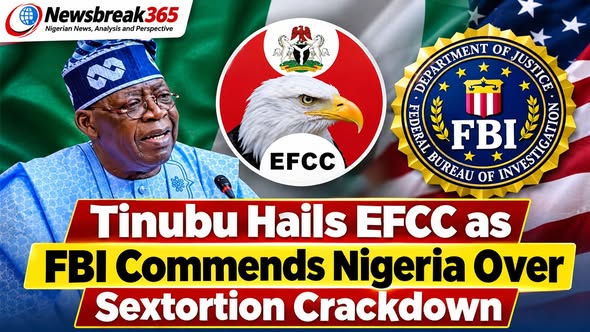
Tinubu hails EFCC as FBI commends Nigeria over sextortion crackdown

Published

on

President Bola Tinubu has commended the Economic and Financial Crimes Commission, EFCC, after the United States Federal Bureau of Investigation, FBI, praised the agency’s role in the arrest and extradition of suspects linked to international sextortion crimes against minors.

The commendation was contained in a statement issued on Saturday, October 31, 2026, and signed by Bayo Onanuga, Special Adviser to the President on Information and Strategy.

The FBI Director, Kash Patel, praised the EFCC in a letter addressed to its chairman, Ola Olukoyede, recognising the commission’s contribution to Operation Artemis, a joint investigation targeting criminal networks involved in the sexual exploitation and extortion of children.

The operation led to the arrest and extradition of two Nigerian suspects, Adebola Festus Adekunle and Mudasiru Afeez Olawale, to the United States in August 2026.

Patel said the successful outcome of the cases depended on the EFCC’s cooperation, stating: “The successful outcome of these cases would not have been possible without your assistance and dedication to international law enforcement collaboration.”

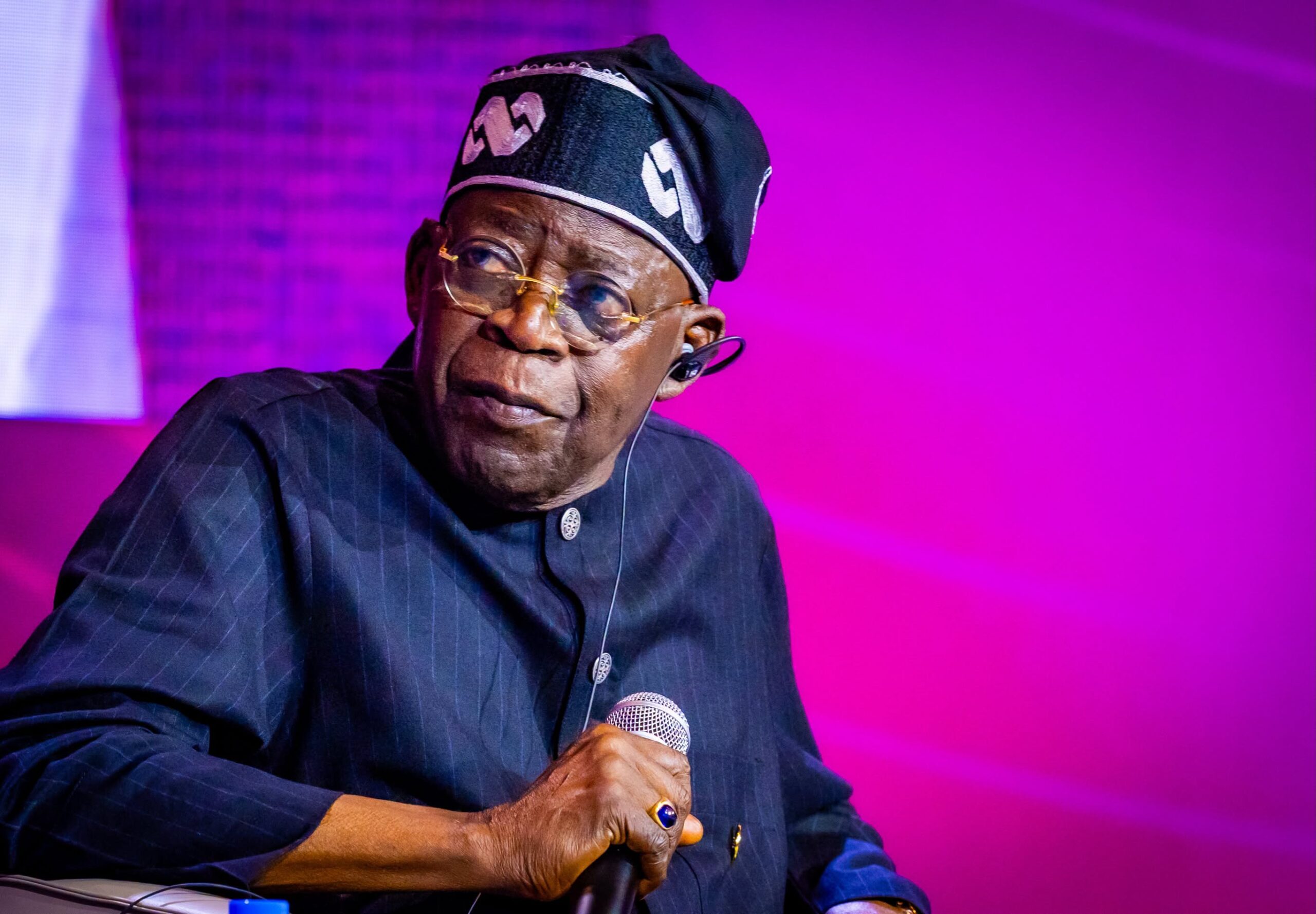
Reacting to the FBI’s commendation, Tinubu praised EFCC Chairman Ola Olukoyede and his team for their professionalism and dedication.

The President also warned against allowing Nigeria to become a safe haven for criminals who exploit innocent people.

“Nigeria must never become a haven for criminals who exploit innocent people, whether at home or abroad,” he said.

Tinubu urged the EFCC and other law enforcement agencies to sustain their efforts, assuring them of his administration’s continued support in tackling financial crimes and bringing offenders to justice.

See also  Minor offences causing prison congestion, Tunji-Ojo says

FOLLOW US ON:

FACEBOOK

WHATSAPP CHANNEL

TWITTER

PINTEREST

TIKTOK

YOUTUBE

LINKEDIN

INSTAGRAM

Continue Reading

News

Group champions rebirth of Igbo spirit, decries mass exodus from Igboland

Published

on

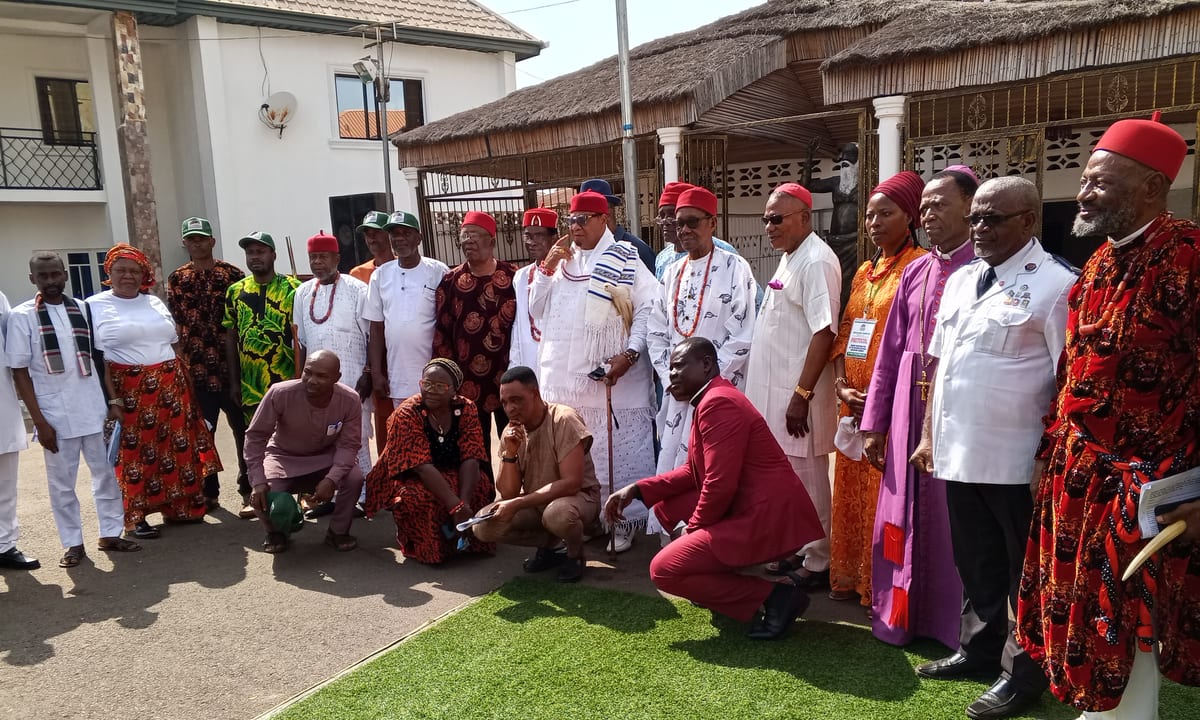
An Igbo group, Igbochukwu Foundation, has inaugurated its Interim National Executive Council, with a mandate to champion the rebirth of the Igbo spirit, which it said encompasses excellence, hard work and unity.

The convener of the group, Dr Chike Obidigbo, and elder statesman, who spoke during the inauguration ceremony at Obu Gad, Enugwu Aguleri in Anambra East Local Government Area of Anambra State at the weekend, said the group was formed to champion the unity and well-being of the Igbo people, especially in the face of what he called and existential threats.

Obidigbo said Igbo people face existential threats both from actions and policies of the Federal Government, which cause marginalization and those of Igbos too, which have led to mass exodus from the region to other regions and also out of the country.

He said: “Igbochukwu Foundation has come as new way to rekindle the Igbo spirit of excellence founded on sound moral principles and dependence on God as the great artificer.

“We have come to this inescapable conclusion that unless something drastic is done, the predicted extinction of Igbo identity would come to a reality. So, instead of sustaining the usual lamentation of marginalization and discrimination, we decided to set up this foundation as a gathering of patriotic sons and daughters to seek solutions through conversations about the fate of Igbo nation.”

Speaking about the marginalization of Igbos, Obidigbo said: “Discrimination against the Igbo, which began after Nigeria gained independence from Britain on October 1, 1960, took a different dimension after the civil war, when it transformed into a national policy.

See also  Eight buildings collapse as flood takes over Borno streets

“The discrimination faced by Igbo, combined with divergent post-independence interests among the major ethnic groups, culminated in the Nigerian Civil War, which pitched the rest of Nigeria against the Igbo ethnic group. But, instead of riding on the lessons of the civil war, Ndigbo decided to recoil from their cultural identity in the rush to embrace alien cultures and practices, which were aggravated by mass exodus from Igbo heartland.

“Therefore, Igbochukwu Foundation is coming at the right time to help in reversing the negative socio-cultural trends, while serving as the platform for value re-orientation and thought leadership on Igbo affairs.”

The highpoint of the gathering was the inauguration of the Interim National Executive Council, with His Grace, Most Rev. Dr. R. C. Opoko, JP as President General.

Opoko in his acceptance speech outlined the vision of the foundation, saying it is to peacefully and diligently pursue the cause of Ndigbo, whose way of life and culture are rooted in the principles and dictates of the Supreme God, also known as Chukwu Okike Abiama.

FOLLOW US ON:

FACEBOOK

WHATSAPP CHANNEL

TWITTER

PINTEREST

TIKTOK

YOUTUBE

LINKEDIN

INSTAGRAM

Continue Reading

News

US court rejects bid to obtain evidence from Tinubu, DCI group in FOIA case

Published

on

A United States federal court has rejected Aaron Greenspan’s request to obtain evidence from President Bola Tinubu and DCI Group in an ongoing Freedom of Information Act, FOIA, case.

The US District Court for the District of Columbia ruled on October 30, 2026, that Greenspan’s proposed discovery over alleged cyberattacks on his website was not sufficiently relevant to the FOIA dispute involving the Federal Bureau of Investigation, FBI, and the Drug Enforcement Administration, DEA.

The court also rejected a request by Karl Von Batten, who is not a party to the case, to file an amicus curiae brief.

It equally denied Greenspan’s request for judicial notice and his motion for summary judgment.

Reacting to the ruling, attorney Christopher W. Carmichael said the decision made clear that the FOIA case could not be used to pursue issues outside the legal questions before the court.

“The Court’s decision makes clear that this Freedom of Information Act proceeding cannot be used to pursue discovery unrelated to the legal questions before it,” Carmichael said.

Attorney Oluwole Afolabi also confirmed that the court had denied Greenspan’s motion for summary judgment and rejected the request to introduce an amicus brief.

The underlying FOIA litigation involving the FBI and DEA remains ongoing.

FOLLOW US ON:

FACEBOOK

WHATSAPP CHANNEL

TWITTER

PINTEREST

TIKTOK

YOUTUBE

LINKEDIN

INSTAGRAM

See also  Eight buildings collapse as flood takes over Borno streets
Continue Reading

Trending