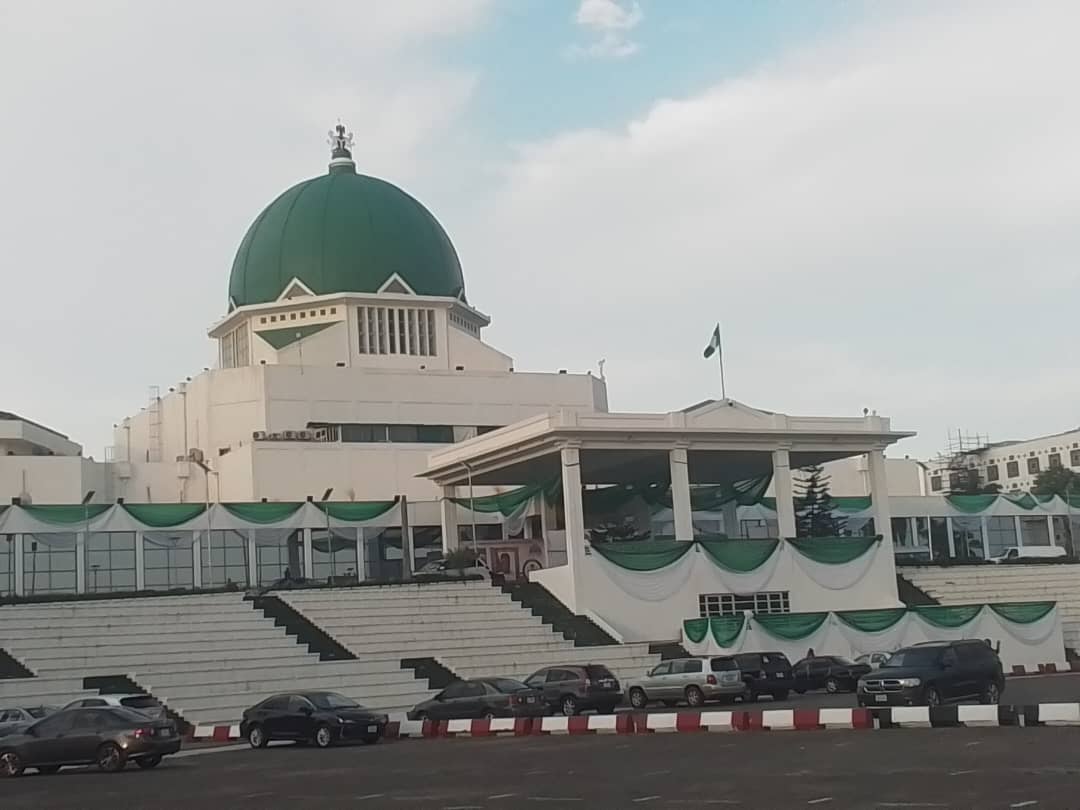
No fewer than 10 state governors and ex-governors are actively working to replace incumbent senators ahead of the 2027 general elections, in a sweeping political realignment reshaping Nigeria’s legislative landscape.
The sitting governors, whose tenure will expire by May 2027, are leveraging their grip on the party structures in their states to secure Senate tickets largely through “consensus” arrangements.
At least 12 of the 36 incumbent governors are already serving their second and final terms in office. Of that number, 10 will complete their constitutionally mandated eight years on May 29, 2027, setting the stage for a high-stakes political transition that is already unsettling party structures nationwide.
Eight of the affected governors are members of the ruling All Progressives Congress. Seyi Makinde of Oyo State belongs to the opposition Peoples Democratic Party, while Bala Muhammed of Bauchi is affiliated with the Allied Peoples Movement.
Those completing their tenure in 2027 include AbdulRahman AbdulRazaq (Kwara), Abdullahi Sule (Nasarawa), Ahmadu Fintiri (Adamawa), Babagana Zulum (Borno), Muhammadu Yahaya (Gombe), Mai Mala Buni (Yobe), Babajide Sanwo-Olu (Lagos), and Dapo Abiodun (Ogun), alongside Makinde and Bala Mohammed.
Although Governors Douye Diri of Bayelsa and Hope Uzodimma of Imo will also finish their second terms, their exit dates fall in January and February 2028, respectively, due to off-cycle elections. Yet, their longer timelines have not excluded them from early succession and Senate calculations.
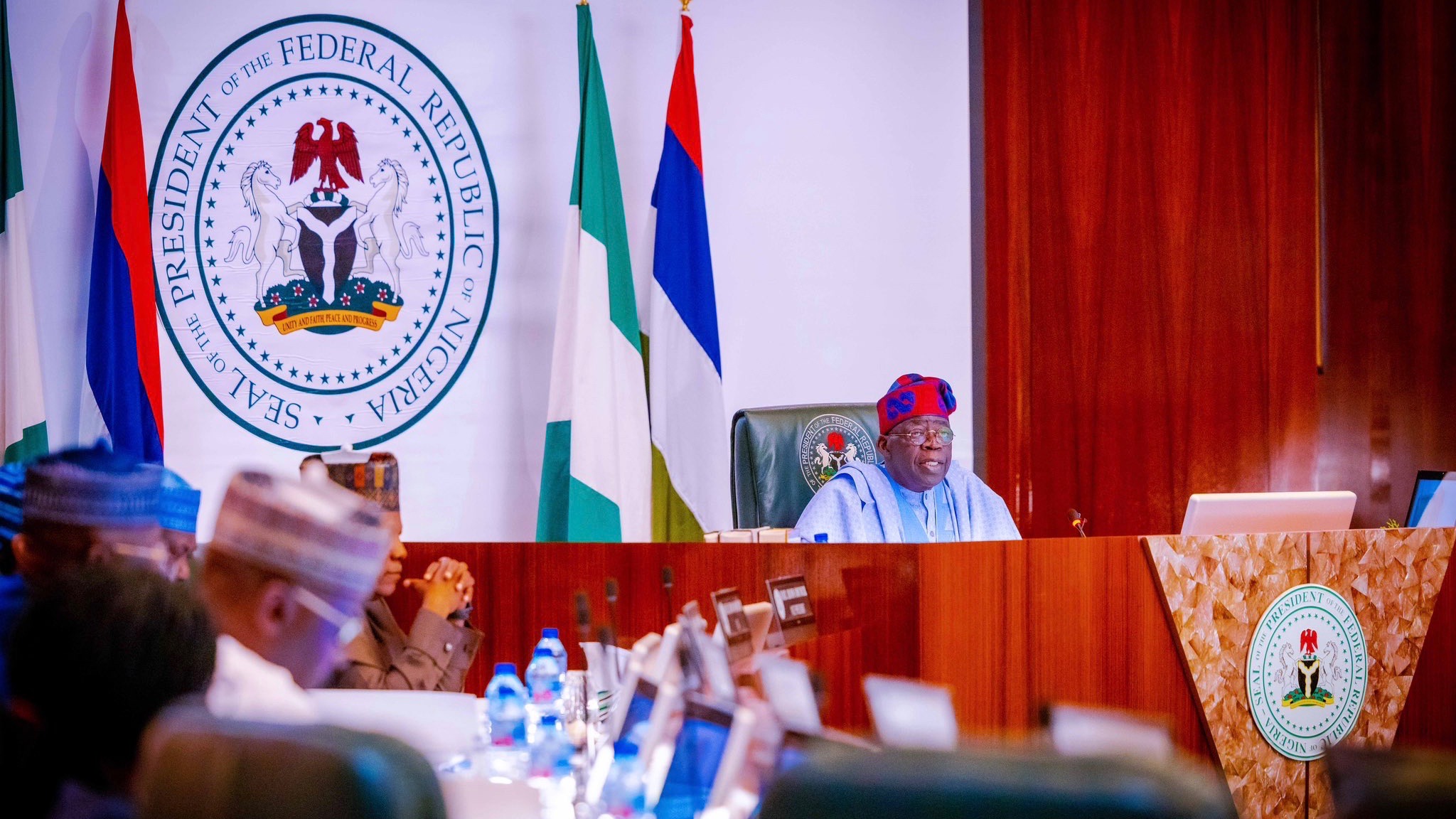
Last month, President Bola Tinubu, during a meeting with the leadership of the National Assembly, rebuffed lobbying efforts by the lawmakers to secure automatic return tickets for the ruling party’s legislators ahead of the 2027 general elections. Instead, he reaffirmed the authority of state governors over the selection of candidates in their respective states.
Tinubu had earlier suggested that he would “do everything within the party’s power” to ensure the return of serving legislators, a promise that raised expectations in the National Assembly.
Multiple senior National Assembly sources familiar with the meeting said the senators had gone to the Villa specifically to press for Tinubu’s assurances.
An insider said, “The meeting was to plead for automatic tickets for senators, but President Tinubu insisted that the governor of each state has influence over candidates.
“They made a case for continuity and stability and argued for automatic tickets, but the President was very clear in his response.
“He told them plainly that governors were the leaders of the party in their states and must have a say on who gets the ticket.”
Less than 24 hours later, President Tinubu convened a second meeting, this time with APC governors.
Present were Prof. Babagana Zulum of Borno State, Hope Uzodimma of Imo State, Inuwa Yahaya of Gombe State, Hyacinth Alia of Benue State, Biodun Oyebanji of Ekiti State, Peter Mbah of Enugu State, and AbdulRahman AbdulRazaq of Kwara State, among others.
Niger State Governor, Mohammed Bago, who spoke to State House correspondents, revealed that Tinubu had formally empowered governors to drive the primaries process.
Bago said, “We came to thank the President for his magnanimity and his support to the governors and for our party, the APC.
“He gave us a matching order on what to do for him. He has delegated and ceded his executive power to the governors to conduct primaries in accordance with the Electoral Act, either through consensus or direct primaries. So, he has reiterated his support for our decision, and he has given us a go-ahead.”
Kwara State Governor AbdulRahman AbdulRazaq confirmed the development, saying, “The timetable for the primaries has been released. We’ve discussed the process moving forward so that there will be free and fair elections, no rancour, at the end of the process, so the party comes out stronger, stronger than ever, heading towards the election.”
Investigations by our correspondents in Yobe, Nasarawa, Adamawa, Ogun, Gombe, Bauchi, Kwara, Imo, among others, revealed that a clear pattern has emerged as party stakeholders endorse the governors or their anointed candidates as sole candidates while rivals are pressured or compelled to step aside, and primaries are either avoided or rendered symbolic.
In many of the affected states, incumbent senators are either being forced into silence, compelled to withdraw, or locked out entirely.
In Yobe State, the incumbent senator representing Yobe East senatorial district, Musa Mustapha, formally stepped aside to back Governor Buni after a high-level stakeholders’ meeting in Damaturu.
Mustapha also stepped down from the APC governorship race in the state, pledging full support for Buni and endorsing the party leadership’s direction ahead of the 2027 elections.
His withdrawal means that only one sitting senator is affected by the governor’s bid for a senatorial ticket, and there is no indication he plans to contest the seat on another political platform.
The senator announced his decision in a statement following a stakeholders’ meeting held on April 23, 2026, at the Government House in Damaturu. The meeting, convened under the auspices of the Yobe APC Critical Stakeholders’ Forum, was led by Governor Buni and the Minister of Police Affairs, Ibrahim Gaidam.
According to Mustapha, party stakeholders collectively resolved to support any candidate presented by the leadership.
He said, “During our meeting, we unanimously agreed to support whoever our leaders present as their preferred governorship candidate.”
Mustapha noted that his decision to step down was guided by “integrity and responsibility,” expressing confidence in the judgment of the party’s leadership.
“In the spirit of integrity and responsibility, I hereby formally withdraw from the contest for the APC senatorial ticket,” he stated.
The lawmaker further clarified that he would not seek the senatorial ticket (in another party), declaring instead his support for Buni to contest the Yobe East Senatorial seat.
“Additionally, to make it explicitly clear, I am not contesting for the senatorial ticket. Rather, I will fully support our leader, His Excellency Governor Mai Mala Buni, to contest the senatorial seat,” Mustapha added.
He expressed gratitude to Buni and Gaidam for the opportunities he had received in public service, highlighting his progression from Executive Secretary of the Yobe State Scholarship Board to commissioner and eventually, senator.
The senator directed his supporters to shut down or repurpose all social media platforms promoting his ambition.
“I hereby direct you to close down all social media platforms registered in my name or rename them and use them to promote all APC candidates in Yobe State and beyond,” he said.
He also urged individuals campaigning on his behalf to desist immediately, emphasising that the party’s decision is final.
In Gombe, the former state governor and Senator representing Gombe Central, Danjuma Goje, has lost his bid to return to the Senate for a fifth term. This follows a zoning arrangement widely believed to favour a candidate aligned with Governor Yahaya.
The beneficiary of the arrangement is retired Deputy Commissioner of Police, Mohammed Ahmed, from Yamaltu-Deba.
The decision was reached following a stakeholders’ call for the senatorial seat to be zoned to Yamaltu-Deba Local Government Area, one of the constituencies that make up Gombe Central. The decision was finalised on Sunday. Goje hails from Akko Local Government Area.
Reacting to the outcome of the consensus arrangement, Saidu Kumo, an aide to the senator, faulted the process, stressing the need for strict adherence to due process.
“This method (consensus arrangement) must be strictly adhered to to ensure legality and transparency in the electoral process,” he said.
He further noted that several aspirants had already purchased their Expression of Interest and Nomination Forms, but were excluded from the consensus meeting held at the Government House.
Goje’s loss was partly attributed to his political rift with Governor Yahaya, which dates back to 2020, during the governor’s first term in office.
The disagreement peaked in the lead-up to the 2023 elections when Goje distanced himself from Yahaya’s re-election campaign. It was also alleged that the senator worked against the party’s interests.
At an emergency meeting held in Gombe, Prof Mustapha Yahaya of the Federal University, Kashere, emphasised that democracy must reflect the will of the people, arguing that Goje’s experience makes him best suited to continue in office.
“Democracy is fundamentally anchored on the will of the people, credible representation, and proven leadership. The Constitution of the Federal Republic of Nigeria does not restrict legislative continuity, thereby allowing the electorate to retain leaders who have demonstrated competence and consistent performance,” he said.
He added that Goje’s years in public service have translated into tangible development, effective advocacy, and visible impact across the state.
In Imo state, the leadership of the APC in the state named Governor Uzodinma as the consensus candidate for the Imo west senatorial seat, though the incumbent Senator Osita Izunaso wished to return to the red chambers.
Last Saturday, leaders and stakeholders of the APC from the Orlu Zone (Imo West), led by the Imo State APC Chairman, Chief Austin Onyedebelu, purchased the 2027 senatorial nomination form for the governor.
According to them, they want the governor to represent them in the 11th National Assembly. Uzodimma is said to be eyeing the President of the Senate.
Onyedebelu, who presented the forms to Uzodimma’s Chief of Staff, Chief Nnamdi Anyaehie, encouraged them to mount pressure on the governor to ‘’accept the plea of Orlu people by filling the forms so that it can be submitted before the deadline of 5th May, 2026.’’
“My dear people of Orlu zone, I welcome you to the party secretariat, and I want to inform you that I have, as directed and sponsored by you, purchased the Expression of Interest and Nomination Forms for our governor, Distinguished Senator Hope Uzodimma, CON, to vie for the Senatorial election on behalf of all well-meaning Orlu people,” he said.
Already, the state chapter of the APC has advised all aspirants for the Orlu senatorial district not to contest against Uzodimma, affirming that he is the consensus candidate.
On his part, former Governor Rochas Okorocha has also purchased his nomination form in a bid to return to the Senate.
Darlington Ibekwe, one of Okorocha’s trusted aides, announced the move on his personal Facebook handle.
Ibekwe said, “Former Imo State Governor, Senator Rochas Okorocha, has purchased his nomination form to contest the Orlu zone senate with Imo State Governor, Hope Uzodimma. The political atmosphere is tense as Okorocha is set to battle Uzodimma in the APC primaries.”
Izunaso could not be reached for comment. His media aide, David Nwaenyi, said he was busy with a motion of national importance and will revert shortly.
“I have a motion of urgent national importance I’m working on. I would like to give you an informed and detailed response – if you would like to get it later today,” he said, but he could not be reached later for comments.
Meanwhile, the Orlu Political Consultative Assembly has declared Uzodinma the sole candidate for Imo West in what it described as a “total, unanimous, and irrevocable decision.’’ Its National President, Rex Anunobi, said the move consolidated earlier endorsements by party leaders across the 12 local government areas.
In Ogun State, the consensus arrangement has broken down into an open conflict.
Governor Dapo Abiodun’s declaration for the Ogun East senatorial seat has put him on a collision course with incumbent Senator Gbenga Daniel.
Abiodun made his intention clear during a caucus meeting, promising the district the ‘’best representation ever.’’
“I will offer Ogun East the best representation ever in the history of the Red Chamber. I will not be a back bencher… I will offer good representation to the good people of Ogun East, so help me God.”
Following his declaration, he was endorsed by leaders of the caucus. The endorsement led to an open rift with Daniel, who declared the endorsement null and void.
In Adamawa state, Governor Fintiri was declared the consensus candidate for the Adamawa North senatorial seat.
The incumbent lawmaker representing Adamawa North Senatorial District at the 10th National Assembly, Rev Amos Yohanna, reportedly halted his re-election plans and purchased the APC nomination and expression of interest forms for the governor.
Describing the gesture as a deliberate sacrifice made in the overall interest of the zone, Yohanna said. “As a student of Fintiri’s politics, I believe this is the right time to allow experience, excellence and an outstanding track record to take Adamawa North to greater heights. My decision is borne out of love for him and our people.”
In Nasarawa, Governor Sule was declared the consensus candidate for the Nasarawa North senatorial district. His nomination form was submitted on Monday.
He had openly acknowledged pressures from certain quarters mandating him to run for the Senate seat.
Though the Borno State governor has not publicly declared his intention to run for the Senate seat, the consensus arrangements in the state were said to have been concluded.
The Senator representing Borno Central Senatorial District, Kaka Lawan, will retain his seat, after being pressured to withdraw from the governorship race and support his rival, Mustapha Gubio, the APC consensus candidate anointed by the state governor.
Sources familiar with the resolution said it took the intervention of the Senator’s parent and Vice President, Kashim Shettima, to get Lawan to agree with the decision.
In a move to fulfil his ambition, Kwara State Governor AbdulRazaq has picked up the APC nomination form for the Kwara Central Senatorial seat.
A senior aide to the governor confirmed the development to The PUNCH in Ilorin on Monday.
Findings by The PUNCH indicate that AbdulRazaq reportedly purchased the form last week and may emerge as the party’s consensus candidate, as no other aspirant has so far obtained the APC senatorial form for Kwara Central.
The senator representing Kwara Central, Senator Salihu Mustapha, is reportedly interested in contesting for the governorship seat.
However, two governorship aspirants, Lola Ashiru from Kwara South and Sadiq Suleiman Umar from Kwara North, have also reportedly obtained the party’s forms for senatorial contests.
In Delta State, former governor Ifeanyi Okowa is being positioned to replace incumbent Senator Ned Nwoko. Okowa, the Peoples Democratic Party Vice Presidential candidate during the 2023 general elections, recently defected to the APC.
The declaration by the former governor had set him on a collision course with the current senator representing the district, Nwoko, also of the APC. Okowa is believed to have the backing of the state governor.
The ex-governor announced his senatorial ambition while addressing a delegation of political leaders from the Delta North Senatorial District, popularly known as Anioma, led by the Deputy Governor, Monday Onyeme, who visited him.
The high-powered delegation comprised former and serving members of the National Assembly, senior government officials, and influential political stakeholders drawn from the nine local government areas of the Delta North senatorial district.
No fewer than 50 political leaders from across the nine local government areas of the senatorial district in attendance had, before the visit, met at the deputy governor’s lodge, where they deliberated on the political future of the district and resolved to present a unified appeal to Okowa to contest in 2027.
The delegation, comprising Chief Chris Agbobu, a former minister from Aniocha/Oshimili Federal Constituency, expressed dissatisfaction with what they described as “the declining quality of representation currently being experienced at the Senate.”
They argued that the senatorial district required a more experienced and influential voice capable of attracting federal presence and effectively articulating the interests of the Anioma people at the national level.
According to the delegation, Okowa remained “a seasoned administrator, consensus builder, and bridge between diverse political interests” whose experience as governor and former senator places him in a strong position to deliver effective representation and restore the district’s influence at the federal level.
A formal motion calling on Okowa to contest the Senate seat was moved by former Minority Leader of the House of Representatives, Ndudi Elumelu, and seconded by a serving member of the House, Nnamdi Ezechi. It received unanimous approval from the gathering.
Responding, Okowa noted that he was taken by surprise by the visit but “deeply moved” by the show of unity and confidence reposed in him by the leaders and the people of Anioma.
The former governor stated that, given the calibre of personalities involved and the collective nature of the appeal, he could not ignore the call.
He said, “I feel very loved and honoured by this show of support. For the calibre of persons here and the unity of purpose demonstrated, I have no choice but to accept.
“As I accept your request, this is not about me alone. It is a collective project. We will run it together and, by the grace of God, we will win together. I will not disappoint you.”
Also, a former Kogi State Governor, Yahaya Bello, has picked the APC nomination form for the Kogi Central senatorial contest.
Bello reportedly received the forms on Saturday and has emerged as the party’s consensus candidate for the seat.
Bello previously served two terms as governor of Kogi State before handing over to the current governor, Usman Ododo.
He is expected to face the incumbent senator, Natasha Akpoti-Uduaghan, who is of the Peoples Democratic Party.
Meanwhile, former Cross River governor, Ben Ayade, on Monday disclosed that he was asked to drop his Senate ambition after a high-level consultation.
Lamenting his exclusion from the race in a statement, Ayade stated, “Mr President wants me to withhold my Senate ambition. I yield to his request even as I pour tears of ill-treatment and agony.”
Ayade warned that political rivals were benefiting from the directive, adding, “I trust that Mr President may not be aware that those who turned our churches against us are the beneficiaries of his instruction.”
He also highlighted his contributions to the party, stating, “I was the first APC Governor in the whole of South-South Nigeria that built the new APC that we enjoy today.”
Despite these efforts, Ayade claimed he has been sidelined for over three years without any federal appointment.
He added that he is currently running a free transportation scheme to support the President’s expected 2027 re-election bid.