Connect with us

Business

Fuel price cut imminent as oil falls

Published

on

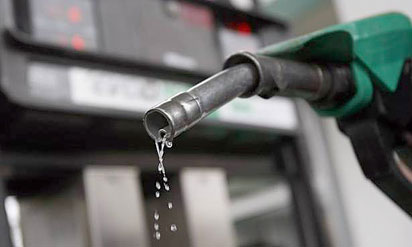
Fuel prices may drop in the coming days if oil prices continue to plunge following ongoing peace talks between the United States and Iran. This came as oil prices fell from $111 last week to $97 on Monday morning.

The PUNCH had earlier predicted that a major drop in oil prices might be imminent if the United States and Iran reached an agreement that would reopen the Strait of Hormuz. As of Sunday, Brent crude hovered between $103 and $105 amid positive signals that the warring nations were ready to end the months-long conflict.

As predicted, prices dropped sharply to $97.48 in the early hours of Monday, fuelling speculation over a possible reduction in fuel prices if the Strait of Hormuz is eventually reopened.

Recall that crude oil, the major input for fuel production, rose from below $70 since the US-Iran war began on February 28. In about three months of the conflict, crude traded above $100 and climbed beyond $115 at some points, leading to a sharp rise in fuel prices globally.

In Nigeria, petrol prices increased from N830 per litre to the current N1,300. Diesel and aviation fuel prices also rose sharply, with airline operators threatening to suspend operations.

As crude prices continued their downward trend in recent days, speculation intensified that the Dangote Petroleum Refinery may consider reducing petrol prices.

There were reports that the US and Iran had agreed in principle to a deal aimed at winding down the conflict in the Middle East by reopening the Strait of Hormuz.

See also  Stop exporting crude, OPEC tells Nigerian producers

US President Donald Trump had on Saturday said the Strait of Hormuz would be reopened as part of a proposed agreement involving the United States, Iran, and several Middle Eastern countries amid efforts to end the ongoing Iran conflict.

Trump disclosed this in a post on the Truth Social platform after a series of calls with leaders of Saudi Arabia, the United Arab Emirates, Qatar, Pakistan, Türkiye, Egypt, Jordan, Bahrain, and Israel.

According to him, an agreement had been negotiated, subject to finalisation between the United States, Iran, and several other countries. The American leader added that final aspects and details of the deal were still being discussed and would be announced shortly.

Speaking on the strategic waterway at the centre of the conflict, Trump declared that the Strait of Hormuz, through which 20 per cent of global oil passes, would be reopened.

On Sunday, Trump said talks with Iran were “proceeding in an orderly and constructive manner”, adding that he had instructed his representatives not to “rush” into a deal because time was on their side.

Meanwhile, Iran confirmed on Monday that talks with the US were progressing, though it said signing an agreement was not imminent. According to the BBC, Iran confirmed that some progress had been made in talks with the US, but a deal “is not imminent”.

Foreign ministry spokesman Esmail Baqai made the remarks after US Secretary of State Marco Rubio said an agreement could possibly be reached on Monday.

“It is correct to say that we have reached a conclusion on a large portion of the issues under discussion. But to say that this means the signing of an agreement is imminent, no one can make such a claim,” Baqai said in Tehran on Monday.

See also  Ikeja Electric reveals why Lagos is experiencing persistent power interruptions

The memorandum of understanding between the US and Iran reportedly involves a 60-day ceasefire extension, reopening the Strait of Hormuz, and a framework for further negotiations over Iran’s nuclear programme.

punch.ng

FOLLOW US ON:

FACEBOOK

TWITTER

PINTEREST

TIKTOK

YOUTUBE

LINKEDIN

INSTAGRAM

Continue Reading
Click to comment

Leave a Reply

Your email address will not be published. Required fields are marked *

Business

Remi Tinubu defends her akara/roasted corn business idea, says petty traders given N50, 000 empowerment appreciate it

Published

on

The First Lady of Nigeria, Senator Oluremi Tinubu, has defended her recent remarks urging low-income citizens to engage in micro-businesses, such as frying akara, roasting corn, or producing kuli-kuli.

The initial comments, delivered to journalists in Abuja on Thursday, June 25, sparked widespread public backlash. Critics argued that promoting low-yield, traditional petty trading is regressive at a time when global economies are transitioning toward technology-driven industries.

Addressing the controversy during an official event in Jigawa State on Monday, June 29, the First Lady dismissed the criticisms, emphasizing that the federal government remains committed to supporting grassroots commerce. She noted that national empowerment initiatives regularly target small-scale vendors, including those selling tomatoes, pepper, vegetables, and roasted plantains.

To support her stance, Tinubu disclosed that the government has distributed ₦100 million in financial grants so far. Under this scheme, approximately 2,000 petty traders have received ₦50,000 each to recapitalize and expand their businesses.

“ I’ve told Her Excellency that we’ve already given, donated about 100 million to her to use to empower 2,000 petty traders. And I know they’ve been talking that I said akara. It’s not only akara, we also have tomato sellers. We have boole, and those also selling pepper, selling vegetables for us in the market.

We will continue to empower them and add to their resources so that their trade can really be sustainable. So that is what we are doing,” she said.

She maintained that the criticism trailing her earlier remarks would not deter the government from its empowerment programmes.

See also  Nigeria’s foreign debt to hit $72.6bn after 2027 polls – IMF

“I know all those people who are affected; they do appreciate it. And we are not intimidated by all those wrong reports. But we are forging ahead and making sure that our people, you know, are well cared for” she said

Mrs Tinubu prayed that Nigerian youths explore other opportunities around them to empower themselves economically.

“Nigeria is a really blessed country. I’ve been travelling, and I pray that our young people will see the resources we have in this nation. We have not even gone to explore yet because we are thinking it’s oil. But there are so many things” she said

FOLLOW US ON:

FACEBOOK

TWITTER

PINTEREST

TIKTOK

YOUTUBE

LINKEDIN

INSTAGRAM

Continue Reading

Business

‘It’s not only akara,’ Remi Tinubu defends comments, says FG also supports tomato, pepper sellers

Published

on

The First Lady, Senator Oluremi Tinubu, has defended her earlier comments on small-scale businesses, saying the Federal Government’s empowerment programmes extend beyond akara sellers to include traders in tomatoes, pepper, vegetables and roasted plantain.

Tinubu spoke on Monday during the inauguration of the newly constructed Abubakar Maje Haruna Hall at the Emir of Hadejia’s Palace in Jigawa State, according to a video aired by TVC News.

Her remarks come days after comments she made about akara, roasted corn and kuli-kuli businesses sparked widespread backlash on social media, with many Nigerians accusing her of trivialising the country’s economic hardship.

Addressing the criticism directly, the First Lady said the Federal Government had donated N100m to the Jigawa State Government to empower 2,000 petty traders in the state.

“Because of the atmosphere, what is going on, I’ve told Her Excellency that we’ve already given, donated about 100 million to her to use to empower 2,000 petty traders.

“And I know they’ve been talking that I said akara. It’s not only akara, we also have tomato sellers. We have boole, and those also selling pepper, selling vegetables for us in the market.

“We will continue to empower them and add to their resources so that their trade can really be sustainable. So that is what we are doing,” she said.

Tinubu said the beneficiaries would each receive N50,000 to recapitalise their businesses.

“We continue to carry the capacity. We have the amount of 2,000 women who are already in small businesses. They will recapitalise their businesses with the N50,000 each. We’ve already given the N100 million,” she added.

See also  FG scraps revenue collection deductions, pledges fiscal transparency

She maintained that the criticism trailing her earlier remarks would not deter the government from its empowerment programmes.

“I know all those people who are affected, they do appreciate it. And we are not intimidated by all those wrong reports. But we are forging ahead and making sure that our people, you know, are well cared for,” Mrs Tinubu said.

The First Lady also spoke about Nigeria’s untapped resources, citing an orange orchard she visited in Benue State, and expressed hope that young Nigerians would explore opportunities beyond oil.

“Nigeria is a really blessed country. I’ve been travelling, and I pray that our young people will see the resources we have in this nation. We have not even gone to explore yet because we are thinking it’s oil. But there are so many things,” she said.

punch.ng

FOLLOW US ON:

FACEBOOK

TWITTER

PINTEREST

TIKTOK

YOUTUBE

LINKEDIN

Continue Reading

Business

Local refineries import 2m barrels Libyan crude oil amid domestic shortage

Published

on

Nigeria imported an average of two million barrels of crude oil from Libya, the first of such imports from the North African country ever. Dangote Petroleum Refinery is the major importer of crude into Nigeria.

The import comes amid the high export of crude locally produced in Nigeria to other countries, leaving local refineries with no option but to seek feedstock elsewhere.

Libya Review, a local media outlet in the country, reports that Libya’s crude oil exports reached a new milestone after Nigeria imported Libyan oil for the first time on record, highlighting the growing role of Libyan supplies in regional energy markets amid ongoing disruptions to global trade flows.

According to data published by the Energy Research Unit, Nigeria imported around 64,500 barrels per day of Libyan crude in May 2026, equivalent to approximately two million barrels for the month.  “The shipment marks the first recorded Nigerian import of Libyan crude in available historical data dating back to 2013,” the report said.

Recall that there were reports in 2024 that the Dangote Petroleum Refinery was in talks with Libya for the purchase of crude oil. However, the Libyan oil corporation denied negotiating or entering into talks regarding the crude oil supply to any Nigerian refinery.

The statement, written in Arabic in 2024, translates, “The National Oil Corporation denies that it has negotiated or entered into any talks regarding the supply of crude oil to an oil refinery in Nigeria.”

The National Oil Corporation also confirmed then that it was committed to its contracts with its international partners and committed to the legal mechanism for selling Libyan oil raw materials and that it did not work with an immediate sales mechanism.

See also  FG sets Dec 20 deadline to pay contractors

“In addition, the process of determining raw material prices is carried out through a committee of experts and is approved by the corporation and the Ministry of Oil and Gas,” Libya said in July 2024.

But it appears the agreement has finally been concluded with the supply of 2 million barrels to the Dangote refinery in just one month. By ramping up capacity to 700,000 barrels per day and eyeing 1.4 million barrels per day in 2028, the Dangote refinery is increasingly in need of feedstock from multiple sources.

In 2026, the refinery has already imported cargoes of Angola’s Cabinda and Saxi Batuque crudes, Ghana’s Jubilee crude and, for the first time, Libyan and Guyanese supplies, all of the light sweet or medium sweet variety, according to S&P Global Energy data.

In Nigeria, local refiners have consistently complained of insufficient crude supply due to higher exports. Nigeria exported an estimated 148.9 million barrels of crude oil valued at about N20.22tn in the first five months of 2026, showcasing the scale of the country’s oil export despite persistent concerns over the domestic crude supply obligation.

The crude barrels were exported by both international and indigenous oil companies, including the Nigerian National Petroleum Company Limited.

The figures obtained from the Central Bank of Nigeria indicate that the total volume of crude oil produced by the country during the five-month review period in 2026 was 216.85 million barrels, out of which about 149 million barrels were exported.

Overall, Nigeria exported about 68.7 per cent of the crude oil it produced during the five months, leaving roughly 67.95 million barrels available for domestic refining, storage, operational use, and inventory adjustments.

See also  States to earn over N4tn yearly from VAT reforms

The import of crude from Libya is coming as international oil markets continue to adjust to supply disruptions linked to the US-Iran conflict and the resulting challenges affecting energy shipments through the Gulf region. These conditions, it was learnt, have allowed Libyan crude to expand its presence in both African and European markets.

Libya is also strengthening energy ties with neighbouring countries while also competing with Nigeria for major oil investors.

It was gathered that Egypt imported approximately 33,000 barrels per day of Libyan crude in April 2026, following imports of 57,000 barrels per day in February. The purchases marked Egypt’s first imports of Libyan crude since 2019 and form part of efforts to secure alternative supplies following agreements to import more than one million barrels per month from Libya.

Tunisia also increased purchases of Libyan crude during 2026, importing around 19,000 barrels per day in March and 10,000 barrels per day in May, despite only occasionally buying Libyan oil in previous years.

Italy remained Libya’s largest customer, importing 348,000 barrels per day in May, accounting for roughly one-third of total Libyan crude exports. Greece, Spain and Turkey followed among the leading buyers of Libyan oil.

The Dangote refinery recently purchased two cargoes of crude oil from the United Arab Emirates, marking its first-ever procurement of Middle Eastern crude as it expands its feedstock sources amid persistent domestic supply constraints.

According to a report by S&P Global Commodity Insights, the two cargoes will be the first sourced by the refinery from any Middle Eastern supplier, signalling a shift from its traditional reliance on Nigerian, African, and United States crude grades.

punch.ng

FOLLOW US ON:

FACEBOOK

TWITTER

PINTEREST

TIKTOK

YOUTUBE

LINKEDIN

Continue Reading

Trending