Connect with us

News

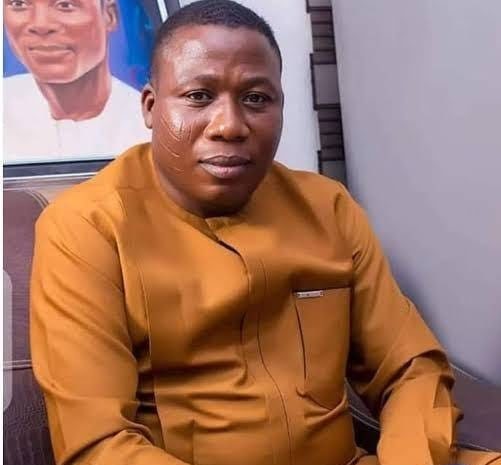
Sunday Igboho defends action on Insecurity as ACF, NEF warn of anarchy

Published

on

The Arewa Consultative Forum and the Northern Elders Forum have warned that Nigeria risks sliding into anarchy if the Federal Government fails to rein in Yoruba Nation agitator, Sunday Adeyemo, popularly known as Sunday Igboho, over his reported ultimatum to Fulani leaders in Oyo State following the abduction of a pregnant woman and her relatives.

The groups, alongside several Fulani associations, accused Igboho of ethnic profiling and cautioned that attempts to hold an entire ethnic group responsible for the actions of suspected criminals could inflame tensions, provoke reprisals and undermine national unity.

Igboho, on Monday, defended his move, adding that his advocacy for effective security of the South-West was not targeted at any ethnic nationality but rather against criminal elements, who are perpetrating abduction, killings, banditry, and other vices.

The warnings and Igboho reaction came as the Oyo State police command and the Oorelope Local Government chairman dismissed reports that the abducted woman, Mrs Kuburat Omowumi, her son and other relatives had regained their freedom, insisting that they remained in captivity and that rescue efforts were ongoing.

The controversy followed a viral video in which Igboho reportedly issued a two-hour ultimatum to Fulani leaders in the Igboho community, Oke-Ogun area of Oyo State, demanding the release of the abducted victims.

In the video, Igboho accused unnamed Fulani men of engaging in kidnappings in the area, alleging that the victims were being held in a forest location within the community.

The National Publicity Secretary of the Arewa Consultative Forum, Prof Tukur Muhammad-Baba, on Sunday, described the ultimatum given to the ethnic group as unconstitutional, dangerous and capable of worsening the country’s security challenges.

According to him, the Federal Government, security agencies, traditional rulers and religious leaders must act quickly to prevent the situation from escalating.

“It is, therefore, the duty of the state, security agencies and community leaders, religious clergy, etc., to call him to order and to make it clear that ethnic profiling is a many-sided sword, a recipe for anarchy and an aberration in the modern world,” Muhammad-Baba told The PUNCH.

The ACF spokesman argued that the ultimatum unfairly portrayed all Fulani people as accomplices in crimes allegedly committed by a few individuals.

“The ultimatum is condemnable as it presumes the specific kidnappers represent the whole Fulani group without exception,” he said.

Muhammad-Baba noted that there was no evidence establishing the ethnic identity of the abductors, stressing that kidnapping had evolved into a criminal enterprise involving people from diverse ethnic and religious backgrounds.

“It is not clear how he has concluded that the kidnappers are of the Fulani ethnic group, when we know that the criminal enterprise that kidnapping has evolved into involves all manner of people irrespective of social identities—ethnicity, religion, gender, etc.

“Wholesale association of kidnapping with all Fulani ethnic people is clearly counterintuitive. Plainly, it is counterproductive to assume Fulani people in this location and everywhere else should be held responsible for the activities of criminal elements from among them.”

He further argued that attributing criminality to an ethnic group amounted to self-deception.

“It is a trite fact that criminality has no tribe and to assume otherwise is to engage in collective illusory self-deception,” he added.

Questioning the legality of Igboho’s actions, Muhammad-Baba maintained that neither the activist nor his associates had constitutional powers to issue such directives.

“Obviously, the directive is unconstitutional. Mr Igboho and his group are not state law enforcement agents and cannot operate outside the law of the land,” he stated.

See also  US Deports Nigerians, See Full List

He warned that allowing non-state actors to assume security responsibilities could encourage retaliatory actions in other parts of the country.

“Their activities pose a threat to national security, and if they remain unrestrained, there is a risk of copycat backlash from others and our slide into catastrophic anarchy and atavism.”

The professor, however, blamed the rise of ethnic champions and self-help security measures on the inability of the government to adequately secure lives and property.

“It is a sign of failure and abdication of the responsibility of government to protect the lives and property of citizens, that enable kidnappers and other criminals to operate. The same failure also encourages local non-state actors and champions of provincialism to seek to fill the gap left by the state,” he said.

“Characters like Sunday Igboho can be seen as products of bad governance, corruption, impunity and criminal neglect by government.”

The Northern Elders Forum echoed similar concerns. Its spokesperson, Prof Abubakar Jiddere, condemned the abduction, but insisted that no ethnic group should be profiled because of the actions of criminals.

“The question is, who told them it is the Fulani people who carried out the kidnapping? That is the ethnic profiling we are against. That is the problem. We are overheating the political atmosphere,” he said.

“Already, Nigeria is facing serious challenges. When we make statements, we are supposed to do so with maturity and put the safety, peace and unity of the country first rather than ethnic sentiments.”

Jiddere argued that Fulani communities were among the worst victims of banditry and kidnapping.

“Many people do not know that Fulani people suffer more than any ethnic group as a result of banditry, kidnapping and cattle rustling. If you go to Zamfara, Sokoto, Katsina and Kebbi, you will discover that thousands of Fulani families have been displaced and forced to relocate,” he said.

He also warned against stereotyping. “Many people you see in the bush put on Fulani dressing. No Fulani man will wear his traditional ceremonial dress and go into the bush to kidnap people. We should be careful about stereotyping entire ethnic groups.”

Jiddere stressed that every Nigerian enjoyed equal rights under the Constitution.

“A Christian has the same rights as a Muslim in Nigeria. A Yoruba person has the same rights as a Hausa or Fulani person. Nobody has a birthright that is superior to another person’s in this country,” he stated.

“If a child is kidnapped in Oyo State, should a Fulani man in Sokoto be held responsible? A child is a child, and every Nigerian should feel concerned when any Nigerian suffers.”

The Coalition of Northern Groups also faulted the alleged threats against Fulani residents.

Its National Coordinator, Jamilu Charanchi, said while the kidnapping deserved condemnation, fighting crime should not involve threats or collective blame.

“While we condemn the kidnapping and support all lawful efforts to secure the victim’s release and bring the perpetrators to justice, addressing crime must not involve issuing threats, ultimatums, or assigning collective blame to an entire ethnic community,” he said.

“Criminal responsibility is individual, and law-abiding Fulani residents should not be held accountable for the actions of criminal elements. Sustainable security can only be achieved through intelligence-driven policing, due process and respect for the constitutional rights of all Nigerians.”

See also  Group warns FG, claims Kanu’s detention stoking anger

The coalition, in another statement on Monday, also expressed concern over reports and viral videos allegedly showing operatives of the Ondo State Security Network Agency, popularly known as Amotekun, profiling, publicly parading and threatening women identified as Hausa and Fulani residents who were engaged in lawful business activities in Ondo State.

The group argued that while insecurity remains a major challenge across the country, criminality should not be linked to ethnic identity.

According to the coalition, different regions of Nigeria had experienced varying forms of crime, including terrorism, banditry and kidnapping in the North; separatist violence and organised criminal activities in the South-East; cybercrime, armed robbery and cultism in the South-West; and oil theft and piracy in the Niger Delta.

The CNG maintained that these security challenges are products of criminal networks rather than ethnic identities and warned against stigmatising entire communities because of the actions of a few individuals.

“We categorically reject the dangerous practice of collective punishment and ethnic stereotyping. No Nigerian should become a suspect merely because of his or her ethnicity, appearance or place of origin,” Charanchi said.

He described as unacceptable reports that women conducting legitimate businesses in Ondo State were allegedly paraded or humiliated because of their ethnic background.

The group urged security agencies to focus on intelligence gathering, investigation and prosecution of criminal suspects rather than resorting to ethnic profiling.

It further called on the Ondo State Government to investigate the conduct of Amotekun personnel featured in the circulated videos and sanction any officers found culpable of misconduct.

In Oyo State, the CNG called on security agencies to ensure the protection of all residents, including Fulani communities, while intensifying efforts to apprehend those responsible for the reported kidnapping incident that sparked tensions in Igboho.

Similarly, the National President of Kautal Fulaku Fulbe, Dr Muhammad Hussaini, condemned the remarks attributed to Igboho, describing them as divisive and detrimental to national unity.

“He is not advocating for peace. Rather, he is one of those whose actions and comments continually threaten the peaceful coexistence and unity of the country,” Hussaini said.

“There is no situation in any of the 19 northern states where an entire tribe would be asked to leave a community because of the actions of a few individuals. Such an approach is unfair and unfortunate.”

The Kulen Allah Cattle Rearers Association of Nigeria also joined the criticism.

Its President, Khalil Muhammad Bello, said no individual had the authority to issue eviction orders to fellow citizens.

“We strongly condemn the statement attributed to Sunday Igboho, especially the part where an ultimatum was issued to a group of citizens, as it is capable of creating tension and misunderstanding in society.

“The Nigerian Constitution guarantees every citizen the right to reside and carry out lawful activities in any part of the country without intimidation, harassment or being forced to leave by any individual or group.”

Bello urged influential figures to avoid inflammatory statements capable of undermining peaceful coexistence.

“Farmers and pastoralists have lived together for many years and depend on one another for survival and economic activities, and anything that threatens that relationship is not in the interest of national peace and development,” he added.

Meanwhile, the pan-Yoruba socio-political organisation, Afenifere, expressed concern over the worsening security situation in Oke-Ogun and renewed calls for state police.

Its National Publicity Secretary, Jare Ajayi, described the abductions and killings in the area as disturbing and unacceptable.

See also  INEC appeals ruling voiding primaries, registration deadlines

“As we in Afenifere and others have repeatedly demanded, kidnapping for whatever reason and terrorisation of our people must stop. It is a very sad thing indeed that these heinous crimes are occurring right on our own soil,” he said.

“The government and security agencies should buckle up to put an end to the evil act and ensure that those in bondage presently are freed without further delay.”

Ajayi urged authorities to fast-track the creation of state police.

“This must be fast-tracked and made to go down to the community level. Enough avoidable bloodshed has been shed. The banditry we are experiencing must come to an end forthwith,” he said.

Reacting on Monday, Igboho, in a statement issued by his spokesperson, Olayomi Koiki, contended that Nigerians, irrespective of religious, political and ethnic divides, should collaborate with the government and relevant security agencies to rid the nation of criminality.

Reacting to the statement of a Fulani socio-cultural group, the Concerned Fulani People of Nigeria, Igboho described the development as “baseless, misplaced priority and distortion of facts over insecurity ravaging some communities in Yorubaland.”

The PUNCH reports that the group, in a statement by its Convener, Ibrahim Barkindo Chubado, called on President Bola Tinubu and the Oyo State Governor, Seyi Makinde, to caution Igboho over what it described as inflammatory remarks directed at Fulani communities in Oyo over the alleged abduction of a woman and her children.

Reacting, Igboho said, “It is obvious that since my agitation for improved security in South-West and other parts of the country, I have never declared war against any ethnic group but have consistently voiced my position against criminal elements responsible for kidnapping, vicious killings, rape and violent attacks across Yoruba communities.

“The call by this faceless CFPN is myopic, uninformed and ridiculous. Our concern and primary focus have always been the protection of innocent lives and the preservation of peace, security and justice.

“We will never advocate hatred against any ethnic group. Our position has always been very clear: criminals should be identified, arrested and prosecuted by the law enforcement agencies regardless of their ethnic, religious and political inclinations because crime has no colour or race.

“It is absolutely wrong and misleading to portray our reaction to security breaches in South-West as ethnic profiling when the rights to life, freedom, and economic livelihoods of our people are being threatened by mindless hoodlums who are obsessed with gruesome killings and kidnapping of innocent people in rural communities.”

Igboho commended the Inspector General of Police, Tunji Disu, the Director-General of the Department of State Service and heads of other security agencies for their sustained onslaught against criminals in the South-West and other parts of the nation.

“While we would not hesitate to collaborate with security agencies to strengthen peace and safety of our communities in the South-West, the collective task of ensuring a secure environment in our society should not be left to the government and stakeholders in the security sector,” the statement explained.

It, however, added that those calling on the government to caution Igboho should instead support stronger security measures aimed at dismantling criminal networks and ensuring justice for victims of kidnapping and other violent crimes.

punch.ng

FOLLOW US ON:

FACEBOOK

TWITTER

PINTEREST

TIKTOK

YOUTUBE

LINKEDIN

Continue Reading
Click to comment

Leave a Reply

Your email address will not be published. Required fields are marked *

News

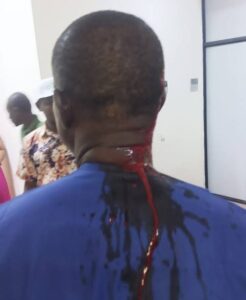
SEE PHOTO: Senate Appropriation Committee session turns bloody

Published

on

A legislative aide, Mr Kingsley Wali, was rushed to the National Assembly clinic in Abuja for emergency treatment after he was allegedly attacked on Wednesday during a sitting of the Senate Committee on Appropriations, chaired by Senator Adeola Olamilekan (APC, Ogun West).

The attacker, a security official attached to Olamilekan, allegedly punched Wali as he accompanied his principal, Senator Onyesoh (APC, Rivers East), to the committee’s sitting.

The altercation between the security official and the legislative aide began after the former tried to stop Wali from accessing the room where the committee was holding its meeting.


Source: tribuneonlineng.com

FOLLOW US ON:
FACEBOOK

WHATSAPP CHANNEL

TWITTER

PINTEREST

TIKTOK

YOUTUBE

LINKEDIN

INSTAGRAM

See also  2026 Will Be Year Of Tangible Developments – Wike
Continue Reading

News

Amupitan reveals INEC’s verified voters register exceeds 100 million, read details

Published

on

The Chairman of the Independent National Electoral Commission (INEC), Prof. Joash O. Amupitan, SAN, has said that the Commission’s verified voters’ register stands at over 100 million following an audit.

Amupitan disclosed this on Wednesday, 25 November 2026, during a strategic consultative meeting with Resident Electoral Commissioners (RECs) in Abuja.

He said the figure followed three phases of Continuous Voter Registration (CVR), which added over 10.77 million new registrants, and an Automated Biometric Identification System (ABIS) and claims-and-objections audit, which removed over 1.6 million invalid, duplicate or deceased records.

“The register includes 232,658 persons with disabilities (PWDs) requiring accessible polling layouts and assistive materials,” he said.

Amupitan said there were 51 days to the Presidential and National Assembly elections scheduled for 16 January 2027, while the Governorship and State Houses of Assembly elections would hold on 6 February 2027.

He said INEC would conduct a nationwide mock accreditation and result transmission exercise on Saturday, 28 November 2026, across the 36 states and the Federal Capital Territory.

The INEC Chairman warned RECs that minor administrative lapses would not be tolerated, noting that general elections were of a different magnitude.

“In an exercise of that scale, even minor administrative lapses in one state can trigger national headlines and cast doubt on otherwise solid work elsewhere. Margin for error simply does not exist,” he said.

He listed six non-negotiable priorities for RECs.

He said Saturday’s mock exercise, which would take place in two polling units per ward, was a live stress test of the 57,000 newly procured BVAS devices and the upgraded INEC Result Viewing Portal (IReV), which now has automated arithmetic and over-voting checks on Form EC8A before upload.

See also  PHOTOS: Alleged ritual k!lling: Slain FRSC officer and her daughter buried amidst tears in Osun

He directed RECs to personally oversee preparations and submit a technical audit to the headquarters by Monday, 30 November 2026, detailing network dead zones, device anomalies and bottlenecks.

On logistics, he said RECs must audit transport arrangements with the National Union of Road Transport Workers (NURTW), marine and aviation partners, verify Registration Area Centres (RACs) and enforce end-to-end tracking of materials.

He said the BVAS threshold had been lowered from 1,250 to 850 voters per machine to prevent crowding, with multiple units to be provided in high-population polling units.

On security, Amupitan said RECs must activate “ICCES Tentacles” down to the local government and ward levels, working with the police, Department of State Services (DSS), Nigeria Security and Civil Defence Corps (NSCDC) and Office of the National Security Adviser (ONSA). He also urged them to use Election Risk Management (ERM) maps to identify flashpoints and resolve conflicts over rally venues under Section 95(4) of the Electoral Act 2026.

He said over 1.41 million ad hoc staff, including National Youth Service Corps (NYSC) members and academics, must be properly trained on the Electoral Act 2026, BVAS operations and Form EC8A validation, with their allowances paid promptly.

The Chairman called for regular engagement with the Inter-Party Advisory Council (IPAC), election observers, civil society organisations and the media to counter disinformation and avoid communication vacuums.

He stressed that there would be zero tolerance for partisan compromise, warning that INEC would not shield any official who compromised the Commission’s neutrality or facilitated malpractice.

“Under the Electoral Act 2026 — including the deterrence provisions of Sections 96, 97 and 148 — the Commission will not shield any staff member or official who compromises neutrality, facilitates malpractice or breaches statutory rules,” he said.

See also  FRSC, others avert fuel tanker fire in Kogi

He also emphasised the need for disciplined record-keeping, immutable BVAS logs, authenticated IReV uploads and the timely issuance of Certified True Copies (CTCs) to ensure clarity for voters and election tribunals.

Source: tribuneonlineng.com

FOLLOW US ON:

FACEBOOK

WHATSAPP CHANNEL

TWITTER

PINTEREST

TIKTOK

YOUTUBE

LINKEDIN

INSTAGRAM

Continue Reading

News

Read lessons from US visa ban on Supreme Court justices

Published

on

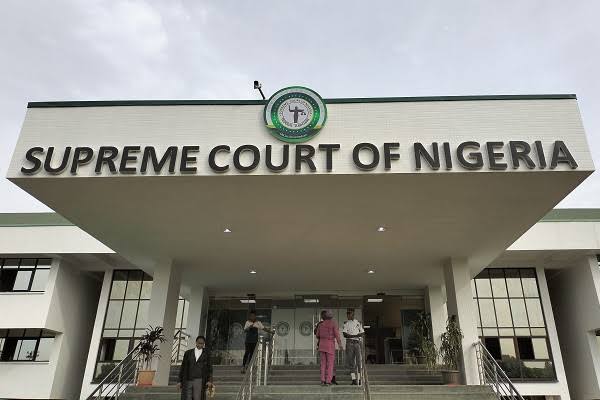
ONCE again, the Supreme Court of Nigeria is under an uncomfortable spotlight. This time, the trigger is an extraordinary revelation by retiring Justice Uwani Abba-Aji at her recent valedictory session. She lamented that the United States imposed visa restrictions on members of a Supreme Court panel over a controversial judgement.

This is no trivial diplomatic gesture. Visa restrictions against serving justices of a country’s highest court carry grave implications for the reputation of the institution and the credibility of its decisions. US authorities would hardly take such a step without serious grounds for concern. More troubling, the sanctions have apparently endured.

Recounting her experience, Abba-Aji said: “My time on the Supreme Court bench was filled with challenges, some of which have served as additional opportunities to stand firm on the side of justice, regardless of the consequences. One of such challenging judgements was widely misinterpreted and led to a travel ban to the United States of America being imposed on all members of the panel; a ban which still holds till today.”

For Abba-Aji, the judgement was merely “widely misinterpreted.” But that is hardly a sufficient explanation for a decision that has continued to cast a shadow over the country’s highest judicial institution. The public, and apparently the US authorities, are entitled to a different assessment. More importantly, the controversy demands introspection rather than defensiveness.

The Supreme Court and the judiciary should recognise that their proceedings and decisions are subject to increasingly intense domestic and international scrutiny. Judicial authority does not confer immunity from criticism. Neither does the sanctity of the bench excuse decisions that raise troubling questions about fairness, consistency and the integrity of the electoral process.

The controversies surrounding the 2023 senatorial elections involving Godswill Akpabio and Ahmad Lawan are cases in point. Both had contested the All Progressives Congress presidential primaries in 2022 before subsequently seeking senatorial tickets in Akwa Ibom North-West and Yobe North, respectively. The Electoral Act 2022 prohibits a candidate from participating in more than one primary election within the same electoral cycle.

Yet, relying on jurisdictional and procedural grounds, the Supreme Court overturned earlier decisions and cleared the way for both men to secure their respective senatorial tickets. Whatever the technical legal reasoning, the outcome reinforced public suspicion that political heavyweights enjoy judicial accommodation unavailable to ordinary Nigerians.

More troubling was the January 14, 2020, Imo State governorship judgement. A seven-member panel of the Supreme Court, including the present Chief Justice of Nigeria, Kudirat Kekere-Ekun, and Abba-Aji, overturned the election of Emeka Ihedioha of the Peoples Democratic Party and declared Hope Uzodimma of the APC governor. Uzodimma had initially placed fourth in the election.

See also  Group warns FG, claims Kanu’s detention stoking anger

The court arrived at its conclusion after adding 213,295 votes from 388 polling units, based on documents tendered by a police witness but reportedly disowned by the Independent National Electoral Commission. In effect, the Supreme Court’s intervention overturned the decisions of both the election tribunal and the Court of Appeal.

The judgement raised fundamental questions that have never been satisfactorily laid to rest. Should the Supreme Court assume the responsibility of sorting, counting and declaring election results? Is it an electoral umpire? Where discrepancies in results arise, should the court not direct the appropriate electoral authority to establish the authentic figures in accordance with the law?

When Ihedioha subsequently sought a review of the judgement, the application was dismissed. In a dissenting opinion, the late Justice Centus Nweze warned that “this decision of the Supreme Court will continue to haunt our electoral jurisprudence for a long time to come.”

His words have proved difficult to dismiss. Indeed, such controversial judgements have helped institutionalise the cynical belief that elections are merely preliminary battles, with the real contest taking place in court. Politicians have consequently made “go to court” a familiar refrain, undermining confidence in the ballot and weakening the foundations of electoral democracy.

The Orji Kalu case is another troubling example of judicial controversy. On May 8, 2020, the Supreme Court set aside the 12-year prison sentence imposed on the former Abia State governor by a High Court and upheld by the Court of Appeal over a N7.1 billion money-laundering charge.

The Court held that the trial judge, Mohammed Idris, lacked jurisdiction because he had been elevated to the Court of Appeal when the proceedings were concluded. It ordered a retrial.

Before it was voided in Udeogu v. Federal Republic of Nigeria, Section 396(7) of the Administration of Criminal Justice Act 2015 provided that a High Court judge elevated to the Court of Appeal may continue sitting as a High Court judge to conclude part-heard criminal matters. This provision was designed precisely to prevent the kind of disruption that could arise from judicial elevation.

More fundamentally, setting aside a conviction on procedural grounds does not extinguish the underlying allegations of financial wrongdoing. The public was entitled to expect that the substantive case would be resolved without further unnecessary delay.

Beyond controversial judgements, the judiciary’s growing proximity to the political establishment has also become a source of concern. Judges are expected to maintain a degree of restraint and distance from the executive, particularly when politically sensitive cases are before them. Yet, the spectacle of judicial officers fraternising with political power has repeatedly undermined that expectation.

Lawyers, for instance, criticised the then Acting Chief Justice of Nigeria, Tanko Muhammad, and other judicial officers for attending an Iftar dinner hosted by President Muhammadu Buhari at the Presidential Villa while presidential election petitions were still pending. Even if no impropriety was established, the optics were damaging. Justice must not only be done; it must be seen to be done.

The late Justice Kayode Eso, one of Nigeria’s most respected jurists, had sounded the alarm years earlier. Following the disputed 2007 elections, he lamented the emergence of “billionaire judges” and described a legal profession increasingly divided between “those who know the law and those who have contacts”. That indictment remains painfully relevant.

See also  2026 Will Be Year Of Tangible Developments – Wike

The era of courageous, intellectually rigorous and landmark judgements associated with Justices Chukwudifu Oputa, Eso and Niki Tobi appears to be receding. Their legacy was not built on proximity to political power but on judicial independence, moral courage and fidelity to the law. The present generation must demonstrate that the judiciary is still capable of producing such men and women.

Unfortunately, the rot is not confined to the Court. It has filtered through the lower judiciary, as reflected in disciplinary actions by the National Judicial Council.

At its 112th meeting, the council suspended three judicial officers — Hannatu Mohammed of the Nasarawa State High Court, Mohammed Sani Salihu of the Jigawa State Sharia Court of Appeal and Sobere Biambo of the Rivers State High Court — for one year without pay over various acts of misconduct. Eight others were cautioned, while warning letters were approved for three judges following investigations into their handling of cases.

These sanctions are necessary, but they also expose the scale of the institutional challenge.

Judicial misconduct cannot be treated as an occasional embarrassment to be managed through discreet disciplinary measures. It is a direct assault on the rule of law and the confidence of citizens in the justice system.

The public perception of judicial integrity has suffered from troubling political disclosures. At a valedictory session in the Senate in June 2023, former senator Adamu Bulkachuwa claimed that he had approached his wife, Justice Zainab Bulkachuwa, a former President of the Court of Appeal, to influence election petition cases involving his political colleagues. Although he subsequently recanted, the damage to public confidence was considerable.

Transparency International’s 2025 Corruption Perceptions Index and concerns raised by the Civil Society Legislative Advocacy Centre further underscore the damage corruption does to public trust in Nigerian institutions, including the judiciary. CISLAC has identified judicial corruption as a major weakness in the country’s anti-corruption campaign, noting that both the CJN and the Nigerian Bar Association have acknowledged its threat to public confidence.

See also  By-election: Police beef up security, warn Ogun residents against vote-buying

The NJC should therefore move beyond occasional disciplinary interventions. It should strengthen its investigative capacity, impose firm and transparent sanctions on erring judicial officers and ensure that accountability extends to the highest courts. No judge should be considered too senior, influential or politically connected to face scrutiny.

If foreign governments are concerned about judicial integrity, Nigerian authorities should not dismiss their actions as interference. The US visa restrictions may be controversial, but they should serve as a wake-up call. Indeed, scrutiny should not stop at the Supreme Court. No level of the judiciary should be beyond examination where credible allegations of misconduct arise.

More fundamental, however, is the need for structural reforms that insulate judicial appointments from political patronage. The appointment of the Chief Justice of Nigeria, the President of the Court of Appeal and chief judges should not remain so vulnerable to the influence of the President and state governors.

An independent, transparent and broadly representative appointments commission should play a decisive role in identifying, screening and recommending judicial candidates on the basis of competence, integrity and professional merit.

There should be meaningful public participation in the appointment process, with appropriate safeguards to protect judicial independence. The objective is not to turn judges into political contestants or subject their decisions to popular approval, but to ensure that those entrusted with dispensing justice command public confidence from the outset.

Ultimately, the judiciary is too important to Nigeria’s democracy to be allowed to decay under the weight of political interference, corruption and questionable judgements.

As the country approaches the 2027 general elections, the Supreme Court and the wider judicial establishment must undertake a serious institutional soul-searching exercise. The credibility of the next elections will depend not only on INEC but also on the integrity of the courts that will adjudicate disputes arising from them.

A judiciary whose integrity is questioned at home and abroad is a liability to the country. It weakens democracy, emboldens impunity, discourages investment and erodes faith in the rule of law.

Investors are unlikely to repose confidence in a country where the impartiality of the courts is in doubt, and commercial disputes can be coloured by political connections.

The lesson from the US visa restrictions should, therefore, be unmistakable: judicial prestige cannot be sustained by constitutional status or the grand trappings of office. It must be earned through impartiality, courage, transparency and fidelity to the law. Nigeria cannot build a credible democracy on a compromised judiciary.

Source: punchng.com

FOLLOW US ON:
FACEBOOK

WHATSAPP CHANNEL

TWITTER

PINTEREST

TIKTOK

YOUTUBE

LINKEDIN

INSTAGRAM

Continue Reading

Trending