Connect with us

News

State police: Federal force can intervene over electoral intimidation — Senate

Published

on

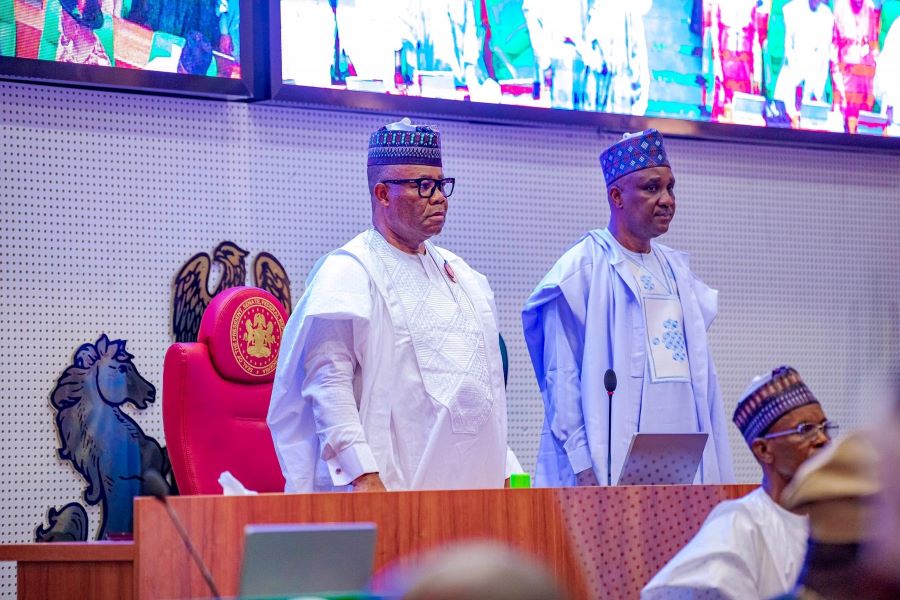
The Senate on Sunday said the proposed State Police Bill contains constitutional safeguards that would allow the federal police to intervene in cases of electoral intimidation, serious human rights violations and threats to national security, dismissing concerns that governors could abuse the proposed policing system for political purposes.

The upper chamber also defended the passage of the Constitution of the Federal Republic of Nigeria (Alteration) (State Police) Bill, 2026, revealing that 84 of the 109 senators voted in support of the legislation during its clause-by-clause consideration, describing the outcome as evidence of broad bipartisan backing.

The clarification comes amid growing debate over the proposed decentralisation of policing, with supporters arguing that state police would strengthen security at the grassroots, while critics fear governors could exploit the outfit to intimidate political opponents ahead of elections.

Defending the Senate’s position in a statement issued by his media office on Sunday, the Senate Leader, Opeyemi Bamidele, said the proposed amendment clearly delineates the constitutional responsibilities of the federal and state police to minimise operational conflicts and improve security coordination.

He explained that the federal police would continue to handle the protection of federal institutions, policing of the Federal Capital Territory, counter-terrorism, organised crime, cybercrime, border security, arms trafficking, interstate criminal activities and other national security matters, while state police would be responsible for enforcing state laws, maintaining public order and protecting lives and property within their jurisdictions.

Bamidele said the bill equally contains several safeguards designed to prevent governors from abusing state police.

See also  Army graduates 47 soldiers as military drivers in Plateau

He explained that although governors may nominate commissioners of police, such appointments would require recommendations by the National Police Council and approval by a two-thirds majority of the relevant state House of Assembly.

The Senate Leader added that the National Police Council would oversee overall policy, funding and appointments, while an independent State Police Service Commission would regulate state police operations without the control of state governors.

Explaining the circumstances under which the federal police may intervene, Bamidele said such action would only be permissible in exceptional situations.

He said, “The intervention can only be granted when there is an outright breakdown of public order; where a state police service is incapable of functioning; where there are serious abuses of fundamental rights; where there is partisan or electoral intimidation; and when national security is heavily strained and threatened.

“To avoid any form of abuse, the bill creates the State Police Service Commission. In design, the commission will serve as the regulatory authority of the state police system.

“Under this arrangement, the commission will be authorised ‘to, without the approval or control of the governor, make rules regulating its own procedure or conferring powers and imposing duties on any officer or authority for the purpose of discharging its functions under the 1999 Constitution.’”

Continuing, Bamidele dismissed claims that the proposal was politically motivated, insisting that it emerged from extensive consultations with the executive, the Nigeria Governors’ Forum, the Conference of Speakers of State Legislatures and the leadership of the Nigeria Police.

The Ekiti senator added that public hearings conducted across the six geopolitical zones in July 2025 produced overwhelming support for the establishment of state police.

See also  Tinubu sacks Chief of Defence Staff, Musa, others

He said, “The state police bill was subjected to intense debates at the Senate and House of Representatives. Even though the All Progressives Congress is the majority party, opposition legislators actively took part in the process that approved the state police initiative.

“They exercised their discretion in favour of the proposal, mainly in the national interest and not on a parochial basis. In the Senate, for instance, 84 out of 109 members voted clause by clause in support of the Bill. This accounted for 77.06 per cent approval at the Senate alone.”

He maintained that the proposed constitutional amendment was designed to strengthen accountability and ensure that the creation of a state police enhances national security without undermining democratic governance or citizens’ fundamental rights.

punch.ng

FOLLOW US ON:

FACEBOOK

TWITTER

PINTEREST

TIKTOK

YOUTUBE

LINKEDIN

Continue Reading
Click to comment

Leave a Reply

Your email address will not be published. Required fields are marked *

News

El-Rufai backtracks on Ribadu phone-tapping claim, read details

Published

on

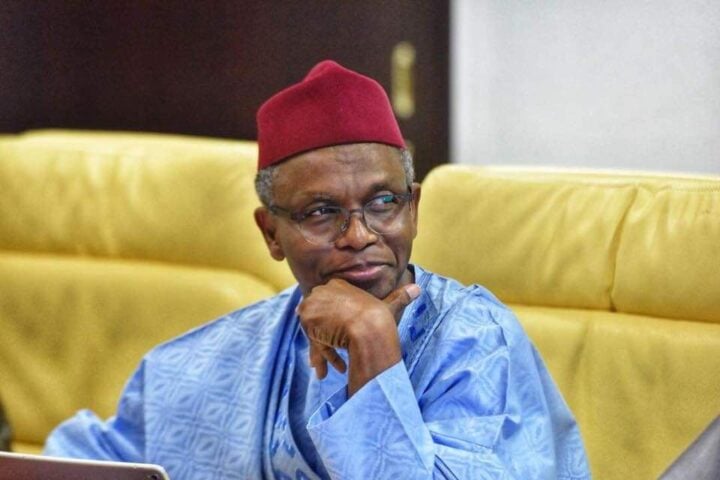
Detained former Kaduna State Governor, Nasir El-Rufai, on Wednesday told the Federal High Court in Abuja that his claim that the telephone of the National Security Adviser, Nuhu Ribadu, was tapped was false, saying he made the statement to scare the government and make its officials uncomfortable.

El-Rufai, who made the admission before the trial judge, Justice Joyce Abdulmalik, described the claim as political rhetoric rather than a factual statement, insisting that neither he nor other opposition figures intercepted Ribadu’s telephone conversations.

The former governor spoke while testifying as the first defence witness in his ongoing prosecution by the Department of State Services over allegations that he intercepted the NSA’s telephone conversations, among other offences.

El-Rufai, who governed Kaduna State between 2015 and 2023, is facing trial over comments he made during an appearance on Arise Television’s Prime Time programme on February 13.

According to court documents, El-Rufai allegedly admitted during the interview that he knew and was associated with an individual who had illegally intercepted the NSA’s telephone communications.

The former Minister of the Federal Capital Territory, who served under former President Olusegun Obasanjo, is accused of breaching national security and public safety through his actions, an offence punishable under Section 12(1) of the Cybercrimes (Prohibition, Prevention, etc.) (Amendment) Act, 2024. He was also charged with failing to report the alleged crime to the relevant security agencies.

During the television interview, El-Rufai had alleged that DSS operatives attempted to abduct him at the Nnamdi Azikiwe International Airport, Abuja, on February 12, 2026, upon his return from Cairo.

He further alleged that the security agency was acting on the instigation of the Independent Corrupt Practices and Other Related Offences Commission, which he claimed had received a directive from Ribadu to detain him.

See also  Edo Ex-deputy gov challenges Okpebholo’s ultimatum to return govt property

The court had, on October 26, ordered the former governor to open his defence to the allegations after dismissing his no-case submission seeking to be discharged and acquitted of the charges.

Justice Abdulmalik held that the application lacked merit and declined to terminate the trial.

At the continuation of proceedings on Wednesday, El-Rufai’s lawyer, Paul Erokoro (SAN), played a recording of the interview his client granted Arise TV on February 13, in which he claimed that someone tapped Ribadu’s phone and relayed his conversations to him and other opposition figures.

After listening to the recording, Erokoro asked his client to clarify what he meant by the statement.

Responding, El-Rufai acknowledged making the claim but said it was not intended to be understood literally.

He explained that his intention was to draw attention to what he described as the government’s surveillance of opposition figures and other prominent Nigerians, including former presidents and senior judges.

El-Rufai said, “What I wanted to say was that the government was monitoring opposition figures and that we knew what they were doing.

“I used the word ‘tap’ as political rhetoric to make them uncomfortable. It was rhetorical, not literal. It was linguistic flourish, just to make the government uncomfortable.”

When reminded by Erokoro that the interviewer had told him that tapping someone’s phone was illegal, the former governor said he intended to expose what he described as the government’s secret monitoring of opposition figures without lawful court orders.

He said, “I was referring to the government violating the law and not someone else doing it.”

Asked who he meant by “we” when he claimed that “we are listening to their conversations…”, El-Rufai said he was referring to himself and other prominent opposition figures.

He, however, denied that they tapped Ribadu’s phone, explaining that he learnt of an alleged plan to abduct and detain him through a mutual friend.

See also  Presidency closes public submissions on state police today

The former governor declined to disclose the identity of the person, saying he did not want to jeopardise the interest of his source.

He told the court that after returning home from the television interview, the said friend visited him and clarified that he had not tapped the NSA’s phone.

According to El-Rufai, he told the person that he already knew but had deliberately made the claim to make government officials uncomfortable.

Earlier in his testimony, the former governor said he had known Ribadu since 2003, when he, as head of the Bureau of Public Enterprises, assisted him in establishing the Economic and Financial Crimes Commission by providing office accommodation and funding.

He attributed the breakdown in their relationship to the 2011 presidential election, when Ribadu contested for the presidency, and he supported the late former President Muhammadu Buhari, whom he considered a better candidate.

El-Rufai further alleged that the NSA was opposed to him because of his opposition to President Bola Tinubu’s re-election bid.

He denied involvement in telephone interception, insisting that he neither possessed the knowledge nor the equipment required to tap phone conversations.

However, during cross-examination by the prosecuting counsel, Oluwole Aladedoye (SAN), El-Rufai, who said he obtained a law degree from the University of London, maintained that he would not disclose the identities of those he referred to as “we” in the television interview.

He also refused to name the person who allegedly informed him that Ribadu, Kaduna State Governor, Uba Sani, and the ICPC chairman had met and agreed to ensure his arrest.

See also  Counter-terrorism campaign: FG moves to fast-track trial of 5,000 insurgents

The former governor said he learnt of the alleged plan before returning from Cairo on February 12. He explained that he resisted attempts by DSS operatives to arrest him at the airport upon his arrival because they failed to produce a valid arrest warrant.

El-Rufai also maintained that his claims during the Arise TV interview that he had never stolen public funds and knew nothing about the disappearance of activist Dadiyata while he was governor of Kaduna State were factual.

He insisted that all other statements he made during the interview were true, except the claim relating to the tapping of Ribadu’s phone.

The former governor, who said he instituted fundamental rights suits over the alleged search of his residence with a defective warrant, admitted that the cases had been dismissed by both the High Court of the Federal Capital Territory and the Federal High Court.

Towards the end of the cross-examination, Aladedoye informed the court that Erokoro had approached him before the commencement of proceedings to seek his assistance in the defence’s plan to invite Ribadu and the ICPC chairman as witnesses.

The prosecuting counsel said he declined the request, explaining that the matter was beyond his control.

Erokoro, however, said he would file the necessary applications to secure their attendance.

Justice Abdulmalik subsequently adjourned the case until February 15 and 16 for the continuation of El-Rufai’s defence.

Source: punchng.com

FOLLOW US ON:

FACEBOOK

WHATSAPP CHANNEL

TWITTER

PINTEREST

TIKTOK

YOUTUBE

LINKEDIN

INSTAGRAM

Continue Reading

News

Buni presents N532bn 2027 budget to Yobe assembly

Published

on

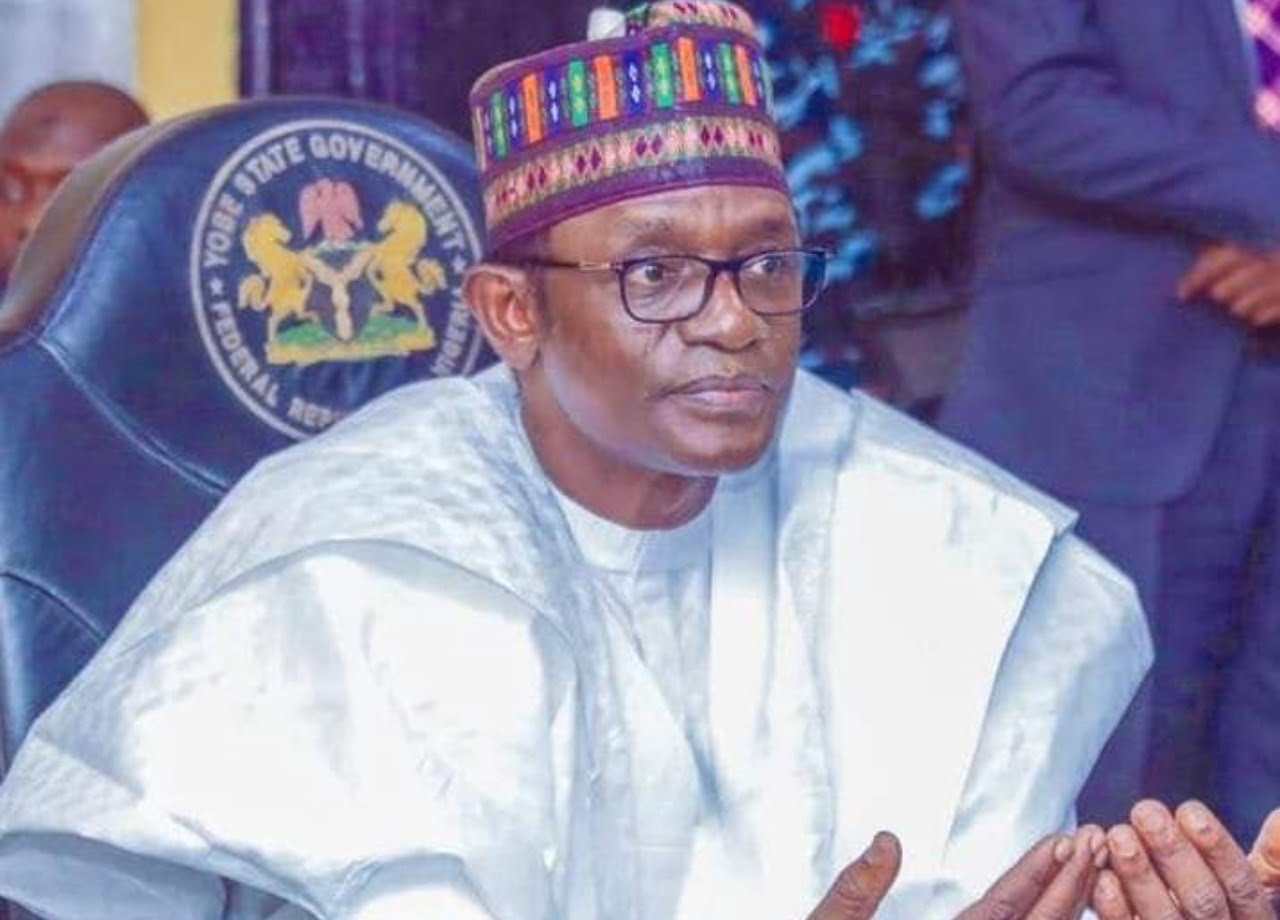
Yobe State Governor, Mai Mala Buni, has presented a proposed budget of N532.27bn for the 2027 fiscal year, with recurrent expenditure taking the largest share of the estimates.

Buni presented the 2027 Appropriation and Finance Bills before the Yobe State House of Assembly in Damaturu on Tuesday, describing the proposal as the final budget of his administration.

Tagged the Budget of Consolidation, Sustainability and Inclusive Growth, the proposed budget represents an increase of N16.739bn, or 3.2 per cent, over the N515.532bn approved for the 2026 fiscal year.

A breakdown of the estimates shows that N288.426bn, representing 54.2 per cent, is allocated to recurrent expenditure, while N243.845bn, representing 45.8 per cent, is earmarked for capital projects.

Presenting the budget, Buni said it was designed to consolidate the achievements of his administration, complete ongoing projects and ensure the sustainability of existing investments.

He said, “Today, with a sense of humility and fulfilment, and in accordance with Section 121(1) of the 1999 Constitution of the Federal Republic of Nigeria (as amended), I once again stand before this Honourable House of Assembly to present the Eighth and last Finance and Appropriation Bills by this administration for your kind consideration and approval for the 2027 fiscal year.”

The governor said the administration would prioritise project completion, improved service delivery and prudent management of public resources.

“The 2027 budget is therefore designed to balance immediate service delivery with the long-term development interest of the state,” he said.

Buni disclosed that the education sector would receive N99.792bn, while N80.543bn was allocated to healthcare.

See also  Counter-terrorism campaign: FG moves to fast-track trial of 5,000 insurgents

He said the education allocation would support the completion of ongoing school construction and rehabilitation projects, the provision of teaching materials, assistance to tertiary institutions and scholarship programmes.

On healthcare, the governor said the government would sustain investments in hospital upgrades, maternity and emergency services, medical equipment and healthcare training institutions.

He also identified the establishment of a modern kidney centre in Gashua as one of the administration’s priority projects.

“We are equally committed to advancing the ongoing establishment of a modern Kidney Centre in Gashua, with emphasis on a safe, accessible, patient-centred treatment environment, appropriate dialysis equipment and the clinical and operational arrangements required for sustainable service delivery,” Buni said.

The governor said infrastructure development would remain a major priority, with emphasis on completing ongoing road, drainage, electricity and commercial infrastructure projects.

He specifically mentioned the Gashua-Masaba, Balanguwa-Kumagannam and Dumbulwa-Lailai roads among the projects requiring attention.

Other priority areas include agricultural development, livestock production, water supply, environmental protection, peacebuilding and the rehabilitation of communities affected by insurgency.

Reviewing the performance of the 2026 budget as of September 30, Buni said the state recorded revenue receipts of N347.078bn, representing 67.3 per cent of the annual projection.

He said the approved 2026 budget stood at N515.532bn, comprising N291.904bn for capital expenditure and N223.628bn for recurrent expenditure.

According to him, recurrent expenditure during the first nine months amounted to N139.346bn, while capital expenditure stood at N94.280bn.

The governor said the administration remained committed to the payment of salaries, pensions and gratuities despite prevailing economic challenges and the demands of post-insurgency recovery.

See also  Kenyan opposition leader Raila Odinga dies in India

Buni, who described the 2027 proposal as the final budget of his administration, said the government would ensure an orderly transition and preserve ongoing development projects.

“Development must not depend entirely on the presence of any individual in public office. It must be supported by strong institutions, competent public servants, credible planning frameworks and effective systems of accountability,” he said.

The governor assured residents that his administration would continue to discharge its responsibilities until the final day of its tenure.

“We shall continue to work, supervise, deliver and remain accountable until the final day of our mandate. There will be no abandonment of our responsibilities and projects,” he said.

He urged the House of Assembly to give the proposed budget timely consideration and passage.

In a political appeal towards the end of his address, Buni urged the people of Yobe to support President Bola Tinubu’s second-term ambition, arguing that the state’s membership of the ruling All Progressives Congress had created opportunities for it to benefit from the Federal Government.

He also commended Tinubu for approving the Federal Government’s takeover and reimbursement of the Muhammadu Buhari International Cargo Airport project in Damaturu, saying the intervention would free up resources for other development projects.

Source: punchng.com

FOLLOW US ON:

FACEBOOK

WHATSAPP CHANNEL

TWITTER

PINTEREST

TIKTOK

YOUTUBE

LINKEDIN

INSTAGRAM

Continue Reading

News

US military base shooter seeks halt to firing squad execution

Published

on

Nidal Hasan, who is set to be executed by firing squad next month for his 2009 massacre at a US military base, asked a court on Tuesday to halt his execution, according to documents obtained by AFP.

The former US Army major and military psychiatrist asked a federal court to delay his execution, which is set for December 3, while he prepares a case to challenge it on constitutional grounds.

If the execution goes ahead, Hasan will be the first person killed by a US military firing squad since 1945.

A furore over plans to livestream the killing erupted in early October.

US Defence Secretary Pete Hegseth initially said the execution would be “public” before a Pentagon spokesperson added it would be available online.

Concerns mounted far and wide about making the execution into a spectacle and turning Hasan into a martyr.

After days of debate and condemnation, US President Donald Trump cancelled the plans to broadcast the killing, while allowing some witnesses to observe it in person.

Hasan killed 13 people, including 12 soldiers, and wounded 30 others in his November 2009 rampage.

He was shot by a civilian police officer and is paralysed from the waist down.

During his trial, Hasan chose to conduct his own defence, and court-appointed attorneys raised concerns that he was seeking to be executed.

Ultimately, he was sentenced to death by a military jury in 2013.

AFP

Source: punchng.com

FOLLOW US ON:

FACEBOOK

WHATSAPP CHANNEL

TWITTER

PINTEREST

TIKTOK

YOUTUBE

LINKEDIN

INSTAGRAM

See also  2027: 'Behave yourself' - Seyi Tinubu blasts Isaac Fayose for criticising City Boys' walk in PH
Continue Reading

Trending