Connect with us

News

Presidency closes public submissions on state police today

Published

on

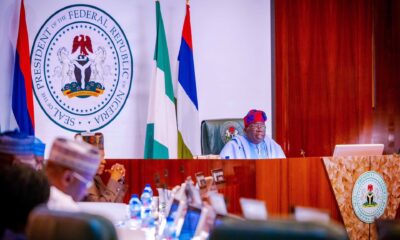
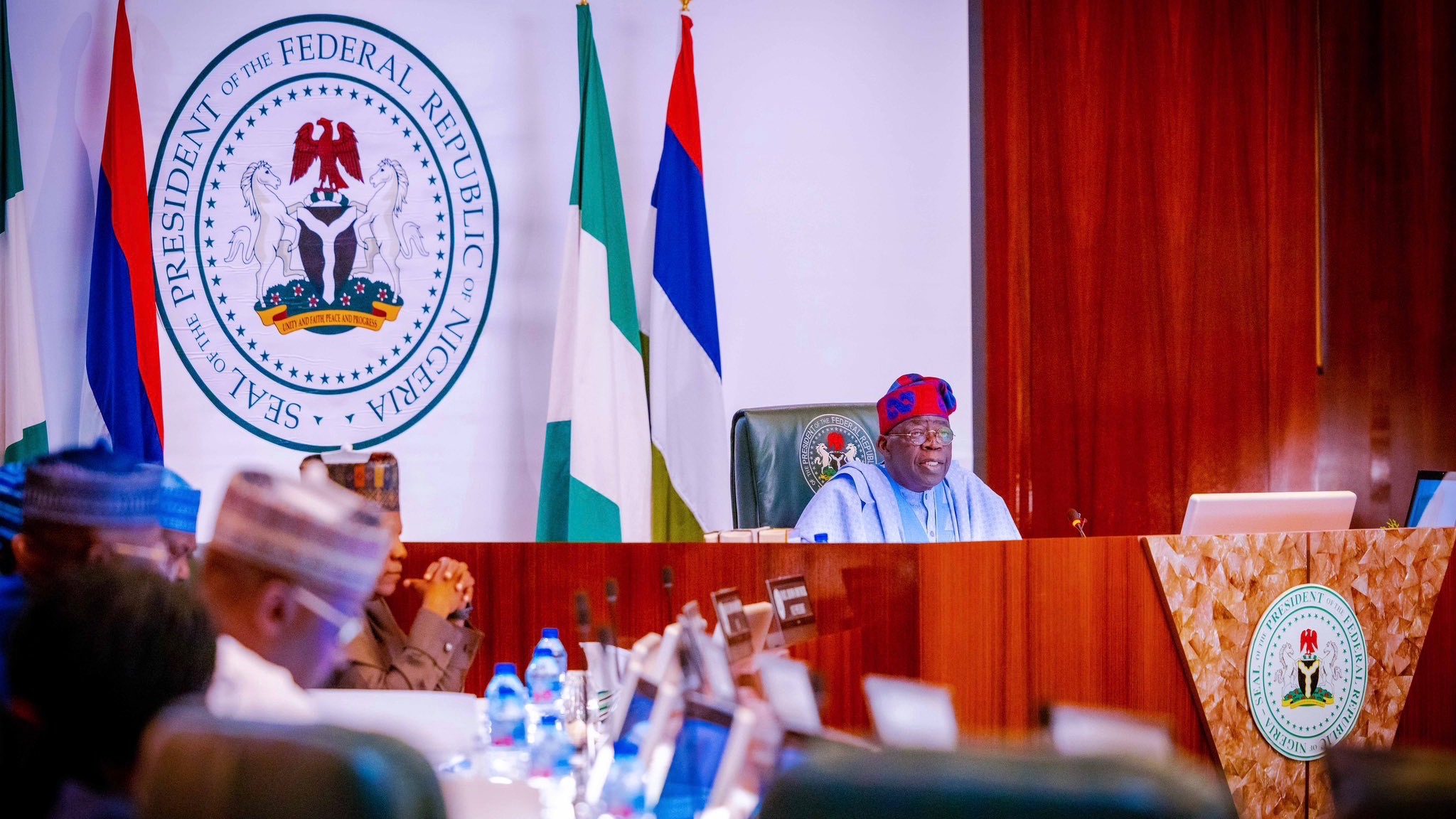
The Presidency has announced that public submissions on the proposed National Policing Bill will close by 5 pm on Thursday, August 13, 2026, urging Nigerians to submit their views on the planned establishment of state police.

The Chief of Staff to the President and Chairman of the Presidential Working Group on the National Policing Bill, Femi Gbajabiamila, disclosed this on Wednesday, saying the consultation was designed to incorporate the experiences and professional expertise of Nigerians into the proposed legislation.

He said the submissions would be particularly useful in addressing concerns over political interference, oversight, police misconduct and intelligence-sharing between federal and state police services.

He said the consultation would not replace the role of the National Assembly, which would retain the power to scrutinise, amend, reject or pass the Bill when transmitted.

Gbajabiamila urged Nigerians to contribute to the process, particularly on how police services could be protected from political interference, who should investigate serious misconduct and how federal and state forces could share intelligence across state boundaries.

He said, “For too long, the debate has been framed as a choice between effective local policing and protection from political abuse. Nigeria needs both.

“We can bring policing closer to the people while building strong national standards, independent oversight and firm safeguards for every citizen. The time to fix policing in Nigeria is now, and we must see the work through.”

Gbajabiamila also stressed that the proposed state police system must contain strong safeguards to prevent governors from using the force against political opponents, protesters, journalists, minority communities and other citizens.

See also  Many abandoned estates in Abuja owned by civil servants who stole public funds - EFCC boss, Ola Olukoyede

Gbajabiamila, a former Speaker of the House of Representatives, said although state police could bring policing closer to communities and improve responses to local security challenges, its proximity to state governments raised legitimate concerns about political interference and abuse of power.

He said, “But proximity does not guarantee justice. The concern that governors might use state police against political opponents, minority communities or dissenting voices is serious and must be answered in the design of the law.”

He added that state police services must have lawful authority within their jurisdictions while remaining subject to the constitution, human rights and the rule of law.

According to him, the proposed framework should ensure that police officers are properly recruited, trained, equipped and supervised, while citizens must have access to credible complaints and oversight mechanisms.

Gbajabiamila said the reforms were aimed at creating a policing system that was “closer, faster and better informed by local conditions,” noting that officers familiar with a community’s language, geography and crime patterns would be better positioned to gather intelligence and respond to security threats.

He, however, stressed that the reform must protect citizens from abuse regardless of their political affiliation.

“The law must protect citizens regardless of who holds office. It must protect opposition parties, peaceful protesters, journalists and minority communities.

“It must make unlawful orders easier to resist, misconduct easier to investigate and political interference harder to hide,” he said.

On the legislative process, Gbajabiamila explained that the constitution currently provides for only one police force, the Nigeria Police Force, under Section 214, making constitutional amendment necessary before state police could be established.

See also  I have no regrets over my actions as minister – Malami

He said both chambers of the National Assembly had approved proposed constitutional changes providing for a Federal Police Service and State Police Services, but the process was not yet complete.

According to him, the National Assembly must complete the remaining stages and transmit the amendment to the state Houses of Assembly, where it must be approved by at least 24 of the 36 state legislatures before it can proceed to the President for assent.

He stressed that until those steps were completed, state police remained a proposal.

Gbajabiamila also disclosed that the Presidential Working Group was preparing the National Policing Bill alongside the constitutional amendment process.

He said the Bill would establish national standards for recruitment, vetting, training, remuneration, pensions, equipment and professional conduct, as well as rules on the use of force, complaints, discipline, independent oversight, intelligence sharing and cooperation between federal and state police services.

He said state police would not automatically be established across the country even after the constitutional amendment and the National Policing Bill became law.

“Each state that chooses to establish a service will still need its own enabling law, institutions and funding. It must also meet the national conditions for operation before its officers can begin policing,” he said.

Gbajabiamila said a state that was not ready to establish its own police service would continue to be served by the Nigeria Police Force.

Source: punchng.com

FOLLOW US ON:

FACEBOOK

TWITTER

PINTEREST

TIKTOK

YOUTUBE

LINKEDIN

INSTAGRAM

Continue Reading
Click to comment

Leave a Reply

Your email address will not be published. Required fields are marked *

News

Implement Ogun disability law, PWDs beg Abiodun

Published

on

The Joint National Association of Persons with Disabilities and the Spinal Cord Injuries Association of Nigeria have called on the Ogun State Government to fully implement the state’s Disability Law, nearly nine years after it was signed into law.

The groups made the demand at a joint press briefing held on Wednesday at the NUJ Hall, Iwe Iroyin House, Oke-Ilewo, Abeokuta, urging Governor Dapo Abiodun to provide the political direction required to conclude the implementation process before the expiration of his tenure in eight months.

The Ogun State Disability Law was signed by the former governor, Senator Ibikunle Amosun, on December 27, 2017.

The groups, however, said the law had yet to be fully operationalised, leaving persons with disabilities waiting for the legal framework to translate into functioning institutions, enforceable protections and accessible public systems.

The National President of SCIAN, Abdulwahab Matepo, and the Chairman of JONAPWD, Ogun State chapter, Ayo Awobona, made the call during the joint briefing.

They said, “A law passed to protect the rights of persons with disabilities must not remain a law on paper. It must become a law in action.”

According to the groups, the disability community had engaged the state government and other stakeholders through meetings, consultations, letters, courtesy visits and media advocacy since 2025 in an effort to resolve issues surrounding the implementation of the law, without any success recorded.

They stressed that their campaign was not intended to confront the state government but to ensure that commitments were translated into concrete action.

See also  Any party with Obi already has 40% of votes – PDP chieftain

The groups said discussions about possible amendments to the law should not be allowed to indefinitely delay its implementation.

They advocated the operationalisation of the existing law in accordance with applicable legal procedures while any necessary amendments were pursued through the appropriate legislative process.

They said this would enable the government and the disability community to address implementation and possible improvements to the legal framework simultaneously.

The organisations said non-implementation had practical consequences for persons with disabilities, particularly in education, healthcare, transportation, employment, economic participation and political engagement.

They also called for accessible public institutions and mechanisms through which the rights of persons with disabilities could be protected and government obligations monitored.

The groups said the World Health Organisation estimated that about 16 per cent of the global population experienced significant disability.

They added that a 2025 JONAPWD “Assumptive Data of Persons with Disabilities in Nigeria” estimated that 1,032,221 persons were living with disabilities in Ogun State, based on a 15 per cent benchmark applied to the National Population Commission’s 2025 population projection.

Matepo said, “JONAPWD and SCIAN recognise government as an essential partner in achieving disability inclusion. We are therefore not presenting ourselves as opponents of government.

“We are presenting ourselves as partners seeking accountability and implementation. We remain ready to provide technical input, participate in consultations, review proposed amendments, mobilise the disability community and work constructively with government.

“But partnership must produce results. The disability community has demonstrated patience. We have written letters. We have attended meetings. We have made courtesy visits.

See also  Fubara cancels N134b secretariat contract awarded by Ibas, orders refund

“We have engaged legal experts. We have engaged government officials. We have undertaken public awareness activities. We have participated in consultations. And we have continued to pursue dialogue. The next step should now be action.”

He added, “We respectfully call on His Excellency, Prince Dapo Abiodun, CON, to provide the necessary political direction to ensure that the process of implementing the Ogun State Disability Law is concluded before the expiration of his term in office.

“JONAPWD has already formally appealed to the Governor to intervene and direct the relevant authorities to conclude the necessary processes and commence implementation. We therefore ask that this matter receive the necessary attention at the highest level of the state government.”

Source: punchng.com

FOLLOW US ON:

FACEBOOK

TWITTER

PINTEREST

TIKTOK

YOUTUBE

LINKEDIN

INSTAGRAM

Continue Reading

News

Argentine president slams UN as ‘useless’ over Falklands dispute

Published

on

Argentine President Javier Milei attacked the United Nations in a speech to the world body on Wednesday, calling it a “useless organisation” filled with “arrogant parasites.”

Milei, one of US President Donald Trump’s closest Latin American allies, has repeatedly used the UN platform to criticise global governance and its “woke” agenda.

He accused the United Nations on Wednesday of having failed in its duty to guarantee collective security and human rights, saying it had instead allowed “chaos, violence and international terrorism” to flourish.

The UN, he said, “has become a useless organisation, serving only to feed a caste of fatally arrogant parasites disguised as well-intentioned bureaucrats.”

He accused the organisation of “looking the other way” on Argentina’s claim to the Falkland Islands, a British overseas territory which Argentines refer to as Las Malvinas and claim as part of their land.

Argentina has accused Britain of flouting a UN resolution ordering both parties to desist from unilateral action in the islands, over which the two countries fought a war in 1982.

“Those who follow the rules receive no reward for doing so, while those who break them face no repercussions whatsoever,” Milei said.

Underscoring Milei’s close ties with Trump, Argentina and the United States on Wednesday announced a joint initiative to improve the Latin American nation’s infrastructure and connect it with “vital economic sectors to major Atlantic ports and Western markets.”

The so-called Andes-Atlantic Corridor aims to facilitate investment in transport, digital infrastructure, minerals and energy, including Vaca Muerta, a massive hydrocarbon deposit in southern Argentina, a joint statement said.

See also  NSIB - Six injured in Abuja–Kaduna train derailment (PHOTOS)

Last Saturday, PUNCH Online reported that the United Kingdom backed businesses and individuals operating in the Falkland Islands after an Argentine federal judge ordered British and Israeli companies to halt development of an oil project near the disputed territory.

The UK Minister for Overseas Territories, Uma Kumaran, said the government stood behind businesses and individuals supplying goods and services to the Falkland Islands, including those in the hydrocarbons sector.

AFP

Source: punchng.com

FOLLOW US ON:

FACEBOOK

TWITTER

PINTEREST

TIKTOK

YOUTUBE

LINKEDIN

INSTAGRAM

Continue Reading

News

After over 200 days in detention, El-Rufai speaks on silence of friends he stood by in the past

Published

on

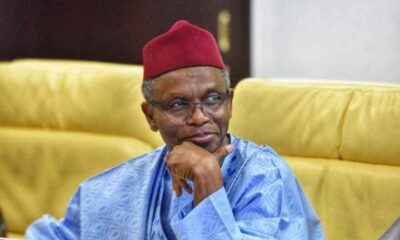
Former Kaduna State Governor, Nasir El-Rufai, has addressed the silence of some of his former colleagues, friends and associates amid his current circumstances, saying he does not resent those who have chosen not to stand by him.

El-Rufai, in a statement titled “My Relationships and the Aftermath,” said he had received concerns over the apparent silence of people he had publicly supported or closely associated with in the past.He said his decision to stand by people and causes throughout his life was guided by his Islamic faith, Arewa upbringing, personal values and conscience.

“Over the years, I have stood by people and for causes I believed in, sometimes in difficult circumstances and at considerable personal cost,” he said.

According to him, such actions were not motivated by expectations of praise, gratitude or reciprocity, but by his conviction that they were the right things to do.

El-Rufai said those he had supported were equally free to make their own choices now that their circumstances had changed.

He noted that some might speak in his support, while others might remain silent or even distance themselves from relationships they previously shared.

“Their reasons are their own, and I do not wish to judge them merely because their response differs from what others or even I might have expected,” he said.

The former governor said difficult circumstances could reveal the nature of relationships, adding that the experience of the past few months might cause him to reconsider some relationships.

“Adversity has a way of illuminating relationships,” he said, adding that what he had learnt during the difficult period could lead him to “quietly and without regret” reassess certain relationships and what people who look up to him expect from them.

See also  Many abandoned estates in Abuja owned by civil servants who stole public funds - EFCC boss, Ola Olukoyede

He, however, stressed that such reassessment should not be interpreted as condemnation or reproach.

El-Rufai said he had no regrets about supporting people or causes whenever he believed doing so was right.

“I bear no resentment towards anyone who chooses not to do the same for me,” he said.

He added that he would rather remain faithful to the principles that had guided his conduct than allow the actions of others to change those principles.

On any perceived injustice, ingratitude or injury against him, El-Rufai said he was not seeking revenge or retribution.

“Ultimate accountability belongs to Almighty Allah, and I leave that judgment to Him, in this world and in the Hereafter,” he said.

He concluded by saying that everyone would ultimately have to live with the choices they made, while posterity would form its own judgment.

“My only concern is to remain at peace with my conscience and, above all, with Almighty Allah,” he said.

El-Rufai, who accused the Tinubu administration of witchhunt, has spent 220 days in detention.

Source: dailytrust.com

FOLLOW US ON:

FACEBOOK

TWITTER

PINTEREST

TIKTOK

YOUTUBE

LINKEDIN

INSTAGRAM

Continue Reading

Trending