Connect with us

News

Trump Ally, US Senator Lindsey Graham Dies

Published

on

Prominent United States Senator Lindsey Graham, a longtime Republican lawmaker and close ally of President Donald Trump, has died at the age of 71 following a brief and sudden illness.

His office announced his death in a statement posted on its official X account early Sunday.

“On the evening of Saturday, July 11, US Senator Lindsey Graham passed away from a brief and sudden illness,” the statement read.

It added that Graham’s family “appreciates prayers at this time and asks for privacy during this incredibly difficult period.”

Graham began his career in the US Congress after winning election to the House of Representatives in 1994, where he represented South Carolina.

He was elected to the United States Senate in 2002 and went on to become one of the Republican Party’s most influential lawmakers.

During his time in the Senate, Graham served on several key committees and was widely recognised for his strong views on national security, foreign policy and defence.

Although Graham was an outspoken critic of Donald Trump during the 2016 Republican presidential primaries, the two later developed a close political relationship.

He became one of Trump’s most trusted allies in the Senate, frequently defending the administration’s policies and playing a prominent role in debates on judicial appointments, immigration and foreign affairs.

In recent years, Graham remained one of the most influential Republican voices on issues involving Ukraine, Israel and US military engagement overseas.

FOLLOW US ON:

FACEBOOK

TWITTER

PINTEREST

TIKTOK

YOUTUBE

LINKEDIN

INSTAGRAM

See also  Sand depletion threatens construction, food security — LASG
Continue Reading
Click to comment

Leave a Reply

Your email address will not be published. Required fields are marked *

News

Gbajabiamila reveals 24 state assemblies approve state police amendment

Published

on

The proposed constitutional amendment to establish a dual policing system in Nigeria has secured approval from 24 State Houses of Assembly, meeting the two-thirds threshold required for constitutional alteration.

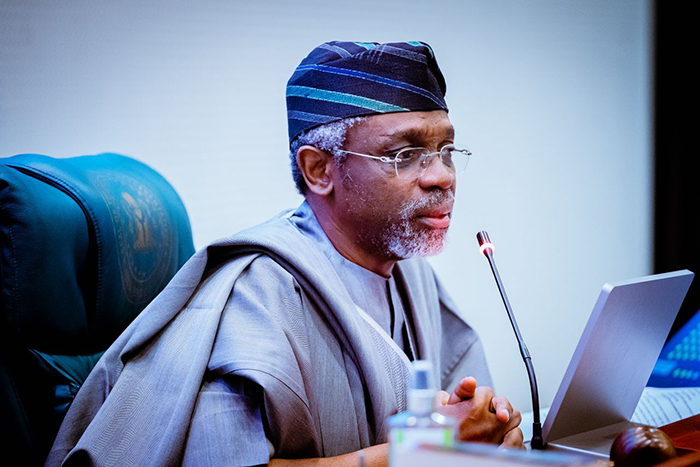
The Chief of Staff to the President and Chairman of the Presidential Working Group on the National Policing Bill, Femi Gbajabiamila, disclosed this in a statement on Friday, October 23, 2026.

The statement said the approval of 24 of the 36 state assemblies met the constitutional requirement for the Constitution (Sixth Alteration) Bill, 2026, which provides for a dual policing system.

The Working Group commended the state assemblies for their action and the National Assembly for passing the amendment in both chambers.

“In line with Section 9 of the Constitution, the amendment can now be returned to the National Assembly for transmission to Mr President for assent,” the statement read.

The proposed amendment is expected to provide constitutional backing for the policing framework contained in the draft National Policing Bill, 2026, prepared by the Presidential Working Group.

October 30 timeline

The group said the draft bills were undergoing legislative drafting review and validation at the Federal Ministry of Justice and were expected to be returned on or before Friday, October 30, 2026.

It added that the group would give the bills final consideration before presenting them to President Bola Tinubu.

The Working Group urged stakeholders to support what it described as a smooth transition to a dual policing system aimed at making Nigerians safer.

PUNCH had reported in September that the National Assembly transmitted the Constitution (Sixth Alteration) Bill, 2026, to the 36 state Houses of Assembly on September 16 for consideration and approval, giving them an expected administrative timeframe of 30 days to communicate their decisions.

See also  Shettima in Switzerland for World Economic Forum

The proposed amendment seeks to establish a dual policing system comprising the Federal Police Service and state police services.

On October 9, the Senate was confident the amendment would secure the required backing, with Senate Committee on Media and Public Affairs Chairman Yemi Adaramodu saying at the time that four states — Edo, Oyo, Osun and Rivers — had approved the bill.

However, in a report published on October 16, PUNCH said five state assemblies — Edo, Osun, Oyo, Rivers and Zamfara — had approved the amendment, while the remaining 31 were yet to do so.

Meanwhile, PUNCH reported on October 15 that the Chief of Staff to the President, Femi Gbajabiamila, had said the draft National Policing Bill was 90 per cent ready for transmission to the National Assembly after further deliberations by the Presidential Working Group.

On October 21, PUNCH reported that five additional state assemblies — Ogun, Delta, Plateau, Kwara and Adamawa — had approved the amendment, bringing the number of approving states to 10.
Continue Reading

News

One dies, three injured in Lagos building collapse

Published

on

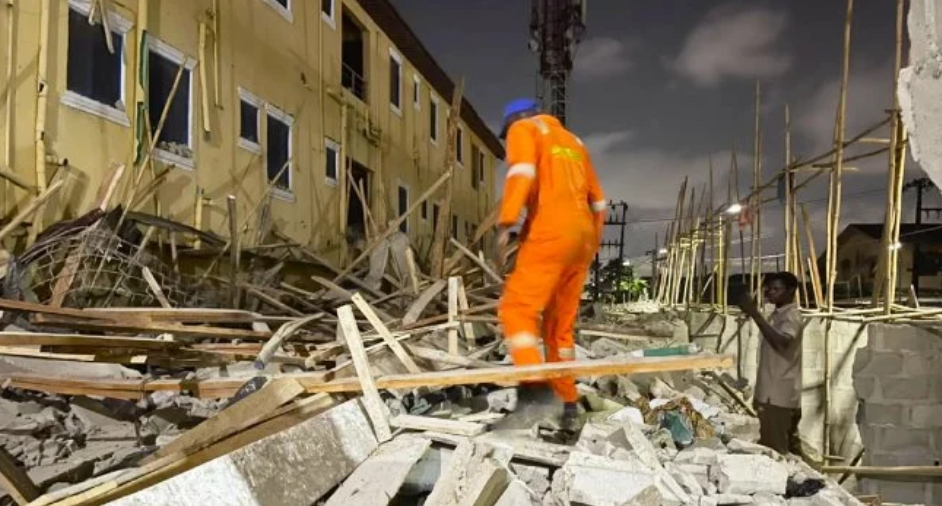
One person has died while three others sustained injuries following the collapse of a building in the Fadeyi area of Lagos State.

The building collapsed on Akinola Street, off Ikorodu Road, on Friday morning.

Lagos building collapse
An emergency responder carries out a search-and-rescue operation at the scene of a building collapse in Lagos State on October 23, 2026. Photo: Channels TV

The Lagos State Emergency Management Agency said the cause of the incident was yet to be established, while rescue teams were working to determine how many site workers remained trapped beneath the rubble, Channels TV reports.

The agency said, “Emergency responders had launched a coordinated search-and-rescue operation to locate and evacuate any victims trapped under the collapsed structure.”

Lagos building collapse
An emergency responder carries out a search-and-rescue operation at the scene of a building collapse in Lagos State on October 23, 2026. Photo: Channels TV

LASEMA added that it was coordinating the response at the scene alongside other agencies and emergency personnel, including LRU paramedics, the Lagos State Fire Service, LASASA and the Alakara Division of the Nigeria Police Force.

Details later…

See also  Asylum seekers to pay £10,000 before settlement in UK
Continue Reading

News

Umahi says South-East will vote differently in 2027 over Tinubu’s projects

Published

on

The Minister of Works, David Umahi, has described the South-East’s overwhelming support for Peter Obi in the 2023 presidential election as an “accident of history”, attributing the voting pattern to anger over the region’s alleged marginalisation under the previous administration.

Umahi said the region’s political outlook had changed under President Bola Tinubu, citing federal infrastructure projects and appointments as reasons he believed voters would respond differently in the 2027 election.

Speaking in an interview with ARISE News published on Friday, the minister said the South-East had reasons to feel aggrieved before Tinubu assumed office.

“In 2023, it was an accident of history,” Umahi continued, “It was a demonstration of the anger of the people of South East on how they were treated.”

He added, “We’ve been marginalised in the past, but it’s no longer so.”

Umahi argued that Tinubu had changed the situation through what he described as increased federal infrastructure investments and appointments for the region.

“If in 2023 they demonstrated their anger, in 2027 they are going to demonstrate their joy on how the President has treated them,” he said.

The former Ebonyi State governor maintained that the South-East would acknowledge Tinubu’s commitment to the region, particularly through major federal road projects and other investments.

He also said serving and former governors, traditional rulers and other influential figures in the South-East were increasingly aligning with Tinubu.

Umahi argued that voters would be reluctant to abandon what he described as infrastructure gains for another political “gamble”.

See also  Shettima in Switzerland for World Economic Forum

The minister rejected suggestions that South-East leaders supporting Tinubu were betraying the region or Obi, arguing that the region’s political interests should not be permanently tied to one candidate.

He also criticised social media supporters who insult South-East political leaders for backing Tinubu, saying such attacks would not advance Obi’s political interests or those of the region.

Umahi maintained that the South-East needed to engage and negotiate with other parts of Nigeria if it hoped to produce a president in the future.

Asked whether he believed Tinubu would defeat Obi in the South-East in 2027, Umahi responded, “Why do you say I believe? That is what is going to happen!”

The minister insisted that the circumstances that shaped the region’s voting pattern in 2023 had fundamentally changed.

Continue Reading

Trending