Connect with us

News

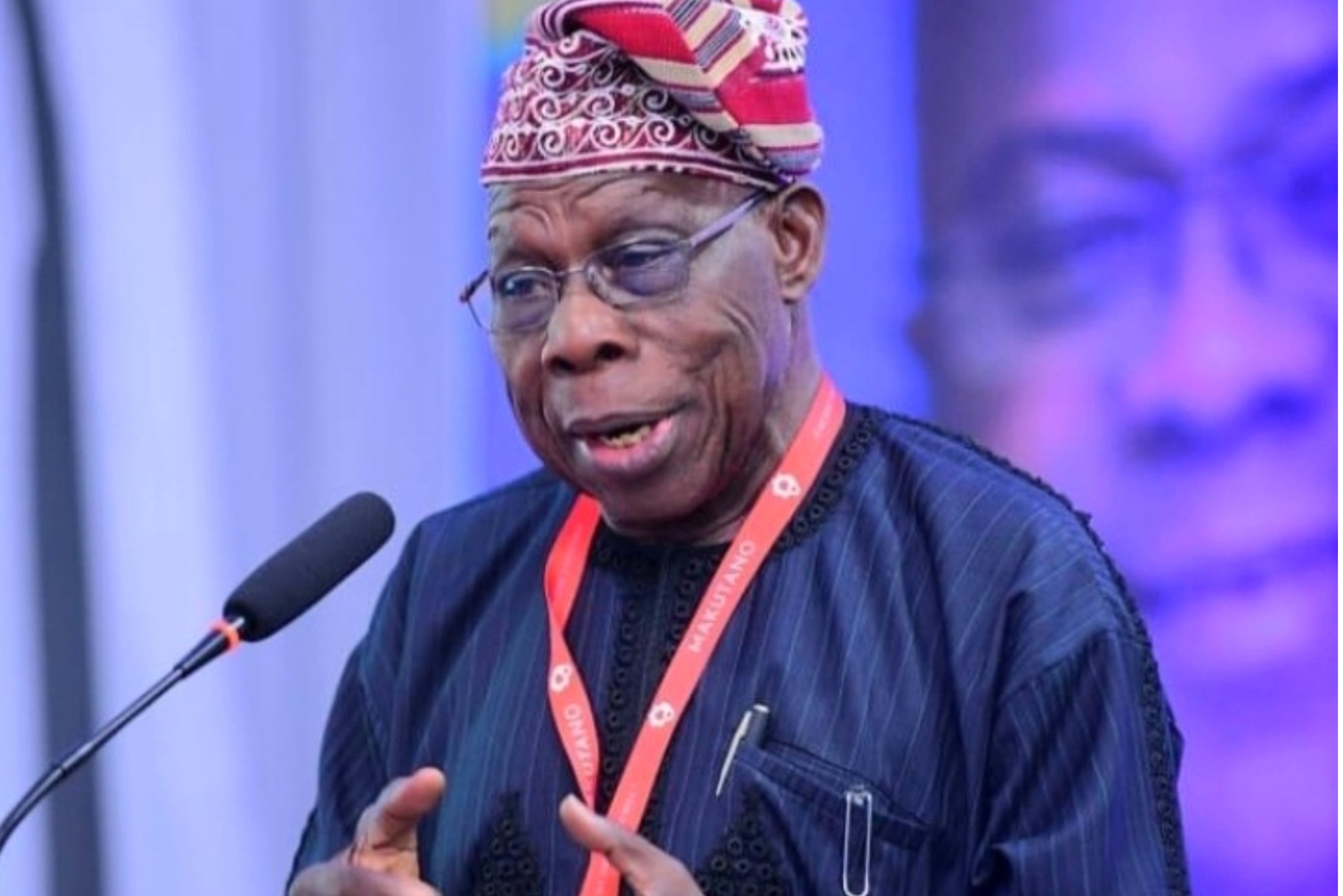
Obasanjo faults Osoba, accuses Atiku of impeachment plot before 2003 Poll; read details

Published

on

Former President Olusegun Obasanjo on Thursday rejected former Ogun State Governor, Chief Olusegun Osoba’s account of the political events leading to the 2003 general elections, insisting that he never deceived the leadership of the Alliance for Democracy.

In a lengthy statement titled, “Reply to Your Inaccurate Posture: ‘How Obasanjo Deceived Us in 2003’,” the former President described Osoba’s article published in The Legal Observer on July 20 as inaccurate, incomplete and “farfetched.”

Obasanjo also alleged that his former Vice-President, Atiku Abubakar, sponsored an impeachment plot against him during his first term and secretly worked with some political actors to stop his re-election in 2003.

He disclosed details of the political intrigues that shaped the country’s Fourth Republic.

The former President said he took “strong and serious objection” to Osoba’s allegation that he deceived the Yoruba political leadership ahead of the 2003 elections.

“I take strong and serious objection to your calling me a deceiver because I deceived nobody.

I always presented my case and all issues as I had them and as I understood them, no matter whose ox is gored,” Obasanjo said.

He argued that Osoba was not privy to several sensitive political engagements that took place between him and the leadership of Afenifere and the Alliance for Democracy, adding that many of the issues were handled by elders of the Yoruba political movement.

“There were issues you did not know or understand because, as you pointed out, they were above your head. They were handled by your elders in Alliance for Democracy and Afenifere,” he stated.

Obasanjo defended the outcome of the controversial 2003 governorship elections in the South-West, which saw the PDP capture five of the six states controlled by the Alliance for Democracy.

He maintained that the defeats suffered by the AD governors reflected the mood of the electorate.

“Your loss or defeat in 2003 was genuine in all the six states except the one where the figures were successfully and murderously changed,” he alleged.

He also claimed that Osoba barely campaigned before the election and eventually apologised to Ogun residents during a television appearance for what he described as his arrogant disposition.

He said: “Your loss or defeat in 2003 was genuine in all the six states except the one where the figures were successfully and murderously changed as Chief Tinubu, the Head of Service in Lagos State then, accurately reported to me. I took it as what God allowed.

“From information that reached me from the political field, you barely campaigned, and at the tail end of the campaign, you went on TV to apologise to the people for your arrogance and informed them that the starch in your agbada caused your arrogant appearance.”

Obasanjo also alleged that his former Vice-President, Atiku, masterminded an impeachment plot against him through the then Speaker of the House of Representatives, the late Ghali Na’Abba.

See also  2027: Kwankwaso supporters propose Obi-Kwankwaso presidential ticket

According to the former President, the alleged plot began while he was away from the office on a Friday.

He claimed that the Vice-President invited Na’Abba to his office and allegedly provided him with N5m to commence impeachment proceedings.

Obasanjo said: “And that takes me to Na’Abba’s impeachment you glowingly talked about. And the way you wrote about it, talking about remorse would suggest stack ignorance on your part or being an accomplice. And both were possible.

“Na’Abba’s impeachment began at the presidency by the Vice-President, who on a Friday when I was out of the office, invited Na’Abba to his office and convinced him, as he had convinced himself and some others but of insignificant number, that I should have only one term as President and this was the act of a man I brought up from governorship to Vice-President.

“From the first day as Vice-President, he raised campaigners for his presidency. On the Friday, he invited Na’Abba; he gave him N5 million to begin his impeachment work. It was all noted, recorded and reported to me by my Chief of Staff, a professional intelligence officer.

“The game continued to be played on with me treating it with contempt as I have committed no impeachable offence except my Vice-President who wanted to take over by hook or by crook.

“It was President Shagari who, on his own volition, asked me about impeachment and I told him that for me, there was absolutely nothing in it.

“He requested my permission to handle it and, of course, I gave him the go-ahead. Aremo Olusegun Osoba, please show me what you will be remorseful for if you were in my position.”

The former President further alleged that after the impeachment bid failed, the former Vice-President pursued another political arrangement involving the six AD governors.

Obasanjo said: “There is one thing more that you may need to be reminded of in the AD governors and my Vice-President honeymoon.

“When he failed in the impeachment exercise, he made a two-track approach: one to go with Alex Ekwueme and Alex to hand over to him in the third year of his presidency; second is for the six AD governors of South-West not to have competition from any other party in 2003 so that in 2007, you would all yield the field to my Vice-President.

“You were all convinced of this anti-democratic plan, and you all fell for it. I was told that I was said to be selling the idea, and if that was said of me, it was a lie.

“Aremo, such was sold to you: an idaro. And none of you thought it fit to check with me, or I was not worth checking with, since I was not a nominee of AD/Afenifere. Have no dealings with Obasanjo as President but deal with his Vice-President and you would get the best that was a clever political move.”

See also  Presidency backs EFCC on Atiku’s son-in-law hunt

Tracing events after his release from prison, Obasanjo disclosed that although he initially wanted to focus on family matters, particularly his children’s education, he was later persuaded by different political groups to return to active politics.

According to him, the first delegation urging him to contest for office was led by Lawan Katsina at his Ota Farm, followed by another headed by the late Chief S.M. Afolabi, while a third delegation was led by the late Dr Martins Kuye.

He explained that because the latter delegations were predominantly Yoruba, he insisted that consultations should be broadened to reflect Nigeria’s diversity.

Obasanjo said he subsequently embarked on consultations across the country’s three major regions before joining the Peoples Democratic Party.

He said he consulted prominent leaders including the late Chief Meredith Akinloye, the late Chief Bola Ige, the late Chief Richard Akinjide, Prof Oyeleye, the late Sunday Awoniyi, the late Adamu Ciroma, Prof Anezi Okoro and Arthur Mbanefo.

“That quick consultation was like a sounding board. It gave me a quick and good feel,” he said.

The former President maintained that politics should never create permanent enemies, stressing that competition should be based on ideas rather than personal animosity.

To illustrate the point, he recalled his cordial relationship with the late former Vice-President, Dr Alex Ekwueme, despite contesting against him for the PDP presidential ticket.

“While competing with Alex Ekwueme, I was a guest in his house when I went to Anambra to campaign. We ate together, and the following morning, I went out to campaign,” he said.

Obasanjo also revisited his relationship with the late Afenifere leader, Chief Abraham Adesanya, revealing that despite repeated visits to seek support, the elder statesman consistently maintained that the Yoruba would not vote for him.

“On three occasions, I visited Chief Abraham Adesanya, and on the three occasions, he vowed that the Yoruba would not vote for me. I never stopped calling on him to report and to campaign.”

According to Obasanjo, Adesanya urged him to join the Alliance for Democracy, but he declined because he believed the party had become “essentially a tribal party.”

“I told him that AD as essentially a tribal party was in a cul-de-sac,” he stated.

The former President said their political disagreement never affected their personal relationship.

Obasanjo defended his decision to accommodate members of the Alliance for Democracy in his administration after assuming office in 1999.

He said the move was driven by national integration rather than political weakness.

“Bringing PDP and AD to join me for a sort of national government was not out of weakness; rather, it was out of strength and the unity and progress of the country,” he said.

He disclosed that immediately after his inauguration, he appointed defeated PDP governorship candidates from the South-West to federal positions while simultaneously beginning consultations with influential AD leaders across the region.

See also  Opposition knocks FG over alleged $9m US lobbying deal

According to him, one of the earliest political figures he persuaded to join the PDP was the late Mrs Mobolaji Osomo.

“My position was simple: the Yoruba had been in the periphery for so long; let them come to the mainstream,” he said.

Responding to Osoba’s suggestion that he sought the assistance of the six AD governors to stabilise his administration, Obasanjo dismissed the claim as illogical.

He argued that with the support of 21 PDP governors, nine APP governors, the National Assembly and the Federal Executive Council, it was inconceivable that six opposition governors could dictate to him.

“Six to dictate to thirty is ridiculous. I had an Executive Council, I had a National Assembly, I had a virile political party, 21 governors and nine other governors from another party with my government,” Obasanjo said.

He insisted that while he was always willing to listen to opposing views, he would never surrender the authority of the Presidency to regional political interests.

The former President criticised Afenifere for what he described as its inability to evolve beyond ethnic politics.

He argued that the group’s refusal to support him stemmed largely from his refusal to identify with tribal politics.

“There were lessons to learn on both sides. I learned the lesson of whether the other side is right or wrong, there should be no bitterness, and there should be accommodation and tolerance.

“Afenifere and its political party never rose beyond tribal cul de sac. There is a lesson for all in that. And it would appear that once you were not an AD or Afenifere member, you would be a liar or a deceiver.

“If you failed to follow my line, you must be maligned and set out as an enemy. I have never believed in tribal politics,” the former President said.

Obasanjo added that several late Afenifere leaders, including Chief Adesanya, Chief Gani Daudu and Chief Ayo Adebanjo, later expressed regrets to him before their deaths over the direction the organisation eventually took.

Despite the sharp criticism, Obasanjo praised Osoba for allocating the land on which the Olusegun Obasanjo Presidential Library now stands in Abeokuta.

He described the gesture as one of the former governor’s greatest contributions to Ogun State.

“The greatest service you rendered for me and for Abeokuta is the land allocated for the Olusegun Obasanjo Presidential Library. It has become the most significant landmark in Abeokuta,” he said.

He urged Osoba to embrace humility and gratitude, saying politics should never destroy enduring personal relationships.

“It is not over until it is over and there is no end to humility and thanksgiving.

“In politics, no one should be ignored or disregarded, and politics may end, relationships may live till life’s end,” the former President said.

punch.ng

FOLLOW US ON:

FACEBOOK

TWITTER

PINTEREST

TIKTOK

YOUTUBE

LINKEDIN

Continue Reading
Click to comment

Leave a Reply

Your email address will not be published. Required fields are marked *

News

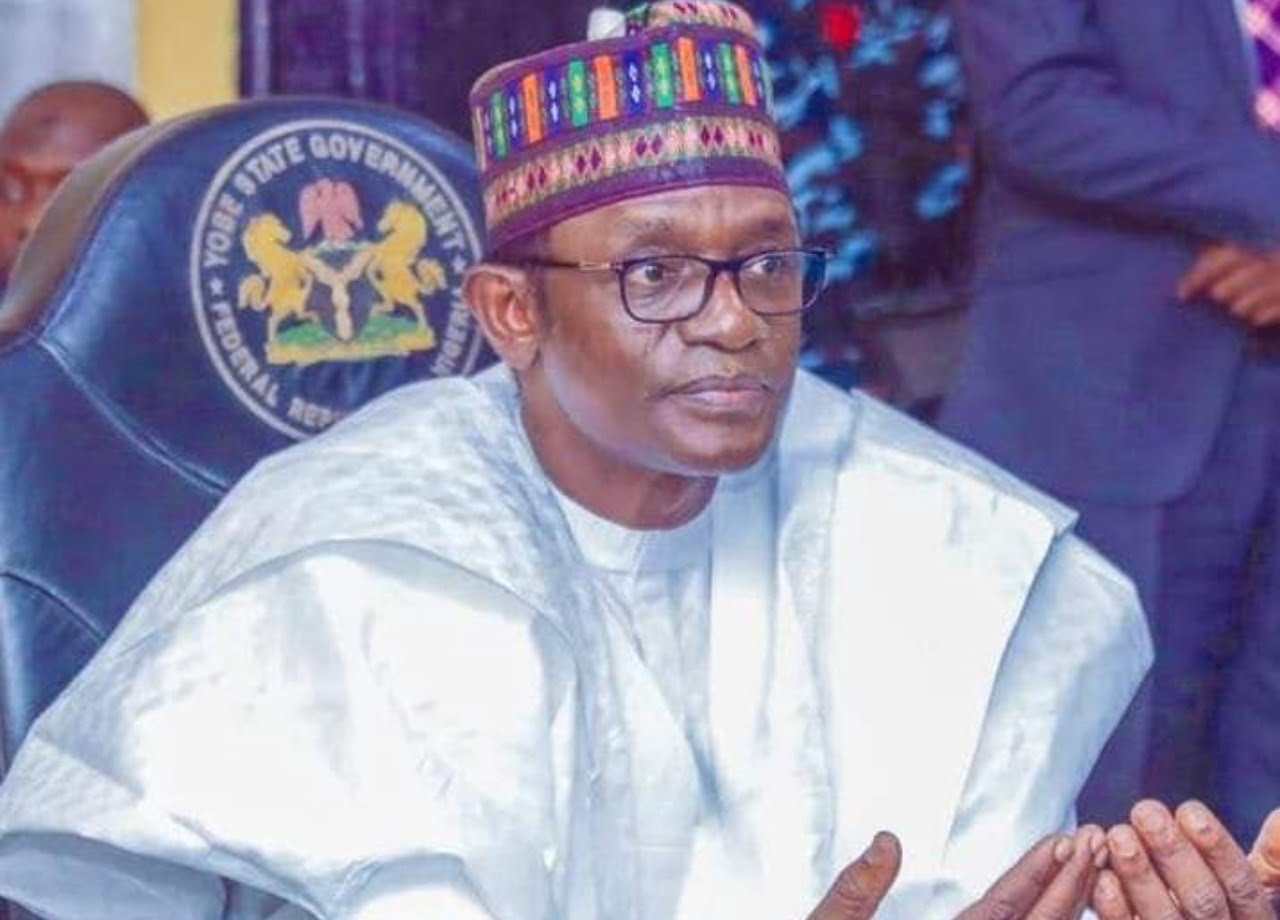
Buni presents N532bn 2027 budget to Yobe assembly

Published

on

Yobe State Governor, Mai Mala Buni, has presented a proposed budget of N532.27bn for the 2027 fiscal year, with recurrent expenditure taking the largest share of the estimates.

Buni presented the 2027 Appropriation and Finance Bills before the Yobe State House of Assembly in Damaturu on Tuesday, describing the proposal as the final budget of his administration.

Tagged the Budget of Consolidation, Sustainability and Inclusive Growth, the proposed budget represents an increase of N16.739bn, or 3.2 per cent, over the N515.532bn approved for the 2026 fiscal year.

A breakdown of the estimates shows that N288.426bn, representing 54.2 per cent, is allocated to recurrent expenditure, while N243.845bn, representing 45.8 per cent, is earmarked for capital projects.

Presenting the budget, Buni said it was designed to consolidate the achievements of his administration, complete ongoing projects and ensure the sustainability of existing investments.

He said, “Today, with a sense of humility and fulfilment, and in accordance with Section 121(1) of the 1999 Constitution of the Federal Republic of Nigeria (as amended), I once again stand before this Honourable House of Assembly to present the Eighth and last Finance and Appropriation Bills by this administration for your kind consideration and approval for the 2027 fiscal year.”

The governor said the administration would prioritise project completion, improved service delivery and prudent management of public resources.

“The 2027 budget is therefore designed to balance immediate service delivery with the long-term development interest of the state,” he said.

Buni disclosed that the education sector would receive N99.792bn, while N80.543bn was allocated to healthcare.

See also  2027: Atiku delays ADC membership card collection amid rumoured Jonathan comeback

He said the education allocation would support the completion of ongoing school construction and rehabilitation projects, the provision of teaching materials, assistance to tertiary institutions and scholarship programmes.

On healthcare, the governor said the government would sustain investments in hospital upgrades, maternity and emergency services, medical equipment and healthcare training institutions.

He also identified the establishment of a modern kidney centre in Gashua as one of the administration’s priority projects.

“We are equally committed to advancing the ongoing establishment of a modern Kidney Centre in Gashua, with emphasis on a safe, accessible, patient-centred treatment environment, appropriate dialysis equipment and the clinical and operational arrangements required for sustainable service delivery,” Buni said.

The governor said infrastructure development would remain a major priority, with emphasis on completing ongoing road, drainage, electricity and commercial infrastructure projects.

He specifically mentioned the Gashua-Masaba, Balanguwa-Kumagannam and Dumbulwa-Lailai roads among the projects requiring attention.

Other priority areas include agricultural development, livestock production, water supply, environmental protection, peacebuilding and the rehabilitation of communities affected by insurgency.

Reviewing the performance of the 2026 budget as of September 30, Buni said the state recorded revenue receipts of N347.078bn, representing 67.3 per cent of the annual projection.

He said the approved 2026 budget stood at N515.532bn, comprising N291.904bn for capital expenditure and N223.628bn for recurrent expenditure.

According to him, recurrent expenditure during the first nine months amounted to N139.346bn, while capital expenditure stood at N94.280bn.

The governor said the administration remained committed to the payment of salaries, pensions and gratuities despite prevailing economic challenges and the demands of post-insurgency recovery.

See also  Ebola: Uganda restricts transit for travellers from DR Congo

Buni, who described the 2027 proposal as the final budget of his administration, said the government would ensure an orderly transition and preserve ongoing development projects.

“Development must not depend entirely on the presence of any individual in public office. It must be supported by strong institutions, competent public servants, credible planning frameworks and effective systems of accountability,” he said.

The governor assured residents that his administration would continue to discharge its responsibilities until the final day of its tenure.

“We shall continue to work, supervise, deliver and remain accountable until the final day of our mandate. There will be no abandonment of our responsibilities and projects,” he said.

He urged the House of Assembly to give the proposed budget timely consideration and passage.

In a political appeal towards the end of his address, Buni urged the people of Yobe to support President Bola Tinubu’s second-term ambition, arguing that the state’s membership of the ruling All Progressives Congress had created opportunities for it to benefit from the Federal Government.

He also commended Tinubu for approving the Federal Government’s takeover and reimbursement of the Muhammadu Buhari International Cargo Airport project in Damaturu, saying the intervention would free up resources for other development projects.

Source: punchng.com

FOLLOW US ON:

FACEBOOK

WHATSAPP CHANNEL

TWITTER

PINTEREST

TIKTOK

YOUTUBE

LINKEDIN

INSTAGRAM

Continue Reading

News

US military base shooter seeks halt to firing squad execution

Published

on

Nidal Hasan, who is set to be executed by firing squad next month for his 2009 massacre at a US military base, asked a court on Tuesday to halt his execution, according to documents obtained by AFP.

The former US Army major and military psychiatrist asked a federal court to delay his execution, which is set for December 3, while he prepares a case to challenge it on constitutional grounds.

If the execution goes ahead, Hasan will be the first person killed by a US military firing squad since 1945.

A furore over plans to livestream the killing erupted in early October.

US Defence Secretary Pete Hegseth initially said the execution would be “public” before a Pentagon spokesperson added it would be available online.

Concerns mounted far and wide about making the execution into a spectacle and turning Hasan into a martyr.

After days of debate and condemnation, US President Donald Trump cancelled the plans to broadcast the killing, while allowing some witnesses to observe it in person.

Hasan killed 13 people, including 12 soldiers, and wounded 30 others in his November 2009 rampage.

He was shot by a civilian police officer and is paralysed from the waist down.

During his trial, Hasan chose to conduct his own defence, and court-appointed attorneys raised concerns that he was seeking to be executed.

Ultimately, he was sentenced to death by a military jury in 2013.

AFP

Source: punchng.com

FOLLOW US ON:

FACEBOOK

WHATSAPP CHANNEL

TWITTER

PINTEREST

TIKTOK

YOUTUBE

LINKEDIN

INSTAGRAM

See also  After over 200 days in detention, El-Rufai speaks on silence of friends he stood by in the past
Continue Reading

News

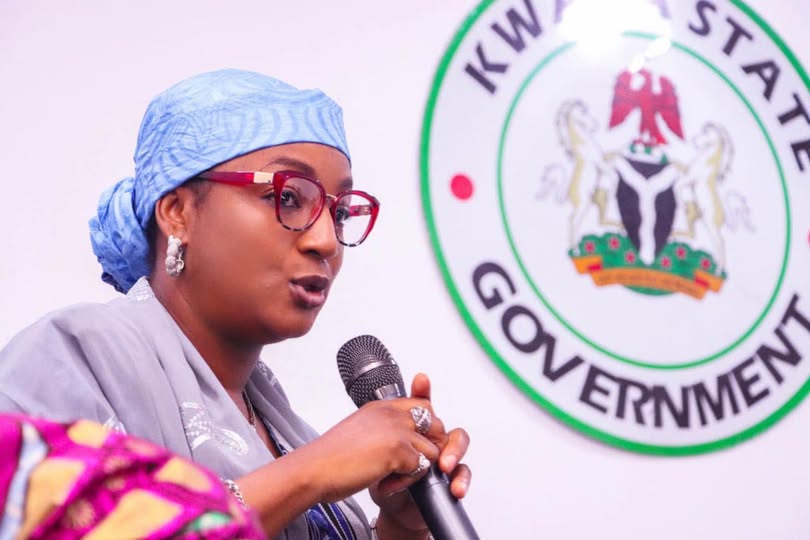
Kwara unveils five-year strategy to tackle malnutrition, read full details

Published

on

The Kwara State Government has unveiled a five-year nutrition strategy aimed at tackling the social, cultural and behavioural factors contributing to malnutrition, particularly among women and children.

The development was contained in a statement issued on Tuesday by the Assistant Press Secretary, Ministry of Health, Funke Olutemilehin, following the unveiling of the strategy by the Commissioner for Health, Amina El-Imam.

The State Social and Behavioural Change Strategy for Nutrition Across the Life Cycle was unveiled at a dissemination meeting held at the ministry’s headquarters on Monday, with representatives of the United Nations Children’s Fund, government ministries, departments and agencies, religious organisations and civil society groups in attendance.

Speaking at the meeting, El-Imam said addressing malnutrition required interventions beyond the provision of healthcare services and nutrition commodities.

“Poor nutritional knowledge, harmful traditional beliefs, inadequate dietary practices, gender norms, poor health-seeking behaviour and weak community engagement remain major contributors to malnutrition,” the commissioner said.

El-Imam explained that the ministry, with financial and technical support from UNICEF, had successfully domesticated, costed and validated the National Social and Behavioural Change Strategy for Nutrition Across the Life Cycle.

“The framework will promote positive nutrition practices through strategic communication, advocacy, community mobilisation, social norm transformation and stronger intersectoral collaboration,” she added.

Highlighting the state’s progress, the commissioner disclosed that findings from the Mini Nigeria Demographic and Health Survey 2025/26 showed that stunting prevalence in Kwara had declined from 40.8 per cent to 35.5 per cent.

“Stunting prevalence has reduced from 40.8 per cent to 35.5 per cent, wasting from 6.1 per cent to 3.5 per cent and underweight from 24.5 per cent to 14.8 per cent,” she said.

See also  Trump threats: Tinubu rallies foreign allies as North rejects Sharia ban

El-Imam attributed the improvements to sustained government commitment and interventions, including Accelerating Nutrition Results in Nigeria 1.0, nutrition promotion campaigns, dietary diversification and micronutrient supplementation.

She also listed the distribution of oral rehydration salts and zinc at primary healthcare facilities and community levels among the interventions contributing to the progress recorded.

The commissioner called on ministries, departments and agencies, development partners, traditional and religious institutions, the media and community structures to support the transition to ANRiN 2.0.

She urged stakeholders to ensure effective implementation of the strategy, stressing the importance of collective action in addressing the factors responsible for malnutrition.

In his remarks, the Acting Chairman of the State Committee on Food and Nutrition, Mohammed Ibrahim, representing the Ministry of Planning and Economic Development, reaffirmed the state government’s commitment to improving nutrition outcomes.

Ibrahim disclosed that the government had contributed N100m to the Child Nutrition Fund, which UNICEF leveraged at a one-to-one ratio to procure 3,964 cartons of Ready-to-Use Therapeutic Food.

He also highlighted advocacy for six-month paid maternity leave and sustained investments in primary healthcare as part of the state’s efforts to improve maternal and child nutrition.

The acting chairman said, “We need adequate budgetary provisions and stronger multisectoral collaboration to further accelerate improvements in the nutrition indices of the state.”

Earlier, the Nutrition Focal Person in the Ministry of Health, Dr Habib Abayomi Lawal, commended members of the multisectoral committee for their contributions towards improving nutrition outcomes.

Lawal urged stakeholders to sustain their collaboration and demonstrate continued commitment to the successful implementation of the strategy.

See also  Opposition knocks FG over alleged $9m US lobbying deal

Source: punchng.com

FOLLOW US ON:

FACEBOOK

WHATSAPP CHANNEL

TWITTER

PINTEREST

TIKTOK

YOUTUBE

LINKEDIN

INSTAGRAM

Continue Reading

Trending