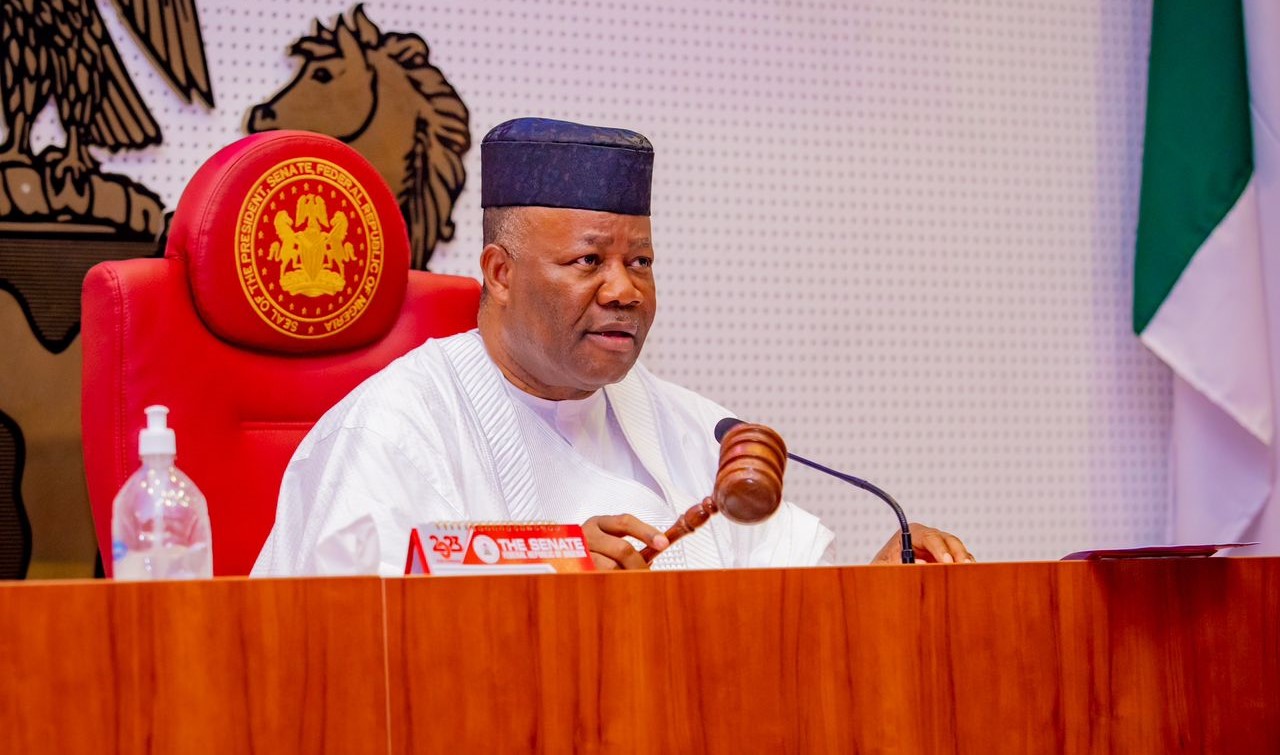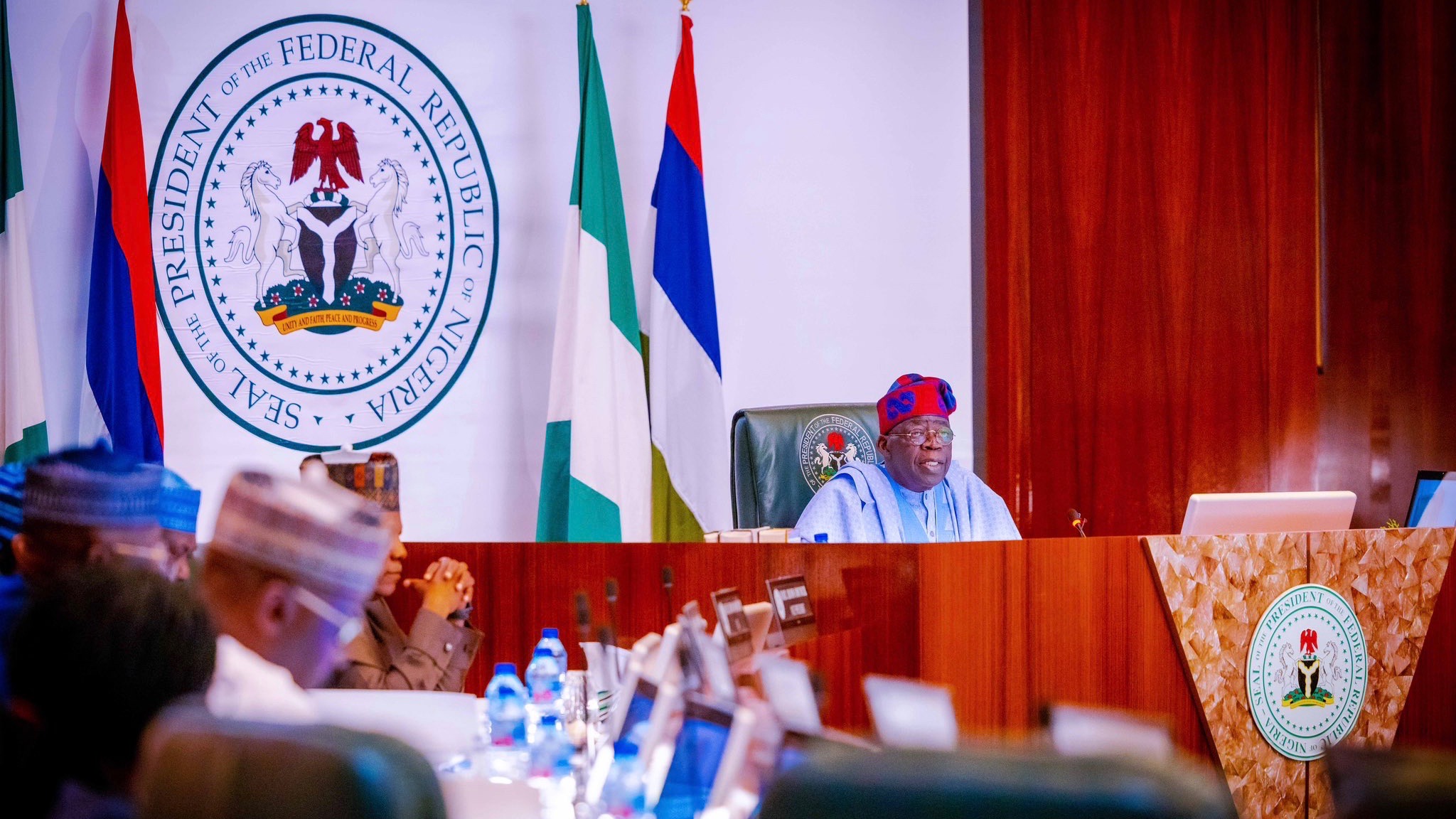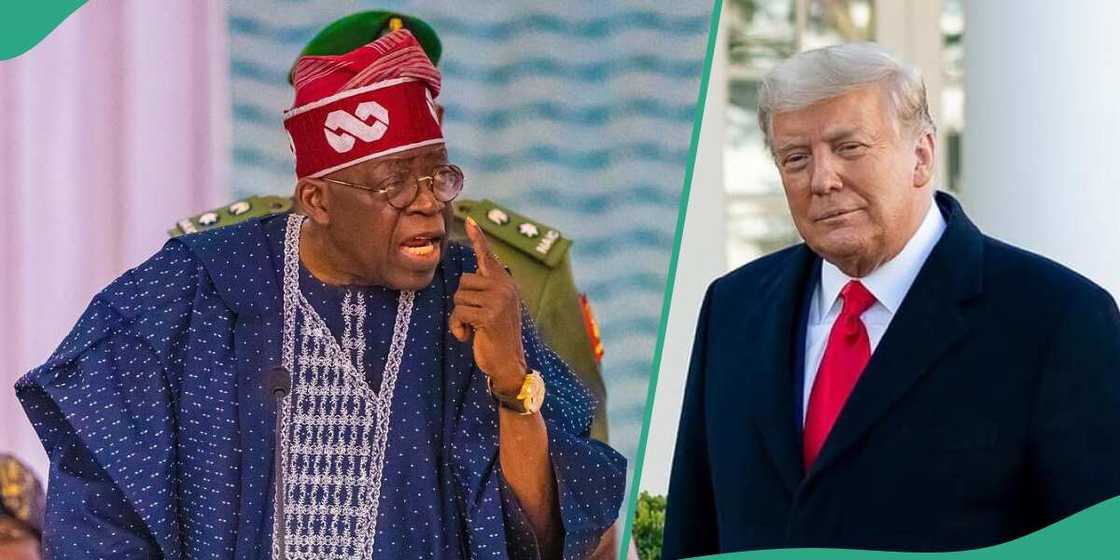
President Bola Tinubu on Thursday said his government was engaging with the world diplomatically following remarks by U.S. President Donald Trump, who threatened military action against terror groups in Nigeria over the alleged mass killing of Christians.
This was a coalition of northern elders that rejected calls by some U.S. right-wing lawmakers to ban Sharia law in the country.
Speaking at the Federal Executive Council meeting shortly after swearing in two new ministers, Dr Bernard Doro and Dr Kingsley Udeh (SAN), Tinubu urged Nigerians not to succumb to despair, promising that the government will defeat every form of terrorism and secure every part of the country.
“We assure all of you that we will defeat terrorism in this country,” Tinubu said at Thursday’s meeting held at the Council Chamber of the State House, Abuja, the first since July.
Tinubu stated that Nigeria remains on a steady growth trajectory, with more promise of stability and prosperity as economic reforms continue to yield results and gain national and international acceptance.
On the current state of the economy and the relationship between Nigeria and the United States, President Tinubu assured, “The most important thing is the fact that despite the political headwinds and the fear of our people, we will continue to engage with partners.
“The success of the $2.3bn eurobond that was oversubscribed by 400 per cent is the most assuring. So, the task ahead is immense; we are engaging the world diplomatically, and we assure all of you that we will defeat terrorism in this country.”
“The task ahead is immense, but it is our resolve to move forward with unity and purpose, guided by the Renewed Hope Agenda to build a prosperous, inclusive and resilient Nigeria,” he further stated.
Tinubu’s remarks come just days after U.S. President Donald Trump threatened military action against terror groups in Nigeria over the alleged mass killing of Christians.
Trump, in a post on his social media platform on Friday, announced that he was labelling Nigeria a “Country of Particular Concern.”
Hours later, he said he had instructed congressional Republicans to “immediately look into this matter” and report back to him.
On Saturday, Trump said he had ordered the U.S. Department of War to “prepare for possible action” in Nigeria over the country’s alleged killing of Christians.
Speaking on Thursday, Tinubu called Ministers and other officials to ensure consistency in communication and avoid discordant messaging.
Nigeria calm, not in panic mode—FG
Minister of Information and National Orientation, Mohammed Idris, who addressed State House correspondents after the Council meeting, said the Federal Government was calm and would not panic over Trump’s threats.
Idris said the government had opened formal diplomatic channels with the U.S. to address the matter.
He also clarified that Nigeria is responding responsibly and strategically, in line with its constitutional obligation to protect all citizens regardless of religion or ethnicity.
“But there is no panic mode here. We are responding responsibly, steadily, and in the interest of our country, also taking into account the concerns both from within and outside this country of what the situation in this,” Idris told journalists at the Aso Rock Villa.
Responding to whether the U.S. position is affecting governance at home, the Information Minister said discussions have commenced with American officials through appropriate diplomatic channels.
He insisted that Nigeria prefers a diplomatic resolution rather than escalating rhetoric.
“Have we had any discussions with the U.S.? Yes. Channels have been opened. We prefer that this situation be solved diplomatically,” he said.
“Let me say that the government of Nigeria is really very stable.
“The President is calm. Like we have said, he’s calm. The Federal Executive Council members are indeed very calm.
“That is not to discountenance the issue. We are not saying that,” he noted.
Idris insisted the Tinubu administration is not indifferent to the challenges.
“Are there security issues in the country? Yes. Are lives being lost? Yes. But is the government responding? Absolutely,” he said, adding, “We are confronting these problems with responsibility and balance.”
The Minister reiterated that Nigeria remains a pluralistic society where freedom of religion is constitutionally protected.
“But let me say for the umpteenth time, Nigeria is a country that has tolerance for religion. So whatever you practice, whatever is your faith, our Constitution guarantees that you are free to practice that. The Nigerian government will continue to impress on the security agencies to maintain law and order wherever they are. We’re also going to do more so that whatever concerns there are, the government of Nigeria will take care of those concerns,” he said.
The Tinubu administration, he said, remains open to partnerships with the international community and regional actors in tackling terrorism and extremist violence, which he noted are not unique to Nigeria.
Northern Groups reject Trump’s sanctions over Sharia laws
In the wake of Donald Trump’s public threats, several U.S. lawmakers and rights groups stepped up calls for tougher action, including a push to eliminate the legal regime of Sharia law in parts of northern Nigeria.
For example, U.S. lawmaker Ted Cruz, in September, introduced the “Nigeria Religious Freedom Accountability Act of 2025”, arguing that Nigerian officials who enforce or support Sharia and blasphemy laws should face sanctions and that Nigeria must be treated as a “country of particular concern.”
Beyond Congress, U.S.-based human‑rights organisations such as Alliance Defending Freedom and Advancing American Freedom filed petitions urging the U.S. State Department to designate Nigeria for severe religious‑freedom abuses, citing reports that “12 state governments enforce Sharia law, including blasphemy laws” in the country. Other groups also called for sanctions on Nigerian government officials and governors of the 12 northern states.
As of 2025, 12 northern states have officially implemented Sharia law to varying degrees. They are Zamfara, Kano, Katsina, Sokoto, Kebbi, Jigawa and Borno. Others are Yobe, Bauchi and Gombe, while Kaduna and Niger have only partially enforced the laws.
While commending Trump for redesignating Nigeria as a “Country of Particular Concern”, Cruz urged the White House to sanction the state governments and officers to incentivise them to stop the “mass murder” occurring in Nigeria.
The sanctions may include travel visa bans, asset freezes, and financial and other intergovernmental restrictions between the U.S. and Nigeria.
However, the Northern Elders Forum and the Coalition of Northern Groups have kicked against the move, describing it as “a direct assault on Islam.”
They insisted that the northern states will not yield to pressure from the United States Government or President Donald Trump.
First adopted by Zamfara State, under Governor Ahmed Sani Yerima, the Sharia Law, otherwise referred to as Islamic Law, is a legal system derived from the Qur’an, the Hadith (sayings and actions of Prophet Muhammad), and Islamic jurisprudence.
While previously mostly covering personal conduct like marriage, inheritance, and moral behaviour, Sharia has been expanded to cover criminal justice, and in some cases, serving as the penal code for northern states.
NEF Spokesperson, Prof Abubakar Jiddere, said the threatened sanctions were “empty threats”, describing President Trump’s comments on the alleged mass killing of Christians in Nigeria as “arrogance”.
“The Northern Elders Forum has frowned, seriously frowned at this threat, which to me, as far as I’m concerned, is an empty threat. Because even in the U.S., it has not gone through the normal process. It’s just Trump’s personal arrogance that he made this statement,” he told our correspondent in a phone call on Thursday.
He added that there was no genocide in the north, as far as the Forum was concerned, nothing that “both Christians and Muslims are facing the same challenge.”
Jiddere further alleged a hidden agenda by the American government, stating that Nigeria’s renewed business dealings with the Chinese made the U.S. “uncomfortable”, prompting the use of force.
The National Coordinator of the Coalition of Northern Groups, Jamilu Aliyu Charanchi, on his part, said the threatened sanctions were only likely to increase anti-Western sentiments and deepen distrust against the Nigerian government, describing Sharia as not just a law but an identity for the majority of the Northern states.
He added that any northern governor who attempted to suspend or weaken Sharia law to avoid U.S. sanctions would face intense backlash from religious scholars and the public, who view the laws as divine and non-negotiable.
“For the majority of these states, Sharia is not just law, but an identity–deeply tied to faith, culture, and local legitimacy. Any northern governor who attempts to halt or weaken Sharia enforcement would face intense backlash from religious scholars, traditional institutions, and the general public, who see Sharia as divine, not negotiable,” he stated.
Respect Nigeria’s sovereignty, South-West Islamic clerics urge U.S.
Islamic clerics from the South-West zone under the aegis of the League of Imams and Alfas in Yorubaland, on Thursday, advised the U.S. and international bodies to avoid any form of external interference that could undermine internal peace efforts in Nigeria.
In a communiqué read by Grand Mufti of Yorubaland, Sheikh AbdulRasaq Ishola, the clerics, after a meeting in Ibadan, the Oyo State capital, appealed to Trump to “respect Nigeria’s sovereignty.”
“Nigeria’s Sovereignty must be respected: We urge all international bodies and world leaders, particularly the USA, to respect Nigeria’s sovereignty and avoid hasty generalisations or external interference that could undermine our internal peace efforts,” they maintained.
The meeting was attended by Sheikh Jamiu KewuLere, President, Leaque of Imams and Alfas in Yorubaland, Sheikh Saadallah Bamgbola, Vice President, Leaque of Imams and Alfas in Yorubaland, Sheikh AbdulGaniy Agbotomokekere, Grand Patron, Leaque of Imams and Alfas in Yorubaland, Sheikh Muhammad Rabiu, Chief Imam of Osun State, Sheikh AbdulHakeem Yayi, Chief Imam of Ondo State, Sheikh Seifudeen Olowooribi, Chairman, Lagos State Rabita, Sheikh Habeebullah Adam Abdullah Al-Ilory, Chairman Board of Trustee, League of Imams and Alfas in Yorubaland and Sheikh Mustapha Olawale Hossein Doak, General Secretary, League of Imams and Alfas in Yorubaland.
Evangelical Fellowship Urges FG to Disarm Terrorists, Ensure Justice
The Nigeria Evangelical Fellowship has called on the Federal Government to decisively disarm terrorists, end killings, and protect religious freedom across the country.
In a communiqué issued after its 60th Anniversary Summit, the group warned against the growing threat of terrorism and demanded swift government action to restore stability and justice.
The group dismissed foreign claims of Christian genocide, insisting that violence in Nigeria is not faith-based but driven by terrorism and poor governance. It urged the government to ensure safe returns for displaced communities, protect vulnerable citizens, and address root causes of insecurity, including poverty, unemployment, and exclusion.
CSOs protest Trump’s threats
Civil society groups under the Human Rights Monitoring Agenda staged a protest at the Lagos Assembly against U.S. President Donald Trump’s threat of military action over alleged Christian genocide in Nigeria.
The protesters submitted a petition urging the U.S. Congress to reject what they called “a reckless threat” and review Nigeria’s CPC (Country of Particular Concern) designation.
Convener Buna Isiak stated, “We are a sovereign nation, not Gaza,” and warned that such rhetoric could worsen investor confidence and destabilise Nigeria’s economy. The petition insisted that Nigeria’s security challenges affect all citizens, regardless of religion, and are rooted in extremism, not state-sanctioned persecution.
Ex-W’Bank Adviser faults Nigeria’s foreign policy strategy
Meanwhile, former World Bank economic adviser, Dr Mahmoud Alfa, warned that Nigeria risks long-term disadvantages in global negotiations due to its lack of strategic economic diplomacy. At a policy event in Abuja, Alfa criticised Nigeria’s representation in bilateral engagements, saying many lack the political-economy expertise needed to safeguard national interests.
He proposed a Political Economy Coordinating Unit in the Presidency to align economic, foreign, and security policy. “Nigeria must negotiate like a country that knows what it wants,” Alfa stressed, citing failed deals such as Mambila and Ajaokuta as examples of poor negotiation outcomes.
He said the country must adopt a more innovative, more informed strategy to avoid exploitation in global economic affairs.
Nigeria Needs Policy Shift from Politics to Governance—Advocacy Group
The Director-General of Good Governance and Advocacy International, Leonard Anyogo, has called for a radical policy shift from political posturing to actual governance in Nigeria. Speaking in Calabar during a public lecture, Anyogo criticised the country’s obsession with elections, noting that governance often suffers as a result.
He described his organisation as a “Chatham House-style” policy hub that promotes people-centred governance.
Also speaking, Cross River’s Planning Commission Vice Chair, Dr Bong Duke, highlighted that the state now prioritises policies based on community feedback, shifting from “project count” to “impact count.”
He urged the Federal Government to cede control of roads to states for better accountability.
China reaffirms support for Nigeria
Meanwhile, China has reaffirmed its commitment to supporting Nigeria in its ongoing battle against terrorism and in maintaining internal stability.
The statement came from the Chinese Ambassador to Nigeria, Yu Dunhai, following a meeting with the National Security Adviser, Nuhu Ribadu.
Dunhai, in a post via his X account on Thursday, said, “Since President Tinubu attended the Beijing Summit of the Forum on China-Africa Cooperation and his state visit to China last year, practical cooperation between our two countries across various fields has yielded fruitful outcomes, effectively supporting Nigeria’s socioeconomic development and the improvement of people’s livelihoods.
“As a comprehensive strategic partner of Nigeria, China firmly supports the Nigerian government in leading its people to a development path that fits Nigeria’s national realities.”
The envoy also emphasised that China opposes foreign interference in Nigeria’s domestic affairs, particularly under the pretext of religion or human rights.
“We oppose any country’s interference in other countries’ internal affairs under the pretext of religion and human rights. We oppose the wanton threat of sanctions and the use of force.
“China is willing to continue supporting Nigeria in combating terrorism and maintaining domestic stability,” the ambassador added.
Earlier this week, China’s Ministry of Foreign Affairs had also expressed support for Nigeria.
Spokesperson Mao Ning told reporters in Beijing that every nation has the right to address its internal matters without external coercion or threats, reiterating opposition to foreign interference in Nigerian affairs.
The FG has consistently rejected allegations of religious persecution or genocide, stressing that its security operations are aimed at criminal groups and terrorist networks that threaten national peace.
Congress hail Trump for CPC label
Nonetheless, Trump reiterated on Wednesday evening that the U.S. could halt aid to Nigeria if the alleged persecution of Christians continues. This was as thirty-one members of the U.S. Congress commended him for designating Nigeria as a Country of Particular Concern.
In a statement released on Tuesday by House Values Action Team Chairman, Rep. Robert Aderholt, and sighted by our correspondent on Thursday, the lawmakers hailed Trump’s move as a necessary step to confront what they called “a growing Christian genocide” in Africa’s most populous country.
“President Trump’s commitment to end the Christian genocide in Nigeria and his designation of Nigeria as a Country of Particular Concern gives hope to the people of Nigeria. This persecution of Christians must end,” Aderholt said.
House Majority Whip, Tom Emmer, also praised Trump’s action, saying, “God bless President Trump for standing up and protecting Christians around the globe. The United States finally has a leader unafraid to do what’s right.”
Republican Chair Lisa McClain described the situation in Nigeria as “a moral outrage and a crime against humanity,” while Representatives Josh Brecheen, Mary Miller, and Mark Alford called for sanctions and stronger international pressure against those responsible for religious attacks.
Rep. Chris Smith, Chairman of the House Foreign Affairs Africa Subcommittee, highlighted that Trump’s decision reinstated the 2020 CPC designation that had been “unjustifiably” lifted by the Biden administration. He called it “a powerful step forward in holding the Nigerian government accountable for its complicity in the unchecked murder, rape, and torture of Christians.”
Other lawmakers, including Don Bacon, Andy Biggs, Gus Bilirakis, and Tim Walberg, echoed calls for Washington to employ “every diplomatic and strategic tool” to protect Nigerian Christians and ensure accountability.
Rep. Riley Moore, who helped bring the issue to Congress, called the designation a demonstration of strong leadership. Moore on Thursday announced plans to introduce a new resolution in the House of Representatives condemning what he described as the “ongoing persecution of Christians in Nigeria.”
In a post shared on his official X account, Moore said the measure would also express support for President Donald Trump’s efforts to defend persecuted Christians around the world.
“Tomorrow I will introduce a new resolution condemning the ongoing persecution of Christians in Nigeria and supporting President Trump’s efforts to defend our brothers and sisters in Christ. Thousands have been killed for their faith — and the world has looked away for far too long,” he wrote.
FG begins overhaul of police training colleges, security institutions nationwide
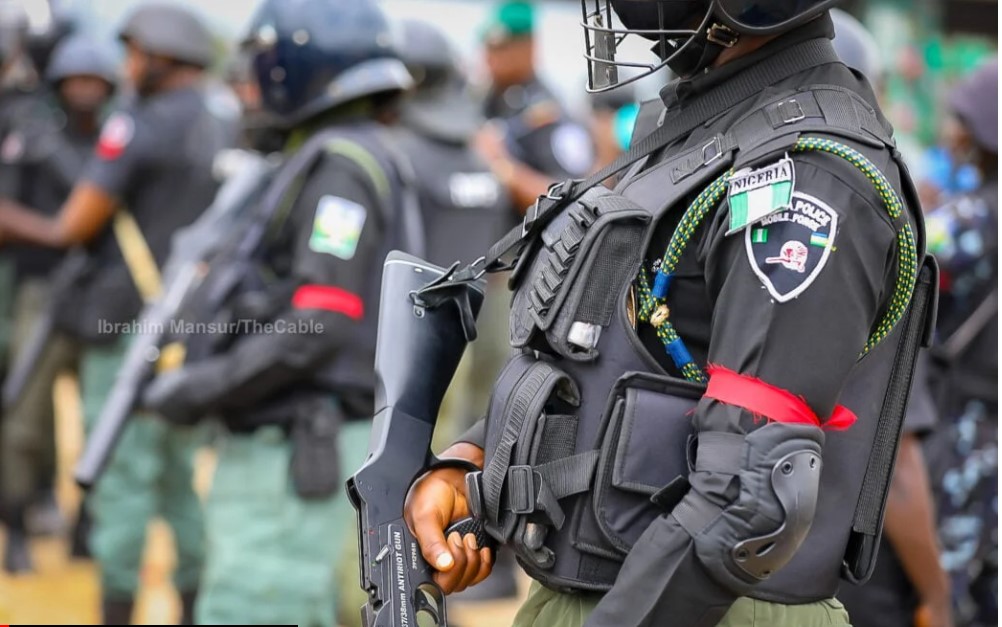
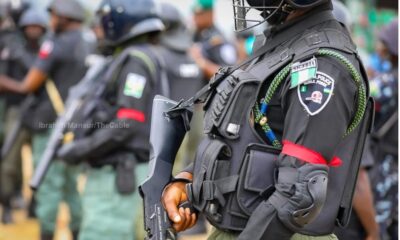
Meanwhile, the FG has commenced a nationwide overhaul of police training colleges and security institutions nationwide.
It said the move is to restore professionalism, integrity, and capacity within Nigeria’s internal security architecture, emphasising that all such facilities will undergo ‘total refurbishment’.
Chairman of the National Economic Council, Ad Hoc Committee on the Overhaul of Security Training Institutions, Governor Peter Mbah of Enugu State, disclosed this during an inspection visit to the Police Training College, Nonwa, in Tai Local Government Area of Rivers State on Thursday.
Mbah said the decision followed President Bola Tinubu’s personal recognition that Nigeria is at a security crossroad. According to him, nothing short of a complete and urgent transformation of the nation’s training facilities would suffice.
“The President came to the NEC meeting himself to inaugurate this committee because he recognised that we are at a security crossroads. Nothing short of a complete and urgent overhaul is required to secure our future,” Mbah stated.
He explained that the inspection was part of a fact-finding mission covering all police and Nigeria Security and Civil Defence Corps training centres nationwide.
“We have seen things for ourselves, and this re-echoes the President’s passion for getting things done urgently. We cannot demand integrity and professionalism from our men and women when the environment in which they are trained does not reflect the same, “Mbah noted.
Also speaking, Ogun State Governor Dapo Abiodun, who is also a member of the committee, revealed that the committee had split into northern and southern teams to ensure that the four-week deadline given by the President was met.
Rivers State Governor, Siminalayi Fubara, who accompanied the team, described the visit as a bold step of the President’s commitment to professionalising the Nigeria Police Force.
NAF chief vows to protect civilians, avoid collateral damage
Chief of the Air Staff, Air Marshal Sunday Aneke, has assured Nigerians that the Air Force will prioritise operational efficiency while preventing collateral damage. Addressing senior officers during his maiden strategic meeting at the NAF Headquarters in Abuja, Aneke emphasised the need for professionalism, civil-military engagement, and precision-led operations that align with President Tinubu’s directives.
He reiterated that the safety of civilians will be central to military operations, saying, “Protecting civilian lives and preventing collateral damage will remain a defining hallmark of our professionalism.”
His remarks come amid growing scrutiny over past airstrikes that inadvertently claimed civilian lives during anti-terror operations. Aneke also pledged that appointments within the service would remain merit-based and aligned with strategic and safety priorities.
Army Chief promises new commanders, improved troops’ welfare
For his part, the Chief of Army Staff, Lt. Gen. Waidi Shaibu, has pledged sweeping reforms to strengthen frontline troop welfare and ensure justice within the ranks.
During a visit to the Operation Hadin Kai headquarters in Maiduguri, Borno State, Shaibu told journalists that soldiers’ well-being and timely allowances would top his agenda, alongside the appointment of commanders who prioritise fairness and accountability. He commended the troops for their resilience and revealed that improved ration allowances were already in effect, with more welfare packages on the way.
DSS holds northern zonal security meeting
Directors of the Department of State Services from across Nigeria’s North-West gathered in Kaduna on Thursday to devise strategies against banditry and kidnapping.
Declaring the meeting open, Governor Uba Sani, represented by the Commissioner for Internal Security, described the DSS as “the invisible backbone” of national stability and urged sustained intelligence-led collaboration.
Emir of Zazzau, Ahmed Bamalli, highlighted how the DSS had helped resolve over 2,000 local disputes through alternative resolution methods. Officials also praised the DSS for vetting traditional leaders and strengthening inter-agency synergy. Kaduna’s DSS Director, Hakeem Abiola, cited the agency’s community-based peace model as a success in curbing insecurity across the zone.
ECOWAS, Islamic leaders tackle terrorism at regional security summit
Islamic scholars, traditional rulers, and ECOWAS leaders have jointly called for non-violent strategies to fight terrorism in West Africa at a regional conference in Abuja. The event, themed “The Role of Islamic Organisations in Countering Terrorism,” focused on reforming Islamic education, preventing youth radicalisation, and improving community resilience.
ECOWAS President Omar Touray said Africa had become the epicentre of global terrorism, with the Sahel bearing the brunt.
The Emir of Kano, Muhammadu Sanusi II, and AU Envoy Mohamed Chambas advocated a joint action plan to counter extremism through peacebuilding and education. The conference concluded with a declaration urging member states to empower Islamic institutions in the fight against radicalism.