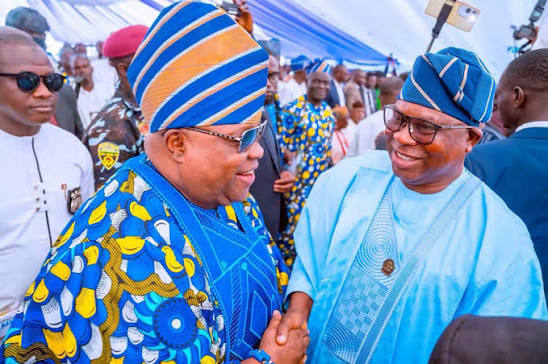
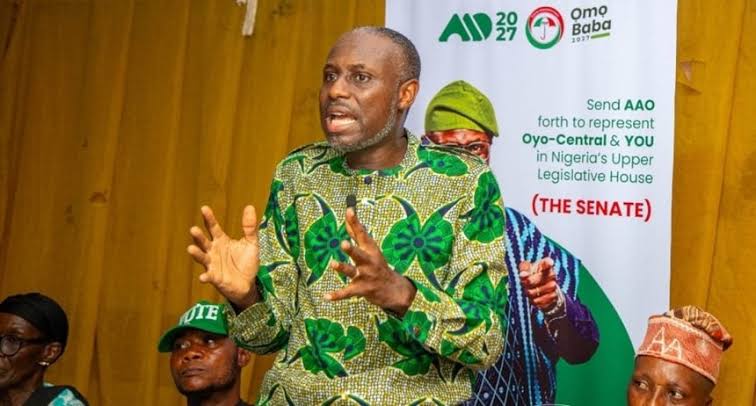
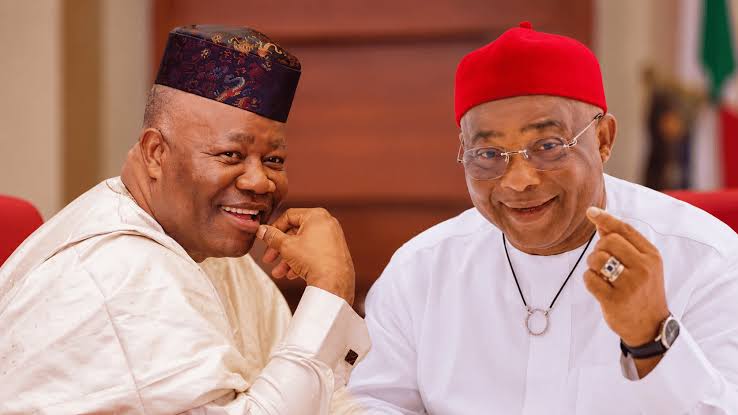
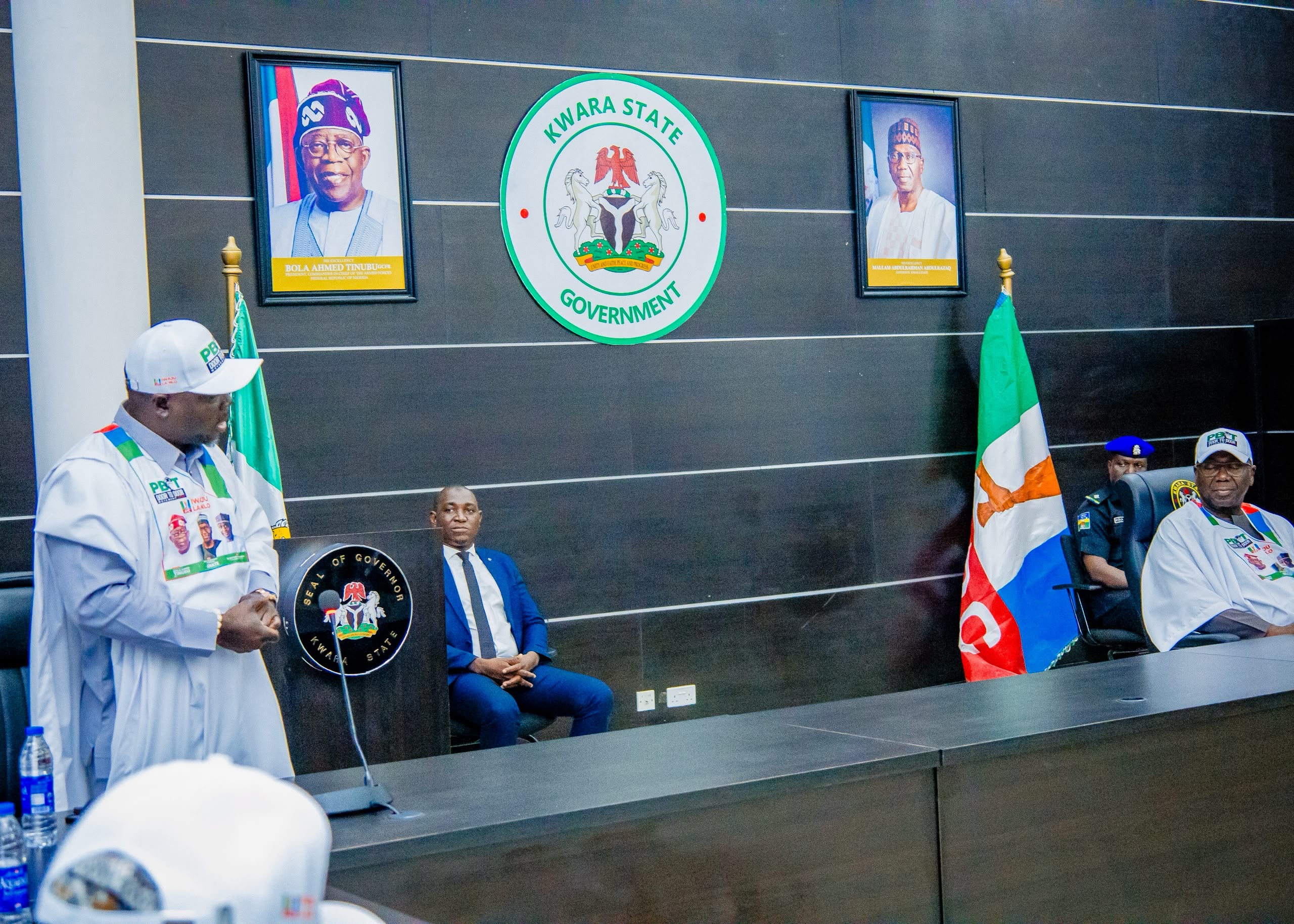
The battle for the presidency of the 11th Senate is gathering momentum ahead of the 2027 general elections, with incumbent Senate President Godswill Akpabio seeking another term, Imo State Governor Hope Uzodimma positioning himself for a return to the National Assembly, and the ruling All Progressives Congress facing competing interests over who should lead its legislative caucus, writes LAOLU AFOLABI
The race for the 11th Senate presidency is already generating political tensions, with incumbent Senate President Godswill Akpabio declaring “no vacancy,” Federal Capital Territory Minister Nyesom Wike opposing Imo State Governor Hope Uzodimma’s reported ambition, and Senator Adams Oshiomhole challenging a controversial amendment to the Senate Standing Orders that raised questions about eligibility for the coveted seat.
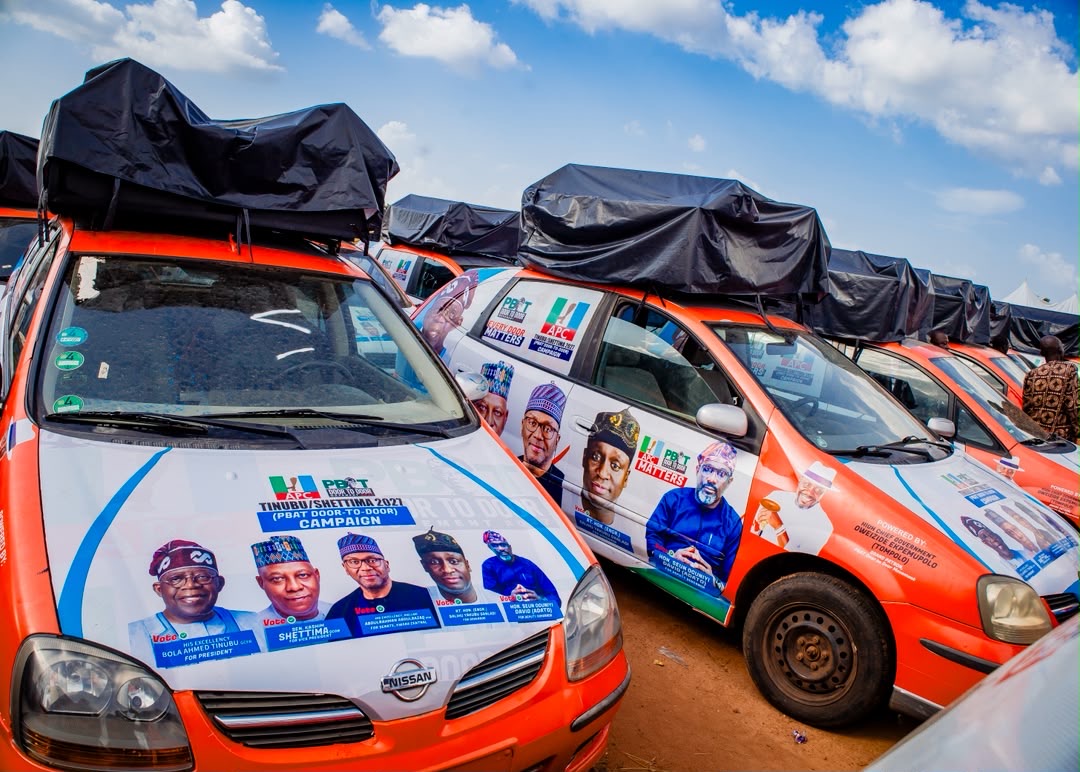
Former Zamfara State Governor Abdulaziz Yari, who challenged Akpabio for the Senate presidency in 2023, is also a significant figure in the unfolding political calculations. His appointment as Director-General of the APC Presidential Campaign Council for President Bola Tinubu’s 2027 re-election bid places him in a prominent position within the ruling party’s structure.
Although Akpabio has received public expressions of support from some serving senators, the contest for the next Senate presidency will ultimately depend on the composition of the 11th National Assembly and the votes of senators-elect when the chamber is inaugurated in June 2027.
Changing Senate leadership
Since the return to democratic rule in 1999, Nigeria’s Senate has had nine presidents: Evan Enwerem, Chuba Okadigbo, Anyim Pius Anyim, Adolphus Wabara, Ken Nnamani, David Mark, Bukola Saraki, Ahmad Lawan and Akpabio.
The frequent changes in the chamber’s leadership during the early years of the Fourth Republic reflected the political pressures and internal disagreements that have often accompanied the emergence of its presiding officers.
Enwerem, who became the first Senate President of the Fourth Republic in June 1999, was replaced by Okadigbo in November of the same year. Okadigbo was himself removed in August 2000, paving the way for Anyim, who served until 2003. Wabara succeeded Anyim but resigned in 2005, after which Nnamani led the chamber until 2007.
Mark’s emergence in June 2007 marked a period of relative continuity. He served through the sixth and seventh National Assemblies, from 2007 to 2015, becoming the first Senate President in the current democratic era to retain the position across two consecutive assemblies. His eight-year tenure remains the longest by any Nigerian Senate President.
Since Mark’s departure, the office has changed hands at four-year intervals. Saraki presided over the eighth Senate from 2015 to 2019, Lawan led the ninth from 2019 to 2023, and Akpabio emerged as Senate President when the 10th National Assembly was inaugurated in June 2023.
Akpabio’s ambition to return in 2027 would therefore put him in pursuit of a second consecutive term, a feat last achieved by Mark. If successful, he would become the second Senate President of the Fourth Republic to lead two successive assemblies.
2023 contest
Ahead of the inauguration of the 10th National Assembly, the APC endorsed Akpabio as its preferred candidate for the Senate presidency, being a Christian, since Tinubu and Vice President Kashim Shettima are both Muslims. Yari, a former governor of Zamfara State and senator representing Zamfara West, a Muslim, nevertheless pursued his ambition, attracting support from lawmakers who questioned aspects of the party’s leadership arrangement and its distribution of political offices.
Some analysts believe that Akpabio’s decision to become the first presidential aspirant to openly step down for Bola Tinubu during the APC presidential primaries in 2022 paved the way for his emergence as Senate President. His move reportedly opened the door for other contestants, including Kayode Fayemi and Ibikunle Amosun, to endorse Tinubu.
The contest for the Senate presidency culminated in a secret ballot on June 13, 2023, when Akpabio secured 63 votes against Yari’s 46 to emerge as Senate President.
“No vacancy” message
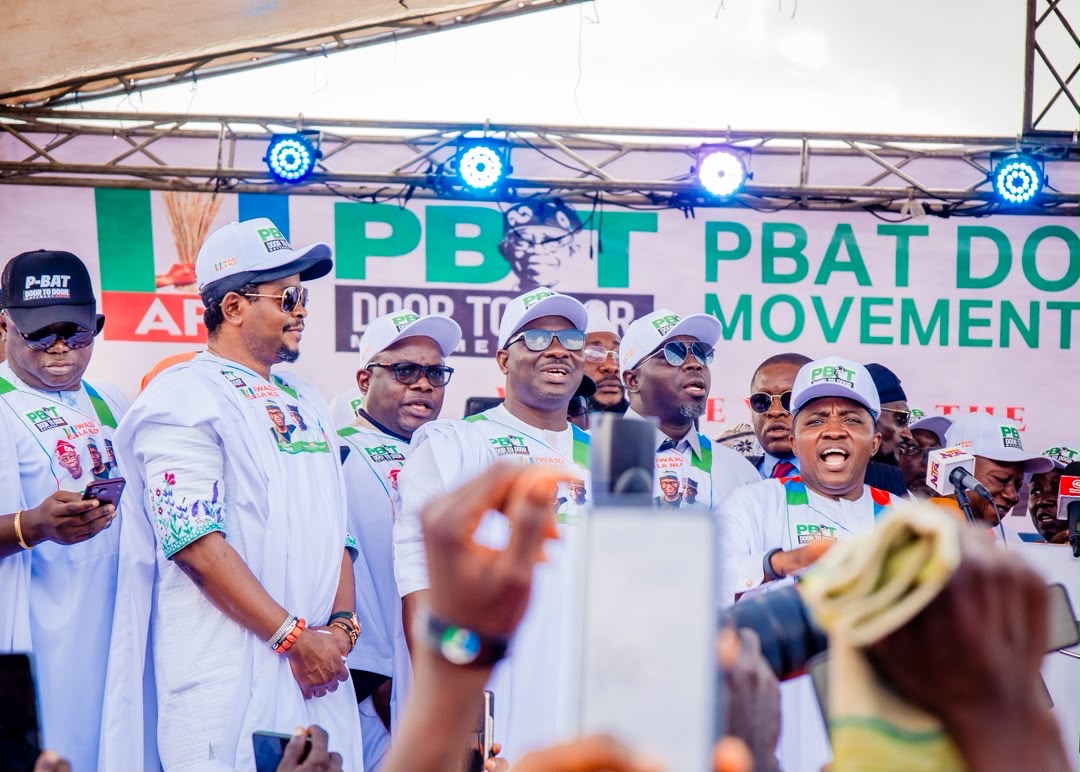
Akpabio has made it clear that he wants to retain the Senate presidency. At the inauguration of the APC Presidential Campaign Council in Abuja on October 14, he appealed to Tinubu to support his return and urged the President to discourage governors from seeking other political offices before completing their current responsibilities.
Although he did not name Uzodimma, the remarks came against the backdrop of reports that the Imo governor was positioning himself to succeed him.
Some serving senators have since declared their support for Akpabio’s return. During plenary on Thursday, October 15, Senate Chief Whip Tahir Monguno and Cyril Fasuyi expressed confidence that the incumbent and other principal officers would return to their positions after the elections, with Monguno declaring that there was “no vacancy” in the Senate presidency.
Wike vs Uzodimma
Uzodimma’s entry into the Imo West senatorial race has brought his reported Senate presidency ambition into sharper focus. The governor, who chairs the Progressive Governors’ Forum, secured the APC ticket for the district ahead of the 2027 elections.
His political standing gives him access to governors and influential party figures. His second term as governor is due to end in January 2028, while the 11th National Assembly is expected to begin in June 2027. He could contest the senatorial election while still in office, but if elected and intending to take his Senate seat at the inauguration of the new assembly, he would have to address the constitutional restriction against a governor simultaneously holding another public office. His decision would therefore involve leaving the governorship before the end of his term.
The political dispute has been sharpened by Wike’s opposition. In September, the FCT minister declared that he would not support Uzodimma’s reported bid for the Senate presidency. He accused some governors of seeking to influence the emergence of the next National Assembly leadership by determining which candidates enter the legislature.
For Uzodimma, the immediate requirement is to win the senatorial election and establish the support needed to pursue a leadership position. For Akpabio, it is to defend his incumbency in a contest that could involve lawmakers and political interests beyond the current Senate leadership.
Oshiomhole’s rules controversy
The controversy over the Senate Standing Orders in May 2026 introduced another dimension to the contest.
The Senate amended its rules to restrict eligibility for presiding and principal offices to lawmakers who had served at least two consecutive terms. The change came as speculation grew that former governors and other political figures were considering a return to the Senate in 2027, with some reportedly interested in the presidency of the chamber.
The amendment attracted opposition from Oshiomhole, the senator representing Edo North, who challenged the procedure and its implications for prospective candidates. His confrontation with Akpabio during plenary brought the disagreement into public view.
Oshiomhole subsequently called on Akpabio to resign, arguing that the process and substance of the amendment raised questions about fairness and the integrity of the Senate’s leadership arrangements.
The Senate later rescinded the amendments following concerns that some provisions could conflict with the 1999 Constitution, particularly its provisions governing the election of presiding officers.
The reversal did not settle the contest for the 11th Senate presidency. It removed the disputed restrictions but left the broader political question unresolved: which candidates will win Senate seats in 2027, and which of them will secure the votes required to lead the chamber?
S’South/S’East permutation
The South-East and South-South regions took a particularly hostile position against the All Progressives Congress in the build-up to the 2015 general elections, largely because of the political tensions surrounding the late President Muhammadu Buhari, Bola Tinubu and other prominent APC figures.
In both regions, the party was heavily demonised as the Peoples Democratic Party, led by then President Goodluck Jonathan, sought to retain power.
Jonathan’s defeat by Buhari in the 2015 presidential election deepened the political divide, particularly in the South-East, where the PDP had enjoyed considerable support. More than a decade later, however, there appears to be a difference in how the two regions have related to the APC. While the South-South seems to have gradually softened its opposition to the ruling party, the South-East remains a difficult political terrain for it, with criticism of the APC and its leaders frequently featuring in the region’s political discourse.
The party’s electoral performance in the South-East illustrates the scale of the challenge. In the 2015 National Assembly elections, the APC failed to win a single seat in the region. Its fortunes improved in 2019, when it secured 12 seats — two in the Senate and 10 in the House of Representatives. In 2023, it won 13 seats, comprising six Senate seats and seven House of Representatives seats.
Its presidential vote also fluctuated significantly, rising from about 200,000 in 2015 to approximately 405,000 in 2019 before falling to around 127,000 in 2023. The figures suggest that the APC has made some gains in legislative representation, though translating those gains into sustained support in presidential elections remains a major challenge.
Winning more seats in the National Assembly is a starting point, but consolidating those gains will depend on whether the party can build a broader appeal beyond its existing supporters.
The votes from the regions may likely be a factor in the 2027 election. Wike, at the inauguration of the APC Presidential Campaign Council, challenged the governors to win their states for Tinubu. While the South-South is leaning more towards the ruling party, the South-East seems indifferent. Akpabio is from Akwa Ibom in the South-South, while Uzodimma is from Imo in the South-East.
Akwa Ibom State Governor Umo Eno, while declaring support for Akpabio, argued that the state should support the incumbent rather than encourage another aspirant from the Ikot Ekpene Senatorial District to replace him.
Eno said he would support another candidate from the district only if the person could assure him of becoming Senate President, a prospect he suggested was unlikely.
“This one that we have, let us support him,” the governor said, making a case for Akpabio’s return based on the possibility of continuity in the leadership of the upper chamber.
The governor’s position adds a state-level dimension to the contest. His argument also highlights the political value attached to the office in Akwa Ibom, where Akpabio’s return could preserve the state’s access to one of the country’s most influential legislative positions.
At a regional level, the South-South APC leaders had publicly expressed support for his leadership of the Senate. The question now is whether the leaders will continue in their support ahead of the 11th Senate.
Akpabio also framed his emergence as recognition for the South-South, noting that the region had not produced a Senate President for about 45 years before his emergence in 2023. At the APC South-South zonal congress in Asaba in March 2026, he urged the region to reciprocate the party’s support by delivering substantial votes for President Tinubu in the 2027 election.
Will Uzodimma ride on the support of South-East governors and the people of the region to emerge as Senate President? Will he count on the backing of fellow governors who are moving en masse to the Senate to unseat the incumbent Senate President?
Analysts weigh chances
A professor of Political Science and former Vice-Chancellor of the Federal University, Oye-Ekiti, Kayode Soremekun, believes the race for the presidency of the 11th Senate will depend largely on Tinubu’s preference, the political influence of the leading contenders and their ability to mobilise support among senators-elect.
Soremekun, who described the exercise as largely speculative at this stage, identified Akpabio, Uzodimma and Yari as figures whose political calculations could shape the contest.
He said Akpabio’s established presence in the Senate could give him an advantage over Uzodimma, who would be entering the chamber after serving as governor, should he win the Imo West senatorial seat and pursue the Senate presidency.
“The governor who is seeking to resign from his governorship and move into the Senate is a very interesting scenario. He will be coming in as an outsider, and to that extent, it is like he will be running against the wind,” Soremekun said.
He, however, cautioned against dismissing Uzodimma’s chances, arguing that financial resources and political networks could play significant roles in the contest.
“In Nigeria, what I can say is that money talks. The two of them, Akpabio on one hand and Uzodimma on the other, are heavily loaded,” he said, adding that their capacity to deploy political resources could influence the outcome.
He also identified Oshiomhole as a significant figure in the emerging contest, describing him as a visible presence in the Senate who combines membership of the political establishment with a public image of speaking for ordinary Nigerians.
Soremekun argued that Oshiomhole’s experience as a former governor and his political resources could make him relevant to the calculations surrounding the next Senate leadership.
The political scientist said Tinubu’s attitude towards the contenders would be one of the most important variables, particularly if the President secured re-election in 2027.
He suggested that the relationship between Tinubu and Akpabio could favour the incumbent if the President considered continuity more advantageous than a change in Senate leadership.
“The way he will go will depend on where his gratitude flows,” Soremekun said, referring to Tinubu’s possible preference between the contenders.
He described the relationship between the President and Akpabio as particularly close, arguing that the Senate President’s record of supporting the administration’s proposals could strengthen his case for another term.
“In football, they say you don’t change a winning team. Why would he want to change when most of the time, Akpabio has been known to endorse virtually all his proposals?” he asked.
Soremekun also considered the implications of Yari’s possible emergence, recalling that the former Zamfara governor challenged Akpabio in the 2023 Senate presidency election but lost.
He said Yari’s religious identity could become part of the political debate if he entered the contest, particularly in a country where questions of religious representation often influence perceptions of political appointments.
Soremekun argued that some Christians might view the prospect of a Muslim occupying the Senate presidency alongside a Muslim President and Vice-President as a further concentration of the country’s highest political offices in one religious group.
Such concerns, he noted, could influence the calculations of political actors who consider religious balance important. However, whether this would materially affect Yari’s prospects would depend on the candidates, the political climate and the priorities of senators-elect.
Beyond the identities and calculations of the contenders, Soremekun challenged journalists and political observers to examine the records of the politicians seeking the Senate presidency and what they had delivered to their constituents.
He said the debate should not be limited to the manoeuvres of political elites, arguing that the public interest required a closer assessment of the performance of the contenders in their respective constituencies and their contributions to improving Nigerians’ lives.
“What is their record? What is the performance of all these various people in their constituencies? Beyond these intra-elitist games, what have they been able to do for the Nigerian people?” he asked.
The professor also referenced a recent criticism of Nigeria’s political class by playwright and scholar, Prof. Femi Osofisan, who reportedly described the country’s leaders as self-loving and wicked. Soremekun said the continued frustration expressed by an elder intellectual of Osofisan’s standing should prompt reflection on the state of governance.
A former member of the House of Representatives, Oghene Egoh, in an interview aired on Arise TV, argued that the contenders and their supporters should wait until the 11th Senate is constituted before beginning an intense struggle for its leadership.
Egoh said he could hardly recall a precedent for a Senate presidency contest attracting such attention before the relevant senators had been elected, pointing to the involvement of prominent political figures, including Oshiomhole and Uzodimma.
He acknowledged that the incumbent Senate President Akpabio might feel compelled to deploy his political influence in response to moves by people outside the Senate who were positioning themselves for the next leadership contest.
Although Egoh said he did not agree with the actions of the politicians involved, he described the manoeuvres as part of the realities of politics. He maintained, however, that both camps should wait until the 11th Senate emerges before seeking to determine who would occupy the presiding officer’s seat.
Political commentator and founder of TAF Africa, Jake Epelle, took a stronger position, arguing that the Senate presidency should not be treated as an inherited privilege or a position that can be allocated before elections.
“The Senate is not a monarchy, nor is it a hereditary throne,” Epelle said, criticising Akpabio and those supporting him over what he described as a disregard for constitutional principles.
He questioned the propriety of attempting to settle the contest before voters had elected the senators who would constitute the next chamber, arguing that such manoeuvres risked undermining the democratic process.
Uzodimma’s reported ambition to enter the Senate has also prompted questions about the implications for his tenure as Imo State governor, which is scheduled to end on January 15, 2028.
Responding to a question on X about what would happen if Uzodimma won the Imo West senatorial seat, House of Representatives member Akin Alabi said the governor would resign on June 14, 2027, paving the way for his deputy to be sworn in as governor.
Alabi further suggested that if the deputy subsequently became the APC candidate in the November 2027 Imo governorship election and won, the deputy would serve only one term.
Source: punchng.com
FOLLOW US ON:
FACEBOOK
WHATSAPP CHANNEL
TWITTER
PINTEREST
TIKTOK
YOUTUBE
LINKEDIN
INSTAGRAM