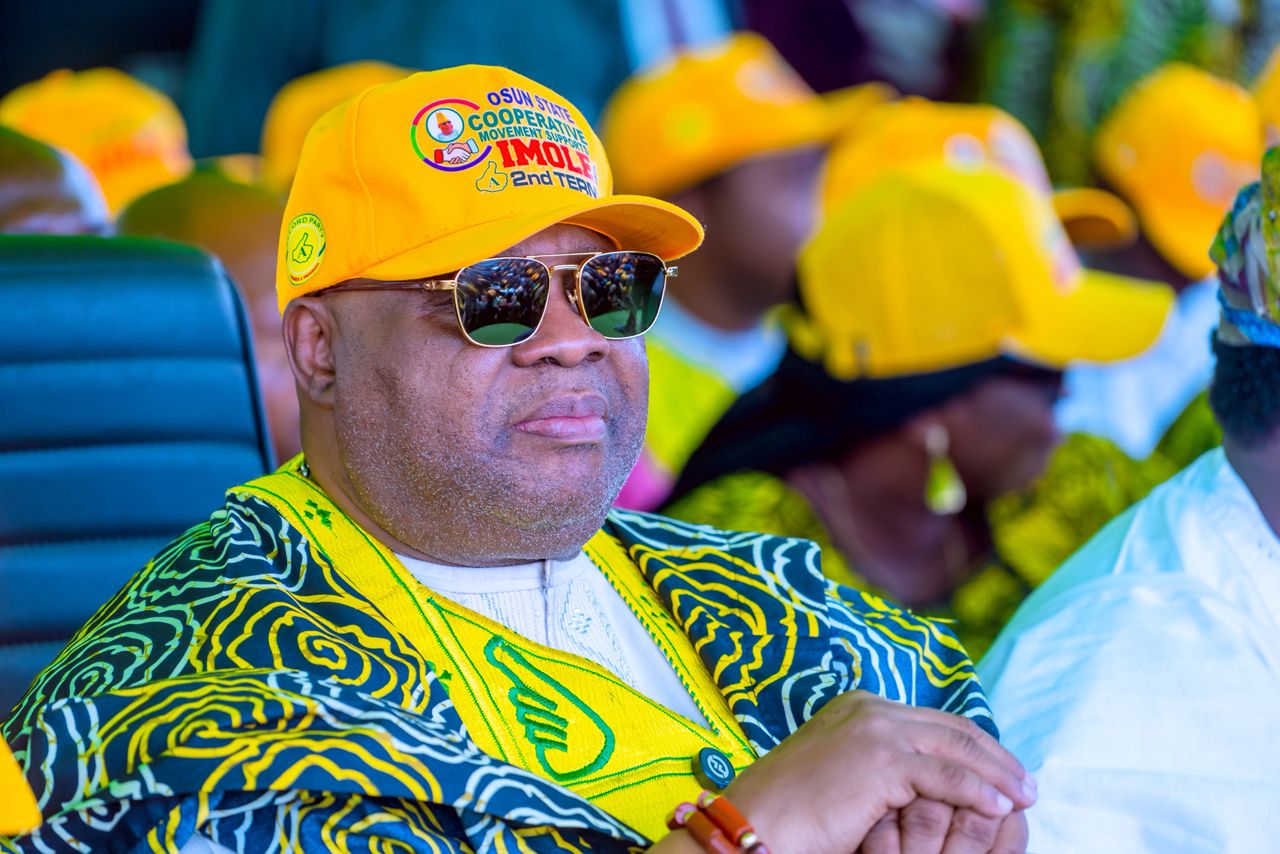
Osun State Governor and Accord Party governorship candidate, Ademola Adeleke, has urged residents to vote against the All Progressives Congress in the August 15 governorship election, accusing the opposition of neglecting civil servants during its time in office.
In a post on X on Thursday, Adeleke alleged that workers in the state suffered hardship under the APC administration and appealed to eligible voters to support his re-election bid.
He wrote, “We will not allow APC to take Osun back to the days when civil servants had to beg their neighbours for food.
“I call on the good people of Osun State to brace up for just a few more days.
“Those who once weaponised poverty by paying workers half salaries, leaving civil servants to struggle to feed their families, and denying our people access to basic necessities are desperate to return to inflict more pain.
“We must never go back to those dark days.
“On August 15, I urge every eligible voter to send a clear and resounding message that Osun has chosen the path of progress, compassion, and good governance.
“Together, we will protect the mandate of the people and keep Osun moving forward ACCORDINGLY.”
In a separate post, the governor defended his administration’s record on workers’ welfare, saying civil servants had remained a priority since he assumed office.
“APC’s disdain for civil servants is well known in Osun State. Since I became governor, I have made the welfare of our workers and the people of Osun State a top priority.
“I am confident that the unjust freezing of state accounts will only strengthen the resolve of our people to do everything necessary to ensure Osun never returns to the era of darkness.
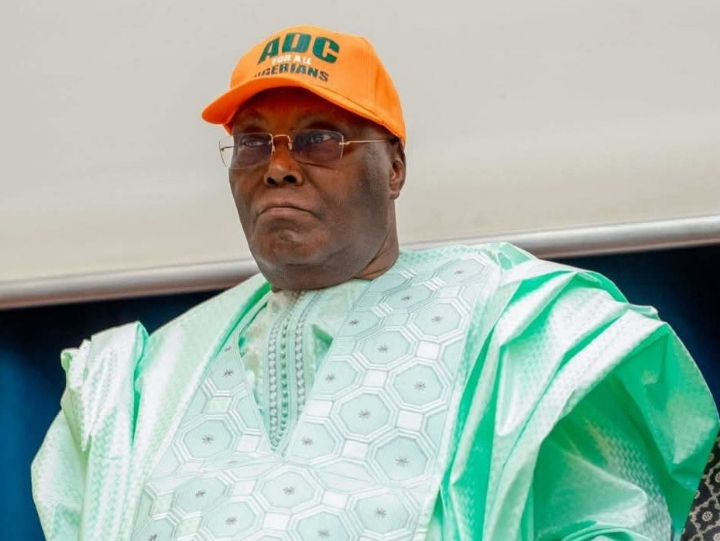
The All Progressives Congress Presidential Campaign Council has urged Nigerians to reject the African Democratic Congress and its presidential candidate, Atiku Abubakar, in the 2027 general election over alleged failure to pay party staff salaries for more than 12 months.
The ADC, however, accused the APC of using the allegation to divert attention from the economic hardship and insecurity facing Nigerians under President Bola Tinubu’s administration.
APC campaign council, in a statement by its spokesperson and Minister of Solid Minerals, Dele Alake, on Monday, accused the ADC National Working Committee, led by David Mark as chairman and Rauf Aregbesola as secretary, of neglecting the welfare of party workers despite their daily service to the party.
The council also criticised Atiku and Aregbesola over their records on workers’ welfare, alleging that Atiku’s businesses had previously owed employees salaries, while Aregbesola’s administration as Osun State governor introduced partial salary payments and left pensioners unpaid for years.
APC PCC stated, “It has come to our attention that the National Working Committee of the African Democratic Congress, led by Senator David Mark as Chairman and Ogbeni Rauf Aregbesola as Secretary, has refused and neglected to pay party staff for over a year.
“We find it unconscionable that a political party that has made many grandiose promises to hoodwink Nigerians owes its workers for more than 12 months. Owing staff who come to work every day and who rely on the salaries for their daily sustenance is wicked and reprehensible.
“With this development, Nigerians can now see the emptiness and insincerity of those parading themselves as ‘new saviours’.
“We have clearly stated that ADC leaders and their presidential candidate, Alhaji Atiku Abubakar, do not mean well and can do nothing for our country.
“Their desperation for power is driven by personal aggrandisement and venomous ill will against President Bola Tinubu. A party that cannot pay its cleaners and workforce cannot be entrusted with our country’s affairs.”
The council accused Atiku of owing his employees, alleging that staff of his Gotel Communication and other businesses went months without salaries and staged protests over unpaid wages and benefits.
“Atiku Abubakar, the ADC’s leader and presidential candidate, has a reputation for owing his employees. While he regularly junkets to the UAE, staff at his Gotel Communication and other businesses also went months without pay and staged protests over unpaid salaries and other benefits.
“The record of the ADC General Secretary, Rauf Aregbesola, on paying workers’ salaries and pensioners in Osun State, where he was a governor for eight years, was abysmal.
“As governor, he mismanaged the state’s finances to the point that he could not pay workers. His government thus introduced quarter-salary and, at times, half-salary payments.
“As for pensioners, he abandoned them for more than four years. Many died because they could not afford the basics of life.
“We are, therefore, not surprised that ADC, harbouring birds of the same feather, cannot pay its workers’ salaries.”
The party asked Nigerians to reject the ADC in the 2027 general elections.
“We are sounding a warning to Nigerians and working people now: reject ADC. Reject Atiku Abubakar and reject all ADC candidates in the next general elections.
“They do not have the interest of our country and our people at heart. A party that aspires to govern Nigeria and which cannot be trusted with something as basic as the management of its own affairs and the welfare of its workforce should be rejected by Nigerians.”
Reacting, the ADC, in a statement issued on Monday by its National Publicity Secretary, Mallam Bolaji Abdullahi, dismissed the allegation as falsehood and challenged the APC Presidential Campaign Council to produce evidence to support its claim.
Abdullahi described the allegation as an attempt to distract public attention from the performance of the Tinubu administration, arguing that the ruling party should defend its record rather than focus on accusations against the opposition.
“The ADC categorically rejects this allegation as an irresponsible falsehood, deliberately concocted to mislead Nigerians and distract attention from the monumental failures of the Tinubu administration.
“If the APC has any credible evidence to support its claims, it should produce it rather than continue to insult Nigerians with fabricated stories masquerading as press statements,” the statement read.
The ADC said the country’s cost-of-living crisis, unemployment and insecurity should take centre stage in the political debate ahead of the 2027 general elections.
According to the party, Nigerians are more concerned about the rising cost of essential goods, limited employment opportunities for young people and threats to lives and livelihoods than allegations surrounding the internal affairs of opposition parties.
“The real issue is the cost of living. The real issue is the absence of jobs and opportunities for our young people. The real issue is the insecurity that continues to threaten lives, livelihoods, and communities across the country,” Abdullahi added.
He accused the APC of preparing for the 2027 elections by focusing on allegations against opposition parties rather than presenting its achievements to voters.
“It is becoming increasingly clear that the APC has decided to run its 2027 campaign on allegations against the opposition rather than achievements of its own.
“That is what happens when a government has spent years making promises it cannot keep and excuses it cannot defend,” he said
The ADC also aimed at the Minister of Information and National Orientation, Mohammed Idris, and other APC figures involved in defending the administration, urging them to explain why Nigerians should give the ruling party another term after three years of economic hardship and uncertainty.
Although the statement did not provide details of the alleged salary dispute or identify the workers said to be affected, the ADC insisted that the APC should substantiate its claim rather than rely on public accusations.
The exchange comes as political parties position themselves ahead of the 2027 general elections, with economic conditions, security and the performance of the Tinubu administration expected to feature prominently in campaign debates.
The ADC said it would not be drawn into what it described as distractions, insisting that its campaign would focus on issues affecting ordinary Nigerians.
“The APC may control the machinery of government, but it cannot control the lived experiences of Nigerians.
“If the APC has a record to defend, let it defend it. If it has solutions, let it present them. But it should stop insulting the intelligence of Nigerians with these increasingly desperate distractions,” the publicity scribe added.
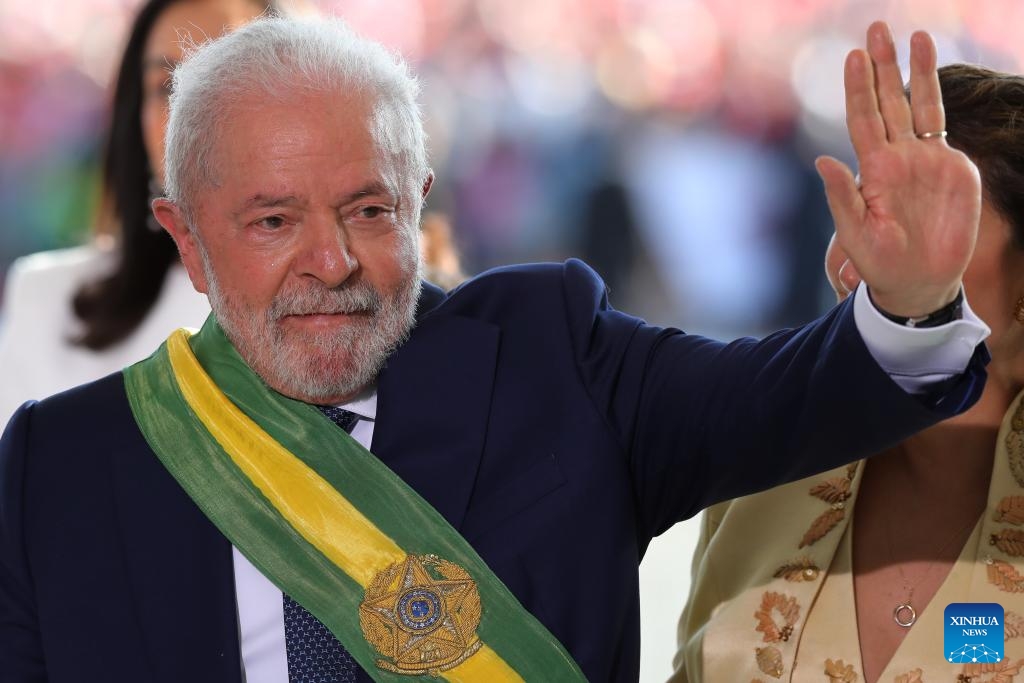
Brazil’s leftist President Luiz Inácio Lula da Silva pulled off a dramatic comeback on Sunday as he clinched a re-election victory, but his rival Flavio Bolsonaro refused to accept the loss and said he would seek to annul the vote.
With Lula’s victory, Brazil staved off a conservative wave that has seen numerous countries — such as Argentina, Chile, Colombia, and Peru — all shift right, backed by US President Donald Trump.
The leftist icon, who turns 81 on Tuesday, defied projections to win an unprecedented fourth term.
According to official results, he won 51.8 per cent of the votes to 48.2 per cent for Flavio Bolsonaro, with Lula pulling around 4.4 million more votes.
The senator is the son of former far-right president Jair Bolsonaro, who is serving a 27-year jail term for attempting a coup after his loss to Lula in the country’s last election in 2022.
Sunday’s vote was marked by confusion after a Supreme Court ruling extended voting by two hours as some polling stations had already closed.
The move came at the request of Lula, who complained that buses had been pulled from circulation in various cities, barring citizens from voting.
Flavio Bolsonaro also requested an extension in some regions due to heavy rains, but he described the decision as “unacceptable” and a “dirty trick.”
“It is impossible to recognise the results. I am going to request the annulment of these elections,” he said, in a brief speech in Brasília.
No candidate who lost the first round has gone on to win the second in Brazil since 1989, the first direct election after the end of the country’s military dictatorship.
“People went to vote because we managed to convince them that voting was very important for ensuring democracy in the country,” Lula said in his first comments after the win.
Fireworks and vuvuzelas rang out in Rio de Janeiro, while thousands of people dressed in red, the colour of Lula’s Workers’ Party, streamed into the streets of Sao Paulo to celebrate.
– Lula’s fight back –
After the first-round defeat, the left swung into action with massive rallies, declaring “Never Again Bolsonaro” and revamped their social media strategy.
The abstention rate decreased from the first round, falling from 21 per cent to 19 per cent.
Julio Canelo, 42, a lawyer celebrating in Rio de Janeiro, hailed a victory for “the entire democratic spectrum.”
“It was the result of the people mobilising, in the streets and online,” he told AFP.
A fierce social media battle drew in Meta, the parent company of WhatsApp, Facebook and Instagram, which Lula’s campaign accused of favouring his opponent with “algorithmic manipulation.”
Meta denied this but acknowledged that some of Lula’s campaign ads had been mistakenly deactivated due to technical errors.
“We are going to have to regulate them,” Lula said of social media companies after his win.
A bitter campaign marred by scandals and mudslinging laid bare the deep divisions that have plagued Brazil over the past decade.
– A country split in two –
Lula heads into a fourth term with almost half of the nation having rejected him, desperate for change.
He rose from poverty to become president in 2003 and was re-elected in 2006.
Lula made a dramatic return to office in the 2022 elections after a corruption scandal saw him jailed for over 18 months.
The charges were annulled on procedural grounds.
In his third term, Lula oversaw a drop in inflation and unemployment, and lifted millions out of hunger, but many voters felt gloomy about the high cost of living and crime.
Bolsonaro, 45, pitched himself as more moderate and jovial than his father and managed to galvanise conservatives as well as less ideological voters wanting something new.
“We’re in a deep hole, things are dire. People can barely afford to eat — buying meat is out of the question,” said Tereza Cristina Ramos, a 68-year-old retiree, who voted in Rio de Janeiro.
Already one of the world’s oldest leaders, Lula will be 85 by the end of his new term in 2030.
He is also facing a hostile Congress dominated by the right.
Lula’s campaign leaned heavily on the theme of sovereignty in the face of commercial and diplomatic pressure from Trump’s United States.
“This country will not accept being anyone’s backyard,” he said Sunday.
Lula received congratulations from Chile’s far-right president, Jose Antonio Kast, and Ecuador’s right-wing Daniel Noboa — both close Trump allies.
Mexico’s left-wing President Claudia Sheinbaum wrote on X, saying “Long live democracy, the people of Brazil won.”
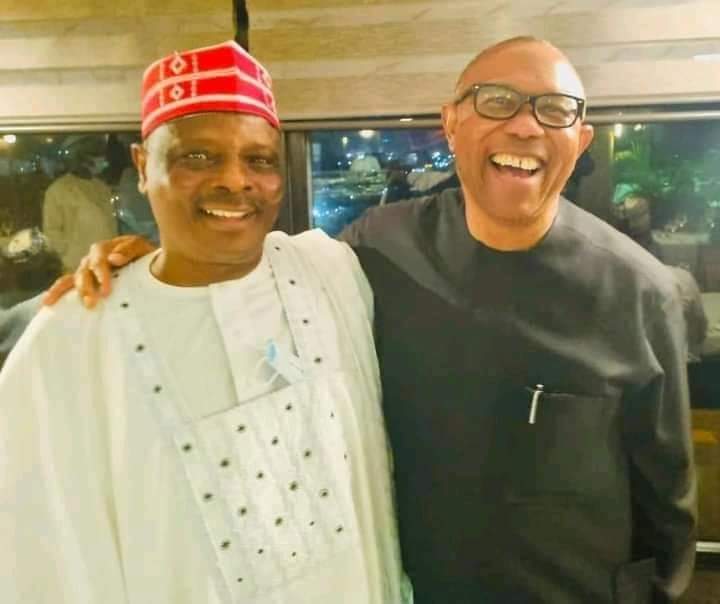
The Obi-Kwankwaso Movement has faulted the Nigeria Democratic Congress over the unveiling of its National Campaign Council, questioning the party’s preparedness for the 2027 general elections and boasting that it has a stronger grassroots structure.
The Director-General of the OK Movement, John Ughulu, said the NDC had waited too long to organise its campaign machinery, warning that political ambition without effective grassroots mobilisation and coordination would not guarantee electoral victory.
He stated this on Monday in a statement made available to journalists in Abuja, a day after the NDC announced the composition of its campaign council ahead of its inauguration in the Federal Capital Territory.
The politician argued that the movement had done the necessary groundwork while others were only beginning to organise, predicting that some of those appointed to the council might eventually seek its support and mobilisation network.
He said, “The funny part of this list is that 90 per cent of the people on it will still come knocking on the doors of the OK Movement to beg for the very structure they have failed to build themselves!”
Ughulu added, “With less than three months to the general elections, they are only just announcing their Presidential Campaign Council. What exactly have they been doing all this time? Where is the structure? Where is the strategy? Where is the machinery required to prosecute a serious national election?”
The criticism comes amid an escalating disagreement between the NDC and the OK Movement over the latter’s organisational independence and its place in the campaign for the party’s presidential candidate, Peter Obi, and running mate, Rabiu Kwankwaso.
The NDC on Sunday named its National Leader, Senator Seriake Dickson, as chairman of its National Campaign Council, with Obi appointed co-chairman.
The party’s National Chairman, Senator Cleopas Moses Zuwoghe, was named vice-chairman, while Kwankwaso will serve as co-vice-chairman.
Other appointees include former Secretary to the Government of the Federation, Babachir Lawal, as chairman of the National Advisory Council; former Deputy Senate President, Senator Ovie Omo-Agege; former presidential candidate, Pat Utomi; and former National Secretary of the Congress for Progressive Change, Buba Galadima.
The NDC National Secretary, Ikenna Enekweizu, was appointed council secretary, while Ibrahim Abdulkarim will serve as Director-General.
However, Ughulu and the OK Movement’s state, local government and ward coordinators were not included in the appointments.
The omission comes against the backdrop of a dispute over the movement’s decision to establish its own presidential campaign council, which Dickson described as “unheard of” and “nonsensical”.
The former Bayelsa State governor had argued that support groups should complement political parties rather than compete with them or operate parallel structures.
Speaking at the unveiling of Lawal in Abuja last month, Dickson maintained that the NDC would work with support groups but expected them to function within their proper roles.
Ughulu, however, insisted that the OK Movement is an independent political organisation, not merely a conventional support group, and would not surrender its national, state, local government and ward structures to the NDC or any other organisation.
In his latest statement, the OK Movement director-general argued that elections were won through sustained grassroots mobilisation, strategic planning and effective coordination rather than prominent names on campaign councils.
“Elections are not won by titles, press releases, political noise, or the number of big names on a campaign council. Elections are won through grassroots mobilisation, effective coordination, strategic planning, committed people, and a well-established structure that reaches every polling unit,” he said.
The politician maintained that the movement had recognised the importance of grassroots organisation long before the electioneering season and was better prepared to mobilise voters.
“We did not wait for the election to approach before recognising the importance of grassroots organisation. We understood from the beginning that a presidential ambition without a functional grassroots structure is nothing more than a political wish!” Ughulu added.
He also warned that political leaders who had criticised the movement could eventually need its network and organisational capacity as the elections approached.
“But the question is: Will they respect the structure they are now coming to depend on?” he asked.
The NDC is scheduled to inaugurate its National Campaign Council and commission its newly acquired national secretariat in Abuja on Monday.
The party will also present Certificates of Return to its candidates for the presidential, governorship, National Assembly and state Houses of Assembly elections as part of activities marking its third National Executive Committee meeting.
The programme is expected to be followed by a dinner.
Ughulu maintained that the OK Movement would not be reduced to a ceremonial support group, insisting that its strength lay in its organisational capacity and commitment to the Obi-Kwankwaso political project.
“Leadership is not about who makes the loudest noise. Leadership is about who prepares, organises, builds, and delivers when it matters most,” he said.