Connect with us

Business

Nigerians pay more for cement than African neighbours – FCCPC

Published

on

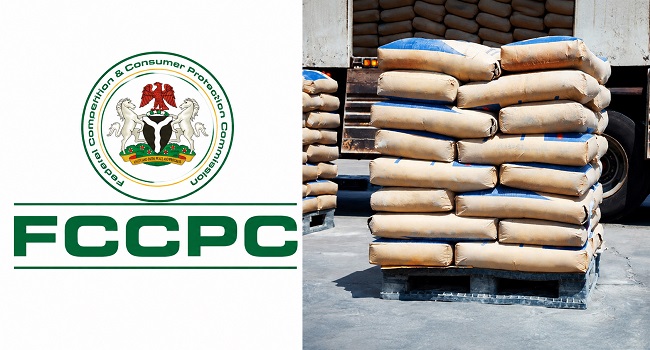
The Federal Competition and Consumer Protection Commission has said its preliminary investigation into Nigeria’s cement industry suggests possible manipulation of cement prices, following widespread complaints over the soaring cost of the commodity despite the country’s large production capacity and abundant limestone deposits.

It has also opened an investigation into possible price manipulation in Nigeria’s cement industry after a three-month inquiry raised concerns that prevailing market conditions may not fully explain the cost of the building material.

The preliminary findings followed a cross-border study conducted by the commission’s Anticompetitive Practices Department in response to widespread complaints over the rising cost of cement.

In a statement issued on Tuesday by the FCCPC Director of Corporate Affairs, Ondaje Ijagwu, the commission said its investigation compared Nigeria’s cement market with those of Kenya, Tanzania, South Africa, Egypt, Morocco, Algeria and Togo.

An analysis of findings in the FCCPC report showed that the cost of cement in Nigeria is higher than the prices of the same quantity of the commodity in neighbouring African countries.

This, however, came as building sector leaders and economists explained that the factors behind the high cement prices in Nigeria are compounded.

The study examined the availability of limestone, population, production capacity, consumption and retail prices. The statement read, “Findings from an industry-wide investigation conducted by the Federal Competition and Consumer Protection Commission suggest possible manipulation of prices of cement in the Nigerian market.

“This is the preliminary summation of the 40-page field reports collated following a three-month cross-border study by the Anticompetitive Practices Department of the Commission, undertaken in response to widespread public complaints over the high cost of cement, a common staple in the country’s construction industry.”

The commission noted that Nigeria has substantial limestone deposits and installed cement production capacity estimated at between 60 million and 65 million metric tonnes annually, against domestic consumption of about 25 million to 30 million metric tonnes.

Despite the reported excess capacity and Nigeria’s position as a net exporter to neighbouring countries, the commission said domestic prices had continued to rise.

Market intelligence reviewed by the FCCPC showed that a 50kg bag of cement, which sold for between N9,300 and N9,700 in January, rose to between N10,500 and N13,000 by mid-year. By July, prices of between N13,000 and N15,000 were reported in some parts of the country.

The commission also found that cement sold at lower prices in some African markets. In Kenya, where the population is about 58.6 million and cement demand was estimated at 9.3 million metric tonnes in 2025, a bag sold for about $5.40, or N7,344.

In Tanzania, with a population of about 66.3 million and similar cement demand, a bag sold for about $4.80, or N6,528. In Togo, which the commission said has no limestone deposits, cement retailed at about $6.75, or N9,180 per bag.

The FCCPC said the price disparity had raised questions about why Nigeria’s significant production capacity and raw material endowment had not translated into greater downward pressure on prices.

See also  Greenwich Merchant Bank achieves N50bn capitalisation

It said industry players had attributed the high prices to energy costs, naira depreciation, imported machinery and spare parts, as well as transportation and logistics expenses.

However, the commission said it was testing those explanations against verified information on production costs, pricing, capacity utilisation and other market conditions.

“Of particular concern to the commission is that this level of production capacity has not resulted in the downward pressure on domestic prices that might ordinarily be expected in a competitive market with substantial excess capacity.

“Information provided by industry participants has identified energy costs, depreciation of the Naira and its effect on imported machinery and spare parts, as well as transportation and logistics costs, among the factors contributing to cement prices.

“The commission is testing these explanations against verified information on costs, production, pricing and market conditions. However, the weight of preliminary findings provides sufficient grounds for the investigation to continue,” the statement said.

The FCCPC said the preliminary findings provided sufficient grounds to continue the investigation and determine whether cement prices were driven by legitimate costs or by anti-competitive practices.

The probe will examine possible coordinated conduct, abuse of market power, restriction of domestic supply and anti-competitive distribution practices.

Accordingly, the commission has issued Notices of Commencement of Investigation and Summons to Produce to key players in the sector, demanding records on pricing methodologies, production, capacity utilisation, exports and commercial relationships.

“Next is to determine whether prevailing cement prices can be explained by legitimate costs and market conditions, or whether there is evidence of coordinated conduct, abuse of market power, restriction of domestic supply, anti-competitive distribution practices or other conduct contrary to the provisions of the FCCPA,” it added.

Commenting, the Executive Vice Chairman and Chief Executive Officer of the FCCPC, Tunji Bello, said the investigation was necessary because of cement’s strategic importance to the economy.

“Cement occupies a strategic place in the Nigerian economy. Its price affects the cost of building a home, developing commercial property, delivering public infrastructure and, ultimately, the cost of doing business. When concerns persist about how such an important market is functioning, the Commission has a duty to look beyond assumptions and establish the facts,” Bello said.

He stressed that the investigation was not aimed at dictating how companies should conduct their businesses or limiting legitimate profits.

“Businesses are entitled to make legitimate commercial decisions and earn returns on their investments. Competition law does not prevent that. Its purpose is to protect the competitive process, so that prices, output and other market outcomes are determined by genuine competition rather than conduct that unlawfully restricts it,” Bello said.

The investigation comes amid growing pressure on the construction sector, where rising cement prices have increased the cost of housing and infrastructure projects across the country.

OPS, economists react

Building sector leaders and economists explained that the factors behind the high cement prices in Nigeria are compounded; on the one hand, it is largely structural, including transportation of limestone on impassable roads, and on the other hand, it could be influenced by monetary policy, including taxes.

See also  Marketers warn against disruption as Dangote plans direct fuel supply

They noted that there is only so much that the FCCPC could do, especially because any government intervention risks could impact free trade.

In separate phone interviews with The PUNCH, business leaders including the Chairman of the Lagos Chamber of Commerce and Industry Construction Group, Soji Adeniji, explained that his experience in a recent project confirmed the FCCPC report

He said, “I was in Canada recently, and a friend of mine who is having a project in Canada was contemplating buying cement from abroad. He was of the opinion that, why can’t we buy cement from Nigeria, as in he wants to import cement from Nigeria and stuff like that.

“By the time he did his calculations, he found out that cement is not as cheap in Nigeria, and that we could arrange for the importation. Eventually, as the report stated, he found out that Turkey is more price-friendly. He was able to establish a relationship with Turkey. Of course, the Tanzania, Kenya market too was a bit preferable, which boils down to the fact that the price of cement in Nigeria is high. But then the question would be, what is the location of that kind of high cost?”

Adeniji also acknowledged that the cement market in Nigeria is experiencing a moment of scarcity, but noted that the given reasons may not be as satisfying.

“Why are we having scarcity? Some people are saying because it was raining and therefore limestone deposits, well, that is not, I mean, for me, for the past two weeks now, since the beginning of August, there has not been much rainfall to affect any production. But what is happening to the limestone would be another thing,” the LCCI construction group leader stated.

He noted that other business factors could play a role, adding, “If you check the production line and look at that production chain line, you look at it from limestone to the facility that is an infrastructure facility for production.

“You look at the economy, which is stable, so we cannot be saying that things are changing. The economy is stable, and has been consistent for too long a time. Then other challenges, maybe with the manufacturer.

“You’d notice that Lafarge has just changed. A company called HBM has just bought over Lafarge, meaning that maybe the management issue or something like that. So, when you look at that production, up to the level of distribution, you’ll ask again, why are we experiencing this? They will be telling you logistics, transportation for delivery, and that kind of thing.

He noted that taxation could be another factor. “Some people from the manufacturer’s side too might be talking about the issue of double taxation, and things like that. If the tax regime is not favorable, there’s nothing definite.”

See also  Otedola boosts First Holdco stake with N20.7bn share purchase

These experts urged the government to invest in improving supply to meet increasing demand, which may have caused exorbitant prices. They recommended working with researchers and the private sector to develop alternatives to cement for concrete making.

On his part, Professor of Economics and Public Policy, University of Uyo, Prof Akpan Ekpo, said the housing sector, the housing sector, is a very crucial part of investment where the cement issue could be a supply problem. He said, “This could be more demand than supply. So what the government should do is that you look at that sector properly and see whether you can help that sector.

Ekpo called on the government to help people who need access to finance in order to be in the cement business. “Otherwise,” he said, “you’d keep having this problem of high cost of cement.”

A member of the Nigerian Institute of Building and Yaba College of Technology researcher, Samuel Shonibare, said, “I urged the government to look for alternatives to the use of cement in construction. There has been a lot of research that studied other materials that can be used to replace cement partially in concrete production.

“I’m trying to look at the probability of using rice shells as partial replacements for cement in concrete production. It’s one research project I’m currently working on. Not that I’m even trying, I’m on it.

He explained that if the country reduces the use of cement in construction, of course, there will be a drastic reduction in the price of cement that is being used in construction. “So the recommendations I would make for now is telling the stakeholders in the construction industry to focus on research that will yield an alternative material to cement. If the producers of cement have discovered that there’s a shift in the usage, I think that will lead to a reduction in the price,” Shonibare noted.

Meanwhile, the Chief Executive Officer of the Centre for Promotion of Private Enterprise, Dr Muda Yusuf, urged the government to carry out more rigorous research to ensure a detailed solution.

He said, “In order for a balanced view, it is important to hear from the FCCPC what the producers and distributors of cement have to say. Secondly, we need to know the cost structure of the cement producers and suppliers in the foreign countries. It will help us gain clear insight.”

Yusuf noted that understanding what factors impact the pricing of cement in the other countries will enrich the FCCPC inquiry.

He added, “The report needs to be more rigorous and show us the cost structure in the other countries. We need to know their cost of production, taxes, logistics and energy. Having the factors that underlie the prices will help (the probe), since it is presented as a comparative report.”

Source: punchng.com

FOLLOW US ON:

FACEBOOK

TWITTER

PINTEREST

TIKTOK

YOUTUBE

LINKEDIN

INSTAGRAM

Continue Reading
Click to comment

Leave a Reply

Your email address will not be published. Required fields are marked *

Business

FG, states, councils share record N3tn in July

Published

on

The Federal Government, 36 states and 774 local government councils shared a record N3.007tn from the Federation Account in July 2026, the highest monthly FAAC allocation ever recorded, as stronger statutory revenue pushed the amount available for distribution above the N3tn mark for the first time.

The statutory collections rose by N658.09bn, driven by improved receipts from petroleum and non-oil taxes. The disbursement was approved at the August 2026 meeting of the Federation Account Allocation Committee held in Owerri, Imo State.

The PUNCH reports that the N3.007tn distributed in July is the highest monthly FAAC allocation recorded in 2026 and the largest allocation in the reviewed FAAC records from 2019 to July 2026.

A statement issued on Tuesday by the Director of Press and Public Relations in the Office of the Accountant-General of the Federation, Bawa Mokwa, said the gross statutory revenue rose to N4.359tn in July from N3.700tn recorded in June.

The increase represented N658.087bn, or 17.8 per cent, signalling stronger collections across several oil and non-oil revenue sources. However, gross Value Added Tax revenue declined marginally to N793.968bn in July from N799.746bn in the preceding month, representing a decrease of N5.778bn, or 0.7 per cent.

The statement read, “In its regular monthly business, FAAC approved the disbursement of a total of N3.007tn to the Federal Government, the 36 state governments and the 774 Local Government Councils as revenue for July 2026.

“The month’s figures point to a strengthening underlying revenue base. Gross statutory revenue rose to N4.359tn in July 2026, up N658.087bn, a 17.8 per cent increase, from N3.700tn in June 2026, reflecting improved collection performance across oil and non-oil statutory sources. Gross VAT revenue held broadly steady at N793.968bn, a marginal decline of N5.778bn (0.7 per cent) from N799.746bn in June, suggesting consumption-tax receipts remain resilient month-on-month.”

See also  FG unveils N54.43tn budget as debt service gulps N15.91tn

The communiqué showed that Petroleum Profit Tax, Hydrocarbon Tax, Companies Income Tax, Capital Gains Tax, Stamp Duty Tax, petroleum royalties, mineral royalties, excise duty and gas flaring penalties recorded increases during the month.

The gains, however, were partly offset by declines in VAT, import duty, CET levies, rental of gas flaring fees and miscellaneous oil revenue. “The committee will continue to monitor as it works with revenue-generating agencies to close collection gaps and improve remittance discipline,” Bawa stated.

The development comes amid a sustained rise in revenues accruing to the Federation Account following major fiscal reforms, including the removal of petrol subsidy, foreign exchange reforms and efforts to widen the tax base.

Beyond the monthly allocation, the Owerri meeting also shifted attention to a broader question confronting the country’s three tiers of government: whether rising federation allocations would translate into stronger state economies, improved infrastructure and better social services.

The FAAC meeting, which was held on the sidelines of the National Council of Federation and Economic Development, brought together finance commissioners and accountants-general to discuss the fiscal health of the federation and ways of converting recent revenue growth into long-term economic strength.

Bawa said government officials were urged to focus on six key areas described as vital to fiscal fitness, including improving the quality of internally generated revenue, strengthening and commercialising public assets, expanding economic activity, attracting private capital, investing in human capital and improving transparency in public finance.

States were also encouraged to use the period of stronger revenue to build comprehensive asset registers, verify payrolls and ensure the timely publication of audited accounts.

See also  Banks sent pretty ladies to woo me for deposits – Otedola

“The FAAC convened its August 2026 meeting in Owerri, the Imo State capital, on the margins of the ongoing National Council of Federation and Economic Development, pairing the Committee’s routine monthly business with a broader push to strengthen fiscal fundamentals across Nigeria’s federating units.

“The FAAC session discussed the state of the economy, fiscal governance, and federal and subnational fiscal fitness. The session set out the scale of the recent revenue windfall and called for deliberate reform to convert it into durable fiscal strength rather than a temporary gain. The meeting noted that gross FAAC have risen significantly over the past three years, driven by subsidy removal, exchange-rate unification and tax reform,” the statement added.

The meeting further highlighted changes introduced under the Nigeria Tax Act 2025, which took effect from January 1, 2026, and altered the distribution of VAT revenue among the tiers of government.

Under the new framework, the states’ share of VAT revenue increased from 50 per cent to 55 per cent, while the Federal Government’s share declined from 15 per cent to 10 per cent.

The new arrangement also provides that 30 per cent of the states’ VAT pool should be distributed according to the place of consumption rather than the location of a company’s registered headquarters.

The change is expected to create a stronger link between economic activity within a state and the revenue it receives from the Federation Account, potentially increasing competition among subnational governments to attract businesses and expand their economies.

The committee also reaffirmed its commitment to the full and timely remittance of collectible revenues by Ministries, Departments and Agencies into the Federation Account.

See also  Shell’s $5bn Bonga S’West project gets presidential support

It stressed the need to diversify government revenues beyond crude oil and said solid minerals and other non-oil royalty streams would remain areas of focus as the federation seeks to build a more resilient revenue base.

The committee noted that sustaining the strong statutory revenue recorded in July would depend on improved collection and remittance discipline by revenue-generating agencies.

It added that the challenge for governments was no longer merely to share rising revenues but to ensure that the additional funds were converted into productive investments capable of strengthening public finances and improving living standards.

The meeting therefore urged the Federal Government and the states to use the current period of revenue growth to institutionalise reforms that would make federation allocations more predictable while building stronger foundations for long-term economic development.

“The committee noted that sustaining the statutory revenue gains recorded in July 2026 will depend on continued discipline in collection and remittance across Ministries, Departments and Agencies, and reiterated its support for reforms aimed at improving the predictability and growth of allocations to all three tiers of government,” the statement concluded.

The PUNCH reports that FAAC distributed N1.96tn in January, N1.89tn in February, N2.04tn in March, N2.25tn in April, N2.30tn in May and N2.55tn in June.

The total amount distributed between January and June 2026 stood at N12.99tn. With the latest July allocation of N3.007tn, the Federal Government, 36 state governments and 774 local government councils have collectively received N15.997tn from FAAC so far in 2026.

Source: punchng.com

FOLLOW US ON:

FACEBOOK

TWITTER

PINTEREST

TIKTOK

YOUTUBE

LINKEDIN

INSTAGRAM

Continue Reading

Business

36 states’ budgets jump 47% to N40tn, capital spending falls

Published

on

Nigeria’s 36 states and the Federal Capital Territory have increased their combined budgets by 47.5 per cent, from N27.22tn in 2025 to N40.14tn in 2026.

Despite the significant increase in overall spending, the proportion allocated to capital projects has declined, raising concerns about the potential impact on infrastructure development and long-term economic growth.

An analysis of the 2026 budgets of the 36 states and the FCT shows that capital expenditure accounts for 64.34 per cent of the total budget, down from 73.24 per cent recorded in 2025.

In nominal terms, states and the FCT have allocated N25.83tn to capital expenditure out of their N40.14tn combined budget for 2026. This compares with N19.94tn earmarked for capital projects from the N27.22tn aggregate budget in 2025.

The figures indicate that although capital spending has increased in naira terms, its share of total state spending has fallen by nearly nine percentage points.

The shift suggests that more state resources are being channelled towards recurrent expenditure and other spending obligations in 2026, even as states seek to expand infrastructure and stimulate economic activity.

However, spending patterns differ across the geopolitical zones, with states in the South-South, North-West and North-East recording increases in infrastructure allocations. On the other hand, South-East, South-West and North-Central cut their capital budgets this year.

Analysts say the declining share of capital expenditure could have implications for states’ ability to attract investment, particularly foreign capital, if reduced infrastructure spending weakens the business environment.

They argue that sustained investment in roads, power, water, transport and other critical infrastructure remains important for improving productivity and making states more attractive to investors.

See also  Marketers warn against disruption as Dangote plans direct fuel supply

The increase in aggregate state budgets also comes amid rising fiscal pressures, with state governments facing growing personnel costs, debt obligations and demands for public services.

Experts point out that the challenge for state governments would be to balance these recurrent commitments with sufficient investment in productive infrastructure capable of supporting economic growth and generating future revenue.

Capital spending

Based on the analyses of these budgets, the FCT raised its capital expenditure to 76.19 per cent in 2026 from 72.3 per cent last year. Its nominal budget rose from N1.81tn in 2025 to N2.29tn in 2026.

Similarly, the South-South region raised its capital expenditure from 58 per cent of the total N5.26tn in 2025 to 70 per cent of the overall budget of N8.08tn.

Another region that raised its spending on capital projects is the North-West, which increased it from 64.24 per cent in 2025 to 75.3 per cent. The region’s total budget rose from N4.6tn in 2025 to N6.53tn in 2026.

The North-East also increased its capital expenditure in 2026 from 58.34 per cent to 64.15 per cent within the period. In nominal terms, the region’s budget climbed to N4.14tn in 2026 from N3.35tn last year.

However, three other regions decreased their capital expenditure this year. Leading the pack is the South-East, which cut its capital spending to 61 per cent in 2026 from 82.05 per cent in 2025. This is despite the region’s budget rising from N3.6tn in 2025 to N5.73tn in 2026.

Similarly, the South-West cut its capital spending marginally to 55.03 per cent in 2026 from 55.4 per cent in 2025. The region’s budget rose from N6.7tn in 2025 to N8.7tn in 2026.

See also  Otedola boosts First Holdco stake with N20.7bn share purchase

Also, the North-Central slashed its capital budget significantly from 72 per cent in 2025 to 59.04 per cent in 2026. The region’s combined budget rose from N3.93tn to N4.7tn in 2026.

Federal budgets

One significant observation in this analysis is that the Federal Government budget far outweighs the combined budgets of 36 states and the FCT.

President Bola Tinubu signed Nigeria’s N68.32tn 2026 Appropriation Act into law on 17th April 2026.

This means the combined budgets of 36 states and the FCT are lower than the Federal Government’s budget by N28.32tn in 2026.

Analysts argue that states ought to commit more budgets than the centre in order to ensure that development gets to the grassroots faster.

Professor of International Economics, Jonathan Aremu, said it was unfortunate that capital spending was declining in states when the population was rising, noting that it was impossible to have even development when this situation continued.

“Capital projects are meant to support productive activities. When money meant for capital projects is going down, it becomes a paradox, especially because the demand for infrastructure is rising,” he said.

The economist stressed that even though attention is often paid to the amount voted each year, budget monitoring has remained critically poor.

“Are they implementing even the ones they have budgeted? If the states are not increasing their budgets, how then will there be development across the regions?” he asked.

A former central banker and current consultant economist, Chukwunonso Iheoma, said capital budgets are meant for critical infrastructure that will boost industrial development.

See also  Nigerians most exploited by telecom, energy firms – FCCPC

“If a state earmarks more money for recurrent expenditure, it may be infrastructurally deficient. It cannot attract foreign investment, and existing investors may be forced to exit to another state where they will have access to the infrastructure.”

An emerging markets analyst, Ike Ibeabuchi, however, attributed the situation to increased recurrent pre-election spending.

“Most governors often like to increase salaries, distribute items to the people and share gifts in pre-election years. It is quite common among them. Rather than build more roads, they would share bags of rice and beans. It is the way politicians think,” he argued.

He, however, pointed out that 64 per cent of the budget is still significantly high.

“We started this campaign to raise capital projects in 1999. I remember when it used to be 30 per cent capital budget, 70 per cent recurrent. But the situation is much better now. All we are saying is that we need to get to 70 per cent capital expenditure every year. That is one way we can make progress in Nigeria fast.”

Source: punchng.com

FOLLOW US ON:

FACEBOOK

TWITTER

PINTEREST

TIKTOK

YOUTUBE

LINKEDIN

INSTAGRAM

Continue Reading

Business

How to apply for FG loan to build, buy a house

Published

on

The Federal Mortgage Bank of Nigeria offers mortgage financing to eligible Nigerians through the National Housing Fund, providing a route to buy, build, improve or renovate a home.

The NHF Mortgage Loan is currently available to contributors at an interest rate of 6 per cent per annum, with repayment of up to 30 years.

According to FMBN on its website, the current information shows that eligible contributors can access up to ₦50 million, subject to affordability and the value of the property.

Here are the key things applicants should know about the scheme and how to apply.

What is the FMBN mortgage loan?

The NHF Mortgage Loan is a housing finance facility administered by FMBN through accredited and licensed Primary Mortgage Banks (PMBs).

The facility can be used to buy, build, improve or renovate an owner-occupied home. The property being financed serves as security for the loan.

Unlike a conventional commercial mortgage, the NHF facility is designed to provide contributors with longer repayment periods and a concessionary interest rate.

Who is eligible?

Applicants generally have to meet the following conditions:

* Be a Nigerian citizen aged 18 or above.
* Be a contributor to the National Housing Fund.
* Have made continuous NHF contributions for at least six months.
* Have a stable source of income or, for self-employed applicants, provide evidence of regular income.
* Apply through an FMBN-accredited and licensed mortgage loan originator/Primary Mortgage Bank.
* Have a property that meets the relevant legal and planning requirements.

FMBN also states that loan repayment affordability is assessed using a maximum of one-third of the applicant’s income.

See also  High unemployment rate forces hundreds of Ghanaian youths to queue overnight for military recruitment

How much can you borrow?

FMBN’s current NHF Mortgage Loan page says a contributor can access up to ₦50 million, subject to affordability and other lending conditions.

The property also matters. FMBN’s published conditions state that an individual should not receive more than 90 per cent of the cost or value of the property being mortgaged.

The older ₦15 million figure still appears in some FMBN documents and online guides, but FMBN’s current product page now states ₦50 million. Applicants should therefore rely on the latest terms provided by FMBN and their accredited mortgage institution.

What is the interest rate?

The interest rate for NHF contributors is not more than 6 per cent per annum. FMBN currently describes the facility as being provided to accredited PMBs at 4 per cent for onward lending to NHF contributors at 6 per cent.

How long do you have to repay?

The maximum repayment period is 30 years, subject to factors including the applicant’s age, income and years in service.

Repayments are made through the mortgage loan originator through which the applicant obtained the loan.

How to apply

1. Confirm your NHF contribution

You must first be registered as an NHF contributor and have made the required continuous contributions.

FMBN now provides an online personal/individual NHF registration portal for new contributors.

2. Choose an accredited mortgage institution

Applicants do not simply walk into FMBN and collect the mortgage loan directly. The application is made through a licensed and FMBN-accredited Primary Mortgage Bank/mortgage loan originator, which processes the application and submits it to FMBN.

See also  Otedola boosts First Holdco stake with N20.7bn share purchase

3. Obtain the mortgage application form

The mortgage institution will provide the relevant application form and guide you on the documentation required for your particular application.

4. Prepare your documents

Depending on the nature of the application, applicants may be required to provide documents such as:

* Completed mortgage loan application form;
* Evidence of NHF contribution;
* Proof of income;
* Recent payslips or other income evidence;
* Property title documents;
* Valuation report for the property;
* Bill of quantities where the loan is for construction;
* Relevant tax and employment documents; and
* Other legal documents required by the mortgage institution.

The exact documentation can vary depending on whether the applicant is buying, building or renovating a property.

5. Submit the application

The application and supporting documents are submitted to the accredited mortgage institution.

The institution assesses the applicant’s income, repayment capacity, property and documentation before forwarding the application to FMBN where applicable.

6. Property and legal checks

The property is subjected to valuation and legal checks. FMBN’s conditions require the mortgaged property to provide adequate security and comply with relevant planning and legal requirements.

7. Approval and disbursement

Once the relevant conditions are satisfied and the loan is approved, the funds are disbursed through the mortgage loan originator for the approved housing purpose.

What can the loan be used for?

The NHF Mortgage Loan can be used to:

* Buy a residential property;
* Build a home;
* Improve an existing home; or
* Renovate an existing home.

FMBN specifically describes its NHF facility as covering these housing purposes.

How can Nigerians check their NHF contributions?

See also  FG unveils N54.43tn budget as debt service gulps N15.91tn

FMBN provides digital channels through which contributors can access information about their NHF accounts. The Bank’s website also provides online registration and account services for contributors.

Important warning for applicants

Applicants should be careful of individuals who claim they can “secure” an FMBN loan in exchange for money.

FMBN’s official website carries warnings about fraudsters posing as NHF facilitation officers. Applicants should deal only with FMBN and its accredited mortgage institutions and verify any request for payment before proceeding.

FMBN’s official website provides information on its mortgage products, NHF services and application channels.

Apply Here: https://fmbn.gov.ng/products/nhf_mortgage_loan

Source: punchng.com

FOLLOW US ON:

FACEBOOK

TWITTER

PINTEREST

TIKTOK

YOUTUBE

LINKEDIN

INSTAGRAM

Continue Reading

Trending