Connect with us

Business

Free zones attract $200bn FDI, create 500,000 jobs – FG

Published

on

The Federal Government has said Nigeria’s free trade zones have attracted more than $200bn in foreign investment and over N900bn in domestic investment, while generating more than 100,000 direct jobs and over 500,000 jobs across supply chains, logistics networks and host communities.

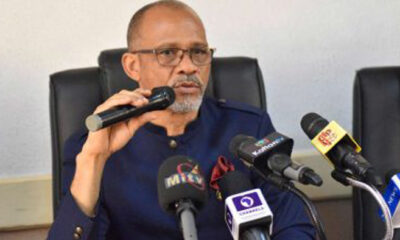
The Minister of Industry, Trade and Investment, Dr Jumoke Oduwole, disclosed this at a meeting of Special Economic Zones stakeholders held virtually in September, as the government moves to modernise the regulatory framework governing the zones and strengthen their role in driving investment and non-oil exports.

Oduwole said the government was revising the Nigeria Export Processing Zones Authority regulations to make the scheme more responsive to the changing nature of businesses and investment, including digital operations.

She said the revised framework would recognise Digital Free Zones and Digital Special Economic Zones, support technology-enabled and non-physical operations, modernise corporate and registry provisions and strengthen dispute-resolution mechanisms.

“Across the scheme, the authorities record over $200bn of foreign investment and over N900bn of domestic investment, more than 100,000 direct jobs, and over 500,000 when the supply chains, the logistics networks and the host communities are counted. So you are all, indeed, valuable investors and contributors to the Nigerian economy. This has not and will not change,” Oduwole said.

The minister said the government’s latest regulatory reforms sought to build on the investments and jobs already created by the zones while addressing weaknesses that had affected the integrity and competitiveness of the scheme.

She said the reforms followed extensive consultations with government agencies, lawmakers and private-sector stakeholders and were designed to preserve Nigeria’s attractiveness as an investment destination while strengthening fiscal accountability.

See also  US stocks retreat amid renewed inflation concerns

Oduwole said the government had identified the diversion of goods produced in free zones into the Nigerian Customs Territory while retaining fiscal incentives intended for export-oriented activities as a major concern.

She said the revised framework would restore the export orientation of the scheme by clarifying the 75 per cent export and 25 per cent domestic-sales structure and aligning domestic sales with applicable Nigerian tax laws.

The minister said the reforms would also clarify the responsibilities of the agencies overseeing the zones, taxation and customs, with NEPZA and the Oil and Gas Free Zones Authority retaining responsibility for licensing and operational oversight.

She said the Nigeria Revenue Service would retain responsibility for tax administration, while the Nigeria Customs Service would handle customs control, valuation, classification and enforcement.

Oduwole said the modernised framework would also accommodate businesses that did not require conventional physical zones, particularly technology-driven enterprises.

“The Revised NEPZA Regulations and Operational Guidelines create, for the first time in Nigeria, Digital Free Zones and Digital Special Economic Zones – zones that operate on a platform rather than a perimeter, with no requirement of physical presence,” she said.

She added that the framework would introduce licence categories, including an Innovator Licence for enterprises operating in areas where regulatory frameworks were still developing, while reporting and fee structures would reflect the way digital businesses generate revenue.

The Executive Secretary of NEPZA, Toyin Elegbede, said operators welcomed the reforms but wanted the government to protect businesses that had already invested under the existing regulatory regime.

“Our members recognise the need for a strong, transparent and well-regulated Special Economic Zones regime, and we welcome the opportunity to engage the government before the framework is finalised. Our priority is to ensure that the reforms address genuine gaps without creating new uncertainty for operators who have invested and modelled their investment on the strength of the existing regime at the time of investment,” Elegbede said.

See also  CNG investments hit $980m, says Presidency

He said stakeholders wanted a competitive free zones ecosystem that would attract more investment, protect legitimate businesses and increase production and exports.

Meanwhile, the Chairman of NEPZA, Hadi Mutallab, said the government must ensure that the transition to the new framework did not undermine existing investments.

“The reform of Nigeria’s Special Economic Zones is necessary to strengthen the integrity of the scheme and ensure that the incentives provided deliver the investment, production, jobs and exports for which they were intended. At the same time, we must protect legitimate operators who have invested in our Zones and ensure that the transition to the new framework is clear, predictable and does not undermine existing investments,” Mutallab said.

Further, Oduwole said the government would continue to support lawful incentives that served the purpose of the zones while demanding compliance from operators.

She said the government’s objective remained to position the zones as engines of non-oil export growth and support President Bola Tinubu’s target of building a $1tn economy by 2030.

Source: punchng.com

FOLLOW US ON:

FACEBOOK

TWITTER

PINTEREST

TIKTOK

YOUTUBE

LINKEDIN

INSTAGRAM

Continue Reading
Click to comment

Leave a Reply

Your email address will not be published. Required fields are marked *

Business

Jide Kosoko laments debt following N300m movie cinema loss

Published

on

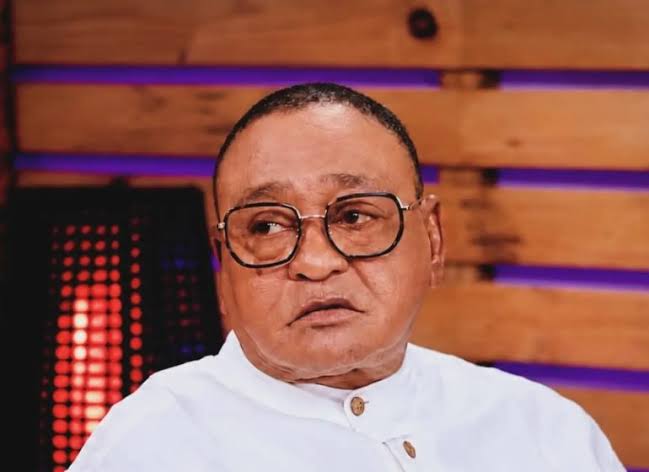
Veteran Nollywood actor and filmmaker Jide Kosoko has said he is in debt after his film, Eleko: Oba Esugbayi, failed to recoup its production cost of over N300m in cinemas.

Kosoko disclosed this in a now trending clip from his interview on African A-List published on October 17, where he explained that the money used to produce the film came from investors who expected returns on their investment.

According to him, the film which premiered in the cinemas in March, failed to generate enough revenue to recover its production cost, while the little money earned was shared among those involved.

“My film ‘Eleko: Oba Esugbayi’ that recently came out and we took to the cinemas, cost us over N300 million. Do I have 300 million? You should know that some people gave it to me and it was not that they dashed me, they invested in it and we took the film to the cinemas,” he said.

He added, “Different things happened and we did not earn our money back. The little that was earned was split. As I am, if you hear someone with debt dancing around their neck, it is me.”

PUNCH Online had earlier reported that Kosoko revealed he had been living with diabetes since 1996, saying his decades-long experience with the condition had given him a better understanding of his health.

The actor made this known in an interview on African A-List, uploaded to YouTube on Saturday.

“I became diabetic in 1996; I understand my health better than some doctors do. Do not misquote me. I am not saying I know how to do everything, I just do not want to die,” Kosoko said.

See also  Oborevwori heads to Germany for better partnership with Julius Berger

He also spoke about his personal life, disclosing that he had lost three wives, including the mother of his daughter, Bidemi Kosoko, who died during childbirth.

“I lost my wife during childbirth; that’s Bidemi’s mother. I have lost three wives,” he said.

Continue Reading

Business

Airline extends Saudi flights suspension after Houthi strikes

Published

on

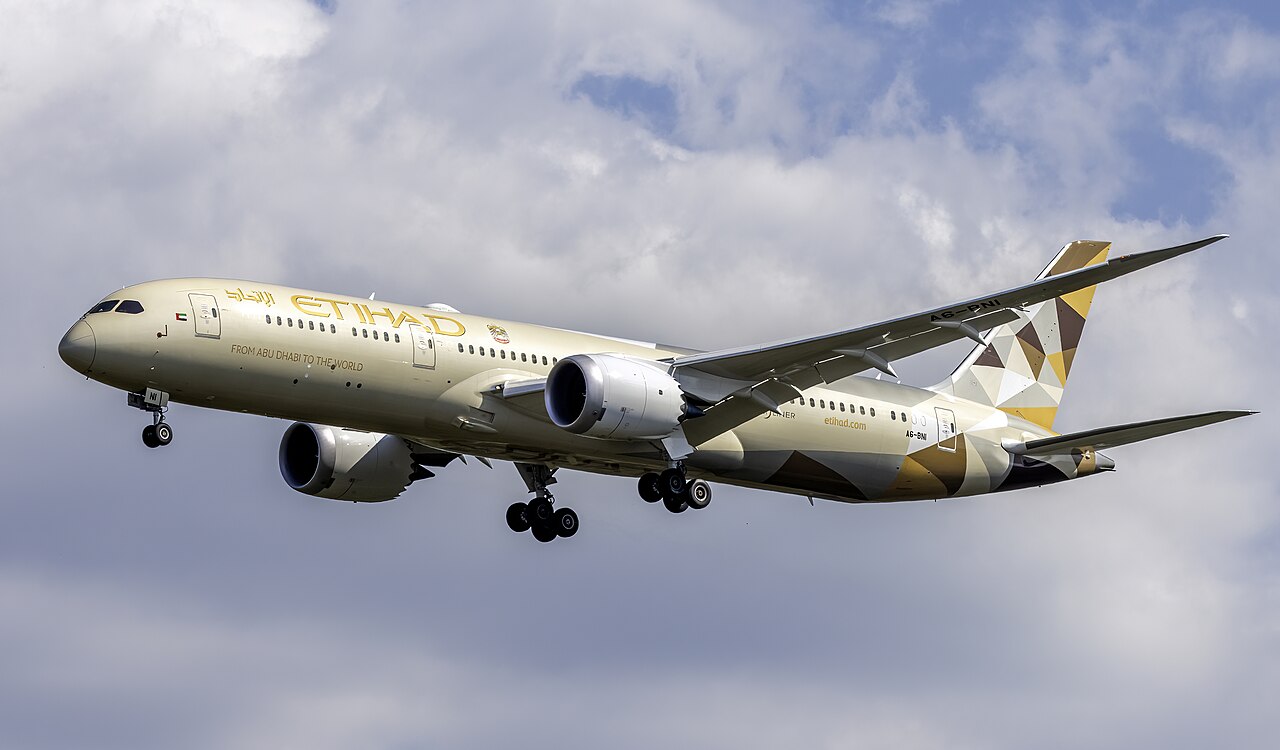
UAE national airline Etihad has extended until November 5 its suspension of flights to Riyadh and Dammam in Saudi Arabia, targeted by strikes from Yemen’s Houthis.

Etihad had suspended its service to Riyadh on October 12, two days after a deadly attack on a passenger terminal killed 13 people.

In a statement on Thursday, Etihad specified that flights to and from Riyadh and Dammam would remain suspended due to “operational disruptions”.

On Wednesday evening, two people were killed and eight others wounded in an attack on Dammam airport.

The airport, however, reopened the following day, while the capital’s airport remains closed.

Etihad added that it would operate only daytime flights to the western city of Jeddah, with night flights cancelled until November 5.

In recent weeks, Houthi attacks on Saudi civilian infrastructure including oil facilities and airports have reached a scale unprecedented since the start of the conflict in Yemen in 2014.

AFP

See also  CNG investments hit $980m, says Presidency
Continue Reading

Business

States push for suspension of Paris Club deductions

Published

on

State governors have rejected deductions from allocations due to the states from the Federation Account in the September 2026 revenue-sharing cycle, arguing that the deductions would further squeeze their finances, The PUNCH reports.

The states also called for the suspension of deductions linked to the Paris Club refund to local government councils, alleging that the payments were resumed without prior communication and reconciliation with affected states.

Their opposition comes after the three tiers of government shared N668.4bn less of August 2026 revenue distributed in September, heightening concerns over the impact of lower revenue receipts on states’ ability to meet their financial obligations.

The governors also demanded the redistribution of the proposed N240bn savings, insisting that the funds should be shared among the federal, state and local governments rather than deducted or retained under the proposed arrangement.

The complaints were raised by several state Accountants-General during the technical session of the Federation Account Allocation Committee meeting, according to a report by the committee’s technical sub-committee, dated 14 October, 2026, obtained by The PUNCH on Thursday.

The meeting, held at the Federal Ministry of Finance headquarters in Abuja, considered revenue accounts for August and the amounts available for distribution in September.

The report showed that the total amount recommended for distribution to the federal, state and local governments stood at N2.339tn, compared with N3.007tn shared in the previous month, representing a decline of N668.4bn.

The statutory revenue available for distribution dropped more sharply, falling from N2.283tn in the previous month to N1.566tn in August, a decrease of N717.08bn.

See also  Tax reform has reduced burden on low-income earners — Revenue board

However, revenue from Value Added Tax increased to N773.23bn from N724.46bn, providing some relief amid the decline in statutory revenue.

The Director of the Federation Account Department, Okolie Rita, who presented the accounts, told the committee that the statutory revenue available for distribution was calculated after deducting N85.71bn and N36.83bn as four per cent costs of collection for the Nigeria Revenue Service and the Nigerian Upstream Petroleum Regulatory Commission, respectively.

The revenue decline triggered calls from state representatives for the Federal Government to release additional funds and reconsider deductions that they said were putting pressure on state finances.

The Accountant-General of Akwa Ibom State, Andrew Essien, observed that August revenue had dropped considerably compared with July and appealed for the proposed N240bn savings to be returned to the distributable pool.

The Accountant-General of Jigawa State, Abdullahi Shehu, recalled an earlier proposal to augment the previous month’s revenue with N250bn, which he said had not been implemented. He urged the committee to combine the promised N250bn with the proposed N240bn savings and redistribute the funds to the three tiers of government.

The Accountant-General of Bayelsa State, Tokoni Ifidi, supported the demands and raised concerns about deductions for the Paris Club refund to local government councils.

She said the deductions were introduced without prior communication to the states, despite what she described as an earlier commitment in 2025 concerning the deductions, which began in February that year and were stopped by a court order in April 2026.

The document read, “AG Akwa Ibom observed a considerable drop in the revenue of August, 2026 compared to July, 2026 and appealed for the proposed savings of N240bn to, instead, be redistributed. AG Jigawa recalled that there was a proposal to augment the previous month’s revenue with the sum of N250bn but it had not been done. He suggested that the N250bn promised in the previous month should be added to the proposed savings of N240bn and be redistributed.”

See also  Oborevwori heads to Germany for better partnership with Julius Berger

The Director of the Federation Account Department explained that the Paris Club deductions were not new, noting that they had previously been suspended following a court order.

The Bayelsa representative, however, maintained that the deductions should continue to be suspended pending reconciliation. She said the Economic and Financial Crimes Commission had held reconciliation sessions with local government councils and was awaiting feedback from the Office of the Accountant-General of the Federation on the commencement and continuation of the deductions.

The Accountant-General of Niger State, Saidu Abdullahi, criticised the handling of the deductions, arguing that the ministry had made a mistake from the beginning by distributing funds without adequate planning and proper communication.

He insisted that previous agreements should be honoured, particularly the proposed N250bn augmentation, while supporting calls for the redistribution of the N240bn savings.

The Accountant-General of Cross River State, Glory Effiong, also backed the demand for the savings to be redistributed, observing that deductions had consumed a substantial portion of the earnings of many states.

She said she had not been invited to any reconciliation meeting on the Paris Club debt since joining the committee and urged the Office of the Accountant-General of the Federation to improve its communication with state representatives.

The Accountant-General of Jigawa State further questioned the amount deducted under security-related expenditure, describing the quantum of deductions as alarming and calling for a review.

The Accountant-General of Nasarawa State, Musa Mohammed, stressed that states should be properly informed and invited to reconciliation meetings before decisions affecting their allocations were implemented.

See also  Cash rush: ATM withdrawals jump 198% to N36tn

Source: punchng.com

FOLLOW US ON:

FACEBOOK

WHATSAPP CHANNEL

TWITTER

PINTEREST

TIKTOK

YOUTUBE

LINKEDIN

INSTAGRAM

Continue Reading

Trending