Connect with us

Politics

Read how vote buyers breached EFCC, ICPC, INEC defences during Osun poll

Published

on

They promised a crackdown. INEC, EFCC and ICPC warned vote buyers they would be arrested. But when Osun voters arrived at polling units on August 15, the cash was already waiting. In some places, votes reportedly went for N15,000, N30,000, N40,000 or more, turning polling centres into open-air marketplaces, BOLA BAMIGBOLA reports

Ahead of the August 15 Osun governorship election, two issues cast long shadows over the state: rising violence and the growing menace of vote trading.

For weeks, killings linked to rival cult groups unsettled communities across the state. The violence, which intensified about two months before the election, persisted despite visits by the Deputy Inspector-General of Police for the South-West, Adegoke Fayoade, and the Inspector-General of Police, Olatunji Disu.

Bodies continued to surface in different parts of the state, while repeated assurances from security agencies that the perpetrators would be arrested offered little comfort to frightened residents.

With solutions seemingly out of reach, some residents appeared to adopt a simple survival strategy: stay alive until Election Day.

Then came another promise.

During a week-long visit to Osun ahead of the poll, the Chairman of the Independent National Electoral Commission, Prof Joash Amupitan, raised hopes that, even if the violence could not be completely halted, vote buying would not be allowed to undermine the election.

At an interactive session with journalists at the Osun INEC headquarters in Osogbo on August 1, Amupitan announced that INEC would work with the Economic and Financial Crimes Commission and the Independent Corrupt Practices and Other Related Offences Commission to tackle vote trading.

“We recognise that vote-buying has increasingly shifted from physical cash exchanges at polling units to digital financial transfers and pre-election account harvesting,” he said.

He added that INEC might also work with the Nigerian Financial Intelligence Unit and the Office of the Attorney-General of the Federation, while plain-clothes anti-corruption officers would monitor the surroundings of polling units and arrest suspected buyers and sellers.

The Commissioner of Police for the Osun election, Samuel Etaifo, also made his first public appearance since his appointment at the event.

The message appeared clear: this time, vote buying would not be business as usual.

The ICPC subsequently took the campaign to the streets of Osogbo, visiting markets, motor parks and other public places to warn residents against selling their votes.

The commission said its operatives would be deployed across all 30 local government areas of the state on Election Day.

Speaking during the sensitisation rally, the Resident Anti-Corruption Commissioner for Osun State, Yusuf Olatunji, warned that both vote buying and selling were offences punishable under Nigerian law.

“We will not be tolerating vote buying or selling and anybody culpable of this will be arrested and prosecuted,” he said.

With INEC, the ICPC and security agencies publicly declaring war on vote trading, expectations were high.

But when the ballots came out, the promises appeared to dissolve.

When the ballot became marketplace

On Election Day, vote buying was reported at several polling locations, with voters allegedly offered cash, food items and promises of transfers in exchange for their support.

See also  2027: Rivers supporters don’t need governor to mobilise for Tinubu — Wike

In some places, political agents reportedly distributed raw food items before voting began in what residents described as an attempt to “wet the ground.”

Elsewhere, voters were asked for their bank account details, with promises that money would be transferred after their votes had been verified.

And in the midst of the transactions, some security personnel appeared to look the other way.

Police officers stationed at some polling units reportedly witnessed the exchanges without intervening.

Despite the earlier announcement that ICPC operatives would be deployed across the state, the commission had, at the time of filing this report, not announced arrests arising from the alleged vote-buying activities.

For some voters, the experience exposed a troubling contradiction: the agencies charged with stopping vote trading had promised a crackdown, but the transactions continued openly when it mattered most.

‘A vote was N30,000, N40,000’

In Ward 05, Boripe Local Government Area, a voter who requested anonymity for security reasons described how political agents allegedly approached voters with cash.

He said he was initially offered N15,000 when he arrived at his polling unit around 10am.

He declined.

But after he encountered difficulties with the BVAS machine, he did not vote until about noon. By then, he said, the price had risen.

“That time, a vote was being bought for about N30,000,” he said.

According to him, a political party had opened a register near the polling unit for voters who agreed to support it.

More troubling, he said, was that four female police officers were present and allegedly watched the process without intervening.

“Four women police were present and they saw what was going on. But they didn’t raise a finger to stop it,” he alleged.

The voter also claimed that the inducement had started long before election day.

Three weeks before the election, he said, adults in his ward received N10,000 from a political party, although the distribution was described as an empowerment programme.

The episode, he said, showed how vote buying had evolved beyond what happens at the polling unit on election day.

For voters already struggling with the rising cost of living, the money can be difficult to reject.

But what appears to be a small payment to an individual voter carries a much larger cost for the electoral system: it risks turning the ballot from an instrument of choice into a commodity for sale.

And in Osun, the question after election day was no longer whether vote buying existed.

It was how openly it could happen despite the army of agencies that had promised to stop it.

For Roseline, a voter in Israel Ward 8, Ilesa East Local Government Area, election day was not simply about walking to the polling unit, collecting a ballot paper and making a choice.

It was also an encounter with a marketplace where votes, according to her account, had a price.

Speaking to The PUNCH by telephone, Roseline alleged that agents of the Accord Party and the All Progressives Congress offered money to voters at her polling unit, with the price of a vote reaching N40,000.

See also  FG plans 500 CNG stations to cut petrol use

But there was a twist.

Some of those who collected the money, she said, eventually voted for candidates of their choice.

“Several people that got money eventually voted for their preferred candidate. Police and NSCDC operatives saw how they were paying for votes, but they didn’t caution those involved,” she said.

Her account offers a glimpse into one of the complications confronting vote buying in Nigeria: the money may change hands, but the ballot remains secret.

For the voter, collecting the cash can become an economic decision; for the politician, it is an attempt to influence the outcome.

And for democracy, the transaction leaves a troubling question: what exactly is being bought when a voter takes the money but still votes according to their conscience?

Mudu of garri, then N20,000

In Ile-Ife, another voter said the inducement began even before voting commenced.

The voter, whose polling unit was located inside Oja Titun, said a political party agent distributed a mudu of garri to people in the market on the morning of the election.

He said he knew the woman who distributed the food items.

“She shared a mudu of garri to all of us in the market that Saturday morning before the election commenced. She didn’t make any request from us, but it was obvious she wanted us to vote for a particular candidate,” he said.

Later, after voting started, he said an agent of a political party paid him N20,000.

The two accounts — one involving N40,000 and another involving food and N20,000 — illustrate how vote inducement can take different forms, from direct cash payments to gifts distributed before voters enter the polling booth.

For voters struggling with rising food prices and household expenses, such offers can be difficult to ignore.

But former INEC National Commissioner, Prof Lai Olurode, believes the implications extend far beyond the immediate financial benefit to individual voters.

‘It was a bazaar’

Reflecting on the election, Olurode described the atmosphere around some polling environments as “a bazaar”.

He said the development was dangerous for democracy because it made it difficult to determine whether voters were choosing candidates freely or responding to financial inducements.

“You won’t know what the people are really voting for. Is it the highest bidder, or are they just voting their conscience or a combination of the two?” he asked.

Olurode, however, absolved INEC of responsibility for the vote trading, arguing that the problem reflected a broader culture of monetising elections.

According to him, political actors have increasingly come to believe that elections cannot be won without substantial financial resources.

He warned that the practice could undermine not only electoral integrity but also Nigeria’s wider development.

“Corruption is widespread, and you cannot isolate your electoral practices and say we want to shield our electoral regime from corruption,” he said.

For Olurode, the way out requires sustained voter education rather than campaigns that only become visible shortly before elections.

See also  PDP south-west chieftain defects to APC

“Maybe we should do more in terms of voter education, so that we don’t turn elections into a bazaar,” he said.

‘The grandfather of all vote-buying’

Osogbo-based legal practitioner, Chief Abimbola Ige, was even more blunt in his assessment.

He described the scale of vote buying witnessed during the August 15 election as “huge”, arguing that the development was a bad omen for Nigerian democracy.

Ige alleged that some voters were offered as much as N50,000 for their votes.

“What happened on the 15th of August 2026 was the grandfather of all vote buying,” he said.

For him, the danger is not merely that politicians spend money during elections.

It is that money is gradually replacing ideas, policies and accountability as the currency of political campaigns.

He argued that candidates increasingly focus on what they can distribute to voters rather than what they intend to do for them if elected.

Yet the outcome of the Osun election also offered an interesting contradiction.

Despite the reported inducements, the incumbent governor was returned for another four-year term, leading Ige to suggest that money may not have the power politicians assume.

“It is becoming apparent that money is losing its magic wand in our electoral processes,” he said.

He urged political actors to recognise that there is a limit to what money can achieve at the ballot box.

Parties reject allegations

The allegations of vote buying were rejected by the political parties involved.

In separate interviews with The PUNCH, the spokesperson for the Ademola Adeleke Governorship Campaign Council, Pelumi Olajengbesi, and the Osun APC spokesperson, Kola Olabisi, denied that their parties engaged in vote buying.

Olajengbesi, however, alleged that as much as N110bn was brought into Osun in two tranches ahead of the election.

“Initially, there was N60bn and another N50bn, making about N110bn in a country where people are suffering, where the economy is suffering,” he alleged.

The allegation could not be independently verified.

Olabisi dismissed the claim, insisting that the APC had no reason to buy votes because its candidate was sufficiently popular to win the election.

He challenged those making the allegation to provide evidence.

“Anybody can make an allegation, but any allegation that is not supported with fact is as good as torn paper,” he said.

For voters who stood inside the polling units, however, the debate over who spent what may be less important than the experience they witnessed.

In one place, a voter said, N40,000 was offered.

In another, a module of garri preceded a N20,000 payment.

And in the middle of it all stood the ballot — supposedly secret, supposedly sacred, but increasingly surrounded by the language of cash and transactions.

The question now is whether Nigeria’s elections can remain genuinely competitive when the price of participation is increasingly being set in naira.

Source: punchng.com

FOLLOW US ON:

FACEBOOK

TWITTER

PINTEREST

TIKTOK

YOUTUBE

LINKEDIN

INSTAGRAM

Politics

Desperate Politicians Responsible For Arrest Of ‘Tinubu Must Go’ Protesters – Zulum

Published

on

Key Takeaways

Borno State Governor, Prof. Babagana Zulum, denied ordering any arrests, after reports linked his government to detaining people wearing “Tinubu Must Go” T-shirts.

Zulum said he only heard about the arrests on Friday morning in Maiduguri, and insisted he has never directed detention for political reasons.

Zulum blamed “desperate politicians” and the approach of the 2027 elections for the allegations, saying criticism will not stop his rebuilding efforts till tenure ends.

The Governor of Borno State, Prof. Babagana Zulum, has denied ordering the arrest of opposition supporters or anyone criticising his administration.

Zulum, who spoke in Maiduguri on Friday, said he was surprised to learn that the arrest of some people for wearing “Tinubu Must Go” T-shirts was being linked to his government.

The governor said he learned of the arrests only on Friday morning, insisting he had never directed anyone to be detained for political reasons.

According to him, his attention since assuming office had been largely devoted to restoring peace and rebuilding Borno after years of Boko Haram insurgency.

Zulum said he had repeatedly put himself at risk to protect residents of the state, regardless of their political affiliations, and create an environment where they could live peacefully.

It was reports that he described anyone who would order the arrest of opposition supporters as a “desperate politician”, stressing that he was not one. BreakingNews Alerts

The governor also questioned the motive for accusing him of ordering politically motivated arrests when he was not seeking any elective position in the 2027 elections.

See also  Osun backs deputy gov, ex-PDP secretary despite anti-party allegations

“Why would I order the arrest of anybody on political grounds when I am not contesting for any political office in 2027?” he asked.

Zulum noted that Borno had remained under the All Progressives Congress (APC) since the party came to power in the state, saying his primary concern was the continued restoration and development of the state.

He said his administration had committed substantial resources to restoring peace, resettling internally displaced persons, rebuilding communities destroyed by insurgency and providing public infrastructure, including schools and hospitals.

The governor said the progress recorded in Borno was the product of sustained commitment to rebuilding a state that had suffered years of violent conflict.

He further attributed some of the allegations against his administration to the approach of the 2027 elections, saying political actors sometimes make accusations against leaders to attract attention.

“Where were they when we were struggling to see that we had restored peace, resettled IDPs, reconstructed destroyed communities and established schools and hospitals?” Zulum asked.

The governor said some individuals who were now criticising his administration had previously commended its efforts but had changed their tone as the 2027 elections drew closer.

Zulum said he considered his reward for the sacrifices and resources committed to rebuilding Borno to be from God.

He added that the criticisms would not stop him from continuing with his efforts to improve the state until the end of his tenure.

FOLLOW US ON:

FACEBOOK

TWITTER

PINTEREST

TIKTOK

YOUTUBE

LINKEDIN

INSTAGRAM

Continue Reading

Politics

If fuel comes down to ₦600 tomorrow, I will campaign for Tinubu — Amaechi

Published

on

African Democratic Congress (ADC) vice-presidential candidate Rotimi Amaechi has challenged President Bola Ahmed Tinubu over his economic policies, vowing that he will abandon his own party ticket and campaign for Tinubu if the price of petrol drops to ₦600 per liter.

Amaechi issued the challenge during an interview on Channels Television’s Politics Today, reacting to President Tinubu’s Independence Day declaration that Nigeria has entered an “age of prosperity.” Nigeriancultural events

Questioning the credibility of the administration’s claims, Amaechi argued that everyday citizens continue to face crushing economic reality.

“It is about believability; who do you believe? Go to the 2005 Presidential speech; it is the same: we have turned the page, and we are about to start enjoyment.

“Have you asked one of your staff who goes by transport, how much it costs from Yanya to Abuja? Has anything come down? Has any price come down, has anything changed?”

Proposing a direct test of the administration’s claims, Amaechi stated he would personally visit a petrol station to verify pump prices, offering to withdraw from the ADC ticket alongside presidential candidate Atiku Abubakar if retail costs have genuinely fallen.

“I will go tomorrow morning to the petrol station to buy fuel, I will go myself, if fuel has come down to 600, I will campaign for President Tinubu,” he said.

“If you doubt me, come with your camera to my house, and I will go to the filling station and buy fuel, and I, Chibuike Rotimi Amaechi will withdraw as a vice-presidential candidate of Atiku and campaign for President Tinubu, if it has come down.”

See also  Police disperse #ReleaseNnamdiKanuNow protesters after regrouping in Abuja

FOLLOW US ON:

FACEBOOK

TWITTER

PINTEREST

TIKTOK

YOUTUBE

LINKEDIN

INSTAGRAM

Continue Reading

Politics

Atiku challenges Tinubu’s prosperity claim, laments rising hardship

Published

on

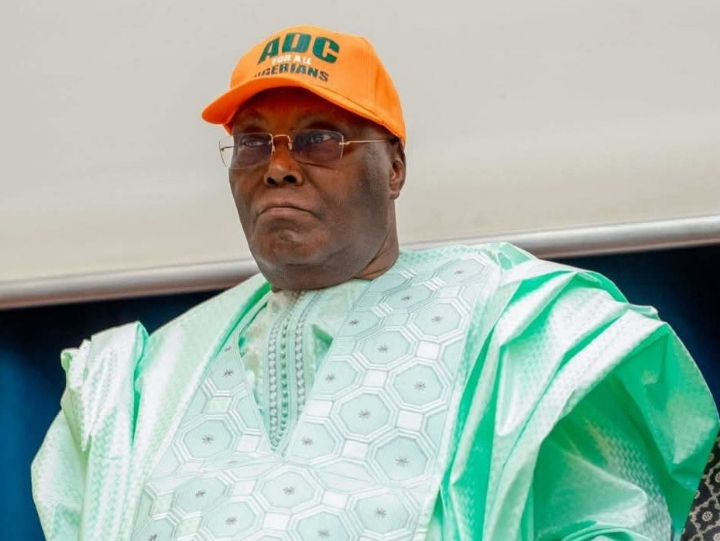
The presidential candidate of the African Democratic Congress and former Vice-President, Atiku Abubakar, has criticised President Bola Tinubu’s Independence Day address, saying Nigerians cannot eat economic growth figures while millions continue to struggle with rising living costs.

Atiku, in his Independence Day address on Thursday, said the past three years of the Tinubu administration had plunged Nigerians into what he described as the country’s worst cost-of-living crisis, with families struggling to afford food, healthcare, transportation and other basic necessities.

Tinubu, while addressing Nigerians to commemorate the 2026 Independence Anniversary, on Thursday, said that after three and a half years in office, there was undeniable evidence that Nigeria’s economic outlook had improved.

He said, “Our economy has grown by over four per cent this year. Both the oil and non-oil sectors have contributed to this renewed period of stable growth.

“My fellow Nigerians, we have reached a turning point. The emergency treatment is over. The foundation has been repaired. The central economic task before us has changed. For three years, our overriding purpose was to correct our nation’s course.

“Now, our purpose is simple: shared and widespread prosperity.”

Reacting, ADC presidential candidate challenged the President’s claim that Nigeria had entered an age of prosperity, asking where the prosperity was when Nigerians could barely afford to survive.

Atiku also faulted the government’s handling of fuel subsidy removal, taxation and other economic reforms, arguing that their impact had further increased the burden on households and businesses.

The former Vice-President stated, “And beyond the market, our nation is bleeding. Armed groups have killed thousands and driven families from their communities. Farmers fear their fields. Parents fear for children in their classrooms. Families dread the call demanding ransom for someone they love.

“A government that cannot make life affordable and cannot protect life has failed the two tests that matter most to its people.

“This is not the Nigeria our founders struggled to set free. But I will not ask you to surrender to despair. Despair is not a strategy. We have a path to recovery, and we must take it.

“Bola, where is this prosperity? Bola says inflation has fallen. A slower rise in prices does not restore what families have lost. He cites growth and rising exports. Nigerian businesses deserve credit for what they have achieved. But growth must improve lives. It cannot be a certificate of success that government awards itself while citizens struggle to survive.

See also  2027: Rivers supporters don’t need governor to mobilise for Tinubu — Wike

“Bola, you call Nigeria a patient with cancer. After three years of your treatment, why is it harder for Nigerians to buy food, pay for medicine or even get to work? Why does your government have more money while the people can afford less?”

Atiku said Nigerians could not be expected to endure prolonged hardship simply because the government described its economic policies as a cure for the country’s problems.

He challenged the Tinubu administration to account for the APC’s eight years in power, while pointing to rising fuel and food prices as evidence of the economic pressure facing Nigerians.

Atiku also questioned the benefits of fuel subsidy removal, saying Nigerians were more interested in knowing when the promised savings would translate into lower living costs.

He continued, “My fellow Nigerians, I will not ask you to accept another promise without asking how it would work. Working with my running mate and our partners in the African Democratic Congress, I will pursue a clear purpose: make life affordable again.

“We will introduce a capped, budgeted production subsidy tied to verified fuel refined in Nigeria, including fuel from modular refineries. Imported petrol will not qualify. The benefit must reach consumers through lower pump prices. We will publish the costs, independently audit the payments and cut government waste to help fund the programme.

“The principle is simple: produce here, refine here, create jobs here and pay less here. If Bola disagrees, he should answer the proposal on its merits. Calling relief an addiction will not lower the price of petrol.

“Bola, your speech is full of ‘we will.’ We will make farming cheaper. We will power factories. We will create jobs. We will bring down prices. You have been President for more than three years. Nigerians are entitled to ask what you have done with the time already given to you.”

Atiku said the government’s promise that lower production costs would eventually reduce prices offered little comfort to farmers and manufacturers currently struggling with insecurity, high electricity costs and other challenges that make production expensive.

See also  Court adjourns ruling in ADC deregistration suit to March 24

He also questioned the impact of government loan programmes, saying young Nigerians need decent-paying jobs while students and workers should not be burdened with loans to cope with rising education costs and living expenses.

Atiku urged the government to explain what the programmes had delivered, who benefited and what beneficiaries were expected to repay.

The ADC presidential candidate stated, “The confusion extends to your budgets. You have just signed an extension keeping the 2025 budget in operation until the last day of 2026.

“The 2026 budget exists alongside it. Soon, your government will ask Nigerians to examine a 2027 budget. How many budgets must be open at once before you can tell the country what was funded, what was completed and what remains unpaid? A budget should be a timetable for delivery, not a ball passed from one year to the next.

“Bola says his government reforms have a human face. Nigerians have spent three years looking for that face in the market, at the hospital and on the road to work. What they have found is deepening poverty, healthcare they cannot afford, school fees they struggle to pay, food beyond their reach and electricity bills that consume what little they earn.

“In communities under attack, people fear for their lives. A government cannot claim a human face while making it harder for Nigerians to eat, learn, seek treatment and stay alive.”

Atiku pledged that, if elected, his administration would prioritise affordability and the protection of lives, with measures to reduce the cost of food, fuel and electricity, improve access to healthcare and education, restore security, ensure accountability in public spending and assess progress based on Nigerians’ living conditions and safety.

He added, “Bola, you have put the weight of Nigeria’s economic well-being on a skateboard. Families are struggling to keep their balance, businesses are falling, and you stand in Aso Rock declaring that the journey to prosperity is going smoothly.

“In your Independence Day speech, you found time to attack my plan to make life affordable. But you did not tell commuters which additional routes became cheaper today, what the fares were before, what they cost now, or how many people can use them. Lower fares on a few routes are welcome, but they do not solve the transport crisis facing the rest of the country.

See also  Autonomy battle: Local Governments demand direct funds as states receive N7.43tn

“Bola, was this a Yahoo Yahoo promise or a hurried reply to my production subsidy proposal? You advertised cheaper transport from October 1. Today is October 1, and commuters are still asking where they can find the lower fares. Show them the routes and the prices. Nigerians cannot board an announcement.

“Bola, publish the routes, the fares and the number of people benefiting. Show Nigerians the cheaper journey you promised.”

Atiku said economic recovery should be reflected in improved living conditions, urging the government to account for the savings from its policies and show Nigerians tangible relief from hardship.

He also noted that independence requires political freedom, stressing that Nigerians must be allowed to question their leaders, organise peacefully and demand change, while calling for the rule of law to be applied fairly.

The former Vice-President called for due process in the cases of Sheikh Sani Khalifa Zaria, former Kaduna State Governor, Nasir El-Rufai and Nnamdi Kanu, and renewed his call for the release of five young Nigerians arrested in Borno over “Tinubu Must Go” T-shirts, saying political slogans should not be grounds for imprisonment.

He stated, “We have looked back. We have counted what fuel costs, what food costs and what a wage can still buy. We have seen families waiting for relief while government asks for more patience. We have heard promises of prosperity from a President who cannot show millions of Nigerians where to find it.

“Our founders did not win sovereignty so that a few could prosper while millions merely survive.

“Their promise lives in ordinary hopes: a meal a family can afford, a safe road home, a child free to learn, and work that offers a path to a better life. Those hopes are neither extravagant nor beyond Nigeria’s reach.

“Bola, the Promised Land is not in sight merely because you can see it from the villa. Nigerians must be able to reach it. We have chosen a different course, peacefully and together, through the power of our votes; the message is clear: Tinubu must go.”

Source: punchng.com

FOLLOW US ON:

FACEBOOK

TWITTER

PINTEREST

TIKTOK

YOUTUBE

LINKEDIN

INSTAGRAM

Continue Reading

Trending