Connect with us

Education

Ondo, varsity unions reach agreement over wage dispute – Gov’s aide

Published

on

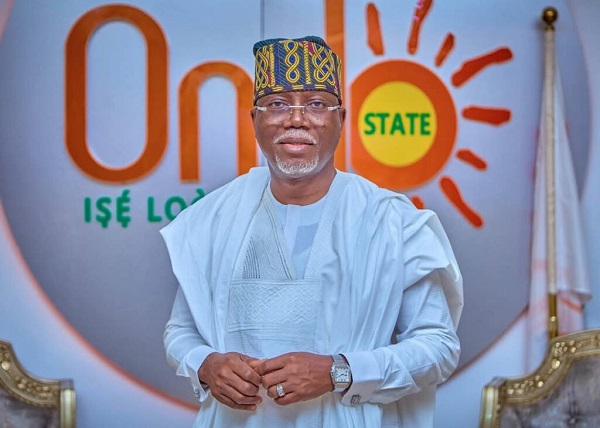
The Ondo State Government and tertiary institution unions have reached an agreement on the implementation of the new Federal Government and university unions’ wage structure and allowances.

This is contained in a statement made available to newsmen on Monday by the Chief Press Secretary to the Governor, Mr Ebenezer Adeniyan.

The agreement followed a series of meetings between officials of the state government, led by Governor Lucky Aiyedatiwa, and the leadership of labour unions in state-owned universities.

According to the statement, the unions involved in the meeting included the Academic Staff Union of Universities, Senior Staff Association of Nigerian Universities, National Association of Academic Technologists, and Non-Academic Staff Union.

The News Agency of Nigeria reports that academic and non-academic unions in the three Ondo State-owned universities are currently on a total and indefinite strike over unpaid allowances to members.

The statement said the meeting addressed outstanding issues relating to salary adjustments, allowances and other welfare matters affecting workers in the state-owned universities.

It added that a major resolution was the approval by Aiyedatiwa for the full domestication of the Federal Government-ASUU agreement on the Consolidated University Academic Salary Structure for academic staff of state-owned universities.

According to the statement, implementation of the resolution will take into account the peculiarities of the state.

It said that during the meeting, Aiyedatiwa described education as a cardinal priority of his administration, with a promise to the unions of his commitment to sustain industrial harmony in the state’s tertiary institutions.

“Our administration will continue to prioritise the welfare of workers, especially in the education sector, because we understand that a motivated workforce is key to academic excellence.

See also  Some private universities running like business centres – Ex-NOUN VC

“We have approved the FGN-ASUU pact for our universities because we want our institutions to compete favourably and our staff to be at par with their counterparts elsewhere,” the statement read.

It said that the government would continue to engage stakeholders to ensure that the state’s tertiary institutions remained centres of excellence without incessant industrial action.

According to the statement, the Adekunle Ajasin University, Akungba-Akoko, chapter of ASUU, while speaking on behalf of the unions, commended Aiyedatiwa for approving the FGN-ASUU agreement for the state universities.

Source: punchng.com

FOLLOW US ON:

FACEBOOK

TWITTER

PINTEREST

TIKTOK

YOUTUBE

LINKEDIN

INSTAGRAM

Continue Reading
Click to comment

Leave a Reply

Your email address will not be published. Required fields are marked *

Education

Read about the return of ASUU strikes at state universities

Published

on

ALL eyes are back on tertiary education. While most federal universities are running smoothly, it is not the case at some state-owned universities. From Lagos to Plateau, Kaduna to Taraba, the age-long disruption of the academic calendar is rearing its head again at state-owned universities. State governors, who are basking in more resources than before, should address the underlying issues.

In the recent past, Nigeria’s public universities were infamous for lengthy strikes.

But President Bola Tinubu’s mantra to end lecturers’ strikes that had plagued the public university system appears to have worked so far. In January, the Federal Government increased salaries by 40 per cent. This has restored stability in these institutions.

Conversely, strikes have returned to some state-owned institutions.

The states have no genuine excuse. After Tinubu removed the petrol subsidy, floated the naira and expanded the tax net, including VAT, the sub-national governments are more buoyant than ever.

Since 2009, public universities have experienced persistent strikes, which Tinubu pledged to end. Until the Tinubu administration’s pact, the 2009 agreement of N1.51 trillion for the revitalisation of universities and the enhancement of salaries was poorly implemented.

The outcome is predictable. In the latest Webometrics ranking, the best is the University of Ibadan at No. 1,291 in the world. UI is followed by the University of Lagos (1,355) and the University of Nigeria (1,397). This is depressing.

At the core of the face-off is the December 2025 Federal Government-Academic Staff Union of Universities agreement. Essentially, the Federal Government increased lecturers’ salaries by 40 per cent.

See also  How A Class Of 24 Students Produced 2 Presidents, 4 Governors, 2 Ministers, 4 Emirs, 3 Justices, 4 Ambassadors and Other Influential Leaders

Other key provisions include an annual credit allowance of N1.8 million for professors and between N840,000 and N870,000 per annum for academic readers, and enhanced pensions.

Ironically, Lagos, Tinubu’s home, is the latest state where ASUU has just declared a strike, following the breakdown in negotiations between the state government and the joint unions of the three universities in Lagos.

According to the ASUU chapters of Lagos State University, Lagos State University of Science and Technology and Lagos State University of Education, the government did not implement the 2025 FGN-ASUU agreement despite a 14-day notice.

In Kaduna, the ASUU state chapter at the Kaduna State University, Kakuri, recently ended its strike after Governor Uba Sani approved the implementation of the agreement from October 1.

A similar story is unfolding in Plateau State. After downing tools over the agreement, the ASUU chapter of the Plateau State University, Bokkos, terminated its strike on September 16.

It said the state government had agreed to implement its six-point demand.

But lecturers at the three state-owned universities in Ondo State are still on strike over the non-implementation of the FGN-ASUU pact.

On September 15, the ASUU chapter of the Taraba State University, Jalingo, issued a 14-day ultimatum to the state government to implement the agreement or face a strike. The ultimatum will expire on September 28.

These contradictions expose Nigeria’s flawed federalism. The centre was at the forefront of the negotiations with ASUU. While the Federal Government has gone ahead to implement the agreement, states are delaying implementation for reasons best known to them.

See also  FG, World Bank restructure $500m education funding programme

In many areas of national life, the Federal Government imposes its will on the federating units. The unbridled federal power is an overreach. In a federal jurisdiction, this is wrong.

So, state governments should not be under this overarching federal influence in the funding and administration of universities at the second tier of government.

The independence of states and the centre has a crucial inflexion point.

In this, private universities offer the best lesson. With their independence and self-funding system, the 182 private institutions determine the remuneration they can offer the academic and non-academic staff. Therefore, strikes over pay are non-existent in private institutions. With proper independence and control, it could also be so at state-owned universities.

State governments share in the blame. Currently, there are 69 state-owned universities in the country. Without proper preparation for funding, staffing and infrastructure, state governments establish multiple universities. This is ridiculous.

Some states have more than three universities. Thus, they find it difficult to cope with the financial and infrastructure demands of such institutions. But it is wrong to see universities as a political symbol.

After a spree, the Federal Government placed a seven-year moratorium on the establishment of new universities in a bid to address the issues at stake.

Therefore, the National Universities Commission should exercise its independence. It should thoroughly scrutinise the centre, the states and private entrepreneurs who bid to establish universities.

Source: punchng.com

FOLLOW US ON:

FACEBOOK

TWITTER

PINTEREST

TIKTOK

YOUTUBE

LINKEDIN

INSTAGRAM

Continue Reading

Education

Unity Colleges staff defy FG resumption order on King’s College

Published

on

Staff of Federal Unity Colleges nationwide defied the Federal Government’s directive to resume academic activities on Monday, insisting that their indefinite strike over the concession of King’s College, Lagos, remains in force.

Recall that the college staff, under the auspices of the Association of Senior Civil Servants of Nigeria, had ignored the initial September 13 resumption date, maintaining that their stance was, “No reversal, no resumption.”

During visits to some Unity Colleges in Lagos and Ibadan on Monday, staff union members were sighted in front of the school gates, while parents largely stayed away despite the Federal Government’s resumption directive.

The Federal Government had, in a September 18 memo to principals of the Unity Colleges, directed that academic activities resume following the agreement it said was reached with the labour unions over the dispute.

The directive followed the Federal Government’s agreement on September 16 to suspend for two weeks the implementation of the planned management takeover of King’s College by the institution’s Old Boys’ Association.

The agreement was reached at a meeting between the education ministers and representatives of education-sector labour unions in Abuja amid protests and industrial action over the concession of the 117-year-old college.

Under the five-point agreement, the unions were to immediately suspend the industrial action, while the government assured workers that no staff member would be victimised for participating in the protest.

The parties also agreed to a two-week pause in the implementation of the takeover arrangement involving the King’s College Old Boys’ Association, while a seven-member committee would be constituted to review and negotiate the Federal Government’s agreement with the old students.

See also  Tinubu appoints NECO, NBTE chairmen, names poly rector, renews library DG tenure

Another resolution was the redeployment of policemen from the premises of King’s College.

However, the Shehu Mohammed-led faction of ASCSN maintained that the agreement was not binding on it, accusing the ministry of subsequently negotiating with persons it said lacked the mandate to represent the association.

The union insisted that the industrial action remained in force until the issues in dispute were fully resolved.

In a September 18 letter to state branch chairmen, chapter chairmen, unit chairmen of Federal Unity Colleges and state secretaries, the union accused the Ministry of Education of undermining the September 14 agreement reached with ASCSN and the Trade Union Congress of Nigeria.

The letter directed members to halt academic and administrative activities, constitute monitoring teams to enforce compliance and disregard any counter-directives from school authorities or ministry officials.

At King’s College, Lagos, the Chairman of the ASCSN chapter, Sam Enang, told The PUNCH that the school had not resumed.

“We have not resumed. The pupils are at home. We have not called off the strike,” Enang said.

Asked about the ministry’s circular directing schools to resume, he said, “The union says an indefinite strike is on and we have started that since yesterday.”

Enang linked the continued strike to the King’s College concession, alleging that the Ministry of Education had breached the agreement reached with the unions.

“The Federal Ministry of Education defied the agreement of the union by sending police to come to the college and beat up staff and even took a staff member’s child away. That means they have breached their agreement.

See also  How A Class Of 24 Students Produced 2 Presidents, 4 Governors, 2 Ministers, 4 Emirs, 3 Justices, 4 Ambassadors and Other Influential Leaders

“And also, negotiating with a different body, that is a breach of agreement,” he said.

He said staff had been directed to remain on indefinite strike until the situation at King’s College was reversed.

“So, we have been asked to remain on indefinite strike until they reverse the situation at the college. So, nothing is working out here,” he said.

Enang said the strike was not limited to King’s College, insisting that workers in the 115 Federal Unity Colleges nationwide had been directed to remain on strike.

“All Unity Colleges, they are on indefinite strike as I’m talking to you, because of King’s College. And this notice has gone across all six geopolitical zones, and the 115 Unity Colleges we have across the country. No school has resumed,” he said.

He added that no student reported at King’s College on Sunday despite the government’s resumption directive.

“The students did not show up at all. They did not show up at all,” Enang said, attributing the development to communication between the union and parents.

“We have a platform to communicate to parents that they should not come. And the union too has also communicated to parents that nobody should show up,” he said.

The union chairman also alleged that the deployment of policemen to King’s College and the confrontation between security personnel and protesting workers contributed to the decision to sustain the strike.

The policemen, who had been deployed to the college following the confrontation between staff and members of the Old Boys’ Association, have since left the premises, according to Enang.

See also  WAEC result crisis worsens as official alleges irregularities, glitches

He alleged that the police spent two to three days at the school and that the gates were damaged during the confrontation.

Also affirming the continuation of the strike, the Chairman of ASCSN at the Federal Government College, Ijanikin, Lagos, Ayo Hundeyin, said the school had not resumed.

“We have not resumed. The pupils are at home. We have not called off the strike,” he said.

Hundeyin said workers were also concerned about what he described as plans to hand over other Unity Colleges to private interests.

“We are aware that there are similar plans to hand over Unity Colleges in Kano, Port Harcourt, and Ilorin. The education of our children is our priority, and we won’t support any privatisation of our schools,” he said.

The dispute has lingered following opposition from workers to the Federal Government’s decision to concession the management of King’s College to its Old Boys’ Association under a public-private partnership arrangement.

The Federal Government has maintained that King’s College has not been sold or privatised, stressing that legal ownership remains with it.

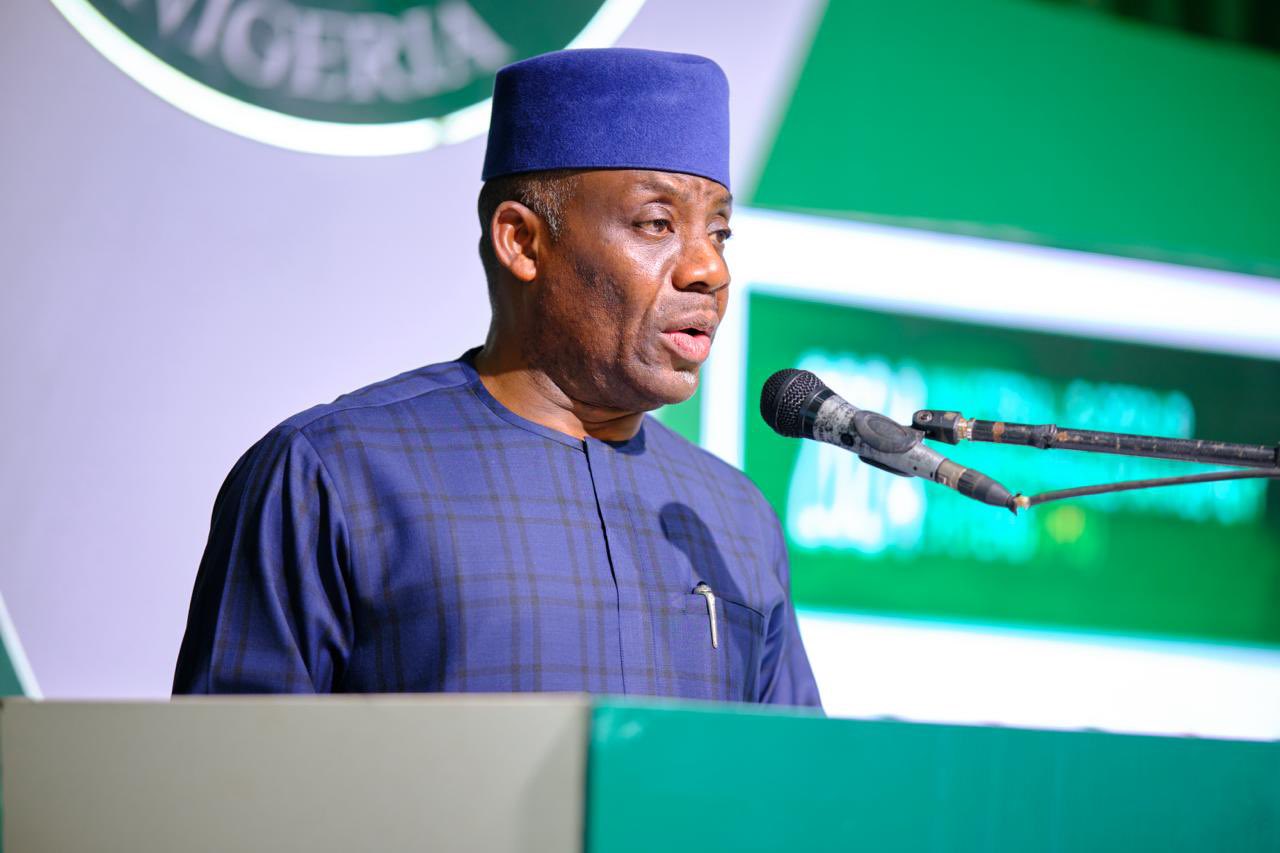
Education Minister, Tunji Alausa, also said the arrangement was an isolated case and would not be extended to other Unity Colleges.

“No. We’re not extending it. The government still has its responsibility,” Alausa said.

He said the government remained committed to funding the rehabilitation of other Unity Colleges directly, while exploring alternative funding mechanisms to address their infrastructure deficits.

Source: punchng.com

FOLLOW US ON:

FACEBOOK

TWITTER

PINTEREST

TIKTOK

YOUTUBE

LINKEDIN

INSTAGRAM

Continue Reading

Education

Ex-LASU VC reveals that public varsities need N1m school fees for financial independence

Published

on

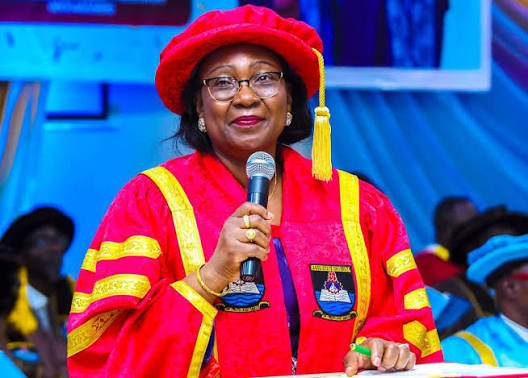
In an interview with WALE AKINSELURE, Prof. Ibiyemi Olatunji-Bello, who ended her five-year tenure as the ninth Vice-Chancellor of Lagos State University on Saturday, September 19, 2026, speaks on her administration’s achievements, challenges, unfinished projects, and vision for the university’s future

When you assumed office in 2021, what were LASU’s major problems, and how far did you address them?

The first major problem was that there was the piece of the graveyard in the university. People were not free; they were all choked up. Although there was no protest or anything, I sensed that people were not free. And I also saw that our students didn’t have toilet facilities. I made sure that those toilets were available. I made sure that we had toilet facilities for each faculty across the campuses, Epe Campus and Ojo Campus, but we had problems with IGR. We didn’t have enough money. We were in debt. Apart from owing money, there was no money to maintain the university environment. We used to have flood problems in LASU, and we decided to work on the drainage. So there were no more floods. We cleaned the drainage channels, and we no longer have that challenge. There were also academic programmes that were not accredited, or were about to be accredited, which we did. And I promised myself that every project started by my predecessor, if I could, I would finish. So, I put pressure on TETFund to finish all the projects. I put pressure on the ministry to finish all the projects, and that’s why most projects are finished, including the hostel accommodation. My predecessor started it, but we ensured that they were completed, despite the fact that there was a skyrocketing increase in the building cost. We also insisted that students must use the hostel as soon as possible.

What were the lowest and highest points of your five-year tenure?

My lowest point at LASU was when the students’ union protested in 2024. They were having a problem with CBT 18. There was a stampede. CBT 18 decided not to allow them to come in to do the exam, and I insisted that there must be a pen-and-paper exam. They agreed. We had the pen-and-paper exam. But when we, as management, sat, we thought we needed to pay off CBT 18. Everybody thought CBT 18 was LASU’s CBT centre, but it wasn’t. So we had to pay them off. But when we when we had when we decided that each student must pay N10,000, there was this protest. When you came out from the Senate building, we had thousands of students. It was a sea of heads, and they insisted that they were not going to pay that N10,000. We tried to persuade them. We came down to N5,000 and then N3,000. They did not agree. So I just said, “We are withdrawing that N10,000. Nobody is paying anything, but you are going to write your exam using pen and paper. That was the worst because I saw pain in the eyes of the students, and I knew that if I insisted and they turned back, they were going to destroy property. It was going to be something that would be very bad. And I didn’t want to answer queries from Mr Governor on how I managed the situation. And when the students were going, they were jubilating.

The highest point was in 2025, when JAMB declared that we were the most subscribed university by UTME candidates in Nigeria; that was great for me. And this year, 2026, we maintained that number one position. And not only did we maintain it, but we were even awarded N25m for maintaining compliance with JAMB regulations.

See also  WAEC results reveal 38.5% failed five key subjects

What challenges came with LASU becoming the most sought-after university, and how did you manage them?

The first thing is the pressure on admissions. You need a whole holiday to deal with the pressure. That means, if you are doing your day-to-day work, you might not be able to do anything. So you need to take a few days off to work on the admission. We follow the rules and regulations of JAMB. Our admission is merit-driven- 70 per cent will be merit. Then we have 10 per cent for catchment, which is Lagosians. Although that 70 per cent still has catchment merit, then catchment general. Then we have another 10 per cent at the discretion of the Vice-Chancellor. Also, there is 10 per cent for direct entry. When we broke this down, we discovered that the majority of our students in LASU are admitted based on merit. That is the reason why we have a lot of brilliant, excellent students in the system. We have a lot of first-class and second-class (upper) students because the best of the best are taken. This year, you will marvel. We have students for our LASU screening. We have a lot of students scoring 90 per cent, 80 per cent. We have students scoring 92 per cent, 95 per cent. So when some people come to me and say that their children/wards did well, scoring 65 per cent, I just laugh. The best of the best students in Nigeria want to come to LASU.

You raised the university’s Internally Generated Revenue from N3bn to N13bn. What did you do differently?

When I came in, I was going to defend the budget of the university. I was told that our dedicated revenue was N3bn; I was baffled. The present deputy chief of staff then queried that, with all the new programmes being introduced in LASU, I should be able to increase our dedicated revenue. And I said, I will try. He said Let’s push it to N7bn, and that was how we started. And by the end of that year, we had over N7bn. It gave me encouragement, so I set a target of N10bn the following year. And I had to tell my colleagues in the management that I’d already committed myself to N10bn. So, we brought in new programs with the SPT digital innovations. I challenged the DVC admin, who is the director of ICT. The digital aspect of our processes in the university brought in a lot of money for us. The ventures also brought in a lot of money. The consults from the diploma programs, all our partners, short-term courses, and so on brought in more money. We also introduced over 75 new postgraduate programmes. We explored all legal ways of bringing in money, and we made N10bn easily. And then, the following year, it went from N10bn to N12bn, and I was so scared of maintaining the growth. But then, when we got to the House of Assembly, they supported me, promising dedicated capital expenditure, and then the others. So they now gave me N10bn for one part, which is the one that we can spend on all the university processes, and then N3bn on capital, and that was a total of N13bn. I thought I would make N12bn, but we had to make N13bn, and we made it. But I don’t know if we are going to make it this year because we had to stop some programs. We reduced intake for the diploma programs, but it doesn’t matter.

See also  Kidnapped Niger school children, staff reunited with families – Properitor, Rev Fr Yohana

How can public universities achieve financial self-sustainability without relying heavily on government funding?

Universities can achieve financial self-sustainability. If they can innovate and ensure improvements in the institution, money will come in. But then, if the money comes in, how do you spend it? Right now, LASU does not have financial self-sustainability. We may have increased our dedicated revenue, but we cannot survive. Our payroll right now is over N1bn per month. All the N13bn IGR does not cover our salaries. So, universities that want to attain self-sustainability will have to increase school fees into millions. Some secondary schools charge over a million per term, but in a university, you’re paying about N100,000 per year. You also have the universities maintaining the environment. You also have to pay bills: cleaning, electricity, security, diesel. We have an electricity bill of N140m every month. This is apart from over N1bn on salary.

We also know what it costs to have inaugural lectures twice a month. There are so many other costs just for the day-to-day running of the university. We still have to augment salary payments with about N240m every month. So, any public university that wants to sustain financial independence will have to charge school fees of not less than N1m per student. You can’t have academic excellence without paying for it. I enjoin parents to ensure their children are well-educated by prioritising their fees. Good quality education needs money.

What is LASU’s student-to-hostel ratio, and how did you tackle the accommodation gap

The student population in the university is about 85,000, including postgraduate and part-time programmes. But at any point in time, on campus, we have about 12,000 students. And the accommodation is not enough for everybody, and it’s not peculiar to only LASU. It is our wish to accommodate all, but we cannot for now. So, some groups will be given priority, and it’s on a first-come, first-served basis. We have our own hostels, and we also have the ones that are jointly owned by Lagos State and our partners on a Public-Private Partnership arrangement. Right now, we are accommodating about 8000 students.

What strategy did you adopt to avert major industrial actions in the university?

To lead LASU, you need the grace of God. You need to be patient. You need to be accommodating, and also you need to have an open-door policy. When I was at the National Institute for Policy and Strategic Studies, LASU was my case study on industrial actions. And the title of my project was “Incessant Strikes in the Nigerian University System, LASU, a case study.” So I deliberately studied LASU: what causes industrial actions? How do we manage industrial actions? And the recommendations from my project were what I carried out in LASU because members of all four unions filled out my questionnaires. I heard what they wanted, why they were always going on strike and what can be done to avert the strikes. And I implemented my findings to the letter. We have roundtable discussions. We meet with them frequently; they tell us their problems, and we were able to avert the problems from escalating to major strikes.

What were your major research and innovation outputs as VC?

We instituted a N5m competitive internal research grant for our academic staff. For the Lagos State Research and Innovation Council, seven of our staff from 2022 to 2025 were able to secure over N29m in grants from Lagos State. Staff in the School of Transport and Logistics and those of the Faculty of Management Sciences enjoyed the Volvo 100,000 SEK grant for the year 2023. Prof Akintola of Fisheries also won a number of grants in millions of naira. We secured a N3bn TETFund Centre of Excellence this year, and it is the only centre in the South-West.

See also  ESUT Suspends Lecturers Over Alleged Extortion, Rule Breaches

All our programmes are digitalised from admission to screening to certificate collection. You can go online to get your certificate within 10 minutes. We introduced an instant verification feature for the certificates so you don’t have to come back to us to verify your certificates. We attracted grants through research collaborations. We have a lot of collaborations locally and abroad. We have also started new courses that will help us with the research. Some centres are fully research-driven. Two striking points for me are that we have intellectual property protection for all the research done in this university. We also have a research ethics committee that will scrutinise your research and make sure that what you have is genuine and is worth showing off.

Does LASU have an AI policy, and how is the university adapting to AI?

We have an AI policy approved by the Senate, and every department has a copy. The policy emphasises the ethical use of AI and tolerance in terms of AI referencing. We encourage the use of AI, but it must be ethical and cited when used. It covers tools, perception and documentation. As a matter of fact, our university is the first in the country to have that policy because it was a decision taken at the Senate meeting of July 2022. And its usage has been deepened among staff and students, and it is binding. And that came after having a policy on plagiarism for both postgraduate and undergraduate students. And that has been implemented at the level of the ethics committee as part of what is considered before any clearance is given for any research. And that is what makes our outputs very original and continues to advance the research profile of the university. In addition, there should be regular review of the policy as AI develops.

Are there things you set out to accomplish which you did not?

I wanted a big Central Research Laboratory. I wanted a massive one like that of the University of Illinois, but it is still in the pipeline. We have a small one that we are renovating, but for the big one on my mind, I’m sure my successor will follow up on that.

What would you like the Lagos State Government to prioritise concerning LASU?

The first is that the state government should help complete the Innovation Hub, which will serve the environment. I want to see it completed and inaugurated. We also have one or two massive buildings that are still outstanding. If they complete it,  it will give LASU a better look. They should also help sustain the environment in front of the Badagry gate.

You set out to make LASU West Africa’s best university. Did you achieve that goal?

Yes. In years 2022/2023, we attain that feat of being the best university in West Africa using the sustainability green metrics, as adjudged by the Universatas Indonesia Green Metrics World Ranking, and in 2022, 2023. 2024, we sustained that first position in West Africa, and in fact, in sub-Saharan Africa, and this continued up to this year. We even went further to be given the vice-chairmanship on the table of the UI Green Metrics World Ranking.

Source: punchng.com

FOLLOW US ON:

FACEBOOK

TWITTER

PINTEREST

TIKTOK

YOUTUBE

LINKEDIN

INSTAGRAM

Continue Reading

Trending