Connect with us

News

CCB probes assets of over 20 ministers, read details

Published

on

The Chairman of the Code of Conduct Bureau, Abdullahi Bello, says the bureau has investigated and verified the assets of more than 20 ministers and 30 permanent secretaries as part of efforts to strengthen accountability among public officers.

Bello disclosed this in Abuja on Wednesday at an anti-corruption and asset tracing stakeholders’ workshop organised by the Human and Environmental Development Agenda in collaboration with the Platform to Protect Whistleblowers in Africa.

Bello said the CCB had moved beyond merely receiving asset declaration forms to examining declarations, investigating suspected infractions and prosecuting offenders.

“We are not submitting forms anymore. Now, we’re examining the forms, we’re also investigating, and we’re also prosecuting,” he said.

The chairman said the bureau had focused its verification exercise on high-profile public officers.

“We have interviewed and verified the relations of more than 20 ministers, 30 permanent secretaries, 32 health agencies, and other high-profile individuals,” Bello said.

He said the bureau invites public officers to its office for face-to-face examination of their records.

“One of the key things that we do is that, once you declare your assets at the beginning of your term, we verify it; then we’ll wait for you at the end of your term, and we’ll also verify it.

“If you see any difference between the beginning and the end, that can only be explained by your non-social income, then we investigate you and prosecute you,” he said.

He stressed that the CCB could commence an investigation before the end of an official’s tenure where allegations or intelligence existed.

See also  Bayelsa deputy gov sues Assembly over impeachment plot

“But it doesn’t mean that we have to wait for you to finish office before we can investigate you. If there is any allegation against you, we can also investigate. Or if there is intelligence against you, we can also investigate, he said.

Bello described asset tracing as central to the bureau’s anti-corruption efforts.

“Asset tracing is not a side issue. It’s where investigation becomes persistent,” he said.

He also said the CCB had secured convictions and forfeited properties and funds linked to breaches of the code of conduct.

“For the first time in the life of CCB, we have been able to do that,” he said.

Bello said the Code of Conduct provisions provided for sanctions including removal from office, disqualification from holding public office and forfeiture of assets acquired through breaches.

“If you look at the prohibition of the Code of Conduct, there are three major punishments for Code of Conduct breaches. First, you can be banned from office for 15 years. You can be removed from office. And then finally, the assets that you acquire from a breach can be forfeited to the government,” he said.

Speaking at the workshop, the Executive Secretary of HEDA, Arigbabu Sulaimon, said the meeting was aimed at strengthening inter-agency collaboration, intelligence sharing and the role of civil society in combating corruption.

Sulaimon said the workshop was “conceptualised not merely as a platform for speeches, but as a technical working session” to advance three core institutional objectives.

He said the first objective was “bridging interagency silos and fostering civic synergy,” stressing the need for effective information sharing among government agencies and civil society organisations.

See also  No ₦11bn was looted in Osun, commissioner replies EFCC

“Realising full accountability requires seamless real-time intelligence exchange among our primary military and enforcement bodies,” Sulaimon said.

He added that civil society organisations could contribute to investigations through grassroots monitoring and open-source intelligence.

“Importantly is forging strong operational pipelines with civil society organisations whose grassroots tracking and open-source intelligence tools provide invaluable leads for criminal investigation,” he said.

Sulaimon also called for greater use of the Proceeds of Crime Act and the Code of Conduct Bureau’s statutory mechanisms in tracing and recovering illicit assets.

“Operationalising the Proceeds of Crime Act, POCA, is essential to ensure that confiscated assets are not only effectively recovered, but managed and disposed of with absolute public transparency,” he said.

He further urged the authorities to make asset declaration a more effective tool for detecting illicit enrichment and abuse of public office.

“Furthermore, we must transform the code of conduct we use after the declaration process from a routine and restricted exercise into a dynamic, verifiable mechanism for detecting early signs of illicit enrichment and public office abuse,” Sulaimon said.

On whistleblower protection, the HEDA executive secretary said greater safeguards were needed to encourage individuals to provide information on corruption and other crimes.

“Whistleblowers remain the single most effective catalyst for uncovering criminal crimes. Yet, without robust statutory protections and safe reporting mechanisms, courageous individuals remain vulnerable to retaliation,” he said.

Source: punchng.com

FOLLOW US ON:

FACEBOOK

TWITTER

PINTEREST

TIKTOK

YOUTUBE

LINKEDIN

INSTAGRAM

Continue Reading
Click to comment

Leave a Reply

Your email address will not be published. Required fields are marked *

News

Lagos residents decry delayed road project, allege extortion

Published

on

Residents and business owners along Ogunrombi Street in the Idimu area of Lagos State have lamented the slow pace of a road rehabilitation project, alleging that construction workers block the road and extort motorists seeking access to the community.

During a visit by PUNCH Metro to the project site on Tuesday following complaints, the residents said the project, which involves resurfacing the road from Ogunrombi Street to Orisunmbare, was awarded by the Lagos State Government with a 12-month completion timeline but remained largely unfinished despite the deadline.

They expressed concern that the delay had caused hardship for motorists and businesses, while also raising questions about the quality of work already executed.

A resident, who spoke on condition of anonymity, told PUNCH Metro during the visit to the community that work on the project began in July 2025, but the contractors had only scraped the road surface and constructed drainage channels.

“We are bothered by what is going on on our street, Ogunrombi Street, Idimu. The Lagos State Government awarded the contract for resurfacing the road from Ogunrombi to Orisunmbare for 12 months. They started in July 2025.

“As I speak, they have only scraped the surface and done the drainage. That is all they were able to achieve within the scheduled time for delivery of the job,” the resident said.

The resident accused the construction workers of deliberately obstructing traffic and demanding money from motorists before allowing them to pass.

“This week, they did literally nothing other than block the roads with their equipment to prevent vehicular movement, treating the people in the community with contempt. They converted the roadblock into a tollgate, extorting motorists to secure passage,” the resident alleged.

See also  Actor Baba Ijesa Released From Prison After Three Years

Another resident, Tunde Filani, said the workers had, at one point, used a caterpillar to block the entire road for a week before moving the equipment to one side and parking a truck on the other, leaving motorists with limited access.

He alleged that the workers subsequently demanded money from motorists before allowing them to pass.

Filani said the owner of an event centre along the road had to contact the contractor after the obstruction disrupted access to the facility, prompting the contractor to direct the workers to open the road.

“The suffering is too much for us, and there is no hope that the project will be completed in another year, given the speed of work,” he added.

A commercial motorcycle rider also decried the delay, alleging that the workers blocked the end of the road linking OPC Junction and demanded money from operators before allowing them to pass.

“They used their caterpillar to block the road last month and prevented us from using it. It was blocked at the other end of the road linking OPC Junction. So, we had to pay N10,000 weekly for us to pass,” the rider alleged.

The rider said the payments were made by officials of their unit on behalf of members to secure passage.

Similarly, Francis Udo, a manager of a company located along the road, said the slow pace of construction had adversely affected the business, forcing it to operate at a loss.

Udo explained that the removal of the company’s drive-in access at the commencement of the project had prevented its trucks from entering the premises, while vehicles parked outside had been vandalised twice.

See also  FG seals deal for 12 US attack helicopters

“We have been subjected to hardship as a result of this project. Our business has been running at a loss. When they started, they removed the drive-ins, and since then, we have not been able to move our truck into the compound.

“While we park outside, our truck has been vandalised twice. We had hoped that the work would be completed by July, but they are still foot-dragging,” he lamented.

He also alleged that the workers resorted to blocking the road and demanding money from motorists instead of accelerating the project.

“Instead of them to hasten up, they resorted to block the road and extort motorists. Sometimes, we paid N3,000 before they would allow us passage. It was later that their leader ordered them to open the road,” he alleged.

Beyond the delay and alleged extortion, the residents raised concerns about the quality of the work, particularly the drive-ins constructed along the road.

A resident, who also spoke on condition of anonymity, alleged that some of the drive-ins had started collapsing barely a month after construction.

“The drive-ins they made have started collapsing under the weight of small cars, and this is just a period of one month,” the resident said.

Another resident alleged that some landlords around the Paiko end of the road had contributed money to purchase iron materials after raising concerns about the quality of materials being used by the contractors.

During the visit, PUNCH Metro observed that construction work was ongoing at the Foursquare Avenue end of the road.

A project signboard erected at both ends of the road identified the Lagos State Ministry of Works and Infrastructure as the agency handling the project and indicated a 12-month completion period.

See also  BREAKING: Nollywood actress, producer Allwell Ademola is dead

The residents appealed to the state government and relevant authorities to investigate the allegations of extortion and substandard work, ensure the quality of the construction and expedite the project’s completion.

The spokesperson for the Ministry of Works and Infrastructure, Adeshina Odunuga, could not be reached for comment, as calls made to his telephone line on Tuesday were not answered.

A text message sent to him had yet to be replied to as of the time this report was filed.

Source: punchng.com

FOLLOW US ON:
FACEBOOK

TWITTER

PINTEREST

TIKTOK

YOUTUBE

LINKEDIN

INSTAGRAM

Continue Reading

News

Aiyedatiwa orders river fumigation, health kits for residents after Ondo plane crash

Published

on

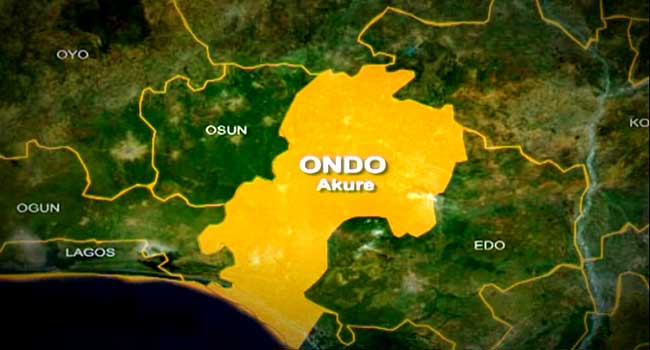
Ondo State Governor, Lucky Aiyedatiwa, has ordered the fumigation of the Igbokoda River and the distribution of nose masks and other health kits to residents following complaints about the offensive stench from the site of last week’s Nigerian Air Force aircraft crash.

The directive followed growing concerns over possible environmental pollution and health risks as recovery operations continue at the crash site in Igbokoda, headquarters of Ilaje Local Government Area of the state.

In a statement on Wednesday, signed by the state Commissioner for Information and Orientation, Idowu Ajanaku, the governor directed the Ministries of Environment and Health to begin extensive fumigation of the river to prevent a possible outbreak of diseases.

The statement read, “Following complaints by residents of Igbokoda over the strong stench emanating from the river where the Nigerian Air Force aircraft crashed last week, Ondo State Governor, Hon. Lucky Orimisan Aiyedatiwa, has directed the Ministries of Environment and Health to commence extensive fumigation of the river.”

It added that the intervention was necessary because the river served as a major source of livelihood for residents of Igbokoda and neighbouring communities.

Aiyedatiwa also directed the Ilaje Local Government Area to arrange water tankers to supply potable water to residents if the river was found to be severely polluted and unsuitable for use.

“The arrangement is to remain in place pending a lasting intervention to address the pollution,” the statement added.

The governor further directed the Ministries of Health and Environment to distribute nose masks and other essential health kits to residents to protect them from potential health hazards.

The statement said, “The governor reiterated the state government’s commitment to providing all necessary support to the Nigerian Air Force in its ongoing evacuation efforts, as well as ensuring the welfare and safety of residents of the affected community.”

See also  BREAKING: Nollywood actress, producer Allwell Ademola is dead

PUNCH Online reports that the crash occurred on October 5, when a Nigerian Air Force ATR-42 aircraft, registration number NAF 931, crashed into a swampy area of Igbokoda during a routine mission from Benin City, Edo State, to Lagos. The incident claimed the lives of all 25 people on board, comprising five crew members and 20 passengers.

Nine days after the incident, the recovery of the victims’ remains and the aircraft wreckage remained a major concern, with residents reporting an increasingly offensive smell from the river.

The Igbokoda monarch, Oba Afolabi Odidiomo, had called on the Federal and Ondo State governments to expedite recovery efforts and address suspected contamination from decomposing human remains and spilt aviation fuel.

The recovery operation has been complicated by the swampy terrain and the aircraft’s submersion in the water. Following the crash, the state government deployed amphibious swamp machines to support the Nigerian Navy, Air Force, emergency response agencies and local divers in accessing the site and retrieving the wreckage and victims’ remains.

The Nigerian Air Force has also intensified search and recovery efforts and constituted a 12-member board of inquiry to investigate the circumstances surrounding the crash. The Federal Government had earlier ordered an investigation into the incident.

Source: punchng.com

FOLLOW US ON:

FACEBOOK

TWITTER

PINTEREST

TIKTOK

YOUTUBE

LINKEDIN

INSTAGRAM

Continue Reading

News

Nuhu Ribadu reveals terrorists deploy AI, crypto to evade security agencies

Published

on

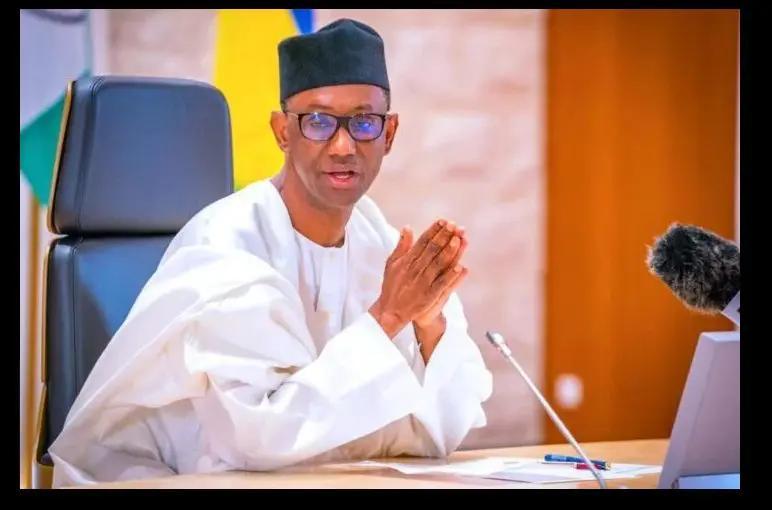
The National Security Adviser, Nuhu Ribadu, and the African Union Counter-Terrorism Centre have warned that terrorist groups are increasingly exploiting social media, cryptocurrencies and emerging technologies to recruit members, conceal funds and coordinate attacks across West Africa and the Sahel.

They raised the alarm in Abuja on Tuesday at a three-day regional training conference on detecting and disrupting terrorists’ exploitation of information and communication technologies and emerging technologies.

Ribadu, represented by the National Coordinator of the National Counter Terrorism Centre, Maj Gen Adamu Laka, said terrorist groups were using digital platforms to spread propaganda, radicalise potential recruits, raise funds and coordinate operations across borders.

He warned that the growing use of artificial intelligence, drones and virtual assets had added new dimensions to the security challenges facing Nigeria and other countries in the region.

“Emerging technologies add further complexity: Artificial Intelligence can rapidly produce personalised content; drones and autonomous systems can expand operational capabilities; and virtual assets can create new financing channels. We must, therefore, strengthen our ability to anticipate, detect, analyse and disrupt threats before they materialise,” he said.

Ribadu said the response required more than acquiring sophisticated equipment, stressing the need to develop technical expertise, strengthen institutions and improve cooperation among security agencies.

The NSA also called for increased cross-border intelligence sharing and the timely exchange of actionable cyber threat information among West African and Sahelian countries.

“Nigeria recognises that no institution, country or sector can defeat terrorism alone,” he said.

The former Economic and Financial Crimes Commission chairman added that Nigeria was working with the African Union Counter-Terrorism Centre to secure accreditation for the National Counter Terrorism Centre as a regional centre of excellence for counterterrorism in West Africa and the Sahel.

See also  See how Abia gov restores power to 33 communities after nine-year blackout

He said the initiative followed President Bola Tinubu’s declaration at the High-Level Africa Counterterrorism Summit held in April 2024.

Also speaking, the Acting Director of the AU Counter-Terrorism Centre, Idriss Lalalli, said terrorist organisations, including the Islamic State West Africa Province, Boko Haram and Jama’at Nusrat al-Islam wal-Muslimin, were expanding their activities through digital technologies.

He said, “Across West Africa and the Sahel today, ISWAP, Boko Haram and JNIM are extending their reach through technology. They recruit on social media platforms, move and conceal funds via mobile money, gift cards and cryptocurrencies.

“They buy weapons on darknet marketplaces, communicate over satellite links beyond our networks, and fly drones across borders, using artificial intelligence to tailor propaganda and evade detection.”

Lalalli warned that the speed and relatively low cost of using digital tools had enabled terrorist cells to reach wider audiences and move faster than security agencies could respond.

“What makes this difficult is speed and cost. A cell with a modest budget can now reach audiences far beyond its physical presence and move faster than our procedures can respond. The capability to counter it remains thinly and unevenly distributed across our member states,” he said.

The director, however, said the capacity gap could be addressed through specialised training, regional coordination and stronger collaboration with private-sector operators.

Lalalli said the programme would equip participants with skills in cyber threat intelligence, open-source intelligence, digital forensics and blockchain analysis to help them track online recruitment networks, preserve digital evidence and trace cryptocurrency transactions.

He stressed that the different areas of training needed to work together to support investigations and prosecutions.

See also  Bayelsa deputy gov sues Assembly over impeachment plot

The AU official also called for stronger partnerships with social media companies, telecommunications operators and financial service providers, noting that much of the infrastructure exploited by terrorist groups was privately owned.

“You leave as this continent’s first cohort of trainers in this domain. You will leave here not just carrying home a certificate, but a responsibility. The Centre will stand behind you. But the multiplier is you,” he said.

The three-day conference brought together participants from West Africa and the Sahel, alongside representatives of the African Union, the Economic Community of West African States, the Multinational Joint Task Force, regional intelligence structures and international organisations.

Source: punchng.com

FOLLOW US ON:

FACEBOOK

TWITTER

PINTEREST

TIKTOK

YOUTUBE

LINKEDIN

INSTAGRAM

Continue Reading

Trending