Connect with us

Lifestyle

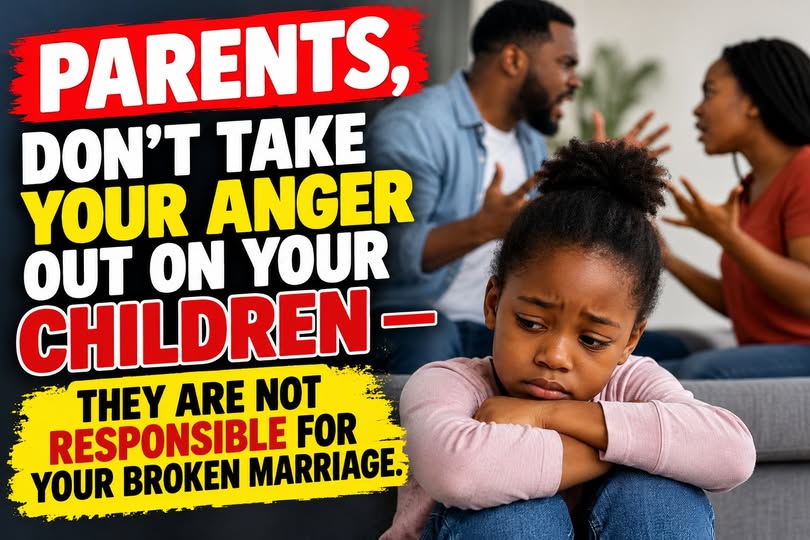
Parents, Don’t Make Your Children Pay for a Broken Marriage

Published

on

A broken marriage can leave adults hurt and angry—but children should never become the victims of problems they did not create.

When a relationship falls apart, emotions can run high. There may be disappointment, resentment, arguments, betrayal, or years of unresolved problems between the couple.

But one thing should remain clear:

The children are not responsible for the failure of their parents’ marriage.

Children did not choose the arguments. They did not cause the separation. They did not make the decisions that brought the relationship to an end.

Yet, in some families, children can become caught in the middle of their parents’ conflict.

A frustrated parent may shout at a child because of anger toward the other parent. Another may use the child to pass messages, criticize the other parent in front of them, or pressure the child to take sides.

This can place an emotional burden on children that they are not prepared to carry.

Your Child Is Not Your Enemy

A child who misbehaves is still a child. They should not be punished for the mistakes, choices, or actions of another adult.

Before taking your frustration out on your son or daughter, take a moment and ask yourself:

“Is my child really the reason I am angry?”

If the answer is no, then don’t make the child pay the price.

Your child may not understand everything happening between the adults, but they can certainly feel the tension.

They need reassurance, stability, love and protection—especially when the family is going through a difficult period.

See also  Nollywood Actress, Ruth Kadiri Opens Up On Private Lifestyle

Don’t Force Children to Choose Sides

Even when parents no longer live together, children should not be turned into weapons against one another.

Avoid making children feel guilty for loving both parents.

A child should be allowed to say, “I love my mother” and “I love my father” without feeling that they have betrayed either parent.

Adults may have serious disagreements, but children should not be forced to carry those disagreements.

Protect Their Hearts

You cannot always control how a marriage ends.

But you can control how you treat your children during and after the separation.

You can choose not to insult them because you are angry.

You can choose not to use them as messengers.

You can choose not to make them responsible for adult problems.

And you can choose to remind them:

“None of this is your fault. You are loved.”

A broken relationship does not have to create broken children.

Parents, deal with your pain without transferring it to the innocent children who still look to you for love and protection.

What do you think?

Should parents completely separate their marital conflicts from their relationship with their children?

Share your thoughts in the comments.

FOLLOW US ON:

FACEBOOK

TWITTER

PINTEREST

TIKTOK

YOUTUBE

LINKEDIN

INSTAGRAM

Continue Reading
Click to comment

Leave a Reply

Your email address will not be published. Required fields are marked *

Lifestyle

YOUR MARRIAGE IS NOT A PUBLIC VOTING CONTEST!

Published

on

One of the biggest mistakes couples can make is allowing outsiders to become the voice of their relationship.

A friend hears one argument.

A relative hears one complaint.

Someone hears one side of the story—and suddenly they are telling you how to treat your spouse.

Before you accept someone else’s opinion, remember: they may know your spouse’s mistakes, but they may not know the full story.

Healthy couples should learn to communicate directly, protect their private matters, and resolve disagreements without allowing gossip and outside pressure to control the relationship.

That does not mean ignoring genuine concerns or refusing to seek help when a relationship has serious problems. Sometimes trusted family members, counselors, or professionals can provide valuable support.

But there is a difference between helpful advice and advice that creates hatred, disrespect, suspicion, or division.

❤️ Protect what you and your spouse are building.

💬 QUESTION FOR OUR READERS:

Should couples keep most marital problems between themselves, or should they involve family and friends when things go wrong?

👇 Tell us your honest opinion in the comments.
📲 Share this post and let other couples join the conversation.

#NewsBreak365 #Relationships #Marriage #Couples #LoveAndMarriage #RelationshipAdvice #MarriageAdvice #Family #Communication

FOLLOW US ON:

FACEBOOK

TWITTER

PINTEREST

TIKTOK

YOUTUBE

LINKEDIN

INSTAGRAM

See also  Listen to Advice, But Don’t Surrender Your Brain to Other People
Continue Reading

Lifestyle

When Couples Turn Private Secrets Into Public Gossip

Published

on

Some couples are good at exposing their spouse’s secrets to other people—but what happens to trust when private matters become public conversation?

Marriage and relationships are built on more than love. Trust, respect, loyalty and confidentiality are also important parts of a healthy relationship.

Unfortunately, some couples reveal their partner’s private information whenever they have an argument. A disagreement that should be handled between two people can quickly become a story shared with friends, relatives, neighbours or even people on social media.

Your partner may have trusted you enough to share personal struggles, family problems, financial difficulties, past mistakes or emotional concerns. Turning those private conversations into gossip can cause serious damage to that trust.

Not Every Argument Needs an Audience

Every relationship has disagreements. Couples will not always see things the same way, and emotions can become intense.

But there is a difference between seeking genuine advice from a trusted person and deliberately exposing your partner simply to embarrass them or make yourself look like the victim.

Once private information is shared, you cannot completely control where it goes.

The people who hear the secret may remember it long after the couple has settled their disagreement.

Think Before You Speak

Before revealing something personal about your spouse, ask yourself:

“Would I want my partner to tell other people this same thing about me?”

If the answer is no, it may be worth reconsidering whether the information should be shared.

There are situations where seeking help is necessary, especially when there is abuse, danger, serious financial problems or other circumstances requiring professional or trusted support. Privacy should not prevent someone from getting the help they genuinely need.

See also  PHOTOS: Bayelsa man marries Ijaw deity in traditional ceremony

But ordinary relationship disagreements do not always need a public audience.

Protect the Trust

A relationship should be a place where both partners can feel safe discussing their fears, weaknesses and mistakes without constantly worrying that their private conversations will become tomorrow’s gossip.

Love is not only about what you say when things are going well. It is also about how you handle your partner’s vulnerability when things go wrong.

Before exposing your spouse’s secrets, remember that the argument may end, but the damage to trust can remain.

What Do You Think?

Should couples keep their partner’s private matters confidential even when they are angry with each other?

Share your thoughts in the comments.

FOLLOW US ON:

FACEBOOK

TWITTER

PINTEREST

TIKTOK

YOUTUBE

LINKEDIN

INSTAGRAM

Continue Reading

Lifestyle

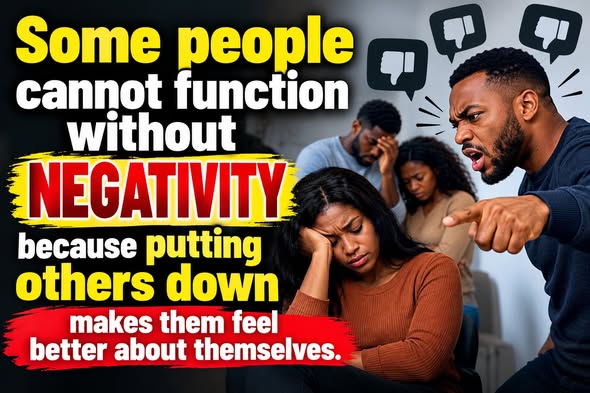
When Negativity Becomes a Lifestyle: Why Some People Feel Better by Putting Others Down

Published

on

Some people don’t know how to feel good about themselves unless they are making somebody else feel bad.

It is one of the most uncomfortable realities of human relationships.

Instead of celebrating someone’s progress, they look for something to criticize.

Instead of encouraging someone who is struggling, they remind them of their failures.

Instead of being happy when someone succeeds, they search for reasons to minimize that success.

And sometimes, the negativity becomes a pattern.

They criticize your appearance.
They mock your achievements.
They question your choices.
They gossip about you.
They turn almost every conversation into an opportunity to put someone down.

But here is the bigger question:

What makes a person feel powerful by making another person feel small?

Putting others down does not automatically make someone stronger, wiser, richer, or more successful. In many cases, it simply creates a cycle of negativity that damages relationships and destroys trust.

A confident person can see another person succeed without feeling threatened.

A mature person can disagree without resorting to insults.

And a supportive person can correct you without constantly trying to humiliate you.

The question everyone should ask

Not every criticism is hatred. Sometimes people genuinely point out our mistakes because they want us to improve.

But there is a difference between constructive criticism and constant negativity.

Constructive criticism focuses on the problem.

Constant negativity often focuses on destroying the person.

That distinction matters.

So, before you allow someone’s words to define your worth, ask yourself:

Is this person trying to help me become better—or do they simply enjoy seeing me struggle?

See also  How Nollywood actor was arrested over failed coup plot

And perhaps we should also look inward.

Have you ever caught yourself putting someone else down just to feel better about yourself?

👇🏾 LET’S TALK:

Have you ever had to distance yourself from a negative person because their constant criticism was affecting your peace?

Share your experience in the comments.

Do you think some people genuinely feel better when others fail?

🔄 Share this article and start the conversation.

Newsbreak365 — Stories, opinions and conversations that matter.

FOLLOW US ON:

FACEBOOK

TWITTER

PINTEREST

TIKTOK

YOUTUBE

LINKEDIN

INSTAGRAM

Continue Reading

Trending