Some children are not suffering because their mothers never loved them. They are suffering because that love has become a weapon used to control their lives.
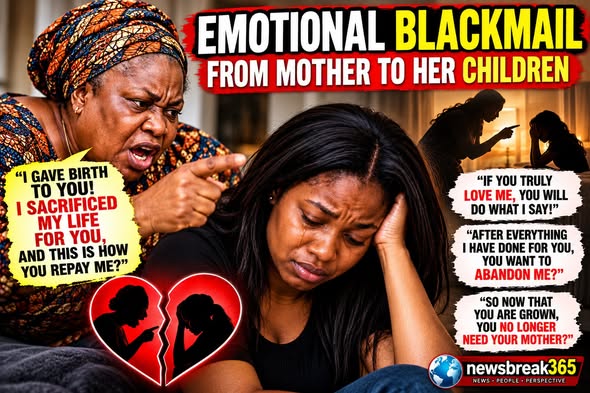
“You want to abandon me after everything I sacrificed for you?”
“I suffered to give birth to you, and this is how you repay me?”
“If you truly love me, you will do what I say.”
These words may sound like a mother’s pain, but when they are repeatedly used to create guilt, control decisions, or force children to obey against their will, they can become emotional manipulation.
💔 **THE PAINFUL TRUTH**
Some mothers make their children feel guilty for growing up, choosing their own partners, pursuing their dreams, setting boundaries, or simply saying NO.
They turn every disagreement into disrespect. Every boundary becomes betrayal. Every independent decision becomes evidence that their children no longer care about them.
And the child? The child grows up believing that saying NO makes them a bad son or daughter.
They sacrifice their happiness to keep their mother happy. They hide their pain to avoid being called ungrateful. They remain trapped in guilt because they are afraid of being judged by family and society.
**BUT LET US ASK A DIFFICULT QUESTION:**
Does giving birth to a child give a mother the right to control that child’s entire life?
Does sacrificing for your children mean they must repay you with unquestioning obedience forever?
Can a mother genuinely love her children while using guilt, fear, and emotional pressure to control them?
Let us be clear: not every emotional appeal is manipulation, and not every mother who expresses hurt is guilty of emotional blackmail. Mothers have feelings too. The problem begins when guilt becomes a repeated tool of control rather than a way to communicate genuine pain.
One of the most painful forms of manipulation comes from the very people who are supposed to protect you: your own parents.
Some parents have mastered the art of emotional blackmail. Whenever their children try to make independent decisions, they bring up sacrifices, remind them of their struggles, or make them feel guilty for saying **NO**.
“After everything I have done for you…”
“So, you want to abandon your parents?”
“You will regret this when we are gone!”
These words may sound like expressions of pain, but when they are repeatedly used to control, threaten, or exploit children, they become tools of emotional manipulation.
**LET’S TELL OURSELVES THE TRUTH!**
Raising a child is a responsibility, not a lifetime contract that gives parents unlimited control over that child’s future.
Yes, children should respect their parents. Yes, they should appreciate their sacrifices. But respect does not mean surrendering your peace of mind, financial stability, dreams, or happiness to satisfy every parental demand.
Some adult children are suffering silently because they are afraid of being labelled ungrateful. They keep sacrificing their own needs, not necessarily because they can afford to, but because they have been made to believe that choosing themselves makes them bad children.
**THE HARD TRUTH:** Love should inspire gratitude, not manufacture guilt. Parenthood should build responsible adults, not create lifelong emotional prisoners.
Parents deserve respect, but children deserve healthy boundaries too.
🔥 **NOW, LET’S DEBATE!**
Should children be expected to sacrifice their happiness and future to satisfy their parents, simply because their parents raised them?
Friends, family members, colleagues, and members of the Christian community are set to hold a night of tributes in honour of late gospel minister Olayemi Bayonle Bolaji, popularly known as Toluwanisings.
The event is scheduled for Tuesday, October 27, at 3 p.m. at the Hall of Grace, Jogor Centre, Ibadan, Oyo State.
The programme will provide an opportunity for loved ones and admirers to celebrate the life and legacy of the late gospel singer through tributes, reflections, cherished memories, and thanksgiving to God.
In an announcement inviting the public to the event obtained from his Instagram account on Wednesday, the organisers described Toluwanisings as a beloved brother, friend and gospel minister whose life and ministry touched many people.
The invite read, “Some lives leave footprints that time can never erase. Some voices may fall silent, but their songs, impact, and memories will forever echo in our hearts.
“With heavy hearts, yet in gratitude to God for a life that touched many, we invite you to join us for a Night of Tributes in honour of our beloved brother, friend, and gospel minister, Olayemi Bayonle Bolaji, fondly known as Toluwanisings.
“It will be a night of love, reflection, heartfelt tributes, cherished memories, and thanksgiving to God for the life he lived and the legacy he leaves behind.
“Though we mourn his departure, we hold firmly to the hope we have in Christ Jesus. His earthly journey may have ended, but the impact of his life and ministry will continue to speak. Come, let us stand together as family, friends, colleagues, and the body of Christ to celebrate a life that mattered,” the post read.
They expressed gratitude to God for his life, noting that although his passing had brought sorrow, the impact of his ministry and the memories he left behind would continue to inspire generations.
The organisers also urged family members, friends, colleagues and members of the body of Christ to come together to honour the deceased and celebrate his contributions to gospel music and Christian ministry.
They further called on well-wishers seeking to support the programme to contact them through direct messages.
The Night of Tributes is expected to bring together people whose lives were touched by the late minister to reflect on his legacy and pay their final respects.
The announcement concluded with a prayer for God’s blessings upon all those mourning his death.
The Federal Government has confirmed a case of Ebola disease in the Federal Capital Territory, Abuja, and commenced contact tracing to prevent further transmission of the infection.
The Minister of Health and Social Welfare, Prof. Ali Pate, disclosed this on Tuesday, following laboratory confirmation of the case involving a woman who recently arrived in Nigeria on an international flight from Uganda.
The woman was admitted to a private hospital in the FCT, where she received treatment for several days before the infection was confirmed.
She is currently in isolation and receiving medical care, according to the Federal Government.
The government said 44 contacts had been identified, including healthcare workers, patients, caregivers and travel contacts.
Public health teams are working to identify and monitor other people who may have been exposed to the infection.
The government has intensified surveillance and urged public and private health facilities to remain on high alert, promptly identify and isolate suspected cases, observe strict infection prevention and control measures, and report suspected infections to public health authorities.
Pate also appealed to people contacted by public health teams, including passengers who may have travelled with the patient, to cooperate with the tracing exercise.
The government advised Nigerians to remain calm, wash their hands regularly and avoid contact with the blood or other body fluids of anyone suspected of having Ebola.
Against the backdrop of the confirmed case, PUNCH Online revisited the World Health Organisation’s fact sheet on Ebola disease and its guidance on contact tracing to sensitise Nigerians on how the infection spreads and the precautions they can take to reduce the risk of infection.
According to the WHO’s “Ebola disease fact sheet”, people can contract the disease through direct contact, through broken skin or mucous membranes, with the blood or other body fluids of a person who is sick with or has died from Ebola.
The virus can also spread through objects and surfaces contaminated with infected body fluids, including blood, faeces and vomit.
WHO says people cannot transmit the disease before they develop symptoms, but they remain infectious for as long as the virus is present in their blood.
Human infection can also occur through contact with infected animals, including fruit bats and certain wild animals, particularly when people handle or consume infected animals.
The global health agency advises avoiding contact with sick or dead wild animals and not eating their raw meat.
Precautions Nigerians should take
The WHO advises people to avoid close physical contact with anyone suspected or confirmed to have Ebola, particularly contact with their body fluids.
Suspected and confirmed patients should be isolated in designated treatment facilities where they can receive appropriate care and where infection-control measures can be applied.
People should maintain good hand hygiene and keep their surroundings clean.
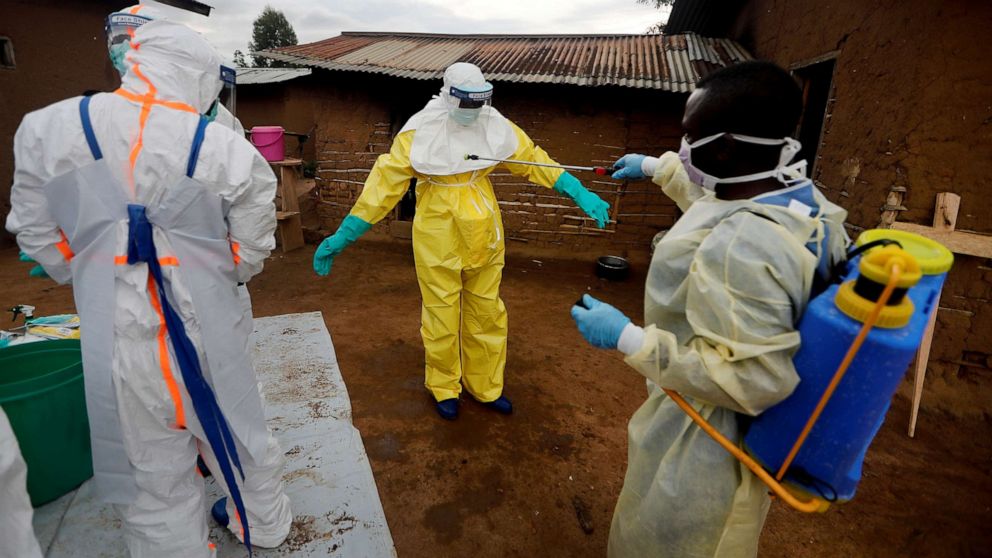
Healthcare workers must use appropriate personal protective equipment and follow infection prevention and control procedures when caring for suspected or confirmed cases, especially when there is a risk of exposure to blood, body fluids or contaminated materials.
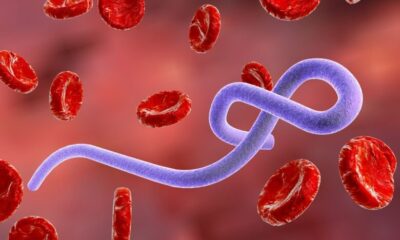
Ebola
The WHO also advises communities to ensure that burials are conducted safely and with dignity.
Traditional or funeral practices involving direct contact with the body of someone who died from Ebola can expose others to infection.
The WHO says Ebola symptoms may appear between two and 21 days after infection.
Early symptoms can include fever, fatigue, muscle pain, headache and sore throat.
These may be followed by vomiting, diarrhoea, abdominal pain and other complications.
However, the WHO cautions that Ebola can be difficult to distinguish from other illnesses, including malaria and typhoid fever, based on symptoms alone.
Anyone who develops symptoms after a possible exposure should seek urgent medical assessment and inform healthcare workers about the possible contact.
People should not attempt to diagnose or treat suspected Ebola at home.
Why contact tracing matters
Contact tracing involves identifying people who may have been exposed to an infected person and following up on their health.
WHO says this helps contacts access care promptly if symptoms develop and helps public health authorities interrupt further transmission.
The organisation recommends monitoring the health of people who may have been exposed for 21 days, corresponding to the maximum known incubation period.
Anyone contacted by public health authorities should provide accurate information and follow the instructions given by health officials.
Nigerians who suspect an exposure should cooperate with public health teams rather than conceal information or avoid follow-up.
The Federal Government has also provided the Nigeria Centre for Disease Control and Prevention’s toll-free call centre, 6232, for information and reports of suspected cases.
Healthworkers in Ebola kits
The WHO says early supportive care, including rehydration and treatment of symptoms, can improve survival.
Prompt reporting, early medical care, cooperation with contact tracing and consistent infection-control practices are therefore important in limiting the risk of further transmission.