Connect with us

Lifestyle

The Pressure to Live a Fake Life in the Age of Social Media

Published

on

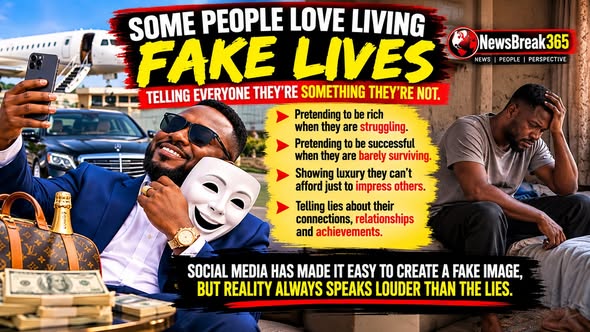
Some people are no longer simply living their lives—they are performing them for an audience.

On social media, it can sometimes appear as though everyone is rich, successful, connected and living their dream life. Luxury cars, expensive holidays, designer clothes, private jets and stacks of cash dominate countless posts.

But behind some of those carefully edited pictures can be a very different reality.

When Image Becomes More Important Than Reality

There is nothing wrong with wanting success or celebrating genuine achievements. The problem begins when people deliberately create an image that does not reflect their real circumstances.

Some people may pretend to be wealthy while struggling financially. Others may exaggerate their careers, relationships, business connections or achievements simply because they want admiration from others.

Social media makes this easier than ever.

A carefully chosen photograph, an expensive-looking location or a borrowed luxury item can create an impression of success within seconds. What viewers may not see is what happened before or after the photograph was taken.

Why Do People Pretend?

The reasons can vary.

For some, it may be pressure to fit into a particular social circle. For others, it may be a desire for recognition, admiration or validation.

There is also the fear of appearing unsuccessful in front of friends, family members or followers.

When people constantly compare themselves with carefully presented versions of other people’s lives, it can create unrealistic expectations about what success is supposed to look like.

The Cost of Maintaining a False Image

Living behind a false image can come with consequences.

See also  More photos from Mr Eazi and Temi Otedola's wedding in Iceland

A person who constantly tells people they are financially successful may eventually feel pressure to maintain that appearance. Someone who exaggerates their achievements may constantly worry about being exposed.

The pursuit of appearances can also distract people from building the real things that matter: financial stability, meaningful relationships, personal development, skills and genuine accomplishments.

Looking successful and actually building a successful life are not always the same thing.

Social Media Is Not Always Reality

It is important to remember that social media usually shows selected moments rather than someone’s complete life.

A photograph can capture a beautiful holiday without showing the financial sacrifices behind it. A smiling picture can hide personal difficulties. A luxury setting may belong to someone else or simply be a temporary experience.

That does not mean every impressive social-media post is fake. Many people genuinely work hard and achieve remarkable things.

The lesson is simply this: don’t automatically mistake presentation for reality.

Build a Life You Don’t Have to Pretend About

Real success does not require constant explanation.

You don’t have to convince everyone that you are rich. You don’t have to pretend to know important people. You don’t have to manufacture achievements just to receive applause.

Build something real.

Let your progress speak for itself.

Because eventually, an online image may disappear from people’s feeds—but reality remains.

What Do You Think?

Why do you think some people feel pressured to present a lifestyle that is very different from their actual circumstances?

Is social media encouraging people to live for appearances rather than reality?

Share your thoughts in the comments.

See also  Ogun monarch slams Fayose for insulting Obasanjo

NewsBreak365 — News | People | Perspective

FOLLOW US ON:

FACEBOOK

TWITTER

PINTEREST

TIKTOK

YOUTUBE

LINKEDIN

INSTAGRAM

Continue Reading
Click to comment

Leave a Reply

Your email address will not be published. Required fields are marked *

Lifestyle

GOSSIP: THE SILENT WEAPON THAT CAN DESTROY A HUMAN LIFE – YOU DON’T NEED A GUN TO KILL SOMEONE

Published

on

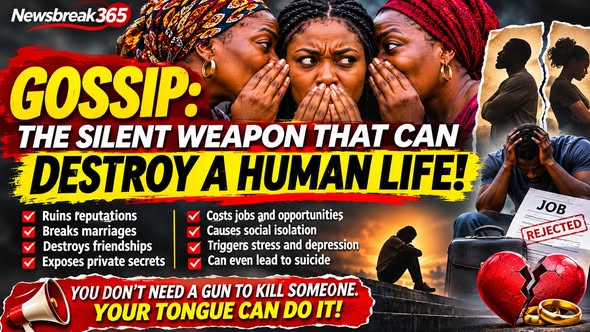
Sometimes, the people who destroy your life are not your enemies. They are the ones smiling with you, sharing your secrets and discussing your private affairs behind your back.**

There are many ways to destroy a human being without physically touching them. One of the most dangerous weapons people use every day is gossip.

It is a weapon without bullets, a knife without a blade and an attack that can happen behind closed doors. Yet its consequences can be devastating.

In many families, workplaces, religious organisations and communities, people have turned gossip into a form of entertainment. They gather, whisper, exchange rumours, exaggerate stories and damage the reputations of people who are not even present to defend themselves.

What makes this behaviour particularly disturbing is that some people who participate in it see absolutely nothing wrong with what they are doing.

But have we ever stopped to consider what happens to the person at the centre of those conversations?

## 1. Gossip can destroy someone’s reputation.

A person can spend decades building a respectable name, only for malicious rumours to damage it within days.

One false accusation can make friends suspicious, neighbours judgmental and business associates uncomfortable.

The person spreading the story may move on to another conversation, but the victim may spend years trying to restore a damaged reputation.

## 2. Gossip can destroy marriages and relationships.

Some people deliberately carry stories between couples, friends and family members.

They exaggerate innocent conversations, twist statements and create suspicion where there was once trust.

Before long, husbands and wives begin questioning each other, siblings become enemies and lifelong friendships collapse.

See also  ‘Table talks ongoing’ – Doris Ogala gives update on face-off with Chris Okafor

Sometimes, the biggest problem in a relationship is not the two people involved but the outsiders constantly feeding them poisonous information.

## 3. Gossip can expose people’s deepest secrets.

Everyone has private struggles.

Some people are battling financial difficulties, marital problems, personal disappointments or family challenges.

Instead of respecting their privacy, malicious individuals turn these struggles into public entertainment.

Imagine confiding in someone during your darkest moment, only to discover that your private story has become the subject of discussion in an entire community.

That is not friendship. That is betrayal.

## 4. Gossip can destroy careers and business opportunities.

Imagine losing a job, a promotion, a business partnership or an important opportunity because somebody decided to spread an unverified story about you.

In professional environments, rumours can undermine confidence, damage working relationships and make people question someone’s integrity.

Not every accusation is true, but once a damaging story spreads, correcting it can become extremely difficult.

## 5. Gossip can isolate people from their communities.

One of the cruelest consequences of malicious gossip is social isolation.

People who once welcomed someone may suddenly avoid them. Friends may withdraw, neighbours may become hostile, and relatives may begin treating them differently.

The victim may not even understand why everyone has changed towards them.

They are left fighting a battle they never knew existed.

## 6. Gossip can damage someone’s mental and emotional well-being.

Constant humiliation, false accusations and public rejection can cause serious emotional suffering.

Victims may experience anxiety, depression, sleeplessness, shame and loss of confidence.

In extreme cases, relentless harassment and humiliation can contribute to suicidal thoughts or self-harm.

See also  Igbos built Nollywood, but Yorubas have become dominant” — Francis Duru

This is why we must stop treating malicious gossip as harmless entertainment.

Words have consequences, and those consequences can be life-changing.

## 7. Gossip can turn innocent people into enemies.

Perhaps one of the most dangerous forms of gossip is the deliberate creation of hatred between people who have never had a genuine disagreement.

A person can tell one story to you, another version to your brother and a completely different version to your friend.

Before anyone realises what is happening, people who should be supporting one another are fighting over information that may not even be true.

This is how families become divided, communities lose unity and friendships disappear.

## THE BIGGEST HYPOCRISY: PEOPLE WHO GOSSIP OFTEN HATE BEING GOSSIPED ABOUT!

Here is a question worth asking: Why do people who spend their time discussing other people’s private lives become angry when somebody discusses theirs?

Why do those who spread rumours demand respect for their own privacy?

Why do people who destroy other people’s reputations become offended when their own character is questioned?

The hypocrisy is astonishing.

Some people want everyone to respect their dignity while showing absolutely no respect for the dignity of others.

They want forgiveness when they make mistakes but offer no mercy when someone else becomes the subject of their gossip.

## BEFORE YOU OPEN YOUR MOUTH, THINK ABOUT THE DAMAGE!

Not every conversation about another person is gossip. Sometimes, discussing someone’s behaviour is necessary to protect others, seek advice or address genuine concerns.

But deliberately spreading false information, exposing private matters, exaggerating stories and encouraging hatred is something entirely different.

See also  More photos from Mr Eazi and Temi Otedola's wedding in Iceland

We must learn the difference between speaking the truth responsibly and using someone’s personal life as entertainment.

Parents must teach their children to respect others. Religious leaders must discourage malicious rumours within their congregations. Politicians must stop using misinformation to divide communities. Society must stop celebrating people who destroy others with their tongues.

**You do not need to physically attack someone to make their life miserable. Sometimes, a rumour, a lie or a carefully manipulated story can cause damage that takes years to repair.**

Remember this: The person you are gossiping about today may be someone you need tomorrow.

And the same mouths that are discussing another person’s private life today may become the subject of tomorrow’s conversation.

## THE NEWSBREAK365 QUESTION: LET’S DEBATE!

1. Is gossip simply harmless conversation, or can it become a form of psychological and emotional violence?
2. Have you ever seen a family, marriage or friendship destroyed by gossip?
3. Should people who deliberately spread false rumours be held accountable for the damage they cause?
4. Why do some people enjoy destroying other people’s reputations while protecting their own?

**ONE FINAL MESSAGE:**

Before you spread a rumour, remember that there is a human being behind the name you are discussing.

That person has feelings, family, dreams, dignity and a life worth protecting.

**STOP USING YOUR MOUTH AS A WEAPON. YOU NEVER KNOW HOW MUCH DAMAGE YOUR WORDS CAN CAUSE.**

*Newsbreak365 – Challenging Perspectives, Exposing Truth and Inspiring Conversations.*

FOLLOW US ON:

FACEBOOK

WHATSAPP CHANNEL

TWITTER

PINTEREST

TIKTOK

YOUTUBE

LINKEDIN

INSTAGRAM

Continue Reading

Lifestyle

The Three Biggest Sources of Division and Hatred in Our Society: Parents, Politicians and Religious Leaders

Published

on

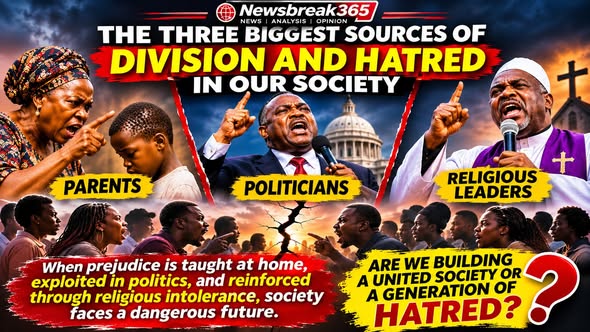
A society does not destroy itself in a single day. Sometimes, its destruction begins in the homes where children are raised, the political institutions where leaders seek power, and the religious institutions where people expect to find love, peace and spiritual guidance.**

We often complain about insecurity, intolerance, tribalism, religious conflicts, hatred and the growing division in our society. We blame the government, the economy, the younger generation and even social media.

But how often do we examine the influence of three powerful groups that help shape the attitudes, beliefs and behaviour of millions of people: parents, politicians and religious leaders?

These are supposed to be the people who teach us values, provide direction, promote unity and prepare future generations for a better society. Yet, when some among them use their influence to promote prejudice, hostility and division, the consequences can be devastating.

Let’s confront an uncomfortable reality.

## 1. Parents: When the Home Becomes a Classroom for Hatred

The first lessons a child learns about the world often come from home.

Children observe how their parents speak about other ethnic groups, religions, communities and families. They listen to conversations, absorb attitudes and sometimes adopt prejudices without understanding their consequences.

Some parents teach their children to distrust people simply because they come from another tribe, practise another religion, speak another language or belong to a different social class.

Some even encourage hatred against people who have done absolutely nothing wrong to them.

What kind of future are we building when children are raised to see fellow human beings as enemies?

A child who grows up believing that people from another background are inferior may carry that prejudice into adulthood, marriage, friendships, workplaces and even leadership positions.

**Parents must understand that raising successful children is not enough. We must also raise children who respect humanity.**

See also  Osun puts Oluwo under watch over inflammatory remarks

Your child does not need to inherit your bitterness, tribal prejudice or personal conflicts.

Teach them to think independently, respect differences and judge people by their character rather than their background.

## 2. Politicians: Division as a Weapon for Political Power

Few things are more dangerous than politicians who discover that dividing the people is easier than developing the country.

Instead of competing through ideas, policies, performance and accountability, some politicians exploit ethnic identity, religious differences, regional loyalties and historical grievances to secure political support.

They turn neighbours into opponents, communities into rival camps and ordinary disagreements into dangerous conflicts.

During election campaigns, some politicians suddenly become champions of tribal and religious identity. They remind people where they come from, what religion they practise and whom they should fear.

But when the elections are over, those same political opponents may sit together, negotiate political arrangements and pursue their personal interests.

Meanwhile, ordinary citizens who were encouraged to fight one another are left to deal with the consequences.

**How can politicians preach democracy while deliberately encouraging hostility among the very people they are supposed to serve?**

A responsible politician should unite people through development, education, healthcare, employment, justice and equal opportunities.

Leadership should be about building a nation, not manufacturing enemies.

## 3. Religious Leaders: When the Pulpit Becomes a Platform for Intolerance

Religious institutions are expected to promote compassion, humility, forgiveness, moral responsibility and peaceful coexistence.

People enter places of worship seeking spiritual guidance, hope and direction.

But what happens when some religious leaders use their influence to encourage hostility towards people of different beliefs?

What happens when sermons become platforms for attacking other religions, promoting superiority, spreading fear and encouraging intolerance?

See also  George Osodi’s “Nigerian Monarchs” Series: A Visual Chronicle of Living Royal Heritage

What happens when people are taught to hate their neighbours in the name of defending their faith?

There is a serious contradiction when leaders preach love but encourage hostility, speak about peace but promote division, and teach forgiveness while nurturing resentment.

People have the right to practise their religion and defend their beliefs. However, religious freedom should never become an excuse for hatred or the dehumanisation of others.

**Faith should inspire people to become better human beings, not teach them to despise those who believe differently.**

A religious leader’s influence should be measured not simply by the size of their congregation, but also by the positive values they promote.

## The Dangerous Consequences of These Three Influences

When prejudice is taught at home, exploited in politics and reinforced through religious intolerance, society faces a dangerous combination.

The consequences can include:

– Tribalism and ethnic discrimination.
– Religious intolerance and hostility.
– Broken friendships, marriages and family relationships.
– Political manipulation and unnecessary conflicts.
– Distrust between communities.
– A younger generation that inherits divisions instead of opportunities.
– The destruction of social unity and national development.

A divided society becomes vulnerable to manipulation. People become so occupied with defending their identities and attacking one another that they forget to demand accountability from those in power.

And while ordinary people fight over ethnicity, religion and political loyalty, the real problems affecting their lives remain unresolved.

## Who Will Break This Cycle of Hatred?

We cannot continue blaming young people for the problems of society without examining the examples they see from adults.

We cannot demand national unity while teaching our children to hate people from other communities.

We cannot condemn political division while celebrating politicians who exploit our differences.

See also  CORRECT YOUR CHILDREN WITH LOVE

And we cannot demand religious tolerance while applauding religious leaders who insult or demonise people of other faiths.

Every parent must examine the values being passed down to their children.

Every politician must understand that political ambition should never be more important than human lives and social harmony.

Every religious leader must recognise that spiritual influence comes with a responsibility to promote peace, compassion and mutual respect.

Society needs people who build bridges, not people who constantly construct walls.

## The Final Question: Are We Building a Better Society or Preparing the Next Generation to Hate?

The future of any society depends heavily on the values it passes from one generation to another.

If we teach children hatred, reward politicians for dividing us and applaud religious leaders for promoting intolerance, we should not be surprised when society becomes increasingly hostile.

We must stop celebrating those who divide us and start holding influential people accountable for the consequences of their words and actions.

**A society cannot experience lasting peace when hatred is being taught at home, exploited in politics and justified in the name of religion.**

The change must begin with us.

—

### NEWSBREAK365 EDITORIAL QUESTION

Do you agree that parents, politicians and religious leaders are among the three most influential groups contributing to division and hatred in our society?

Or do you believe that social media, the education system and the wider society deserve equal blame?

**Who is doing the greatest damage to our society, and why?**

Share your thoughts. This is a conversation we cannot afford to avoid.

*Newsbreak365 — Challenging Perspectives, Exposing Issues and Inspiring Conversations.*

FOLLOW US ON:

FACEBOOK

WHATSAPP CHANNEL

TWITTER

PINTEREST

TIKTOK

YOUTUBE

LINKEDIN

INSTAGRAM

Continue Reading

Lifestyle

WHO WINS WHEN BROTHERS AND SISTERS SEE THEMSELVES AS STRANGERS? THE DANGEROUS PRICE OF A DIVIDED SOCIETY

Published

on

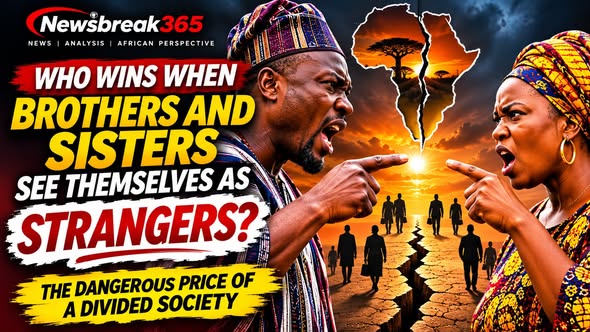
When people who share the same history, struggles, culture and aspirations begin treating one another as enemies, somebody is benefiting from their division. And more often than not, the people paying the highest price are those who can least afford it.**

There is something deeply disturbing about a society where brothers and sisters can live on the same land, share similar struggles and face the same challenges, yet look at one another as strangers.

People who should be working together to build a better future are busy fighting over religion, ethnicity, tribe, political affiliation, social class and personal interests.

The question we must ask ourselves is simple but uncomfortable:

**Who wins when brothers and sisters see themselves as strangers?**

## Division: A Powerful Tool of Manipulation

History has repeatedly demonstrated that divided societies are vulnerable societies.

When people are divided, they lose the ability to recognise their common interests. Instead of demanding accountability, good governance, economic opportunities and social justice, they become distracted by endless arguments over differences that should never prevent peaceful coexistence.

Those who understand the power of division can exploit these weaknesses.

They know that a population fighting among itself is less likely to unite around common problems. They understand that people consumed by hatred are easier to distract from the decisions that affect their lives.

And while ordinary people are busy fighting one another, those who benefit from the division can continue protecting their interests.

**A divided population can spend generations fighting battles that do not improve its collective future.**

## When Religion, Ethnicity and Politics Become Weapons

Religion should not become an excuse to hate another human being.

Ethnicity should not become a reason to discriminate against someone.

Political differences should not destroy friendships, families and communities.

See also  Igbos built Nollywood, but Yorubas have become dominant” — Francis Duru

Yet, in many societies, these identities have become weapons used to create suspicion, resentment and hostility.

People are increasingly judged not by their character, integrity, competence or contribution to society, but by the group they belong to.

A person’s religion becomes more important than their honesty. Their ethnic background becomes more important than their ability. Their political loyalty becomes more important than their commitment to the common good.

What kind of society are we building when identity matters more than character?

And what future can we expect when people are encouraged to hate one another simply because they are different?

## The Real Victims of Division

The consequences of division are not limited to arguments on social media or political disagreements.

They affect education, economic development, security, employment, investment, social cooperation and the future of younger generations.

When communities refuse to cooperate, opportunities disappear.

When citizens cannot trust one another, collective progress becomes difficult.

When families and communities are divided, the next generation inherits suspicion instead of solidarity.

Meanwhile, poverty, unemployment, insecurity, poor infrastructure and inadequate public services do not discriminate according to tribe, religion or political affiliation.

These problems affect ordinary people regardless of the identity they proudly defend.

The painful irony is that people who are fighting one another often suffer from the same problems.

## Who Benefits From Our Hatred?

This is perhaps the most important question.

Who benefits when neighbours become enemies?

Who benefits when people who should demand better leadership spend their energy attacking one another?

Who benefits when citizens defend politicians more passionately than they defend their own future?

Who benefits when religious and ethnic loyalty becomes more important than justice, accountability and human dignity?

We must be courageous enough to examine these questions.

See also  Ogun monarch slams Fayose for insulting Obasanjo

Not every disagreement is manipulation, and not every difference is deliberately created. But history and experience show that division can be deliberately exploited by individuals and institutions seeking power, influence or personal advantage.

The danger begins when ordinary people become willing participants in a system that weakens their own collective interests.

## Unity Does Not Mean Thinking Alike

It is important to understand that unity does not mean everybody must belong to the same religion, speak the same language, support the same political party or share identical opinions.

A healthy society allows disagreement.

People should be free to question, challenge, criticise and defend their beliefs without turning differences into hatred.

True unity means recognising that our shared humanity and collective future are bigger than our individual differences.

We can disagree without becoming enemies.

We can practise different religions without despising one another.

We can come from different ethnic backgrounds and still work towards common goals.

We can support different political parties without sacrificing our relationships or our responsibility to society.

That is the foundation of a mature and progressive society.

## Africa Must Rethink the Culture of Division

For African societies to make meaningful progress, there must be a serious conversation about the destructive consequences of division.

We cannot continue demanding development while celebrating hatred.

We cannot complain about exploitation while allowing ourselves to be manipulated against one another.

We cannot demand responsible leadership while blindly defending people simply because they belong to our preferred political, religious or ethnic group.

Development requires cooperation, critical thinking, accountability, mutual respect and a willingness to place collective progress above narrow interests.

Our differences should enrich our societies, not destroy them.

The younger generation deserves something better than inherited hostility. They deserve communities where intelligence is valued above tribal loyalty, integrity above religious pretence, and competence above political connections.

See also  Osun puts Oluwo under watch over inflammatory remarks

## The Question We Must All Answer

Perhaps the greatest tragedy of a divided society is that people can spend so much time fighting those who share their struggles that they forget to question the systems keeping them in those struggles.

We must stop allowing differences to become instruments of destruction.

We must stop celebrating division as though it were a sign of strength.

And we must understand that no community, ethnic group, religious organisation or political faction can build a prosperous society entirely at the expense of everyone else.

**When brothers and sisters become strangers, the entire society loses. But those who profit from division may be the only ones celebrating.**

The time has come to look beyond our differences and ask a more important question: What kind of future are we building together?

Because at the end of the day, hatred will not build our roads, educate our children, create employment, secure our communities or put food on our tables.

**DIVISION MAY GIVE SOME PEOPLE POWER, BUT UNITY GIVES A PEOPLE A FUTURE.**

—

**NEWSBREAK365 EDITORIAL**

*Our society does not need more enemies. It needs more people willing to think critically, challenge manipulation, demand accountability and recognise the value of collective progress.*

**Join the Conversation:**

1. Who benefits the most when ordinary people are divided by religion, ethnicity and politics?
2. Have we allowed our differences to become more important than our shared future?
3. Can Africa achieve meaningful development without confronting its culture of division?

Share your thoughts. The conversation must continue.

#Newsbreak365 #AfricanUnity #SocialDivision #AfricanDevelopment #Unity #CriticalThinking #CollectiveProgress

FOLLOW US ON:

FACEBOOK

WHATSAPP CHANNEL

TWITTER

PINTEREST

TIKTOK

YOUTUBE

LINKEDIN

INSTAGRAM

Continue Reading

Trending