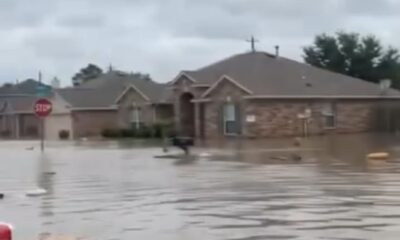
Anger, sorrow and anxiety have gripped communities across the country as torrential rainfall and flooding killed residents, displaced families, submerged homes, destroyed roads and other infrastructure and disrupted economic activities.
From the North to the South, floods have affected several communities, forcing residents to abandon their homes while farmers, traders, and business owners have suffered significant losses.
In some areas, roads and bridges were washed away, cutting off communities and disrupting transportation, while schools and health facilities were also affected.
This came after the Nigerian Meteorological Agency warned of more rain in the days ahead.
A NiMet official noted that Nigeria was still within the rainy season, which was currently at its peak in the central and southern states.
He said the agency’s seasonal forecast did not indicate that rainfall would end before September, urging residents to pay attention to its daily weather forecasts.
“We are still within the rainy season. We give daily weather forecasts; we are in September, and if you check our seasonal forecast. We didn’t say the rain is going to stop before September. So we are at the peak of the rainy season, particularly in the central and southern states. So we will keep getting this rainfall as the ITD continues its southward movement with Zone C.
‘’Basically, central states and parts of the southern states are under Zone C now. So we will be having this heavy rainfall, evening rainfall as the days progress. So just pay attention to our forecast,” the official said.
The agency added that it would continue monitoring weather conditions and issuing regular forecasts to alert the public to possible heavy rainfall.
The Head of Media and Public Relations, NEMA, Manzo Ezekiel, disclosed that the agency has deployed rescue teams to flood-affected states following fresh flooding incidents, as authorities intensify efforts to protect communities and respond to emergencies across the country.
Ezekiel said that although the flood situation was not as terrible as it was at the same period last year, the agency would not lower its guard as the rainy season was still ongoing.
“So far, the records are better than incidents of last year. But we are not lowering our guard yet, because the season is still on,” he said.
He explained that following a flood alert issued last week, the Director-General of NEMA had activated all operational offices to prepare for possible deployment.
“Last week there was an alert, and following that alert, the DG NEMA has activated all the operational offices to be on alert for deployment. So, that is not to say that the flood season is over,” he added.
Ezekiel said NEMA had directed its search and rescue teams to visit affected locations and coordinate with local resources, while creating awareness among residents about the dangers of flooding.
“So, now following that alert, we are having reports of flooding that are taking place now in some locations. The floods are coming when we are already on alert. Because when we received that alert, our teams were alerted to move in and talk to the people in those communities,” he said.
“NEMA’s search and rescue were asked to visit those locations and see how to coordinate with the local resources. To create awareness, two, is to arm them to be on guard that there may be flooding.”
He disclosed that he would travel to Ebonyi State with a team the following day to supervise ongoing response efforts, adding that the agency would subsequently move to Port Harcourt, Rivers State, where the situation was already serious.
“So, the director of search and rescue is on standby, is moving, leading a team to Ebonyi State tomorrow (today), from there, we will move, and move down to Port Harcourt because the incident is already bad there. Our teams are working; there is reinforcement to go and see and make sure that everything is done accordingly.”
The NEMA spokesman attributed flooding to both natural and human-induced factors, including poor town planning, construction on waterways and blocked drainage channels.
He, however, noted that some of the flooding being experienced at this time of the year was caused by overflowing waterways, which had become full following sustained rainfall.
He added that NEMA and the Federal Government would provide technical assistance and reinforce local response efforts, while relief materials would be distributed to affected residents.
The latest flooding incidents were recorded in Bauchi, Edo, Bayelsa, Imo, Rivers, Osun, Ekiti, Abia, Anambra, Benue and Delta states, while emergency officials in Kano, Yobe, Nasarawa and Zamfara also provided updates on the impact of the rainy season.
In Bauchi State, the State Emergency Management Agency identified six local government areas as the worst affected by disasters during the ongoing rainy season.
The affected councils are Toro, Bauchi, Ningi, Shira, Gamawa and Kirfi.
The Director in charge of Disaster Management at the agency, Adamu Nayola, disclosed this in an interview with The PUNCH on Tuesday.
Nayola said while Toro, Bauchi, Ningi, Shira and Gamawa were particularly affected by windstorms and heavy downpours, Kirfi Local Government Area recorded flooding.
He, however, said the agency was yet to determine the exact extent of the damage caused by the disasters.
According to him, two deaths had been recorded in Kirfi, while thousands of houses and other properties were reportedly damaged across the affected communities.
He said, “We cannot estimate the exact number of damages caused at the moment, but we have recorded two deaths in Kirfi Local Government Area and thousands of people have had their houses and properties damaged.”
Nayola said no Internally Displaced Persons camp had been established for victims because most of the affected residents were staying with relatives.
He explained that the decision was also informed by the need to protect women and children who could be vulnerable in formal camps.
He said, “We did not establish any IDP camp because the affected people are staying with their relatives. We are also mindful of the rights of women and children, and we do not want to violate their rights by putting them in camps.”
The official said the Bauchi State Government, through the Ministry of Housing and Environment and other relevant ministries, had taken measures to manage the situation and provide succour to affected communities.
He added that the government had also been leveraging partnerships, including the Agro-Climatic Resilience in the Semi-Arid Landscapes project, to mitigate the impact of the disasters.
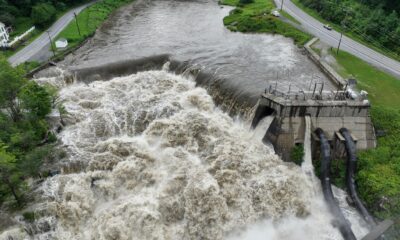
In Edo State, residents of Enwan community in Akoko-Edo Local Government Area have been thrown into panic following the overflow of the Ojirami Dam.
The dam overflowed its banks and flooded the Enwan-Igarra-Ososo Expressway after a heavy downpour on Sunday, September 27, leaving the road impassable to commuters.
A community leader, Dr Agbadua Bamidele, expressed fears that continued rainfall could result in the submergence of the entire community.
Bamidele recalled that the dam overflowed in 1980, submerging more than 500 houses and killing several people.
He warned that the community could experience a disaster worse than the 1980 incident if urgent measures were not taken.
“Everyone is in fear; we can’t close our eyes and sleep because it has been raining, and we don’t know what will befall us from Ojirami Dam. The dam is completely abandoned.
“The dam is owned by the state government. There is no maintenance, so it is dilapidated. The iron has rusted. And our major fear is that there is a crack in the Ojirami Dam concrete, which may collapse anytime, and if it happens, both human and material damage will be huge. It will be worse than the 1980 incident,” he said.
The flooding prevented students from attending classes and farmers from accessing their farms, while many shops were also forced to close.
A poultry farmer, Monday John, said he lost 1,400 birds to the flood.
“That is my house. I have poultry. The flood took over everywhere and killed 1,400 of my birds. The rain began at 6 am on Monday, and I woke up to see water everywhere,” he lamented.
Another resident, Chief John Omaze, said his house was flooded and destroyed his property and palm-oil mill.
“The flood destroyed my palm oil mill. Our children could not go to school, and many people did not go to the farm,” he said.
The Executive Secretary of the Edo State Emergency Management Agency, Jerry Idahosa, however, said the immediate threat posed by the overflowing dam had been curtailed.
According to him, the area where the dam had cracks and was overflowing had been repaired through the combined efforts of the agency and the local government.
He said the water board had also been advised on how to release water from the dam when the water level rises.
Idahosa added that the IDP camp in Edo Central had been refurbished in preparation for any eventuality.
“We are also having discussions with stakeholders to ensure that we are ready for any eventuality. We do not have any serious emergencies for now, but we are engaging everyone in flood-prone areas to get them ready,” he stated.
In Bayelsa State, residents of Obogoro community in Yenagoa Local Government Area said more than 200 houses had been lost to the advancing Ekoli River.
The residents said the flooding and erosion had displaced families, destroyed property and threatened community infrastructure.
They said the river had continued to encroach on the community, destroying homes and farmlands and leaving some residents homeless.
A resident, Janet Eseoghene, said affected residents had yet to receive relief from the government in 2026.
“So far this year, nothing has been given to us. There is no IDP camp yet, and we are still expecting support from the government.
“People are losing their homes and properties. Those who can afford it are moving away, but what about those who have nowhere else to go? We need urgent intervention before the entire community is lost,” she said.
Another resident, Joel Itortaziba, affirmed that the situation had become frightening, particularly at night when portions of the riverbank collapse.
“Sometimes at night, you hear a hit, which indicates that some land has caved into the river. It is terrifying living here.
“We really need the help of the government. Just some months back, a child lost his life in the erosion. The government should please help this community,” he said.
The President of the Epie-Atissa Peoples Congress, Obesi Benjamin, explained that the advancing river had drastically reduced the size of the community.
“Today, the community is gradually disappearing. What we are seeing is just one quarter of the community that is left. People who have homes are now homeless.
“Over 200 houses have been submerged into the river. The state and Federal Governments and the NDDC need to visit Obogoro community. This place needs urgent attention,” Benjamin said.
The residents said the destruction had also affected a primary school, football field, NYSC lodge and burial grounds.
They appealed to the Bayelsa State Government, Federal Government, Niger Delta Development Commission and emergency management agencies to provide relief and establish an evacuation centre.
In Imo State, flooding affected nine local government areas during heavy rains, with several roads rendered impassable.
Affected locations included Akwakuma, Amakaohia, Works Layout, Orji and the IMSU back gate in Owerri North.
In Owerri West, Umuguma, Eziobodo, Obinze, Ihiagwa, Emeabiam, Federal Housing Estate, parts of New Owerri and FUTO Road were affected.
Other affected areas included Obowo, Onuimo, Aboh Mbaise, Ideato North, Ideato South, Orlu and Orsu.
The Acting Head of the Imo State office of the National Emergency Management Agency, Innocent Nweze, said the agency had moved families trapped by the floods in Akwakuma to higher ground.
“We had to go to Akwakuma to move families trapped by rains, and could not get out. We organised emergency response and moved them to higher ground,” he said.
Nweze said the agency also received flood alerts from Umuguma, Eziobodo, Obinze, Ihiagwa, Onuimo, Aboh Mbaise and Obowo.
He added that officials were monitoring Oguta and Ohaji/Egbema Local Government Areas.
Although there was a reported death in Umuguma, the claim had not been verified at the time of filing the report.
Flooding also affected parts of Rivers State, particularly Port Harcourt City and Obio/Akpor local government areas.
At Marine Base, also known as Firisaka Polo, residents said they had endured flooding for nearly a month.
A resident, Sunny Etim, said residents had resorted to hiring pumping machines to remove water from their homes.
“In Marine Base down here, we are facing serious flooding for nearly a month now. This morning, as you can see, we used a pumping machine to pump out the water. It takes four to five hours to do that.
“Whenever the tide slows down is when we have some rest here; otherwise, whenever it rains, the water enters people’s houses and destroys many things. Electronics, beds and other properties are damaged,” he said.
Etim said residents spent about N7,000 daily to hire pumping machines and called for improved drainage and piling of the area.
Another resident, Emmanuel George, said some residents had relocated because of the flooding.
In Iriebe, Obio/Akpor, the Rivers State Rehabilitation Centre was submerged, while corps members at the nearby NYSC transit camp were also affected.
The corps members said floodwater frequently entered their accommodation, destroying personal belongings and forcing some of them to seek alternative shelter.
Other affected areas included UPE Borikiri Sandfield, NTA/Mgboba axis, Eleme, Oyigbo, Ahoada West and Ahoada East.
The flooding also claimed the life of 17-year-old Ifeanyichukwu Osuji at Umuebereke community in Oyigbo Local Government Area.
His father, Okey Osuji, expressed disappointment that the state flood committee had not visited the family.
He said what he wanted was not palliatives but a lasting solution to the flooding.
“The only thing I needed from government is just to make sure they do what they are supposed to do; my son will rest,” he said.
The Obio/Akpor Local Government Council, meanwhile, commenced the desilting of canals and drainage channels across flood-prone areas.
The council said it had deployed swamp buggies to strategic locations to clean drainage channels, canals and other water bodies.
In Osun State, communities in seven local government areas were affected by flooding, resulting in damage to public infrastructure and private property.
The affected councils are Atakunmosa West, Ilesa West, Obokun, Osogbo, Olorunda, Iwo and Ifelodun.
In Osunjela, a community in Atakunmosa West, residents lost personal belongings, while the bridge linking Ijaaregbe to Ilesa was damaged and rendered impassable.
A Kuti bridge in Iwo was also damaged, while homes in Sasa, Ijetu and Famson in Ifelodun, Osogbo and Olorunda were flooded.
The state Commissioner for Environment, Mayowa Adejoorin, said the government had taken preventive measures against flooding, including dredging waterways, creating public awareness and discouraging indiscriminate dumping of refuse.
In Ekiti State, flooding entered its third day on Tuesday, with several parts of Ado Ekiti and neighbouring communities affected.
Sources said three people were swept away by floodwaters around Ayemi Garage and Elemi areas of Ado Ekiti, although the report had not been independently confirmed at the time.
The affected areas included Ayemi Garage, Adehun, Elemi River, Again Road, Abekoko, Falegan, Adere, Ureje, Iyana Eminrin and the new Airport Road.
A Federal University Oye Ekiti staff member, Biodun Fanoro, said he spent more than four hours stranded at Ayemi Garage after work.
“I spent over four hours there because I was lucky a very high staff bus belonging to FUOYE met me there and struggled to cross because the rain had stopped and the water was receding then,” he said.
The Ekiti State Government said it had spent more than N1.18bn between 2023 and 2026 on flood-control interventions, including rehabilitation of waterways and drainage infrastructure.
In Abia State, the scale of destruction was also severe, with reports indicating that about 20 people had died and more than 800 houses had been destroyed or submerged. The PUNCH could not immediately verify the fatalities.
More than 16 communities were reportedly affected, including Ugwueke Alayi in Bende, Ekenobizi in Umuahia South, Ebem Ohafia, Nkalunta in Ikwuano, Ndume Ibeku in Umuahia, Owerrenta in Isialangwa South and several areas of Aba.
A 12-year-old student of Federal Government College, Ohafia, Sopuruchi Ibe, was confirmed dead after being swept away by floodwater.
A 37-year-old man, identified as Ejiuwa, also reportedly died at Ugwueke in Bende Local Government Area.
The flooding disrupted schools, businesses and transportation in Umuahia, while homes, shops and public facilities were affected.
At the University Demonstration School, flooding forced the management to ask parents to take their children home.
A staff member said school materials, uniforms, books, sportswear and office documents were damaged.
The state Commissioner for Power and Public Utility, Ikechukwu Monday, attributed the worsening flooding to heavy rainfall and climate change, saying government agencies were working to address affected areas.
The Commissioner for Environment, Philemon Ogbonna, advised residents in flood-prone areas to move to higher ground and keep drains and waterways clear.
In Anambra State, flooding also wreaked havoc in several communities, submerging houses, schools and roads.
Onitsha, Awka, Nnewi, Ekwulobia and Ogidi were among the affected areas.
The flooding claimed the life of a school pupil, Success Ezenwafor, after the shuttle bus conveying him and other pupils was overturned by floodwater along the Isiagu-Nibo-Awka Link Road.
Seven other children and two adults were rescued after the flood overturned shuttle buses, a tricycle and a school bus.
Crops and livestock were also affected in riverine communities in Ogbaru and Anambra East.
Two-storey buildings were pulled down by flooding in Umudioka, Awka, although no casualties were recorded in that incident.
The Anambra State Government subsequently issued a flood alert, urging residents to take the predictions of the Nigerian Meteorological Agency seriously and relocate from flood-prone areas where necessary.
In Yobe State, the State Emergency Management Agency said 34,533 people had been affected by tropical windstorms, heavy rainfall and flash floods across 15 local government areas since May.
The agency said 9,845 households had been affected, while 21,363 shelters or rooms had been damaged or destroyed.
It also recorded 303 injuries and 11 deaths.
The affected local government areas include Bade, Bursari, Damaturu, Fika, Fune, Gujba, Gulani, Jakusko, Karasuwa, Machina, Nguru, Potiskum, Tarmuwa, Yunusari and Yusufari.
The agency said 468 households, comprising 1,120 people, had been displaced and were in urgent need of emergency shelter and household items.
In Kano State, SEMA said nine people were killed and 4,524 displaced by rainstorms and windstorms between January and August 2026.
The incidents occurred in Gaya, Ajingi, Rimin Gado, Minjibir, Kabo, Bichi, Shanono and Kibiya.
More recently, flooding in Shuwaki town in Tudun Wada Local Government Area destroyed more than 200 rice farms and damaged a historic bridge along the Tudun Wada-Shuwaki Road.
The Kano State House of Assembly subsequently called on the state government to provide emergency assistance to affected residents and reconstruct the damaged bridge.
In Delta State, torrential rainfall also triggered severe flooding across Udu, Uvwie, Warri South and Ughelli North local government areas.
Agbarho and Ovwian were among the affected communities, with floodwaters submerging homes, schools, roads and farmlands.
Residents in parts of Ovwian reportedly resorted to using canoes to move around their neighbourhoods.
The Jakpa Road drainage system was also reported to have collapsed, while several shops and houses were affected.
Meanwhile, officials in Nasarawa State said they had begun sensitisation campaigns across the state’s 13 local government areas and established temporary settlement arrangements in flood-prone locations.
In Benue State, torrential rainfall submerged houses in parts of Makurdi, Buruku and Guma local government areas.
An unconfirmed report also alleged that a 10-year-old girl was swept away by floodwater in Makurdi, although the state emergency agency said it could not verify the report.
In contrast, the Zamfara State Emergency Management Agency said no flooding had been recorded in the state despite heavy rainfall.
The agency said residents had been sensitised against building on waterways and dumping refuse into drainage channels, while officials continued to monitor vulnerable areas.
The widespread flooding has heightened concerns about the capacity of governments at all levels to respond to the effects of extreme rainfall, particularly as communities continue to report losses of lives, homes, businesses and livelihoods.
While state emergency agencies have carried out evacuations, desilting and sensitisation campaigns in some areas, residents in several affected communities are demanding more permanent solutions, including improved drainage systems, dredging, erosion control, maintenance of dams and reconstruction of damaged roads and bridges.
The recurring flooding has also renewed calls for residents to stop dumping refuse in drainage channels and waterways and to avoid construction on floodplains and natural water channels.
With several communities still exposed to heavy rainfall, residents fear that further downpours could worsen the situation unless emergency agencies and governments intensify preventive and response measures.
Senate demands relief for victims
The Senate on Tuesday expressed concern over the impact of flooding on communities, farmers and families across the country, urging governments at all levels to improve disaster preparedness and relief efforts.
President of the Senate, Senator Godswill Akpabio, spoke during the resumption of plenary, where he also highlighted the rising cost of living and its impact on Nigerian households.
Akpabio called for early preparation for floods, adequate protection of vulnerable communities and prompt delivery of relief materials to victims.
“A warning must lead to preparation, preparation must lead to protection, and relief must reach the people for whom it is intended,” Akpabio said.
He said the effects of flooding went beyond the immediate destruction of homes and farmlands, warning that the loss of agricultural produce could worsen food insecurity.
The Senate President commended agencies and individuals involved in emergency response, but urged governments at all levels to respond to disasters with greater speed and preparedness.
On the economy, Akpabio said the Senate must remain attentive to the realities confronting ordinary Nigerians as lawmakers consider economic reforms and policies.
“Many Nigerians continue to bear a very heavy cost of living,” he said, stressing that “policymakers must not lose sight of how economic conditions affect ordinary Nigerians.”
He cited rising food costs and the difficulties faced by unemployed graduates as examples of the economic pressures confronting Nigerians.
Akpabio said the experiences of citizens outside the National Assembly should remain central to lawmakers’ deliberations as the Senate resumes its legislative activities.
Source: punchng.com
FOLLOW US ON:
FACEBOOK
TWITTER
PINTEREST
TIKTOK
YOUTUBE
LINKEDIN
INSTAGRAM