Connect with us

News

FEC cancels NYSC passing-out parade, extends orientation to six weeks; read details

Published

on

The Federal Government on Monday approved a comprehensive reform of the National Youth Service Corps (NYSC) since its establishment in 1973, replacing military leadership with a civilian Director-General.

It also restructured the one-year scheme into 11 specialised skills-based streams, redesigned the orientation camp programme and uniform, and directed the amendment of the NYSC Act to give immediate legal effect to the changes.

This followed Monday’s Federal Executive Council meeting presided over by President Bola Tinubu at the Council Chamber of the State House, Abuja.

It is the first in three months since March 4, 2026, when the President swore in Inspector-General of Police Olatunji Disu.

Also on Monday, the Federal Government approved the establishment of a National Snakebite Research and Medical Centre in Kaltungo, Gombe State.

It also approved N128.29bn across five health and aviation projects, including the procurement of tuberculosis commodities worth N62bn, reproductive health drugs worth N25bn, 10 blood donation vans worth N6.9bn, and the construction of the Gboko airstrip in Benue State at N34.39bn.

Briefing State House correspondents after the meeting, the Minister of Youth Development, Ayodele Wisdom, said the reform process for the NYSC began in 2025 when a committee was constituted to carry out a full review of the scheme, adding that the outcome represented a fundamental repositioning of the NYSC from a mobilisation exercise into a platform for skills development, job creation, productivity and national growth.

He explained, “The NYSC was created in 1973 to promote national unity after the civil war. For 53 years, it has helped bring together Nigerian graduates and strengthen national unity. But today, our needs as a country have changed, and many expect the objectives of NYSC to also change.

“Our review found a number of challenges with NYSC, outdated laws, weak links between education and jobs, and concerns about the safety and welfare of corps members, among others.”

The minister noted that the Ministries of Youth Development and Education and the Office of the Special Adviser to the President on Policy and Coordination worked together to develop the reform framework, adding that the council was invited to ratify the framework, the new organisational structure, and the directive to begin amending the NYSC Act and related regulations.

The Special Adviser to the President on Policy and Coordination, Hadiza Bala-Usman, who has oversight of the reform implementation, described the move as the first holistic reform of the scheme in its 53-year history and linked the overhaul to the administration’s ambition of building a one-trillion-dollar economy.

She said, “One of the important things on the basis of which we decided to embark on this reform process is that there is a need for us to intervene to build the present ambition of a $1tn economy by repositioning NYSC as a civilian-led, skill-oriented, productivity-driven and youth-empowering national institution.

“Indeed, as mentioned, the NYSC has been in existence for 53 years, and this is the first time there has been a holistic reform.

“The reform areas speak to all the strategic aspects of NYSC, starting from the area of the main area of deployment, how you are registering, what modality is being used to post you to several states, how we are recognising the areas where we have security challenges.”

She said the reform now segments the NYSC into 11 distinct core streams, which every corps member will be required to select upon registration based on academic background and personal skills profile.

The streams are the Agriculture Core, the Medical Core, the Education Core, the Technology and Digital Core, the Legal Core, the Public Service Core, the Infrastructure Core, the Green Core, the Enterprise Core, the Creative Economy Core, and the Paramilitary and Security Core.

“When you come in as a youth corps member, you will now pick which stream you want to participate in. Once you have uploaded and been recognised and accepted as a corps member, you are required to pick one of those cores, and once you register in that, certain trainings will be given for each of those cores within the two weeks,” Usman explained.

The orientation camp programme, she revealed further, will be redesigned from its current format into a structured six-week curriculum divided into three distinct two-week phases.

“The first two weeks speak to laying a foundation on civic responsibility, you will be made aware of what civic duties mean, our national values and leadership development,

“The next two weeks will look at career mapping, basic accounting literacy skills, business planning and access to finance, how do we access finance and then we intend to introduce a structured career day programme to enable corps members to engage directly with the public.

“The final two weeks, we intend to have focused corps-stream-specific training aligned with the corps member’s designated stream based on his choice, his academic background and skills profile,” Usman said.

She noted that for streams requiring longer certification periods, such as the Digital Core, where relevant certifications may span three to six months, corps members would remain in structured training rather than being posted to primary assignment locations.

“We want them to have skills that will enable them to be self-employed,” she said.

The new management structure will be headed by a civilian Director-General, supported by three Executive Directors and a security directorate to be led by a military or paramilitary officer, she revealed.

Responding to questions on the security implications of removing military operational leadership, Usman argued that the arrangement will preserve the military’s core protective function while transferring administrative authority to civilian professionals.

She noted, “We recognise that NYSC is spread across the whole country, and security is a core aspect of ensuring the safety of our corps members.

“The safety aspect still remains with the military, but the operational leadership of NYSC will be civilian-led, while security will continue to be anchored and implemented by the Nigerian military.”

She also noted that the Passing-Out Parade will be redesigned and renamed as a graduation ceremony.


The NYSC uniform, she added, would also be overhauled to reflect a more professional identity while preserving its distinctive character.

See also  NLC lauds Imo’s wage hike, challenges govs

Usman confirmed that the Attorney-General of the Federation, working with the Ministry of Youth Development, has been directed to amend the NYSC Act and related regulations to give immediate legal backing to the approved changes.

On brain drain, the Japa wave driving thousands of NYSC-age graduates abroad each year, she said the reform was designed to turn the challenge into an asset rather than simply try to stem the outflow.

According to her, “Brain drain is something that we cannot stop as a country. We’re looking to see how we can produce more graduates that will enable us to have more,  and actually export and earn foreign exchange from the brain drain.

“What happened in India: they left, and now they are back to promote and support various areas within the tech industry; this is the model. The more we produce, the more we are able to retain and channel brain drain back into Nigeria’s development.”

Also briefing State House correspondents after the meeting, the Coordinating Minister of Health and Social Welfare, Prof Ali Pate, said the council considered four critical health items, beginning with the upgrade of the existing snakebite treatment facility in Kaltungo into a comprehensive research and medical institution with an expanded mandate for clinical services, research and training.

Pate explained, “The Federal Executive Council today considered four important items related to the health of Nigerian people.

“First was the upgrade of the snake bite treatment centre in Kaltungo, Gombe State, into the National Snake Bite Research and Medical Centre in Kaltungo, Gombe State, with an expanded mandate for clinical services, research, and training to respond to the need that exists in our country for adequate attention to snake bites and snake envenomation.

“Snakebite remains a significant yet neglected public health challenge, particularly in our rural communities here in Nigeria, in the savannah regions, but also across the sub-region, and is especially hard on vulnerable populations, farmers, herders, hunters, women and children, whose livelihoods and daily activities expose them to encounters with snakes.

“We do have a large burden. Over 43,000 snakebites annually occur, many of which result in death, disfigurement, disability and psychological trauma with severe socioeconomic impact.

“This new centre will be an important new institution that will address the challenge, particularly in the Northeast, the Northwest and the North Central geopolitical zones of Nigeria, where the issue is most dire.”

He said the new centre would provide comprehensive, specialised care for snakebite and related envenomations, undertake research on snakebite epidemiology, prevention, diagnosis and treatment, and ensure sustainable access and supply of quality anti-snake venom through a full clinical and medical department.

“It will also partner with international institutions. This is a major step that brings an institution that will be the first of its kind in this country, but also in our sub-region,” Pate added.

On the second approval, Pate said the council approved the procurement of 10 units of compressed natural gas-powered blood donation medical clinic vans for the National Blood Service Agency’s zonal activities, at a cost of N6.9bn.

“Approximately, we require 1.8 million units of blood donations annually. At the current rate, we only get about 25 to 30 per cent.

“These blood donation vehicles can be deployed to mobilise donors so that we enhance the collection of blood that is critical for pregnant women who may require caesarean sections, for trauma victims, for patients undergoing surgery, but also for those being treated for cancers who require repeated transfusions.

“It is part of the effort to build infrastructure comprehensively for emergency medical services dealing with maternal health,” the minister explained.

The third approval, Pate revealed, was for the procurement of tuberculosis commodities.

He argued that the item reflected a deliberate pivot away from decades of dependence on external actors for the country’s TB treatment supply chain.

He said, “Nigeria is among the countries that have the highest burden of tuberculosis. Tuberculosis is a socially determined disease, a disease of those who are poor, vulnerable, a disease of poverty, malnutrition, comorbidities and poor housing.

“Until now, most of the treatment for tuberculosis depended on external actors. Now the Nigerian government is stepping in to procure those commodities and put us on a path to manufacture them locally.


“We don’t manufacture those at the moment, so the effort to procure by the Federal Government will ultimately lead to the manufacturing of anti-tuberculosis drugs, both the first line and the second line.”

The health minister said the fourth approval, worth N25bn, covered reproductive health drugs and commodities to be procured through the National Primary Health Care Development Agency and distributed through primary health care centres nationwide.

According to him, “The procurement is to provide family planning commodities and maternal health commodities for those who choose to use them for birth spacing,  essentially allowing women to exercise their wish, if they so wish, to use family planning.

“This is also with a view to getting us on a path to manufacturing those commodities in Nigeria.”

For his part, the Minister of Aviation and Aerospace Development, Festus Keyamo (SAN), said the council also approved the construction and development of the Gboko airstrip in Benue State, awarded to MESSRS CCECC Nigeria Limited at a contract sum of N34.39bn.

“The Gboko area, in particular, serves as an important hub for agricultural activities around the Middle Belt, and also, in particular, for security agencies who have had to look for airstrips and bases to confront the challenges we are facing around that axis,” Keyamo said.

He added, “It will also be a base for humanitarian activities and services and emergency medical services. That is how important that area is, and we thought it was important to put an airstrip there to confront and address these challenges of government.”

punch.ng

FOLLOW US ON:

FACEBOOK

TWITTER

PINTEREST

TIKTOK

YOUTUBE

LINKEDIN

Continue Reading
Click to comment

Leave a Reply

Your email address will not be published. Required fields are marked *

News

State Police Update: National Assembly collates reports from 30 state assemblies

Published

on

The National Assembly has commenced collation of reports from state Houses of Assembly on the proposed establishment of state police, with the Senate Leader, Opeyemi Bamidele, saying the constitutional requirement for the reform had been met.

Bamidele disclosed this on Thursday while delivering a lecture to participants of Senior Executive Course 48 at the National Institute for Policy and Strategic Studies, Kuru, Plateau State.

He said at least 30 state legislatures had approved the State Police Constitution Alteration Bill, 2026, surpassing the constitutional requirement of two-thirds of the 36 State Houses of Assembly.

According to him, the National Assembly will collate the reports, consider the positions of the state legislatures and pass a resolution by a simple majority in both chambers before transmitting the bill to President Bola Tinubu for assent.

The Senate Leader, who is also Vice Chairman of the Senate Committee on the Review of the 1999 Constitution, said the National Assembly intended to complete the remaining legislative processes by December 2026.

He said, “We are pleased to inform our constituents across the federation that state police has moved from rhetoric to reality. We have already received formal reports from the state Houses of Assembly and, as of today, no fewer than 30 states have approved the State Police Constitution Alteration Bill, 2026.

“By the provision of Section 9(2) of the 1999 Constitution (as amended), which requires the concurrence of not less than two-thirds of all state Houses of Assembly, the constitutional requirement for the alteration has been duly met. This is a historic milestone in our collective quest to re-engineer our security architecture and make it more responsive, more local, and more effective.

See also  EFCC reveals why Osun govt accounts were frozen

“What happens next is procedural, but critical. The National Assembly is now constitutionally obligated to consider the reports transmitted by the state Houses of Assembly, collate those reports, and pass a resolution by simple majority of members in both chambers. Once this resolution is passed, the Alteration Bill will be transmitted to the President and Commander-in-Chief for assent.

“We have set a clear timeline for ourselves. We intend to conclude all these legislative stages — consideration of reports, passage of resolution, and transmission for presidential assent — on or before December 2026,” the Senate Leader emphasised.

The proposed state police system is part of wider efforts to decentralise Nigeria’s security architecture amid persistent killings, kidnappings and other violent crimes across the country.

Under the existing policing structure, the Nigeria Police Force operates primarily as a centrally administered institution.

Proponents of state police argue that allowing states to establish their own police services would improve local intelligence gathering, response times and accountability.

However, concerns have been raised about the potential abuse of state police by governors and other political office holders, particularly against political opponents.

Bamidele said the proposed reform would operate within constitutional safeguards, oversight mechanisms and human rights protections.

He described the development as a significant breakthrough after more than 15 years of unsuccessful attempts to establish state police through constitutional reform.

“What this means is that state police is no longer a campaign promise or a subject of endless debate. It is now a constitutional reality. It means that the security of lives, private property and public assets occupies a prime place in the legislative agenda of the 10th National Assembly,” he said.

Bamidele said the proposed system would enable states to develop policing structures better suited to their local conditions.

See also  NLC lauds Imo’s wage hike, challenges govs

He added that the reform was not intended to weaken the Federal Government but to strengthen Nigeria’s federal system by making security more responsive to local communities.

According to him, the objective was not to create state armies but state-led, community-anchored policing arrangements operating under clearly defined constitutional and operational standards.

The Ekiti lawmaker also credited the leadership of the Senate President, Godswill Akpabio, with supporting the reform, assuring Nigerians that the National Assembly would see the process through.

He said the National Assembly, under the leadership of Akpabio, “remains committed to delivering on the establishment of state police. We will not falter until every Nigerian, whether in Kuru, in Iyin-Ekiti, in Gusau or in Yenagoa, can sleep with both eyes closed.”

Beyond state police, Bamidele said the 10th National Assembly had prioritised legislation intended to address citizens’ welfare, economic development and institutional reforms.

He argued that the performance of the legislature should be assessed by the practical effects of its laws and interventions rather than the number of bills passed.

Bamidele listed the Student Loans (Access to Higher Education) Act, 2024; the Minimum Wage (Amendment) Act, 2024; the four Tax Reform Acts of 2025; and the National Social Investment Programme Act among the measures passed by the current Assembly.

The Senate Leader also cited the Electoral Act, 2026, the Cybercrimes (Amendment) Act, the Investments and Securities Act, 2025, the Nigerian Insurance Industry Reform Act, 2024, and the Regional Development Commissions Acts.

He said the laws reflected a deliberate effort to use legislation to anticipate emerging challenges, strengthen public institutions and improve governance.

See also  FRSC officer, daughter’s suspected killer arrested in Ghana

Bamidele said the impact of proactive lawmaking extended to national security, economic transformation, public financial management, electoral credibility, education, healthcare, technological innovation, environmental sustainability and relations among the different tiers of government.

On the relationship between the National Assembly and NIPSS, he called for stronger institutional collaboration to improve legislative foresight and policy development.

He maintained that the passage of laws alone was insufficient to guarantee good governance, stressing the need for effective implementation, funding and monitoring.

The senator said good laws must be relevant to citizens’ needs and capable of producing measurable improvements in their lives.

He, thus, observed that good governance “requires good laws. But good laws alone do not guarantee good governance.

“We require laws that are relevant, evidence-based, implementable, adequately funded, properly administered, effectively monitored, periodically reviewed and ultimately measured by their impact on citizens,” Bamidele stated.

Source: punchng.com

FOLLOW US ON:

FACEBOOK

WHATSAPP CHANNEL

TWITTER

PINTEREST

TIKTOK

YOUTUBE

LINKEDIN

INSTAGRAM

Continue Reading

News

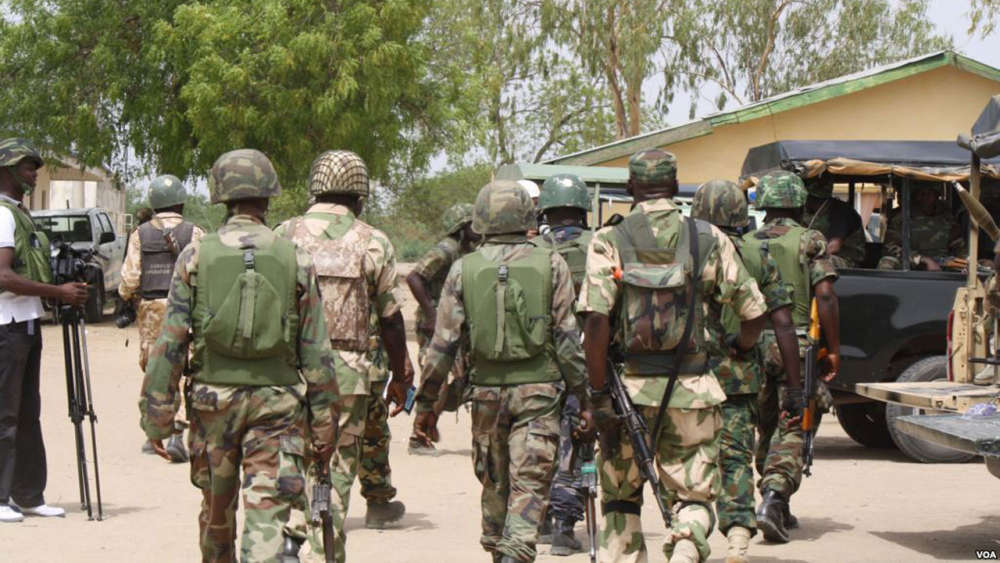
FG pumps N5tn into military operations, read details

Published

on

The Federal Government has disbursed N5.15tn in special intervention funds to the Nigerian military and related security agencies between November 2023 and September 2026, amid persistent insecurity, including terrorism, banditry, kidnapping and other violent crimes across the country.

An analysis by The PUNCH of documents from the Federation Account Allocation Committee, obtained on Thursday, revealed that the government received N5.65tn into a dedicated special intervention account over the period, out of which N5.15tn had been disbursed, representing 91.15 per cent of the total funds.

The records showed that the intervention was financed through allocations from the Federation Account and other government revenue sources, including non-oil revenue and funds transferred from a FAAC withholding account.

The document, titled ‘Ledger of Special Intervention Programme for Nigerian Military September, 2026”, was prepared by the Federation Account Department of the Office of the Accountant-General of the Federation and formed part of the records presented to the Technical Sub-Committee of FAAC at its meeting in Abuja on October 14, 2026.

According to the ledger, the N5.15tn was released through 30 payment transactions between November 8, 2023, and September 23, 2026, while the total receipts were recorded across 33 funding transactions.

The disbursements were separate from the regular annual budgetary allocations to the Ministry of Defence and other security institutions, indicating the scale of additional financial resources channelled towards security operations.

However, the records did not provide a breakdown of the specific military operations, equipment purchases, personnel costs or security projects financed with the money.

A breakdown of the transactions showed that the intervention programme commenced with a N100bn transfer on October 19, 2023, described as the September 2023 allocation.

The first payment of N100bn was made to the military on November 8, 2023, while another N100bn was received on November 20, 2023, and subsequently disbursed on December 20.

By the end of December 2023, the account had received N300bn and disbursed N300bn, leaving no outstanding balance.

The funding arrangement continued throughout 2024, with regular transfers of N100bn and corresponding payments to military and paramilitary agencies.

Between January and December 2024, the account received N1.2tn and disbursed the same amount, bringing cumulative receipts and payments to N1.5tn.

See also  PHOTOS & VIDEO: Aviation Minister, Festus Keyamo, orders arrest and sanctioning of airline officials who released video containing the indecent exposure of Ibom air unruly passenger

The transactions were largely recorded as monthly allocations under the special intervention programme, although the payment dates did not always correspond with the months for which the funds were allocated.

For instance, the January 2024 allocation was transferred on February 27, while the corresponding payment was made on March 1.

Similarly, the ledger showed that the programme entered a second phase in July 2024, beginning with a N100bn transfer on July 27.

The second phase continued into 2025, with the government maintaining the N100bn monthly funding pattern.

During the first nine months of 2025, the account received N900bn and disbursed N900bn, bringing cumulative payments to N2.4tn by September 1, 2025.

An analysis of the transactions, therefore, showed that N2.4tn was disbursed between November 2023 and September 2025, before the government significantly increased the scale of the intervention in 2026.

The records indicated that the funding arrangement changed considerably in 2026, with individual transfers rising from the previous N100bn monthly pattern to between N200bn and N500bn.

On March 18, 2026, the government transferred N200bn from the FAAC Withheld Account, described in the ledger as savings for March 2026.

The amount was followed by a N100bn payment to security agencies on March 16, although the payment preceded the recorded transfer by two days.

Another N250bn was transferred from non-oil revenue on May 18, 2026, while N130bn was paid to security agencies from the FAAC Withheld Account on May 25.

The ledger also recorded a N120bn payment to the Consolidated Pool Account II TSA on June 3, 2026.

This particular transaction differed from the other payments because it was not expressly described as a transfer to military or paramilitary agencies.

On June 16, 2026, the government transferred N400bn from non-oil revenue for May, which was reversed the same day.

The reversal was followed by a fresh transfer of N500bn from non-oil revenue, indicating that the earlier transaction was cancelled and replaced.

The same day, N500bn was paid to military and paramilitary agencies, marking one of the largest individual disbursements recorded under the programme.

See also  Malami, Fagbemi clash over $200m Mambilla settlement

Another N500bn was transferred from non-oil revenue on July 15, followed by a corresponding payment to military and paramilitary agencies on July 22.

The pattern continued in August, when N500bn was transferred on August 19 and paid out on the same date.

On September 16, another N500bn was transferred from non-oil revenue, while the corresponding payment was recorded on September 23.

The final entry in the ledger showed a further N500bn transfer from non-oil revenue on October 14, 2026, described as the September 2026 allocation.

Although the ledger was titled September 2026, the inclusion of the October 14 transaction indicated that its financial position incorporated the latest transfer recorded at the FAAC technical meeting.

The figures showed that the intervention account received N3.25tn in 2026 up to October 14, compared with N1.2tn throughout 2024.

This represented an increase of about 170.83 per cent over the entire amount received in 2024, despite the 2026 records covering only part of the year.

Payments recorded in 2026 amounted to N2.75tn, compared with N1.2tn in 2024, representing an increase of approximately 129.17 per cent.

The N2.75tn disbursed in 2026 also accounted for 53.40 per cent of the N5.15tn paid out under the programme since its commencement.

The analysis further showed that the government disbursed more under the special intervention programme in 2026 than the combined N2.4tn released between November 2023 and September 2025.

It also revealed that the programme had an outstanding balance of N500bn as of October 14, 2026, representing 8.85 per cent of the total N5.65tn received.

The balance arose after the latest N500bn transfer was recorded without a corresponding payment in the ledger.

Consequently, the outstanding amount represented funds available in the intervention account rather than money already disbursed to security agencies.

Despite the significant increase in funding, the country continues to grapple with security challenges across several regions.

In the North-East, the military has continued operations against Boko Haram and the Islamic State West Africa Province, while banditry and mass kidnappings remain major security concerns in parts of the North-West and North-Central regions.

Communities in several states have also experienced attacks by armed groups, resulting in deaths, displacement and disruption of farming and other economic activities.

See also  Again, fire razes Yobe Fika main market, shops, others destroyed

The security challenges have placed pressure on government finances, as authorities continue to allocate substantial resources to military operations, intelligence gathering, logistics and the protection of vulnerable communities.

FG reviews strategy

Ina related development, the Federal Government has begun a review of the 2019 National Security Strategy to develop a new framework that addresses emerging threats, including terrorism, banditry, kidnapping, cybercrime, food insecurity and climate change.

The National Security Adviser, Nuhu Ribadu, disclosed this on Thursday during the inauguration of a committee to review the existing strategy and formulate the National Security Strategy 2026.

Ribadu, who was represented by Major General Sarkin Bello (retd.), said Nigeria’s security environment had changed significantly since the last review in 2019, requiring a comprehensive reassessment of the country’s security priorities.

“Our national security landscape is undergoing rapid and profound transformations. Since the last review of our strategy in 2019, the domestic, regional and global security environments have changed dramatically, with intensity,” he said.

He noted that the country was confronted with multiple security challenges that required a broader strategic response.

“As you are aware, these problems range from terrorism, banditry and kidnapping to sophisticated cyber threats, misinformation, economic problems, food insecurity and environmental challenges, among others,” Ribadu said.

He said the new strategy would serve as a framework for coordinating national security, resilience and sustainable development, adding that it must reflect current realities while anticipating future threats.

Also, the Deputy Chairman of the committee, Major General Evi Onumajuru (retd.), said the changing nature of security threats made a strategic realignment imperative.

He said traditional security challenges, including terrorism, insurgency and banditry, had become intertwined with non-kinetic threats such as cybercrime, economic vulnerabilities, food insecurity and climate change.

He added that the strategy must integrate the priorities of the Renewed Hope Agenda by linking economic prosperity and good governance with human security and national defence.

Source: punchng.com

FOLLOW US ON:

FACEBOOK

WHATSAPP CHANNEL

TWITTER

PINTEREST

TIKTOK

YOUTUBE

LINKEDIN

INSTAGRAM

Continue Reading

News

10 things to know about applying for 2027 SAN rank

Published

on

The Legal Practitioners’ Privileges Committee has invited applications for the 2027 award of the rank of Senior Advocate of Nigeria, with private legal practitioners required to pay a non-refundable processing fee of N5m and government-employed lawyers N2.5m.

The committee said the application portal would open on November 1, 2026, directing all candidates to complete the application process online and comply with its document submission requirements and deadlines.

PUNCH Online had reported Wednesday that Legal Practitioners’ Privileges Committee invited applications for the 2027 conferment of the rank of Senior Advocate of Nigeria.

Here are 10 things prospective applicants need to know about the exercise.

1. Applications open on November 11

The LPPC said its application portal would open to the public at 12am on November 1, 2026.

Applications are to be processed through its official portal, www.lppconline.com.

2. Private legal practitioners will pay N5m

The committee fixed the non-refundable processing fee for private legal practitioners at N5m.

3. Government-employed lawyers will pay N2.5m

Legal practitioners employed by the government are required to pay a non-refundable fee of N2.5m.

4. Payment must be made into designated bank accounts

Applicants are required to pay directly into either of the committee’s designated accounts:

– Zenith Bank: 1014103141

– Guaranty Trust Bank: 0213662834

5. Proof of payment must be uploaded

Candidates must upload evidence of payment to the online portal for verification.

According to the notice, the LPPC Secretariat will send a confirmation email after verification, allowing applicants to continue with the process.

See also  WHO chief says US exit allows agency reset

6. All supporting documents must be uploaded online

Applicants seeking the rank through advocacy or academia must upload clear and legible scanned copies of all mandatory and supporting documents through the portal.

7. Academic applicants have additional requirements

Candidates applying through the academic category must submit seven physical photocopies each of their curriculum vitae and impact statement, in addition to the required flash drives.

8. Every applicant must submit five flash drives

The committee directed all applicants to provide five flash drives containing copies of their completed application forms downloaded from the portal and all mandatory and supporting documents uploaded during the application process.

9. Online applications close on January 31, 2027

The deadline for completing online applications is midnight on January 31, 2027. Applicants are advised to complete their submissions before the deadline to avoid technical or procedural complications.

10. Flash drives must arrive by February 1, 2027

The five flash drives must be delivered to the LPPC Secretariat before 4pm on February 1, 2027.

The committee warned that applications that do not comply with its guidelines or are submitted after the prescribed deadlines will be rejected and treated as non-submissions.

The notice was signed by the Chief Registrar of the Supreme Court of Nigeria and Secretary of the LPPC, Kabir Eniola Akanbi.

Applicants seeking clarification may contact the secretariat through lppcsecretariat@courts.gov.ng.

Source: punchng.com

FOLLOW US ON:

FACEBOOK

WHATSAPP CHANNEL

TWITTER

PINTEREST

TIKTOK

YOUTUBE

LINKEDIN

INSTAGRAM

Continue Reading

Trending