Connect with us

News

Police release Okorocha on bail for alleged forgery

Published

on

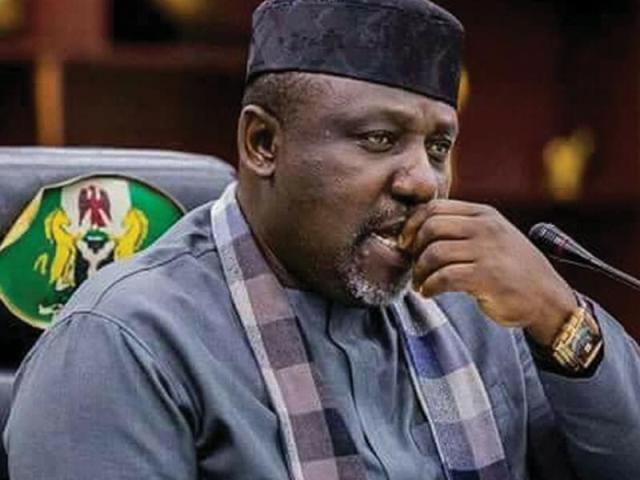
The Nigeria Police Force has released former Imo State Governor, Rochas Okorocha, on bail, after interrogating him over allegations of criminal conspiracy, forgery and impersonation.

Okorocha, who represented Imo West Senatorial District in the Senate, was arrested on Monday night at the REIZ Continental Hotel in Abuja and released after about an hour of questioning.

The Force Public Relations Officer, CSP Anietie Iniedu, reportedly confirmed the arrest and subsequent release, adding that the former governor had been directed to return to the Force Headquarters on Tuesday for further interrogation.

Our correspondent could however not independently confirm the details of the interrogation as the police spokesperson did not respond to phone calls made to him.

The police said investigations into the allegations were ongoing but did not disclose details of the alleged offences.

The arrest reportedly followed Okorochaโ€™s failure to honour previous invitations by the police for questioning in connection with the investigation.

He was initially invited to appear at the Force Headquarters on September 2, but the appointment was rescheduled to September 8 following a request by his lawyers.

Okorocha reportedly failed to honour the rescheduled invitation, prompting the latest police action.

The police were also reported to have obtained a bench warrant to compel his appearance for questioning.

However, the circumstances surrounding the alleged forgery, impersonation and conspiracy have yet to be fully disclosed by the police.

The former governor has not been reported to have been formally charged with any offence in connection with the investigation.

See also  Soludo orders suspension of absentee workers after surprise secretariat visit

Source:ย punchng.com

FOLLOW US ON:

FACEBOOK

TWITTER

PINTEREST

TIKTOK

YOUTUBE

LINKEDIN

INSTAGRAM

Continue Reading
Click to comment

Leave a Reply

Your email address will not be published. Required fields are marked *

News

Nuhu Ribadu reveals terrorists deploy AI, crypto to evade security agencies

Published

on

The National Security Adviser, Nuhu Ribadu, and the African Union Counter-Terrorism Centre have warned that terrorist groups are increasingly exploiting social media, cryptocurrencies and emerging technologies to recruit members, conceal funds and coordinate attacks across West Africa and the Sahel.

They raised the alarm in Abuja on Tuesday at a three-day regional training conference on detecting and disrupting terroristsโ€™ exploitation of information and communication technologies and emerging technologies.

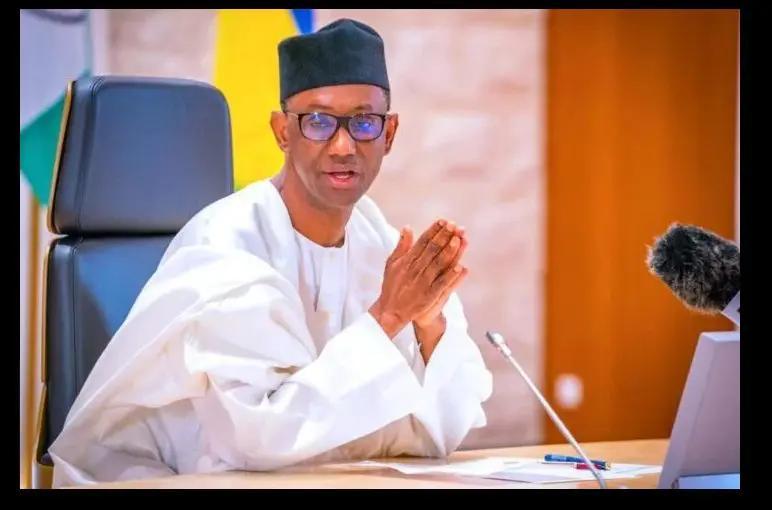
Ribadu, represented by the National Coordinator of the National Counter Terrorism Centre, Maj Gen Adamu Laka, said terrorist groups were using digital platforms to spread propaganda, radicalise potential recruits, raise funds and coordinate operations across borders.

He warned that the growing use of artificial intelligence, drones and virtual assets had added new dimensions to the security challenges facing Nigeria and other countries in the region.

โ€œEmerging technologies add further complexity: Artificial Intelligence can rapidly produce personalised content; drones and autonomous systems can expand operational capabilities; and virtual assets can create new financing channels. We must, therefore, strengthen our ability to anticipate, detect, analyse and disrupt threats before they materialise,โ€ he said.

Ribadu said the response required more than acquiring sophisticated equipment, stressing the need to develop technical expertise, strengthen institutions and improve cooperation among security agencies.

The NSA also called for increased cross-border intelligence sharing and the timely exchange of actionable cyber threat information among West African and Sahelian countries.

โ€œNigeria recognises that no institution, country or sector can defeat terrorism alone,โ€ he said.

The former Economic and Financial Crimes Commission chairman added that Nigeria was working with the African Union Counter-Terrorism Centre to secure accreditation for the National Counter Terrorism Centre as a regional centre of excellence for counterterrorism in West Africa and the Sahel.

See also  Nnamdi Kanuโ€™s trial: Focus on facts, not propaganda โ€“ Lawyer tasks journalists

He said the initiative followed President Bola Tinubuโ€™s declaration at the High-Level Africa Counterterrorism Summit held in April 2024.

Also speaking, the Acting Director of the AU Counter-Terrorism Centre, Idriss Lalalli, said terrorist organisations, including the Islamic State West Africa Province, Boko Haram and Jamaโ€™at Nusrat al-Islam wal-Muslimin, were expanding their activities through digital technologies.

He said, โ€œAcross West Africa and the Sahel today, ISWAP, Boko Haram and JNIM are extending their reach through technology. They recruit on social media platforms, move and conceal funds via mobile money, gift cards and cryptocurrencies.

โ€œThey buy weapons on darknet marketplaces, communicate over satellite links beyond our networks, and fly drones across borders, using artificial intelligence to tailor propaganda and evade detection.โ€

Lalalli warned that the speed and relatively low cost of using digital tools had enabled terrorist cells to reach wider audiences and move faster than security agencies could respond.

โ€œWhat makes this difficult is speed and cost. A cell with a modest budget can now reach audiences far beyond its physical presence and move faster than our procedures can respond. The capability to counter it remains thinly and unevenly distributed across our member states,โ€ he said.

The director, however, said the capacity gap could be addressed through specialised training, regional coordination and stronger collaboration with private-sector operators.

Lalalli said the programme would equip participants with skills in cyber threat intelligence, open-source intelligence, digital forensics and blockchain analysis to help them track online recruitment networks, preserve digital evidence and trace cryptocurrency transactions.

He stressed that the different areas of training needed to work together to support investigations and prosecutions.

See also  US warns Nigerians against visa fraud

The AU official also called for stronger partnerships with social media companies, telecommunications operators and financial service providers, noting that much of the infrastructure exploited by terrorist groups was privately owned.

โ€œYou leave as this continentโ€™s first cohort of trainers in this domain. You will leave here not just carrying home a certificate, but a responsibility. The Centre will stand behind you. But the multiplier is you,โ€ he said.

The three-day conference brought together participants from West Africa and the Sahel, alongside representatives of the African Union, the Economic Community of West African States, the Multinational Joint Task Force, regional intelligence structures and international organisations.

Source:ย punchng.com

FOLLOW US ON:

FACEBOOK

TWITTER

PINTEREST

TIKTOK

YOUTUBE

LINKEDIN

INSTAGRAM

Continue Reading

News

Tinubu transmits NDLEA, NSIB amendment bills to Senate

Published

on

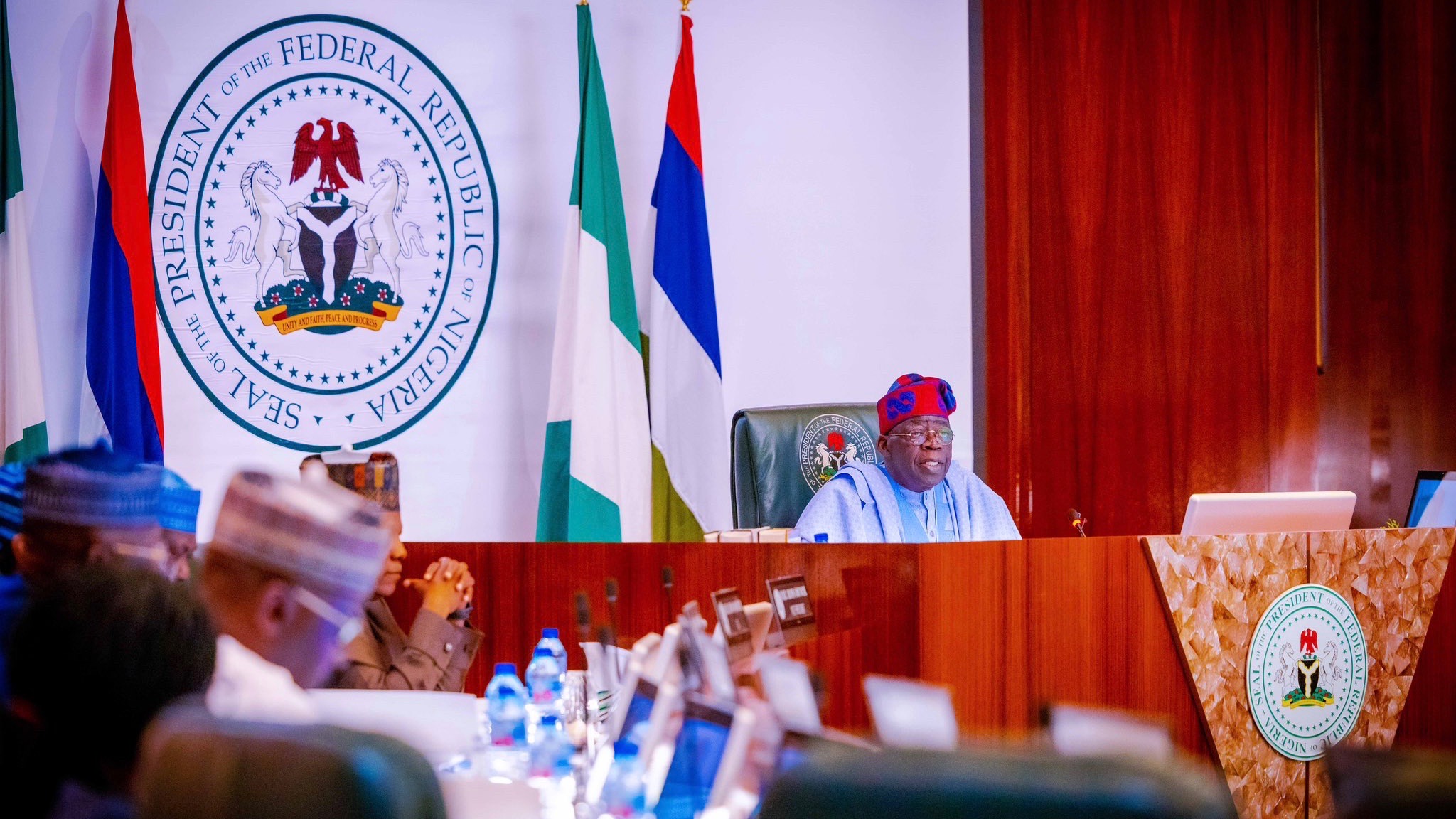
President Bola Tinubu on Tuesday transmitted two bills seeking to overhaul Nigeriaโ€™s drug enforcement framework and expand the investigative powers of the Nigerian Safety Investigation Bureau to the Senate for consideration.

The bills, the National Drug Law Enforcement Agency Bill 2026 and the Nigerian Safety Investigation Bureau Amendment Bill 2026, were forwarded to the upper chamber in separate letters addressed to the Senate President, Godswill Akpabio.

The proposed legislation seeks to consolidate existing laws on drug-related offences and reposition the NSIB as an independent, multimodal safety investigation authority with jurisdiction beyond aviation accidents.

Both bills were transmitted pursuant to Section 58(2) of the 1999 Constitution, as amended, which provides for the presentation of bills to the President for assent after passage by the National Assembly.

In his letter on the NDLEA Bill, Tinubu said the proposed legislation would repeal the existing NDLEA Act and the Indian Hemp Act and establish a consolidated legal framework for combating drug-related offences.

According to the President, the bill seeks to strengthen enforcement against the cultivation, processing, sale, trafficking and use of illicit drugs, while empowering the agency to investigate persons suspected of involvement in drug-related activities.

The letter reads: โ€œThe National Drug Law Enforcement Agency Bill 2026 seeks to repeal the National Drug Law Enforcement Agency Act, Cap. N30, and the Indian Hemp Act, Cap. I16, Laws of the Federation of Nigeria 2004, and to enact a consolidated framework to enforce the law against the cultivation, processing, sale, trafficking and use of hard drugs.โ€

See also  Youths rally Jonathan for 2027 presidential bid

Tinubu urged the Senate to give the proposed legislation expeditious consideration.

Following its presentation, Akpabio referred the NDLEA Bill to the Senate Committee on Rules and Business for further legislative action.

In a separate letter, the President transmitted the NSIB Amendment Bill 2026, seeking changes to the legal framework governing the bureau.

The proposed amendment seeks to amend the Nigerian Safety Investigation Bureau (Establishment) Act No. 35 of 2022 to strengthen the bureauโ€™s independence and expand its mandate to cover accidents and incidents involving multiple modes of transportation.

Under the proposed changes, the bureauโ€™s investigative responsibilities would extend beyond aviation to include rail, maritime and other transport-related occurrences.

The bill also seeks to transfer supervisory oversight of the bureau to the Presidency and strengthen its institutional, operational and administrative powers.

The proposed expansion comes amid renewed attention to aviation safety following the October 5 crash of a Nigerian Air Force ATR-42 aircraft near Igbokoda in Ondo State, which reportedly killed 25 people.

The Senate has since called for a comprehensive investigation into the crash and an audit of military aircraft serviceability and maintenance funding.

In his letter transmitting the NSIB bill, Tinubu requested the Senateโ€™s consideration of the proposed changes in accordance with Section 58(2) of the Constitution and urged lawmakers to expedite action on the legislation.

Akpabio subsequently referred the bill to the Senate Committee on Rules and Business for further legislative consideration.

The two bills will now undergo further legislative scrutiny, with the proposed NDLEA legislation targeting a consolidated framework for drug law enforcement and the NSIB amendment seeking to broaden the scope of independent safety investigations across Nigeriaโ€™s transport sector.

See also  Terrorists Shifting To South-West โ€“ Ex-DSS Director

Source:ย punchng.com

FOLLOW US ON:

FACEBOOK

TWITTER

PINTEREST

TIKTOK

YOUTUBE

LINKEDIN

INSTAGRAM
Continue Reading

News

El-Rufai earmarked $600,000 for EFCC officials โ€“ Investigator reveals

Published

on

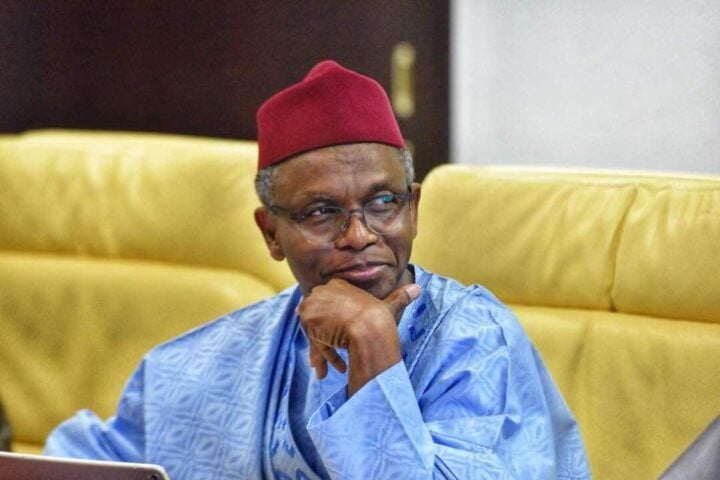
A forensic investigator with the State Security Service, Segun Kayode, on Tuesday alleged that former Kaduna State Governor, Nasir El-Rufai, and some of his associates earmarked $600,000 to settle officials of the Economic and Financial Crimes Commission and intermediaries.

Kayode, the first prosecution witness in the ongoing trial, made the allegation while testifying before the Kaduna State High Court sitting in Kawo, Kaduna, presided over by Justice Darius Khobo.

The witness said $500,000 and $100,000 were allegedly set aside for the payments, adding that forensic audio recordings captured conversations involving El-Rufai and some of his suspected associates.

According to him, the recorded conversations centred on alleged efforts to frustrate an EFCC investigation into a company identified as Singularity.

Kayode named a Senior Advocate of Nigeria, AU Mustapha (SAN); Jimi Lawal; and Bashir El-Rufai among those allegedly mentioned in the conversations.

He told the court that Mustapha and Lawal were allegedly directed to meet one Ahmadu Sule to obtain a template previously used to liquidate another company, with the intention of applying a similar process to Singularity.

The investigator further alleged that the discussions included plans to liquidate the company in Nigeria and Mauritius, where it was reportedly under investigation by the Nigerian Financial Intelligence Unit.

Kayode also alleged that the recordings contained discussions about preventing the EFCC from investigating IHS, which he said was listed on the New York Stock Exchange.

The allegations were presented as part of the prosecutionโ€™s evidence against the former governor.

The proceedings lasted nearly eight hours, from 12:26 pm to 8:18 pm, with about two hours devoted to playing the recorded conversations.

See also  Soludo orders suspension of absentee workers after surprise secretariat visit

Earlier, El-Rufaiโ€™s lead counsel, Paul Erokoro (SAN), objected to Kayodeโ€™s testimony, arguing that the witnessโ€™s name and summary of evidence were not included in the prosecutionโ€™s proof of evidence.

Erokoro argued that the omission undermined his clientโ€™s right to a fair hearing, insisting that the defence was entitled to know the evidence it was expected to answer.

However, counsel for the Independent Corrupt Practices and Other Related Offences Commission, Ayodeji Adedipe (SAN), told the court that Kayode was a subpoenaed witness and that the omission did not automatically render his testimony inadmissible.

Adedipe said the subpoena was issued and signed by the court on June 30, 2026, adding that the defence would have the opportunity to cross-examine the witness.

The prosecution counsel also cited judicial authorities in support of his argument.

In his response, Erokoro maintained that the issue was not whether the witness could testify but whether the defence had been adequately informed to prepare for his evidence.

He relied on Section 210 of the applicable Administration of Criminal Justice Law, 2017, and argued that the prosecution should have served the subpoena on the defence.

In its ruling, the court acknowledged that the witnessโ€™s name and summary of evidence were absent from the proof of evidence but held that the records showed he had been subpoenaed.

Justice Khobo ruled that the omission did not automatically make the testimony inadmissible, provided the defence was allowed to cross-examine the witness.

The judge consequently overruled the objection and directed Kayode to continue his testimony.

See also  Terrorists Shifting To South-West โ€“ Ex-DSS Director

After the witness submitted a hard copy of his findings to the court clerk, the defence complained that the document should have been served earlier to enable it to study the contents.

The judge, however, ruled that the defence could obtain a certified true copy of the document admitted as Exhibit One for examination.

The court adjourned the case until November 30 and December 1, 2026, for continuation of the cross-examination, following agreement by the prosecution and defence.

The PUNCH reported that El-Rufai arrived at the court premises at about 11:50 am, ahead of the scheduled noon hearing, amid tight security.

He was accompanied by the African Democratic Congress governorship candidate in Kaduna State, Isa Ashiru.

His appearance followed an order by Justice Khobo directing the ICPC to produce him in court for the resumed proceedings.

The previous sitting was adjourned on Monday after the former governor was absent following information that he had requested access to his personal physician to review medical test results.

The resumed hearing came days after the Court of Appeal in Kaduna dismissed El-Rufaiโ€™s appeal challenging the refusal of bail by the state high court.

In its judgment delivered on October 9, the appellate court upheld the lower courtโ€™s decision, ruling that the former governor had failed to establish sufficient grounds to warrant interference with the refusal of bail.

El-Rufai has been in ICPC custody since February 18, 2026, over allegations of financial misconduct linked to his administration of Kaduna State between 2015 and 2023.

The Kaduna State House of Assembly had petitioned the ICPC over the alleged diversion and mismanagement of more than N423bn in public funds during his eight-year administration.

See also  Youths rally Jonathan for 2027 presidential bid

The former governor is facing multiple cases involving allegations of money laundering, abuse of office, fraud and other financial offences before different courts.

He has denied wrongdoing and pleaded not guilty to the charges. The allegations remain subject to judicial determination.

Source:ย punchng.com

FOLLOW US ON:

FACEBOOK

TWITTER

PINTEREST

TIKTOK

YOUTUBE

LINKEDIN

INSTAGRAM

Continue Reading

Trending