Connect with us

Business

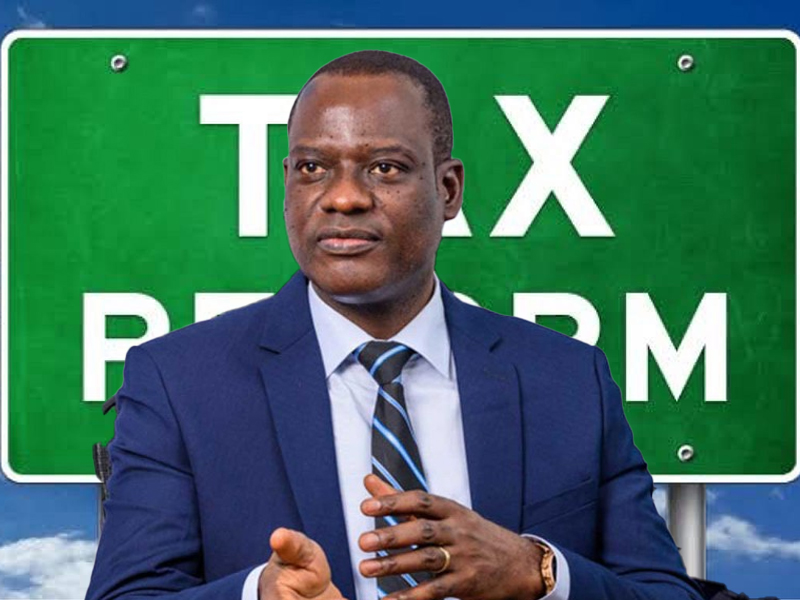
Taiwo Oyedele rules out fuel tax, calls report fake news

Published

on

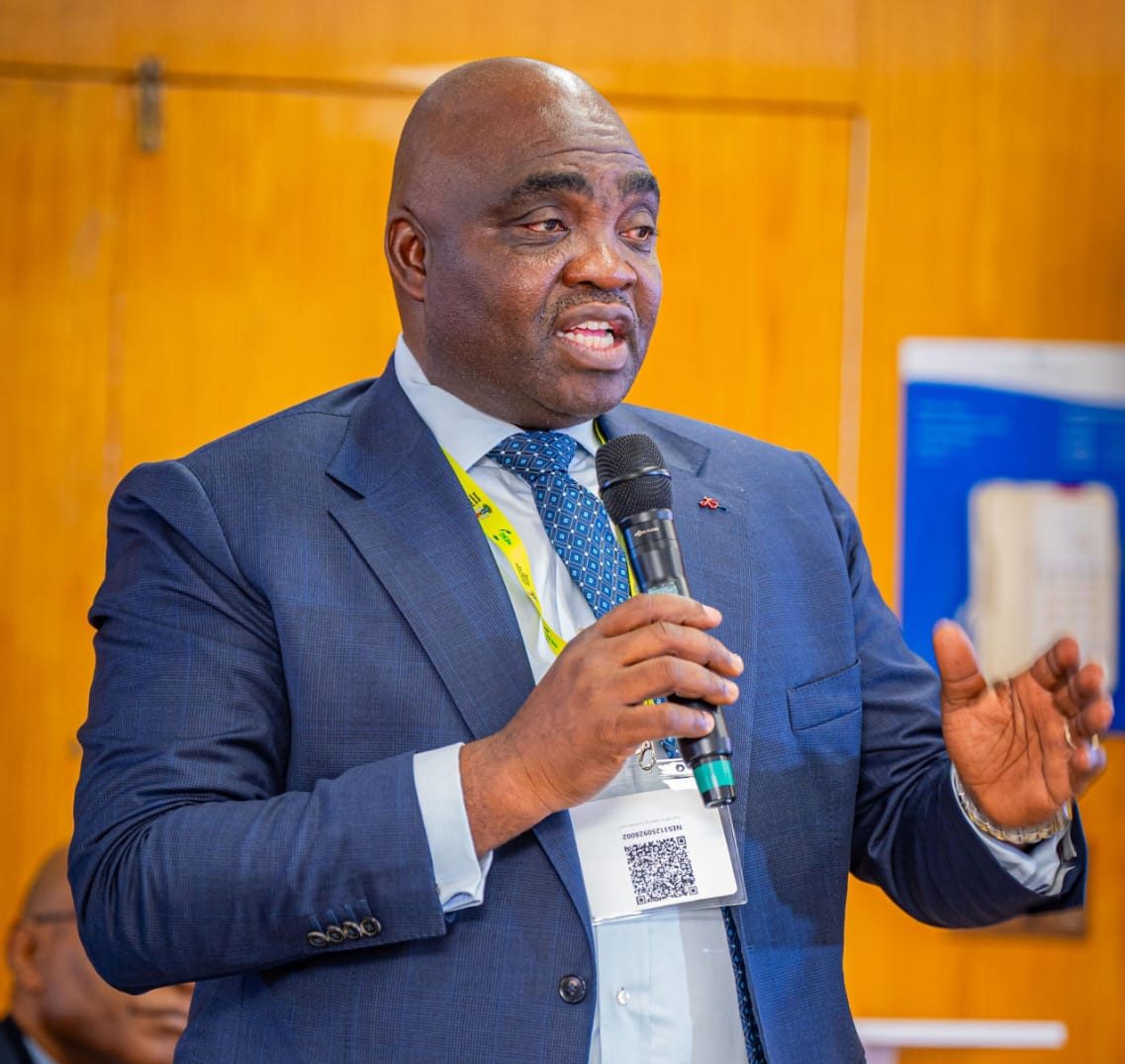
The Minister of Finance and Coordinating Minister of the Economy, Taiwo Oyedele, has ruled out plans to introduce a fuel tax, describing reports suggesting otherwise as “fake news”.

Oyedele said the Federal Government had no plan to impose the levy, accusing some online reports of twisting his remarks during an interview with ARISE News.

In a post on X on Tuesday, the minister said, “In my interview with ARISE News, I was clear: a fuel tax is not on the table.”

He added, “Having removed the fuel subsidy, it would be insensitive for government to impose a fuel tax at this time.”

Oyedele’s clarification followed reports suggesting that the government intended to introduce a fuel tax once economic conditions improved and Nigerians’ incomes could accommodate the additional burden.

Dismissing the reports, he said, “Some online reports have since twisted this message into a claim that the government plans to introduce fuel taxes. That is FAKE NEWS.”

He urged Nigerians to disregard what he described as misleading headlines and watch his remarks on the issue.

During the interview, conducted on the sidelines of the 2026 annual meetings of the International Monetary Fund and the World Bank in Bangkok, Thailand, Oyedele explained that imposing a fuel tax while petrol was subsidised would have been counterproductive because the government would effectively be paying the tax itself.

He also argued that the priority should be to grow incomes faster than prices rise, rather than focus on suppressing prices.

The minister maintained that introducing a fuel tax under the prevailing economic conditions would place an additional burden on Nigerians still grappling with the effects of subsidy removal.

See also  Schools, markets open as IPOB ends Monday sit-at-home

Source: punchng.com

FOLLOW US ON:

FACEBOOK

WHATSAPP CHANNEL

TWITTER

PINTEREST

TIKTOK

YOUTUBE

LINKEDIN

INSTAGRAM

Continue Reading
Click to comment

Leave a Reply

Your email address will not be published. Required fields are marked *

Business

Tinubu reveal no regrets on subsidy, won’t return to Egypt

Published

on

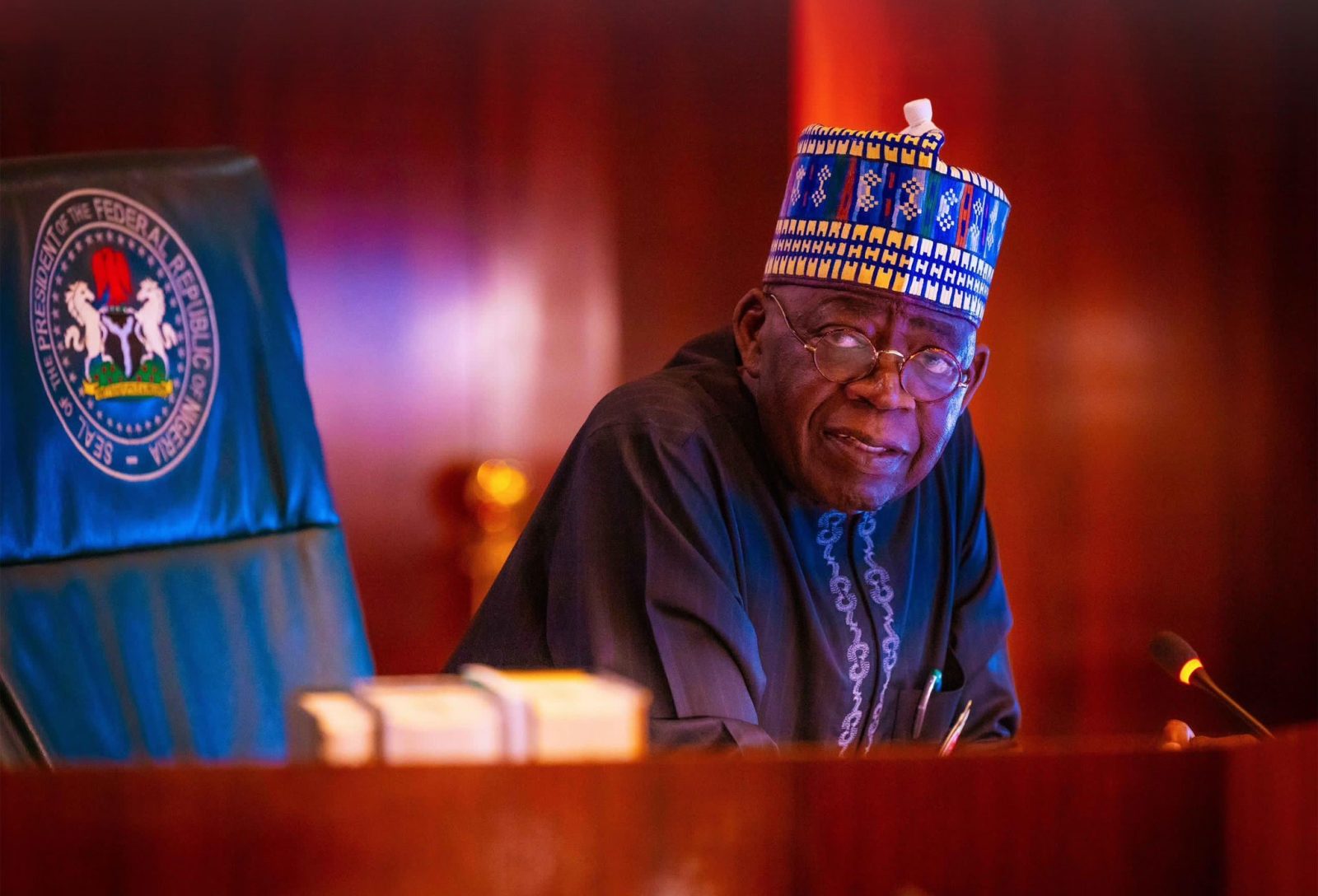
President Bola Tinubu has said he has no regrets over the removal of the fuel subsidy, vowing that Nigeria will never go back to it as he likened any return to asking the biblical Moses to go back to Egypt.

Tinubu spoke on Monday evening at the forum tagged ‘Together till 2027: An Evening with Original City Boy’, organised by the City Boy Movement in conjunction with the Relax-Tinubu-Is-Fixing-Nigeria movement, both of which are geared towards his reelection at the 2027 polls.

Recalling the start of his administration, the President said he scrapped the subsidy on his first day in office.

“I came, and I removed the subsidy the first day,” he said, adding that Nigeria was heading for bankruptcy, with “nothing left to pay subsidy.”

The President threw jabs at the African Democratic Congress presidential candidate, Atiku Abubakar, who promised a return to subsidy.

Citing what he called his studies of scripture in the Bible and the Holy Quran, Tinubu recalled how the Red Sea parted when Moses left Egypt.

He likened the end of the subsidy regime to the exodus of the ancient Israelites from Egypt, saying, “You cannot ask Moses to go back to Egypt.”

Continuing, he said, “I could listen to my political opponents promising a return to subsidy. Most of all, sometimes I remember my scripture studies, both the Bible and the Holy Quran. When Moses left Egypt, they faced the challenge, and the Red Sea parted and gave way.

“You cannot ask Moses to go back to Egypt. We wake up with ideas, original thoughts, and deep thinking to move this country forward. With your energy, your support, Nigeria will never go back to Egypt. No regrets.

“Before I left home, I saw one of the greatest Chinese economic news growing by 4.6 per cent or thereabouts. We are on the right trajectory. We are in good company. The economy is growing steadily. You will have a future, a future to believe in.”

The President added, “Nigeria must win this election before any candidate does. You are not campaigning for me. You are campaigning for your own future, and that future is renewed hope. There’s nothing that will push us back.”

Tinubu said the past three years had not been easy, adding that his administration “took hard decisions.”

He described the condition in which he took over, stating that, “We owed money to airlines. They were almost cutting their flights to Nigeria. Our foreign reserve was nothing. We printed currencies as if there were no tomorrow.”

He said that rather than dwell on the flaws of the past, he chose to assume the responsibility and liability of his predecessor.

“We understood that a nation cannot borrow its way to greatness,” Tinubu said, adding that many people had predicted that young Nigerians would turn their backs on the reforms.

See also  Capital Gains Tax: Taiwo Oyedele dismisses claims Nigerian investors are frustrated

“They were wrong. You are here,” he said.

Turning to the January 16, 2027, presidential election, the President told the youths to take the message to their campuses, markets and villages.

“Make sure every young person you know has a PVC and use it. Tell them what we have done, and tell them what we will do. Campaign with your ideas.

“You are not campaigning for me. You are campaigning for your own future, and that future is Renewed Hope,” he stated.

On the Students Loan Act, which he signed in 2023, he said he also had no regrets, adding, “Today, more than a million students have been supported through NELFUND.”

Tinubu announced the end of the petrol subsidy when he took office on May 29, 2023.

The pump price rose from about N180 per litre to about N620 after the announcement, and to about N1,200 roughly a year later.

Atiku, on August 20, in an English rendering of a Hausa-language interview, said: “If elected, I will bring back the oil subsidy.”

He, however, proposed a capped, audited production subsidy tied to domestic refining, saying his proposal was not to resurrect the old subsidy regime.

The Presidency called the proposal a return to a “wasteful, corruption-ridden and financially burdensome” system.

At the event, Tinubu assured the City Boy Movement, especially the youth who had stood with him, that they would not be left behind.

“The future of this country does not belong to me, and it does not belong to my generation. It belongs to you.

“I am very proud, once again, that when I signed the Student Loan Act, I had no regrets.

“Today, more than a million students have been supported through NELFUND,” Tinubu stated.

On his son, Seyi, he said: “He is running after his father. Your young colleagues would have seen that you are investing your time effectively. We are with you. Thank you. You did it humbly.

“You did not ask for a title or an office. You went to the young people, your age mates, your group. You listened to them and organised them.

“I am proud of all of you. But I will tell you what every father tells a son: you have only started. Do more, not less. Serve harder. Set an example that your own children, my grandchildren, will be proud to follow.”

Speaking earlier, Vice President Kashim Shettima said Nigeria’s economy would have collapsed had President Bola Tinubu not taken what he called far-reaching decisions.

He said, but for the tough decisions, critics would by now be writing epistles on a collapsed economy from the comfort of their homes in Dubai, United Arab Emirates, and New York, United States.

The Vice President credited the President’s decisions for the economy’s recovery.

He said, “The President took those far-reaching decisions. He had the courage of conviction and the knowledge to take those far-reaching decisions that repositioned the Nigerian economy, so that now, the economy grew by 4.43 per cent in the last quarter.

See also  15% tariff: Nigerians to pay N1tn extra for petrol yearly

“Most importantly, our foreign reserves are now hovering at the level of $60bn.

“Remember how far we have come. It’s only those who have been in the deepest valley that will appreciate how magnificent it is to be on a mountain top.”

To the critics of the administration, Shettima said, “The same people that are crying wolf, if the President had not taken those far-reaching decisions, Walahi, I am not talking to you as a politician. I am talking to you as a Nigerian; our economy would have collapsed.

“These people, by now, would be writing epistles on a collapsed economy from the comfort of their homes in Dubai, in New York, or in marriage with their young Moroccan wives. I have not mentioned anybody’s name.”

He admitted that Nigerians had endured hardship, but said it could have been worse.

“Your Excellency, distinguished ladies and gentlemen, the President has to be commended, not demonised. Yes, Nigerians have gone through some tough times, but it could have been worse.

“Be reassured that in the coming weeks, the President will come up with robust responses to agricultural challenges, and prices of foodstuffs will certainly come down,” he stated.

The Vice President said efforts were being made to reposition the economy, citing the Nigerian Education Loan Fund and investments in infrastructure.

He then asked the youth to carry the message to the streets.

“I urge the youth of Nigeria. I beseech thee. I implore you to go out to the streets and tell the truth to other Nigerians,” he stated.

At the inauguration of the All Progressives Congress Presidential Campaign Council on October 14, Shettima mocked the former Vice President, Atiku Abubakar, and the former Anambra State governor, Peter Obi, over their economic proposals.

Also speaking at the event on Monday, the Deputy Senate President, Barau Jibrin, commended the City Boy Movement, describing it as a “special purpose political vehicle” that was not only human-driven but also technology- and AI-driven.

He said he believed no other political organisation in the country was doing what the group was doing, and urged others to take a cue from it.

Jibrin asked the movement to build Tinubu’s ideology and philosophy into its AI content, citing his “spirit of philanthropy, the spirit of resilience, the spirit of perseverance, and of course patriotism.”

The Deputy Senate President also urged the group to load its AI platform with questions and answers to counter some of the candidates in the election whom he accused of “churning out things that they cannot achieve” in “false populism”.

He said, “We know their track records; we know their scorecards when they held offices before. So that people will not fall for their lies, so that people will not fall for the fallacy they are turning out every day.”

See also  Soludo closes Onitsha market for one week, see why

He further asked that the content explain the global rise in the cost of living, which he blamed on armed conflicts. He said the President was working very hard to deal with the situation.

The Speaker of the House of Representatives, Tajudeen Abbas, announced that he would publish an audit of what Tinubu had done for his Zaria constituency in Kaduna State, and called on all political officeholders serving under the President to do likewise.

He said he would hold a media briefing within 14 days, where he would also present a scorecard of the House’s bills, reforms and oversight work done in partnership with the administration.

“It will not be a celebration; it will be an audit. Every intervention will carry a location, a value and a status.

“And where something remains undone, I will say so, because an account that tries to hide its gap is merely an advertisement,” he said.

Abbas said many people who carried the President’s portrait on their posters had “never carried your record to their people.”

He urged officeholders, elected and appointed alike, to render an account of what their share of the President’s mandate had produced, and proposed a common format and a 90-day timeframe.

“The question before us will not be, whose side are you on. It will be, what did you do?” he stated.

Addressing the City Boy Movement, the Speaker asked it to verify these accounts by photographing projects and holding town halls where officeholders face their constituents.

“A leader learns nothing from applause. Become the feedback loop this administration requires, carrying the President’s record down to the people and the people’s verdicts back to the President,” said Abbas.

On his part, the Director-General of the City Boy Movement, Francis Shoga, told the President that Nigerian youths were ready to work and ready to serve.

“We are not a generation waiting helplessly on the sidelines. We are not a generation without direction, courage or purpose.

“We are a generation prepared to rise above every limitation, organise with discipline, confront challenges with courage and build the Nigeria of our dreams.

“Your Excellency, we are your foot soldiers, ambassadors of hope, defenders of our national unity and committed partners in the great task ahead of national transformation. Wherever young Nigerians are found, we will carry the message of Renewed Hope,” he stated.

Shoga said the movement drew its inspiration from the “courage, persistence, patriotism, visionary leadership and bold decision-making” that had defined Tinubu’s political journey and public service.

“Our mission,” he affirmed, “is to inform, engage, inspire and empower Nigerian youths so that they understand the direction of government, recognise available opportunities and participate confidently and responsibly in national development.”

Source: punchng.com

FOLLOW US ON:

FACEBOOK

WHATSAPP CHANNEL

TWITTER

PINTEREST

TIKTOK

YOUTUBE

LINKEDIN

INSTAGRAM

Continue Reading

Business

FG showcases $125m housing PPP model to African nations

Published

on

The Federal Government has attracted interest from African countries seeking to replicate Nigeria’s housing delivery model, which leverages private investment, concessional loans and guaranteed buyers to deliver 100,000 homes without direct public financing of construction.

The Renewed Hope Housing Public-Private Partnership model was presented by the Director-General of the Infrastructure Concession Regulatory Commission, Dr Jobson Ewalefoh, at the Second Forum for Public-Private Partnership Units in Africa in Addis Ababa, Ethiopia.

A statement issued by the Acting Head of Media and Publicity, Ifeanyi Nwoko, on Monday said delegates from 36 countries attended the forum, which focused on making public-private partnerships work in social sectors, including housing, healthcare, education, sanitation and water.

Nigeria was among five countries selected to present projects at the forum’s project clinic, alongside Malawi, Kenya, Djibouti and Côte d’Ivoire.

The statement read, “The Federal Government has presented its Renewed Hope Housing Public-Private Partnership model at a continental forum in Addis Ababa, Ethiopia, where African countries showed strong interest in replicating it in their own housing programmes.”

Speaking for the Nigerian delegation, Ewalefoh said the Renewed Hope Cities programme would deliver 100,000 housing units across selected Nigerian cities through a joint venture concession with private sector partners.

“The beauty of this PPP structure is that it is not the conventional PPP. In this case, the private party owns the land, has the design, is financing it and is doing the construction,” he said.

Under the model, the Federal Government’s role is to reduce investment risks and create the conditions necessary for private developers to deliver homes at affordable prices.

See also  Nigeria imports N1tn steel despite N7.2bn Ajaokuta spend

“The PPP here is that the government agreed to de-risk the project,” Ewalefoh said.

He explained that the arrangement was designed to address the financing constraints facing housing developers in Nigeria, where commercial lending rates exceed 23 per cent, making it difficult to finance large-scale housing projects at market rates.

Rather than pay for construction directly, the government deployed several measures to attract private capital and improve affordability.

These include guaranteeing demand by identifying middle-income federal civil servants as prospective off-takers, providing access roads to the semi-urban project sites and securing concessional financing through public institutions.

According to the statement, about $19m in single-digit interest funding was unlocked through the Federal Mortgage Bank of Nigeria, while the Family Homes Fund provided a further $20m in concessionary loans.

Homebuyers are also expected to benefit from lower mortgage rates through an approximately `$112m MOFI Real Estate Investment Fund.

The government and the developer negotiated sale prices to keep the houses affordable, while a restriction limiting each buyer to one unit was introduced to discourage speculative purchases.

The measures, according to the ICRC chief, have reduced the effective cost of the project by about 30 per cent.

The structure is expected to mobilise approximately 39m in concessionary funding helping to unlock the project.

Ewalefoh told delegates that the model demonstrated how governments could expand housing supply without bearing the full cost of construction.

“The structure means the government is delivering homes without funding their construction. About $39 million in concessionary funding is helping to unlock a project whose construction cost now stands at about $125 million in private sector investment.

See also  Nigerian states’ revenues rise 93%, but education spending drops — World Bank

“Government does not need to finance housing capital projects. It can crowd in private capital through policy, land availability and off-taker facilitation to create a replicable, scalable model for housing delivery,” he said.

The Nigerian model generated considerable interest during the question-and-answer session, with delegates seeking details on how its risk-sharing arrangements could be adapted to their respective countries.

Particular attention was given to the use of guaranteed off-takers to provide developers with a more predictable market and concessional financing to reduce the cost of delivering homes.

The forum was co-organised by the United Nations Economic Commission for Africa, the African Development Bank and the African Legal Support Facility under the theme, “Making Social Sector PPPs Work: From Policy Ambition to Effective Service Delivery”.

Held at Africa Hall, the United Nations Economic Commission for Africa, the two-day event brought together heads of PPP units, development finance institutions, private operators and transaction advisers to examine how private investment could support essential public services.

Discussions covered risk allocation, availability payments, viability gap funding, subnational PPP arrangements and contract management.

Unlike roads, ports and power plants, social infrastructure often generates insufficient revenue from user charges to recover investment costs. This makes affordability, fiscal sustainability and accountability central to the design of such partnerships.

The delegation also learnt from other countries’ projects, including their approaches to structuring transactions, allocating risks and implementing social sector partnerships.

The lessons, the statement said, would help inform Nigeria’s own pipeline of social infrastructure PPP projects.

The forum built on its inaugural edition in 2024, which brought together more than 30 African PPP units to discuss climate-resilient infrastructure.

See also  NNPC urged to revive refineries after Dangote snub

Source: punchng.com

FOLLOW US ON:

FACEBOOK

WHATSAPP CHANNEL

TWITTER

PINTEREST

TIKTOK

YOUTUBE

LINKEDIN

INSTAGRAM
Continue Reading

Business

NLC strike ultimatum fuels Labour-FG tension

Published

on

The Nigeria Labour Congress has warned that Nigerian workers remain under severe economic pressure despite the increase in the national minimum wage to N70,000, insisting that its two-week ultimatum to the Federal Government over rising petrol prices and fresh wage negotiations remains in force.

The NLC president, Joe Ajaero, made the position clear on Monday in Abuja, where he criticised the implementation of the 2024 minimum wage agreement and called for urgent measures to address the rising cost of living.

Ajaero’s remarks came amid growing tensions between organised labour and the Federal Government over workers’ declining purchasing power, with the labour movement demanding petrol price relief and renewed negotiations on salaries.

While maintaining that the ultimatum stands, Ajaero urged the government to address workers’ hardship proactively rather than wait for strikes or protests to force action.

The Secretary to the Government of the Federation, George Akume, however, called for a balance between workers’ legitimate demands for improved remuneration and the government’s fiscal capacity, warning against avoidable industrial disputes.

The exchange underscores the widening challenge facing the government and organised labour as they seek to reconcile workers’ welfare with public finances amid economic reforms and rising expectations ahead of the 2027 general elections.

Ajaero said the government must address the declining purchasing power of workers rather than wait for organised labour to embark on industrial action before introducing measures to ease their hardship.

He said, “I’ve not come here to discuss my ultimatum. My ultimatum stands. I’ve said something about it, and this is not a table. The fact that the permanent secretary is here does not give us the opportunity to start negotiating an ultimatum. He has replied a letter, and we have replied him again. So, we will go into that game.

“But to the head of service, sir, Nigerian workers are really suffering. And if you do something, history and posterity will remember all of us for it.”

The labour leader’s remarks came amid growing tensions between organised labour and the Federal Government over the impact of rising petrol prices on household incomes and the adequacy of the existing minimum wage.

The NLC had issued a two-week ultimatum demanding a reduction in petrol prices and the commencement of fresh negotiations on the national minimum wage, arguing that prevailing economic conditions had eroded workers’ earnings.

Although Ajaero acknowledged ongoing exchanges with government officials over the ultimatum, he maintained that the retreat was not the appropriate forum for negotiations.

He said workers were facing severe financial difficulties, stressing that the N70,000 minimum wage agreed upon in 2024 had become inadequate to meet basic household needs.

Ajaero argued that workers were struggling to afford food and transportation, adding that the situation required urgent government intervention.

See also  Nigeria’s inflation eased to 14.45% in November, says NBS

He said, “The point we are making is not strike. The point we are making is that whether you enter bus or you buy fuel, you will not be able to eat.”

According to him, governments in other countries introduce measures to protect workers from economic hardship before industrial disputes escalate, rather than waiting until unions mobilise for protests or strikes.

He said the Federal Government should adopt a similar approach by addressing the concerns of workers through timely interventions and meaningful negotiations.

“But to wait for Labour to be on the street before we address this is not really what is happening all over the world. Countries all over the world will come with interventionary measures even before Labour acts on it. I think we should be more proactive,” he stated.

The NLC president also criticised the salary adjustments implemented after the 2024 minimum wage negotiations, disputing claims that federal workers received increases of about 133 per cent.

According to him, the government added N40,000 to the salaries of federal public servants, an adjustment he argued did not represent the percentage increase being attributed to the wage agreement.

He said, “After the last minimum wage negotiation, which some of you have been arguing that it attracted about 133 per cent increase, what the head of service—what they did was adding 40,000 to every worker. That’s not the real way to negotiate.

“All the federal public service workers, they added 40,000 to them. 40,000 does not translate to 100 per cent or 133 per cent. And the consequences are what we are facing now, sir.”

Ajaero maintained that the adjustment had failed to provide meaningful relief, particularly as inflation and higher transportation costs continued to weaken workers’ purchasing power.

He also expressed concern over unresolved industrial disputes, recalling an 84-day strike by health sector workers that was suspended following the intervention of organised labour.

According to him, more than a year after the intervention, the issues that prompted the strike had yet to be adequately addressed.

He further disclosed that workers under the National Public Service Negotiating Council had considered industrial action but were persuaded by labour leaders to suspend their plans.

Ajaero rejected suggestions that organised labour was being influenced by politicians, describing such accusations as insulting to workers seeking improved living conditions.

“No politician can use us. That’s the greatest insult, to tell me at this age and time, you know, to say a politician is using you when you ask for increase of workers’ salaries,” he said.

He appealed to government officials and the leadership of the wages commission to take workers’ concerns seriously and pursue solutions that would prevent further deterioration in industrial relations.

See also  FG, states, councils share record N3tn in July

The labour leader nevertheless expressed willingness to participate in the retreat and contribute to discussions on improving wage administration.

Meanwhile, the Secretary to the Government of the Federation, George Akume, called for a balance between workers’ demands for improved remuneration and the financial capacity of government.

Akume, represented by the Permanent Secretary, General Services Office, Office of the Secretary to the Government of the Federation, Dr Abubakar Kana, said wage decisions must reflect economic realities while promoting industrial harmony.

He said, “The commission must continually balance the legitimate expectations of workers with the fiscal realities of government and broader imperatives of national economic development.”

The SGF noted that ongoing economic reforms, rising public expectations and the approaching 2027 general elections had made the need for a fair and sustainable wage system more pressing.

He urged the commission to strengthen its capacity to anticipate emerging wage challenges and provide recommendations based on credible economic data and consultations with organised labour, employers and other stakeholders.

Akume identified three priorities for the commission, including stronger policy coordination, digital transformation and effective implementation of institutional reforms.

He also warned against avoidable industrial disputes, stressing that dialogue and cooperation were essential to maintaining economic stability.

“A credible and inclusive approach towards governance is indispensable to building trust, preventing avoidable industrial disputes like we’re about to have now, and promoting a stable environment for national development,” he said.

The SGF called for improvements in research, data management and administrative processes, alongside clear implementation timelines and measurable performance indicators.

He urged the commission’s newly constituted board and management to demonstrate accountability and ensure that decisions reached at the retreat translated into practical improvements.

Earlier, the Chairman and Chief Executive Officer of the National Salaries, Incomes and Wages Commission, Junaidu Bindawa, said Nigeria’s economic conditions required a more strategic approach to wage administration.

Bindawa noted that inflationary pressures, changing labour expectations and demands for public sector efficiency had increased the importance of sustainable salary policies.

He said wage administration directly affected workers’ welfare, public expenditure, industrial relations, productivity and the overall performance of the public service.

“Our work must reflect a careful balance between the legitimate expectation of workers, the imperatives of productivity and social justice, and the physical capacity of government,” he stated.

The chairman explained that the retreat, themed Vision, Strategy and Institutional Renewal, was designed to reposition the commission for greater effectiveness in addressing emerging wage and compensation issues.

He identified research, job evaluation, compensation management, public finance, industrial harmony and institutional accountability as critical areas requiring attention.

See also  Capital Gains Tax: Taiwo Oyedele dismisses claims Nigerian investors are frustrated

Bindawa also called for stronger collaboration between the board and management, improved internal systems and the adoption of digital tools to support evidence-based decisions.

He said the retreat should produce a practical roadmap with clear priorities and measurable outcomes, rather than recommendations that would remain unimplemented.

In her welcome remarks, the Secretary to the commission, Olajumoke Okoya-Thomas, said Nigeria needed to move away from reactive wage reviews towards a permanent system driven by credible data.

She recalled that previous wage review exercises were conducted through temporary commissions, including the Morgan Commission of 1964, Adebo Commission of 1971 and Udoji Commission of 1974.

According to her, the establishment of the NSIWC in 1993 provided a permanent institutional framework for advising the government on salaries, allowances and national incomes policy.

“We exist so that wage decisions rest on evidence, not emergencies,” she said.

Okoya-Thomas noted that the 2024 minimum wage more than doubled the previous statutory minimum, but stressed that future wage decisions must remain fair, informed and sustainable.

She said the retreat would examine five major issues, including data reliability, fair remuneration, social dialogue, institutional capacity and governance.

The secretary added that the commission intended to develop an action plan aligned with the Renewed Hope Agenda, Nigeria Agenda 2050 and the Medium-Term National Development Plan for 2027 to 2030.

She said the plan would contain specific responsibilities, implementation timelines and performance indicators, with the commission’s monitoring and evaluation division responsible for tracking progress.

Also speaking, the Head of the Civil Service of the Federation, Abel Enitan, said improved workers’ welfare, institutional efficiency and the modernisation of government operations were essential to achieving national development objectives.

The Head of Service described salary administration as a matter of national interest, noting that the civil service and the wages commission had complementary responsibilities in improving workers’ conditions and public sector performance.

The official said the government was prioritising capacity development and end-to-end digitisation of civil service operations, aiming to establish a fully paperless working environment.

He also linked public service reforms to President Bola Tinubu’s ambition to build a $1tn economy by 2030, arguing that the target would require a productive, well-equipped workforce.

Enitan said, “It is achievable. Just that the workforce must be mobilised behind that agenda.”

He identified efficiency, productivity, integrity and citizen-centred service delivery as essential attributes of a modern civil service.

Enitan expressed confidence that the retreat would produce recommendations to strengthen wage administration, improve workers’ welfare, and support the broader public service reform agenda.

Source: punchng.com

FOLLOW US ON:

FACEBOOK

WHATSAPP CHANNEL

TWITTER

PINTEREST

TIKTOK

YOUTUBE

LINKEDIN

INSTAGRAM

Continue Reading

Trending