Connect with us

Business

Ogun illegal refinery had 90,000-litre underground tank – NMDPRA

Published

on

The Nigerian Midstream and Downstream Petroleum Regulatory Authority (NMDPRA) on Wednesday said that the illegal refinery recently discovered at Ogere Remo in Ikenne Local Government Area of Ogun State was operating on over three hectares of land, with an underground storage tank estimated to have a capacity of more than 90,000 litres.

The State Coordinator of NMDPRA, Dr Atilola Akinyemi, disclosed this on Wednesday during a joint inspection of the facility by officials of the authority and the Economic and Financial Crimes Commission.

Akinyemi explained, “We received information about this operation, and we realised that it was important for us to be here personally. This kind of discovery cannot be made through ordinary monitoring alone; it requires intelligence gathering. As the Zonal Director of the EFCC has explained, intelligence was instrumental in uncovering this operation. We need more of such efforts.”

“The facility you see here is very crude and completely illegal. This is not a refinery by any standard. I want you to understand that this facility does not have a permit from any regulatory authority, and its operations are unknown to the relevant authorities.

“This can be likened to the illegal refining activities that were prevalent in the Niger Delta during the 1990s and early 2000s. One question that comes to mind is: where do they source their feedstock?”

He explained that the facility had underground storage tanks with an estimated capacity of more than 90,000 litres, locally fabricated tanks, separation silos, underground heating systems and hydrants used for cooling.

See also  Chinese investors may acquire 51% stake in PH, Warri refineries; read details

Akinyemi added that the operators appeared to have technical knowledge and had designed the facility to imitate a standard refinery while bypassing established regulations.

He, however, cautioned against describing the recovered products as diesel, also known as Automotive Gas Oil, saying laboratory tests were necessary to determine their actual composition.

The NMDPRA coordinator warned that allowing the products into the market could expose vehicles and automobile engines to serious risks.

He maintained that the products and materials recovered from the facility had been confiscated and placed under the authority of the Federal Government pending laboratory analysis and verification.

Akinyemi declared that the authority would not tolerate illegal refining activities in Ogun State, adding that it would continue to collaborate with law enforcement agencies to uncover similar facilities.

He added, “We can identify the various components of the operation, including the areas where they receive their feedstock. The underground storage facility behind the site is estimated to have a capacity of more than 90,000 litres.

“We have also seen how they carry out the heating and processing of the materials using underground heating systems, as well as the water hydrants installed for cooling.

“It is clear that the people behind this operation are not ordinary individuals. They appear to be technically skilled people who have deliberately designed this facility to circumvent government regulations and operate outside the established regulatory framework.

“We have seen locally fabricated storage tanks, silos for separation, and other equipment. Everything about the setup suggests that they attempted to replicate the operations of a standard refinery but failed to meet the required standards.”

Meanwhile, the EFCC Zonal Director, Lagos Zonal Directorate 2, Bawa Usman Kaltungo, said that the commission acted on information provided by a Nigerian whistleblower, adding that surveillance was conducted to authenticate the intelligence before a sting operation was launched.

See also  Obasanjo reveals why NNPC refineries will never work again; read details

According to him, the information was provided following an appeal by the EFCC Executive Chairman, who had encouraged Nigerians to report suspicious activities under the commission’s whistleblowing policy.

“A Nigerian who responded to that call subsequently provided us with information about an illegal mining site. We informed the Chairman, who directed us to conduct surveillance first. We carried out the surveillance and confirmed that the information was accurate,” Kaltungo said.

“Following that, the Chairman directed us to conduct a sting operation, which we successfully carried out. It was during that operation that we discovered this facility. We are also on the verge of discovering another location.”

The EFCC official expressed concern over the immigration status of some of the foreign nationals arrested, saying some could not produce passports, while others had visas that reportedly expired about three months earlier.

He added that the commission was investigating the ownership structure of the companies allegedly connected with the operation, noting that some of the ultimate owners were based in China.

Also speaking, the Director of the Department of Proceeds of Crime Management, EFCC, Mr Gbolahan Latona, warned that illegal petroleum operations could undermine legitimate investments in Nigeria’s refining industry and deprive the country of revenue.

He said the commission would ensure that assets established to be proceeds of crime were recovered and put to productive use in accordance with the law.

Latona cited the conversion of Nok University, following its forfeiture to the government, into the Federal University of Applied Sciences, Kachia, as an example of the EFCC’s asset recovery and social reuse initiative.

See also  CBN, NCC to combat SIM-related fraud

He said the discovered facility could also be subjected to appropriate recovery and reuse procedures, depending on the outcome of investigations and the necessary legal processes.

Latona further warned that illegal operators should not be allowed to undermine investments made by legitimate players in the petroleum industry, particularly major domestic refining projects.

He assured that the suspects would face prosecution if sufficient evidence was established against them, adding that the commission would also investigate individuals and interests allegedly financing the operation from outside the country.

Source: punchng.com

FOLLOW US ON:

FACEBOOK

WHATSAPP CHANNEL

TWITTER

PINTEREST

TIKTOK

YOUTUBE

LINKEDIN

INSTAGRAM

Continue Reading
Click to comment

Leave a Reply

Your email address will not be published. Required fields are marked *

Business

Read how FG selects beneficiaries for N50,000 relief

Published

on

The Federal Government has explained how it selects beneficiaries for its N50,000 cash relief under the National Emergency Relief and Stabilisation Intervention.

The clarification comes as payments continue and many Nigerians seek to understand how the government identifies recipients and determines their eligibility.

According to information on the Federal Ministry of Humanitarian Affairs and Poverty Reduction’s NERSI website, sighted by PUNCH Online on Wednesday, beneficiaries are selected from verified national identity records and the National Social Register.

“Beneficiaries are selected from verified national identity records and the national social register, then screened to reach poor and vulnerable households,” the website states under its eligibility and selection section.

The National Identification Number (NIN) is issued by the National Identity Management Commission (NIMC) after enrolment.

It is used to verify an individual’s identity and is linked to the mobile wallet through which selected beneficiaries receive the relief.

The National Social Register (NSR), on the other hand, is a database of poor and vulnerable households in Nigeria, coordinated by the National Social Safety-Nets Coordinating Office.

According to NASSCO, the register contains data on more than 70 million individuals.

It said registering vulnerable persons is a multi-process activity that begins with states identifying their poorest local government areas and communities, after which trained teams work with residents and community leaders to identify vulnerable households.

The identified households are then registered digitally and assessed using poverty indicators.

Those ranked within the bottom six deciles may qualify for inclusion in the National Beneficiary Register, which is used for programmes such as cash transfers.

See also  Dangote, importers battle as fuel prices holds above N1,000

Enrollment in both NIMC and NSR is a prerequisite for being selected for N50,000 cash relief, according to NERSI.

However, the office does not provide further details on the specific screening criteria used to determine relief recipients.

It stresses that Nigerians cannot apply or pay to be included in the beneficiary list.

“You cannot apply or pay to be added,” the website says. “Not everyone is in the first group. Your data is used only for this programme.”

The Humanitarian Assistance Programme is described as the Federal Government’s shock-responsive cash transfer initiative for poor and vulnerable households. It provides financial support through mobile wallets.

“Under NERSI, selected beneficiaries receive support of ₦50,000 into a mobile wallet,” the website explains. “It is a grant from the Federal Government. You do not pay it back.”

According to the office, selection is based on need and covers all six geopolitical zones, regardless of religion, ethnicity or political affiliation. Payments are made in phases, meaning beneficiaries are not contacted at the same time.

PUNCH Online reported that the Minister of Humanitarian Affairs and Poverty Reduction, Dr Bernard Doro, announced the commencement of disbursement in a statement on October 30.

Nigerians can check if they are selected through the approved providers by dialling their USSD codes: ALAT by Wema (*945*23#), MoMo PSB (*671*0#), NairaGram (*726*00#), OPay (*955*20#) and Moniepoint (*5573*27#).

Source: punchng.com

FOLLOW US ON:

FACEBOOK

WHATSAPP CHANNEL

TWITTER

PINTEREST

TIKTOK

YOUTUBE

LINKEDIN

INSTAGRAM

Continue Reading

Business

Revenue boom: World Bank faults states’ spending priorities, read full details

Published

on

The World Bank has criticised the spending priorities of Nigerian state governments, warning that increased revenues following recent economic reforms have not translated into proportionate investments in education, healthcare and social protection.

The global lender observed that although states had increased spending on essential public services, investments in transport infrastructure had grown considerably faster, even in states with poor human development indicators.

A Senior Economist at the World Bank Nigeria Office, Gloria Joseph-Raji, raised the concerns on Tuesday in Abuja during the launch of BudgIT’s 2026 State of States Report, themed ‘From Allocation to Impact: Rethinking State Spending Priorities.’

She said, “Spending on education, health, and social protection has also risen substantially, but it has not kept pace with the rapid growth in transport infrastructure spending, even in states with weaker human capital outcomes.”

Joseph-Raji explained that the bank’s October Nigeria Development Update, which examined budget implementation reports from all 36 states, found that governments had expanded transport infrastructure and reduced their debt burdens, particularly domestic debt, following increased fiscal allocations.

She attributed the revenue growth to petrol subsidy removal, exchange rate unification and improvements in tax administration since 2023, alongside federal intervention funds and the settlement of longstanding obligations to states.

According to her, the additional resources have enabled states to meet salary obligations and created opportunities for improved public service delivery.

However, she warned that excessive dependence on Federation Account allocations continued to expose state finances to fluctuations in federally shared revenue.

“In 2025, federation transfers accounted for more than three-quarters of revenue in all but a handful of states,” she said.

See also  Obasanjo reveals why NNPC refineries will never work again; read details

She disclosed that federation transfers accounted for 73 per cent of aggregate state revenues between 2021 and 2025, excluding Lagos, while internally generated revenue was sufficient to cover recurrent expenditure in only two states.

Joseph-Raji noted that states received 26.72 per cent of net Federation Account revenues and now received 55 per cent of Value Added Tax revenue under the revised sharing formula.

Meanwhile, BudgIT’s Country Director, Vahyala Kwaga, disclosed that aggregate revenue across the 34 states covered in its comparative analysis rose from N4.99tn in 2022 to N15.53tn in 2025, representing an increase of N10.54tn.

He said FAAC allocations increased by more than 232 per cent, from N3.43tn to N11.38tn during the period.

Despite the revenue growth, Kwaga disclosed that the states had spent only N8.60tn, representing 24.4 per cent of their combined N35.22tn approved budgets, by June 2026.

“We must also examine how effectively they deploy the resources available to them, what they prioritise and whether their spending is delivering the outcomes that citizens need,” he said.

He explained that BudgIT had revised its assessment methodology to place greater emphasis on spending in education, healthcare, agriculture, water and sanitation, alongside revenue performance and debt sustainability.

Presenting the report, BudgIT’s Head of Research and Policy Advisory, Adejoke Akinbode, disclosed that total debt across the 35 states assessed increased by 10.41 per cent, from N10.57tn in 2024 to N11.67tn in 2025.

She identified Lagos as the most indebted state, with N2.9tn, while Osun spent N100.17bn servicing debt, equivalent to 28.6 per cent of its revenue.

See also  Dangote pumps 43 million litres, denies petrol shutdown

Akinbode said Lagos ranked first in overall fiscal sustainability, followed by Enugu, Bayelsa, Delta and Kebbi, while Cross River ranked last. Rivers was excluded because of inadequate fiscal data.

She urged states to reduce administrative costs, strengthen revenue collection and link borrowing to productive investments.

In her keynote address, an economist and lecturer at Amadeus University, Abia State, Dr Iboro Nelson, argued that rising government revenues had failed to compensate households for the economic hardship associated with recent reforms.

She disclosed that states collectively budgeted N1.32tn for healthcare in 2024 but spent N816.64bn, while education expenditure stood at N1.61tn against N2.41tn budgeted.

According to her, average annual spending per resident amounted to N3,483 on healthcare and N6,981 on education, equivalent to approximately N290 and N582 monthly, respectively.

“This is actually not fiscal space, but fiscal illusion,” she said.

Nelson blamed weak budget implementation, unrealistic expenditure projections, overlapping projects and excessive recurrent costs for the limited developmental impact of rising allocations.

Also speaking, a Programme Manager at the Ford Foundation’s West Africa Office, Joy Ehinor-Esezobor, urged governments to measure fiscal success by improvements in citizens’ lives rather than revenue growth or rankings.

“The ultimate measure of success should not simply be a better fiscal ranking, but better services and improved living conditions,” she said.

The programme is seeking to establish a framework for developing Nigeria’s underutilised small hydropower resources through private investment and public-private partnerships.

Source: punchng.com

FOLLOW US ON:

FACEBOOK

WHATSAPP CHANNEL

TWITTER

PINTEREST

TIKTOK

YOUTUBE

LINKEDIN

INSTAGRAM

Continue Reading

Business

Otti woos US investors to Abia

Published

on

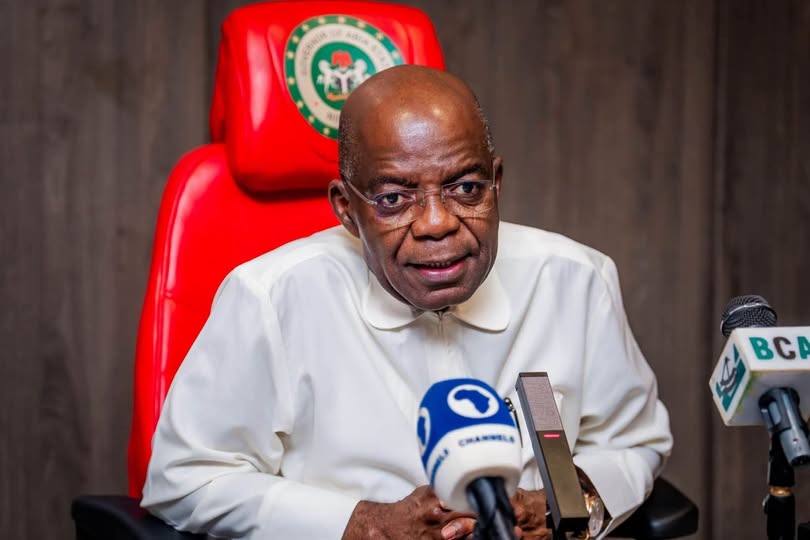
Governor Alex Otti of Abia State has concluded plans to bring investors, business leaders, policymakers, development partners, diplomatic representatives and entrepreneurs to the state to explore investment opportunities and strengthen commercial relations between Africa and the United States.

In a statement he signed and issued to newsmen on Sunday, the Chief of Staff to the Governor, Pastor Caleb Ajagba, disclosed that the Abia State Government had unveiled plans to attract American and other international investors to the state through the 2026 edition of the African Diaspora Conference and Expo, AFRICANDO, scheduled for this month.

Ajagba said, “AFRICANDO is a platform for translating international economic engagement into concrete investments and commercial partnerships. The state government is working with the organisers to ensure that the conference goes beyond speeches and networking to facilitate transactions, business agreements and sustainable investment.”

According to him, the 2026 edition, with the theme, “Deepening U.S.–Africa Commercial Ties in the Era of AfCFTA,” would connect investment opportunities in Abia and other African markets with American capital, technology, expertise and international distribution networks.

He added, “The African Continental Free Trade Area, AfCFTA, presents opportunities for African businesses to expand beyond their domestic markets, while international partnerships could help them improve production capacity and competitiveness.

“Abia is strategically positioned to benefit from the initiative because of its manufacturing and entrepreneurial base, particularly in Aba, which is known for indigenous manufacturing, commerce and craftsmanship.”

Ajagba added that Otti’s administration “is investing in infrastructure, strengthening public institutions and improving the business environment to position the state as a destination for private investment.”

See also  CNG investments hit $980m, says Presidency

He explained that international delegates and prospective investors would be encouraged not only to attend conference sessions but also to visit strategic economic locations, manufacturing clusters, enterprises and government-backed projects to assess investment opportunities firsthand.

He said the approach was intended to give participants a practical understanding of the state’s economic potential and create opportunities for direct engagement with local businesses and relevant government agencies.

“AFRICANDO 2026 is not exclusively an Abia event. It is an international economic platform being hosted in Abia State,” he continued.

He listed agriculture and agro-processing, manufacturing, consumer goods, energy, financial services, healthcare, transportation and logistics, science and technology, artificial intelligence and emerging technologies among the sectors expected to receive attention.

A major feature of the conference, he said, would be a structured Deal Room and Investment Marketplace, where investment-ready projects from Abia and participating businesses would be presented to prospective investors.

Source: punchng.com

FOLLOW US ON:

FACEBOOK

WHATSAPP CHANNEL

TWITTER

PINTEREST

TIKTOK

YOUTUBE

LINKEDIN

INSTAGRAM

Continue Reading

Trending