Connect with us

Politics

APC targets Obi’s stronghold in Lagos ahead of 2027 elections

Published

on

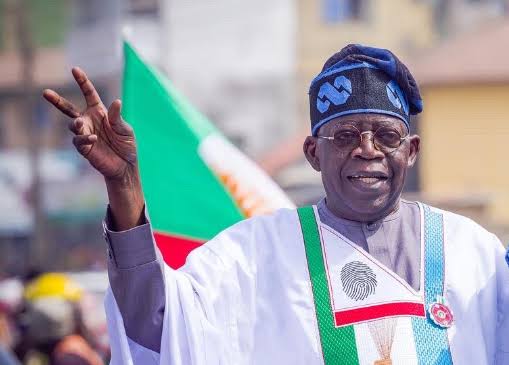
The Lagos State chapter of the All Progressives Congress has vowed to prevent Peter Obi from repeating his 2023 presidential election victory in the state, declaring that the party has learnt from the defeat and is mobilising to secure President Bola Tinubu’s re-election in 2027.

The state APC Chairman, Cornelius Ojelabi, said the outcome of the last presidential election had served as a wake-up call for the ruling party, which is intensifying its mobilisation across states and local government areas ahead of the January 16, 2027 poll.

Ojelabi also backed the rainbow coalition being promoted by the Minister of the Federal Capital Territory, Nyesom Wike, saying political groups and stakeholders from different backgrounds were united by the goal of returning Tinubu to the Presidency.

Obi, the former Anambra State governor who contested the 2023 election on the platform of the Labour Party, defeated Tinubu in Lagos, his home state and the traditional stronghold of the APC.

Speaking in an interview with The PUNCH, Ojelabi said the party was taking nothing for granted despite being in power, adding that it was reaching out to voters to propagate the achievements of Tinubu’s administration.

He said, “We can see the seriousness the All Progressives Congress attached to the forthcoming general election. You can also see that most of the political activities taking place are centred around the APC. You can see our people moving from one state to another as well as from one local government to another.

See also  APC, opposition clash over FG’s $1bn household palliative ahead of 2027

“I am sure you can also see the number of support groups from different states and regions coming up to show their solidarity and support to the presidential candidate of the APC.

“For the mere fact that we are the ruling party, we are not taking that for granted. We are reaching out to the electorate and telling them what the Tinubu administration has achieved in the last three and a half years and the need to consolidate that.

“So, as I earlier said, we are not taking anything for granted. Let them (electorate) take ownership of the 2027 general election,” he said.

Asked about the strategies the Lagos APC had put in place to prevent a repeat of the 2023 outcome, Ojelabi expressed confidence that the party would perform better in the next election.

“Definitely, that will not happen again. What happened in the 2023 election only helped to strengthen us in the APC. This is because we know Lagos has remained the only state in the whole country that has been governed by only one political party since 1999.

“So, as I said, what happened in last year’s poll was a wake-up call. Wait and see the wonder that we are going to perform in the forthcoming January 16, 2027 election,” he said.

The APC chairman, however, declined to outline specific measures for stopping Obi, insisting that the party would focus on its performance in government and rely on voters to return Tinubu to office.

“Well, I am not from this political party. I am the chairman of the All Progressives Congress, and I want to concentrate on what our government has done for the good people of Lagos and how to reciprocate. And the only way by which they will reciprocate this is through their votes. So, wait and see what is going to happen,” he said.

See also  El-Rufai’s son leads fresh Reps defections to NDC, ADC

On Wike’s Rainbow Coalition, Ojelabi said the APC was less concerned about the political affiliations of those involved than their commitment to Tinubu’s re-election.

“Whether coalition or no coalition, everybody is speaking one language; the language of making sure that President Bola Tinubu return to Aso Rock, irrespective of wherever they are coming from. What is important is for us to consolidate and bring forth the votes required for the President’s re-election in 2027,” he said.

The Rainbow Coalition has featured in political discussions ahead of the 2027 election as politicians and groups consider alliances to influence the presidential contest.

The development comes barely one month after the Nigeria Democratic Congress expressed confidence that its presidential candidate would floor Tinubu in Lagos, predicting a wider margin than the one recorded in 2023.

The party’s National Publicity Secretary, Osa Director, stated that Obi’s victory over Tinubu in Lagos during the 2023 presidential poll was not accidental, adding that it reflected the political mood of the state.

Speaking exclusively with our correspondent on the party’s preparations for the 2027 general elections, Director said, “Obi didn’t win Lagos by magic. It was a political reality. The people overwhelmingly rejected APC and their former governor who was the presidential candidate of the party,” he said.

Obi’s 2023 victory in Lagos was one of the biggest surprises of the election, as he overturned expectations in a state where Tinubu and the APC had enjoyed decades of political dominance.

The former Labour Party candidate polled 582,454 votes to defeat Tinubu.

See also  Abiodun pledges two million votes for Tinubu’s re-election

The Peoples Democratic Party candidate in the election, Atiku Abubakar, scored 75,750 votes, while the New Nigeria People’s Party candidate, Rabiu Kwankwaso, recorded 8,844 votes.

Obi won nine local government areas: Ajeromi-Ifelodun, Amuwo-Odofin, Eti-Osa, Ikeja, Kosofe, Oshodi-Isolo, Somolu, Ojo and Alimosho.

Tinubu, however, won 11 local government areas, including Mushin, Agege, Apapa, Badagry, Epe, Ibeju-Lekki, Ifako-Ijaiye, Ikorodu, Lagos Island, Lagos Mainland and Surulere.

The state recorded 1,271,451 valid votes, 64,278 rejected votes and 1,335,729 total votes cast.

The 2027 contest is expected to test whether the APC can translate its political structures and control of the state into a stronger presidential performance, particularly in the local government areas Obi won in 2023.

Source: punchng.com

FOLLOW US ON:

FACEBOOK

WHATSAPP CHANNEL

TWITTER

PINTEREST

TIKTOK

YOUTUBE

LINKEDIN

INSTAGRAM

Continue Reading
Click to comment

Leave a Reply

Your email address will not be published. Required fields are marked *

Politics

Again, OK Movement, Natasha clash over constituency cash giveaway

Published

on

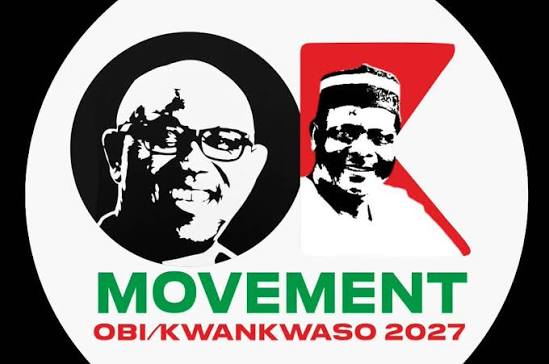
The Obi-Kwankwaso Movement and the senator representing Kogi Central, Natasha Akpoti-Uduaghan, have renewed their disagreement over the lawmaker’s distribution of millions of naira to constituents, with the group insisting that the exercise raises questions about electoral integrity.

The latest exchange followed Akpoti-Uduaghan’s criticism of the movement for calling on the Economic and Financial Crimes Commission to investigate her cash empowerment programme, which she said was funded through a Federal Government budgetary provision.

The senator had also maintained that she would honour any invitation from the anti-graft agency and explain the circumstances surrounding the distribution.

However, in a fresh interview with The PUNCH, the Director-General of OK Movement, John Ughulu, said the senator’s position did not address the concerns raised by the group.

Ughulu argued that elected public officials should be subjected to continuous orientation on their constitutional responsibilities, ethical standards and accountability.

The politician said the circumstances surrounding the public distribution of money to constituents raised questions about the possible abuse of public office and the integrity of the electoral process.

He said, “What Nigerians witnessed in the widely discussed money distribution incident raises serious questions about the abuse of public office and the integrity of our electoral process.

“If the circumstances establish that the money was distributed to influence voters ahead of an election, the matter could amount to advance vote buying and should be investigated under the relevant provisions of Nigerian electoral law.”

Ughulu challenged the senator to explain whether similar cash distributions featured in her electoral campaigns, insisting that the circumstances surrounding her emergence into the National Assembly also deserved scrutiny.

See also  Atiku’s ally Jada quits ADC in Adamawa
Natasha Akpoti-Uduaghan
The Senator representing Kogi Central, Senator Natasha Akpoti-Uduaghan

“The election that brought Senator Natasha into the National Assembly was decided by the people. Therefore, an important question must be asked: Was the same practice of distributing money to influence voters involved in securing her electoral victory?

“That question deserves a factual answer, not an emotional reaction,” he said.

The movement also dismissed suggestions that its criticism was politically motivated, saying its position on electoral accountability would apply to candidates across party lines, including those of the Nigeria Democratic Congress.

“We cannot condemn alleged electoral malpractice under the present administration while appearing to tolerate similar conduct from individuals within our own political space. The same standards of integrity, transparency and accountability must apply to everyone.

“The OK Movement will not make exceptions for anyone. This applies equally to NDC candidates and candidates of every other political party. Anyone involved in electoral manipulation, vote buying, result falsification or any attempt to undermine the will of the electorate should expect lawful scrutiny and accountability,” he stated.

Ughulu further warned that the group would explore lawful means of seeking accountability if the EFCC or other relevant agencies failed to investigate credible allegations.

He said the 2027 elections should be determined by voters at polling units, adding that the movement was committed to transparency, proper documentation of results and protection of voters’ rights.

The latest exchange comes days after Akpoti-Uduaghan defended her cash empowerment programme in a video circulating on social media.

The senator insisted that the money was provided through a Federal Government budgetary allocation and that she personally brought it before beneficiaries to ensure transparency.

See also  Vote-buying won’t decide Anambra election – INEC Chairman

She said, “Well, I have not been invited by the EFCC. But, of course, if I’m invited, I will turn up and explain the following things. Number one, the cash empowerment was money from the Federal Government. It’s budgeted by the Federal Government, okay? And I, in my typical fashion, do things transparently.

“I brought the money personally before the people. The money was all placed on a platform. There was no money abuse. And you saw the hall was full to its brim. We had about 600 beneficiaries.

“But the Obi-Kwankwaso group, please, I don’t know how authentic you are. But if you are, you have NDC senators in the Senate. And they’re also able to bring these same opportunities to you. So rather than using your efforts to call on EFCC to investigate why I am giving such an amount of money to my constituents, I think you should channel that energy to your senators and tell them to do the same for you.”

The controversy followed the circulation of photographs and videos showing bundles of cash at an empowerment programme organised by the senator to mark her third anniversary in the 10th National Assembly.

Her action attracted criticism on social media, with some Nigerians questioning the propriety of publicly displaying large sums of money during a constituency empowerment programme.

Akpoti-Uduaghan subsequently defended the decision to distribute cash rather than business equipment, explaining through her media aide, Mike Idoko, that previous empowerment exercises showed that some beneficiaries preferred direct financial assistance to equipment because of their immediate business needs.

See also  APC, opposition clash over FG’s $1bn household palliative ahead of 2027

Source: punchng.com

FOLLOW US ON:

FACEBOOK

WHATSAPP CHANNEL

TWITTER

PINTEREST

TIKTOK

YOUTUBE

LINKEDIN

INSTAGRAM

Continue Reading

Politics

2027 manifesto: Tinubu eyes 6% growth, 78,000 security recruits, read full details

Published

on

President Bola Tinubu has promised to recruit 28,000 additional military personnel and 50,000 police officers as part of efforts to strengthen Nigeria’s security architecture and tackle terrorism, banditry and kidnapping.

According to the 109-page APC 2027 Presidential Election Manifesto, titled From Reform to Prosperity Agenda 2027–2031, obtained by The PUNCH, Tinubu plans to achieve six per cent annual economic growth, facilitate the construction of 200,000 affordable homes and sustain a downward trend in inflation and food prices by 2031.

The APC leadership will unveil the 2027–2031 presidential manifesto on Tuesday, November 10, 2026, at the Shehu Musa Yar’Adua Centre in Abuja.

The event is scheduled to begin at 11 am.

Under the healthcare component of the manifesto, Tinubu promises to increase the number of functional primary healthcare centres to 90 per cent nationwide and expand active health insurance coverage to 40 per cent of Nigerians.

The manifesto further outlines plans to make communities safer, recruit and train 20,000 additional teachers and scale available electricity generation towards 10,000 megawatts to improve access to power for households and businesses.

The President said his second term would focus on translating the economic reforms and foundations laid during his first tenure into tangible improvements in the lives of Nigerians, with prosperity extending to homes, markets, farms and workplaces across the country.

On what Nigerians should expect by 2031, the manifesto stated, “Safer lives and communities: Stronger protection against terrorism, banditry and kidnapping; a police service that responds when needed; and better protection of our borders.

“Lower living costs and food security: Inflation set on a sustained downward trajectory, domestic food production, storage, and processing expanded, and post-harvest losses halved, and goods moving more quickly and cheaply between states.

“Reliable power for homes, businesses and communities:

Available power generation scaled towards 10,000MW, metering extended towards full coverage, transmission and distribution networks reinforced, and clean energy access extended to underserved communities.

“Expanded jobs and higher real incomes: Annual economic growth accelerated to 6 per cent, youth unemployment halved, and equitable credit reached half of all economically active Nigerians.

“Quality education and accessible healthcare: Out-of-school children halved, more children completing their education, 20,000 additional teachers deployed, health insurance expanded from more than 23 million enrollees to 40 per cent of Nigerians, and primary health centres functioning in at least 90 per cent of facilities, up from 53 per cent today.”

See also  Vote-buying won’t decide Anambra election – INEC Chairman

Tinubu pledged to facilitate the construction of 200,000 affordable homes for Nigerian workers by 2031 through the Tinubu Mass Social Housing Scheme, mortgage financing and partnerships with licensed private developers.

He said the initiative would provide more working households with access to decent housing while strengthening regulations to protect property buyers.

The President also promised to strengthen accountability in governance by extending digital case management systems to magistrate courts, tracking public service delivery and ensuring local governments receive their constitutional allocations under clear performance standards.

On security, Tinubu pledged to guarantee Nigerians greater safety in their homes, workplaces, schools, farms and commercial centres, assuring that his administration would strengthen measures to protect lives, secure national borders and enable citizens to live, work and travel without fear.

The APC presidential candidate promised to strengthen the Armed Forces and other security agencies, improve intelligence gathering and deploy modern technology to tackle insecurity across the country if re-elected in 2027.

The President, in his 2027–2031 manifesto, also pledged to intensify efforts against terrorism, banditry, kidnapping and organised crime through improved recruitment, specialised training, modern equipment and better welfare for security personnel.

He said the proposed security reforms would prioritise the protection of farmers, schoolchildren, traders and other Nigerians, while strengthening border surveillance, community policing and emergency response systems to ensure safer communities and commercial activities.

It read in part, “2027–2031: Complete the establishment and equipping of the four new Army divisions in Makurdi, Ilorin, Jalingo and Benin City, recruit and train the 28,000 additional personnel approved, and report publicly on their deployment.

“Sustain intelligence-led kinetic operations against insurgent and kidnapping networks to degrade and dismantle their operating bases, backed by independent verification of reported operational outcomes to build public trust.

“Strengthen surrender and rehabilitation frameworks through standardised, verifiable reporting on all screened, reintegrated, and prosecuted ex-combatants. Establish specialised zonal counter-terrorism capabilities while fortifying physical security across schools, commercial markets, places of worship, and vital transport corridors.

“Expand peace-building, trauma support, and deradicalisation programmes to enable long-term social recovery, rebuild civic trust, and safely resettle internally displaced families in their homes. We will restore peace in every community.

“Train and deploy the 50,000 newly recruited officers and expand recruitment and tactical training towards a 1:400 police-to-citizen ratio, maximising visible patrols across residential neighbourhoods, commercial centres, schools, and transit corridors.”

Tinubu also plans to implement a nationwide police reform programme featuring digital record systems, officers’ body cameras, geographic mapping tools, emergency response channels and modern forensic facilities to improve policing and crime prevention.

See also  PHOTOS: Branded panties distributed in Kano as campaign materials

The manifesto further proposes recruiting 30,150 personnel of the Nigeria Security and Civil Defence Corps to take over static security duties from the police, while working with federal and state lawmakers and governors to establish a legal framework for accountable state and community policing.

It added, “Complete e-surveillance coverage of all mapped borders (31 of 190 mapped areas remain), extend e-Gates, passenger-data (APIS) and MIDAS border systems to more entry points, and strengthen patrol, screening and intelligence-sharing.

“Complete nationwide Mining Marshals coverage across all identified mining sites (over 530 identified, 420 already protected) and resolve outstanding governance and funding questions so the unit is accountable and credible.

“Deploy trained Forest Guards, Agro-Rangers, and Mining Marshals to safeguard agricultural belts, farming communities, grazing routes, national forest reserves, and mineral deposits.

“Launch full implementation of the National Protection Policy and Strategy for Critical National Assets, with real-time surveillance across energy pipelines, electrical power grids, railways, schools, and health facilities.

“Expand domestic military production of ammunition, personal protective gear, armoured vehicles, and tactical drones, generating high-skilled Nigerian jobs while securing defence supply chains.”

Tinubu also pledged to establish integrated security command systems to improve intelligence gathering, detect threats early and strengthen coordination among security agencies, while boosting local defence production through technology partnerships.

He promised to implement approved salary increases for security personnel, improve their welfare and housing, and fast-track insurance and pension payments to families of fallen officers.

The manifesto also outlines plans to rehabilitate police barracks, improve working conditions and expand tactical training, while introducing vocational programmes and non-custodial measures to reduce congestion in correctional facilities.

Tinubu further promised to modernise fire stations, strengthen maritime surveillance and cybersecurity, deploy drones for emergency response and enrol 95 per cent of Nigerians in the National Identity Database.

It added, “Building on the 80,284 teachers already certified and licensed, recruit and train 20,000 additional teachers, prioritising female educators and underserved rural communities nationwide.

“Enforce safe-school standards, expand school water and sanitation facilities, and publish an annual education dashboard tracking enrolment, dropout, and completion rates.

“Prioritise foundational learning, science, technology, engineering, mathematics, and digital capabilities across all educational levels. Strengthen partnerships with industry to provide practical, work-linked training and move students into the workforce, aligning courses with labour-market needs.

See also  2027 showdown: Wike-Makinde rift threatens high-stakes PDP convention

“Scale NELFUND, expand the National Smart Learning Initiative, sustain industrial peace in public universities, and extend the Student Venture Capital Grant and Diaspora BRIDGE to additional tertiary institutions. Expand technical, vocational, and digital training programmes, building on the TVET initiative (117,152 verified trainees, monthly stipend raised from N22,500 to N30,000) and the Digital Technical Academy, measuring systemic success by graduate employment, enterprise survival, and workplace productivity.”

Tinubu also pledged to expand the Mandatory School Sports Programme and the National Sports and Education Excellence Programme nationwide, building on the ongoing pilot involving 61 schools, 3,500 teachers and 15 trained students to strengthen grassroots sports development.

The manifesto read in part, “Expand static and mobile primary care, upgrade secondary facilities across all local government areas, and strengthen referral networks to tertiary hospitals, raising the share of functional primary health centres from 53 per cent today towards 90 per cent by 2031 and extending direct quarterly financing under the Basic Health Care Provision Fund from about 8,300 to all 17,600 primary health centres.

“Sustain maternal, newborn, immunisation, cancer-screening, and early detection programmes, prioritising families with the greatest financial need and tracking the proportion of births attended by a skilled health provider as a

headline HOPE-PHC indicator.

“Expand active health insurance coverage from more than 23 million enrollees to 40 per cent of Nigerians by 2031, subsidising poor and vulnerable Nigerians through the Vulnerable Group Fund, and cut out-of-pocket spending from 71 per cent to below 50 per cent of health expenditure.

“Complete the revitalisation of the remaining primary health centres (about 1,000 still under way), bring steady power to 30 per cent of health facilities by the end of 2027 through Power for Health solar installations, and scale MAMII free emergency obstetric care from 172 local government areas to all 774.

“Complete the National Health Information Exchange to ensure portable electronic records by 2031, while achieving complete Emergency Operations Centre coverage across all states.”

Tinubu also pledged to improve the recruitment, training and welfare of healthcare workers, boost local production of essential medicines to 50 per cent by 2031 through BioVaccines Nigeria, and complete cancer treatment centres across the six geopolitical zones.

Source: punchng.com

FOLLOW US ON:

FACEBOOK

WHATSAPP CHANNEL

TWITTER

PINTEREST

TIKTOK

YOUTUBE

LINKEDIN

INSTAGRAM

Continue Reading

Politics

Ex-Kwara ADC spokesperson defects to APC, read details

Published

on

The immediate past Publicity Secretary of the African Democratic Congress in Kwara State, Abubakar Basambo, has defected to the All Progressives Congress.

Basambo, who is former governorship candidate of the Labour Party in the 2023 general election, announced his defection in a statement made available to The PUNCH on Sunday in Ilorin.

He said his decision followed a meeting with the Speaker of the Kwara State House of Assembly and APC governorship candidate, Yakubu Danladi-Salihu.

The former ADC spokesman also declared his support for Governor AbdulRahman AbdulRazaq and Danladi-Salihu, expressing confidence in the leadership of the governor and his administration’s performance.

“Governor AbdulRazaq is a man who keeps his promise. His singular act of taking the governorship ticket to Kwara North is enough for me. His resounding success in healthcare, education, roads and other sectors is top-notch,” he said.

Basambo added that he decided to join the ruling party to contribute to the development of the state, adding that he was fully committed to supporting the governor and the APC governorship candidate.

“I hereby declare my unflinching support and total loyalty to the Executive Governor of Kwara State, Mallam AbdulRahman AbdulRazaq, and to Rt. Hon. Yakubu Danladi,” he stated.

His defection comes amid a public disagreement between him and the Kwara State chapter of the ADC over the circumstances surrounding his resignation from the party.

Basambo had resigned as the ADC state publicity secretary in a letter dated October 23, 2026, addressed to the state chairman through the chairman of his Magaji Are 1 Ward and the Ilorin East Local Government Area chapter.

See also  By-elections: INEC deploys 7,726 BVAS machines in Edo, Anambra, 10 states

In the letter titled, ‘Letter of Resignation from ADC’, he accused some party leaders and members of the state executive committee of hypocrisy, dishonesty and double standards, saying he could no longer identify with the direction of the party in the state.

“This decision was not taken lightly. After deep reflection, I can no longer cope with the direction the party is going in the state. There is so much hypocrisy, lies, and double standards amongst some party leaders and State Excos who parade themselves as loyal leaders,” he wrote.

However, the ADC state secretary, Ibrahim Alege, had alleged that Basambo resigned to avoid disciplinary proceedings initiated by the party leadership and its Council of Elders over concerns about his conduct and commitment.

“For some time, concerns had been raised regarding Mr Basambo’s conduct and commitment to the ideals of the party. These concerns prompted the party’s leadership and Council of Elders to initiate established internal disciplinary procedures. Rather than allow that process to run its course, he chose to resign,” Alege said in a statement.

The party maintained that his departure was a personal decision and did not reflect any weakness within its ranks.

But Basambo dismissed the allegation, insisting that he resigned voluntarily and was never formally notified of any allegations against him or given an opportunity to defend himself.

“Let me state it unequivocally: I resigned voluntarily and on principle. I did not resign to evade any process. No formal allegation was ever served on me in writing, and I was never given a fair hearing to respond,” he said in a statement made available to The PUNCH.

See also  Atiku’s ally Jada quits ADC in Adamawa

He also faulted the proposed disciplinary panel, alleging that some of those expected to sit on it were among the party members whose conduct he had previously challenged.

“You cannot be a judge in your own case. I cannot face a panel populated by the very persons whose anti-party activities and impunity I challenged,” he added.

The former spokesman further accused the ADC leadership in Kwara of failing to establish an effective political structure, describing the party as “structurally comatose”.

He questioned the party’s visibility and grassroots engagement, alleging that it had no billboards or radio programmes to promote its activities and lacked adequate facilities for its operations.

“Show me one billboard of the ADC in Kwara. Show me one radio program sponsored by the party to sensitise the public. There is none — except for the personal efforts of a few serious-minded candidates, particularly in Kwara South and one Senatorial candidate from the North,” he said.

Basambo also alleged that members of the Council of Elders had taken control of the party’s affairs, sidelined the state executive and engaged in political negotiations with other parties without accountability.

He further claimed that the party’s state secretariat was uninhabitable and alleged that a candidate who won its House of Assembly primary in Oyun Local Government Area was removed and replaced by some party leaders, although he did not provide details of the circumstances surrounding the alleged replacement.

The former spokesman had also criticised the ADC governorship candidate, Zakari Mohammed, alleging that his conduct contributed to his decision to leave the party.

See also  2027 manifesto: Tinubu eyes 6% growth, 78,000 security recruits, read full details

Despite his criticism of the ADC leadership, Basambo expressed appreciation for his political leader, Abubakar Kannike, whom he described as a man of honour and sincerity.

The ADC, however, maintained that it remained committed to building what it described as a credible political alternative in Kwara State and Nigeria, insisting that its mission was driven by transparency, competence and service.

Source: punchng.com

FOLLOW US ON:

FACEBOOK

WHATSAPP CHANNEL

TWITTER

PINTEREST

TIKTOK

YOUTUBE

LINKEDIN

INSTAGRAM

Continue Reading

Trending