Connect with us

Politics

Atiku reacts to Tinubu’s apology over failure to visit Plateau attack victims, read details

Published

on

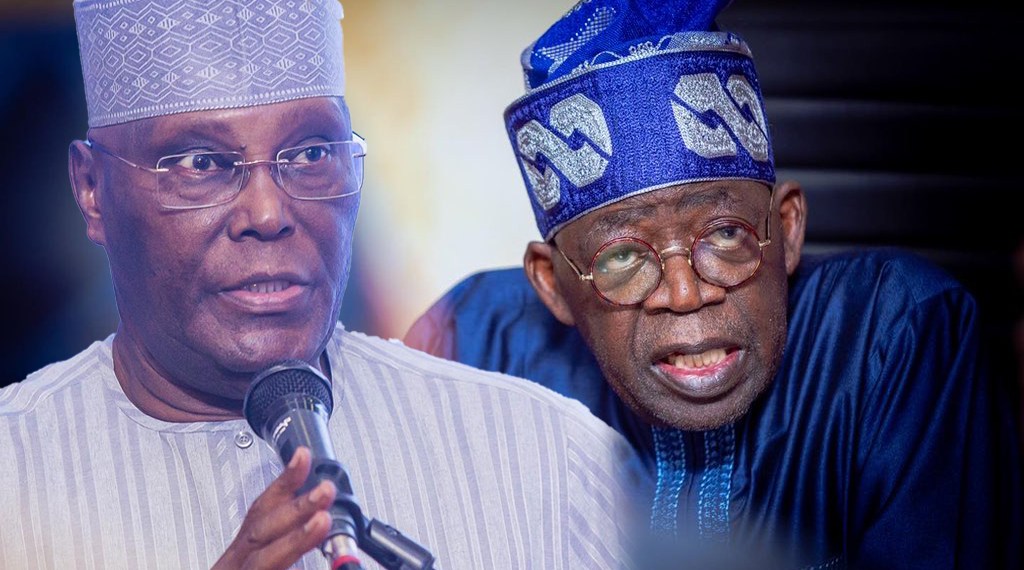
Former Vice President Atiku Abubakar, presidential candidate of the African Democratic Congress (ADC), has reacted to President Bola Tinubu’s appeal for forgiveness in Plateau State, saying the state needed his presence and support when it faced attacks.

In a statement issued by his Director of Strategic Communication, Phrank Shaibu, from Potiskum, Yobe State, on Monday, Atiku said Plateau needed a present and compassionate President when communities were affected by killings and kidnappings.

“The people of Plateau needed their President when they were grieving, when their communities were under attack and when families desperately needed reassurance,” the statement said.

Atiku said President Tinubu had promised to end the killings and protect communities but did not visit at the time.

“Now he has gone to Plateau to campaign and ask for forgiveness. The people may forgive him, but they will never forget the lives lost, the communities left in fear and the absence of their President when they needed him most,” the statement added.

He said the people of Plateau should not be taken for granted and would hold their leaders accountable.

“President Tinubu cannot abandon Plateau in its hour of agony, then return when he needs its votes and expect a warm welcome,” the statement said.

The statement added that the administration’s handling of the economic situation had affected Nigerians, noting that the ADC’s Affordable Life campaign was designed to address the economic challenges and restore relief to households.

Source: tribuneonlineng.com

FOLLOW US ON:

FACEBOOK

WHATSAPP CHANNEL

TWITTER

PINTEREST

TIKTOK

YOUTUBE

LINKEDIN

INSTAGRAM

See also  APC Chairman reveals why the party has not officially welcomed Fubara
Continue Reading
Click to comment

Leave a Reply

Your email address will not be published. Required fields are marked *

Politics

Singing old national anthem not a crime – APC chieftain reveals

Published

on

A chieftain of the All Progressives Congress (APC), Dr Josef Onoh, has said that neither the 1999 Constitution nor the National Anthem Act 2024 criminalises the singing of Nigeria’s former national anthem, ‘Arise, O Compatriots’.

Onoh stated this during an interview on Arise News on Monday, describing the controversy surrounding Nigeria Democratic Congress presidential candidate Peter Obi and members of the party for singing the old anthem at a party gathering as a trivial matter.

He argued that although the National Anthem Act 2024 reinstated ‘Nigeria, We Hail Thee’ as the country’s official anthem, it did not prohibit citizens from singing the previous anthem or prescribe punishment for failing to recite the current one.

“Why I think it’s a trivial matter is, one, we have the old national anthem, which is the Arise, O Compatriots, and we have the new national anthem,” he said.

Onoh said both anthems represented Nigerians’ allegiance and historical connection to the country, adding that the 2024 legislation did not criminalise the use of the former anthem.

“And these two national anthems symbolise our allegiance, our deep-rooted and historical affiliation to our nation,” he added.

He explained that the National Anthem Act, signed by President Bola Tinubu in May 2024, did not contain any provision making it an offence to sing the former anthem.

“And when the National Anthem Act of 2024 was created, they did not in any way, even in the Constitution, criminalise any part of the old national anthem that says, ‘Ok, if you do not recite the old national anthem, if you ever recite the old national anthem, it becomes a crime’,” Onoh said.

See also  PDP compiles delegates list ahead of national convention

The APC chieftain also questioned the argument that the NDC gathering was legally required to render the new anthem, citing Section 3 of the Act, which outlines occasions when its performance is mandatory.

According to him, the provision covers official government and legislative gatherings as well as political gatherings but does not specifically list private political town hall meetings as occasions requiring the rendition of the anthem.

“And you have to also understand that Section 3 of the Act mandates the performance of the new anthem in official government places and official legislative holdings and gatherings and political gatherings too,” he said.

He, however, pointed to what he described as a loophole in the provision, arguing that private political town hall meetings were not expressly included among the gatherings where the anthem must be performed.

“But one particular part of this section, it’s like a loophole in the whole essence, is that when you look at the whole section, it never in any way made it, listed private political town hall gathering as mandatory, as mandatory requiring you to cite the national anthem,” he added.

Onoh further cited Section 24(a) of the 1999 Constitution, which lists respect for the national anthem among the civic duties of citizens.

He argued that although the Constitution recognises respect for the anthem as a civic responsibility, it does not provide criminal punishment for failing to sing or recite it.

“Then when you look at Section 24A of the 1999 Constitution as amended, it listed respecting the national anthem, which basically we all know, as a civic duty,” he said.

See also  Tinubu eyes North’s 56 million voters ahead of 2027 election

“But neither the Constitution nor the National Anthem Act of 2024 criminalised the not reciting the national anthem,” he added.

The controversy followed a town hall meeting organised by the NDC in Lagos last week, which featured Obi and the party’s governorship candidate in the state, Funso Doherty.

During the event, the former anthem, ‘Arise, O Compatriots’, was rendered after the gathering did not join in singing ‘Nigeria, We Hail Thee’, prompting political reactions.

The incident attracted criticism from several supporters of the ruling party and government officials, including the Minister of the Federal Capital Territory, Nyesom Wike, and the Minister of Aviation and Aerospace Development, Festus Keyamo.

Wike accused Obi of disrespecting national symbols, while Keyamo described the incident as an indication of secessionist tendencies.

However, some NDC figures dismissed the criticism, arguing that the singing of the former anthem was a spontaneous reaction by attendees rather than a deliberate rejection of the official national anthem.

Nigeria adopted ‘Nigeria, We Hail Thee’ as its national anthem at independence in 1960 before replacing it with ‘Arise, O Compatriots’ in 1978.

Tinubu signed the National Anthem Bill into law on May 29, 2024, restoring the original anthem after 46 years.

The legislation followed its passage by the National Assembly and generated public debate, with critics questioning the decision amid the country’s economic challenges.

Source: punchng.com

FOLLOW US ON:

FACEBOOK

WHATSAPP CHANNEL

TWITTER

PINTEREST

TIKTOK

YOUTUBE

LINKEDIN

INSTAGRAM

Continue Reading

News

Points On election campaigns and election manifestos

Published

on

Governance should focus on sustainable economic development, improving people’s living conditions day by day. If in doubt, ask President Donald Trump. The global rising cost of living or declining standard of living led, invariably, to demonstrations in countries like Germany and France, while United States citizens used the Mid-Term elections in November to demonstrate their displeasure with President Trump and the Republican Party, with the loss of a majority in both the Senate and House of Representatives. With 55 seats in the Senate, the Democrats gained eight more seats lost by the Republicans. In the House, Democrats won 256 seats to the Republicans’ 169.

According to available research records, the loss by the Republican Party has been attributed to five main causes, namely soaring cost of living, the unpopular Iran war, a disciplined message from the democrats, unpopularity of President Trump in connection to his policies generally and economic policies in particular, and shifts in the position of Hispanic and black voters as related to Trump’s immigration policy. What matters here is the soaring cost of living, a global phenomenon. The state of an economy, specifically citizens’ economic condition, has a way of helping or destroying candidates participating in elections. The rising cost of living phenomenon is the necklace being worn by every country’s leader today!

When we talk about the macroeconomic goals every country wants to achieve, price stability is central. It seems to be the central point around which achieving other macroeconomic goals revolves. The macro goals or objectives are full employment of resources, economic growth, price stability, balance of payments equilibrium, equitable income distribution and sustainable development. We need stable prices to achieve full employment, yet we need some moderate inflation to achieve economic growth. If the law of supply is to hold, upward adjustment of prices serves to encourage higher supply. That is, the higher the price, the higher the supply.

See also  2027: Fayemi Urges Catholics To Join Politics, Warns Against ‘Dirty Game’ Mentality

And higher supply means growth. Growth, encouraged by higher prices, makes external trade possible, improving the balance of payments and moving it toward equilibrium. Higher economic growth implies higher national income, for which equitable distribution is essential for peace to reign in the country. Sustainable economic growth moves the economy toward rising employment and incomes or the full-employment goal and eventually results in economic development. While moderate price rises necessarily achieve those stated macroeconomic objectives, the kind of rapid inflation being witnessed today creates a disastrous situation, particularly with respect to citizens’ welfare. The fact that this second wave of inflation came from external shocks provides a lesson in policymaking.

We witnessed the first wave of inflation when the subsidy on fuel was removed and petroleum prices were deregulated, in addition to the massive devaluation of the naira by about 300 per cent. That was a domestic shock and did require some reforms. External shocks require policy revolution to prevent, in the future, the magnitude of the effects that we are having presently. That is why the current political campaign should centre around economic revolution rather than economic reform.

Many African leaders are afraid of using revolution but prefer reforms, the language of the World Bank and IMF. Whereas the economic policies are necessary to take Africa out of the economic doldrum, it finds itself in a revolutionary adjustment. There is a need to overhaul the economic system of production whereby we produce to satisfy the industrial needs of advanced economies. We remain producers of raw materials in human and non-human resources. Our physical products feed industries in the Western world, and human resources are attracted by improved working environments and higher wages and salaries.

See also  2027 polls: Northern youths hail Tinubu’s reforms

A revolution does not mean chaotic changes like the French Revolution, but drastic, radical, or fundamental changes like the First Industrial Revolution in 18th- and 19th-century Great Britain. The revolution transformed global production, labour, and trade through mechanised factories and steam power. What we require in Nigeria and the whole of Africa is revolutionary production in agriculture, factories or industries generally, whereby we export finished products like the rest of the world. The present campaign for election in Nigeria and the manifestos of principal actors should reflect a revolutionary departure from the present situation.

Such revolutionary changes will minimise the depth of external shocks that we are witnessing now. Politicians should tell us how many megawatts of electricity will be generated yearly and how they will do it. President Tinubu was promising a growth rate of six per cent per year for the next four years. That is not ambitious. He should be proposing a minimum growth of 10 per cent. China did take over 900 million Chinese out of poverty in three decades by growing at 10 per cent per year for more than a decade. According to the World Bank Poverty and Equity Report, an estimated 496 million Indians moved out of poverty between 2011 and 2023, driven by increased employment opportunities. This was linked to sustained growth of about 10 per cent over the decade. Specific government schemes were credited with the massive decline.

Every presidential candidate should be specific about what to do with agriculture, education, industry, science and technology and medicine. Manifestos must be clear, just like the campaign. Every specific promise must be backed by data and a timeline. We cannot continue to run Nigeria on handouts to consumers; we must run it on jobs and enhanced productivity. A conducive production environment must be promised and fulfilled. This will include reliable electricity or power infrastructure. Without electricity, neither China nor India would have achieved the feats reported. China has long achieved 100 per cent electricity, while India is almost there, with an achievement of over 90 per cent in the last five years. The Nigerian government, like other African governments, must declare revolutionary development rather than unending reforms and transformation.

See also  Tinubu eyes North’s 56 million voters ahead of 2027 election

Source: punchng.com

FOLLOW US ON:

FACEBOOK

WHATSAPP CHANNEL

TWITTER

PINTEREST

TIKTOK

YOUTUBE

LINKEDIN

INSTAGRAM

Continue Reading

Politics

‘Bamayi is spiritual movement to remove Tinubu, opposite of emilokan’ – Primate Ayodele

Published

on

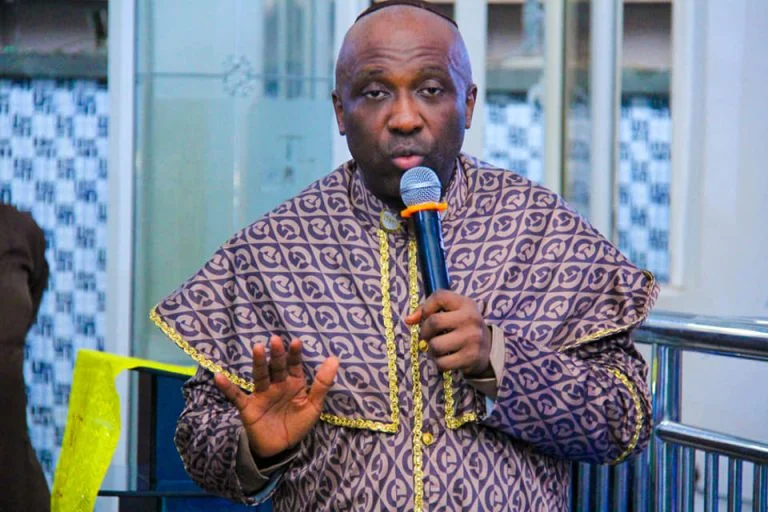
‘Bamayi’ is a spiritual movement aimed at taking President Bola Tinubu out of power, according to the Spiritual Leader of the INRI Evangelical Spiritual Church, Primate Ayodele.

In a statement by his Media Assistant, Osho Oluwatosin, Primate Ayodele said the chant “Bamayi” is not just a simple phrase but a spiritual effort to remove Tinubu from office.

On Friday Tinubu was booed by a group of angry youths at the Shehu Shagari Central Mosque in Abuja, after observing Juma’at prayers.

While leaving the mosque with his entourage, the youths chanted “ba ma so” in Hausa, meaning “we don’t want’.

Reacting to the development, Primate Ayodele warned that the ‘Bamayi’ movement is growing in the northern part of Nigeria and that the people there do not trust Tinubu with power.

Primate Ayodele explained that if Tinubu goes to the North for his campaign, things might get bad as the people are not happy with the government.

He said the masses in the North are not listening to their leaders anymore and want a new government, which is why the chant is spreading quickly in the region.

The cleric added that the ruling party has not understood what the movement is, warning that it could also target some governors, senators, and members of the House of Representatives.

He said northerners are ready for the movement and it will have a big impact.

Primate Ayodele also said the movement has a source, and unless Tinubu finds it, it will be hard to stop.

He described Bamayi as the opposite of “emilokan”.

See also  APC Chairman reveals why the party has not officially welcomed Fubara

“They must not joke with it but quickly adjust and do all that is needful. There will be so much rejection before the election and during the election. Some candidates may not even be allowed to vote because of this. Bamayi is the opposite of ‘Emilokan’. People will come out en masse to vote despite the fact that they want to disenfranchise some of them,” the clergyman stated.

Primate Ayodele urged Tinubu not to ignore the movement as it could cause a lot of problems before the election.

FOLLOW US ON:

FACEBOOK

WHATSAPP CHANNEL

TWITTER

PINTEREST

TIKTOK

YOUTUBE

LINKEDIN

INSTAGRAM
Continue Reading

Trending