Connect with us

Business

NGF distances self from $100m Paris Club refund dispute, read details

Published

on

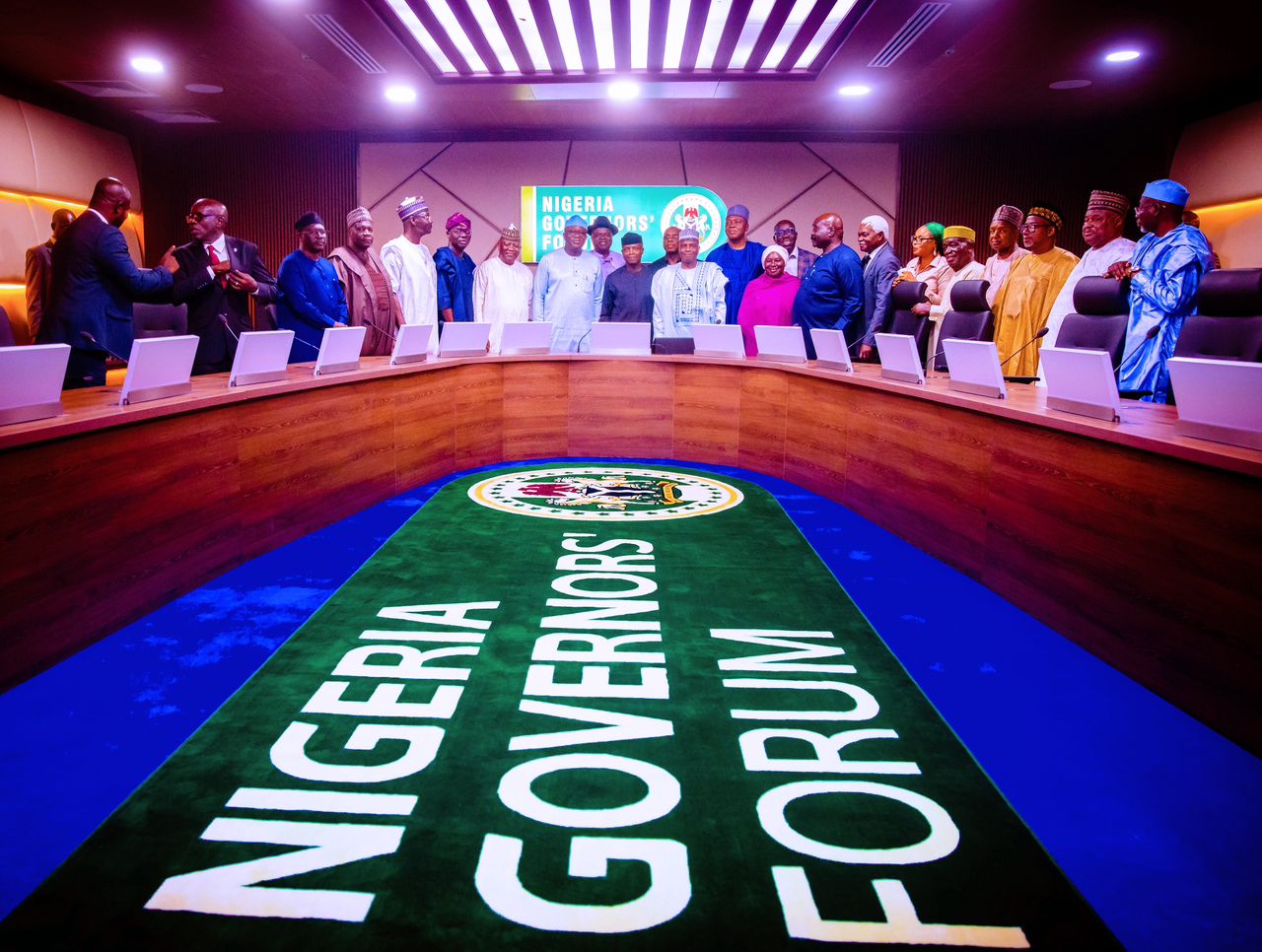
The Nigeria Governors’ Forum has distanced itself from the ongoing Paris Club refund suit, insisting that it was not involved in the transaction between the plaintiff, Dr Ted Iseghohi-Edwards, and the Association of Local Governments of Nigeria.

In a statement issued on Wednesday and signed by its Director of Media and Strategic Communications, Yunusa Abdullahi, the NGF said it neither participated in the transaction nor held any of the funds allegedly involved.

The development followed an interim order issued by the High Court of the Federal Capital Territory, Abuja, directing the freezing of $100m (about N135.58bn) allegedly held by the NGF over a dispute involving the Paris Club refunds and outstanding legal and consultancy fees.

Justice O.C. Agbaza granted the Mareva injunction on November 19, following an ex parte application filed by Iseghohi-Edwards against the Incorporated Trustees of the NGF and 29 commercial banks.

According to the Certified True Copy of the order obtained by The PUNCH on Tuesday, Iseghohi-Edwards is seeking to recover the money based on an alleged indemnity issued by the NGF on December 20, 2018.

The arrangement reportedly involved the Federal Government paying $100m to the forum as a stakeholder pending the determination of its liability for professional fees.

Reacting, the forum said the dispute originated from events in 2016, adding that its legal team was reviewing the court documents and would take appropriate steps in response.

The statement read, “The Nigeria Governors’ Forum is aware of recent media reports regarding the November 19, 2026 interim order, obtained ex parte, issued by the High Court of the Federal Capital Territory, Abuja, in the Paris Club refund suit filed by Dr Ted Iseghohi-Edwards over events that happened in 2016.

See also  Petrol remains pricey as crude crashes to $73

“Please note that this issue emanated from allegations of transactions between the plaintiff and the Association of Local Governments of Nigeria. The Nigeria Governors’ Forum had no hand in that transaction and did not engage any party thereto, nor did it hold any such monies in its custody at any time.

“Meanwhile, the NGF’s legal team is currently reviewing the court processes and will respond accordingly.

“The forum reiterates its unwavering commitment to the rule of law, transparency and accountability.”

Source: punchng.com

FOLLOW US ON:

FACEBOOK

WHATSAPP CHANNEL

TWITTER

PINTEREST

TIKTOK

YOUTUBE

LINKEDIN

INSTAGRAM

Continue Reading
Click to comment

Leave a Reply

Your email address will not be published. Required fields are marked *

Business

CBN holds rate at 23%, warns of election spending, read details

Published

on

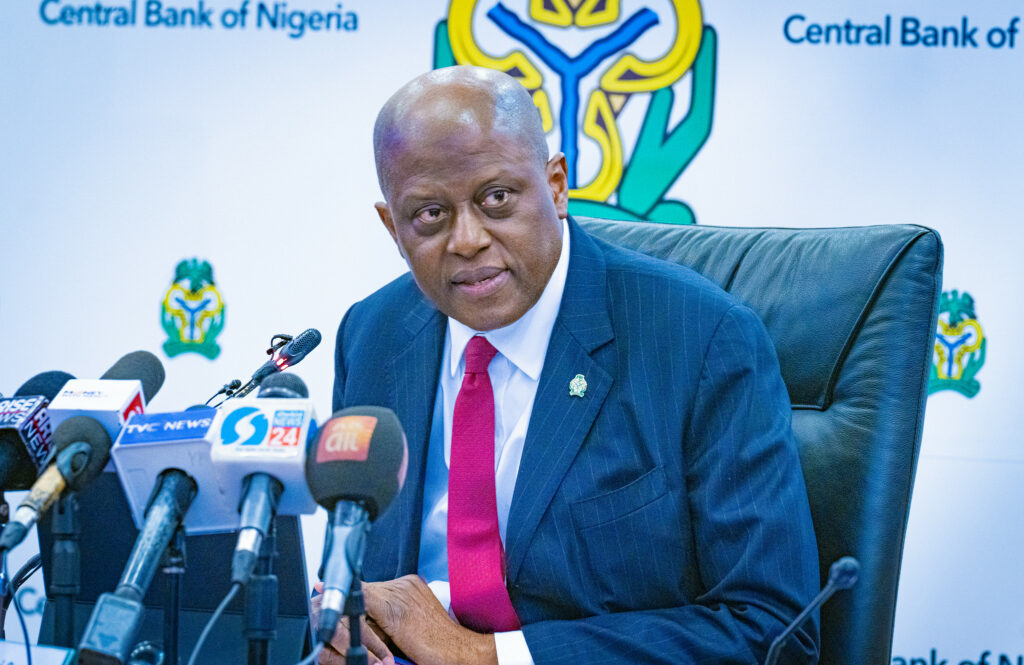
The Monetary Policy Committee of the Central Bank of Nigeria (CBN) has retained the benchmark interest rate at 23 per cent, citing inflationary risks arising from anticipated election-related spending, increased festive season expenditure and disruptions to global energy supplies.

The CBN Governor, Olayemi Cardoso, announced the decision on Tuesday at the end of the committee’s 308th meeting, held on 23 and 24 November, 2026, in Abuja, with 10 members in attendance.

Cardoso said the committee retained the Monetary Policy Rate (MPR) at 23 per cent.

The committee also maintained the Standing Facilities Corridor at +50 and -300 basis points around the MPR. The Cash Reserve Requirement was retained at 45 per cent for deposit money banks, 16 per cent for merchant banks and 75 per cent for non-Treasury Single Account public sector deposits.

The decision follows the 350-basis-point reduction in the benchmark interest rate from 26.5 per cent to 23 per cent in September 2026.

Cardoso explained that although headline inflation had moderated for five consecutive months, prevailing economic risks necessitated maintaining the current monetary policy stance to consolidate the gains recorded in price stability.

He said, “The MPC observed that the anticipated increase in spending from the end-of-year festive season and election-related activities could impact aggregate demand with likely upward pressure on prices.”

The committee also expressed concern over the ongoing Middle East conflict, which could sustain pressure on energy prices, and adverse weather conditions that could undermine food supply.

Nigeria’s headline inflation declined to 14.06 per cent in October from 14.63 per cent in September, while core inflation fell to 10.78 per cent from 12.95 per cent.

See also  Price Of Refilling Cooking Gas Per Kg In Nigeria

Food inflation also moderated to 19.13 per cent from 19.59 per cent, reflecting easing price pressures on processed food and farm produce following the commencement of the harvest season.

Cardoso attributed the sustained moderation in inflation to exchange rate stability, improved monetary policy transmission and the restrictive monetary policy stance.

He added that the Composite Purchasing Managers’ Index rose from 53 points in September to 53.2 points in October, reflecting improved activities across the industrial, agricultural and services sectors.

Responding to questions from journalists, Cardoso disclosed that the September interest rate adjustment was yielding the intended results, with interbank lending rates moving closer to the lower band of the Standing Facilities Corridor.

“What we’re finding is that the interbank rates are moving closer to the lower band of the corridor, and that’s exactly where we want to be,” he said.

The governor added that rates on Open Market Operations instruments and Treasury bills had moderated, while the gap between the benchmark interest rate and prevailing market rates had narrowed considerably.

He also disclosed that credit to the private sector was gradually recovering, adding that the apex bank would continue to monitor borrowing costs.

“We are very pleased that, really, the amount of credit going out to the private sector has gradually begun to come up,” Cardoso said.

He maintained that the September adjustment was intended to align the benchmark rate with market realities rather than signal a departure from the restrictive monetary policy stance.

On recent pressure on the naira and declining external reserves, Cardoso dismissed concerns over the sustainability of exchange rate stability, describing the developments as temporary and largely seasonal.

See also  N20,000 monthly transfers can cut poverty, says W’Bank

Nigeria’s gross external reserves stood at $54.02bn as of 17 November, 2026, sufficient to cover 10.26 months of imports of goods and services.

The governor attributed the recent volatility to year-end portfolio adjustments by foreign investors, increased foreign exchange demand by domestic businesses seeking to hedge against future risks and rising election-related expenditure.

“These are all seasonal. And we believe very strongly that as we go into the next year, we will find a major moderation in the volatility that you have seen,” he said.

Cardoso also disclosed that diaspora remittances exceeded $900m in the preceding month, adding that Nigeria’s current account surplus and sustained remittance inflows would strengthen external buffers.

He assured Nigerians that the apex bank would do everything possible to preserve exchange rate stability.

Speaking on the recently signed Memorandum of Understanding between the CBN and the Nigerian National Petroleum Company Limited, Cardoso said the agreement followed months of consultations between both institutions.

He explained that the partnership would improve transparency in the management of oil-related FX inflows, deepen the FX market, strengthen external reserves and support energy project financing.

The governor added that the CBN would deploy its advisory expertise and convening power to support the national oil company’s operations.

On the outlook for 2027, Cardoso promised policy consistency, stronger coordination between fiscal and monetary authorities, sustained banking sector stability and further improvements in monetary policy transmission.

“Our goal is single-digit inflation, and we will not stop until we get there. We will continue to ensure that we do everything possible to move inflation to single digits,” he said.

See also  Pension inflows surge 42% despite idle accounts

Source: punchng.com

FOLLOW US ON:

FACEBOOK

WHATSAPP CHANNEL

TWITTER

PINTEREST

TIKTOK

YOUTUBE

LINKEDIN

INSTAGRAM

Continue Reading

Business

Tinubu cuts 2026 budget to N65.18tn, retains deficit, read details

Published

on

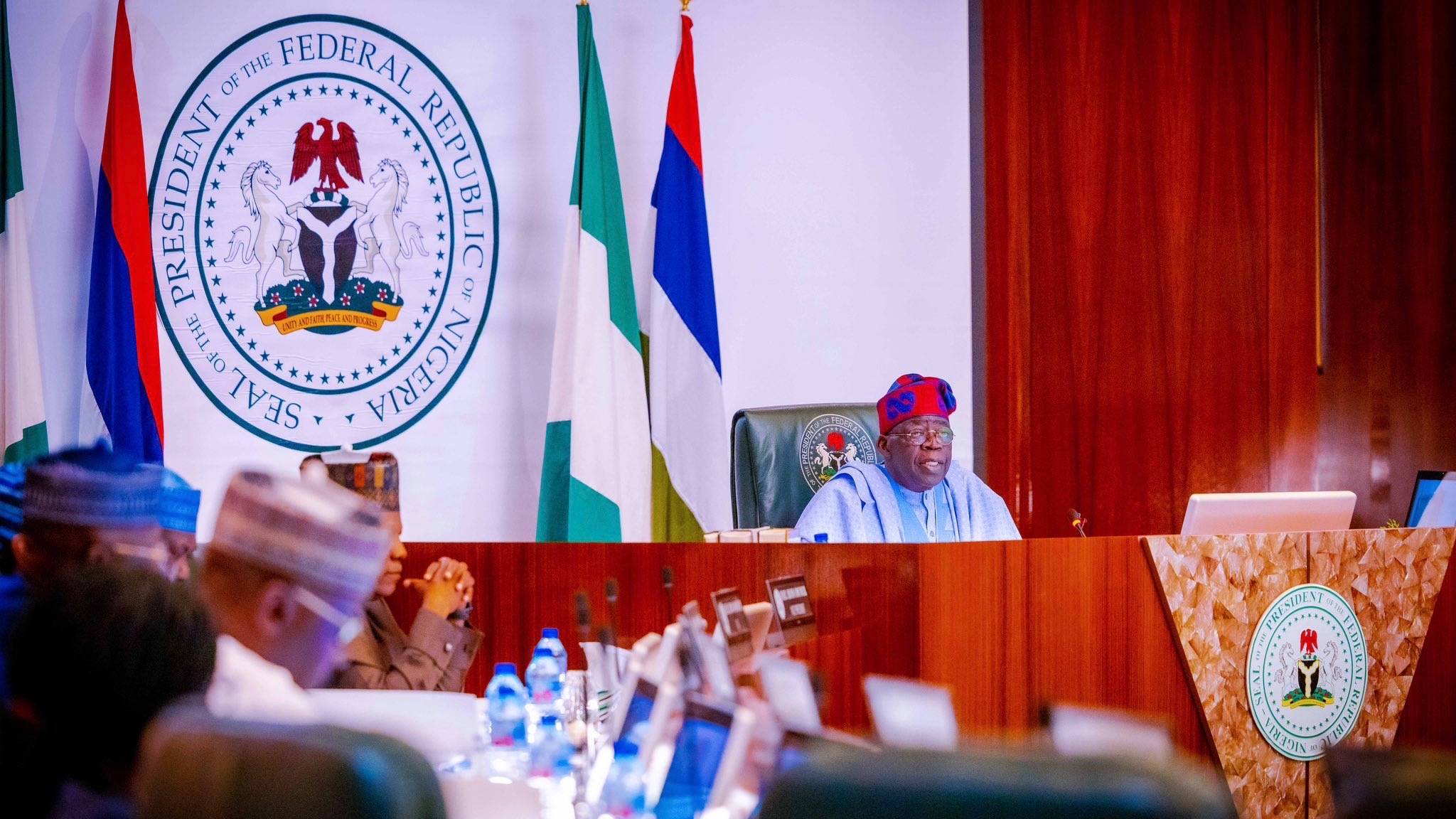
President Bola Tinubu has transmitted a bill to the House of Representatives seeking to repeal and re-enact the 2026 Appropriation Act, reducing the approved budget from N68.32tn to N65.18tn while retaining the N31.46tn fiscal deficit.

The revised budget provides for projected Federal Government revenue of N33.72tn, including earnings from Government-Owned Enterprises, and capital expenditure of N26.23tn.

Tinubu’s request was contained in a letter dated November 20, 2026, addressed to the Speaker of the House, Tajudeen Abbas, and read during plenary on Tuesday.

The President also transmitted a revised 2026 Federal Government Fiscal Framework, explaining that the adjustments were intended to align the budget with existing obligations and available resources.

According to the letter, the revision seeks to regularise some expenditures incurred by the Nigerian National Petroleum Company Limited (NNPCL) on behalf of the Federation, address underprovided debt-service obligations, recognise issued capital warrants and supplementation commitments, and provide for refunds to Ministries, Departments and Agencies (MDAs) and special accounts.

Tinubu said capital provisions for MDAs consisted mainly of amounts already warranted, while a few new capital and overhead allocations were introduced to address priority national interventions.

He identified the completion of critical road projects, protection of agricultural production, reduction of production costs, improvement of farm yields, enhanced market access and measures to address water vulnerability as key priorities.

The President said the revised fiscal framework was designed to prioritise existing commitments, improve the credibility and execution of the capital budget, and maintain fiscal restraint.

Despite the reduction in the overall budget, the fiscal deficit, including project-tied loans, remains unchanged at N31.457tn, representing 5.64 per cent of the Gross Domestic Product.

Tinubu also retained the proposed new borrowing of N29.22tn, comprising N18.43tn in domestic borrowing and N10.79tn in foreign borrowing.

See also  Naira strengthens to 1,514/$, nears five-month high

On the proposed external borrowing, the President said the planned $7.7bn loan, estimated at N10.37tn using an exchange rate of N1,346.50 to the dollar, was intended to finance the existing foreign borrowing provision without increasing the borrowing envelope.

The letter read: “The proposal aligns the 2026 budget with existing obligations and available resources. It regularises some NNPCL expenditures incurred on behalf of the Federation, addresses underprovided debt-service obligations, recognises issued capital warrants and supplementation commitments, and provides for refunds to Ministries, Departments and Agencies and Special Accounts.

“MDA capital provision consists mainly of amounts already warranted. A few new MDA capital and overhead provisions were included as priority national interventions, particularly to complete critical road projects, protect agricultural production, reduce production costs, improve farm yields, and enhance market access, while addressing water vulnerability.

“Under the revised framework, aggregate expenditure is N65.176tn, compared with N68.323tn in the approved budget, while projected FGN revenue, including Government-Owned Enterprises, is N33.720tn. Aggregate capital expenditure is N26.232tn.

“The fiscal deficit, including project-tied loans, remains unchanged at N31.457tn, equivalent to 5.64 per cent of GDP. These adjustments prioritise existing commitments and improve the credibility and execution of the capital budget while maintaining fiscal restraint.”

Seeking the cooperation of lawmakers for speedy passage, Tinubu said the revised appropriation was necessary to ensure orderly implementation of the budget and settlement of outstanding obligations.

“I, therefore, request the kind cooperation of the House of Representatives for expeditious consideration and passage of the Bill to facilitate orderly implementation of the revised budget and settlement of existing obligations,” he added.

See also  Petrol remains pricey as crude crashes to $73

The bill will be subjected to legislative scrutiny before the revised appropriation can take effect. Its passage would provide the legal basis for the Federal Government to implement the adjusted spending plan and meet the obligations outlined in the revised fiscal framework.

Source: punchng.com

FOLLOW US ON:

FACEBOOK

WHATSAPP CHANNEL

TWITTER

PINTEREST

TIKTOK

YOUTUBE

LINKEDIN

INSTAGRAM

Continue Reading

Business

Dangote emerges recipient of 2026 Ọbafẹmi Awolọwọ Prize for Leadership, read details

Published

on

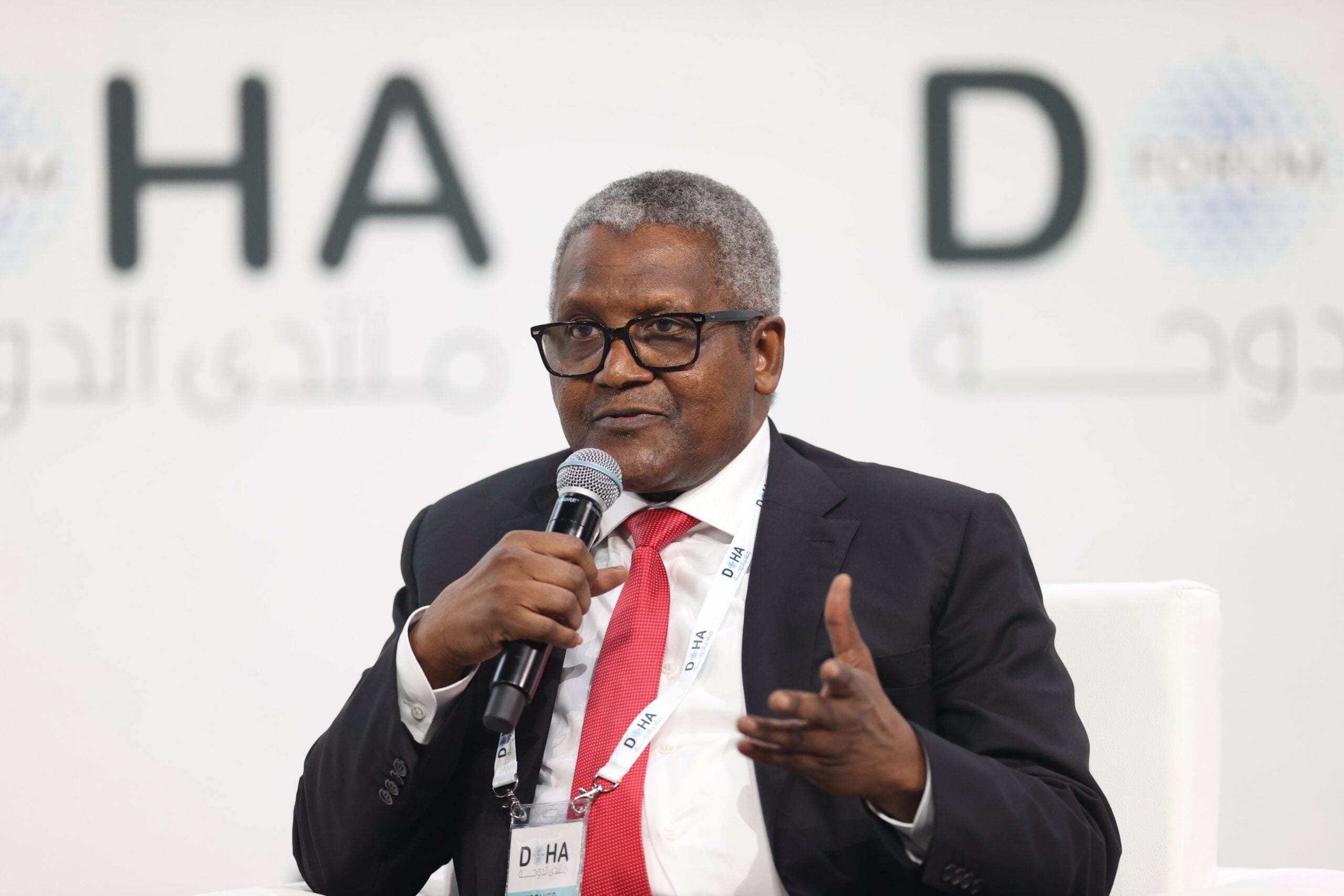
Alhaji Aliko Dangote, President of the Dangote Group, has emerged the winner of the 2026 Ọbafẹmi Awolọwọ Prize for Leadership.

The African industrialist and philanthropist was announced winner among many nominations received for the prestigious biennial global prize in celebration of the democratic and development-oriented ideals of a foremost Pan-African nationalist, Chief Obafemi Awolowo.

Unveiling the winner for the 2026 edition, the Ọbafẹmi Awolọwọ Foundation, in a statement on Monday signed by its Executive Director, Ambassador Dr Ọlatokunbọ Awolọwọ Dosumu, said a distinguished Selection Committee chaired by former Commonwealth Secretary-General, Chief Emeka Anyaoku, GCON, GCVO, CFR, “recognised Dangote’s extraordinary contributions to entrepreneurship, industrialisation and economic development in Nigeria and across Africa.

“Through decades of sustained investment in manufacturing, cement production, fertiliser, petroleum refining and other strategic sectors, he has demonstrated remarkable vision, courage, resilience and tenacity of purpose, while helping to expand Africa’s productive capacity and advance the prospects of economic self-reliance.”

The Foundation explained that the biennial prize, established in 2012, followed a special dialogue organised by the Foundation on Transformational Leadership and Good Governance: Lessons from the Awolọwọ Example, which seeks to recognise, reward and celebrate individuals whose leadership exemplifies the values and ideals for which Chief Awolọwọ was renowned.

According to the statement, the selection process involves public nominations, rigorous screening, verification and careful evaluation against established criteria, including integrity, vision, courage, discipline, accountability, people-centred leadership and demonstrable contributions to societal advancement.

Continuing, the Foundation explained that the Committee also placed considerable emphasis on Dangote’s commitment to philanthropy and human development through the Aliko Dangote Foundation, established in 1994. “Its interventions in education, healthcare and social welfare reflect a recognition that economic growth must be accompanied by meaningful improvements in people’s lives,” the statement added.

See also  High borrowing costs threaten banks’ credit expansion - CBN

The statement further disclosed that the Prize will be formally presented on Saturday, March 6, 2027, the anniversary of Chief Awolọwọ’s birth, at a ceremony which will also feature the Ọbafẹmi Awolọwọ Prize for Leadership Lecture, to be delivered by the laureate, in keeping with the tradition of the Award.

FULL TEXT:

ALIKO DANGOTE EMERGES RECIPIENT OF 2026 ỌBAFẸMI AWOLỌWỌ PRIZE FOR LEADERSHIP

The Ọbafẹmi Awolọwọ Foundation has announced the recipient of the 2026 Ọbafẹmi Awolọwọ Prize for Leadership, instituted in honour of one of Africa’s foremost statesmen and advocates of visionary, people-centred governance.

Chief Ọbafẹmi Awolọwọ, first Premier of the Western Region of Nigeria, was widely acclaimed for his visionary leadership, integrity, discipline and commitment to social and economic transformation for the citizens. His pioneering programmes in education, healthcare and rural development, together with his advocacy of federalism and economic self-reliance, remain enduring landmarks in Nigeria’s developmental history.

Established in 2012, following a special dialogue organised by the Foundation on Transformational Leadership and Good Governance: Lessons from the Awolọwọ Example, the biennial Prize seeks to recognise, reward and celebrate individuals whose leadership exemplifies the values and ideals for which Chief Awolọwọ was renowned.

The selection process involves public nominations, rigorous screening, verification and careful evaluation against established criteria, including integrity, vision, courage, discipline, accountability, people-centred leadership and demonstrable contributions to societal advancement. The process is overseen by a distinguished Selection Committee chaired by former Commonwealth Secretary-General, Chief Emeka Anyaoku, GCON, GCVO, CFR.

Following the conclusion of the selection process, the Foundation is pleased to announce Alhaji Aliko Dangote, GCON, President of the Dangote Group, as the recipient of the 2026 Ọbafẹmi Awolọwọ Prize for Leadership.

See also  N20,000 monthly transfers can cut poverty, says W’Bank

In arriving at its decision, the Selection Committee recognised Dangote’s extraordinary contributions to entrepreneurship, industrialisation and economic development in Nigeria and across Africa. Through decades of sustained investment in manufacturing, cement production, fertiliser, petroleum refining and other strategic sectors, he has demonstrated remarkable vision, courage, resilience and tenacity of purpose, while helping to expand Africa’s productive capacity and advance the prospects of economic self-reliance.

The Committee also placed considerable emphasis on his commitment to philanthropy and human development through the Aliko Dangote Foundation, established in 1994. Its interventions in education, healthcare and social welfare reflect a recognition that economic growth must be accompanied by meaningful improvements in people’s lives.

Of particular significance is the Foundation’s ambitious educational initiative launched in 2026, designed to support 45,000 students initially, with plans to extend its reach to 1.3 million students by 2035. The initiative places special emphasis on science, technology, engineering and mathematics (STEM), closing the literacy gender gap, teacher development and improving the transition from education to employment.

Dangote’s description of this commitment as a “strategic investment” resonates strongly with Chief Awolọwọ’s conviction that education and human-capital development are fundamental to national progress. His declaration that “Every child we keep in school strengthens our economy. Every student we support reduces inequality” is particularly significant in this regard.

The Committee considers Dangote’s combination of visionary enterprise, industrial transformation and commitment to human development a compelling demonstration of leadership whose impact extends beyond individual achievement to the wider society.

The Prize will be formally presented on Saturday, March 6, 2027, the anniversary of Chief Awolọwọ’s birth, at a ceremony which will also feature the Ọbafẹmi Awolọwọ Prize for Leadership Lecture, to be delivered by the laureate, in keeping with the tradition of the Award.

See also  Petrol remains pricey as crude crashes to $73

Source: tribuneonlineng.com

FOLLOW US ON:

FACEBOOK

WHATSAPP CHANNEL

TWITTER

PINTEREST

TIKTOK

YOUTUBE

LINKEDIN

INSTAGRAM

Continue Reading

Trending