Connect with us

Business

Presidency eyes NNPC shake-up as oil output falters

Published

on

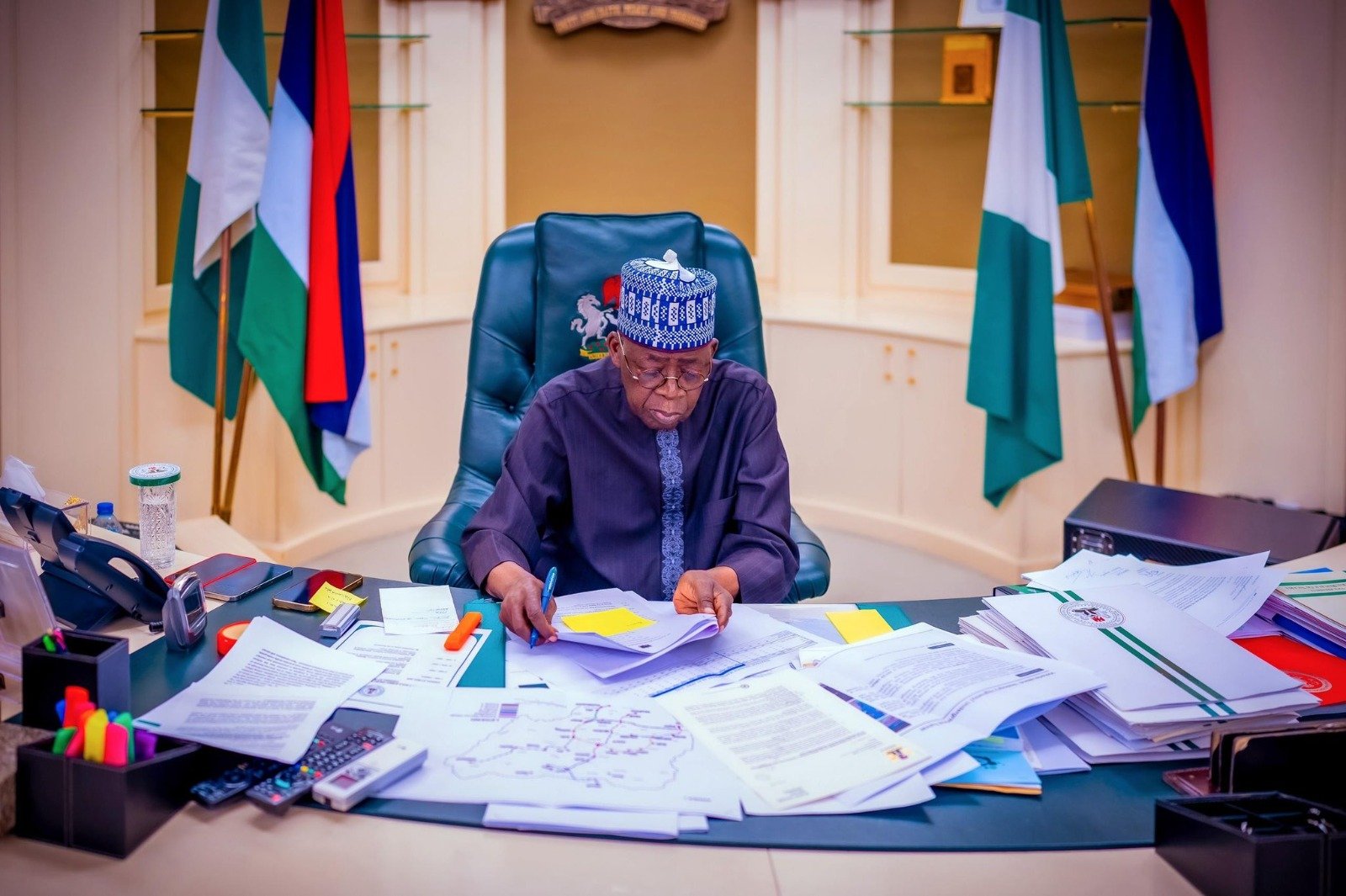
The Presidency is planning to restructure asset ownership in the Nigerian National Petroleum Company Limited amid concerns over what it called its low oil production.

The Special Adviser to the President on Energy, Olu Verheijen, made this known on Monday at the ongoing Nigerian Association of Petroleum Explorationists Conference in Lagos.

Verheijen outlined a bold agenda to revitalise Nigeria’s oil and gas sector while ensuring energy security and sustainable development. She stressed that achieving the 3-million-barrel daily oil production goal requires performance-based stewardship even as she questioned NNPC’s capacity to deliver incremental growth.

According to her, the NNPC E&P Limited only produces 220,000 barrels a day, an output she said is less than 10 per cent of national oil production. Verheijen expressed doubts that the NNPC can fund and execute the drilling campaigns needed to raise the figure.

Unlike in the era of international oil companies onshore, she said the current joint venture partners can no longer carry the NNPC, asking if the state-owned firm can deliver the incremental growth needed on its sole balance sheet.

If not, the special adviser said the country must have the courage to restructure asset ownership and invite those who can deliver credible operators in the technical capacity, the financial depth, and the governance discipline, saying revitalisation requires performance-based stewardship, not sentiment.

Verheijen said, “Independence will also matter more than ever, but independent must not mean inert. Our journey to three million barrels depends on companies like Renaissance, Oando, Seplat, Aiteo, and others moving beyond workovers and infill drilling toward bold, large-scale greenfield developments.

See also  N804bn arms imports spark calls for local production

“Campaigns of the magnitude of Shell’s Forcados or ExxonMobil’s satellite field and NGL projects that truly move the needle, but at the same time, NEPL (NNPC E&P Limited) is now a critical lever for growth, and they only produce 220,000 barrels a day; that is less than 10 per cent of our national production. But can it fund and execute the drilling campaigns needed to juggle that figure?

“And unlike the IOC era onshore, its JV partners can no longer carry NNPC, so we must ask the hard question: Can an NNPC deliver the incremental growth we need on its own balance sheet? If not, we must have the courage to restructure asset ownership and invite those who can deliver credible operators in the technical capacity, the financial depth, and the governance discipline. Revitalisation requires performance-based stewardship, not sentiment.”

Verheijen outlined a broader framework she calls the ‘four R’s’ — reserves, revenues, reliability, and responsibility — as the yardstick for Nigeria’s energy sector.

On reserves, she said, “Rebuilding the opportunity set. Exploration is not a PowerPoint slide. It is a risky business. But risk has a price, and clarity is the discount. Since 2023, under President Tinubu’s leadership, Nigeria has worked to restore that clarity.”

She stressed the need for Nigeria to act fast to attract investment, saying the world is not standing still, and the countries will not wait for one another to catch up.

”For us in Nigeria, we must do more and move faster to attract exploration and production investment. And our investors have never been so spoiled for choice. The decisions they take will depend on clear, hard-headed assessments of where they can most easily deploy capital and achieve the best returns,” she stated.

See also  Shell abandons huge biofuel project in Netherlands

She added that the Tinubu administration had prioritised reforms that make Nigeria a destination of choice for investments.

Verheijen further highlighted revenue generation and domestic value creation. According to her, in just 18 months, the current government had unlocked over $8bn in final investment decisions through Ubeta, Bonga North, and HI.

”With a clear line of sight to another $20bn, these aren’t signatures, they’re shovels in the ground. We’re commercialising gas through long-dated GSAs, anchoring LNG apipeline, gas-to-power, industrial uptake, expanding midstream infrastructure that turns stranded molecules into bankable assets.

“But our revenue agenda goes beyond exports. It is about domestic value creation, gas-to-power to stabilise our grid, LPG and CNG to replace fossil fuels, petrochemicals and fertilisers to strengthen agriculture and build our industrial base, and a refining that ends import dependence and positions Nigeria as a reliable supplier not just to Nigeria but to West Africa,” she said.

Speaking, the Chairman of NNPC, Ahmadu Kida, said the motto of NNPC is to collaborate with everybody and be Nigeria’s company of choice. In the next five years, Kida said the NNPC would become Africa’s incontestable energy company and one that Nigerians can be proud of.

”At NNPC Limited, we wish in the very near future to be a company that all of you are going to be very proud of, one that all Nigerians should be proud of; and when they see the NNPC Limited logo, they should see a reflection of their shareholding. And again, when NNPC’s name is called, it should sound like a goal that the national football team scored against Brazil in a match.

See also  Nigeria’s foreign debt to hit $72.6bn after 2027 polls – IMF

“That’s the kind of sentiments we want to provoke in you when they call that NNPC Limited. And we’ll get there. In five years, our vision is to be the African uncontestable energy company,” Kida said.

Continue Reading
Click to comment

Leave a Reply

Your email address will not be published. Required fields are marked *

Business

Jide Kosoko laments debt following N300m movie cinema loss

Published

on

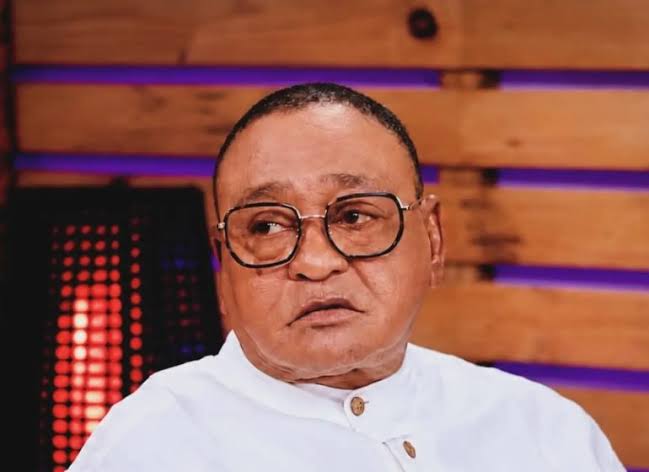
Veteran Nollywood actor and filmmaker Jide Kosoko has said he is in debt after his film, Eleko: Oba Esugbayi, failed to recoup its production cost of over N300m in cinemas.

Kosoko disclosed this in a now trending clip from his interview on African A-List published on October 17, where he explained that the money used to produce the film came from investors who expected returns on their investment.

According to him, the film which premiered in the cinemas in March, failed to generate enough revenue to recover its production cost, while the little money earned was shared among those involved.

“My film ‘Eleko: Oba Esugbayi’ that recently came out and we took to the cinemas, cost us over N300 million. Do I have 300 million? You should know that some people gave it to me and it was not that they dashed me, they invested in it and we took the film to the cinemas,” he said.

He added, “Different things happened and we did not earn our money back. The little that was earned was split. As I am, if you hear someone with debt dancing around their neck, it is me.”

PUNCH Online had earlier reported that Kosoko revealed he had been living with diabetes since 1996, saying his decades-long experience with the condition had given him a better understanding of his health.

The actor made this known in an interview on African A-List, uploaded to YouTube on Saturday.

“I became diabetic in 1996; I understand my health better than some doctors do. Do not misquote me. I am not saying I know how to do everything, I just do not want to die,” Kosoko said.

See also  Nigeria promotes investment without building production capacity – UNILAG don

He also spoke about his personal life, disclosing that he had lost three wives, including the mother of his daughter, Bidemi Kosoko, who died during childbirth.

“I lost my wife during childbirth; that’s Bidemi’s mother. I have lost three wives,” he said.

Continue Reading

Business

Airline extends Saudi flights suspension after Houthi strikes

Published

on

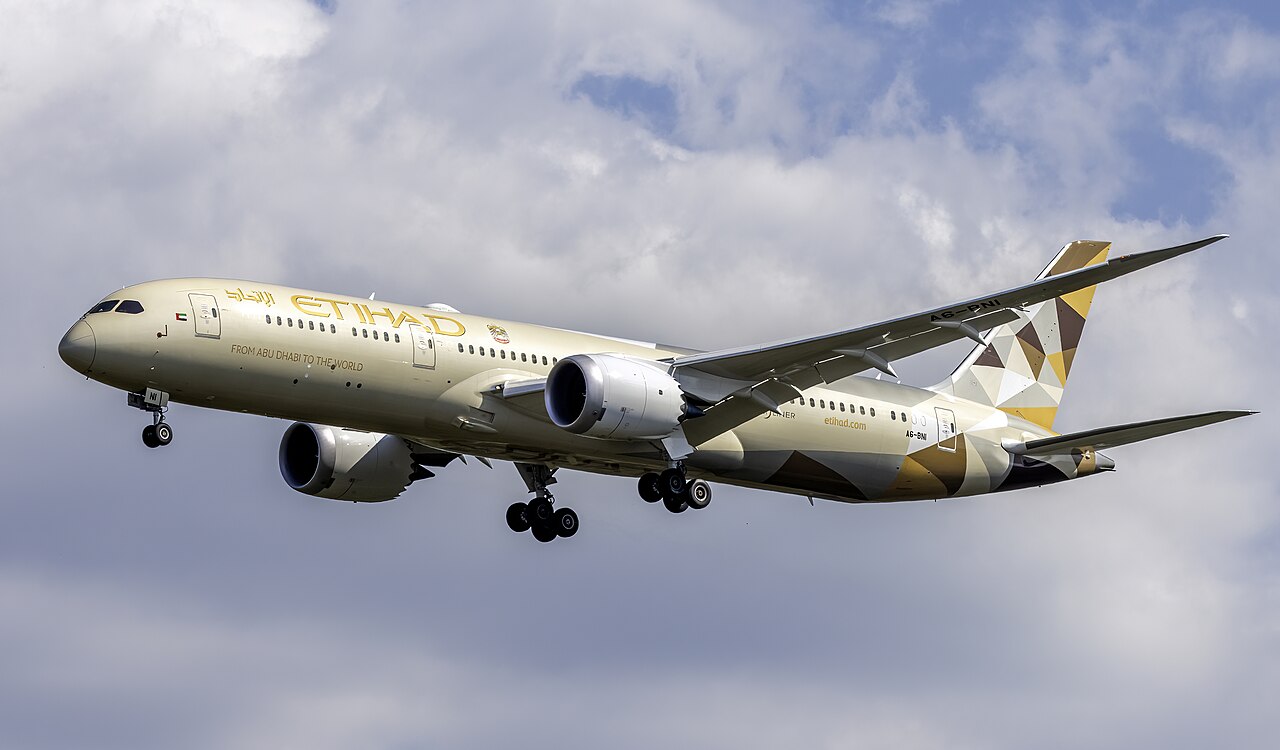
UAE national airline Etihad has extended until November 5 its suspension of flights to Riyadh and Dammam in Saudi Arabia, targeted by strikes from Yemen’s Houthis.

Etihad had suspended its service to Riyadh on October 12, two days after a deadly attack on a passenger terminal killed 13 people.

In a statement on Thursday, Etihad specified that flights to and from Riyadh and Dammam would remain suspended due to “operational disruptions”.

On Wednesday evening, two people were killed and eight others wounded in an attack on Dammam airport.

The airport, however, reopened the following day, while the capital’s airport remains closed.

Etihad added that it would operate only daytime flights to the western city of Jeddah, with night flights cancelled until November 5.

In recent weeks, Houthi attacks on Saudi civilian infrastructure including oil facilities and airports have reached a scale unprecedented since the start of the conflict in Yemen in 2014.

AFP

See also  N804bn arms imports spark calls for local production
Continue Reading

Business

States push for suspension of Paris Club deductions

Published

on

State governors have rejected deductions from allocations due to the states from the Federation Account in the September 2026 revenue-sharing cycle, arguing that the deductions would further squeeze their finances, The PUNCH reports.

The states also called for the suspension of deductions linked to the Paris Club refund to local government councils, alleging that the payments were resumed without prior communication and reconciliation with affected states.

Their opposition comes after the three tiers of government shared N668.4bn less of August 2026 revenue distributed in September, heightening concerns over the impact of lower revenue receipts on states’ ability to meet their financial obligations.

The governors also demanded the redistribution of the proposed N240bn savings, insisting that the funds should be shared among the federal, state and local governments rather than deducted or retained under the proposed arrangement.

The complaints were raised by several state Accountants-General during the technical session of the Federation Account Allocation Committee meeting, according to a report by the committee’s technical sub-committee, dated 14 October, 2026, obtained by The PUNCH on Thursday.

The meeting, held at the Federal Ministry of Finance headquarters in Abuja, considered revenue accounts for August and the amounts available for distribution in September.

The report showed that the total amount recommended for distribution to the federal, state and local governments stood at N2.339tn, compared with N3.007tn shared in the previous month, representing a decline of N668.4bn.

The statutory revenue available for distribution dropped more sharply, falling from N2.283tn in the previous month to N1.566tn in August, a decrease of N717.08bn.

See also  Nigeria promotes investment without building production capacity – UNILAG don

However, revenue from Value Added Tax increased to N773.23bn from N724.46bn, providing some relief amid the decline in statutory revenue.

The Director of the Federation Account Department, Okolie Rita, who presented the accounts, told the committee that the statutory revenue available for distribution was calculated after deducting N85.71bn and N36.83bn as four per cent costs of collection for the Nigeria Revenue Service and the Nigerian Upstream Petroleum Regulatory Commission, respectively.

The revenue decline triggered calls from state representatives for the Federal Government to release additional funds and reconsider deductions that they said were putting pressure on state finances.

The Accountant-General of Akwa Ibom State, Andrew Essien, observed that August revenue had dropped considerably compared with July and appealed for the proposed N240bn savings to be returned to the distributable pool.

The Accountant-General of Jigawa State, Abdullahi Shehu, recalled an earlier proposal to augment the previous month’s revenue with N250bn, which he said had not been implemented. He urged the committee to combine the promised N250bn with the proposed N240bn savings and redistribute the funds to the three tiers of government.

The Accountant-General of Bayelsa State, Tokoni Ifidi, supported the demands and raised concerns about deductions for the Paris Club refund to local government councils.

She said the deductions were introduced without prior communication to the states, despite what she described as an earlier commitment in 2025 concerning the deductions, which began in February that year and were stopped by a court order in April 2026.

The document read, “AG Akwa Ibom observed a considerable drop in the revenue of August, 2026 compared to July, 2026 and appealed for the proposed savings of N240bn to, instead, be redistributed. AG Jigawa recalled that there was a proposal to augment the previous month’s revenue with the sum of N250bn but it had not been done. He suggested that the N250bn promised in the previous month should be added to the proposed savings of N240bn and be redistributed.”

See also  Shell abandons huge biofuel project in Netherlands

The Director of the Federation Account Department explained that the Paris Club deductions were not new, noting that they had previously been suspended following a court order.

The Bayelsa representative, however, maintained that the deductions should continue to be suspended pending reconciliation. She said the Economic and Financial Crimes Commission had held reconciliation sessions with local government councils and was awaiting feedback from the Office of the Accountant-General of the Federation on the commencement and continuation of the deductions.

The Accountant-General of Niger State, Saidu Abdullahi, criticised the handling of the deductions, arguing that the ministry had made a mistake from the beginning by distributing funds without adequate planning and proper communication.

He insisted that previous agreements should be honoured, particularly the proposed N250bn augmentation, while supporting calls for the redistribution of the N240bn savings.

The Accountant-General of Cross River State, Glory Effiong, also backed the demand for the savings to be redistributed, observing that deductions had consumed a substantial portion of the earnings of many states.

She said she had not been invited to any reconciliation meeting on the Paris Club debt since joining the committee and urged the Office of the Accountant-General of the Federation to improve its communication with state representatives.

The Accountant-General of Jigawa State further questioned the amount deducted under security-related expenditure, describing the quantum of deductions as alarming and calling for a review.

The Accountant-General of Nasarawa State, Musa Mohammed, stressed that states should be properly informed and invited to reconciliation meetings before decisions affecting their allocations were implemented.

See also  Nigeria’s foreign debt to hit $72.6bn after 2027 polls – IMF

Source: punchng.com

FOLLOW US ON:

FACEBOOK

WHATSAPP CHANNEL

TWITTER

PINTEREST

TIKTOK

YOUTUBE

LINKEDIN

INSTAGRAM

Continue Reading

Trending