Connect with us

Business

FG debt repayments exceed budget allocation by nearly N2tn

Published

on

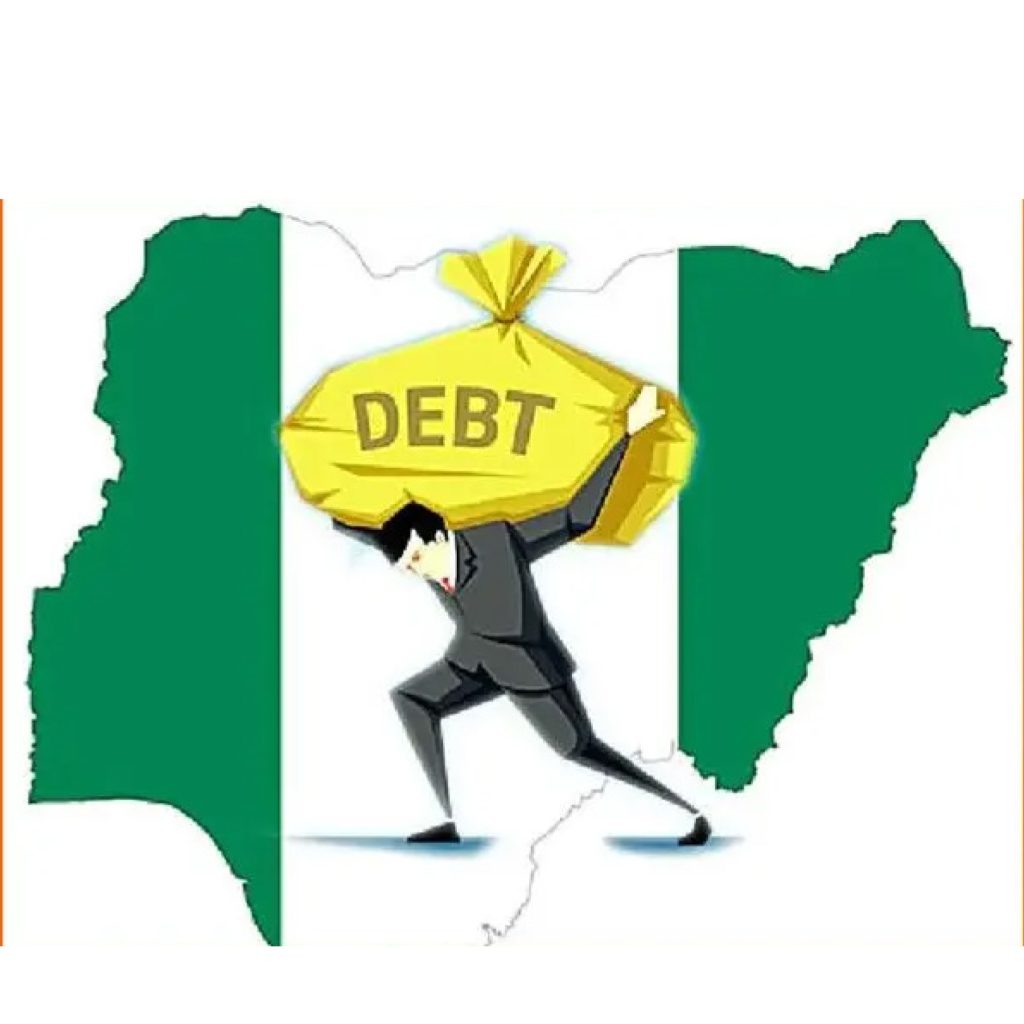
Federal Government debt repayments exceeded the 2025 amended budget allocation by N1.90tn in the first nine months of the year, fresh data from the Budget Office of the Federation showed.

The 2025 third quarter Budget Implementation Report showed that total debt-related payments, including domestic debts, foreign debts and sinking fund, rose to N12.63tn between January and September, compared with the prorated budget provision of N10.74tn. This represents an overrun of N1.90tn or 17.65 per cent.

The pressure was driven mainly by debt service, which stood at N12.52tn in the first three quarters, against the prorated allocation of N10.45tn, showing excess spending of N2.07tn or 19.8 per cent.

A breakdown showed that domestic debt service gulped N6.23tn, exceeding its N5.39tn provision by N832.42bn. Foreign debt service also rose to N6.30tn, surpassing its N5.06tn allocation by N1.24tn.

The figures indicate that 67.2 per cent of the Federal Government’s retained revenue of N18.63tn was spent on debt service in the first nine months of 2025. When the sinking fund is included, debt-related payments consumed about 67.8 per cent of revenue.

This means that for every N100 retained by the Federal Government between January and September, about N67 went into servicing debts, leaving roughly N33 for salaries, overheads, capital projects, transfers and other obligations.

The report also showed that aggregate Federal Government revenue underperformed the budget by N12.03tn or 39.24 per cent, as actual revenue of N18.63tn fell short of the N30.67tn projected for the first three quarters.

In the third quarter alone, the government generated N7.70tn, below the quarterly target of N10.22tn by N2.52tn or 24.64 per cent. The Budget Office attributed the weakness largely to persistent oil revenue shortfalls, despite stronger non-oil collections.

The debt burden also crowded out capital spending. Total capital expenditure stood at only N3.10tn in the first nine months, far below the N17.58tn budgeted for the period. This means actual debt-related payments were more than four times capital expenditure.

See also  Attack scare: Police deploy officers to top Lagos schools

The report stated that the debt service-to-revenue ratio remained elevated and warned that fiscal space was constrained, requiring urgent revenue mobilisation and expenditure rationalisation.

Overall, aggregate Federal Government expenditure stood at N24.66tn, below the prorated N41.24tn budget by N16.58tn. However, the composition of spending showed that debt obligations took priority over capital releases.

The fiscal deficit for the first three quarters stood at N6.03tn, compared with a prorated deficit target of N10.58tn, while financing items totalled N12.07tn, led by multilateral and bilateral project-tied loans of N4.81tn and domestic borrowing of N7.08tn.

The figures suggest that Nigeria’s main fiscal problem remains weak revenue rather than spending alone, as rising debt costs continue to absorb the bulk of government income and limit room for infrastructure investment.

As fiscal pressures persist, the Federal Government is considering refinancing some of its costly obligations and tapping additional funding sources to bridge its budget shortfall, taking advantage of favourable market conditions and stronger investor sentiment driven by higher oil prices.

“We think that this timing is good for us to be able to maybe even refinance some of our expensive past debts, but also to raise more funding for our development at this critical time,” Finance Minister Taiwo Oyedele told Bloomberg TV in an interview on Wednesday. “You don’t know what happens tomorrow. But as of today, market conditions are actually very good.”

The improved outlook has been supported by the recent surge in crude oil prices following tensions involving the United States, Israel and Iran. As a major oil producer, Nigeria has benefited from stronger export earnings, while investors have become more confident about the country’s ability to meet its obligations.

According to Oyedele, the government is seeking ways to finance a budget deficit estimated at N30tn this year despite gains in tax revenue generated from fiscal and tax reforms introduced under the current administration. “We’re keeping our options open; we know the size of the deficit,” Oyedele said, including less-costly concessionary loans.

He added that discussions were continuing with the World Bank and other multilateral institutions, while interest from international investors had increased as a result of reforms undertaken by the government.

See also  Soludo closes Onitsha market for one week, see why

The minister’s comments come as higher oil prices provide some relief for government finances, although they also pose risks to inflation. The resulting price pressures have complicated monetary policy, prompting the Central Bank of Nigeria to pause its interest-rate easing cycle.

The development could further test the government’s ability to fund critical infrastructure and social projects as President Bola Tinubu’s administration seeks to sustain economic reforms and accelerate development spending.

However, Oyedele recently said Nigeria could no longer rely mainly on borrowing to fund development, warning that the country must build a sustainable fiscal system capable of supporting critical sectors of the economy.

The PUNCH earlier reported that the Federal Government spent only N3.10tn on capital projects in the first nine months of 2025 despite accessing N11.89tn from various debt financing sources during the period, highlighting the wide gap between borrowing and infrastructure spending.

Economists react

Economists who spoke with The PUNCH said the Federal Government should prioritise revenue growth, asset sales and private-sector participation in infrastructure financing to reduce its reliance on borrowing and curb rising debt-servicing costs.

The Chief Executive Officer of CSA Advisory, Dr Aliyu Ilias, said increasing debt levels would inevitably lead to higher debt-servicing obligations, urging the government to explore alternative funding sources. “The more you borrow, the more you are also incurring more debt services,” he said.

Ilias suggested that the government could generate additional resources by disposing of certain public assets and capitalising on increased oil revenues stemming from ongoing geopolitical tensions in the Middle East.

“The government can actually sell off some of their assets to raise more money. The government can also, if you look at the revenue we are getting from oil, it’s getting more, especially with this war. It’s another opportunity for us to actually not borrow again,” he said.

See also  FG unveils new strategy to tackle housing deficit

He also pointed to ongoing tax reforms as another avenue to improve government finances and narrow the fiscal gap. “Government can also look at tax reform. The fact is that the government does not have money. The only chance for getting more money is to address the financial deficit,” he added.

Also commenting, the Chief Executive Officer of the Centre for the Promotion of Private Enterprise, Dr Muda Yusuf, warned that Nigeria’s high borrowing costs were worsening the country’s debt burden.

“Well, the debt servicing cost, first, we need to worry about the rate at which we borrow. I’m talking about the interest rate. Because the rates we offer for our bonds and even treasury instruments are too high. So it’s a major issue,” he said.

According to Yusuf, policymakers need to strike a balance between attracting foreign portfolio inflows and containing the rising cost of servicing domestic debt. “It’s helping us to attract portfolio investment, but it’s creating a huge burden of debt service. We have to balance those two objectives,” he stated.

He called for stronger collaboration between fiscal and monetary authorities to bring down interest rates and reduce government borrowing costs. The economist also advocated wider adoption of public-private partnerships, arguing that many infrastructure projects currently funded through the budget could be transferred to private investors.

“Let’s identify projects that are feasible. We should be able to create a pool of projects that we take off from the budget and hand over to the private sector to put their money,” he said.

Yusuf further argued that the Federal Government should narrow its spending priorities and leave more responsibilities to state governments. “The Federal Government is involved in too many things. The Federal Government should concentrate on core strategic investments such as security, interstate highways, power and other critical infrastructure,” he said.

punch.ng

FOLLOW US ON:

FACEBOOK

TWITTER

PINTEREST

TIKTOK

YOUTUBE

LINKEDIN

INSTAGRAM

Continue Reading
Click to comment

Leave a Reply

Your email address will not be published. Required fields are marked *

Business

Nigerians spend N50bn on US visa applications

Published

on

Nigerians spent more than N50bn on US visa applications between 2023 and 2024, despite a sharp decline in approvals as Washington tightened immigration controls and increased scrutiny of applicants.

An analysis of the Intelpoint report, using data from the US Department of State, shows that 201,200 non-immigrant visas were issued to Nigerians between 2023 and 2024. At a standard application fee of $185 per applicant, Nigerians spent approximately $37.2m, equivalent to N50.7bn at an average exchange rate of N1,360 to the dollar.

Visa issuances declined by about 23 per cent, falling to 87,300 in 2024 from 113,900 in 2023, a reduction of 26,600 visas. The PUNCH could not obtain comparable figures for 2025 at the time of reporting.

Business and tourism travel dominated approvals in 2024, with B1/B2 visas accounting for 83 per cent of total issuances, while student visas (F1) represented about seven per cent. Exchange visitor visas (J1) and other temporary categories made up the remainder.

Africa’s most populous nation remained a significant source market for the United States, accounting for about 0.8 per cent of global non-immigrant visa issuances in 2024, the data showed.

Former President of the National Association of Nigeria Travel Agencies, Susan Akporiaye, said Nigerians’ travel behaviour is driven by more than economic conditions, noting a strong cultural inclination toward mobility.

“People would say it’s because of the economy, but I share a different view. Nigerians are generally migrants; they love travelling.

We are like the Chinese of Africa,” Akporiaye told The PUNCH.

The executive argued that most Nigerians who travel abroad return home, and only a small proportion remain outside the country permanently. “There is so much noise of Nigerians staying back. The ones who travel and return are far more than those who stay back. It’s not up to 10 per cent that don’t return,” she stated.

See also  Boko Haram issues 72-hour ultimatum over 416 captives

The decline in visa issuances comes amid a series of policy changes introduced after Donald Trump returned to the White House in January 2025, which have gradually tightened requirements for Nigerian applicants.

In July 2025, the US Department of State announced that most non-immigrant and non-diplomatic visas issued to Nigerian citizens would be restricted to single-entry permits valid for three months, with existing visas unaffected.

In August, applicants were required to disclose all social media usernames used over the previous five years on DS-160 forms, with officials warning that omissions could lead to visa denial or ineligibility.

Akporiaye also noted that travel demand cuts across income levels, from affluent individuals to ordinary citizens travelling for social events. “Nigerians like to explore. We travel for birthdays, weddings, and other ceremonies. I’m not talking about people like Dangote or Otedola, but ordinary Nigerians you don’t even know,” she said.

The expert, however, acknowledged that demand for US travel has softened relative to other destinations, citing operational and policy-related constraints.

“The demand has reduced for some destinations like the US, and it’s becoming worse now. Conditional requirements and operational changes at the US Embassy in Abuja have made access more difficult, including the consolidation of services in Lagos,” she stated.

“There are stories about visas being cancelled or Nigerians getting deported, and that makes people a bit sceptical. But other destinations are still booming.”

Further tightening followed in December 2025, when the US Mission in Nigeria said Washington expanded travel restrictions to include partial limitations on Nigeria and five other countries, effective January 1, 2026.

See also  Presidential fleet operations gulp N4.24bn in six months – Read report details

An executive at Travel and Tours Limited, Maureen Chimaobi, said securing a US visa has become increasingly difficult over the past year, with many first-time applicants facing steep odds despite completing all required procedures.

“Last year, getting a US visa drastically reduced, especially if you are a first-time traveller or first-time applicant. It’s almost a no-go area,” Chimaobi told our correspondent.

She noted that applicants continue to pay visa fees, schedule appointments and attend interviews, but approvals have become far less predictable. “You pay your visa fee, book your appointment and go for submission. Most of the time, they don’t give it,” the agent said.

The trend reflects growing concerns among travel operators about declining approval rates for Nigerian applicants, even as demand for overseas travel remains strong. Chimaobi said rejection levels have remained high throughout the period under review, particularly for individuals with limited international travel history.

The tougher environment is also influencing destination choices. More Nigerians are turning to countries where visa approvals are perceived to be more attainable, provided applicants can demonstrate sufficient financial capacity and present strong documentation.

“I think most countries still offer a 70 to 80 per cent chance of getting a visa, depending on the quality of your documents and your financial status,” Chimaobi revealed.

She identified the United Kingdom as one of the destinations with relatively stronger approval prospects, although she cautioned that British authorities have also hardened their assessment processes in recent months.

France and other countries within the Schengen area, once considered more accessible to Nigerian travellers, have become increasingly selective, especially toward first-time applicants, she added.

See also  SEE FULL LIST: IG deploys new AIGs, CPs in major police re-organisation

“Before now, France used to issue visas more easily, but most Schengen countries have become difficult over time, particularly for first-time travellers,” Chimaobi said.

punch.ng

FOLLOW US ON:

FACEBOOK

TWITTER

PINTEREST

TIKTOK

YOUTUBE

LINKEDIN

INSTAGRAM

Continue Reading

Business

Petrol imports crash by N2tn to N87bn; see why

Published

on

Nigeria’s spending on the importation of Premium Motor Spirit, popularly known as petrol, plunged by over 96 per cent in the first quarter of 2026, marking a dramatic shift in the country’s fuel supply landscape and signaling the growing impact of local refining capacity.

Latest foreign trade statistics released by the National Bureau of Statistics on Monday showed that only N87.401bn was spent on the importation of Motor Spirit Ordinary, the official trade classification for petrol, between January and March 2026.

The figure represents a sharp decline of N2.184tn, or 96.15 per cent, compared to the N2.271tn spent on petrol imports during the corresponding period of 2025. The development is particularly significant as petrol, which had consistently ranked among Nigeria’s most imported commodities for years, was completely absent from the list of the country’s top traded products in the first quarter of 2026.

An analysis of the NBS data by our correspondent showed that petrol did not feature among the top 19 traded products with the rest of the world, Africa, or West Africa during the review period.

Instead, the leading traded products included crude petroleum oils and oils obtained from bituminous minerals, gas oil, durum wheat, machines for reception, conversion and transmission of data, used vehicles, motorcycles, agricultural seeders, medicaments, aircraft parts, butanes, petroleum bitumen, sugar cane, herbicides and fuel additives.

The report read, “The value of total imports stood at N13,619.33bn in the first quarter of 2026, representing a 18.17 per cent decrease from the value recorded in the corresponding quarter of 2025 (N16,644.42bn) and a 21.05 per cent decrease compared to the value recorded in Q4 2025 (N17,250.93bn).

“Analysis of Nigeria’s import trade reveals that China remained the leading source of imports in the first quarter of 2026, followed by the United States of America, India, Germany, and the United Arab Emirates. The most imported commodities during the quarter were petroleum oils and oils obtained from bituminous minerals (crude), gas oil, durum wheat, machines for the reception, conversion, and transmission of voice, images, or data, and used vehicles with diesel or semi-diesel engines.

See also  FG demands protection after two Nigerians killed in South Africa

“The value of other oil products imported in Q1 2026 stood at N748.10bn, reflecting an 85.05 per cent decrease from N5,005.22bn in Q1 2025 and an 81.38 per cent decrease from N4,018.31bn recorded in Q4 2025.”

The latest import figure is also the lowest quarterly amount spent on petrol imports since at least 2022, according to available trade records reviewed by our correspondent.

Data from previous years showed that Nigeria spent N2.694tn on petrol imports in the first quarter of 2022. The import bill declined by N661bn, or 24.5 per cent, to N2.033tn in the corresponding period of 2023.

However, petrol import spending surged by N1.780tn in 2024 to N3.813tn, representing an increase of 87.6 per cent year-on-year. The figure later dropped by N1.542tn, or 40.4 per cent, to N2.271tn in the first quarter of 2025 before plunging by a massive N2.184tn, or 96.15 per cent, to N87.401bn in the first quarter of 2026.

The latest figure means that for every N100 spent on petrol imports in the first quarter of 2025, only about N4 was spent during the same period in 2026. The NBS data also highlighted the changing structure of Nigeria’s petrol import trade profile over the years.

According to the report, the total trade value involving the petroleum product stood at N7.705tn in 2022. This declined marginally by N194bn, or 2.5 per cent, to N7.511tn in 2023.

Trade value, however, more than doubled in 2024, rising by N7.907tn, or 105.3 per cent, to N15.418tn, the highest level during the period under review. The figure subsequently fell by N5.045tn, or 32.7 per cent, to N10.373tn in 2025, reflecting changing trade dynamics in Nigeria’s downstream petroleum sector.

See also  Attack scare: Police deploy officers to top Lagos schools

The PUNCH reports that the sharp reduction in petrol imports reflects the increasing contribution of domestic refining facilities to fuel supply, reducing Nigeria’s dependence on foreign suppliers and helping conserve foreign exchange.

For decades, Nigeria relied heavily on imported petrol despite being Africa’s largest crude oil producer, owing largely to the poor performance of state-owned refineries and inadequate domestic refining capacity.

The trend began to change following investments in local refining and the gradual increase in output from domestic refineries, which have reduced the need for large-scale fuel imports.

The sharp decline in petrol imports in the first quarter of 2026 comes amid growing domestic refining capacity, particularly from the operations of the Dangote Petroleum Refinery, which began supplying petrol to the Nigerian market in 2024.

For decades, Nigeria relied heavily on imported Premium Motor Spirit despite being Africa’s largest crude oil producer. The country’s state-owned refineries operated far below capacity for years, forcing marketers and the Nigerian National Petroleum Company to spend trillions of naira annually importing fuel to meet domestic demand.

The commissioning of the 650,000 barrels-per-day refinery in Lekki, Lagos, marked a turning point in the downstream petroleum sector. Since commencing petrol production, the refinery has steadily increased output, supplying marketers, industrial users and fuel distributors across the country.

In January, the Nigerian Midstream Downstream Petroleum Regulatory Authority reported that Dangote refinery supplied an average of 40.1 million litres of petrol daily, accounting for 61.78 per cent of Nigeria’s petrol supply. Imported fuel contributed 24.8 million litres per day during the month.

See also  Presidential pardon: AGF orders multi-agency probe

It increased significantly in February as imports collapsed. The refinery supplied about 36.5 million litres per day, while imports dropped to roughly 3.1 million litres per day, meaning locally refined fuel accounted for more than 92 per cent of national supply.

According to the NMDPRA March fact sheet, Dangote remained the sole domestic supplier of petrol, supplying 34.2 million litres per day. Imports rose slightly to 5.9 million litres daily, bringing total supply to about 40.1 million litres per day.

Supply rebounded strongly in April. Dangote supplied 40.7 million litres per day to the domestic market, while imports declined further to 3.7 million litres daily. Total petrol supply stood at 44.4 million litres per day, giving the refinery a market share of approximately 92 per cent of locally consumed fuel and about 80–92 per cent of overall supply, depending on the methodology used.

The disappearance of petrol from the list of top imported products is expected to strengthen arguments that local refining is beginning to alter Nigeria’s trade patterns, lower import dependence and reshape the country’s foreign exchange requirements.

The sustained reductions in fuel imports could improve Nigeria’s trade balance, reduce pressure on the naira and retain more value within the domestic economy, provided local production continues to meet demand.

The first-quarter data therefore represents one of the clearest indications yet of a major shift in Nigeria’s downstream petroleum sector, with petrol imports falling to levels not seen in more than four years.

Continue Reading

Business

Nigerian workers deserve a living wage; read details

Published

on

THIS is a debate that never goes away for too long: what is due to Nigerian workers? The renewed agitation over workers’ wages, triggered by a fresh Nigeria Governors’ Forum proposal to raise the national minimum wage to N100,000 per month, only confirms that the country is trapped in an endless cycle of wage adjustments that inflation quickly renders meaningless.

This means that the issue is not just about the size of the minimum wage. Rather, it is about whether Nigerian workers can afford to live with dignity.

That is why the conversation must shift from a statutory minimum wage to a genuine living-wage regime – and a stable economy.

The proposal by the Chairman of the NGF, Governor AbdulRahman AbdulRazaq, has already been rejected by organised labour.

The Nigeria Labour Congress, through its spokesman, Benson Upah, dismissed N100,000 as grossly inadequate and argued that, given current realities, a realistic wage would be closer to N1 million per month!

The Federal Workers Forum also condemned the proposal as a “Greek gift,” insisting that it bears little relationship to prevailing economic conditions.

While the NLC’s N1 million demand may appear excessive to many, the underlying argument deserves serious attention.

The current N70,000 minimum wage approved in July 2024 has already been overtaken by inflation. Like every previous wage increase in Nigeria’s history, its real value has been rapidly eroded.

The country’s minimum wage trajectory elucidates this. It rose from N18,000 in 2011 to N30,000 in 2019 and then to N70,000 in 2024. Yet each increase was followed by soaring inflation that wiped out most of the gains.

It is alleged that some states have yet to implement the minimum wage for grassroots workers, local government employees and primary school teachers.

Dataphyte estimates that the real value of the previous N30,000 wage had collapsed to barely N11,708 by mid-2024. The current N70,000 wage is clearly following the same path.

See also  Disu inaugurates state police implementation committee

The CBN reported that workers lost N2.79 trillion in purchasing power in 2024 alone due to inflation. That explains why workers who celebrated the 133 per cent wage increase in 2024 now find themselves struggling to survive less than two years later.

Nothing illustrates the crisis more vividly than the National Bureau of Statistics and Global Alliance for Improved Nutrition Cost of a Healthy Diet data.

According to an analysis by The Whistler, a healthy diet for one adult now costs an average of N1,541 per day or N46,230 per month, excluding meal preparation costs.

This means that a worker earning N70,000 is left with just N23,770 after feeding only himself.

For an average Nigerian household of 5.06 persons, the monthly cost of a healthy diet rises to N233,923 — equivalent to 334 per cent of the current minimum wage.

In other words, the average worker cannot afford the minimum nutritional requirements recommended by global health standards.

Even the governors’ proposed N100,000 wage would still leave most families far below the subsistence level. It is therefore difficult to dispute labour’s argument that Nigeria’s wage structure has become detached from economic reality.

However, raising wages alone cannot solve the problem.

The organised private sector has raised legitimate concerns about its ability to pay across the board.

The president of the Lagos Chamber of Commerce and Industry, Leye Kupoluyi, said the private sector should not be compelled to pay the same wage level as the government if businesses could not afford it.

The Director-General of the Nigeria Employers’ Consultative Association, Adewale Oyerinde, points out that the process for arriving at a National Minimum Wage is “rooted in widely acclaimed tripartite negotiations and consultation and not just political statements, without any empirical data to back up the quantum of increase.”

The Centre for the Promotion of Private Enterprise warned that many businesses are already struggling under crushing energy costs, logistics bottlenecks, foreign exchange challenges, multiple taxation and weak consumer demand. All this needs to be addressed.

See also  Tinubu confirms killing of ISIS leader in Nigeria-US joint operation; read details

Indeed, any wage increase that is unsupported by productivity growth and economic reforms risks fuelling another inflationary spiral. Businesses facing higher wage bills often pass costs to consumers, thereby worsening the very inflation the wage increase seeks to offset.

Nigeria must therefore avoid the false choice between workers’ welfare and business survival.

The real objective should be a living-wage framework tied to measurable economic indicators and supported by aggressive cost-of-living reduction policies.

This is the model increasingly adopted across many countries. In South Africa, the national minimum wage is approximately 28.79 rand per hour, translating to well over N250,000 monthly at prevailing exchange rates.

Algeria’s minimum wage is around 20,000 dinars (N204,000) monthly, while Egypt recently increased its public-sector minimum wage to 7,000 Egyptian pounds (N184,000).

Kenya’s minimum wage varies by sector and location, but the average of 16,113 Kenyan Shillings (N169,500) remains significantly higher in purchasing power terms than Nigeria’s.

Nigeria should not be setting wage policy as though inflation were a temporary inconvenience.

Food inflation remains the principal driver of household hardship, standing at 16.06 per cent YoY and higher than headline inflation of 15.69 per cent as of April.

Massive investments in agricultural productivity, rural roads, storage infrastructure and security in farming communities are urgently needed.

The absurd situation where healthy diets are more expensive in some rural communities than in urban centres because of poor roads must end.

The government must also address transport costs through investments in rail, inland waterways and public transportation systems.

Electricity tariffs remain a major burden on both households and businesses. Lowering energy costs would immediately improve living standards while enhancing business competitiveness.

Investments in health by ramping up health insurance enrolment and better access to quality care, and in education, via massive infrastructure improvements and teacher recruitment, will reduce household expenditure on these essentials.

See also  Price war: Retailers drop petrol below Dangote’s N739/litre

Furthermore, labour’s argument regarding improved government revenues deserves scrutiny.

Since the outbreak of conflict in the Middle East, higher oil prices have boosted Nigeria’s earnings. It is estimated that the windfall has added more than N5 trillion to government coffers.

Whether that figure is an exaggeration or not, governments are receiving historically high FAAC allocations, averaging over a 50 per cent surge for states in 2025 and all tiers sharing up to N2 trillion in 2026.

Nigerians deserve to see some direct benefit from these gains through targeted subsidies for food production and transportation, public transit and essential services.

More fundamentally, wage determination should no longer depend on sporadic political negotiations every few years.

The National Minimum Wage Act should be amended to provide for automatic annual adjustments linked to inflation, productivity and cost-of-living indicators. Such a mechanism would prevent workers from suffering prolonged erosion of purchasing power before the government responds.

Above all, policymakers must remember that they are insulated from the hardships confronting ordinary citizens.

Governors, legislators, political appointees and senior public officials enjoy humongous allowances, subsidised accommodation, official vehicles, security details and generous expense accounts.

They do not queue for transport. They do not worry about school fees after buying food. They do not feel inflation in the same way as the average worker.

That disconnect explains why debates over N70,000, N100,000 or even N1 million often miss the central issue.

The goal of wage policy is not simply to keep workers alive so that the job is done. It is to ensure that honest labour can provide a decent standard of living.

punch.ng

FOLLOW US ON:
FACEBOOK

TWITTER

PINTEREST

TIKTOK

YOUTUBE

LINKEDIN

INSTAGRAM

Continue Reading

Trending