Connect with us

Business

FG debt repayments exceed budget allocation by nearly N2tn

Published

on

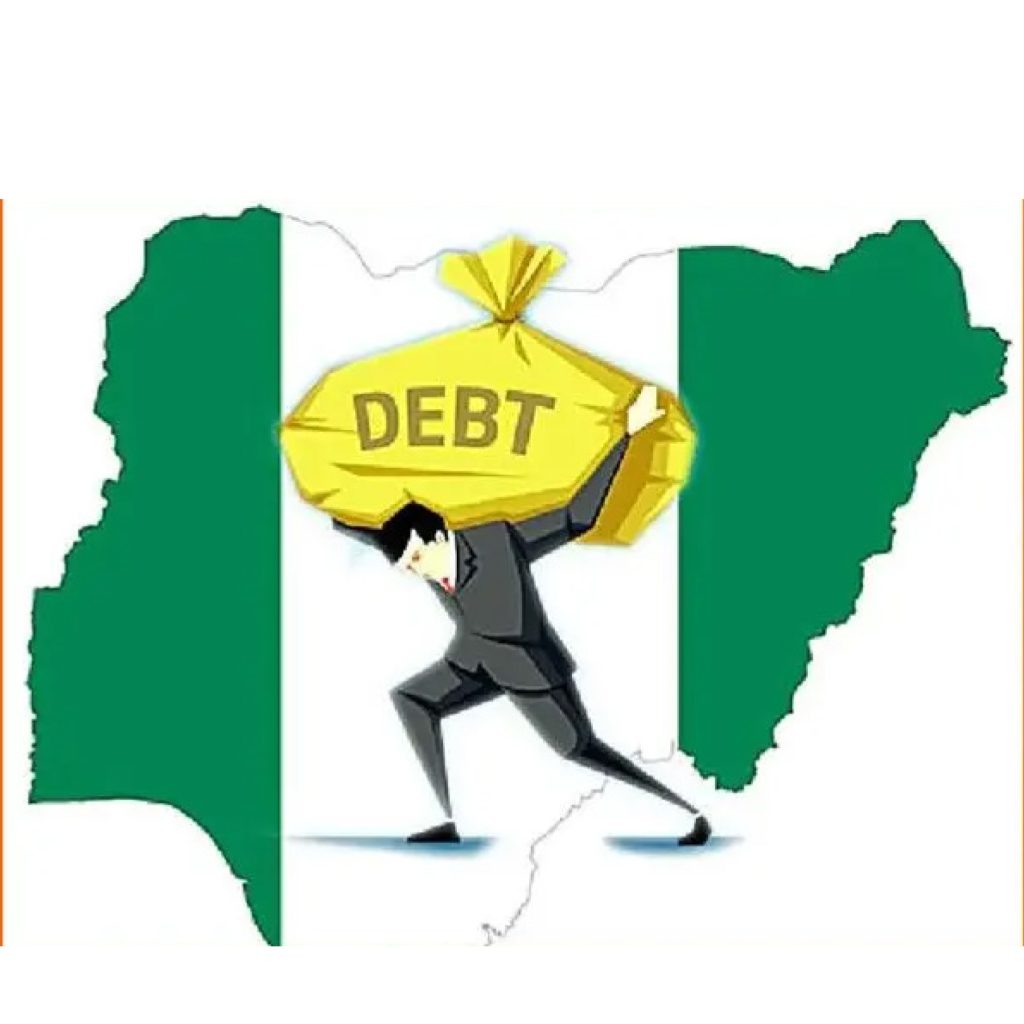
Federal Government debt repayments exceeded the 2025 amended budget allocation by N1.90tn in the first nine months of the year, fresh data from the Budget Office of the Federation showed.

The 2025 third quarter Budget Implementation Report showed that total debt-related payments, including domestic debts, foreign debts and sinking fund, rose to N12.63tn between January and September, compared with the prorated budget provision of N10.74tn. This represents an overrun of N1.90tn or 17.65 per cent.

The pressure was driven mainly by debt service, which stood at N12.52tn in the first three quarters, against the prorated allocation of N10.45tn, showing excess spending of N2.07tn or 19.8 per cent.

A breakdown showed that domestic debt service gulped N6.23tn, exceeding its N5.39tn provision by N832.42bn. Foreign debt service also rose to N6.30tn, surpassing its N5.06tn allocation by N1.24tn.

The figures indicate that 67.2 per cent of the Federal Government’s retained revenue of N18.63tn was spent on debt service in the first nine months of 2025. When the sinking fund is included, debt-related payments consumed about 67.8 per cent of revenue.

This means that for every N100 retained by the Federal Government between January and September, about N67 went into servicing debts, leaving roughly N33 for salaries, overheads, capital projects, transfers and other obligations.

The report also showed that aggregate Federal Government revenue underperformed the budget by N12.03tn or 39.24 per cent, as actual revenue of N18.63tn fell short of the N30.67tn projected for the first three quarters.

In the third quarter alone, the government generated N7.70tn, below the quarterly target of N10.22tn by N2.52tn or 24.64 per cent. The Budget Office attributed the weakness largely to persistent oil revenue shortfalls, despite stronger non-oil collections.

The debt burden also crowded out capital spending. Total capital expenditure stood at only N3.10tn in the first nine months, far below the N17.58tn budgeted for the period. This means actual debt-related payments were more than four times capital expenditure.

See also  ‘Nigerians must go,’ Ghanaians protest alleged prostitution, ritual killings

The report stated that the debt service-to-revenue ratio remained elevated and warned that fiscal space was constrained, requiring urgent revenue mobilisation and expenditure rationalisation.

Overall, aggregate Federal Government expenditure stood at N24.66tn, below the prorated N41.24tn budget by N16.58tn. However, the composition of spending showed that debt obligations took priority over capital releases.

The fiscal deficit for the first three quarters stood at N6.03tn, compared with a prorated deficit target of N10.58tn, while financing items totalled N12.07tn, led by multilateral and bilateral project-tied loans of N4.81tn and domestic borrowing of N7.08tn.

The figures suggest that Nigeria’s main fiscal problem remains weak revenue rather than spending alone, as rising debt costs continue to absorb the bulk of government income and limit room for infrastructure investment.

As fiscal pressures persist, the Federal Government is considering refinancing some of its costly obligations and tapping additional funding sources to bridge its budget shortfall, taking advantage of favourable market conditions and stronger investor sentiment driven by higher oil prices.

“We think that this timing is good for us to be able to maybe even refinance some of our expensive past debts, but also to raise more funding for our development at this critical time,” Finance Minister Taiwo Oyedele told Bloomberg TV in an interview on Wednesday. “You don’t know what happens tomorrow. But as of today, market conditions are actually very good.”

The improved outlook has been supported by the recent surge in crude oil prices following tensions involving the United States, Israel and Iran. As a major oil producer, Nigeria has benefited from stronger export earnings, while investors have become more confident about the country’s ability to meet its obligations.

According to Oyedele, the government is seeking ways to finance a budget deficit estimated at N30tn this year despite gains in tax revenue generated from fiscal and tax reforms introduced under the current administration. “We’re keeping our options open; we know the size of the deficit,” Oyedele said, including less-costly concessionary loans.

He added that discussions were continuing with the World Bank and other multilateral institutions, while interest from international investors had increased as a result of reforms undertaken by the government.

See also  Borno attack: Army General, terrorists killed, Tinubu mourns

The minister’s comments come as higher oil prices provide some relief for government finances, although they also pose risks to inflation. The resulting price pressures have complicated monetary policy, prompting the Central Bank of Nigeria to pause its interest-rate easing cycle.

The development could further test the government’s ability to fund critical infrastructure and social projects as President Bola Tinubu’s administration seeks to sustain economic reforms and accelerate development spending.

However, Oyedele recently said Nigeria could no longer rely mainly on borrowing to fund development, warning that the country must build a sustainable fiscal system capable of supporting critical sectors of the economy.

The PUNCH earlier reported that the Federal Government spent only N3.10tn on capital projects in the first nine months of 2025 despite accessing N11.89tn from various debt financing sources during the period, highlighting the wide gap between borrowing and infrastructure spending.

Economists react

Economists who spoke with The PUNCH said the Federal Government should prioritise revenue growth, asset sales and private-sector participation in infrastructure financing to reduce its reliance on borrowing and curb rising debt-servicing costs.

The Chief Executive Officer of CSA Advisory, Dr Aliyu Ilias, said increasing debt levels would inevitably lead to higher debt-servicing obligations, urging the government to explore alternative funding sources. “The more you borrow, the more you are also incurring more debt services,” he said.

Ilias suggested that the government could generate additional resources by disposing of certain public assets and capitalising on increased oil revenues stemming from ongoing geopolitical tensions in the Middle East.

“The government can actually sell off some of their assets to raise more money. The government can also, if you look at the revenue we are getting from oil, it’s getting more, especially with this war. It’s another opportunity for us to actually not borrow again,” he said.

See also  National Assembly okays N2.29tn FCT budget, sets 76% for capital projects

He also pointed to ongoing tax reforms as another avenue to improve government finances and narrow the fiscal gap. “Government can also look at tax reform. The fact is that the government does not have money. The only chance for getting more money is to address the financial deficit,” he added.

Also commenting, the Chief Executive Officer of the Centre for the Promotion of Private Enterprise, Dr Muda Yusuf, warned that Nigeria’s high borrowing costs were worsening the country’s debt burden.

“Well, the debt servicing cost, first, we need to worry about the rate at which we borrow. I’m talking about the interest rate. Because the rates we offer for our bonds and even treasury instruments are too high. So it’s a major issue,” he said.

According to Yusuf, policymakers need to strike a balance between attracting foreign portfolio inflows and containing the rising cost of servicing domestic debt. “It’s helping us to attract portfolio investment, but it’s creating a huge burden of debt service. We have to balance those two objectives,” he stated.

He called for stronger collaboration between fiscal and monetary authorities to bring down interest rates and reduce government borrowing costs. The economist also advocated wider adoption of public-private partnerships, arguing that many infrastructure projects currently funded through the budget could be transferred to private investors.

“Let’s identify projects that are feasible. We should be able to create a pool of projects that we take off from the budget and hand over to the private sector to put their money,” he said.

Yusuf further argued that the Federal Government should narrow its spending priorities and leave more responsibilities to state governments. “The Federal Government is involved in too many things. The Federal Government should concentrate on core strategic investments such as security, interstate highways, power and other critical infrastructure,” he said.

punch.ng

FOLLOW US ON:

FACEBOOK

TWITTER

PINTEREST

TIKTOK

YOUTUBE

LINKEDIN

INSTAGRAM

Continue Reading
Click to comment

Leave a Reply

Your email address will not be published. Required fields are marked *

Business

FG tells marketers to reflect global oil price drop in petrol prices

Published

on

Minister of State for Petroleum Resources, Sen. Heineken Lokpobiri, has directed petroleum marketers to immediately reflect the recent decline in global oil prices by reducing the pump prices of Premium Motor Spirit (PMS) and other petroleum products.

Lokpobiri gave the directive at the 2026 Nigerian Midstream and Downstream Petroleum Regulatory Authority (NMDPRA) General Counsel and Legal Advisers Forum on Monday in Abuja.

The forum is themed “Beyond Compliance Certainty and Investment Confidence in Nigeria’s Petroleum Sector.”

Lokpobiri said that with the de-escalation of tensions between Iran and the United States, there was an expectation that the prices of PMS and other petroleum products would be adjusted downward accordingly.

He expressed concern that the anticipated reduction had yet to be reflected at the pumps, stressing that while market forces under the deregulated regime would ultimately restore price equilibrium, marketers should not exploit the situation to make excessive profits.

The minister said the regulator had a statutory responsibility to ensure that deregulation did not become an avenue for profiteering, adding that this must be carried out in line with the provisions of the Petroleum Industry Act (PIA 2021).

“For too long, the dominant question in our regulatory conversations has been: are operators complying? That question matters. It will always matter. But it is no longer sufficient.

“The more consequential question today is this: are our regulatory authorities doing their job? Is it clear, consistent and predictable enough to give investors the confidence they need to commit capital, not just for one cycle, but for the long term?

See also  FCCPC sets January 5 deadline for digital lending compliance

“Compliance is the foundation. Regulatory certainty is the ceiling we must now be building toward,” he said.

Lokpobiri, while urging marketers to comply with the principles of fair pricing to ensure that consumers benefit from the prevailing market realities, urged regulators to move beyond compliance by promoting regulatory certainty to attracting long-term investments.

“The sector is now fully deregulated, a bold reform that President Bola Tinubu had the courage to implement. That decision paved way for the operationalisation of the Dangote Refinery and other refinery projects currently underway.

“It also ensured that artificial scarcity has become a thing of the past.

“You can attest to the fact that since 2023 there has been availability of products in country even with the recent challenges posed by the US-Israeli /Iranian conflict.

“Beyond allowing prices to be determined by market forces, the question is: what is the regulator doing to ensure that consumers receive the correct quantity of product?

“When someone pays for 10 litres of PMS, they should receive exactly 10 litres, not less,” he warned.

Lokpobiri said while compliance with regulations remained fundamental, investors were increasingly interested in jurisdictions with clear, consistent and predictable regulatory frameworks.

He described general counsel as strategic partners whose responsibilities extend beyond interpreting laws to shaping investment decisions, improving regulatory design and supporting national development.

According to him, legal advisers should provide constructive feedback whenever regulations or guidelines create uncertainty that could discourage investment.

He said Nigeria’s petroleum sector was entering a new phase characterised by expanding domestic refining capacity, increased private sector participation and emerging opportunities across the midstream and downstream segments.

See also  NELFUND opens student loan portal for 2025/2026 academic session

According to him, attracting investments will require policy consistency, transparent regulation, efficient dispute resolution and strong collaboration among government, regulators, industry operators and legal practitioners.

He expressed confidence that the recommendations from the forum would contribute to improving governance, regulatory certainty and investment confidence in Nigeria’s petroleum sector. (NAN)

punch.ng

FOLLOW US ON:

FACEBOOK

TWITTER

PINTEREST

TIKTOK

YOUTUBE

LINKEDIN

Continue Reading

Business

Olodo uprising: Tinubu aide faults critics of First Lady’s Akara, Kuli kuli comment

Published

on

The Special Assistant to President Bola Tinubu on Social Media, Dada Olusegun, has defended First Lady Oluremi Tinubu’s recent empowerment of micro-traders, saying criticisms of the initiative are driven by ignorance of her record and the role of Nigeria’s informal economy.

In a statement shared on Monday, Olusegun described the backlash over the First Lady’s focus on traders such as akara and kulikuli sellers as a “performative circus of selective amnesia.”

He argued that critics had ignored the numerous interventions carried out by the Renewed Hope Initiative across healthcare, women’s empowerment, support for military widows and persons living with disabilities.

The First Lady, Senator Oluremi Tinubu
The First Lady of Nigeria, Senator Oluremi Tinubu

According to him, the First Lady’s interventions extend beyond petty traders, citing her donation of ₦1bn to the National Cancer Fund for cervical cancer screening and another ₦1bn for tuberculosis diagnostic equipment in Abuja in 2025.

He also referenced the disbursement of ₦250,000 each to 1,709 widows and orphans of fallen military personnel in 2023, as well as ₦200,000 business grants to persons living with disabilities across the 36 states and the Federal Capital Territory.

Olusegun further highlighted the Renewed Hope Initiative’s partnership with the Tony Elumelu Foundation, which targeted 18,500 women nationwide with ₦50,000 grants and the distribution of equipment, including industrial grinding machines, freezers and generators.

He further criticised what he described as an “Olodo uprising” on social media, accusing critics of reacting to trends without researching the facts.

“This entire controversy perfectly mirrors what is now happening with the broader ‘Olodo uprising” across our social platforms. We live in an era where people jump on trending hashtags and soundbites without dedicating a single minute to researching context. Memes are manufactured in seconds; accurate history takes time to read.

See also  Post-NEC meetings: APC, PDP set stage for epic 2027 face-off

“When the critics are done making their superficial memes, writing cynical captions, and circulating ignorant narratives, the reality on the ground will remain unchanged. They would be better off advising their constituents to find credible means to key into these ongoing government initiatives,” he stated.

He maintained that empowering small-scale traders should not be viewed as “weaponising poverty.”

“According to various economic metrics, the informal sector contributes over 50 per cent of Nigeria’s GDP and accounts for over 80 per cent of employment. The akara fryer, the kulikuli processor, and the petty trader are not just marginal actors; they are the literal shock absorbers of our micro-economy.

“When you give a micro-grant or operational tools to an akara seller, you are not validating poverty; you are reducing immediate operational capital friction, securing food chains at the grassroots, and expanding household income. Mocking these initiatives as ‘petty’ shows a deep-seated contempt for the actual working class of Nigeria,” he said.

Olusegun also defended the political value of grassroots empowerment, saying such interventions create trust among beneficiaries.

He cited the TraderMoni and MarketMoni programmes introduced during former President Muhammadu Buhari’s administration under then Vice President Yemi Osinbajo as examples of initiatives that directly impacted market traders.

“The opposition often wonders why the poorest segments of the population continually familiarise themselves with the All Progressives Congress during elections. The answer is simple: the party meets them at their point of immediate need,” he said.

Olusegun added that Tinubu’s record as former First Lady of Lagos State, a three-term senator and now First Lady of the Federation showed a consistent commitment to structured empowerment programmes.

See also  FG demands protection after two Nigerians killed in South Africa

“She will not be distracted by digital static from doing what she has mastered over decades: empowering the poorest among us, one structured intervention at a time,” he said.

punch.ng

FOLLOW US ON:

FACEBOOK

TWITTER

PINTEREST

TIKTOK

YOUTUBE

LINKEDIN

Continue Reading

Business

Dangote refinery imports first UAE crude cargoes

Published

on

The Dangote Refinery has purchased two cargoes of crude oil from the United Arab Emirates, marking its first-ever procurement of Middle Eastern crude as it expands its feedstock sources amid persistent domestic supply constraints.

According to a report by S&P Global Commodity Insights, the two cargoes will be the first sourced by the 700,000-barrels-per-day refinery from any Middle Eastern supplier, signalling a shift from its traditional reliance on Nigerian, African, and United States crude grades.

The report said the purchases followed the resumption of oil exports from the Middle East after the United States and Iran reached an interim peace agreement that restored confidence in shipping through the Strait of Hormuz.

The refinery, designed primarily to process Nigeria’s light sweet crude, has increasingly diversified its crude slate as operations ramp up. S&P Global reported that an agreement between the refinery and the Nigerian National Petroleum Company had guaranteed the supply of between 13 and 15 cargoes of Nigerian crude monthly in naira, helping the refinery reduce its foreign exchange exposure.

However, the arrangement has faced challenges due to inadequate crude availability and operational issues at export terminals. According to the report, Dangote Refinery Chief Executive Officer David Bird had previously disclosed that these constraints had compelled the company to seek additional crude sources outside Nigeria.

The report added that the refinery’s expansion plans would further increase its crude requirements. Dangote plans to double the refinery’s processing capacity to 1.4 million barrels per day by the end of 2028, a level that would enable it to process about 80 per cent of Nigeria’s recent crude oil production in a single day.

See also  US envoy, Nicki Minaj decry killings in Nigeria

Speaking earlier this year, Bird said the refinery intended to increase the share of heavier crude grades in its feedstock mix. “We definitely want to heavy up the barrel,” Bird said in April.

He added, “We will be in the crude blending game. So you can easily imagine at 1.4 million b/d we could process 30 per cent Middle Eastern grades on each train.”

According to S&P Global, the refinery has been broadening the range of crude grades it processes as part of its ambition to operate as a fully merchant refinery. The report noted that in 2025, about 70 per cent of the refinery’s crude imports came from Nigeria, while 24 per cent originated from the United States.

punch.ng

FOLLOW US ON:
FACEBOOK

TWITTER

PINTEREST

TIKTOK

YOUTUBE

LINKEDIN

Continue Reading

Trending