Connect with us

Politics

David Mark slams FG after A’Court reverses ADC deregistration

Published

on

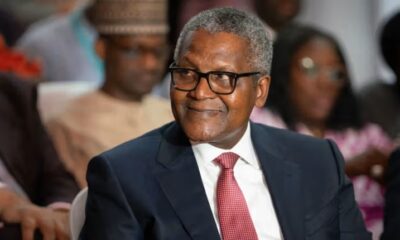
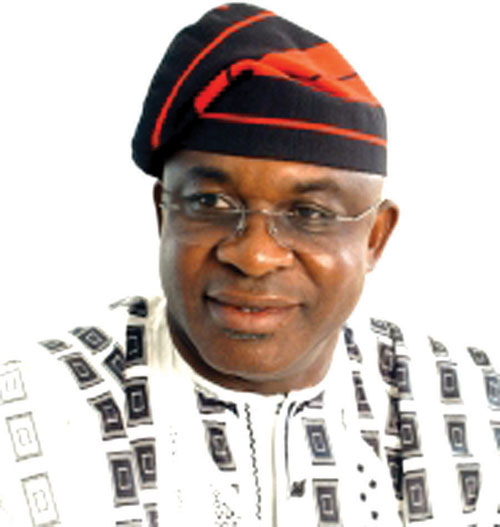
Following the Court of Appeal’s decision to reverse the deregistration of the African Democratic Congress and four other parties on Monday, ADC National Chairman Senator David Mark stated the judiciary is on trial and warned the Federal Government against political manipulation.

Stakeholders also called for sanctions against Justice Peter Lifu for flouting a superior court order, as the ADC assures supporters they will remain on the ballot.

Political parties and stakeholders affected by the Federal High Court’s controversial deregistration order welcomed the Court of Appeal’s decision to stay the execution of the judgment.

The Court of Appeal in Abuja had on Tuesday ordered a stay of execution of the judgment that directed the Independent National Electoral Commission to deregister the ADC, Action Peoples Party, Action Alliance, Accord Party and Zenith Labour Party, while delivering a stinging rebuke to Justice Lifu for flouting a May 22 appellate court order restraining him from delivering the ruling.

In a unanimous decision on Tuesday, a three-member panel led by Justice A. B. Mohammed condemned Justice Lifu of the Federal High Court in Abuja for flouting a May 22 order that directed him to suspend proceedings before him, describing his conduct as the gravest form of judicial misconduct.

“The decision of the lower court to proceed with the judgment despite the express order of this court is a brazen violation of the hierarchy of the court and the 1999 Constitution,” the panel held.

The appellate court went further, invoking a Supreme Court precedent to characterise Justice Lifu’s conduct in the harshest terms.

“The decision of the lower court to proceed with the judgment despite the express order of this court is the highest form of judicial impertinence,” the panel declared, adding that the Supreme Court had previously held that a judge who acted in such a manner “is unfit for the bench as it amounts to judicial rascality.”

The court said it had a duty to assert its supervisory authority over lower courts and protect the integrity of the judicial hierarchy.

“Courts are enjoined to protect their integrity. This court has supervisory authority over the trial court. This court has the duty to invoke its powers in ensuring that its orders are obeyed. The application for stay of execution is hereby granted. The enforcement of the judgment is stayed,” the panel ruled.

The Federal High Court in Abuja, presided over by Justice Lifu, had on Monday ordered INEC to deregister the ADC, Accord Party, Action Alliance, Action Peoples Party and Zenith Labour Party, ruling that the five parties failed to meet the constitutional performance thresholds under Section 225A of the 1999 Constitution, specifically, requirements related to securing at least 25 per cent of votes in certain states or winning seats in the 2023 general elections.

Earlier in Tuesday’s proceedings, INEC told the appellate court it was stunned by Justice Lifu’s decision to deliver the judgment, disclosing that the commission only learned of the ruling through media reports rather than any official notification.

INEC’s lead counsel, Mr Haliru Mohammed, told the panel that the commission had been aware of the appellate court’s May 22 order restraining the lower court from delivering the judgment, which had originally been reserved for June 5.

“We were not aware of any notice from the court regarding the delivery of the judgment. We only saw it as breaking news in the media. We therefore do not oppose the application of the appellant to stay the execution of the judgment,” Mohammed submitted.

The commission also aligned itself with the notice of appeal filed by the affected political parties.

Counsel to the ADC, Mr Shuaibu Aruwa, SAN, told the court that Justice Lifu communicated the judgment’s delivery to the party via WhatsApp, a disclosure that drew visible reactions from the bench.

See also  Osun 2026: Ademola Adeleke may emerge Accord Party gov candidate today

Aruwa described the lower court’s conduct as an invitation to anarchy and urged the appellate court to invoke its disciplinary jurisdiction under Section 6 of the 1999 Constitution to sanction the judge.

“The action of the trial judge calls for swift and extraordinary measures from this court. We have come to the stage where this court should press the reset button.

“We urge this court to take disciplinary steps by immediately suspending that judgment. This court has the power to protect its own integrity. We pray this court suspends the judgment immediately without further delay,” he added.

APC reacts

Reacting to the appellate court’s decision,  the ADC’s National Publicity Secretary, Bolaji Abdullahi, said the ruling offered a measure of hope for the judiciary’s credibility, though he was careful not to celebrate unreservedly.

“It indicates that the judiciary may still redeem itself. We are cautiously delighted but we insist that it shouldn’t have happened in the first place,” Abdullahi said in a telephone interview.

He called on the National Judicial Council to take urgent steps to rid the bench of judges whose conduct brought the institution into disrepute.

“We, therefore, hope that the judicial council will take urgent steps to purge the bench of judges who bring the judicial institution to disrepute,” he said.

The National Leader of the Action Peoples Party, Ikenga Ugochinyere, was more emphatic in his welcome of the ruling, describing it as a vindication of the party’s position from the outset and calling on the NJC to weed out what he termed controversial judges.

“There was no need to panic in the first place, and, so, this ruling is a vindication of our position from the get-go,” Ugochinyere said.

“We call on the NJC to weed out controversial justices who say one thing in the morning and another in the evening. These are the bad eggs giving the judiciary a bad name,” he added.

Ugochinyere raised broader concerns about public confidence in the justice system, warning that judicial inconsistency was eroding citizens’ respect for court pronouncements.

“Court pronouncements are supposed to be respected by citizens, particularly because they come from institutions established by law. But when people begin to hide behind technicalities, it raises concerns about the integrity of those institutions.

“How do we expect citizens to obey court judgments when many people no longer see justice as blind, but rather as something influenced by individuals and personal interests? That is the challenge before us,” the APP leader added.

He also noted that the controversy surrounding Justice Lifu’s ruling had sparked frustration across the country, with some of the anger directed at the presidency.

“This situation has generated a lot of reactions across the country. Many people are directing their frustrations at the President. Perhaps there is a need for greater clarity so that Nigerians understand exactly what is happening,” Ugochinyere said.

He nevertheless described Tuesday’s outcome as a victory for democracy and the rule of law.

“What happened today (Tuesday) is a victory, not just for democracy, but for the rule of law. We are happy because the courts have once again demonstrated their relevance in our democratic process,” he said.

Other parties speak

The Acting National Chairman of the Coalition of United Political Parties,  Peter Ameh, took a philosophical approach in welcoming the ruling, invoking the words of the philosopher Edmund Burke to frame the significance of the appellate court’s intervention.

“The only thing necessary for the triumph of evil is for good men to do nothing,” Ameh said.

He warned that what he described as hostile executive rascality and brazen judicial overreach must not be allowed to stand.

See also  INEC probes source of ‘strange’ names in NDC list ahead of 2027 elections

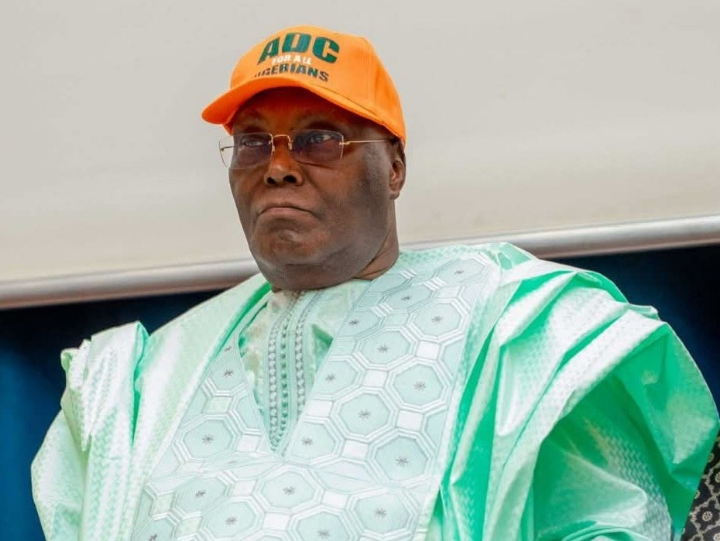
Also, the ADC presidential candidate, Atiku Abubakar said in a statement posted on his X handle that the ruling was a positive development, noting with particular significance that INEC itself had initiated the application for the stay .

“I welcome the Court of Appeal’s decision to stay the execution of the Federal High Court judgment seeking the deregistration of our great party, the ADC, and four other political parties. It is particularly significant that INEC itself initiated the application for the stay,” he wrote.

Atiku, Mark protest

The former Vice President, Atiku Abubakar also criticised what he described as judicial contradictions in the ongoing legal dispute, warning that such developments had placed the judiciary under intense public scrutiny.

“The disturbing spectacle of judicial contradictions and politically charged rulings playing out in our courts has placed the judiciary under intense public scrutiny. As ADC National Chairman, Sen. David Mark, rightly observed, the judiciary itself is now on trial,” Atiku said.

He warned against any attempt to weaponise the courts against Nigeria’s democratic institutions.

“Any attempt to undermine Nigeria’s hard-won democracy through judicial manipulation is a grave danger to the Republic. If our democracy suffers further injury, history will demand accountability from those entrusted with dispensing justice,” he said.

Following the judgment given by Justice Lifu, the National Judicial Council has been urged to investigate Justice Peter Lifu over his decision to deliver judgment in a case that was already before the Court of Appeal.

The civil society organisation, Tap Initiative for FOR Citizens’ Development, on Tuesday in a statement called on the leadership of the judiciary to immediately investigate Justice Lifu over the judgment.

The call follows concerns over the alleged disregard for the hierarchy of courts and implications such actions could have on the judiciary and Nigeria’s democracy as the country moves closer to the 2027 general elections.

Justice Lifu had on Monday ordered the Independent National Electoral Commission to deregister five political parties over their alleged breach of Section 225(A) of the Constitution.

However, the judgment was reportedly delivered despite an order staying proceedings issued by the Abuja Division of the Court of Appeal on May 22.

The decision has since attracted criticism from several quarters, with critics accusing the judge of undermining democratic principles.

In a statement signed by its Executive Director, Mbasekei Martin Obono, the group urged the NJC to, among other things, “Determine whether the decision was delivered in disregard of pending appellate proceedings and a subsisting order of stay;

“Examine possible breaches of the judicial code of conduct; Take appropriate disciplinary action if misconduct is established; and

Reaffirm the authority of appellate courts and the supremacy of due process within the judiciary”.

The group recalled that the Chief Justice of Nigeria, Justice Kudirat Kekere-Ekun, had consistently emphasised the need for accountability, discipline and ethical conduct within the judiciary.

It disclosed that it had formally petitioned the CJN, in her capacity as Chairman of the NJC, seeking an investigation and possible disciplinary action against Justice Lifu.

According to the group, the petition presents an opportunity to reinforce the principles of accountability and demonstrate that judicial independence is not incompatible with responsibility.

“Tap Initiative expresses grave concern that at the time the said judgement was delivered, there were subsisting appellate proceedings before the Court of Appeal in respect of the same subject matter in Appeal No. CA/ABJ/CV/569/2026. Furthermore, the Court of Appeal had issued an Enrolment Order expressly granting a stay of proceedings in Suit No. FHC/ABJ/CS/2637/2025, being the very proceedings in which the Federal High Court subsequently proceeded to deliver judgment.

“This development raises profound constitutional and procedural concerns, as it appears that a valid order of stay and active appellate proceedings were in force at the material time. If established, this situation would constitute a serious affront to the doctrine of judicial hierarchy and the supervisory jurisdiction of the Court of Appeal within Nigeria’s constitutional order.

See also  FG unveils poverty intelligence hub to target 140 million poor Nigerians

“Tap Initiative emphasizes that the integrity of Nigeria’s justice system depends fundamentally on strict adherence to judicial hierarchy, procedural discipline, and respect for appellate authority. Any deviation from these principles risks creating conflicting judicial outcomes, eroding legal certainty, and undermining public confidence in the courts”, he said.

The group stressed that the judiciary remains the last hope of the common citizen, arguing that its legitimacy is sustained not only by constitutional authority but also by unwavering public confidence in its fairness, discipline and respect for the rule of law.

It therefore called on the NJC to treat the matter with the urgency and seriousness it deserves in the interest of justice, democracy and national stability.

Meanwhile, the National Chairman of the African Democratic Congress, Senator David Mark, on Tuesday declared that the Nigerian judiciary, rather than the opposition party, is the institution facing scrutiny over the controversy surrounding the deregistration of the ADC and four other political parties.

Speaking at the ADC Strategic Communications Retreat in Abuja, the former Senate President accused the judiciary of actions capable of undermining public confidence in the nation’s democratic process, while questioning the conduct of Justice Peter Lifu in matters relating to the party.

According to Mark, the outcome of the controversy will test the credibility of the judiciary and the ability of the National Judicial Council to address concerns arising from the case.

“The ADC is not on trial. Rather, it is the judiciary that is on trial and the nation is waiting to see how the National Judicial Council is going to handle this precarious situation,” he said.

The ADC chairman expressed concern over what he described as unprecedented judicial actions, alleging that Justice Lifu ignored an order of the Court of Appeal directing a stay of proceedings in the matter.

He said it was difficult to comprehend how a judge could be involved in actions that appeared to contradict existing court directives.

Mark further alleged that the judge issued conflicting decisions regarding the status of the party within a short period.

“It is strange that a judge can order the Independent National Electoral Commission to pronounce a party dead and in less than 24 hours put the same party on trial,” he said.

The remarks come amid growing political tension over recent legal challenges affecting opposition parties ahead of preparations for the next electoral cycle.

Despite the legal setback, Mark urged party members not to lose confidence in the ADC, insisting that the party would emerge stronger from the dispute.

“Like I have said previously, our members should not worry about the shenanigans of the ruling party. We will go through all these turbulence because we are up to the task. By the time we are through all these, ADC will come out stronger,” he stated.

The former Senate President also accused the ruling All Progressives Congress APC of attempting to weaken opposition forces through distractions, claiming that the governing party was struggling to defend its record in office.

He alleged that the President Bola Tinubu-led government is diverting attention from its challenges by targeting opposition platforms.

Addressing party communicators at the retreat, Mark charged them to craft messages capable of expanding the ADC’s appeal across political divides, including among members of the ruling party.

He challenged the communications team to develop persuasive narratives that would attract more Nigerians to the ADC project.

punch.ng

FOLLOW US ON:

FACEBOOK

TWITTER

PINTEREST

TIKTOK

YOUTUBE

LINKEDIN

INSTAGRAM

Continue Reading
Click to comment

Leave a Reply

Your email address will not be published. Required fields are marked *

Politics

Atiku names Kashim-Ibrahim campaign chair, El-Rufai deputy

Published

on

The presidential candidate of the African Democratic Congress, Atiku Abubakar, has named Kashim Ibrahim-Imam as chairman of his 2027 National Campaign Council, with former Kaduna State Governor, Nasir El-Rufai, appointed deputy chairman.

In a statement by his Senior Special Assistant on Public Communication, Phrank Shaibu, who also serves as the campaign council’s Director of Strategic Communications, the former Vice-President also appointed Austin Akobundu as Director-General and Campaign Manager, while veteran journalist and publisher, Dele Momodu, will serve as Deputy Director-General of the Media and Communications Directorate.

Atiku said the appointments formed part of a lean campaign structure with six operational directorates and 30 directors, designed to ensure clear responsibilities, accountability and effective coordination.

The former Vice-President added, “The size and character of the council deliberately reflect the mood of the nation and the severe economic realities confronting millions of Nigerians.

“At a time when families are being compelled to do more with less, the campaign must demonstrate the same discipline, prudence and sensitivity it seeks to bring to government.

“This will not be a bloated campaign built around titles, privileges and political patronage. It will operate as a people-driven organisation anchored on competence, accountability, national inclusion, clearly defined responsibilities and measurable results.

“The National Campaign Council will be chaired by Kashim Ibrahim-Imam, an experienced political organiser and administrator with decades of involvement in national politics.

“Serving as Deputy Chairman is Nasir El-Rufai, former Minister of the Federal Capital Territory and former Governor of Kaduna State. El-Rufai brings extensive experience in public administration, political organisation and executive governance to the leadership of the council. His role will include high-level political coordination and engagement with critical stakeholders across the country.”

See also  I’ll protect Yoruba’s interest if elected president – Atiku

He said Akobundu, the Director-General and Campaign Manager, would oversee the day-to-day running and coordination of the campaign.

According to Atiku, Akobundu would be responsible for implementing the campaign’s strategies, coordinating its various arms and maintaining discipline, unity and accountability across the national structure.

He added that the campaign had been divided into six major operational directorates, each headed by a Deputy Director-General to ensure effective coordination.

The statement added that, “Working across these directorates are 30 Directors, each assigned clearly defined responsibilities. The structure has been deliberately kept lean to prevent duplication, reduce bureaucracy and ensure that every office has a specific function and every appointee is accountable for results.

“The Media and Communications Directorate will be headed by veteran journalist and publisher Dele Momodu as Deputy Director-General. He will coordinate the campaign’s media and communications operations across traditional, broadcast and digital platforms.

“Also playing a key role in the campaign structure is Dino Melaye, whose political experience and public engagement will form part of the wider effort to strengthen the campaign’s national outreach, mobilisation and public interface.”

The former Vice-President said economist and banker Mohammed Hayatudeen would lead the campaign’s policy team, supported by Prof Mohammed Sagagi and Aare Aremijoye.

He added that Prof Kingsley Moghalu, former Deputy Governor of the Central Bank of Nigeria, would also contribute his expertise to the campaign’s policy development.

The statement continued, “The Campaign Advisory Council will be chaired by John Oyegun, former governor of Edo State and pioneer National Chairman of the All Progressives Congress, with Senator Ben Obi and Lawal Batagarawa serving as Deputy Chairmen and Eyitayo Jegede (SAN) as Secretary.

See also  INEC probes source of ‘strange’ names in NDC list ahead of 2027 elections

“The philosophy underlying the campaign structure is straightforward: fewer offices, clearer responsibilities and greater accountability.

“There are six operational directorates headed by Deputy Directors-General and 30 Directors responsible for defined areas of campaign activity.

“The Director-General will coordinate their execution, while the Chairman and Deputy Chairman provide political leadership and strategic coordination.

“There will be no room for ornamental appointments. Every directorate has a responsibility. Every director has an assignment. And every level of the campaign structure will be expected to account for results.”

Atiku said the campaign would focus not only on political mobilisation but also on key issues affecting Nigerians, including the rising cost of living, unemployment, insecurity, reduced purchasing power and poor governance.

He said the campaign would be people-oriented, with its effectiveness measured by its organisation, policy clarity and commitment to addressing the concerns of Nigerians.

According to the Independent National Electoral Commission’s 2027 election timetable, political parties were expected to commence presidential campaigns on August 19.

Although the parties have yet to formally flag off their campaigns, several presidential candidates and their teams have been engaging key stakeholders and supporters across the country ahead of the official campaign activities.

Moghalu rejects appointment

Meanwhile, a former Deputy Governor of the CBN, Moghalu, has rejected his inclusion in the policy team.

Moghalu, in a statement posted on his X handle on Thursday, said he was neither consulted nor asked for his consent before his name was published as a member of Atiku’s campaign policy team.

“I am surprised to see a statement from @atiku and @ADCNig campaign team including my name as a member of former Vice-President Atiku Abubakar’s policy team for the 2027 presidential campaign.

See also  Makinde, Obi mobilise opposition to ‘Reset’ Nigeria ahead of 2027

“For the record: I was not consulted and did not give my consent to my name being published as a member of the ADC candidate’s policy team.

“I am not, in fact, a member of Atiku’s policy team, even unofficially or in any advisory capacity,” Moghalu said.

Moghalu, who was a presidential candidate of the Young Progressives Party in the 2019 election, said he had quit partisan politics in Nigeria in 2022.

“I have quit partisan politics in Nigeria since 2022. I have maintained, and continue to maintain, my non-partisan posture in our country’s national affairs.

“I am not a member or sympathiser of any political party in Nigeria,” he said.

He said his current engagements included serving as president of the Institute for Governance and Economic Transformation, IGET Africa, which he described as a non-partisan public policy think tank and executive education academy, as well as Chief Executive Officer of Sogato Strategies, a geopolitical risk and regulatory strategy advisory firm.

Moghalu said his decision to remain outside partisan politics did not mean he was disengaged from national affairs.

“I remain committed to my country, Nigeria and its progress, but such commitment does not have to entail ANY partisan alignment.

“I have adopted the path of statesmanship, not partisanship,” he said.

Source: punchng.com

FOLLOW US ON:

FACEBOOK

TWITTER

PINTEREST

TIKTOK

YOUTUBE

LINKEDIN

INSTAGRAM

Continue Reading

Politics

I left Anambra debt-free, Obi insists

Published

on

The presidential candidate of the Nigeria Democratic Congress, Peter Obi, has insisted that he did not borrow money or issue bonds on behalf of Anambra State during his eight years as governor.

Obi, who spoke on Arise TV’s Prime Time programme on Thursday, said his administration left office in March 2014 without owing salaries, gratuities, pensions or contractors whose jobs had been executed, certified and verified.

The former governor was responding to questions over recent allegations by the Anambra State Government that his administration left outstanding debt and other liabilities for successive governments to service.

“Let me categorically state again: I, Mr Peter Obi, did not approach any financial institution to borrow money or issue bonds on behalf of Anambra State in the eight years I was in government.

“On the day I left office, the government of Anambra State, which I headed, was not owing any salary, gratuity, or pension to those scheduled to be paid by the state government.

We were not owing any contractor or supplier who executed his job, certified and verified—not one,” he said.

Obi said the loans being attributed to his administration were not funds he personally obtained from financial institutions, arguing that some of the funding arrangements were supported by the Federal Government.

“I didn’t go to obtain it. But what I’m saying, assuming that your father left you with an inheritance of N100m, and suddenly somebody comes up and says your father is owing N10m. Are you going to go to the market and say your father left you with debts? Unless there’s another thing, you’ll be unfair,” he said.

He explained that the Federal Government had selected Anambra, Ekiti and Bauchi states to receive concessionary multilateral support because of their performance in education.

“There’s a difference between I went to the bank to borrow money, then the Federal Government sees, ‘Oh, this state is doing well in education.’ They selected Anambra, Ekiti, and Bauchi and said, ‘These three states are doing well. Why don’t we give them a concessionary multilateral support to help them?’”

Obi said the funding, which involved the World Bank, was not obtained by Anambra from a commercial bank.

“Yes, and the World Bank,” Obi said, when the interviewer asked whether the funding was a decision by the Federal Government to provide support.

See also  US Congressman; Riley Moore meets Ribadu, others, says religious violence must stop

“To support us. Not that we go to the World Bank and say give me this, not that we go to any commercial bank. And to even make it more… when it came, if you look at State Education Programme Investment Project (SEPIP), you will see that the drawdown was well after I left office.”

He added that even if the entire amount in question had been drawn down, there would have been sufficient funds left to cover it.

“I’ve assumed the whole and said even if that was the case, there was enough left to pay it, and the state will still be at the best financial standing,” he said.

Obi further argued that undrawn funds under a loan facility should not be regarded as debt incurred by the government.

“Even if I had gone to a bank and borrowed money—even if I had gone to a bank and borrowed money, but I did not spend the money, you cannot call it debt I left.

“Assuming I have gone to the bank and said, ‘Bank A, borrow me loan, Give me a loan of N10 billion. And they gave me a loan of 10 billion Naira, and I only drew down 500 million; you cannot now say I’m owing 10 billion because you know the amount. That’s why I said it is not proper public sector accounting.”

To support his position, Obi cited former Debt Management Office Director-General, Abraham Nwankwo, who he said served for 10 years.

He said Nwankwo had invited him to chair his send-off ceremony and publicly stated that Obi was the only governor in Nigeria who never visited his office to seek approval to borrow money.

“To even confirm this: the then DG… Abraham Nwankwo, who was DG of Debt Management Office, served for 10 years. The day he left office, at his send-off party, he invited me as the chairman, and he announced to everybody at that party that the reason why he made me chairman is that I was the only governor in Nigeria who never came to his office for approval to borrow money,” he said.

The dispute followed recent criticism from the Anambra State Government, which has alleged that Obi left outstanding external loans and other liabilities.

The state government recently challenged Obi to quit the 2027 presidential race, accusing him of leaving outstanding external loans and salary, pension and gratuity arrears, and of breaking earlier pledges on debt and timely payment of workers.

See also  CBN targets N2.83tn cash in private hands ahead of 2027 polls

Through its New Media Office and Commissioner for Information and Value Reorientation, Dr Law Mefor, the state alleged that eight external borrowings contracted during Obi’s tenure left an outstanding balance of about N127.4 billion (from $123.77 million) as of June 30, 2026, which continues to be serviced from federal allocations.

It also referenced salary arrears, including at the Water Corporation, and disputed Obi’s claim of leaving more than N2.13 billion in an ecological fund account.

Obi had previously vowed to stop campaigning if it was proven he left the state in debt or with unpaid certified contractor obligations.

NDC, Ok Movement tackle Soludo

The NDC and the Peter Obi-backed OK Movement have criticised Anambra State Governor, Prof Chukwuma Soludo, over his continued attacks on Obi as the political battle ahead of the 2027 presidential election intensifies.

The NDC National Publicity Secretary, Osa Director, described Soludo’s attacks on Obi as a distraction, alleging that the Anambra governor was acting at the behest of unnamed political interests.

Director disclosed this in an exclusive phone interview with The PUNCH.

He said, “This is more like a distraction that Obi is having. Soludo is the man on the spot right now, apparently doing someone’s bidding to destroy his own brother. He seems to be taking this too far, and it is very petty of him.”

The Director-General of the OK Movement, John Ughulu, in an exclusive interview with our correspondent, also urged Soludo to focus on governing Anambra State rather than making Obi the centre of his political attacks.

Ughulu said the movement respected Soludo’s decision to support President Bola Tinubu and the APC in 2027, but argued that political differences should not turn into a continuous campaign against Obi.

He said, “We believe Soludo should focus his energy and attention on the task of governing Anambra State and delivering on the mandate entrusted to him by the people.

See also  Owo church massacre: Court sentences four to death for terrorism; read details

“Obi left office as governor 12 years ago. The people of Anambra are mature and capable of assessing the records of previous administrations and comparing them with the realities they experience today. They do not need political actors to tell them how to evaluate the past.

“We equally respect Prof Soludo’s political choice to support President Bola Tinubu and the APC in the 2027 presidential election. Every Nigerian has the constitutional right to support the candidate or political platform of his or her choice.

“However, political disagreement should not become a continuous campaign against another individual.”

According to him, Obi’s growing popularity across the South-East and other parts of the country was a political reality that should be countered with stronger policies and programmes rather than personal attacks.

The OK Movement DG added that since Soludo was not a presidential candidate in 2027, there was little value in turning the election into a permanent contest with Obi.

He said, “The growing popularity of Peter Obi across the South East and other parts of Nigeria is a political reality that cannot be wished away. The appropriate response to popularity in a democracy is to present a stronger vision, policies and programmes, not personal attacks.

“The OK Movement has deliberately instructed its members and supporters not to be distracted by unnecessary or divisive exchanges. Our focus remains on issues that matter to Nigerians: good governance, economic development, security, institutional accountability, equity, justice and competent leadership.

“Soludo is not a candidate in the 2027 presidential election. If his political objective is to support the APC presidential campaign, he is entitled to do so. But there is little value in allowing the politics of 2027 to become a permanent contest with Peter Obi.

“We therefore encourage him to concentrate on the development of Anambra and allow the people to make their own independent assessment of every political leader and administration.

“The OK Movement will continue to promote issue-based politics, peaceful democratic engagement and responsible political discourse. We will not be distracted. Nigeria will be OK.”

Source: punchng.com

FOLLOW US ON:
FACEBOOK

TWITTER

PINTEREST

TIKTOK

YOUTUBE

LINKEDIN

INSTAGRAM

Continue Reading

Politics

One ticket, two visions; read about the battle between NDC and the OK Movement today

Published

on

The presidential candidate of the opposition Nigeria Democratic Congress (NDC), Peter Obi and his running mate, Rabiu Musa Kwankwaso  appear to have divergent views on some issues ahead of the 2027 presidential election.

Obi and Kwankwaso hold different views on fuel subsidy removal and establishment of state police.

Daily Trust reports that Obi supports the removal of the subsidy but believes it should have been removed in a structured and phased manner, noting that the alleged mismanagement of subsidy savings should not have been an excuse for restoring it.Speaking at the Nigerian Bar Association conference in Port Harcourt, Rivers State, recently, Obi maintained that he did not support a return to the fuel subsidy era.

“I subscribe and maintain that you need to remove the subsidy. Mismanagement of the proceeds shouldn’t be the reason for not removing it. What we should have done is that when we remove subsidy, we would have given the people an alternative usage for the subsidy. What we have today is that the removal and attendant resources being recovered are also being mismanaged and stolen,” Obi had said.

But Kwankwaso said he supported the reintroduction of the subsidy in a modified form.

In a TV interview on Tuesday, the NDC vice-presidential candidate stated that an Obi-led government would bring back subsidy “in our own way.”

Asked whether it would be difficult for the NDC to campaign in the North-West, where there is support for the return of subsidy, Kwankwaso said, “No, no, no, look. We are bringing subsidy in our own way.”

“Of course, there are many ways. One, I can tell you: now we have a refinery built by a businessman, and I’m sure more refineries would be built.

“Now, if individuals in this country could build refineries, I see no reason why the government, under certain circumstances, will not build a refinery or refineries to the extent that we achieve the minimum requirement.

“What is the minimum requirement? The minimum requirement is for the people across the country to go to the filling stations and buy fuel at a reasonable price.

“We, in the NDC, will do whatever it takes, really, to put the price of oil down,” he said.

The position of the NDC presidential candidate and his running mate also differed on state police.

Obi had in a statement on his X handle, commended the State Police Bill, saying it represents a major legislative milestone in Nigeria’s quest to reform its policing architecture, but disagreed with the manner in which the legislation was processed.

He said the absence of broad public consultation and the speed with which the legislation was passed had created widespread suspicion about the motives behind the initiative.

Obi said, “The recent passage of the State Police Bill by the National Assembly marks a significant legislative milestone in addressing a long-standing demand of the Nigerian people.

Also, in an interview with Arise Television, Obi,  when asked if he believes in state police, retorted:  ‘’Yes I believe in state police. We will do whatever it takes to secure the country.”

But the NDC vice-presidential candidate, in the Tuesday interview, rejected the creation of state police in Nigeria saying the increasing calls for it were due to the inability of the current federal policing system to effectively tackle the country’s security challenges.

Kwankwaso insisted that the idea of state police emerged because of what he described as the failure of the federal or national police to effectively deal with insecurity.

He said, “I have always been against state police, and I can tell you the issue of state police came because of the failure of the federal or national police. I think it’s one of the big mistakes that government is doing.

NDC, OK Movement rift

Also, the brewing tension between the hierarchy of the NDC and grassroots volunteers under the auspices of the Obi-Kwankwaso (OK) Movement has spilled into the open after the executive leadership of the party disowned a 59-member Presidential Campaign Council (PCC) unveiled by the movement.

See also  FG unveils poverty intelligence hub to target 140 million poor Nigerians

The move marks the first major public battle over political supremacy, organisational control and strategy between the party platform and the high-profile support group backing the Obi-Kwankwaso ticket.

Analysts describe the disagreement within the party over the structure of its campaign machinery as “untimely” and warned the crisis could have wider implications for the opposition ahead of the 2027 general elections.

The crisis escalated when the OK Movement, through its National Secretary Saadatu Sani, announced the formation of an independent campaign machinery led by the movement’s National Director-General, John Ughulu, as Director-General of the PCC. The announcement was swiftly rebuffed by the party hierarchy.

In a counter-statement titled “Re: Purported OK Movement PCC Announcement,” the NDC National Chairman, Senator Cleopas Moses, officially disavowed the movement’s setup, insisting that no campaign structure could be unveiled without formal approval from the party’s National Working Committee (NWC).

Adding weight to the party’s stance, the NDC National Leader Senator Seriake Dickson cautioned support groups against setting up alternative organs that compete with official structures.

While acknowledging the importance of support groups in grassroots mobilisation, Dickson insisted that all campaign activities must be channeled through formal party machinery.

“Support groups should work with the political party and its campaign structures rather than compete with them during the electioneering process,” Dickson noted, reiterating that party supremacy remains non-negotiable.

Why NDC, OK Movement are at loggerheads

Behind the public statements lies a fundamental conflict between traditional party governance and organic political mobilisation.

Party insiders revealed that the NDC leaders fear being sidelined by the support group’s assertive structure.

An NDC chieftain, who spoke on condition of anonymity, outlined the core conflict.

“The friction rests on organizational independence versus party supremacy. The OK Movement maintains it is a volunteer-driven force that will not be absorbed or subordinated into the NDC machinery. Conversely, the NDC views political authority through constitutional structures. Allowing parallel campaign councils creates competing power centers that undermine party discipline,” the source said.

The feud is further complicated by leadership disputes around Ughulu. While state and ward coordinators of the OK Movement have threatened mass withdrawal if Ughulu is removed, NDC leaders have resisted his authority, citing unresolved disciplinary proceedings over past primary disputes in Lagos.

Campaign council list ‘nonsensical’ – Dickson

The NDC national leader, Dickson, also criticised the OK Movement over the controversy surrounding the 59-member presidential campaign council list, describing the group’s actions as “nonsensical.”

Dickson addressed the issue on Tuesday following a meeting of NDC stakeholders in Abuja, where Babachir Lawal, former Secretary to the Government of the Federation (SGF), officially joined the party.

Rejecting the movement’s stance, Dickson emphasised that support groups must understand their boundaries and avoid attempting to rival the party apparatus.

“Support groups don’t compete with the political party that is sponsoring candidates. Support groups don’t compete for supremacy and space. They provide grassroots support and mobilisation. They don’t convert themselves to become critics of the political party sponsored. They don’t attack the political party sponsored,” he said.

Dickson noted that while support groups exist across all political platforms, including the ruling All Progressives Congress (APC), none had attempted to usurp party functions.

“None of them will dare say they are setting up a presidential campaign council. It is unheard of. Nonsensical. And those who had a duty to educate and call people to order should do so,” he added.

Despite the reprimand, the NDC leader affirmed that the party recognises the value of grassroot support groups and remains open to collaborating with them, noting that he has previously held constructive meetings with Obedient groups.

See also  CBN targets N2.83tn cash in private hands ahead of 2027 polls

Movement declares independence from party

Refusing to back down, Ughulu, in a statement on Wednesday, asserted that the movement remains an autonomous entity that will neither merge into the NDC nor surrender its nationwide structures.

“The OK Movement is an independent political organisation, not a support group created as an appendage of any political party. Its existence and internal administration are not subject to the internal management of the NDC. Political cooperation between the OK Movement and the NDC should be understood as collaboration rather than organizational subordination,” Ughulu declared.

He maintained that the movement is self-funded by its members and retains the right to design its own campaign strategy and field operations. While affirming that the group does not claim supremacy over the NDC, he warned against attempts to dissolve or hijack its network.

“No individual can simply declare that structure dissolved, transferred, or absorbed without the authority of the movement’s legitimate organs,” he warned.

He stressed that the movement operates through its own established nationwide structures across national, state, local government, and ward levels, adding that these assets would neither be surrendered, collapsed, nor merged into the NDC or any other political party.

“The movement’s structures were built through the commitment of thousands of coordinators across the country over time. No individual can simply declare that structure dissolved, transferred, or absorbed without the authority of the movement’s legitimate organs,” Ughulu said.

Reaffirming the group’s long-term strategy, Ughulu stated that the OK Movement remains united, lawful and fully committed to advancing the Obi-Kwankwaso presidential campaign through the 2027 general elections.

Rift may affect NDC’s chances at polls – Analysts

A Kano-based political analyst, Mustapha Isa, said the OK Movement operates outside the formal party structure and enjoys the blessings of both Obi and Kwankwaso because of its organisational strength and ability to mobilise resources more pragmatically than many party organs.

He noted that the recent rift between the NDC and the movement over the campaign council reflects a lack of synergy and highlights the group’s independence, which the party may see as a threat.

“Traditionally, what obtains in Nigerian politics is for the party to inaugurate its campaign council and assign roles to support groups. This is usually done under a coordinator or director of support groups, who harmonises their activities, just like the APC did,” Isa said.

The analyst maintained that the NDC was right to dissociate itself from the campaign council list released by the movement, warning that recognising it could encourage other support groups to set up parallel councils, thereby creating a cumbersome structure for the party to manage.

He added that the OK Movement, because of its allegiance to the candidates, believes the party cannot effectively manage campaigns or safeguard their mandate.

Isa advised that the way forward is for the party to accommodate the movement within its proposed campaign council and address its grievances, so that its wide network can be deployed during electioneering.

He urged Obi and Kwankwaso to personally intervene in resolving the feud before it worsens.

Speaking on the issue, a political analyst, Dr Ayinde Mosadi, said the disagreement within the NDC over the structure of its campaign machinery should be viewed beyond the immediate internal wrangling.

He warned that the crisis could have wider implications for the opposition ahead of the 2027 general election.

Mosadi said the NDC’s present crisis was partly rooted in the history of the party and the manner in which it had evolved with the entry of prominent political figures.

According to him, the party was initially a relatively small political platform that welcomed prominent figures such as Obi and Kwankwaso because of their political strength and the desire to win the election.

See also  I’ll protect Yoruba’s interest if elected president – Atiku

A lecturer at the Department of Political Science, Adekunle Ajasin University, Akungba-Akoko, Ondo State, Idowu Ajayi, warned that the ongoing rift between the NDC and the OK Movement could affect the party’s performance in the 2027 general election if not urgently resolved.

Ajayi said the manner in which the campaign committee was constituted had the potential to create divisions within the political platform, particularly if the various groups involved were not adequately carried along.

He said the disagreement should not be treated as an ordinary misunderstanding because it could affect internal coordination, grassroots mobilisation and the party’s ability to present a common message to the electorate.

According to him, any political organisation preparing for a general election requires a clearly defined structure in which the roles of the party, campaign organisation and support groups are understood by all stakeholders.

“The way the campaign committee was constituted is capable of creating misunderstanding among the different interests within the movement. If the issue is not properly managed, it could affect the performance of the party during the general election,” he said.

Ajayi explained that the major issue appeared to be the relationship between the authority of the political party and the independent identity of the OK Movement and other support organisations associated with the Obi-Kwankwaso political project.

He said while the party would want to maintain control over its official structures and candidates, the support movements would also expect recognition of their structures and contributions.

He warned that failure to resolve the differences could create confusion among supporters at the grassroots, particularly over who is responsible for mobilisation, campaign activities and communication.

“When supporters begin to receive different directives from different structures, it can affect coordination. At the ward and polling-unit levels, there must be clarity about who is responsible for what,” Ajayi said.

The political scientist also noted that continued public exchanges between the NDC and the OK Movement could shift attention away from the party’s candidates, policies and campaign message, while prolonged disagreement could deepen mistrust among the different interests within the political platform.

We’re awaiting nominations to PCC from Obi, Kwankwaso – NDC

Meanwhile, the NDC has ceded the privilege to nominate key members of the party’s Presidential Campaign Council to Obi and Kwankwaso.

The party said the duo would nominate the Director-General, Deputy Director-General (North), campaign spokesman, deputy spokesman, Head of New Media, Finance Director, Deputy Finance Director and other officials of the council in consultation with the party leadership.

The NDC stated this in a statement on Tuesday by its National Publicity Secretary, Osa Director, following consultations between Obi, Kwankwaso and the party’s national leadership.

Director said the arrangement was designed to promote inclusiveness and cohesion in the campaign structure.

The spokesman explained that the organogram of the campaign council had been prepared since August and submitted to Obi and Kwankwaso for their input, while nominations had also been received from stakeholders nationwide.

He said, “The party leadership has given a free hand to the presidential candidate and his running mate to make nominations.”

The NDC said it would announce and inaugurate the council after receiving the candidates’ inputs.

“We also appeal to all our candidates at all levels to restrain their supporters and support groups to focus on the need to win elections. There are no battles to fight within the NDC. The common opponent to defeat is the ruling APC.

“We are committed as a party. The party has done its own and is ready to do more. The candidates and their supporters are encouraged to do the same,” he stated.

Source: dailytrust.com

FOLLOW US ON:

FACEBOOK

TWITTER

PINTEREST

TIKTOK

YOUTUBE

LINKEDIN

INSTAGRAM

Continue Reading

Trending