Connect with us

Business

Lagos-bound British Airways plane skids off London runway, read details

Published

on

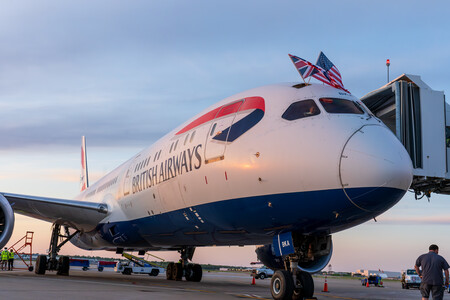
A British Airways flight bound for Lagos was forced to abort its journey on Tuesday after the aircraft veered off a taxiway at London Heathrow Airport, leaving its nose landing gear stuck in a grass verge.

The incident, which involved flight BA75, occurred as the Boeing 787-10 Dreamliner prepared to depart Heathrow for the Murtala Muhammed International Airport, Lagos, with 215 passengers on board.

Although the incident disrupted the passengers’ travel plans, no injuries were reported among those on board or the crew.

The PUNCH gathered that the aircraft, with registration number G-ZBLF, had pushed back from Terminal 5, Gate C56, at about 10:40 a.m. local time.

It was taxiing towards the runway when it suddenly veered off the designated path, sending its nose wheel into a grass verge.

Photographs from the scene showed the aircraft’s nose landing gear partially embedded in the grass, with emergency services subsequently deployed to assist.

The incident forced the cancellation of the Lagos-bound flight, leaving passengers to contend with unexpected travel disruptions.

Heathrow Airport confirmed the development, saying it was providing assistance following the aircraft’s departure from the taxiway.

British Airways, in a statement published on its website, apologised to affected passengers and said it was working to minimise the disruption by arranging alternative travel.

The airline said: “We are very sorry to our customers for the disruption to their flight. Our teams are working to get them on their way as quickly as possible and are in touch with them to put things right.”

See also  NNPC laments losses as PENGASSAN halts strike

Source: punchng.com

FOLLOW US ON:

FACEBOOK

WHATSAPP CHANNEL

TWITTER

PINTEREST

TIKTOK

YOUTUBE

LINKEDIN

INSTAGRAM

Continue Reading
Click to comment

Leave a Reply

Your email address will not be published. Required fields are marked *

Business

Read details of things to know about Enugu’s proposed 2% rent cap

Published

on

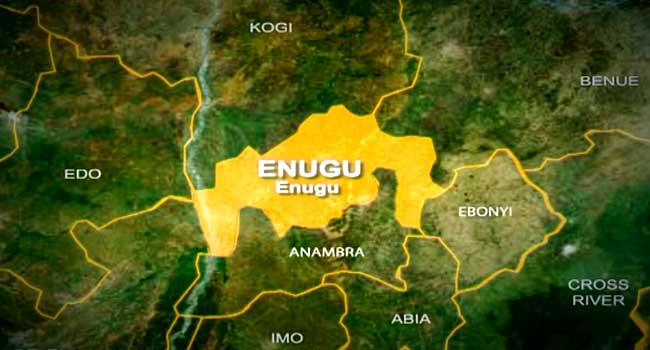
The Enugu State House of Assembly has passed a bill seeking to restrict landlords from increasing rents by more than two per cent every four years, a proposal that could significantly change the relationship between property owners and tenants if it becomes law.

The proposed amendment to the state’s Landlord and Tenant Law comes amid complaints about rising accommodation costs, arbitrary rent increases, excessive agency commissions and legal fees.

Although the bill has passed its third reading, it is yet to become law, as it requires the assent of Governor Peter Mbah.

If signed, the legislation could introduce new restrictions on rent reviews, provide additional safeguards for tenants and regulate certain charges associated with securing accommodation.

Here are five things the proposed law could mean for residents of Enugu State.

1. Landlords may not increase rent every year

One of the most significant provisions of the proposed amendment is the restriction on how frequently landlords can increase rent.

Under the proposal, landlords would have to wait at least four years before increasing the rent of a property. Any subsequent increase would be limited to two per cent of the existing rent.

This means tenants could potentially enjoy greater certainty about their accommodation costs instead of facing annual or frequent rent increases.

For instance, if a tenant currently pays ₦500,000 annually, a two per cent increase would amount to ₦10,000, bringing the annual rent to ₦510,000 after the permitted review period.

Similarly, a tenant paying ₦1m annually would face a maximum two per cent increment of ₦20,000, bringing the rent to ₦1.02m.

See also  Cooking gas prices ease as supply improves

However, the actual effect would depend on the final wording of the legislation, particularly how the four-year period and rent calculation are defined.

2. Renovated properties could attract higher rent

The proposed amendment also makes provision for landlords who undertake reasonable renovations to their properties.

In such circumstances, landlords would be permitted to increase rent by not more than 10 per cent.

This means that a property owner who carries out qualifying renovations could potentially charge a higher rent than the ordinary two per cent limit allows.

For example, if a property attracts an annual rent of ₦500,000, a 10 per cent increase would amount to ₦50,000, bringing the new rent to ₦550,000.

The provision could allow landlords to recover part of the costs of improving their properties while preventing unlimited increases.

However, the definition of reasonable renovations, the evidence required and the conditions for applying the 10 per cent increase would be important in determining how the provision works.

3. Tenants could face lower accommodation-related charges

Beyond rent increases, the proposed amendment is also intended to address complaints about excessive agency commissions and legal fees when residents seek accommodation.

Such charges can significantly increase the amount prospective tenants must pay before moving into a property.

The House committee chairman, Okey Mbah, said the legislation was designed to protect residents from exploitation by landlords and estate agents.

“This bill will subsidise over 60 per cent of what residents used to pay while trying to secure accommodation,” he said.

A previous published version of the amendment bill contained provisions requiring estate agents to obtain permits from the Enugu State Housing Development Corporation.

See also  Dangote rejects NNPC offer to increase stake in refinery; read why

It also proposed limiting agency fees to 10 per cent of the rent paid by prospective tenants and legal fees for preparing tenancy agreements to 10 per cent.

However, the final version passed by the Assembly should be examined to establish whether these provisions were retained and whether additional conditions apply.

4. Landlords may face greater restrictions over eviction

The proposed reform also raises questions about the procedures landlords must follow when seeking to recover their properties from tenants.

According to a report by THISDAY, the committee chairman said the amended legislation would require landlords to properly serve tenants before initiating court proceedings.

“A tenant must be properly served before being charged to court. Without proper service, no case should be established or treated in the first instance,” Mbah said.

If retained in the final legislation, the provision could strengthen procedural protections for tenants facing eviction disputes.

It would also emphasise that landlords must follow the legally prescribed process rather than resorting to arbitrary eviction.

However, it would not mean tenants could occupy properties indefinitely without paying rent or complying with their tenancy agreements.

5. Landlords could face financial and enforcement challenges

While the proposed restrictions could offer tenants greater predictability, property owners have questioned whether the two per cent limit is sustainable in an economy where the costs of maintaining buildings, purchasing construction materials, electricity and other services continue to change.

A landlord in Enugu, Onyekwere Johnson, according to a Punch report on Tuesday, described the proposed cap as unrealistic and difficult to enforce.

See also  Reps propose commission to track, manage FG assets, read details

“That would have been a natural law if the prices of petroleum products and electricity tariffs increased by two per cent. Otherwise, it is an unnatural law. It is neither sustainable nor can it be obeyed,” he told PUNCH.

He added, “You cannot single out landlords and regulate their business while other sectors are struggling to meet the benchmark of inflation set by the managers of the Nigerian economy. It violates landlords’ rights against discrimination.”

The disagreement raises questions about how the government would enforce the proposed restrictions, verify qualifying renovations and address disputes between landlords and tenants.

It also raises the possibility that property owners could seek other ways to adjust their charges, making effective enforcement and clear regulations important.

When will the proposed law take effect?

The Enugu State House of Assembly passed the Landlord and Tenant Amendment Bill on Tuesday, November 17, 2026, after it scaled its third reading.

The bill, which passed its second reading on March 11 and underwent a public hearing on March 26, now awaits the assent of Governor Peter Mbah.

Until the governor signs it and it commences in accordance with its provisions, the proposed restrictions should not be treated as an existing law.

If assented to, the legislation could introduce significant changes to how rents are reviewed, accommodation charges are regulated and tenancy disputes are handled across Enugu State.

Source: punchng.com

FOLLOW US ON:

FACEBOOK

WHATSAPP CHANNEL

TWITTER

PINTEREST

TIKTOK

YOUTUBE

LINKEDIN

INSTAGRAM

Continue Reading

Business

Oyetola to flag off Apapa, Tin-Can ports modernization, read details

Published

on

MINISTER of Marine and Blue Economy, Dr Adegboyega Oyetola, will perform the flag-off ceremony for the modernisation of Apapa and Tin-Can Island ports in Lagos on November 25.

According to the News Agency of Nigeria (NAN), the ceremony will mark the commencement of the Federal Government’s efforts to rehabilitate and upgrade the two major ports to improve efficiency and strengthen Nigeria’s maritime infrastructure.

Dr Bolaji Akinola, Special Adviser to the Minister, disclosed this in a statement on Monday.

Akinola said the two ports jointly handle more than 70 percent of Nigeria’s non-oil export cargo, making their modernisation important to the country’s trade and economic growth.

He described the project as a major intervention, noting that it would be the first comprehensive upgrade of the ports in about 50 years.

According to him, the project will address ageing infrastructure, operational challenges and growing demands on the nation’s busiest port corridors.

He said that the modernisation would improve cargo-handling capacity, reduce vessel turnaround and cargo dwell times, enhance port access and logistics, and strengthen safety and security.

Akinola added that the project would improve the operating environment for port users, investors and other maritime stakeholders.

He said the modernisation of Apapa and Tin-Can ports was part of a broader government strategy to develop an efficient and globally competitive port system across the country.

He disclosed that the government had also approved the modernisation of four other major seaports outside Lagos, namely Warri, Onne, Calabar and Rivers ports.

He explained that the initiative is aimed at expanding cargo-handling capacity, promoting balanced economic development and reducing the concentration of maritime activities in Lagos.

See also  FG, World Bank in talks over second-largest $1.25bn loan

Akinola noted that modern port infrastructure was essential to the government’s economic diversification agenda, particularly efforts to increase non-oil exports, strengthen local industries and improve the ease of doing business.

He said that the programme would also promote better integration of seaports with road and rail networks, inland waterways and dry ports to enhance multimodal transportation and trade facilitation

Source: tribuneonlineng.com

FOLLOW US ON:

FACEBOOK

WHATSAPP CHANNEL

TWITTER

PINTEREST

TIKTOK

YOUTUBE

LINKEDIN

INSTAGRAM
Continue Reading

Business

NNPC probes Lagos filling station fire, read details

Published

on

The Nigerian National Petroleum Company Limited (NNPC) has commenced an investigation into a fire outbreak at an affiliated filling station along Ekoro-Ajasa Road in the Alimosho Local Government Area of Lagos State.

The company said the fire, which occurred on Monday, November 16, 2026, had been brought under control by emergency responders, adding that no deaths or injuries had been reported.

NNPC Limited disclosed this in a statement issued by its Chief Corporate Communications Officer, Andy Odeh.

The incident affected seven classrooms at St Lawrence Greater Height School, located beside the filling station, as well as two vehicles and three fuel dispensing pumps.

A DAF truck and a Toyota Camry were also reportedly destroyed in the fire.

The Lagos State Emergency Management Agency said preliminary investigations indicated that the fire started while a tanker was discharging diesel at the filling station before spreading to the dispensing pumps and the adjoining school.

Confirming that the fire had been contained, NNPC said its retail, health, safety and environment teams, alongside the management of the affiliated station, were reviewing the circumstances surrounding the incident.

The statement read, “NNPC Limited confirms that the fire at an NNPC-affiliated filling station on Ekoro-Ajasa Road in Alimosho Local Government Area of Lagos earlier today, 16 November 2026, has been contained.

“Based on preliminary information, no fatalities or injuries have been reported.

“We understand the fear and distress this incident has caused residents, customers and businesses in the area. Our thoughts are with everyone affected, particularly those whose property or livelihoods may have been impacted.”

See also  Firm partners Hilda Baci for world’s largest jollof rice cook-off

The company commended the Lagos State Emergency Management Agency, the Lagos State Fire and Rescue Service and other emergency responders for containing the fire and limiting further damage.

It said, “NNPC Limited commends the Lagos State Emergency Management Agency (LASEMA), the Lagos State Fire and Rescue Service and other emergency responders for bringing the fire under control and limiting further damage.”

The oil firm said the safety of customers, employees and neighbouring communities remained a priority, assuring residents that it would cooperate with relevant authorities and the station’s management in investigating the incident.

“NNPC Retail, Health, Safety and Environment teams and management of the affiliate filling station are reviewing the cause of the fire.

“The safety of customers, employees and neighbouring communities remains a priority. NNPC Limited will support the relevant authorities and management of the affiliate filling station and provide further updates as verified information becomes available,” it stated.

The incident has renewed attention on fire safety at petroleum retail outlets, particularly during fuel offloading operations, when flammable products are transferred from tankers into storage facilities.

NNPC said it would provide further information after its review and investigations by the relevant authorities.

Source: punchng.com

FOLLOW US ON:

FACEBOOK

WHATSAPP CHANNEL

TWITTER

PINTEREST

TIKTOK

YOUTUBE

LINKEDIN

INSTAGRAM

Continue Reading

Trending