Connect with us

Business

Tinubu commends NADF for expanding farm input access

Published

on

President Bola Ahmed Tinubu has commended the National Agricultural Development Fund (NADF) for its critical role in expanding farmers’ access to fertiliser and advancing Nigeria’s food security objectives under the Renewed Hope Agenda.

Tinubu’s commendation was contained in a State House statement issued on Thursday, where he highlighted NADF’s implementation of the Renewed Hope Farm Input Support Programme (RH-FISP) as a critical intervention supporting smallholder farmers across the country.

According to President Tinubu, while efforts under the Presidential Fertiliser Initiative (PFI), now restructured under the Ministry of Finance Incorporated (MOFI), have strengthened fertiliser procurement and local production, NADF has played a crucial role in ensuring that these inputs reach farmers at the grassroots level.

“Securing inputs and keeping blending plants active is only the first step. The real test is last-mile access, getting fertiliser to the farmers who need it, when they need it,” President Tinubu stated.

He noted that through RH-FISP, NADF is currently distributing 515,720 bags of locally produced fertiliser to 128,930 smallholder farmers across 25 states and the Federal Capital Territory during the current planting season, helping to improve productivity and support national food production.

The intervention, being coordinated by the Executive Secretary of NADF, Muhammad Abu Ibrahim, is one of the flagship agricultural support programmes designed to boost smallholder farmer productivity, improve yields and strengthen food security across the country.

President Tinubu described the initiative as a practical demonstration of his administration’s commitment to fulfilling its promise to make food security a central pillar of the Renewed Hope Agenda.

See also  FG tells marketers to reflect global oil price drop in petrol prices

“When we came into office, we made a promise to Nigerians that food security would be a major pillar of our Renewed Hope Agenda. We promised to support our farmers, strengthen local production, reduce dependence on imports, and build an agricultural system strong enough to withstand shocks from beyond our borders. That promise is being kept,” he said.

Beyond fertiliser distribution, the President also acknowledged NADF’s efforts in promoting modern agricultural practices through digital extension services, harmonised fertiliser application guidance and targeted interventions for priority crops, including rice, maize, cassava and soybean.

Under the leadership of Mohammed A. Ibrahim, NADF has continued to deepen partnerships and implement strategic interventions aimed at improving access to agricultural inputs, enhancing farmer support systems and driving sustainable agricultural development.

The commendation comes amid ongoing federal government efforts to strengthen agricultural value chains and shield the sector from global supply disruptions.

President Tinubu noted that strategic interventions across the fertiliser value chain have helped sustain local production capacity, improve affordability and support farmers despite rising global input costs.

Reaffirming his administration’s commitment to agricultural transformation, the President pledged continued support for initiatives that boost productivity, strengthen value chains and improve livelihoods across rural communities.

“Our administration will not relent in its efforts to strengthen Nigerian agriculture and protect food security for every Nigerian. This is the meaning of promise made, promise kept.

“We will continue to take practical steps that improve productivity, support our farmers, and secure our nation’s food future,” President Tinubu said.

The President’s endorsement further underscores NADF’s growing role in the Federal Government’s strategy to improve agricultural productivity, enhance food security and drive sustainable rural development nationwide.

Continue Reading
Click to comment

Leave a Reply

Your email address will not be published. Required fields are marked *

Business

DisCos earn N603bn as power offtake drops

Published

on

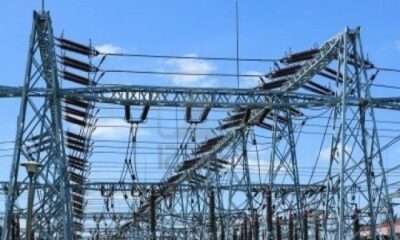
Electricity distribution companies collected N603.64bn from customers in the second quarter of 2026, despite a decline in the volume of electricity they received from the power market.

The figure was contained in the Nigerian Electricity Regulatory Commission’s second-quarter 2026 report, which showed that the average energy offtake by the DisCos at their trading points fell to 3,197.03 megawatt-hours per hour in the quarter.

The Q2 figure represented a 112.45MWh/h, or 3.40 per cent, decline from the 3,309.48MWh/h average recorded in the first quarter. Despite the decline in offtake, the DisCos recorded an overall offtake performance of 94.07 per cent during the quarter, against available partially contracted capacity of 3,398.41MWh/h.

According to the report, the DisCos received a total of 6,982.32 gigawatt-hours of electricity during the quarter but billed customers for only 5,812.31GWh. It stated, “This translates to an overall energy accounting efficiency of 83.24 per cent and represents a 0.24pp decrease compared to 2026/Q1 (83.48 per cent).”

The report further revealed that the naira value of electricity off-taken by the DisCos stood at N946.57bn, while the total value of energy billed to customers was N744.67bn.

This translated to a billing efficiency of 78.67 per cent, representing a decline of 0.57 percentage points from the 79.24 per cent recorded in the first quarter. At the collection stage, the DisCos recovered N603.64bn from the N744.67bn billed to customers, translating to a collection efficiency of 81.06 per cent.

The report said this represented an improvement of 2.11 percentage points from the 78.95 per cent recorded in Q1. However, the difference between the amount billed and the amount collected stood at N141.03bn during the quarter.

See also  PHOTOS: Gov. Abiodun meets investors in China, seeks expansion of Ogun economic frontiers

The report also disclosed that the weighted average Aggregate Technical, Commercial and Collection losses across the 11 DisCos stood at 36.23 per cent in Q2.

It stated, “The ATC&C loss of 36.23 per cent is 19.31pp higher than the 2026 MYTO target (16.92 per cent) and translates to a cumulative revenue loss of N129.07 billion across all DisCos.”

The 36.23 per cent loss, however, represented a 1.21 percentage-point improvement from the 37.44 per cent recorded in Q1.

The report noted that all the DisCos failed to meet their ATC&C targets during the quarter, with “Kaduna DisCo recording the worst underperformance relative to the target (Actual – 67.70 per cent vs target – 18.18 per cent),” it stated.

On market obligations, the report said the cumulative upstream invoice payable by the DisCos stood at N410.38bn in Q2.

The amount comprised N326.46bn for generation costs from the Nigerian Bulk Electricity Trading Company and N83.92bn for transmission and administrative services provided by the market operator.

The DisCos collectively remitted N385.44bn, comprising N306.62bn to NBET and N78.82bn to the market operator, leaving an outstanding balance of N24.94bn. This represented a market remittance performance of 93.92 per cent, slightly lower than the 94.08 per cent recorded in Q1.

The report added that the Federal Government had taken responsibility for about 50 per cent, or N321.26bn, of the total generation costs through subsidies arising from the freezing of end-use customer tariffs at the rates applicable in July 2024.

Meanwhile, three international bilateral customers purchasing electricity from grid-connected generating companies paid $8.67m against an $18.84m invoice issued by the market operator during the quarter.

See also  FG tells marketers to reflect global oil price drop in petrol prices

This represented a remittance rate of 46.02 per cent. Domestic bilateral customers, on the other hand, paid N6.91bn against an invoice of N7.55bn, representing a remittance rate of 91.54 per cent.

Source: punchng.com

FOLLOW US ON:

FACEBOOK

TWITTER

PINTEREST

TIKTOK

YOUTUBE

LINKEDIN

INSTAGRAM

Continue Reading

Business

Personal loans rise to N2tn as Nigerians borrow more

Published

on

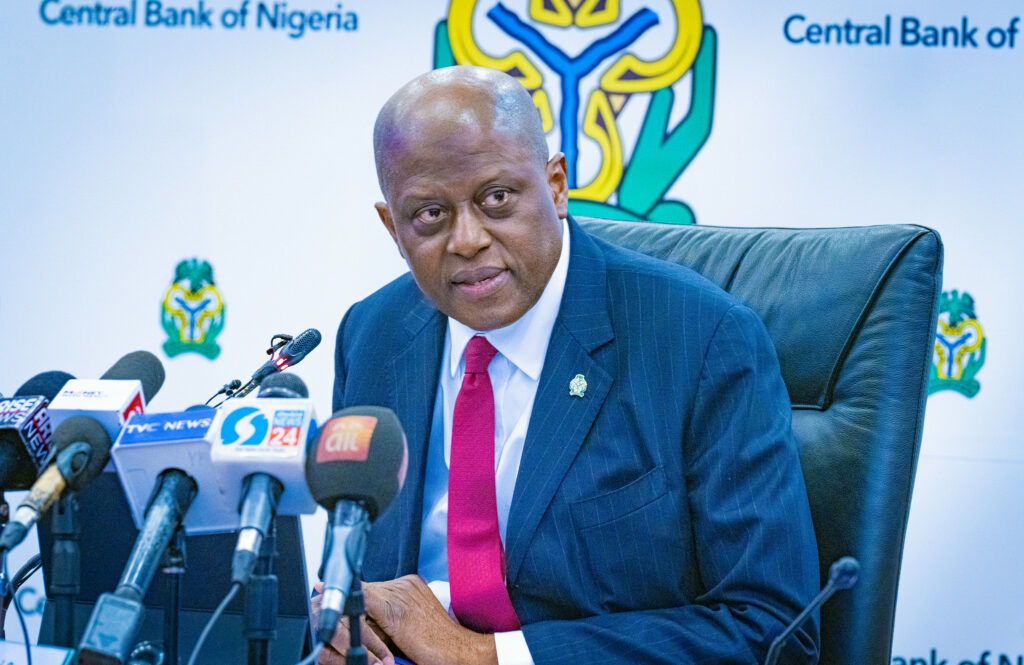
Personal loans obtained by Nigerians rose to an estimated N2.06tn in May 2026, as consumer credit continued to expand amid persistent cost pressures and weak consumer spending, according to the latest Economic Report of the Central Bank of Nigeria.

The figure, calculated from data contained in the CBN’s May 2026 Economic Report, represents about 64.78 per cent of the N3.18tn total consumer credit outstanding during the month. The report covers developments in the real, fiscal, financial and external sectors of the economy.

The apex bank said consumer credit increased by 1.60 per cent from N3.13tn in April to N3.18tn in May, indicating that Nigerians borrowed an additional N50bn within one month.

It said, “Consumer credit outstanding increased by 1.60 per cent to N3.18tn from N3.13tn in the preceding month, driven by growth in personal and retail loans, which rose by 1.98 and 0.90 per cent, respectively.”

The CBN added, “Personal loans remained the dominant component of consumer credit, accounting for 64.78 per cent, while retail loans constituted 35.22 per cent.”

Based on the proportions reported by the apex bank, personal loans stood at approximately N2.06tn at the end of May, while retail loans amounted to about N1.12tn.

The 1.98 per cent month-on-month increase in personal loans suggests that the balance rose by roughly N40bn during the period. Retail loans, which include credit tied more directly to the purchase of goods and services, recorded a slower increase of 0.90 per cent.

The figures show that personal borrowing remained the main driver of Nigeria’s consumer-credit market, accounting for nearly two-thirds of outstanding credit.

See also  PHOTOS: Gov. Abiodun meets investors in China, seeks expansion of Ogun economic frontiers

The increase came against a challenging operating environment for households and businesses. The CBN reported that economic activity remained weak in May, with its composite Purchasing Managers’ Index at 49.60 points, slightly higher than 49.40 points in April but still below the 50-point threshold separating expansion from contraction.

According to the bank, the contraction reflected subdued demand, declining new orders and elevated production costs. It also identified weak consumer spending and higher energy-related costs as pressures on the industry and services sectors.

Inflation also remained elevated during the period. Headline inflation increased to 15.93 per cent in May from 15.69 per cent in April, which the CBN attributed to persistent cost pressures and higher energy prices. However, month-on-month inflation slowed to 1.75 per cent from 2.13 per cent.

The combination of rising consumer credit and weak consumer spending suggests that households were increasingly accessing credit at a time when living and operating costs remained under pressure.

A recent report Enhancing Financial Inclusion & Advancement noted that four in every 10 Nigerians borrowing from formal financial institutions now take loans mainly for consumption and coping needs, as rising financial pressures increasingly push credit away from productive activities.

The 2026 Access to Financial Services in Nigeria Survey revealed that 40.8 per cent of formal borrowers used loans for coping and consumption, up sharply from 31.7 per cent in 2023.

The 9.1 percentage-point increase made coping and consumption the largest purpose of formal credit, overtaking productive enterprise borrowing, which fell from 40.2 per cent to 34.3 per cent during the same period.

See also  CBN cuts T-bill rate amid N3.63tn demand

Borrowing for household assets also declined from 25.2 per cent to 23.4 per cent. The report warned, “Coping/consumption purposes rose from 31.7 per cent to 40.8 per cent; productive purpose fell from 40.2 per cent to 34.3 per cent. We need to ensure that credit builds productive capacity and does not produce distress.”

Formal credit use increased from six per cent of adults in 2023 to 10 per cent in 2026, with about 11.9 million Nigerians borrowing from regulated providers. When informal sources were included, 36 per cent of adults had access to some form of credit.

Credit use among informally employed Nigerians tripled from five per cent to 15 per cent, while borrowing among people aged 18 to 35 rose from four per cent to 10 per cent. Business owners recorded an increase from four per cent to 10 per cent, while farmers rose from two per cent to six per cent.

However, the report found significant distress among borrowers. About 45.8 per cent of formal-credit users reported some or serious repayment stress, while 83.8 per cent experienced ongoing financial stress.

Source: punchng.com

FOLLOW US ON:

FACEBOOK

TWITTER

PINTEREST

TIKTOK

YOUTUBE

LINKEDIN

INSTAGRAM

Continue Reading

Business

NAFDAC seizes N300m banned drinks in Lagos

Published

on

The National Agency for Food and Drug Administration and Control has seized alcoholic beverages worth an estimated N300m packaged in sachets and PET bottles below 200ml during enforcement operations in Lagos State.

NAFDAC disclosed this in a statement shared on its Facebook page on Sunday, adding that some distributors and retailers involved in the sale of the prohibited products were arrested.

The agency said the enforcement operations were carried out at Ile-Epo Market, Ojuwoye Market in Mushin and Oke-Arin Market on Lagos Island.

“Officials evacuated several cartons of alcoholic beverages packaged in sachets and PET bottles below 200ml from these locations.

“Distributors and retailers were arrested during operations at Ile-Epo Market, while raids were also conducted at Ojuwoye Market, Mushin, and Oke-Arin Market, Lagos Island,” the statement said.

NAFDAC said investigations revealed that some distributors and retailers were hoarding the prohibited products amid increased demand and rising prices.

The agency said the enforcement was part of efforts to ensure compliance with the ban on the sale and distribution of alcoholic beverages packaged in sachets and PET bottles below 200ml.

It warned distributors, retailers and other operators against selling, distributing or hoarding the prohibited products.

“NAFDAC emphasises that the ban remains in force and warns distributors, retailers and other operators against the sale, distribution or hoarding of the prohibited products.

“The value of the seized products is estimated at N300m,” it stated.

PUNCH Metro reported on August 25 that NAFDAC ordered manufacturers of banned alcoholic beverages packaged in sachets and polyethylene terephthalate bottles below 200ml to recall the products nationwide or risk closure of their facilities.

See also  Nigeria misses OPEC oil production quota again

NAFDAC had also vowed to fully enforce the Federal Government-approved prohibition of alcoholic beverages packaged in sachets and PET or plastic bottles below 200ml, warning that the ban was irrevocable.

The agency had stated that the years of grace given to manufacturers by the Federal Government to stop producing the products had expired.

Source: punchng.com

FOLLOW US ON:

FACEBOOK

TWITTER

PINTEREST

TIKTOK

YOUTUBE

LINKEDIN

INSTAGRAM

Continue Reading

Trending