Connect with us

Business

Boko Haram, banditry, clashes driving poverty across North — Report reveals

Published

on

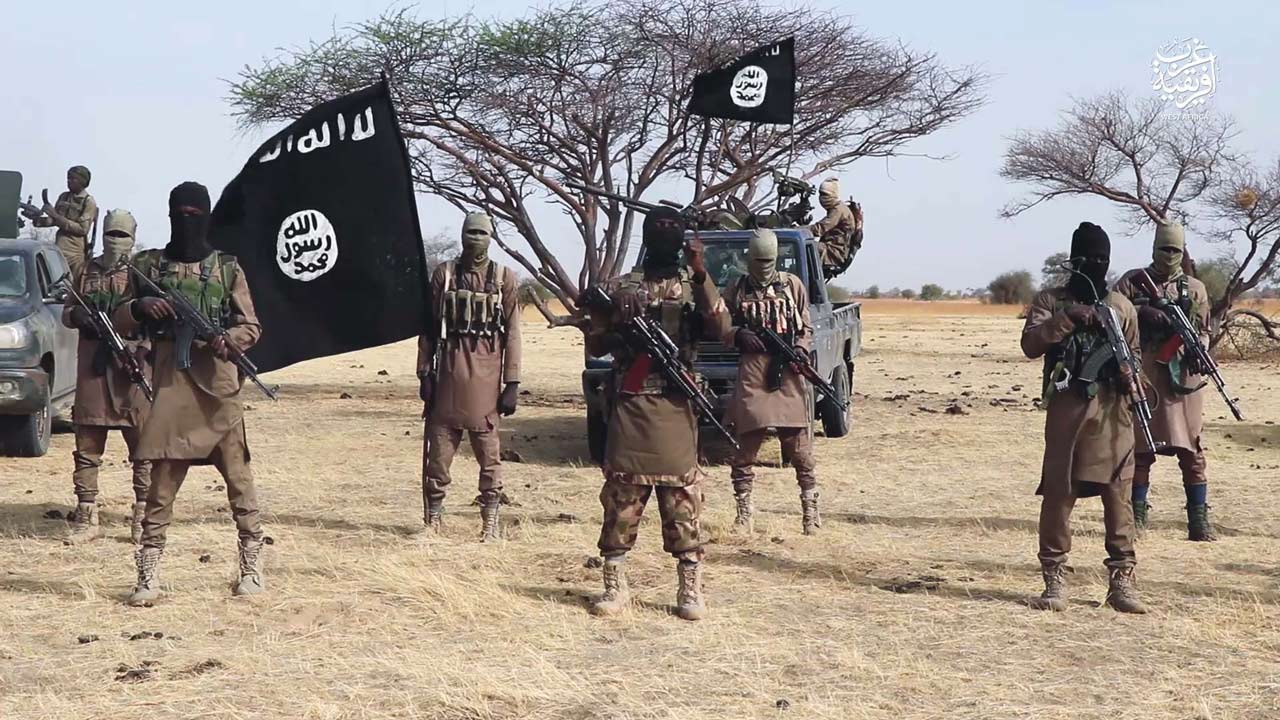
A new report has revealed that violent conflict across the northern part of the country is deepening poverty and weakening the ability of households to recover from economic shocks.

The report, titled “Insecurity, Livelihoods and Welfare in Northern Nigeria,” identified three major forms of insecurity affecting the region: Boko Haram/ISWAP insurgency in the North-East, farmer-herder conflicts in the North-Central, and banditry and kidnapping in the North-West.

The findings were unveiled on Thursday in Abuja during a high-level webinar convened by the Chronic Poverty Advisory Network of the Institute of Development Studies, United Kingdom; the Development Research and Projects Centre; and the Foreign, Commonwealth and Development Office-supported Strengthening Peace and Resilience in Nigeria project.

The Minister of Humanitarian Affairs and Poverty Reduction, Dr Bernard Doro, opened and closed the session, reflecting on the implications of the findings for the ministry’s One Humanitarian–One Poverty Response System policy.

Presenting the report, CPAN Deputy Director, Dr Vidya Diwakar, said the study explored the relationship between insecurity and household welfare using data from the Nigeria Living Standards Survey 2022/23, the Nigeria Demographic and Health Survey 2024, Armed Conflict Location and Event Data from 2010 to 2025, and extensive fieldwork conducted by dRPC.

The report stated that “Households in the North-East affected by Boko Haram and ISWAP attacks recorded between eight and 14 per cent lower expenditure per adult equivalent when violent incidents occurred within two years before the survey.

“Conflict-related debt accumulated since 2009 was also associated with an additional expenditure loss of between eight and 13 per cent.”

See also  Terrorists attack Army base, police post, hospital in Borno

The study found that “Farmer-herder clashes had the most severe impact on near-poor households in the North-Central zone, resulting in a 14 per cent drop in expenditure at the 60th percentile, the largest single welfare effect recorded in the study.

“In the North-West, banditry and kidnapping were linked to expenditure losses ranging from four to 11 per cent, particularly among moderately poor households.”

Despite the challenges, the report identified livelihood diversification as the most effective strategy for building resilience and escaping chronic poverty.

According to the findings, combining farming, non-farming and enterprise-based income-generating activities emerged as “the single most consistent protective factor across all three conflict types.”

The report, however, noted that “only 13 per cent of household heads in Northern Nigeria were currently pursuing diversified income opportunities.”

The study also found that education strengthens households’ ability to diversify income sources, although the benefits remain weaker among women- and youth-headed households, which account for 28.9 per cent of households in the region.

Reviewing the findings, Team Lead of SPRiNG, Dr Ukoha Ukiwo; Director of the Plateau State Peace Building Agency, Dr Julie Sanda; and the Senior Special Assistant to the President on Chieftaincy Matters, Abba Waziri, highlighted the importance of linking peace-building efforts with livelihood recovery programmes.

The discussants stressed that rebuilding livelihoods and expanding economic opportunities are critical to reducing vulnerability and promoting long-term peace in conflict-affected communities.

Particular emphasis was placed on training traditional rulers and community leaders to play stronger roles in peace-building initiatives.

Speaking at the close of the webinar, Executive Director of dRPC, Dr Judith-Ann Walker, thanked the FCDO for supporting the research and commended the minister for engaging with evidence-based policy recommendations.

See also  PHOTOS: 141 Nigerians arrested over wire fraud, romance scam, s3xtortion in Ghana

She also praised the ministry’s commitment to implementing the OHOPRS framework, which is built on what she described as “one system, one register and one pathway.”

The minister pledged continued collaboration between the government and stakeholders and challenged researchers to generate evidence that would improve targeting, sequencing and graduation pathways under the OHOPRS framework, particularly for women and young people who are often excluded from poverty reduction interventions.

punch.ng

FOLLOW US ON:

FACEBOOK

TWITTER

PINTEREST

TIKTOK

YOUTUBE

LINKEDIN

Continue Reading
Click to comment

Leave a Reply

Your email address will not be published. Required fields are marked *

Business

Crude hits $107, fresh petrol price hike looms

Published

on

Petrol prices in Nigeria may rise further as international crude oil prices surged to $107 per barrel on Thursday from about $100 the previous day.

The latest rally has increased pressure on domestic petrol prices, which have already climbed from about N830 per litre before the Middle East crisis to N1,310 or more in some locations.

Before the crisis began on February 28, crude oil traded below $69 per barrel. However, the subsequent disruption to global oil supplies has pushed international prices sharply higher, prompting the Dangote Petroleum Refinery and fuel importers to adjust their pricing.

With Brent crude now above $107 per barrel and the US-Iran conflict continuing to disrupt tanker movements through the Strait of Hormuz, marketers and analysts warned that another petrol price increase could be imminent.

According to Oilprice.com, Brent crude surged to $107 per barrel on Thursday as the prolonged military confrontation between the United States and Iran continued to disrupt oil supplies through the Strait of Hormuz, raising concerns over a sustained reduction in global crude availability.

The international benchmark gained more than five per cent in early trading, extending the rally that pushed it above the $100 mark earlier in the week.

West Texas Intermediate also climbed above $100 per barrel, reflecting growing global concerns that the conflict may continue to constrain crude supplies.

The latest increase was driven largely by a sharp decline in oil flows through the Strait of Hormuz. Oilprice.com reported that volumes, which had recovered to between six million and nine million barrels per day in previous weeks, had fallen sharply, with recent estimates putting daily outflows below two million barrels.

Shipping trackers also reported that no very large crude carriers had exited the strait since early September, a significant decline from the higher tanker traffic recorded during the brief period of relative calm.

See also  Man faces trial over dispute on Lagos Harvesters church land

The escalation of attacks on tankers and commercial vessels in the Persian Gulf and surrounding waters has further heightened uncertainty in the oil market.

Iran claimed to have struck several ships, while the United States confirmed the destruction of some Iranian oil tankers. Officials from both sides have given no indication of an imminent ceasefire, with their statements suggesting that the confrontation could continue for weeks or longer.

Analysts said the absence of a clear path towards de-escalation had forced traders to reassess global supply risks.

Physical crude benchmarks had already moved above $100 in recent sessions, while the futures market followed as inventories tightened and alternative export routes faced increased exposure to attacks.

For months, reports of recovering tanker traffic through the Strait of Hormuz had helped to limit upward pressure on crude prices. That outlook has now changed.

With oil flows sharply reduced and no clear diplomatic resolution in sight, global markets are increasingly pricing in the possibility of prolonged disruption to one of the world’s most important energy transit routes.

For Nigeria, sustained increases in international crude prices could continue to feed into the domestic petrol market, particularly as refiners and importers adjust their prices to reflect changes in global crude and related supply costs.

Source: punchng.com

FOLLOW US ON:

FACEBOOK

TWITTER

PINTEREST

TIKTOK

YOUTUBE

LINKEDIN

INSTAGRAM

Continue Reading

Business

How to buy fuel via app, serve yourself at NNPC stations

Published

on

The Nigerian National Petroleum Company Limited has begun introducing self-service fuel pumps at selected NNPC Retail stations, allowing motorists to dispense petrol themselves using a mobile application.

The development is part of NNPC’s plan to deploy between 50 and 70 smart, self-service stations across the country within the next six months.

Unlike the conventional system where an attendant dispenses fuel, the self-service model allows customers to select the amount of fuel they want, make payment through an app and use a code to activate the pump.

NNPC Retail shared a guide on its X handle on Friday showing motorists how to use the system.

Here is a step-by-step guide on how to buy and dispense fuel yourself at participating NNPC stations:

Step 1: Motorists who want to use the self-service facility should first download the NRL Fuel App. Get the download link from the NNPC X handle.

Step 2: Open the app, tap Fuel Purchase, and select your fuel type.

Step 3: Browse the station list and choose an NNPC Retail station offering the self-service option.

The facility is currently available only at selected stations as NNPC rolls out the new system. Look for the green Self-Serve badge next to the station name. Tap it to select.

Step 3: After selecting the station, enter the amount you wish to spend on fuel. Review the quantity and price, then tap Pay from Wallet. The system will process the transaction based on the amount entered.

Step 4: Once the payment is successful, the app will generate a digital receipt. It contains your Order ID, your Self-Service Code, and a QR Code.

See also  PHOTOS: 141 Nigerians arrested over wire fraud, romance scam, s3xtortion in Ghana

Step 5: At the pump, enter your 8-digit self-service code on the terminal and press the hash key. Once validated, pick up the nozzle and fuel up—exactly the amount you paid for.

NNPC Executive Vice President, Downstream, Mumuni Dagazau, said the new model was part of the company’s plan to transform conventional filling stations into broader energy and mobility hubs.

At the newly commissioned smart station on Bill Clinton Drive, Airport Road, Abuja, NNPC Retail Executive Director, Retail Operations and Mobility, Shettima Baba-Kukawa, said customers could complete transactions on their phones and dispense the exact amount of fuel purchased.

NNPC said the smart stations would combine conventional petrol sales with services such as electric vehicle charging, liquefied petroleum gas, compressed natural gas and other mobility services.

Source: punchng.com

FOLLOW US ON:

FACEBOOK

TWITTER

PINTEREST

TIKTOK

YOUTUBE

LINKEDIN

INSTAGRAM

Continue Reading

Business

Nigeria starts local production of dual-active mosquito nets

Published

on

Nigeria has commenced local production of next-generation dual-active ingredient insecticide-treated mosquito nets as part of efforts to strengthen malaria prevention and domestic manufacturing of essential health products.

Federal Ministry of Health and Social Welfare announced the development in a statement issued Thursday and signed by its Assistant Director, Information and Public Relations, Ado Bako.

The new facility, Health Textiles Nigeria FZE, wholly owned by Vestergaard Sàrl, is the first in Nigeria to manufacture dual-active ingredient insecticide-treated nets, according to the ministry.

The facility will produce PermaNet Dual, a mosquito net manufactured by Vestergaard to address the growing challenge of insecticide resistance and prequalified by the World Health Organisation in 2023.

“At full scale, the facility is expected to produce approximately 10 million nets annually and create more than 600 jobs.

“About 80 employees have already been recruited and are undergoing training in manufacturing excellence, product quality, occupational health and safety, and regulatory compliance,” the statement read.

The Coordinating Minister of Health and Social Welfare, Prof. Muhammad Pate, said the development aligned with the Nigeria Health Sector Renewal Investment Initiative and its focus on unlocking the healthcare value chain through investment, local production and stronger domestic capacity.

“This investment demonstrates what is possible when government policy, private-sector investment and technology transfer come together to unlock Nigeria’s healthcare value chain. The commencement of local production also strengthens our capacity to produce essential health products and supports a more resilient health system,” the minister said.

The establishment of Health Textiles Nigeria followed a 2024 Memorandum of Understanding between Vestergaard and the Presidential Initiative for Unlocking the Healthcare Value Chain to strengthen local production capacity for essential health products.

See also  Police arrest two women for stealing children in Abia church, rescue victims

The development comes as Nigeria continues to bear a substantial share of the global malaria burden.

The World Health Organisation estimates that malaria caused 282 million cases and 610,000 deaths globally in 2024, with the African Region accounting for the overwhelming majority of cases and deaths.

With production now underway, Health Textiles Nigeria is expected to fulfil its first commercial orders in the coming months, expanding Nigeria’s capacity to produce malaria prevention commodities locally, the ministry said.

Source: punchng.com

FOLLOW US ON:

FACEBOOK

TWITTER

PINTEREST

TIKTOK

YOUTUBE

LINKEDIN

INSTAGRAM

Continue Reading

Trending