Connect with us

Business

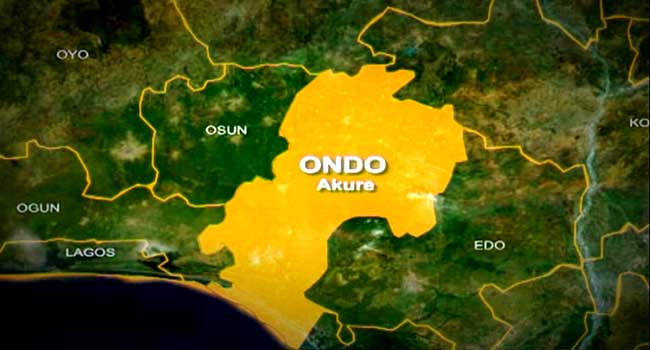
Ondo artisans beg FG for inclusion in empowerment programmes

Published

on

Artisans and skilled workers in Ondo State have appealed to the Federal Government to include them in various empowerment programmes under President Bola Tinubu’s Renewed Hope Agenda.

The artisans, under the aegis of the Artisan Defender and Empowerment Foundation, said over 25,000 members of the group had been neglected despite their support for the re-election of the President.

This was contained in a statement issued on Friday by the Chairman and General Secretary of the association, Engr. Ogundipe James and Adebayo Olugbenga, respectively.

According to the statement, the group was founded and registered with the Federal Government to promote the interests of Niger Delta artisans and skilled workers, adding that its members needed government support through empowerment initiatives.

The statement read, “It was evident, the neglect of the welfare and empowerment of over 25,000 artisans that this organisation controls, for which we are advocating better welfare, skills and vocational training, empowerment, workshops and recognition of political strength and weight the coalition commands in the voting structure.

“The deteriorating situation of artisan welfare, particularly in Ondo State, is why the body is seeking immediate attention, mostly empowerment and skills upgrading from the primary concerned government agencies—the Federal Ministry of Trade and Investment, Directorate of the Office of Humanitarian Affairs and Poverty Reduction, Small and Medium Enterprises Development Agency of Nigeria, Presidential Amnesty Programme, among others.

“The neglect of this very important organisation, which plays a vital role in employment and the growth of the national economy, will cause disagreement and affect political support that comes from this coalition group.”

See also  Lagos bans movement of goods on public buses

The statement urged the concerned Federal Government agencies to consider the proposals earlier submitted by the group to enhance the support of its members for the President’s administration.

The group stated, “We call on the agencies mentioned above, demanding immediate attention to the proposals that have earlier been sent to this parastatal.

“This is a public warning and general awareness that failure to listen to Niger Delta Artisan Forum’s demands will lead to a national protest and have huge political support consequences for the continuation of the Renewed Hope Agenda of President Bola Ahmed Tinubu come the 2027 election, if attention is not immediately given to the demands.”

punch.ng

FOLLOW US ON:

FACEBOOK

TWITTER

PINTEREST

TIKTOK

YOUTUBE

LINKEDIN

Continue Reading
Click to comment

Leave a Reply

Your email address will not be published. Required fields are marked *

Business

RMAFC gives NUPRC 48 hours to dissolve host community trust

Published

on

The Revenue Mobilisation Allocation and Fiscal Commission has directed the Nigerian Upstream Petroleum Regulatory Commission to dissolve a disputed Host Community Development Trust within 48 hours over concerns about its constitution and representation of affected oil-producing communities.

The directive was contained in a statement issued by the commission on Friday and signed by the Head of Information and Public Relations Unit, Maryam Umar-Yusuf, following an investigative hearing into the operations of Sterling Oil Exploration and Energy Production Company and the implementation of the Host Community Development Trust provisions of the Petroleum Industry Act.

According to the statement, the ultimatum was issued during the hearing of the commission’s Investment Monitoring Committee after concerns were raised over the establishment of the trust for affected host communities.

The Chairman of the RMAFC, Mohammed Shehu, reaffirmed the commission’s commitment to protecting the interests of oil-producing host communities, saying it would continue to strengthen the oversight of operators and institutions responsible for ensuring that communities receive benefits due to them under the law.

Shehu, who spoke at the investigative hearing held at the commission’s headquarters on Thursday, described the exercise as “an important national service and a critical national responsibility.”

He commended the committee for its diligence and urged members to remain resolute, stressing that the commission’s constitutional mandate required “firm oversight, transparency and accountability in the management of national revenue assets.”

According to the statement, he expressed confidence that the investigation would strengthen trust in the petroleum sector and ensure that host communities received the full benefits guaranteed under the Petroleum Industry Act.

Leading the hearing, the Chairman of the Investment Monitoring Committee and Federal Commissioner representing Anambra State, Ekene Enefe, conducted an extensive investigation into SEEPCO’s compliance with the statutory provisions governing Host Community Development Trusts.

See also  Lagos Reopens Ferry Terminal After Clearing Water Hyacinth

He maintained that host communities should no longer bear the environmental and social consequences of oil exploration without corresponding development, adding that the commission would ensure operators and regulatory institutions discharged their statutory obligations.

The committee also criticised SEEPCO for repeatedly failing to honour invitations to appear before it despite previous engagements.

Addressing officials of the NUPRC during the hearing, Enefe said the commission would hold every institution in the petroleum value chain accountable for the effective discharge of its responsibilities.

He consequently ordered the regulator to address concerns surrounding the trust established for the affected communities, declaring, “We are going to give you 48 hours to dissolve that host community development trust.”

The committee chairman also faulted SEEPCO over what he described as its failure to meet obligations owed to host communities.

“We are going to write them and we are going to give them an ultimatum to pay up what is owed the host communities,” Enefe said.

He added that the committee would conclude its investigation and submit its findings to the appropriate authorities, insisting that the commission would carry out its constitutional oversight responsibilities “without fear or favour.”

Earlier, the NUPRC delegation, led by the Director of Host Communities, Ufondu Ejiro, defended the implementation of the Host Community Development Trust established under the Petroleum Industry Act.

According to the statement, Ejiro told the committee that the trust had been duly incorporated, funded and structured in accordance with the law.

She said the commission had processed documents relating to community consultations, governance structures, funding arrangements and Community Development Plans, while also presenting records of statutory contributions made into the trust.

See also  World's Top 100 Biggest Economies in 2026

The NUPRC maintained that it discharged its responsibilities within the framework of the Petroleum Industry Act and the Host Community Development Regulations.

However, counsel representing the affected host communities, Peter Chukwudi, rejected the regulator’s submissions, insisting that several persons recognised as community representatives were not accepted by the communities.

He also argued that adequate consultations were not conducted before the Host Community Development Trust was constituted and questioned the level of development recorded in the affected communities despite years of oil production.

Chukwudi urged the committee to ensure that the grievances raised by the communities were thoroughly investigated.

Also speaking, the Anambra State Commissioner for Petroleum and Mineral Resources, Professor Charles Ofoegbu, called for stronger collaboration between the NUPRC and the state government in verifying community representation and monitoring compliance with statutory obligations.

He advocated greater transparency in calculating statutory contributions, operational expenditure and the execution of community development projects, stressing that the state government had a responsibility to protect the interests of its oil-producing communities.

Other members of the commission also raised concerns during the hearing.

The Federal Commissioner representing Rivers State, Desmond Akawor, said there appeared to be a disconnect between the regulator and affected state governments, adding that closer collaboration and direct engagement with operators were necessary for effective oversight.

He also criticised SEEPCO for failing to attend the hearing and urged all parties to cooperate with the investigation.

The Federal Commissioner representing Kogi State, Abdulazeez Idris-King, questioned the effectiveness of the NUPRC’s verification process, saying reliance solely on documents submitted by operators might not sufficiently establish that genuine consultations had taken place with host communities.

See also  Tinubu commends NADF for expanding farm input access

Similarly, the Federal Commissioner representing Jigawa State, Hauwa Umar-Aliyu, stressed the need for regulators to uphold professionalism and impartiality, saying public confidence would only be strengthened if the interests of host communities received equal attention alongside those of operators.

According to the statement, the hearing forms part of the commission’s ongoing oversight initiative aimed at promoting transparency, strengthening accountability and ensuring that host communities derive the benefits guaranteed under the Petroleum Industry Act.

The PUNCH reports that The HCDT was created under the Petroleum Industry Act 2021 as a new framework for ensuring that communities where oil and gas operations take place receive direct and sustainable benefits from petroleum activities.

The PIA requires petroleum operators, known as settlors, to establish trusts for their host communities and contribute 3 per cent of their actual annual operating expenditure in the preceding year to the funds. The trusts are intended to finance community development projects and promote peaceful relations between operators and host communities.

The NUPRC is responsible for regulating the trusts, including their incorporation, funding, governance and implementation of development projects. The provision was introduced against the background of decades of grievances in oil-producing communities over environmental impacts, inadequate development and disputes with petroleum companies

punch.ng

FOLLOW US ON:
FACEBOOK

TWITTER

PINTEREST

TIKTOK

YOUTUBE

LINKEDIN

Continue Reading

Business

China extends trade boom as global AI tech demand surges

Published

on

Chinese exports and imports soared in July, official data showed Friday, as the manufacturing powerhouse benefits from a global AI boom lifting overseas demand for its tech products.

The world’s second-largest economy last year achieved a historic trade surplus of nearly $1.2 trillion, helping its manufacturing sector through a prolonged slump in domestic consumption.

The export boom has been propelled further this year by increased demand for Chinese data-processing equipment and related components, as companies rush to build artificial intelligence capacity.

Exports climbed 23.9 percent year-on-year last month, the General Administration of Customs (GAC) reported, compared with a 23.0 percent forecast by Bloomberg.

Overseas shipments of computers and related parts jumped 45.2 percent on year in the first seven months, the data showed.

“Export and import values remain elevated, helped by soaring global demand for electronics and green tech products,” wrote Julian Evans-Pritchard of Capital Economics.

China’s trade surplus appears to be on pace to match that of last year, reaching $687 billion through the end of July, the data showed Friday.

The yawning gap has increasingly raised eyebrows abroad — particularly in Europe, where leaders worry about floods of Chinese exports squeezing out local manufacturers.

Beijing has insisted it never deliberately pursued a trade surplus.

The Communist Party’s Politburo — the decision-making body headed by President Xi Jinping — urged a more “balanced” trade development at a key meeting late last month.

– China-US flare-up –

“Export growth continued to support the economy in July,” Zhiwei Zhang, president and chief economist at Pinpoint Asset Management, wrote in a note after Friday’s data.

“I expect intense negotiations between China and (its) major trading partners in coming months on what can be done to make trade more balanced,” he added.

See also  Tinubu commends NADF for expanding farm input access

Imports increased 27.5 percent in July, extending this year’s strong performance even as main indicators of domestic demand have remained weak.

However, that was slower than the 36 percent surge seen in June, and also missed a Bloomberg forecast of 29.5 percent growth.

The growth has been achieved despite considerable pressure on the global trading system from the war in the Middle East and simmering trade frictions between Beijing and Washington.

China’s shipments to the United States rose 17 percent year-on-year last month, Friday’s data showed, as the countries remain locked in a trade war despite efforts to ease tensions.

That brought China’s surplus with its superpower rival this year to nearly $171 billion through the end of July, according to the official data.

The latest figures come days after a fresh flare-up in trade tensions between the world’s top two economies.

Following sanctions imposed by Washington over forced labour and national security concerns, Beijing on Wednesday announced restrictions on drone exports to the United States and blacklisted six firms.

China and the United States spent much of last year embroiled in an escalating trade war but reached a truce when US President Donald Trump met Xi in October.

The relationship will undergo further scrutiny in coming weeks as officials prepare for a scheduled state visit by Xi to the United States in late September.

AFP

punch.ng

FOLLOW US ON:

FACEBOOK

TWITTER

PINTEREST

TIKTOK

YOUTUBE

LINKEDIN

Continue Reading

Business

Food security fears mount as UK farmers battle drought

Published

on

Giant dust clouds rose from a green-red combine harvester as it crawled across a parched field, a sign that something was awry with UK farmer John Pawsey’s land.

“It suddenly, completely dried out,” Pawsey said. For weeks the drought “just seems to have gone on for ever” on his farm in the eastern county of Suffolk.

English farmers have been contending with the driest July ever recorded by the Met Office weather agency — unwelcome news for those like Pawsey who have only seen paltry yields of crops such as oats, wheat and vetch.

Concern over food security has gripped Britain’s headlines amid a series of heatwaves this year.

“All of our fears were realised when we got our combines into the field and realised that actually the yield was … between 25 and 30 percent down,” Pawsey said.

His family has tilled the Suffolk soil since a Scottish great-grandfather moved there, one of many farm workers who flocked south following the late 19th century agricultural depression.

Like his ancestors, Pawsey, 62, is navigating a turbulent future.

“I am worried about the coming years,” he admitted.

The drought is the most recent weather-related challenge to hit the nation’s farmers over the past five years.

Food growers must learn to adapt, Pawsey urged, adding dynamic farmers should view the changing climate as an “opportunity.”

His organic farm has experimented with new crops, like fava beans and chickpeas more suited to hotter, drier climates, and techniques to build resilience such as pairing two different crops in the same field to force them to grow as they compete for space and nutrients.

See also  Petrol to hover around N905/litre this year – CBN

The government needs to support farmers in “making a transition” towards using similar methods, Pawsey argued.

Food security expert Timothy Benton endorses farming less intensively, saying “a more circular, diverse farming system” would be more secure and less dependant on imports of such things as fruits and fertilisers.

“Climate impacts will become greater,” Benton told AFP, adding “food systems will have to change”.

“We’re not investing enough in the forms of technological innovation to address a larger crisis,” he said.

Benton argued: “Food is not just food, it’s what you grow, produce and the products and processes needed to bring it to the general population.”

– Different menu –

Climate change could also force Britain to change its eating habits, said Nicola Cannon, professor at the Royal Agricultural College. She has been growing soya with the aim of introducing it to more British farms.

Dinnertime staples have been hit especially hard by the drought. This year’s pea yield was only “50 percent of what we wanted,” Cannon said.

They had little chance to grow, as there has been “very little moisture since March,” she added.

On Pawsey’s Suffolk farm, an entire crop of quinoa failed.

“We just had no rain,” he said. “The only things that started growing were docks (leaves) and thistles.”

Shortages of certain foods may result if drought conditions continue, National Farmers’ Union president Tom Bradshaw told the BBC.

“We have taken our food supply for granted for far too long,” he warned.

Lower yields make farming less profitable, meaning farmers will lack capital to invest in adaptation and experimenting with new crops.

See also  Airlines risk disruptions as NCAA enforces debt sanctions

Buying seasonal British produce gives “farmers more market certainty which allows them to invest in adaptations,” Cannon said.

“We’ve invested too much in worrying about wheat genetics and not enough about farming systems,” expert Benton said.

“Food security is national security,” Prime Minister Andy Burnham’s spokesperson said earlier this week.

The government has promised “record investment in water infrastructure, including nine new reservoirs,” they added.

Adapting food systems will require greater state intervention, Benton added.

“Change will be much more expensive,” he said, warning that “things are going to get worse in the decades ahead.”

Pawsey said that if weather trends continue, “farmers will go out of business.”

“It’ll either mean higher prices or the government will have to continue to support farmers,” he said.

AFP

punch.ng

FOLLOW US ON:

FACEBOOK

TWITTER

PINTEREST

TIKTOK

YOUTUBE

LINKEDIN

Continue Reading

Trending