Connect with us

Business

NNPC, partners advance $21bn Bonga offshore project

Published

on

Nigeria’s push to revive investment in its deepwater oilfields gained fresh momentum on Monday as the Nigerian National Petroleum Company Limited and its partners signed agreements expected to move the proposed Bonga Southwest/Aparo project, estimated to attract up to $21bn in investment, closer to a Final Investment Decision.

The project, located in Oil Mining Lease 118, is expected to become one of Nigeria’s biggest new deepwater developments, with a projected peak production of about 175,000 barrels of oil per day and 140 million standard cubic feet of gas per day.

The NNPC Ltd and the OML 118 Contractor Parties, Shell Nigeria Exploration and Production Company Limited, Esso Exploration and Production Nigeria (Deepwater) Limited and Nigerian Agip Exploration Limited, executed an Addendum to the OML 118 Production Sharing Contract and an Addendum to the Dispute Settlement Agreement.

The agreements give effect to new fiscal and commercial terms approved by the Federal Government to support the development of the Bonga Southwest/Aparo project. The development is particularly significant for Nigeria, which has struggled in recent years to secure major new investments in its deepwater petroleum sector despite possessing some of Africa’s largest offshore oil and gas resources.

Unlike onshore and shallow-water operations, deepwater projects require huge upfront capital and long-term fiscal certainty, making the competitiveness of a country’s tax and commercial framework a major consideration for international investors.

The NNPC, in a statement issued by its Chief Corporate Communications Officer, Andy Odeh, said the latest agreements demonstrated the practical impact of the Federal Government’s recent reforms aimed at restoring Nigeria’s attractiveness as a destination for deepwater investment.

See also  No directive to suspend sachet alcohol ban, says NAFDAC

The statement read, “The Nigerian National Petroleum Company Limited, and the OML 118 Contractor Parties, Shell Nigeria Exploration and Production Company Limited, Esso Exploration and Production Nigeria (Deepwater) Limited, and Nigerian Agip Exploration Limited, today executed the Addendum to the OML 118 Production Sharing Contract and the Addendum to the Dispute Settlement Agreement, marking a major milestone in the advancement of the deepwater Bonga Southwest/Aparo project towards Final Investment Decision.

“The execution gives effect to the fiscal and commercial terms approved by the Federal Government to support the development of BSWAp, and it reinforces Nigeria’s commitment to creating a competitive, stable and attractive environment for large-scale deepwater investment.”

The milestone followed President Bola Tinubu’s approval of the Deep Offshore Oil and Gas Projects Incentives (Tax Remission) Order, 2026, which was designed to improve the competitiveness of Nigeria’s deepwater fiscal regime and unlock fresh investments.

The NNPC said the execution of the addenda showed how the policy reforms were beginning to translate into concrete project development.

Speaking on the development, the Group Chief Executive Officer of NNPC Ltd, Bayo Ojulari, said the agreements provided evidence that the Federal Government’s reforms were beginning to create a pathway for major investments that had remained uncertain.

Ojulari said, “The execution of the BSWAp PSC and DSA Addenda demonstrates the effectiveness of President Tinubu’s reforms in translating policy into investment. This is about unlocking a major deepwater project and demonstrating that Nigeria has a competitive fiscal framework and a clear pathway for sustainable investment in its energy sector.

“NNPC Ltd will continue to work closely with the Federal Government, our partners and other stakeholders to ensure that this project delivers maximum value for the Federation and the Nigerian people.”

See also  Tomato Price Will Fall During 2026 Ramadan Fast – Marketers Predict

The project partners also announced the successful completion of the project’s Pre-Front End Engineering Design phase, another step towards taking the proposed development into the more detailed Front End Engineering Design stage.

According to the statement, the completion of the Pre-FEED work had helped to mature the technical and commercial scope of the project and positioned it for further engineering activities, subject to approvals and other governance requirements.

In another indication that preparations for the project are advancing, the partners said a bidder had emerged as the preferred contractor for the Floating Production Storage and Offloading vessel planned for the Bonga Southwest/Aparo development.

The FPSO is expected to be the central offshore facility for processing, storing and exporting crude oil from the field. However, the NNPC and its partners stressed that the identification of the preferred bidder did not amount to a final contract award.

The statement said the selection was still subject to the completion of “applicable partner, regulatory, assurance and governance processes,” while any eventual Engineering, Procurement, Construction and Installation contract would require further approvals.

The preferred bidder’s emergence, however, provides a basis for the FPSO concept to progress into the FEED stage and for further engineering and commercial work required to mature the project towards an FID.

With an estimated lifetime investment of between $15bn and $21bn, the Bonga Southwest/Aparo project could rank among the biggest investments in Nigeria’s oil and gas industry in years.

Beyond its projected crude oil and gas output, the project is expected to generate additional government revenues and foreign exchange, while creating opportunities for Nigerian companies involved in engineering, fabrication, offshore construction, logistics and other services.

See also  DisCos install 228,614 meters in Q3, 2025 — NERC

The NNPC said the development would also deepen local content participation through increased contracting opportunities for indigenous companies and suppliers. It added that the project was expected to strengthen local fabrication, marine and engineering capabilities, facilitate technology transfer and support skills development.

The latest development comes as Nigeria seeks to reverse years of underinvestment in its oil and gas industry and raise crude production through new investments in both existing and frontier assets.

The Federal Government and industry regulators have in recent months introduced a series of fiscal and regulatory measures aimed at attracting fresh capital into the petroleum sector, particularly in deepwater projects where investment decisions are often influenced by global competition and the long development cycle of offshore fields.

Once operational, the Bonga Southwest/Aparo project is expected to become a major new production hub and contribute to Nigeria’s ambition to sustainably increase its oil and gas output.

The NNPC said the signing of the agreements reflected collaboration among the Federal Government, the national oil company, regulatory agencies and the OML 118 Contractor Parties.

It added that it would continue to work with all stakeholders to advance the project “safely, competitively and responsibly, while maximising value for Nigeria and the Nigerian people.”

Source: punchng.com

FOLLOW US ON:

FACEBOOK

TWITTER

PINTEREST

TIKTOK

YOUTUBE

LINKEDIN

INSTAGRAM

Continue Reading
Click to comment

Leave a Reply

Your email address will not be published. Required fields are marked *

Business

Dangote raises petrol to N1,200/l despite crude price decline

Published

on

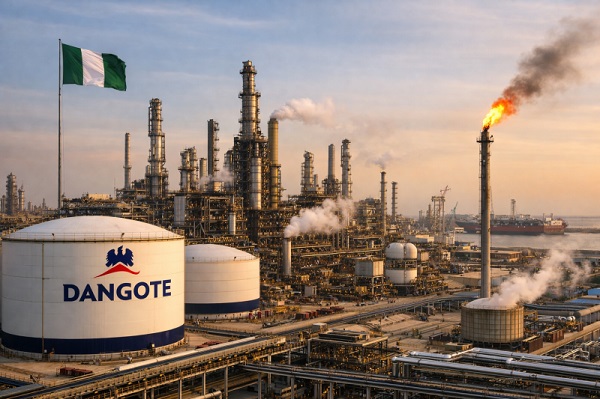
Dangote Petroleum Refinery and Petrochemicals FZE has increased the gantry price of Premium Motor Spirit (petrol) from N1,185 to N1,200 per litre, effective August 26, 2026.

In an official communication to customers issued on Tuesday, the refinery’s Group Commercial Operations announced revised depot prices for gantry and coastal deliveries.

The email, titled ‘PMS Price Change Communication (N1,185 per Litre To N1,200 Per Litre)’, asked customers to take note of the revised DPRP PMS gantry and coastal price, which is effective 26th August 2026.

According to the table contained in the notice, the coastal price rose from N1,562,265 per metric tonne to N1,582,380, while the gantry price increased from N1,185 to N1,200 per litre.

The refinery further directed customers to return all Authorisation to Collect documents for repricing, adding that a new volume contract would be issued for immediate loading resumption.

“You are advised to return all ATCs for repricing, and a new volume contract will be issued for immediate loading resumption. Should you require any further clarification, please do not hesitate to contact us,” the notice said.

The latest adjustment represents a N15 per litre increase in the gantry price and comes barely days after the refinery raised the price from N1,165 to N1,185 per litre. The previous increase took effect from midnight on August 21, 2026, according to industry trackers.

However, the latest hike comes against a backdrop of falling international crude oil prices. Data from oilprice.com on Tuesday showed West Texas Intermediate crude trading at $82.13 per barrel, down $2.88 or 3.39 per cent, while Brent crude stood at $88.37 per barrel, declining by $3.80 or 4.12 per cent. Murban crude also fell to $92.71 per barrel, shedding $8.73 or 8.61 per cent.

See also  India buys Nigerian crude as Dangote imports US oil

Our correspondent gathered that marketers and depot operators who received the circular might have begun returning existing ATCs for repricing in line with the refinery’s directive.

The N15 increase could result in higher pump prices as oil marketers factor in transportation, landing and other downstream costs. Petrol is expected to return to an average of N1,250 per litre.

The Dangote Group has yet to respond to messages from our correspondent.

The price increase comes at a time of renewed volatility in the international oil market amid the ongoing US-Iran conflict. Reuters reported that oil prices fell as investors viewed the latest US sanctions against Iran as less threatening to global oil supplies than a military escalation. However, analysts warned that the decline could be an overreaction, noting that prices could rise sharply if Iran retaliates militarily.

Reuters also reported that supply disruption risks remained, with only two commodity vessels transiting the Strait of Hormuz on Monday, the lowest daily tally since early May. The waterway handled about one-fifth of global oil consumption before the conflict began, leaving the market vulnerable to further disruptions.

Source: punchng.com

FOLLOW US ON:

FACEBOOK

TWITTER

PINTEREST

TIKTOK

YOUTUBE

LINKEDIN

INSTAGRAM

Continue Reading

Business

States’ IGR soars 34% to N2.43tn despite economic hardship

Published

on

The Internally Generated Revenue of Nigerian states rose by 34 per cent to N2.43tn in the first half of 2026, up from N1.815tn recorded in the comparable period of 2024, as sub-national governments gained access to more funds despite worsening economic pressures on households.

Findings by The PUNCH showed that 35 states, excluding Rivers State, generated a combined N2.43tn in IGR during the six-month period. Data for H1 2025 IGR for many states are not available.

The IGR growth underscores the expanding revenue base of state governments at a time when they face mounting financial obligations, including infrastructure development, social services, workers’ salaries and other recurrent expenditures.

However, the increase in revenue has intensified questions about how state governments are deploying the additional funds, particularly as they benefit from higher Federation Account allocations and savings from the removal of petrol subsidies.

The scrutiny has also shifted to the estimated N10.4tn in subsidy savings allocated to states and local governments, with stakeholders demanding evidence of how much of the additional resources is being converted into projects and programmes that improve citizens’ welfare.

Despite stronger revenue inflows, analysts said many states continue to grapple with inadequate infrastructure, weak social services, widespread poverty and limited economic opportunities.

A World Bank report cited showed that the proportion of Nigerians living below the poverty line rose from 56 per cent in 2023 to 61 per cent in 2024 and further to 63 per cent in 2025, representing about 140 million people.

The widening gap between increased government revenues and citizens’ living conditions has consequently raised concerns over the spending priorities of governors and local government chairmen. Analysts have accused some political office holders of maintaining lavish lifestyles while residents struggle with elevated living costs and declining purchasing power.

See also  Toyota hikes profit, sales forecasts despite US tariff impact

Experts argued that higher public revenue must be matched by greater transparency, stronger fiscal accountability and a significant increase in productive capital investment.

They said states should channel the additional resources into projects and programmes that expand economic activity, create jobs, improve productivity and reduce the financial burden on households.

According to the analysts, higher FAAC allocations and IGR would have limited impact on citizens unless governments strengthen fiscal discipline and ensure that public funds are deployed efficiently towards sustainable development.

Rising states’ earnings

The 35 states earned N2.43tn from IGR from January to June 2026, representing a 34 per cent increase from N1.815tn obtained in H1 2024.

FAAC allocations jumped 26 per cent to N4.54tn in the first half of 2026 from N3.61tn obtained in the corresponding period of 2025. In the first half of 2026, about 11 oil-producing states shared a total of N321.90bn under the 13 per cent derivation formula. Funds were heavily concentrated, with Delta, Bayelsa, and Akwa Ibom receiving roughly 75.4 per cent or N242.63bn of the total pool.

Between June 2023 and December 2025, states and local governments received about N10.4tn out of N15.8tn in total cumulative subsidy savings, lifting combined state revenues significantly. The PUNCH reported that 36 states and 774 local governments shared a cumulative N93.216tn as revenue from the Federation Account between 2017 and 2025.

Abandoned projects in states

The BudgIT service delivery monitoring platform, Tracka, uncovered widespread cases of unexecuted, abandoned and fraudulently delivered public projects across several states in Nigeria in February 2026, amounting to about N24bn.

See also  No directive to suspend sachet alcohol ban, says NAFDAC

The report showed that Benue State (40 per cent), Ondo State (32.4 per cent), Kwara State (30.4 per cent), Akwa Ibom State (27.3 per cent), and Sokoto State (25.6 per cent) recorded the highest proportions of projects that were not executed at all.

Chief Executive Officer of Centre for the Promotion of Private Enterprise, Muda Yusuf, said the effect of states’ rising revenues must be felt at the subnational level by the citizens.

“States have more to do with all the resources going to them now. We should hold them more accountable. The reforms have significantly expanded the fiscal space of state governments through higher statutory allocations and, in many cases, stronger internally generated revenues.

“This should translate into a much larger development role for the states. Citizens should demand measurable outcomes in roads, healthcare, public transportation, education, agricultural infrastructure, security, power and enterprise support.”

Yusuf noted that higher revenues must produce visible development and welfare dividends, rather than simply finance higher recurrent expenditure and prestige projects.

Director of Deals Advisory at PwC, Wale Olusi, said states must begin to pull their weight to reduce the rising level of hardship across the nation.

“Local governments, in particular, are doing little or nothing. We should be making them do more. States should invest the money they are getting in infrastructure, in transport to move farm produce from rural areas to urban centres, in security to protect the people. A state like Lagos should invest in beneficiation: plant trees and flowers.”

He said subnational governments should be propelled to drive growth, noting that now is the right time to deploy their resources from subsidy removal and taxes to give the people a good life.

See also  Experts to showcase travel tech innovations

Professor of International Economics, Jonathan Aremu, however, cautioned that though states are earning more money in nominal terms, the value of what is earned has depreciated.

“What they were using N1m to get before costs N3m today. The exchange rate has gone up, and things are very expensive, especially when imported content is part of what they consume. We need to appreciate that the value of what they are getting has actually gone down. When you look at the purchasing power parity, you will see that the value of what they get has actually gone down.”

Nevertheless, he agreed that the lifestyles of governors must change. “States are extravagant. Not everything they are buying has substantial import content. As a result, people should feel the impact of what they are doing. Currently, people are not feeling the impact, and it is sad.”

Source: punchng.com

FOLLOW US ON:
FACEBOOK

TWITTER

PINTEREST

TIKTOK

YOUTUBE

LINKEDIN

INSTAGRAM

Continue Reading

Business

Investing in women’s health not optional, says FG

Published

on

The Federal Government has said investment in women’s health is critical to achieving Nigeria’s economic ambition of becoming a $1tn economy, declaring that improving the wellbeing of women must be treated as a foundation for sustainable development.

The Minister of Women Affairs and Social Development, Imaan Suleiman-Ibrahim, stated this at the maiden edition of the Her Health, Her Power Conference Africa 2026, organised by the VickyHeldan Empowerment Foundation in Abuja.

The conference, themed “Leading with Wellness for a Sustainable Africa,” brought together stakeholders from the health, development, business, media and humanitarian sectors to discuss women’s health, empowerment and leadership.

A statement on Monday by the foundation said the Minister, who was represented by the Director-General and Chief Executive Officer of the Maryam Babangida National Centre for Women’s Development, Dr Adedayo Benjamins-Laniyi, said the country’s economic aspirations could not be achieved without prioritising women’s health.

“If we are serious about a $1 trillion Nigerian economy, then investing in women’s health is not optional. It is foundational,” Suleiman-Ibrahim said.

She said the Federal Government was strengthening policies and institutional structures to promote women’s economic empowerment, gender equality, family development and protection.

The minister also called for stronger collaboration among government, the private sector, civil society organisations, healthcare professionals and other stakeholders to improve outcomes for women.

She commended the founder of the VickyHeldan Empowerment Foundation, Dr Victory Njoku, for creating a platform for stakeholders to generate commitments towards improving women’s health and empowerment.

Suleiman-Ibrahim, however, urged participants to move beyond discussions and translate ideas generated at the conference into measurable action and tangible results.

See also  OPay named The Sun’s first-ever Fintech/Digital Bank of the Year 2025

Former Rivers State Governor, Rotimi Amaechi, also stressed the need to link women’s health with economic development, urging political leaders and policymakers to give greater attention to women’s access to healthcare and education.

“Now, it is key not to separate women’s health from economic growth,” Amaechi said.

He said people appointed to positions of responsibility should understand the relationship between economic growth and the wellbeing of women.

Reflecting on his tenure as Rivers governor, Amaechi said his administration established health centres in every village, with each centre staffed by a medical doctor and two nurses.

He added that the administration also paid N10,000 to women who attended antenatal care.

Amaechi said political decisions had direct consequences for women, urging leaders to transform communities by providing hospitals, health centres and other facilities that could improve the quality of life of women and families.

The convener of the conference, Njoku, said the initiative was established to advance women’s health across Africa by bringing together women, innovators, healthcare practitioners and advocates.

She said the foundation would take the campaign beyond the conference through community-based outreach programmes focusing on maternal health, reproductive healthcare, mental wellness, education and leadership.

“This is just creating a conversation, but taking action, we’re going to propel into communities through our outreach programs, focused on maternal health, reproductive care, mental wellness, education and leadership,” Njoku said.

She expressed the hope that the initiative would expand beyond Nigeria into a broader African platform, while encouraging women to take their rightful place in conversations and decisions concerning their development, health and wellbeing.

See also  DisCos install 228,614 meters in Q3, 2025 — NERC

Participants included healthcare practitioners, entrepreneurs, public health professionals, advocates, media practitioners and other stakeholders from across the development sector.

Source: punchng.com

FOLLOW US ON:

FACEBOOK

TWITTER

PINTEREST

TIKTOK

YOUTUBE

LINKEDIN

INSTAGRAM

Continue Reading

Trending