Connect with us

Lifestyle

BEFORE YOU CALL A CHILD “STUBBORN” FOR RUNNING AWAY FROM HOME, ASK YOURSELF ONE UNCOMFORTABLE QUESTION: “WHAT HAPPENED IN THAT HOME?”

Published

on

Not every child who runs away from home is a bad child.

Some children leave because they are exhausted from constant insults, rejection, bullying, comparison, humiliation, neglect, hatred, and harsh treatment from the very people they expect to love them.

Yes, children must obey their parents.

📖 “Children, obey your parents in the Lord: for this is right.”
— Ephesians 6:1 (KJV)

But parents also have responsibilities toward their children.

📖 “And, ye fathers, provoke not your children to wrath: but bring them up in the nurture and admonition of the Lord.”
— Ephesians 6:4 (KJV)

And again:

📖 “Fathers, provoke not your children to anger, lest they be discouraged.”
— Colossians 3:21 (KJV)

⚠️ READ THAT AGAIN: “LEST THEY BE DISCOURAGED.”

A child can live under the same roof with their parents and still feel completely unloved, unwanted, and emotionally abandoned.

Some parents believe that because they provide food, clothing, and school fees, they have done everything necessary.

But children also need love, encouragement, attention, patience, correction, and a safe environment where they can speak without being constantly insulted or humiliated.

The Bible says:

📖 “Death and life are in the power of the tongue.”
— Proverbs 18:21 (KJV)

Our words matter.

A parent may say, “I was only joking.”

But what if that “joke” is slowly destroying your child’s confidence?

A parent may say, “I am disciplining my child.”

But is it really discipline—or are you simply releasing your anger on someone who is smaller and has less power than you?

See also  2026 Ojude Oba festival to honour late Awujale’s legacy — Coordinator reveals

The Bible says:

📖 “A soft answer turneth away wrath: but grievous words stir up anger.”
— Proverbs 15:1 (KJV)

And:

📖 “He that spareth his rod hateth his son: but he that loveth him chasteneth him betimes.”
— Proverbs 13:24 (KJV)

Biblical discipline is not the same thing as cruelty, hatred, humiliation, or emotional destruction.

And parents should remember:

📖 “Lo, children are an heritage of the LORD: and the fruit of the womb is his reward.”
— Psalm 127:3 (KJV)

Your child is not your property to abuse.

Your child is a heritage from God entrusted to your care.

🏠 HOME SHOULD BE THE FIRST PLACE A CHILD EXPERIENCES LOVE, NOT THE FIRST PLACE A CHILD LEARNS TO FEAR.

So before you condemn a child who ran away, ask:

Did we listen to this child?

Did we show this child love?

Did we correct with wisdom—or with anger?

Did we create a home where this child felt safe enough to tell us the truth?

And most importantly:

👉 Could your child be running away from the pain inside the home rather than running away from the family itself?

💥 NOW LET’S DEBATE THIS HONESTLY:

When a child runs away from home, WHO SHOULD BE BLAMED FIRST—the child, the parents, or BOTH?

👇 What do you think?

DON’T JUST READ IT. SHARE YOUR OPINION.

FOLLOW US ON:

FACEBOOK

TWITTER

PINTEREST

TIKTOK

YOUTUBE

LINKEDIN

INSTAGRAM

Continue Reading
Click to comment

Leave a Reply

Your email address will not be published. Required fields are marked *

Lifestyle

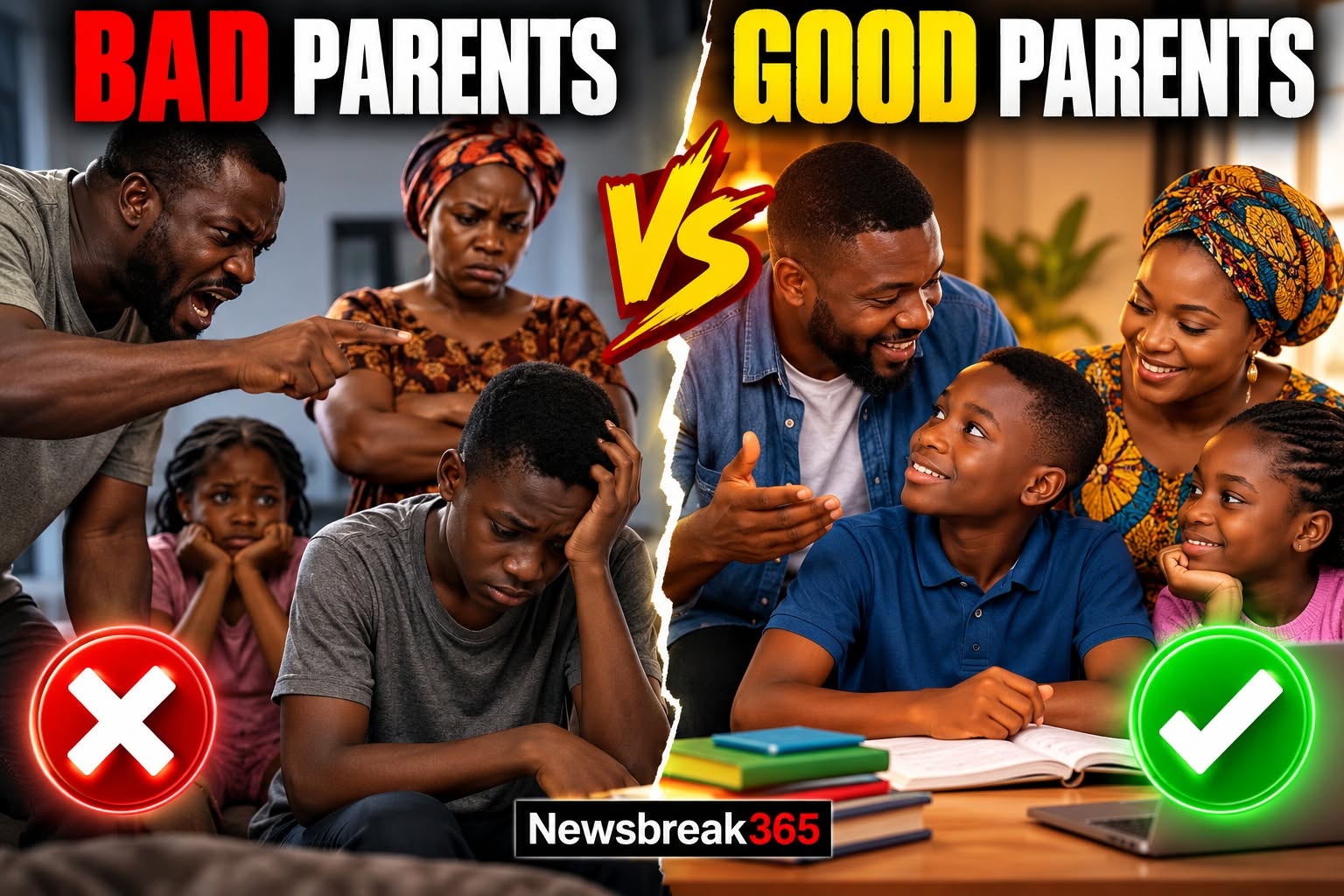
50 CHARACTERISTICS OF BAD PARENTS VS. GOOD PARENTS: WHICH CATEGORY DESCRIBES YOUR PARENTING STYLE?

Published

on

**THE HARDEST TRUTH ABOUT PARENTING IS THAT YOU CAN LOVE YOUR CHILD AND STILL HURT THEM THROUGH YOUR ACTIONS!** 

Giving birth is biological. Raising a child into a responsible, emotionally healthy adult requires patience, wisdom, discipline, sacrifice, and self-awareness.

Some parents build their children’s confidence. Others destroy it without even realising the damage they are causing.

Let’s examine the differences.

**25 CHARACTERISTICS OF BAD PARENTS**

1. **They demand respect but show no respect.** They expect their children to obey them while treating them with contempt.

2. **They use insults as discipline.** Instead of correcting bad behaviour, they attack their children’s intelligence, appearance, or worth.

3. **They believe feeding a child is enough.** They provide food and shelter but neglect emotional support and guidance.

4. **They never admit their mistakes.** In their minds, parents can never be wrong.

5. **They compare their children with others.** They make their children feel inferior instead of helping them discover their strengths.

6. **They use fear to control their children.** Their children obey because they are afraid, not because they understand the importance of good behaviour.

7. **They show favouritism.** One child receives love and opportunities while another is constantly rejected.

8. **They refuse to listen.** They dismiss their children’s feelings without trying to understand them.

9. **They punish without explaining.** Their children learn to avoid punishment rather than understand right and wrong.

10. **They humiliate their children publicly.** They embarrass them in front of relatives, friends, or strangers.

11. **They use their children to settle personal scores.** They involve children in conflicts between adults.

12. **They break promises repeatedly.** Their children gradually lose trust in their words.

13. **They discourage questions.** They interpret curiosity and independent thinking as disrespect.

See also  The Loved Child and the Hated Child by Parents

14. **They demand perfection.** Nothing their children achieve ever seems good enough.

15. **They dismiss mental and emotional struggles.** They tell their children to stop crying instead of asking what is wrong.

16. **They teach hypocrisy.** They preach honesty but lie, demand kindness but behave cruelly, and insist on responsibility while avoiding it themselves.

17. **They refuse to respect boundaries.** They believe being a parent gives them unlimited control over every aspect of their children’s lives.

18. **They make children responsible for adult problems.** They burden them with financial worries, marital disputes, and emotional responsibilities beyond their age.

19. **They use guilt to manipulate.** They remind their children of every sacrifice whenever they want obedience.

20. **They discourage independence.** They want children who depend on them forever rather than adults who can make responsible decisions.

21. **They neglect their children’s education and development.** They show little interest in school, talents, friendships, or future ambitions.

22. **They confuse strictness with cruelty.** They believe that being harsh automatically makes them good parents.

23. **They refuse to apologise.** They expect children to say sorry but never do so themselves.

24. **They repeat the harmful patterns of their own upbringing.** They pass down the same pain they experienced instead of choosing to break the cycle.

25. **They care more about appearances than their children’s well-being.** They want society to see a respectable family while ignoring what happens behind closed doors.

**25 CHARACTERISTICS OF GOOD PARENTS**

1. **They demonstrate the respect they expect.** They teach respect through their own behaviour.

2. **They correct behaviour without destroying self-worth.** They explain what is wrong without making a child feel worthless.

3. **They understand that providing financially is only part of parenting.** They also provide affection, attention, protection, and guidance.

See also  2026 Ojude Oba festival to honour late Awujale’s legacy — Coordinator reveals

4. **They admit when they are wrong.** They understand that apologising does not make them weak.

5. **They recognise each child’s individuality.** They encourage their children’s unique abilities rather than constantly comparing them with others.

6. **They establish rules without creating terror.** Their children understand consequences while knowing they are loved.

7. **They treat their children fairly.** They recognise that different children may need different kinds of support.

8. **They listen before judging.** They give their children opportunities to explain themselves.

9. **They explain the reasons behind discipline.** They help children understand consequences and develop sound judgement.

10. **They correct privately when appropriate.** They protect their children’s dignity while addressing unacceptable behaviour.

11. **They keep children away from unnecessary adult conflicts.** They allow children to enjoy childhood without carrying the burden of adult disputes.

12. **They keep their promises or explain when circumstances change.** They understand that trust is built through consistency.

13. **They encourage curiosity and critical thinking.** They allow children to ask questions and learn how to think independently.

14. **They appreciate effort, not just achievement.** They recognise improvement, perseverance, and good character.

15. **They take emotional struggles seriously.** They make it safe for children to talk about sadness, fear, disappointment, and anxiety.

16. **They practise what they preach.** Their daily actions support the values they teach.

17. **They respect age-appropriate privacy and boundaries.** They protect their children while gradually allowing them greater independence.

18. **They protect children from adult responsibilities.** They provide reassurance without making children responsible for their parents’ happiness.

19. **They express gratitude without demanding lifelong repayment.** They do not use parental sacrifices as a weapon of control.

See also  Happy New Year 2026

20. **They prepare children to become independent.** They teach practical skills, decision-making, accountability, and problem-solving.

21. **They take an active interest in their children’s development.** They support education, healthy friendships, talents, and ambitions.

22. **They combine firmness with compassion.** They set boundaries without resorting to humiliation or cruelty.

23. **They apologise and make amends.** They show children that taking responsibility is a sign of maturity.

24. **They consciously break harmful family patterns.** They choose healthier ways of raising children, even when those methods differ from what they experienced.

25. **They care more about raising healthy adults than impressing society.** Their priority is their children’s safety, character, well-being, and future.

**THE MOST IMPORTANT LESSON**

No parent is perfect. Good parenting does not mean allowing children to do whatever they want, and bad parenting cannot be judged by a single mistake.

The real difference lies in patterns of behaviour: whether parents are willing to listen, learn, take responsibility, provide appropriate discipline, and change when their actions cause harm.

**Your children may forget the toys you bought them, the clothes you purchased, and the money you spent. But the way you consistently treated them can shape how they see themselves, how they trust others, and how they build their own families.**

**NOW, LET’S TALK!**

Which of these characteristics of bad parenting do you think is most damaging to a child?

And which characteristic of good parenting do you believe every parent should practise?

**COMMENT, SHARE, AND LET’S START A SERIOUS CONVERSATION ABOUT PARENTING.**

#Parenting #GoodParents #BadParents #FamilyValues #ChildDevelopment #EmotionalWellbeing #BreakingTheCycle #Newsbreak365

FOLLOW US ON:

FACEBOOK

WHATSAPP CHANNEL

TWITTER

PINTEREST

TIKTOK

YOUTUBE

LINKEDIN

INSTAGRAM

Continue Reading

Lifestyle

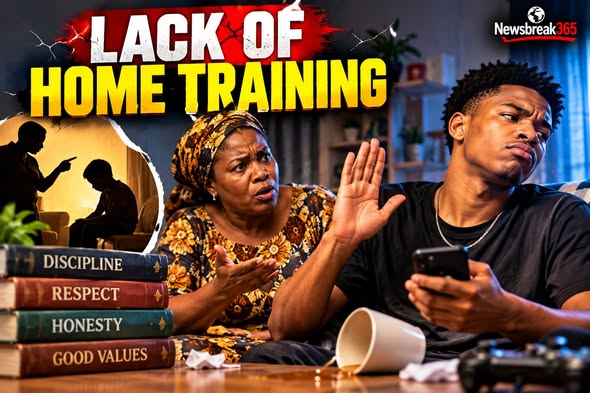
SOME PEOPLE ARE NOT BOLD, FEARLESS, OR CONFIDENT — THEY ARE SIMPLY VICTIMS OF POOR HOME TRAINING!

Published

on

Let’s stop glorifying bad behaviour and calling it confidence! When someone insults others without shame, disrespects elders, behaves arrogantly, or treats people like garbage, sometimes the problem is deeper than attitude — **it is a failure to learn basic values at home.**

The home is the first classroom, and parents are the first teachers. Before a child steps into society, they should have learned the difference between confidence and arrogance, freedom and recklessness, and honesty and disrespect.

**Home training is not just about providing food, clothes, and school fees. It is about teaching respect, discipline, honesty, responsibility, empathy, and self-control.**

Sadly, some parents want society to respect their children but refuse to correct them when they misbehave. They defend every wrong action, blame teachers for every problem, and attack anyone who dares to point out their children’s mistakes.

But here is the uncomfortable truth: **LOVE WITHOUT DISCIPLINE CAN BECOME NEGLECT, AND FREEDOM WITHOUT RESPONSIBILITY CAN DESTROY CHARACTER.**

Of course, not every badly behaved person comes from a poorly trained home. People make their own choices, and adults are responsible for their actions. But the values instilled during childhood can have a lasting impact.

Parents, raising a child is not just about keeping them alive; it is about preparing them to live responsibly among other human beings.

**IF EVERYONE AROUND YOU MUST SUFFER BECAUSE YOU HAVE NO RESPECT, NO SELF-CONTROL, AND NO REGARD FOR OTHERS, PERHAPS IT IS TIME TO ASK YOURSELF: WHO FAILED TO TEACH YOU BETTER?**

🔥 **LET’S TALK!**

See also  FULL LIST: 68th Grammy Award Nominations

Is bad behaviour mainly a result of poor home training, or should individuals take full responsibility for the way they behave?

Drop your opinion in the comments! 👇

#LackOfHomeTraining #Parenting #Discipline #Respect #GoodUpbringing #SocialValues

FOLLOW US ON:

FACEBOOK

WHATSAPP CHANNEL

TWITTER

PINTEREST

TIKTOK

YOUTUBE

LINKEDIN

INSTAGRAM

Continue Reading

Lifestyle

SOME PARENTS ARE NOT PROUD OF THEIR CHILDREN’S SUCCESS — THEY ARE JEALOUS OF IT

Published

on

It is a painful truth that nobody wants to talk about.

We grow up believing that our parents will always be our biggest cheerleaders, the people who celebrate our victories, support our dreams, and feel proud when we achieve what they could not achieve themselves.

But what happens when a child becomes successful and the very people who should be celebrating begin to feel threatened?

What happens when your progress makes your own parents uncomfortable? When your achievements are met with silence instead of congratulations? When every step forward is followed by criticism, comparison, discouragement, or an attempt to bring you back down?

**THE SAD REALITY IS THAT NOT EVERY PARENT KNOWS HOW TO CELEBRATE A CHILD WHO OUTGROWS THEM.**

Some parents struggle when their children become financially independent. Some feel threatened when their children become more educated, more respected, or more influential. Others want their children to succeed, but only as long as that success does not challenge their authority or make them feel less important.

Instead of saying, *”I am proud of you,”* they say, *”You think you are better than us now.”*

Instead of celebrating your breakthrough, they remind you of your past mistakes.

Instead of supporting your dreams, they use guilt, emotional manipulation, and family expectations to keep you under their control.

But let us be clear: **A child’s success is not an insult to a parent. It is an opportunity for a parent to celebrate how far their child has come.**

Dear parents, your children are not your competitors. Their success does not reduce your worth. Their achievements do not erase the sacrifices you made. If you truly love them, you should want them to go further than you ever did.

See also  FULL LIST: 68th Grammy Award Nominations

And to the children experiencing this painful reality, remember this: you can respect your parents without allowing jealousy, guilt, or emotional manipulation to destroy your peace.

Not every disagreement is jealousy, and not every criticism comes from hatred. But when a pattern of resentment repeatedly appears whenever you succeed, it deserves honest attention.

**NOW, LET US ASK THE UNCOMFORTABLE QUESTION:**

🔥 Can a parent genuinely love a child and still envy that child’s success?

🔥 Have you ever seen a parent become uncomfortable because their child became more successful than they are?

🔥 Is this a hidden problem in some African families, where respect for parents is sometimes used to discourage children from becoming independent?

**LET US DISCUSS THIS HONESTLY.** Do not judge every parent, but do not pretend that every family relationship is healthy either.

#Parenting #FamilyIssues #ToxicFamilyDynamics #AfricanFamilies #Jealousy #LifeLessons #Newsbreak365

FOLLOW US ON:

FACEBOOK

WHATSAPP CHANNEL

TWITTER

PINTEREST

TIKTOK

YOUTUBE

LINKEDIN

INSTAGRAM

Continue Reading

Trending