Connect with us

Lifestyle

2026 Ojude Oba festival to honour late Awujale’s legacy — Coordinator reveals

Published

on

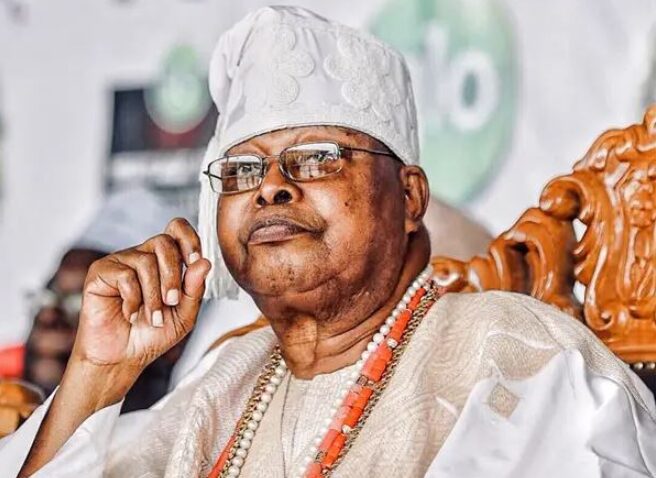
The Coordinator of Ojude Oba festival in Ijebu Ode, Prof Fassy Yusuf, on Tuesday said that this year’s celebration will be devoted to celebrating the indelible legacy of selflessness and the exemplary leadership of the late Awujale of Ijebu land, Oba Sikiru Kayode Adetona, who died last year July at the age of 91 after reigning for 65-years.

Yusuf also debunked a narrative circulating on social media that the Ojude Oba festival would not be celebrated because of the transition of Oba Adetona, saying that the highly revered royal father had warned that nothing should hinder the annual celebration, even after his death.

This is just as the First Lady and the wife of the President, Sen Oluremi Tinubu, alongside Gov Dapo Abiodun and his wife, Mrs Bamidele Abiodun, as well as the Minister of Arts, Culture, Tourism and the Creative Economy, Barrister Hannatu Musa Musawa, are expected to be the special guests of honour at this year’s festival, which is celebrated two days after the Muslim Eid-el-Kabir festival.

The Professor of Mass Communication disclosed this during a world press conference held at the Awujale palace on Tuesday.

He explained that the theme of this year’s festival, “Ojude Oba 2026: Celebrating The Legacy of Oba Sikiru Adetona”, was inspired by the remarkable life, enduring legacy, and monumental contributions of the late traditional ruler, whose reign was marked by uncommon courage, visionary leadership, unwavering devotion to the Ijebu people, and transformational strides in governance.

He stated that “Throughout his illustrious reign, Oba Adetona broke barriers, demystified age-long jinxes, redefined the institution of monarchy, and repositioned the Ijebu Nation on the global cultural and socio-political landscape.

See also  PHOTOS: 7 Beautiful Traditional Yoruba Hairstyles – Irun Dídì Ni Ayé Àtijọ́

“His leadership brought renewed prestige, unity, development, and pride to the traditional institution, while his wisdom and progressive disposition changed the narrative of kingship in Nigeria and beyond.

“The 2026 edition of Ojúdé Ọba Festival, therefore, serves not only as a celebration of culture and heritage, but also as a solemn tribute to the longest- reigning monarch in the history of Ijebuland — a revered royal icon whose legacies remain indelible and whose impact will continue to resonate across generations.”

He added that in recent times, certain voices and interests, through both traditional and social media platforms, had sought to create uncertainty around the continuity of the Ojude Oba Festival following the transition of the highly revered monarch, Oba Adetona.

Yusuf stated that various campaigns and insinuations, particularly the “No Awujale, No Ojude Oba” narrative, sought to cast doubt on the future of this globally acclaimed cultural institution.

He disclosed that the history, tradition and the collective will of the Ijebu people have prevailed because the festival transcends personalities as it is a timeless cultural heritage deeply rooted in the identity, pride and unity of the Ijebu nation.

The Ijebu Ode High Chief revealed that suspending the festival because of the royal transition would not only have undermined decades of cultural preservation and economic advancement, but would also have inflicted immeasurable loss on the people and their traditions, the tourism potential, the economy and the global cultural standing.

He added that “Indeed, our highly respected late Kabiyesi himself made it abundantly clear that Ojude Oba must never be suspended on account of his passage or during any interregnum.

“According to his noble conviction, the festival remains a sacred cultural institution that must continue to flourish up to eternity.

See also  Why I assaulted my daughter, Ilebaye – Father

“It is, therefore, with great pride, confidence and a deep sense of responsibility that we announce to the world today that the 2026 Ojude Oba Festival shall hold with all its grandeur and splendour by the grace of Almighty God.

“The festival remains alive, vibrant and firmly established as a unifying symbol of our ur heritage, our religious tolerance, our pride and our collective destiny as a people.

“The grand finale of the 2026 edition of the Ojude Oba Festival is expected to hold on Friday, May 29, 2026, being two days after the celebration of Eid-el- Adha (Ileya Festival).”

This year’s edition of the festival is expected to witness the spectacular participation of about 90 male and female Age Grades (Regberegbe), all elegantly adorned in resplendent and richly coordinated traditional attires that reflect the depth, creativity, pride, and cultural sophistication of the Ijebu people.

Equally, 25 distinguished families of warlords and warrior lineages—renowned for their historic roles in defending the Ijebu kingdom before the colonial annexation of Ijebu, are expected to participate in the celebrated equestrian display and horse riding to the festival pavilion, where they pay homage to the Awujale.

Historical accounts reveal that with the advent of Islam in Ijebuland, the reigning monarch granted adherents of the new faith the freedom to practise their religion peacefully and without discrimination.

This atmosphere of tolerance and mutual respect fostered religious harmony within the kingdom.

Consequently, after the celebration of Eid-el-Adha (Ileya), members of the Muslim community would, on the third day, gather to pay homage to the monarch in appreciation of his goodwill, accommodation, and support for peaceful coexistence.

See also  The 1973 Nigerian “Hides and Skins” Postage Stamp: A Window into Economic Identity

Over the years, this gesture of appreciation and gratitude gradually transformed into what is now known as the Ojude Oba Festival.

Today, the festival attracts millions of participants and visitors from across Nigeria and the diaspora, showcasing the rich cultural heritage of the Ijebu people.

More importantly, it remains a shining example of religious tolerance, peaceful coexistence, and communal harmony — a priceless cultural gift of the Ijebu nation to Nigeria and the world.

punch.ng

FOLLOW US ON:

FACEBOOK

TWITTER

PINTEREST

TIKTOK

YOUTUBE

LINKEDIN

INSTAGRAM

Continue Reading
Click to comment

Leave a Reply

Your email address will not be published. Required fields are marked *

Lifestyle

Details Of Operation Behind PFIPC ‘Fake DG’ Adeyemi’s Arrest Emerge

Published

on

The self-styled Director-General of the Presidential Foreign Investment Promotion Council (PFIPC), Adeniyi Adeyemi, was arrested last Tuesday by the Intelligence Response Team led by Chief Superintendent of Police, Moses Lohor.

It was learnt that Adeyemi was arrested between 11am and 12pm inside a building in the Ijebu-Ijesa area of Osun State.

The suspect’s arrest followed a bench warrant issued against him by a Federal High Court in Abuja after he allegedly failed to appear for arraignment on eight counts.

Giving details of the operation that led to the arrest, a senior police officer in the Osun State Police Command, in an interview with Punch, said Adeyemi’s location was first uncovered in the Aregbe-Fakule area of Osogbo on July 9 after evading tracking by the Department of State Services (DSS).

The police officer said Lohor’s team took over the tracking after the DSS withdrew from the case.

He added that the operatives eventually located Adeyemi in Ilesa and subsequently arrested him on Tuesday morning.

The source said, “The Moses Lohor team were in Osun for surveillance ahead of the August 15 governorship election. They were mapping hotspots and collating other intelligence. As a matter of fact, the Lohor team didn’t report to the Osun State Police Command. They operated from the area commander’s office at Oke-Fia in Osogbo.

“Adeyemi was already on their watch list, but they didn’t act because the case was being handled by the DSS. Adeyemi’s last known location tracked by the DSS was Ibadan, but they couldn’t apprehend him because he regularly switched off his phone.

See also  I expected twins, shocked four babies came out — Mother detained over N3m bill

“A senior police officer from Abuja informed the Lohor team about the DSS withdrawal on Wednesday. Lohor’s team then decided to track Adeyemi’s location on Thursday, July 9. Incidentally, he was located around the Aregbe-Fakule area of Osogbo.

“Luckily for them, late on Monday night, Adeyemi’s location showed he was around Ilesa, and the Lohor team intensified efforts, which led to his arrest on Tuesday morning. The team only informed the Osun State Commissioner of Police when they moved in to make the arrest.”

Adeyemi is reportedly being detained at the Force Headquarters in Abuja, from where he is expected to be arraigned on July 27.

FOLLOW US ON:

FACEBOOK

TWITTER

PINTEREST

TIKTOK

YOUTUBE

LINKEDIN

INSTAGRAM

Continue Reading

Lifestyle

‘I Almost Ran Mad After My Ex-husband Left Me’ – Nollywood Actress, Biola Fowoshere

Published

on

Popular Nollywood actress in the Yoruba movie industry, Biola Fowosere, has opened up about the challenges she faced after her ex-husband left their marriage.

It was reports that Biola, during an interview on African A List, said her ex-husband abandoned her and their children despite not doing anything wrong in the union.

The thespian who broke down in tears during the interview said her ex-husband is the only person she would like to ask why he abandoned his family.

Biola also spoke about battling severe depression after the separation, spending one year and six months in the hospital while struggling to recover emotionally.

According to the movie star, she almost lost her sanity, adding that it has been seven years since they lost contact.

She said, “The only person I’d really want to ask a question is my ex-husband. I’d really like to ask him what I did wrong because I did nothing before he left me and the kids. I want to ask what my children and I did to deserve what he did to us,” she said.

“I spent one year and six months in the hospital battling depression after he left. I almost ran mad. We are not in contact. Since he left, we haven’t seen him. He blocked us seven years ago.”

FOLLOW US ON:

FACEBOOK

TWITTER

PINTEREST

TIKTOK

YOUTUBE

LINKEDIN

INSTAGRAM

See also  DSP George Iyamu: The Police Officer Who Betrayed the Badge
Continue Reading

Lifestyle

Nigerian men reveals why they can’t use condoms with their wives

Published

on

From cultural beliefs and bride price entitlement to fears of diminished masculinity and reduced sexual pleasure, many Nigerian husbands reject condoms and vasectomy, leaving their wives to bear the burden of family planning alone. JANET OGUNDEPO reports

When the side effects of several contraceptives she used became too much to bear, a middle-aged mother of four, Amara Nwobi, summoned courage and walked into a registered pharmacy in the Somolu area of Lagos State.

Her goal was to enquire about contraceptive methods she could use to prevent another pregnancy.

As she interacted with the healthcare worker, our correspondent observed that Nwobi was quite knowledgeable about the several planning methods.

Whenever a method was mentioned, she’ll respond, “I don use that one before, I dey react to am.” This means that she has tried several methods and had reactions such as irregular menstruation, constant headaches and bloating.

As she left the pharmacy determined to go to the family planning unit of the Primary Healthcare Centre in her area for further counselling, our correspondent approached her to ask a few questions to which she obliged.

The mother of four explained, “Despite all these reactions I have, my husband will never agree to use a condom.

“He’ll say, ‘After I paid my wife’s bride price in full, I can’t use the condom with my wife. If I use it with her, what should I then use with ‘Olosho’?”

When asked if she had explained her reactions to the methods, Nwobi said her husband told her to enquire about other methods with the hope that one would be perfect for her.

Why would I use a condom with my wife?

Several married men interviewed by PUNCH Healthwise on their views about contraceptive use, especially the barrier method, condom, explained reasons for their reluctance.

A Lagos-based Software Engineer, identified only as Mahatma, said, “Condoms sometimes feel like an emotional barricade for men who prefer to have the skin-to-skin contact.”

The father of one noted that since he doesn’t need to protect himself from sexually transmitted infections, there was no need for him to use a condom with his wife.

Mahatma, however, was open to using other available, safe and reversible male contraceptives if his wife reacted to the available methods for females.

See also  PHOTOS: 7 Beautiful Traditional Yoruba Hairstyles – Irun Dídì Ni Ayé Àtijọ́

While the software engineer declined to undergo a vasectomy, he believes family planning “should be a shared responsibility but can’t be equal as it is mainly to protect the woman.”

For a print media practitioner and father of three, Ojonrewaju Lanre, he can only use a condom with his wife “for her health’s sake.”

He further explained, “I think it is cultural and religious. Culturally, it is against our belief system that a husband is using a condom with his wife. In my 13 years of holy matrimony, I have never used a condom with my wife. On a religious basis, my faith is against any artificial contraception. Condom is one of them.

“Bride price or no bride price, once you are married you have to consummate your union. Why use a condom? I use the withdrawal method.”

The father of three vehemently refused vasectomy, saying, “Not in this era of high rate of paternity issues. Once a man is considered not virile, then what’s the use of his masculinity? Psychologically, both partners will have insecurity and infidelity issues.”

Men feel safe with wives, so why condom?

A Lagos-based father of one, Oluwamuyiwa Oyedele, believes that most married people feel safe with their wives, “believing the wives know when it is safe for them to be impregnated. And many also enjoy having it raw with their wives, believing it’s a safe place for them.”

He, however, noted that paying his wife’s bride price doesn’t give him the right to have sex without a condom, stating that his wife’s comfort during the sexual activity was important to him.

Oyedele says he’s comfortable with condom use and couples should both be involved in contraceptive use.

A Client Relationship Manager, Odedeyi Williams, believes that men enjoy sex “raw,” stating that for the prevention of pregnancy, men can use the withdrawal method.

While the Abuja-based husband says he is only comfortable with the male barrier method of contraception, condoms, and likes the idea of male contraceptives, he believes family planning is “basically for women; men don’t have a womb.”

Williams further says he will participate in family planning to avoid unintended pregnancy.

PUNCH Healthwise earlier reported that despite the push for increased uptake of family planning services to regulate the country’s explosive population growth, some Nigerian men have vowed not to embrace vasectomy, a form of male birth control method.

See also  The 1973 Nigerian “Hides and Skins” Postage Stamp: A Window into Economic Identity

The report showed that men are worried a lot about whether their testosterone levels and libido would drop, while some are particularly worried that they could suffer from erectile dysfunction after undergoing vasectomy.

Globally available and approved modern contraceptives for men are condoms and vasectomies. In some countries, spermicides are available, and research is ongoing to develop non-hormonal male contraceptive pills and gels.

PUNCH Healthwise spoke to some women who confirmed that their husbands do not use or agree to the use of male contraceptives and have allowed them to use whichever modern contraceptive was effective for them.

These women pray that someday, “better contraceptives for the men will be available so they can also be involved in the family planning process.”

Contraceptives don’t reduce men’s dignity– Urologists

Commenting on the matter, a urologist and President of the Association of Urological Surgeons, Nigeria, Prof Nuhu Dakum, said many men refuse to use condoms because it denies them the natural sensation they ought to enjoy during sex.

“Many men feel the natural sensation is dulled when they use a condom, so they do not want to use it. Many may also feel the insistence of a partner that they use a condom may be an indirect way of saying they are not trusted, thus casting doubts on their faithfulness,” he said.

He further noted that misconceptions such as “condoms are meant for unfaithful partners or those infected” prevent the uptake of the contraceptive method.

The don stated that many men also think that vasectomy or other ways of contraception are only for women.

Dakum further explained that condoms and vasectomy are “the two main contraceptive methods,” stating that “male pills are not fully developed, and spermicides as methods of male contraception are not popular.”

On the health consequences that may arise when family planning responsibility is placed almost entirely on women, the consultant urologist said, “The consequences may be the side effects of the female contraceptives on the women.”

He stated that health education of men and involving them during family planning counselling with their wives on contraception would further help to increase male adoption of contraceptives.

On his message to Nigerian men who believe that using condoms with their wives or undergoing vasectomy diminishes their manhood or their rights as husbands, Dakum said, “This is a misconception. No man’s dignity is reduced because he uses any contraception. It would reduce the burden on the women if men also get involved in contraception.   Men are advised to get educated on the methods available and discuss with their doctors so they make informed choices on the appropriate method for them,” he said.

See also  Perpetua Nkwocha: The Nigerian Football Legend Who Redefined Women’s Game

In an earlier interview with PUNCH Healthwise, a professor of Urology and Consultant Urological Surgeon at the University of Abuja and the University of Abuja Teaching Hospital, Oseremen Aisuodionoe-Shadrach, noted that the slow adoption of contraception among males was due to cultural beliefs, adding that it could be difficult to change the perceptions and mindsets.

The Reconstructive Urologist explained that the reluctance towards vasectomy is largely due to the surgical nature of the procedure and the psychological impact of “stopping their capacity to reproduce.”

He added, “Not many men will do a vasectomy. Not many men will even use condoms, as simple as it is, because they feel it is the woman who should routinely use contraception. Most of these things stem from cultural beliefs and are not psychological.

“First, because men think that it is women who should use contraception. You know, they think, culturally, it is the woman who gives birth. So, if you don’t want to give birth or want to space childbirth, you should use contraceptives.

“So, I think that it is just a cultural way because that was how it was devised from the beginning, and that was why female contraception started early.

“It was like, if we can get female contraception, then there will be no conception. So, of course, the introduction of barrier methods using condoms is not necessarily for male contraception, but for the prevention of Sexually Transmitted Infections, really.

“So in a logical sense, you would say that female contraception started with a cultural bias that since it is the woman who gives birth, then prevent that conception in the same woman.”

punch.ng

FOLLOW US ON:

FACEBOOK

TWITTER

PINTEREST

TIKTOK

YOUTUBE

LINKEDIN

Continue Reading

Trending