Connect with us

Education

FG makes tertiary institution ranking compulsory for varsities, polytechnics

Published

on

The Federal Government has made participation in Nigeria’s national tertiary education ranking exercise compulsory for all universities, polytechnics and colleges of education, expanding the scheme beyond universities.

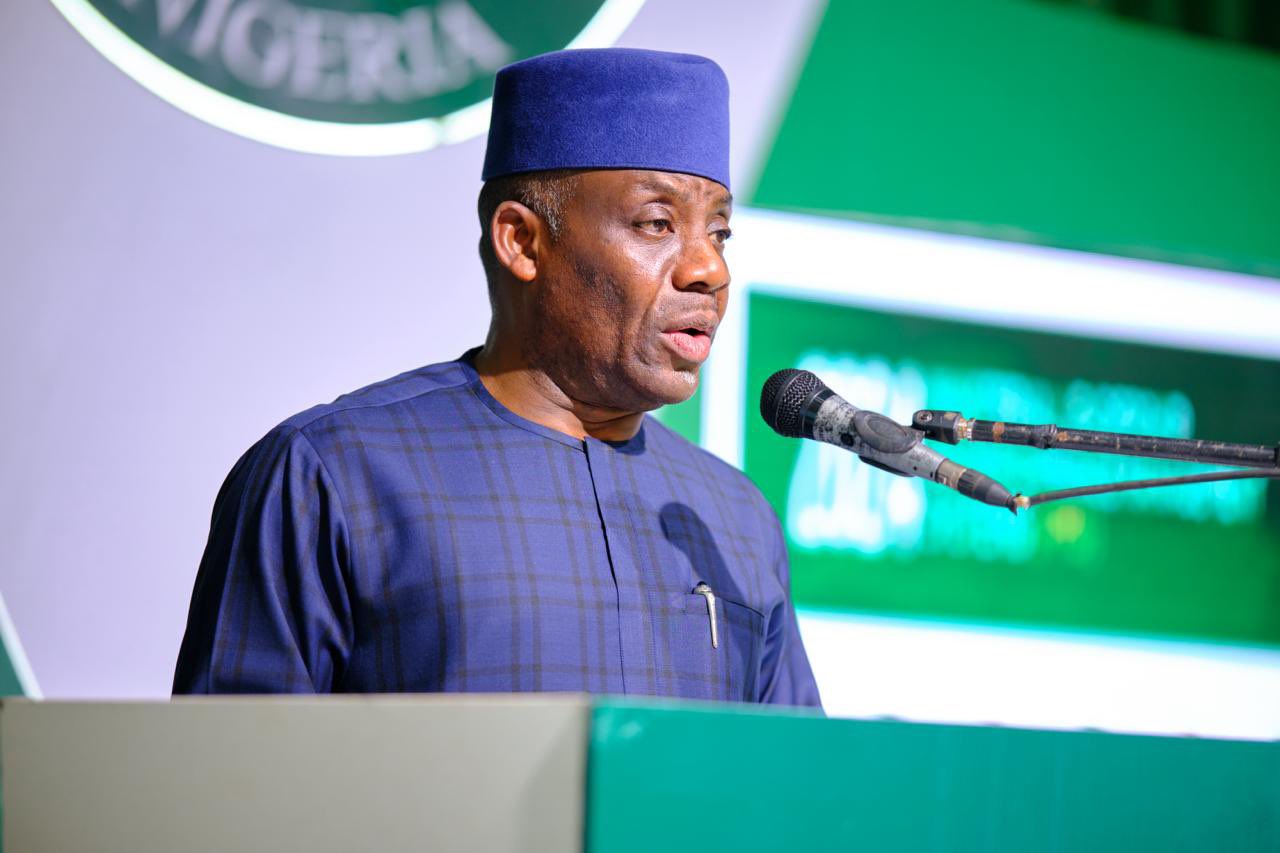
The Minister of Education, Dr Tunji Alausa, announced this on Tuesday in Abuja at a meeting with the Nigerian Universities Ranking Advisory Committee, which has now been expanded and renamed the Nigerian Tertiary Education Ranking Advisory Committee.

Alausa said the expanded ranking framework was designed to strengthen “quality, accountability, institutional performance and global competitiveness” across the country’s tertiary education system.

He said the ranking would provide institutions with “clear benchmarks for assessing their performance, identifying areas requiring improvement and measuring progress,” while encouraging healthy competition among institutions.

Under the new arrangement, universities, polytechnics and colleges of education will come under a unified national ranking framework, with the Federal Government expected to fund the exercise through the Tertiary Education Trust Fund.

Alausa said, “The 2026/2027 ranking exercise for universities would commence in September, while the committee would determine the appropriate timeline for extending the exercise to polytechnics and colleges of education.”

He added that “the government would develop guidelines to institutionalise the exercise and formally communicate to vice-chancellancellors and heads of other tertiary institutions that participation was compulsory.”

The minister said the policy was part of President Bola Tinubu’s education reforms under the Renewed Hope Agenda, being implemented through the Nigeria Education Sector Renewal Initiative.

He also pledged that the Federal Ministry of Education would provide the “policy direction, funding and capacity-building support” required to make the ranking exercise credible, sustainable and impactful.

See also  Aba Polytechnic to introduce education technology courses, tackles drug abuse

According to him, the ministry would work with the committee to facilitate “in-service training and institutional capacity-building programmes across tertiary institutions,” with the expectation that more Nigerian institutions would gain global recognition.

The Minister of State for Education, Professor Suwaiba Ahmad, described the initiative as “a significant step towards strengthening accountability and quality across Nigeria’s tertiary education system.”

She said healthy competition was essential to making institutions assess their performance and address shortcomings.

“Healthy competition is essential to encouraging institutions to assess their performance, address identified gaps and consistently improve the quality of education they provide,” she said.

Suwaiba also insisted that the ranking should cover both public and private institutions, saying the exercise would provide a mechanism for establishing and maintaining minimum standards across the sector.

She said it would help institutions understand their “strengths and weaknesses” and drive measurable improvements as the tertiary education system continues to expand.

Emeritus Professor Peter Okebukola, chairman of the ranking advisory committee and former Executive Secretary of the National Universities Commission, said the committee’s engagement with Alausa followed a memorandum congratulating the Tinubu administration over the increasing number of Nigerian universities gaining global recognition.

The committee had also called for greater investment in university education to accelerate the progress, according to Okebukola.

He said, however, that Alausa’s response went beyond the committee’s initial proposal by expanding NURAC’s mandate to cover polytechnics and colleges of education.

The development resulted in the transformation of NURAC into the Nigerian Tertiary Education Ranking Advisory Committee.

Okebukola expressed optimism that “sustained investment, stronger institutional capacity and the new national ranking framework” would enable more Nigerian institutions to make significant progress in international rankings.

See also  First lady distributes 10,000 sanitary pad packs to Anambra schoolgirls

He said the framework would help Nigerian institutions “compete confidently with leading institutions globally.”

The latest policy comes as Nigerian tertiary institutions face pressure to improve their performance in global university rankings, where factors such as research output, academic reputation, citations, international outlook and institutional resources influence their positions.

Although a growing number of Nigerian universities have secured places in international rankings, concerns remain over inadequate funding, research capacity, infrastructure, staffing and the ability of institutions to compete with better-funded universities globally.

The government’s decision to extend the national ranking framework to polytechnics and colleges of education is expected to broaden performance measurement beyond universities and establish a more coordinated system for tracking the quality and competitiveness of Nigeria’s tertiary institutions.

The compulsory nature of the exercise also marks a shift from voluntary participation towards a system in which institutions will be expected to provide data and engage with nationally defined performance benchmarks.

Source: punchng.com

FOLLOW US ON:

FACEBOOK

TWITTER

PINTEREST

TIKTOK

YOUTUBE

LINKEDIN

INSTAGRAM

Continue Reading
Click to comment

Leave a Reply

Your email address will not be published. Required fields are marked *

Education

Czech Embassy debunks scholarship eligibility claim for Nigerian students

Published

on

The Embassy of the Czech Republic in Nigeria has debunked information circulating online claiming that Nigerian students are eligible for the Czech Government Scholarship programme for the 2027/2028 academic year.

The embassy, in a statement on Monday, said Nigeria was not among the countries eligible for the scholarship programme for the 2027/2028 academic year.

The clarification followed the circulation of information online about the scholarship, including claims that Nigerian students could apply.

The embassy said, “For the 2027/2028 academic year, Nigeria is not among the countries eligible for the Czech Government Scholarship programme.”

It urged Nigerian students to disregard information published on unofficial websites listing Nigeria among the eligible countries.

“We have seen some information circulating online about Czech Government Scholarships for the 2027/2028 academic year, including information stating that applicants from Nigeria are eligible. Please note that this information is NOT accurate,” the statement said.

The embassy acknowledged the interest of Nigerian students in studying in the Czech Republic, but said the government scholarship would not be available to Nigerian applicants for the 2027/2028 academic year.

“We know that many Nigerian students are interested in studying in the Czech Republic, and we understand that this may be disappointing news,” it stated.

“Unfortunately, the Czech Government Scholarship is not available to applicants from Nigeria this year.”

The embassy consequently advised prospective Nigerian applicants not to rely on information published by unofficial websites concerning the scholarship programme.

It directed students seeking accurate information to the Czech Ministry of Education, Youth and Sports and the Dům zahraniční spolupráce, which provides information on study opportunities for foreign students.

See also  FG bans admission and transfer into SS3 nationwide from 2026/27 session

The embassy said, “Please do not rely on information published on unofficial websites stating that Nigeria is eligible for the 2027/2028 Czech Government Scholarship.”

The clarification is expected to prevent prospective Nigerian applicants from acting on the inaccurate information or making preparations based on an eligibility claim that does not apply to them.

The embassy thanked Nigerian students for their understanding and wished prospective students success in their academic pursuits.

Source: punchng.com

FOLLOW US ON:
FACEBOOK

TWITTER

PINTEREST

TIKTOK

YOUTUBE

LINKEDIN

INSTAGRAM

Continue Reading

Education

Kogi varsity expels six students for rewriting exam at lecturer’s residence

Published

on

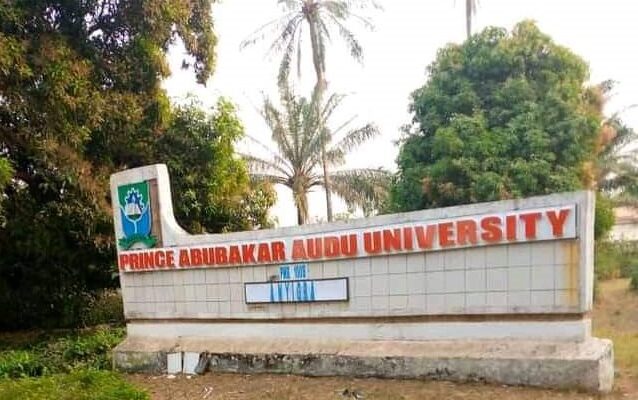
The Senate of Prince Abubakar Audu University, Anyigba, Kogi State, has approved the expulsion of six students for gross examination misconduct after they were found to have rewritten an examination at a lecturer’s private residence.

The Senate also approved the withdrawal of nine other students over poor academic performance and failure to register for two consecutive semesters.

The decisions were among the major resolutions reached at the 167th Regular Meeting of the university’s Senate, held on Wednesday, August 26, 2026, at the university auditorium.

This was disclosed in a statement issued on Monday by the Public Relations Officer of the university, Uredo Omale.

According to the statement, the university management acted on July 1, 2026, following credible information that a lecturer was coordinating students to rewrite an examination at his residence.

“On 1st July, 2026, the University Management acted based on credible information that a Lecturer was coordinating students to re-write an examination at his residence. This led to the arrest of Dr Maji Okpanachi of the Department of Plant Science and Biotechnology and some students along with some exhibits from his private residence, behind the Police Area Command Office, along Idah Road, Anyigba by the security operatives of the University,” Omale stated.

She said the security report was subsequently referred to the Examination Misconduct Committee, whose findings were considered by the Senate at its 167th Regular Meeting.

“The committee report further confirmed the security report as well as the confessional statements by the Lecturer and the students involved and other available records, that some students re-wrote the examination at the lecturer’s residence, days after the examination was written.

See also  JSS1 minimum age not raised to 12 – Nigerian Govt refutes report

“The committee further revealed that the affected students paid the sum of N10,000 each to the lecturer to re-write the Course: BOT102 (Introduction to Plant Science) at the residence of the course lecturer, Dr. Maji Okpanachi,” she added.

Omale said the Senate also approved the referral of Okpanachi to the Senior Staff Disciplinary Committee for appropriate disciplinary action in accordance with the university’s established rules and regulations.

She added that the Senate, in a related development, approved the withdrawal of nine students on grounds of poor academic performance and failure to comply with registration requirements.

Reacting to the decisions, the Vice-Chancellor and Chairman of Senate, Prof. Salisu Ogbo Usman, reaffirmed the commitment of the Senate and university management to maintaining high standards of academic excellence, discipline, integrity, patriotism and quality assurance.

He stressed that the university would not tolerate any act capable of compromising the credibility and integrity of its academic and examination processes.

Usman commended the committees involved for their thorough investigations, saying the outcome demonstrated the university’s determination to strengthen accountability and safeguard the integrity of its academic system.

He reiterated the management’s commitment to sustaining a culture of academic discipline, responsibility and ethical conduct among staff and students, stressing that the rules governing examinations and other academic activities must be respected by all members of the university community.

The Vice-Chancellor also urged students to remain focused on their studies, uphold high standards of character and learning, and comply fully with the university’s academic and examination regulations.

“The affected students have been directed to surrender all University property in their possession, including identity cards and other official items, to the appropriate authorities before exiting the University,” the PRO added.

See also  NYSC reforms: All you need to know about 11 specialised streams, new camp structure

Source: punchng.com

FOLLOW US ON:

FACEBOOK

TWITTER

PINTEREST

TIKTOK

YOUTUBE

LINKEDIN

INSTAGRAM

Continue Reading

Education

Read how students can win FG’s ₦365m national laureate prize

Published

on

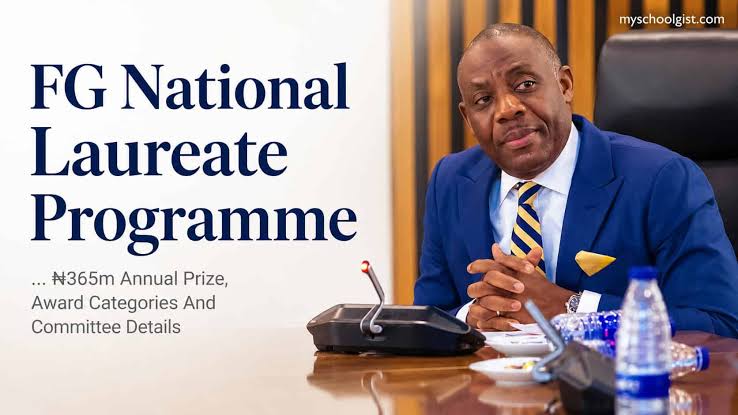
The Federal Government has opened the Tertiary Institutions National Laureate Prize, an annual ₦365 million scheme designed to reward and elevate outstanding research from Nigeria’s universities, polytechnics, monotechnics, and colleges of education.

Minister of Education, Dr Maruf Tunji Alausa, announced the opening of the prize on Thursday, following a press briefing with the Nigeria Education Repository and Databank National Laureate team.

He said the initiative aligns with President Bola Tinubu’s Renewed Hope Agenda by repositioning tertiary institutions as centres of research, innovation, enterprise and problem-solving rather than mere certificate-producing centres.

Prize structure

The annual prize fund of ₦365 million is structured as follows:

  • Undergraduate Star Prize: ₦35 million
  • Master’s Star Prize: ₦50 million
  • Doctoral Star Prize: ₦100 million
  • 15 Thematic Excellence Prizes: ₦12 million each, totalling ₦180 million

Across six thematic areas, one national thematic laureate is selected at each of the three academic levels — undergraduate, master’s and doctoral — producing 18 laureates in total.

Three of these receive the Star Prizes, while the remaining 15 receive the thematic awards.

The six thematic areas are Science, Engineering and Technology; Medicine and Health Sciences; Arts and Social Sciences; Agriculture; Law; and Teaching Innovation.

A special Dr Stella Adadevoh Prize, or Excellence Award, for Medicine and Medical Innovation honours the late physician whose actions helped contain Nigeria’s 2014 Ebola outbreak.

It is conferred on the laureate whose work and conduct best embody integrity, national service and protection of the public good.

Who is eligible?

The prize is open to students and researchers in every accredited tertiary institution in Nigeria — federal, state or private.

See also  Senate expands Safe Schools probe to TETFund, NELFUND

Undergraduate dissertations or recognised equivalents, master’s theses and doctoral theses, or equivalents from polytechnics, monotechnics, colleges of education and similar institutions, are eligible if they demonstrate strong commercial potential, industrial application or clear developmental impact.

Works must meet research integrity and originality standards.

Every nominated work must first be deposited in the NERD system and issued a valid National Document Number.

An NDN confirms deposit but does not automatically enter a work into the competition.

How students can position themselves to win

Students cannot submit entries directly. Only institutions, through their formally constituted Institution Laureate Selection Committees, can nominate and enter works.

Each institution may submit up to 18 entries: up to six undergraduate, six master’s and six doctoral entries, or their equivalents, drawn from the six thematic areas, generally one per theme at each level.

To maximise their chances, students should:

  • Produce exceptional work with demonstrable commercial, industrial or developmental value that addresses national challenges.
  • Ensure the dissertation, project or thesis is fully submitted to NERD and assigned a valid NDN before the institutional selection window closes.
  • Actively engage their supervisor, co-supervisor, head of department and other academic leaders. Ask them to present their work to the Institution Laureate Selection Committee for independent review.

Institutional selection is the first gateway. High-quality research and proper NERD compliance can improve the prospects of nomination.

How institutions submit entries

Once an institution’s Laureate Selection Committee has chosen its strongest works, authorised members follow the submission process on the National Laureate portal.

Step 1: Log in to the National Laureate Committee portal. This assumes the institution has constituted its Laureate Selection Committee and directed its NERD Focal Officer to enrol and formally designate the appointed members on NERD. Committee members require this designation to access the Laureate portal using their existing NERD credentials.

See also  Leave before visa expires, UK warns foreign students

Step 2: On the Laureate Dashboard, click Manage Institution Entries from the top-right menu.

Step 3: The next page will display the dissertations, projects and theses submitted within the institution, grouped under the relevant academic levels: undergraduate, master’s and doctoral, or their recognised equivalents.

Step 4: Use the filters at the top of the page to search for a specific dissertation, project or thesis.

Step 5: Once the work the committee intends to enter is located, click View to review the submission details carefully and confirm that all information is correct.

Step 6: On the View page, click View Submission Evidence to confirm that all required departmental and institutional attestations have been supplied.

Step 7: Click Open Authoritative Student File to view the exact PDF of the dissertation, project or thesis as originally submitted.

Step 8: If everything is in order, click Back to Previous Page or Back to Dashboard to return to the relevant work.

Step 9: Tick the oath checkbox and read the declaration carefully before proceeding. By ticking the box, the committee is making the prescribed institutional declaration in respect of the entry.

Step 10: Click Submit Entry. This completes the submission process for that entry. The committee may then proceed to review and submit other eligible works.

Deadline for submission

The deadline for institutional entries is August 31, 2026.

What happens after institutional submission?

Entries progress through a three-tier process: Institution Committee, Regional (zonal) Committee, and National Committee.

The National Laureate Committee, chaired by Emeritus Professor Abubakar Sambo, oversees the final evaluation.

See also  NANS vows critical assets shutdown over ASUU strike threat

The process is designed to be transparent, competitive and merit-driven, with emphasis on academic excellence and impact.

Winners are expected to be honoured at a National Laureate Gala later in the year, previously indicated for November.

Source: punchng.com

FOLLOW US ON:

FACEBOOK

TWITTER

PINTEREST

TIKTOK

YOUTUBE

LINKEDIN

INSTAGRAM

Continue Reading

Trending