Connect with us

Education

FG makes tertiary institution ranking compulsory for varsities, polytechnics

Published

on

The Federal Government has made participation in Nigeria’s national tertiary education ranking exercise compulsory for all universities, polytechnics and colleges of education, expanding the scheme beyond universities.

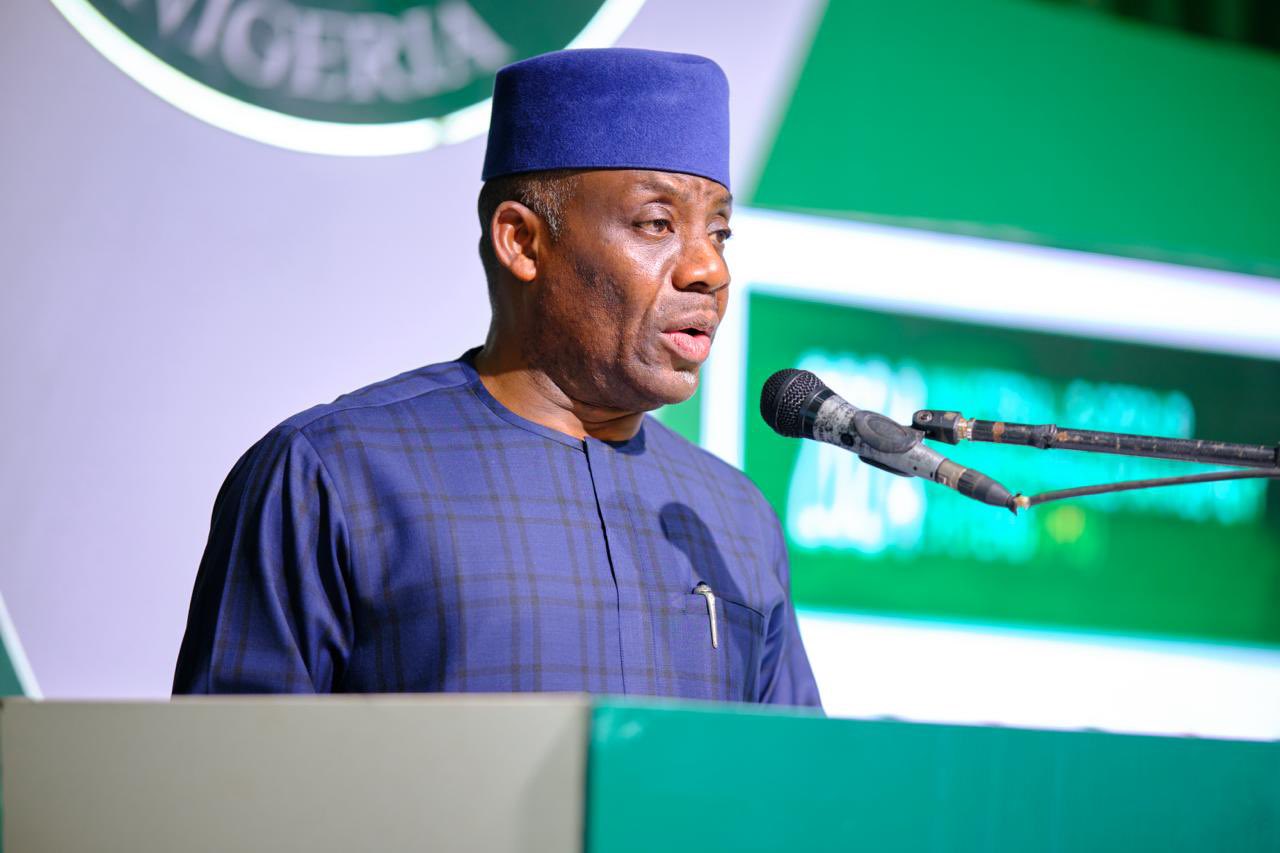
The Minister of Education, Dr Tunji Alausa, announced this on Tuesday in Abuja at a meeting with the Nigerian Universities Ranking Advisory Committee, which has now been expanded and renamed the Nigerian Tertiary Education Ranking Advisory Committee.

Alausa said the expanded ranking framework was designed to strengthen “quality, accountability, institutional performance and global competitiveness” across the country’s tertiary education system.

He said the ranking would provide institutions with “clear benchmarks for assessing their performance, identifying areas requiring improvement and measuring progress,” while encouraging healthy competition among institutions.

Under the new arrangement, universities, polytechnics and colleges of education will come under a unified national ranking framework, with the Federal Government expected to fund the exercise through the Tertiary Education Trust Fund.

Alausa said, “The 2026/2027 ranking exercise for universities would commence in September, while the committee would determine the appropriate timeline for extending the exercise to polytechnics and colleges of education.”

He added that “the government would develop guidelines to institutionalise the exercise and formally communicate to vice-chancellancellors and heads of other tertiary institutions that participation was compulsory.”

The minister said the policy was part of President Bola Tinubu’s education reforms under the Renewed Hope Agenda, being implemented through the Nigeria Education Sector Renewal Initiative.

He also pledged that the Federal Ministry of Education would provide the “policy direction, funding and capacity-building support” required to make the ranking exercise credible, sustainable and impactful.

See also  Catholic diocese shuts schools, hospital over Benue attacks

According to him, the ministry would work with the committee to facilitate “in-service training and institutional capacity-building programmes across tertiary institutions,” with the expectation that more Nigerian institutions would gain global recognition.

The Minister of State for Education, Professor Suwaiba Ahmad, described the initiative as “a significant step towards strengthening accountability and quality across Nigeria’s tertiary education system.”

She said healthy competition was essential to making institutions assess their performance and address shortcomings.

“Healthy competition is essential to encouraging institutions to assess their performance, address identified gaps and consistently improve the quality of education they provide,” she said.

Suwaiba also insisted that the ranking should cover both public and private institutions, saying the exercise would provide a mechanism for establishing and maintaining minimum standards across the sector.

She said it would help institutions understand their “strengths and weaknesses” and drive measurable improvements as the tertiary education system continues to expand.

Emeritus Professor Peter Okebukola, chairman of the ranking advisory committee and former Executive Secretary of the National Universities Commission, said the committee’s engagement with Alausa followed a memorandum congratulating the Tinubu administration over the increasing number of Nigerian universities gaining global recognition.

The committee had also called for greater investment in university education to accelerate the progress, according to Okebukola.

He said, however, that Alausa’s response went beyond the committee’s initial proposal by expanding NURAC’s mandate to cover polytechnics and colleges of education.

The development resulted in the transformation of NURAC into the Nigerian Tertiary Education Ranking Advisory Committee.

Okebukola expressed optimism that “sustained investment, stronger institutional capacity and the new national ranking framework” would enable more Nigerian institutions to make significant progress in international rankings.

See also  2026 budget: Anambra, Enugu, Kano lead in education funding

He said the framework would help Nigerian institutions “compete confidently with leading institutions globally.”

The latest policy comes as Nigerian tertiary institutions face pressure to improve their performance in global university rankings, where factors such as research output, academic reputation, citations, international outlook and institutional resources influence their positions.

Although a growing number of Nigerian universities have secured places in international rankings, concerns remain over inadequate funding, research capacity, infrastructure, staffing and the ability of institutions to compete with better-funded universities globally.

The government’s decision to extend the national ranking framework to polytechnics and colleges of education is expected to broaden performance measurement beyond universities and establish a more coordinated system for tracking the quality and competitiveness of Nigeria’s tertiary institutions.

The compulsory nature of the exercise also marks a shift from voluntary participation towards a system in which institutions will be expected to provide data and engage with nationally defined performance benchmarks.

Source: punchng.com

FOLLOW US ON:

FACEBOOK

TWITTER

PINTEREST

TIKTOK

YOUTUBE

LINKEDIN

INSTAGRAM

Continue Reading
Click to comment

Leave a Reply

Your email address will not be published. Required fields are marked *

Education

Troops foil suspected kidnap attempt at school in Kaduna, rescue students

Published

on

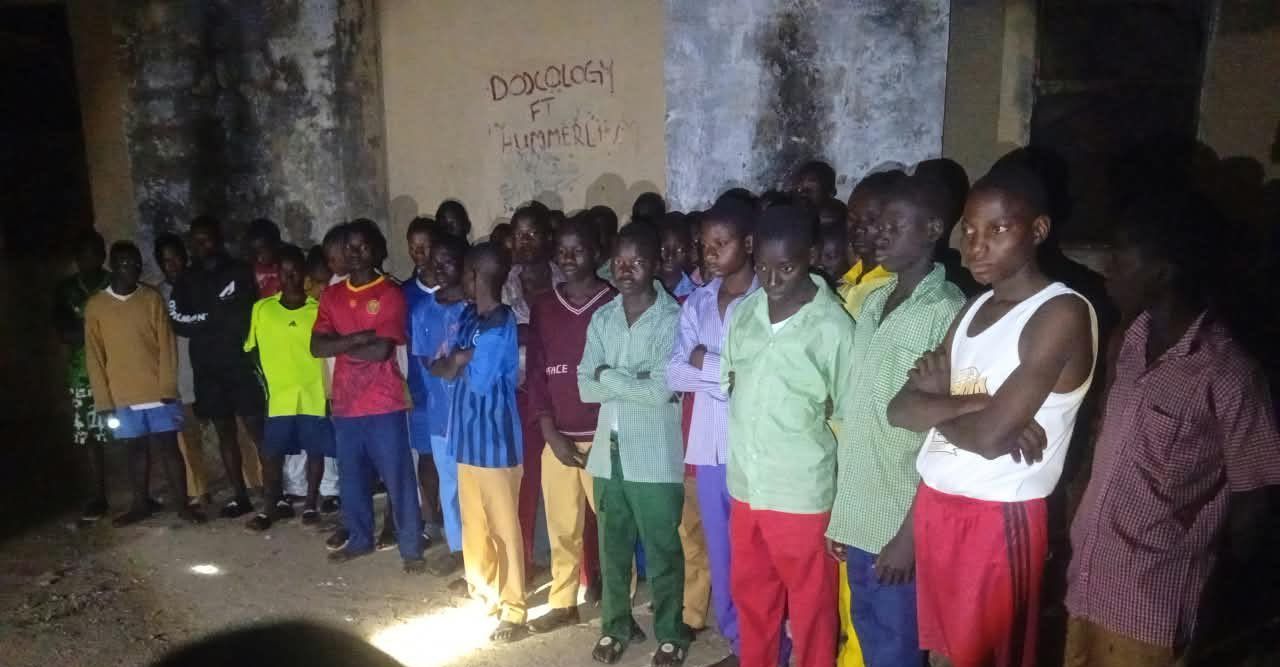
Troops of Operation ENDURING PEACE (OPEP) have foiled a suspected kidnapping attempt at Tafawa Balewa Memorial Commercial College, Samaru, in Zangon Kataf Local Government Area of Kaduna State.

Security analyst Zagazola Makama disclosed this in a report on Saturday, November 21, 2026.

The incident occurred at about 11:56 p.m. on November 18, following reports of suspicious movements by unidentified criminals around the school premises.

The troops of Sector 7 swiftly responded to the report and moved to the school, forcing the suspected criminals to abandon their mission and flee.

The troops subsequently conducted a thorough search of the school premises and surrounding areas but made no contact with the fleeing suspects.

A headcount was also conducted by the school authorities in collaboration with the troops, with no student or other occupant recorded missing.

The troops have continued to dominate the area to prevent further criminal activities, while efforts are ongoing to coordinate with 97 Battalion and 2 Nigerian Military Police Brigade to strengthen security in the general area, which falls within their respective areas of responsibility.


FOLLOW US ON:

FACEBOOK

WHATSAPP CHANNEL

TWITTER

PINTEREST

TIKTOK

YOUTUBE

LINKEDIN

INSTAGRAM

See also  Honorary awards: TASUED dismisses claims of snubbing Gbenga Daniel
Continue Reading

Education

ASUU to Tinubu: Release our withheld salaries now or risk fresh varsity crisis, read details

Published

on

The Academic Staff Union of Universities (ASUU) has demanded that President Bola Ahmed Tinubu immediately release the remaining three-and-a-half months of salaries withheld during its 2022 nationwide strike.

In a press release issued on Thursday, November 19, and signed by its President, Prof. Chris Piwuna, the union warned that the continued non-payment of the arrears was an undeserved punishment that could trigger a major crisis in Nigeria’s public university system.

The statement followed resolutions reached at ASUU’s National Executive Council (NEC) meeting held between November 13 and 14, 2026, at the University of Abuja.

According to ASUU, former President Muhammadu Buhari’s administration seized seven-and-a-half months of lecturers’ salaries over the 2022 industrial action.

Before winning the 2023 presidential election, Tinubu had intervened in the dispute, endorsing the principle of “clemency” and pledging to prevent future crises.

However, three-and-a-half years into his administration, the union lamented that only four months of the backlog had been paid.

Prof. Piwuna noted that efforts to resolve the impasse had stalled.

He revealed that the Chief of Staff to the President, Femi Gbajabiamila, had previously informed the union that the government was not ready to pay the balance in full, a stance currently echoed by the Minister of Education, Dr Tunji Alausa.

Furthermore, all requests by the union to meet directly with President Tinubu had been rebuffed.

The union faulted the Federal Government’s enforcement of the “No Work, No Pay” policy, pointing out that academics forfeited their annual and research leaves to clear academic backlogs and ensure that affected students graduated on time.

See also  JAMB releases criteria for underage admission, screens 599 exceptional candidates

“If the Tinubu government would not commend Nigerian academics for moderating their demands to guarantee industrial harmony in the universities, it should at least release what they are owed,” the statement read. “ASUU members are no beggars. Neither are they a conquered people or slaves.”

Rejecting what it termed empty platitudes and “No more ASUU strikes” sloganeering by the ruling party, the union urged President Tinubu to act in the spirit of fairness and justice by clearing the remaining three-and-a-half months’ salaries without further delay.

Source: tribuneonlineng.com

FOLLOW US ON:

FACEBOOK

WHATSAPP CHANNEL

TWITTER

PINTEREST

TIKTOK

YOUTUBE

LINKEDIN

INSTAGRAM

Continue Reading

Education

ASUP strike rocks four South West states, read details

Published

on

The Academic Staff Union of Polytechnics (ASUP), Zone C, has directed all its chapters across state-owned polytechnics, colleges of technology and monotechnics in Ogun, Oyo, Osun and Ekiti states to embark on an industrial strike over the non-implementation of the Consolidated Academic Tools Allowance and Earned Academic Allowance.

This was contained in a statement signed by the Zonal Executive Council of ASUP Zone C and read by its coordinator, Adekunle Nurudeen, during a press conference held at the ASUP Secretariat, The Polytechnic, Ibadan, the Oyo State capital, on Thursday.

The union lamented that while the Federal Government had commenced the payment of CATA and EAA to academic staff in federal institutions on the CONPCASS salary structure, state governments in the zone, with the exception of Ondo State, had failed to follow suit.

Nurudeen stated that the strike action took effect on Monday, November 16, 2026, following the expiration of a 15-day ultimatum issued to state governments across the South-West zone.

According to the union, “The Federal Government concluded the renegotiation of the 2009/2010 agreement with ASUP in April 2026 under the Yayale Ahmed-led committee, birthing the 2025/2026 FGN/ASUP Agreement with an effective implementation date of January 1, 2026.

“It is on record and in the public domain that the Federal Government had commenced the implementation of CATA and EAA for members on the CONPCASS salary structure with reference to the effective date as contained in the agreement.

“However, our members in state-owned polytechnics and colleges of technology have not been considered after 10 months despite performing the same duties and facing the same economic hardship.

See also  Ondo, varsity unions reach agreement over wage dispute – Gov’s aide

“We had written to all state governors on August 10, 2026, requesting the implementation of the agreement, and followed up with a reminder on September 21, 2026, to maintain industrial harmony.

“Following the lack of response, ASUP resolved at its 118th National Executive Council meeting held in Abuja between October 23 and 24, 2026, to issue a 15-day ultimatum to defaulting state governments, which elapsed on Tuesday, November 10, 2026.

“We are now directing all our chapters across state-owned polytechnics, colleges of technology and monotechnics in Ogun, Oyo, Osun and Ekiti states to embark on an industrial strike over the non-implementation of the Consolidated Academic Tools Allowance and Earned Academic Allowance.”

While commending the Ondo State Government as the first and only state in the zone to implement the 2025/2026 agreement, ASUP criticised the governments of Ogun, Oyo, Osun and Ekiti states for their silence.

“State governments should endeavour to treat our members in state-owned institutions appropriately, not as second-class citizens within the same national economy,” the union demanded.

ASUP Zone C listed its core demands to include the immediate implementation of CATA and EAA for academic staff in state-owned polytechnics, colleges of technology and monotechnics across Ogun, Oyo, Osun and Ekiti states, as well as the payment of accrued arrears from January 1, 2026, to date.

“Considering the unimpressive and demoralising conduct of the state governments of Ogun, Oyo, Osun and Ekiti on the implementation of CATA and EAA, which has resulted in the non-implementation of these allowances, the Zonal Executive Council hereby reiterates the directive of the National Executive Council at the 118th NEC meeting; hence, we have directed all state chapters of ASUP to proceed on industrial strike effective from Monday, November 16, 2026,” the statement concluded.

See also  Anambra gov lauds teachers’ role in shaping education

Source: punchng.com

FOLLOW US ON:
FACEBOOK

WHATSAPP CHANNEL

TWITTER

PINTEREST

TIKTOK

YOUTUBE

LINKEDIN

INSTAGRAM

Continue Reading

Trending