Connect with us

Business

Nigeria imports N1tn steel despite N7.2bn Ajaokuta spend

Published

on

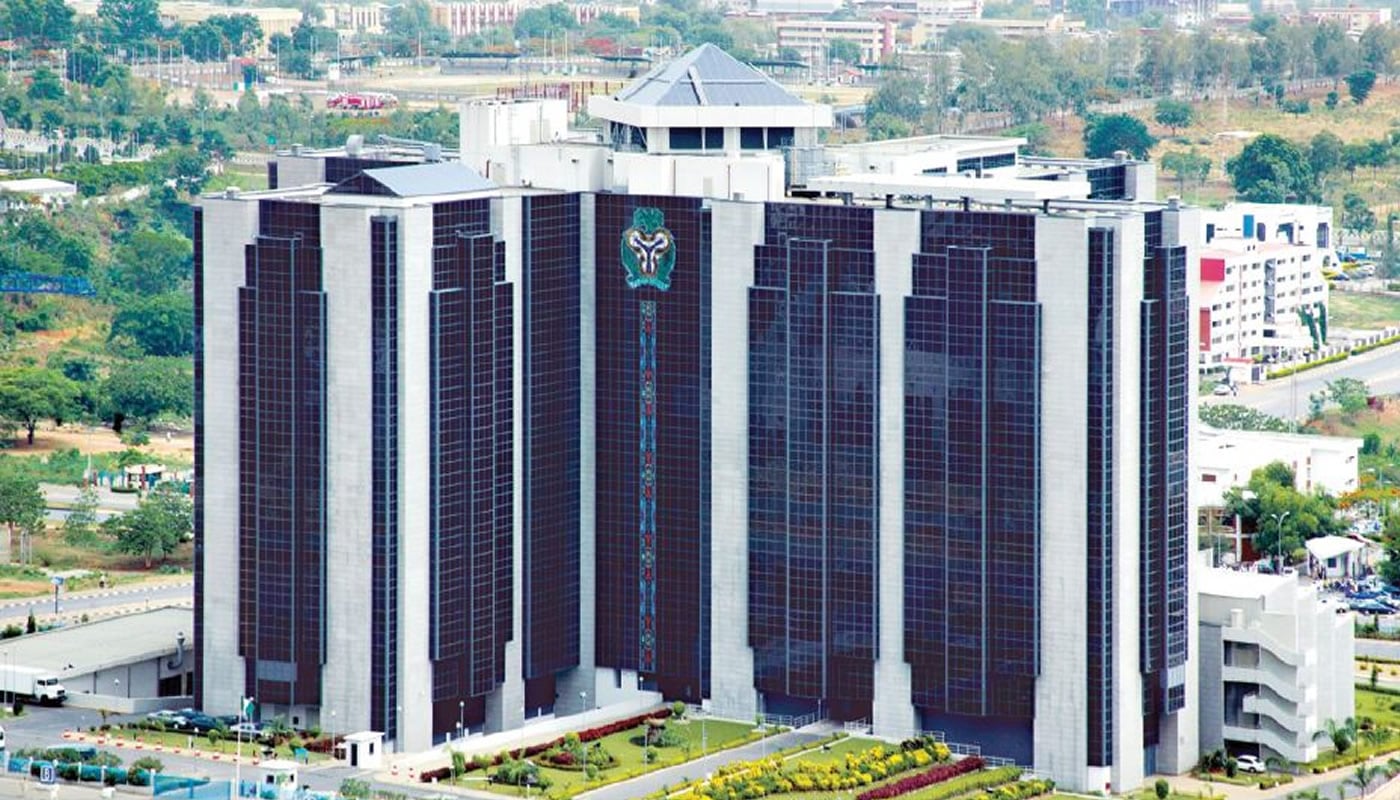
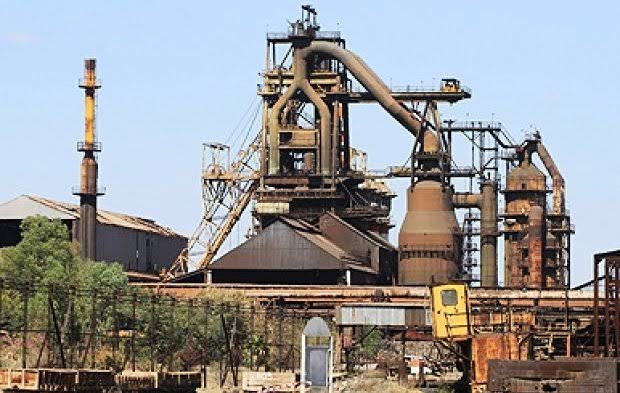
The Federal Government spent about N7.21bn running Ajaokuta Steel Company Limited between 2020 and 2025, even as the nearly 50-year-old complex in Kogi State remained largely dormant.

The expenditure spanned 501 transactions and covered taxes and other statutory obligations, pension and housing-fund contributions, maintenance, road works, and other infrastructure-related payments, according to spending records obtained from GovSpend and reviewed by The PUNCH on Monday.

GovSpend tracks and analyses Federal Government spending over time.

The spending occurred as Nigeria continued to rely heavily on imported steel, with the country’s iron and steel imports exceeding $1tn in 2025, according to data from the National Bureau of Statistics.

Nigeria’s iron and steel imports averaged about N526bn annually over the past six years, the NBS data showed. The figures represent officially recorded trade and exclude possible unrecorded or under-reported imports.

Ajaokuta was conceived in 1979 and built with Soviet backing as a cornerstone of Nigeria’s industrialisation drive.

The complex was designed to produce up to five million tonnes of steel annually, using the country’s iron-ore reserves to reduce dependence on imports and support industrial development.

Yet the spending records show that the company continued to incur substantial costs during the six years despite the plant’s inability to deliver the large-scale steel production for which it was designed.

In 2020, spending linked to Ajaokuta stood at about N795.4m across 57 transactions. The figure rose to N1.19bn in 2021, when 119 transactions were recorded, before falling to about N1.01bn in 2022.

See also  NNPCL appoints new heads of corporate communications, relations

Spending increased to N1.36bn in 2023 and peaked at about N1.66bn in 2024 across 107 transactions. It then fell to approximately N1.20bn in 2025. The figures indicate that the expenditure was not a one-off intervention but a recurring cost associated with the state-owned steel company.

Some payments were routine obligations, including taxes, value-added tax, pension contributions, National Housing Fund contributions, and other statutory payments.

Others were linked to maintenance and infrastructure, including road rehabilitation, repairs to access roads, and the installation of solar street lights.

The records also show payments for infrastructure work in Lagos, including projects around Obalende, Okofaji, Olowogbowo and Isale Eko, as well as the rehabilitation of a 250-metre access road at Idoluwo Street on Lagos Island.

The payments raise questions about the scope of Ajaokuta’s responsibilities and why a steel company whose primary industrial asset is in Kogi State was involved in some infrastructure-related expenditure in Lagos.

The purpose of those payments and their relationship with Ajaokuta would need to be established through the relevant authorising agencies, contracts and procurement records.

The continued expenditure comes as the government renews efforts to revive the steel complex and attract investment into the long-delayed project.

The Ajaokuta Presidential Project and Implementation Team, inaugurated in May 2020, was established to accelerate the revival of the plant, coordinate a work plan and help structure the project for possible concession or implementation with private and international partners.

In July 2026, Ajaokuta Steel Company signed a reported 20-year gas supply agreement with the Nigerian National Petroleum Company Limited, with the Gas Aggregation Company of Nigeria and NNPC Exploration and Production Limited also involved.

See also  Vietnam seeks stronger trade, agricultural ties with Nigeria

The agreement provides for three million standard cubic feet per day of firm gas and up to 47 million standard cubic feet per day of interruptible gas, according to reports. The supply is intended to support power generation and the eventual revival of the steel complex.

Ajaokuta’s Managing Director, Nasir Naeem Abdulsalam, who was appointed in April 2025 to lead the turnaround, said prospective investors had repeatedly identified gas availability as a major concern.

“Without gas, you can’t operate the steel plant,” Abdulsalam said, describing gas supply as critical to steel production and the independent power generation serving the complex.

There are limited signs of production at the site, with engineers operating a modular blast furnace producing manhole covers, utility poles and rail-track components for a small domestic market.

The limited output contrasts sharply with the scale of the complex, which was designed to produce millions of tonnes of steel annually.

The development comes as President Bola Tinubu’s administration seeks to expand domestic manufacturing and has set a target of 10 million tonnes of annual crude-steel production by 2030.

Nigeria continues to spend hundreds of billions of naira importing steel despite having a major steel complex built to support domestic production.

The Minister of Steel Development, Abubakar Audu, has estimated that Nigeria spends about $4bn, or roughly N5.6tn, annually on iron and steel imports.

Source: punchng.com

FOLLOW US ON:

FACEBOOK

TWITTER

PINTEREST

TIKTOK

YOUTUBE

LINKEDIN

INSTAGRAM

Continue Reading
Click to comment

Leave a Reply

Your email address will not be published. Required fields are marked *

Business

Paraguay president resigns after digital bank collapse leaves millions without access to savings

Published

on

Paraguayan President Santiago Peña has resigned following the intervention of digital lender Ueno Bank, which left nearly three million customers unable to access their accounts and triggered widespread protests and calls for his removal.

Peña announced his resignation on Thursday, November 5, saying he was stepping down to protect national stability, social peace and the country’s democratic institutions.

“I do so with the stability of our country, social peace and the need to preserve our democratic institutions in mind,” he said in a recorded address.

The resignation came as pressure mounted on the president, with opposition lawmakers pushing for impeachment proceedings and members of his own conservative Colorado Party withdrawing their support.

The crisis erupted after Paraguay’s central bank intervened in Ueno Bank, initiating a resolution process after discovering that the digital lender’s solvency ratio had fallen below half the legally required minimum.

The intervention left approximately three million customers, representing a significant portion of Paraguay’s 6.5 million population, unable to access their savings and other funds.

Ueno had rapidly expanded into one of the country’s major financial institutions, reportedly holding between $800 million and $850 million in public-sector funds, including money linked to state pension and healthcare institutions.

The bank’s crisis also raised questions about Peña’s previous business connections to its parent company, Grupo Vázquez. The president had been a shareholder in the group until March 2025, prompting lawmakers to accuse his administration of conflicts of interest, misuse of pension funds and attempts to cover up irregularities.

See also  NNPCL appoints new heads of corporate communications, relations

Peña denied wrongdoing, while promising that those responsible for financial irregularities would face justice. He also called for the recovery of depositors’ funds and the protection of public money.

The crisis has resulted in the detention of several Ueno executives as prosecutors investigate suspected financial misconduct. The central bank chief had also resigned earlier in the week following the controversy.

In a further political development, Paraguay’s lower house voted 78–0 to approve impeachment proceedings against Peña shortly after he announced his resignation. The matter was subsequently referred to the Senate.

Vice President Pedro Alliana is expected to succeed him, although the formal transition remains subject to the constitutional process surrounding Peña’s resignation and impeachment.

The banking crisis has shaken confidence in Paraguay’s financial system, with protesters demanding the return of their savings and accountability from officials connected to the bank’s intervention.

Source: tribuneonlineng.com

FOLLOW US ON:

FACEBOOK

WHATSAPP CHANNEL

TWITTER

PINTEREST

TIKTOK

YOUTUBE

LINKEDIN

INSTAGRAM

Continue Reading

Business

Business activity strengthens as PMI rises to 53.2 points, read details

Published

on

BUSINESS activities in Nigeria strengthened in October as the Purchasing Managers’ Index (PMI) rose to 53.2 points from 53.0 points in September, extending the private sector’s expansion for the fifth consecutive month.

The latest PMI report by the Central Bank of Nigeria (CBN), released on Thursday, showed that 24 of the 32 subsectors surveyed recorded expansion, indicating that the improvement in economic activities was spread across major segments of the economy.

A PMI reading above the 50-point threshold indicates expansion, while a reading below 50 points signals contraction.

The improvement was driven largely by stronger performances in agriculture and industry, where business activities gained momentum, supported by increased production, new orders and employment.

The industrial PMI rose to 52.6 points in October from 52.0 points in September, while agriculture recorded a stronger increase to 54.7 points from 53.1 points.

However, the services sector recorded a moderation, with its PMI declining to 52.7 points from 53.2 points in the preceding month, although it remained in expansion territory for the fourth consecutive month.

Within the industrial sector, manufacturing activity improved as the Manufacturing PMI increased to 52.4 points from 51.7 points, reflecting stronger performances in cement, motor vehicles and assembly, and oil refining.

The report showed that manufacturing production rose to 53.5 points from 53.2 points, while the new orders index increased to 52.1 points from 51.7 points.

Employment also improved significantly, with the index rising to 52.7 points from 51.1 points, suggesting increased demand for labour among businesses.

Raw materials inventory increased to 51.8 points from 51.1 points, while suppliers’ delivery time stood at 52.6 points, slightly below the 52.7 points recorded in September.

See also  Vietnam seeks stronger trade, agricultural ties with Nigeria

Of the 16 industrial subsectors monitored, 12 recorded expansion, while four contracted.

Cement manufacturing emerged as the best-performing industrial subsector, with a PMI of 60.2 points, while chemical and pharmaceutical products recorded the weakest performance at 43.4 points.

Agriculture maintained its position as one of the strongest drivers of business expansion, supported by improved farming activities and new orders.

The general farming activities index rose to 56.8 points, while new orders increased to 55.6 points. Livestock also recorded strong performance, with a PMI of 56.4 points.

In the services sector, business activity stood at 54.2 points, while employment improved to 53.5 points. New orders and inventories recorded 51.7 points and 51.1 points, respectively.

Seven of the 11 services subsectors expanded during the month, while four contracted. Educational services recorded the strongest performance at 60.2 points, while arts, entertainment and recreation posted the weakest reading at 47.1 points.

Despite the improvement in business activity, the report highlighted persistent cost pressures confronting companies, with both input and output prices increasing during the review period.

The composite input price index rose to 64.0 points in October from 63.3 points in September, while the output price index increased to 58.9 points from 58.4 points.

The increases suggest that businesses continued to face higher costs of raw materials and other production inputs, with some transferring the additional costs to consumers through higher selling prices.

Agriculture recorded particularly strong increases in both measures, as its input price index climbed to 68.3 points from 65.8 points, while its output price index rose to 61.1 points from 58.5 points.

See also  NNPCL appoints new heads of corporate communications, relations

In the services sector, the input price index increased to 62.8 points from 62.0 points, although the output price index declined to 58.4 points from 59.3 points.

Commenting on the outlook, CSL Research said the gradual recovery in economic activities was expected to continue in the near term, supported by sustained agricultural production and improving industrial conditions.

It noted that the recovery in manufacturing output and new orders was particularly encouraging, as sustained improvements could support domestic production, capacity utilisation and employment.

However, the research firm cautioned that elevated input costs could undermine operating margins and limit the extent to which increased demand translates into higher output and profitability.

It also warned that the moderation in services activity suggested that the recovery remained uneven across sectors.

The CBN survey, which covered 1,851 responses from purchasing and supply executives across the agriculture, industry and services sectors, provides an indication of prevailing business conditions in the Nigerian economy.

Overall, the October PMI suggests that private sector activity is sustaining its recovery, although rising production costs remain a major risk to the durability of the expansion.

Source: tribuneonlineng.com

FOLLOW US ON:

FACEBOOK

WHATSAPP CHANNEL

TWITTER

PINTEREST

TIKTOK

YOUTUBE

LINKEDIN

INSTAGRAM

Continue Reading

Business

Trump blames Democrats’ midterm victories for stock market plunge, read details

Published

on

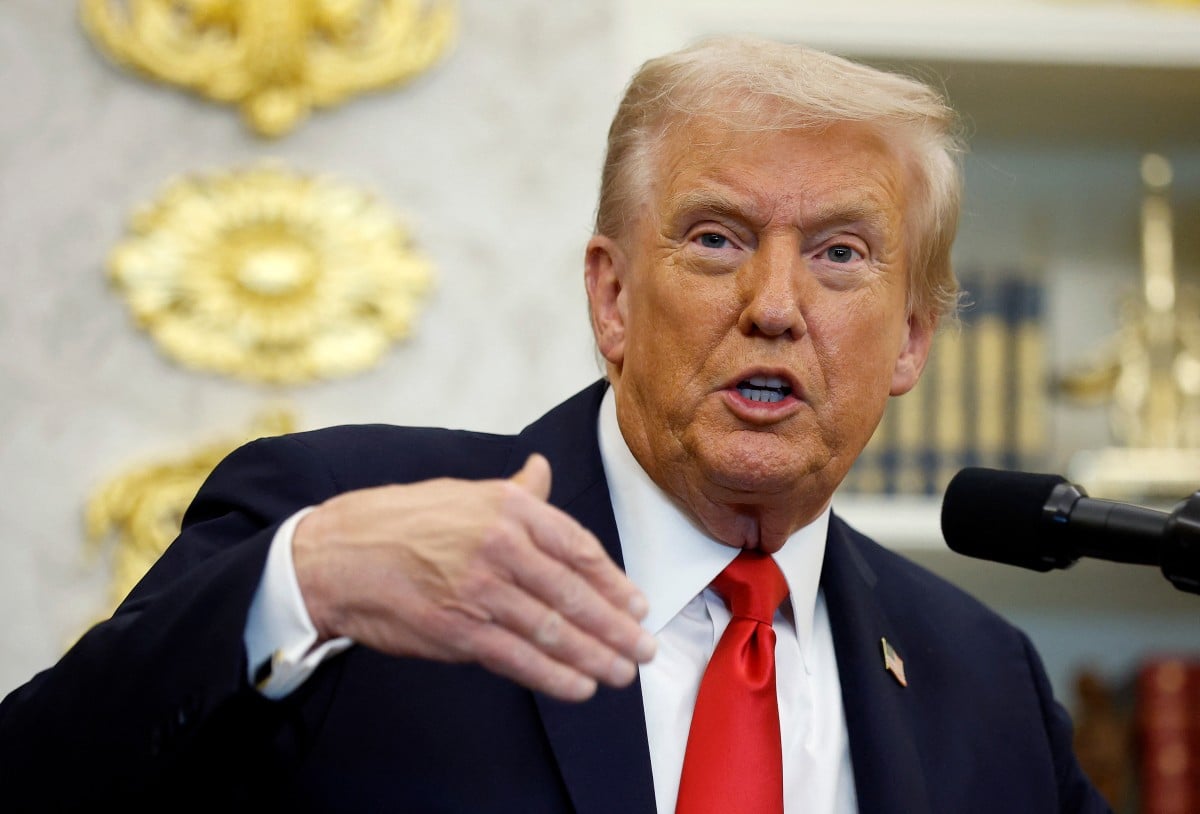
US President Donald Trump attributed Thursday’s stock market freefall to the electoral victory of his rival Democratic Party in midterm elections earlier this week.

“The Stock Market crashed today because the Dumocrats had a big Tuesday — So sad to see, you only have yourselves to blame!” Trump posted on his Truth Social platform after US markets closed for the day.

Analysts attributed Thursday’s stock selloff to fears of Democrats threatening the AI data center investment boom, with the tech-focused Nasdaq suffering its worst session percentage-wise since April 2025.

Data centers have faced broad opposition from US voters regardless of political affiliation, and many midterm winners have pledged to put the brakes on such projects.

Democrats flipped seats that had long been held by Republicans, scoring breakthroughs in South Carolina, North Carolina, Iowa, Kansas, Ohio, Texas and Maine.

In Maine, former logger Troy Jackson defeated longtime Republican Senator Susan Collins, the party’s seventh Senate seat captured from Republicans.

In Kansas, Methodist minister Adam Hamilton became the first Democrat elected to the Senate from the reliably conservative state since 1932. Iowa had not elected a Democratic senator since 2008.

Talarico, the Texas Democrat, declared he had defeated “Goliath” in winning a Senate seat, while Gina Hinojosa unseated the state’s Republican governor, Greg Abbott, ending decades of Republican rule.

Democrats also protected key Senate seats of their own, including Jon Ossoff in Georgia and an open seat in New Hampshire.

The scale of the victory grew further when Abdul El-Sayed defeated former Republican lawmaker Mike Rogers in Michigan, making him the first Muslim elected to the upper chamber of Congress.

See also  NNPCL appoints new heads of corporate communications, relations

The party’s House victory saw gains across Pennsylvania, Kentucky, Arizona, North Carolina, Wisconsin and New Jersey, including districts Trump had carried comfortably in 2024.

In one closely watched bellwether, Democrat J.D. Ford ousted Republican congresswoman Victoria Spartz in Indiana, capturing a district Trump won by 17 points two years earlier.

Democrats also won Georgia’s governorship, electing former Atlanta mayor Keisha Lance Bottoms as the first Black woman governor in US history.

Republicans had some consolation in Florida, where Trump-backed Byron Donalds became the state’s first Black governor and Ashley Moody retained a Senate seat — but only after seeing off surprisingly strong Democratic challenges.

Source: punchng.com

FOLLOW US ON:
FACEBOOK

WHATSAPP CHANNEL

TWITTER

PINTEREST

TIKTOK

YOUTUBE

LINKEDIN

INSTAGRAM

Continue Reading

Trending