Connect with us

Lifestyle

“All Women Are the Same” — Why Do Some Men Say This?

Published

on

The statement “All women are the same” is one that often appears during heated conversations about relationships, heartbreak, cheating and trust. But what makes some men reach the point where they believe an entire gender behaves the same way?

For some men, the statement may come from painful personal experiences. A man who has experienced betrayal, repeated heartbreak, dishonesty or disappointment in relationships may begin to believe that what happened to him is simply how women behave.

But is that really the case?

Is It Experience or Generalisation?

When someone has been hurt several times, it is understandable that their experiences can influence how they view future relationships. However, there is a major difference between saying “I have had bad experiences with several women” and saying “all women are the same.”

The first statement describes personal experience.

The second makes a judgment about millions of individuals based on the actions of some.

Women, like men, have different personalities, values, priorities and behaviours. Some people are faithful, some are unfaithful. Some are generous, while others may be selfish. Some are honest, while others may lie.

These characteristics are not exclusive to one gender.

Why Does the Statement Become So Popular After Heartbreak?

Heartbreak can change the way people think.

A man who trusted someone deeply and was betrayed may become suspicious of future partners. Instead of judging each new person based on their own character, he may unconsciously compare them with the person who hurt him.

This can create a dangerous cycle:

See also  Mallam Aminu Kano: The Voice of the People and Champion of Social Justice in Northern Nigeria

One person hurts you → you lose trust → you expect the same behaviour from others → every new relationship is viewed through the lens of the past.

Sometimes, the real issue isn’t that “all women are the same.”

It may be that one painful experience has changed the way a person sees relationships.

But What About “All Men Are the Same”?

Interestingly, women sometimes make a similar statement: “All men are the same.”

It can come from similar experiences—being cheated on, lied to, mistreated or disappointed by previous partners.

But if we reject the idea that all men are identical, we should apply the same standard when discussing women.

One person’s behaviour should not automatically become the definition of an entire gender.

Could Someone Be Choosing the Same Type of Partner?

Another uncomfortable question is whether repeated relationship problems can sometimes be connected to patterns in the people someone chooses.

If a person repeatedly enters relationships with partners who display similar negative behaviours, it may be worth asking:

“Am I choosing the same type of person again and again?”

This doesn’t mean victims are responsible for being mistreated. It simply means that understanding relationship patterns can sometimes help people make better choices in the future.

The Bigger Question

Perhaps the more important question isn’t:

“Are all women the same?”

Instead, we should ask:

“Why do some people allow the actions of one or a few individuals to determine how they view an entire gender?”

Relationships require people to judge each other as individuals rather than as representatives of a particular gender.

See also  Osun puts Oluwo under watch over inflammatory remarks

There are good women and bad women.

There are good men and bad men.

There are faithful people and unfaithful people.

There are people who genuinely want healthy relationships, and there are people who do not.

The challenge is learning how to recognise character without allowing past experiences to completely control our judgment.

What Do You Think?

When a man says “All women are the same,” is he telling the truth about his experiences, expressing anger from a broken relationship, or making an unfair generalisation?

And when a woman says “All men are the same,” should we apply the same reasoning?

Share your opinion in the comments. Do you believe repeated bad experiences can justify saying “all women are the same,” or should every person be judged individually?

FOLLOW US ON:

FACEBOOK

TWITTER

PINTEREST

TIKTOK

YOUTUBE

LINKEDIN

INSTAGRAM

Continue Reading
Click to comment

Leave a Reply

Your email address will not be published. Required fields are marked *

Lifestyle

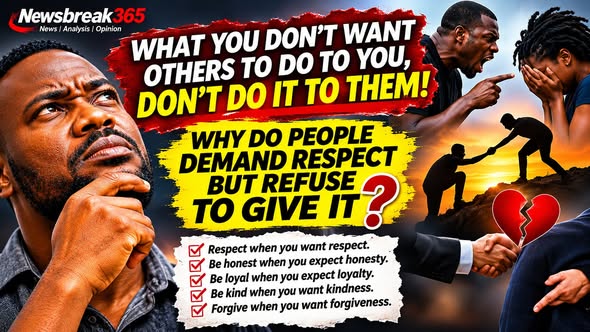
WHAT YOU DON’T WANT OTHERS TO DO TO YOU, DON’T DO IT TO THEM: WHY DO PEOPLE DEMAND RESPECT BUT REFUSE TO GIVE IT

Published

on

Some people want loyalty but betray others. They demand honesty but live by deception. They expect kindness but treat people with cruelty. So why do we expect others to treat us better when we refuse to treat them the same way?**

There is something deeply disturbing about human behaviour: some people want the best treatment from everyone around them, yet they have no problem making other people’s lives miserable.

They want respect, but they disrespect others. They want loyalty, but they betray those who trust them. They want forgiveness, but they hold grudges. They want people to understand their struggles, but they show no compassion when someone else is going through difficult times.

The biggest problem is that many people have become experts at identifying how others have wronged them while remaining completely blind to the pain they inflict on others.

**Is this not the height of hypocrisy?**

## THE HYPOCRISY OF DEMANDING WHAT YOU CANNOT GIVE

Think about it.

You don’t want anyone to embarrass you in public, yet you find pleasure in humiliating others.

You don’t want anyone to betray your trust, yet you betray people who genuinely believe in you.

You don’t want anyone to lie to you, yet you manipulate the truth whenever it benefits you.

You don’t want anyone to take advantage of your kindness, yet you exploit the kindness of others.

You don’t want anyone to abandon you when you need help, yet you disappear when someone needs you.

See also  Ruling family demands gov resume Awujale selection process

You don’t want people to speak badly about you behind your back, yet you participate in destroying other people’s reputations.

And when someone finally decides to treat you the way you have treated them, suddenly, you become the victim.

**Why should you expect a different standard of treatment when you refuse to practise the same values you demand from others?**

## PEOPLE HAVE FEELINGS TOO — NOT EVERYONE WILL TELL YOU WHEN YOU HURT THEM

One of the most dangerous assumptions people make is believing that someone who remains silent is not hurting.

Some people smile while carrying emotional wounds. Some people pretend everything is fine because they don’t want to explain their pain. Others simply withdraw because they have realised that explaining their feelings to someone who doesn’t care is a waste of time.

Never mistake someone’s silence for weakness.

The person you constantly insult may eventually stop speaking to you. The person whose kindness you repeatedly exploit may eventually walk away. The person you repeatedly disappoint may eventually stop expecting anything from you.

And when that happens, don’t always accuse them of changing.

Sometimes, your behaviour is the reason they changed.

## YOUR ACTIONS SAY MORE ABOUT YOU THAN YOUR WORDS

It is easy to preach about love, respect, kindness, loyalty and humanity.

It is easy to post inspirational quotes about treating people well.

It is easy to condemn wickedness when you are the victim.

But the real test of character is how you treat people when you have power over them, when they cannot offer you anything in return, and when nobody is watching.

See also  Osun puts Oluwo under watch over inflammatory remarks

Do you respect people who cannot help you financially?

Do you treat workers, cleaners, security guards and vulnerable people with dignity?

Do you keep people’s secrets?

Do you apologise when you are wrong?

Do you consider the emotional consequences of your actions before hurting someone?

These are the questions that reveal genuine character.

## BEFORE YOU HURT SOMEONE, PUT YOURSELF IN THEIR SHOES

Imagine someone treating your mother, father, spouse, children or someone you deeply love the same way you treat other people.

Would you accept it?

Imagine being betrayed by someone you trusted. Imagine being publicly humiliated, manipulated, lied to or emotionally destroyed by someone you considered a friend.

Would you call it acceptable?

If you wouldn’t want it done to you or someone you love, why do you think it is acceptable to do it to another human being?

Nobody is perfect. Everyone makes mistakes. But there is a difference between making mistakes and repeatedly hurting people without taking responsibility.

**Being human is not an excuse for treating other human beings like they don’t matter.**

## THE GOLDEN RULE WE SHOULD NEVER FORGET

The principle is simple:

**WHAT YOU DON’T WANT OTHERS TO DO TO YOU, DON’T DO IT TO THEM.**

If you want respect, learn to respect others.

If you want honesty, be honest.

If you want loyalty, demonstrate loyalty.

If you want kindness, show kindness.

If you want forgiveness, learn to forgive.

If you want people to consider your feelings, start considering theirs.

The world would be a much better place if people stopped measuring good behaviour by what they personally receive and started measuring it by what they give.

See also  Mallam Aminu Kano: The Voice of the People and Champion of Social Justice in Northern Nigeria

Remember, you are not the only person with feelings. You are not the only person who deserves respect. And you are certainly not the only person whose heart can be broken.

**Before you make someone cry, ask yourself whether you would be comfortable experiencing the same pain. Before you destroy someone’s peace, ask yourself whether you would accept someone destroying yours.**

Because demanding good treatment while deliberately treating others badly is not strength. It is hypocrisy.

—

## LET’S DEBATE: ARE PEOPLE BECOMING MORE SELFISH?

Why do some people demand respect, honesty, loyalty and kindness when they themselves refuse to offer those same values?

Is it selfishness, hypocrisy, lack of empathy or simply a society that has forgotten the meaning of humanity?

**Do you believe people should treat others exactly the way they want to be treated? Or should everyone simply treat others according to how they are treated?**

Share your thoughts in the comment section. Your opinion matters.

*Newsbreak365 — Bringing You Stories, Issues and Conversations That Matter.*

#Humanity #Respect #Hypocrisy #Kindness #LifeLessons #HumanBehaviour #GoldenRule #Newsbreak365

 

Continue Reading

Lifestyle

Sex outside marriage: Saudi court orders 100 lashes for Kenyan woman, read complete story

Published

on

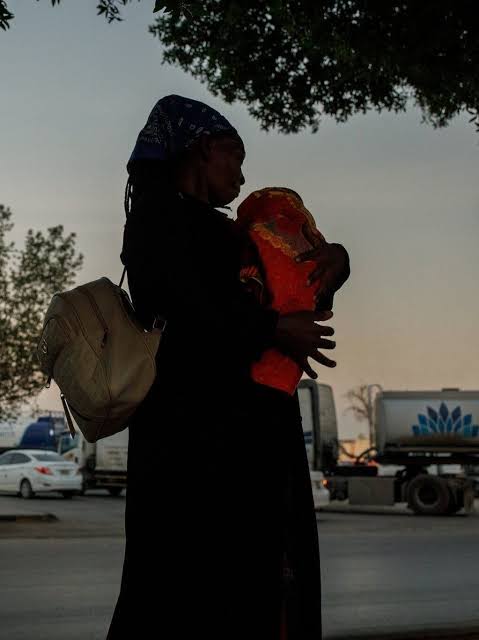
A Saudi Arabian court has sentenced a 40-year-old Kenyan domestic worker, Esther Wanja Muthoni, to 100 lashes for having sex outside marriage after she gave birth to a child in the kingdom.

The sentence, issued in October, followed several court hearings last summer and has left Muthoni fearing for her safety as she struggles to return to Kenya with her one-year-old son, Abudy.

The New York Times reported on Tuesday that Muthoni had been trying for more than a year to leave Saudi Arabia with her child but was unable to do so because of the legal proceedings against her.

“I am so afraid,” she told the newspaper in a telephone interview last month.

“I don’t think I can endure those lashes,” she said.

Muthoni, a mother of five, was working legally as a domestic worker through Maharah Human Resources, a Saudi recruitment company, when she became pregnant following a brief relationship with an Egyptian resident identified only as Mohamud.

She gave birth in August 2025 at staff accommodation. According to court documents reviewed by the newspaper, a supervisor discovered her and took her and the baby to a hospital, after which police detained her for questioning over the pregnancy.

Muthoni told the police that the child’s father had left Saudi Arabia. The court documents did not provide his surname.

Although she was released from police custody, she was reportedly denied access to both her staff accommodation and a shelter.

She subsequently lived at a petrol station in Riyadh that had become a gathering place for migrant mothers hoping to leave the country with their children.

See also  Mallam Aminu Kano: The Voice of the People and Champion of Social Justice in Northern Nigeria

The New York Times said its investigation published last year had documented the difficulties faced by East African domestic workers who became pregnant in Saudi Arabia, including the bureaucratic obstacles preventing them from obtaining documents for their children and returning home.

Following the newspaper’s earlier report on Muthoni’s situation, Maharah provided her with accommodation, while the Kenyan Embassy issued documents intended to allow her to leave Saudi Arabia.

However, she remained unable to travel while her criminal case was pending.

The newspaper reported that Muthoni was provided with a court interpreter but had no lawyer during the proceedings. The court documents it reviewed also contained no indication that she had legal representation.

Although indigent defendants in Saudi Arabia are entitled to state-sponsored lawyers, experts told the newspaper that criminal trials sometimes proceed without legal representation, including in some cases carrying the death penalty.

In October, the three-judge panel found Muthoni guilty of having sex outside marriage and imposed the 100 lashes prescribed under its interpretation of Islamic law.

The judgment did not indicate that authorities had pursued the child’s father.

Ekaterina Porras Sivolobova, a labour migration analyst and founder of the non-profit organisation Do Bold, criticised the punishment, saying it violated international human rights standards.

“This sentence of flogging does not align with international human rights standards,” she told the newspaper.

She added that the punishment stripped Muthoni of her dignity instead of protecting a vulnerable woman.

The case has also raised questions about Saudi Arabia’s claims of legal and social reforms, particularly its 2020 announcement of restrictions on flogging.

See also  Be Careful Who You Oppress Today — They May Be the Very People You Need Tomorrow

The New York Times noted that judgments involving morality offences were not routinely published, making it difficult to establish how frequently courts still imposed the punishment.

Saudi Arabia’s judicial system is based on Islamic law, or sharia, but the kingdom does not have a written penal code.

Judges therefore interpret Islamic law in deciding criminal cases, leaving some offences and their punishments open to differing interpretations.

Muthoni did not appeal the judgment, saying she wanted to return home to her other children.

“It is the only way that can take me back home to my children,” she said.

In addition to the lashes, the court sentenced her to one year of banishment. The newspaper reported that Saudi rules generally allow a person sentenced to banishment to be sent to another city in the kingdom when no destination is specified in the judgment.

It remains unclear whether the order means Muthoni will be deported to Kenya. Her exit documents have also expired, leaving uncertainty over how she and her son will return home.

The Saudi and Kenyan governments, as well as representatives of Maharah, did not respond to requests for comment from The New York Times.

The newspaper’s earlier investigation found that East African women recruited to work as domestic workers in Saudi Arabia faced reports of physical abuse, sexual violence, withheld wages and abandonment.

It also reported that some Kenyan women who became pregnant while working in the kingdom struggled to obtain birth certificates for their children, while diplomats who could assist them were accused of neglecting their cases or demanding bribes and sexual favours.

See also  Ruling family demands gov resume Awujale selection process

Source: punchng.com

FOLLOW US ON:

FACEBOOK

WHATSAPP CHANNEL

TWITTER

PINTEREST

TIKTOK

YOUTUBE

LINKEDIN

INSTAGRAM

Continue Reading

Lifestyle

Paul McCartney ranks third-richest musician with $1.4bn

Published

on

Former Beatles member Paul McCartney has become a billionaire, with an estimated net worth of $1.4bn, making him the world’s third-richest musician, Forbes has reported.

The 84-year-old British singer-songwriter ranks behind American rapper Jay-Z, whose fortune is estimated at 2bn, according to the publication.

Forbes disclosed this in a report published on Monday, attributing McCartney’s wealth to decades of songwriting, music publishing investments, royalties, touring and property holdings.

Much of his fortune comes from MPL Communications, the music publishing company he established in 1969, shortly before The Beatles broke up.

Through the company, McCartney acquired the publishing rights to thousands of songs, including works by early rock-and-roll musician Buddy Holly and scores from Broadway musicals.

The catalogue also includes several well-known Christmas songs, such as “It’s Beginning to Look a Lot Like Christmas”, “Blue Christmas” and “Baby, It’s Cold Outside”.

Forbes estimated that MPL is worth at least $`250m and generates tens of millions of dollars in annual revenue from music royalties.

The singer also earns from The Beatles’ music catalogue through the group’s Apple Corps company, which Forbes estimated generates more than $50m annually from streaming, vinyl sales and merchandise.

McCartney, drummer Ringo Starr and the estates of late band members John Lennon and George Harrison each receive a 25 per cent share of the company’s income, according to Forbes.

His share of the songwriting copyrights to The Beatles’ compositions in the United States is also estimated to be worth at least 10m annually.

McCartney’s wealth further includes earnings from decades of international tours, property in the United Kingdom and the Hamptons in the United States, as well as an art collection featuring works by Pablo Picasso and René Magritte.

See also  Kaduna to immortalise late Sheikh Dahiru Bauchi, says gov

The singer’s financial success came after an early career in which The Beatles reportedly earned less than one US cent for each album sold under their initial record deal, while music publisher Dick James controlled the copyrights to songs written by the group.

McCartney subsequently established his own publishing company to gain greater control over his music and future royalties.

In a 2017 Forbes essay, he described the group’s early recording agreement as “basically a slave contract”, saying they did not receive a raise despite the success they brought the company.

Source: punchng.com

FOLLOW US ON:

FACEBOOK

WHATSAPP CHANNEL

TWITTER

PINTEREST

TIKTOK

YOUTUBE

LINKEDIN

INSTAGRAM

Continue Reading

Trending