Nigeria recorded at least 10 military aircraft crashes between 2021 and October 2026, resulting in at least 68 confirmed and presumed deaths, an analysis of military aviation incidents has shown.
The incidents involved fighter jets, helicopters, training aircraft, transport aircraft, and unmanned aerial vehicles, and occurred during combat operations, training exercises, routine missions, casualty evacuation, and post-maintenance checks.
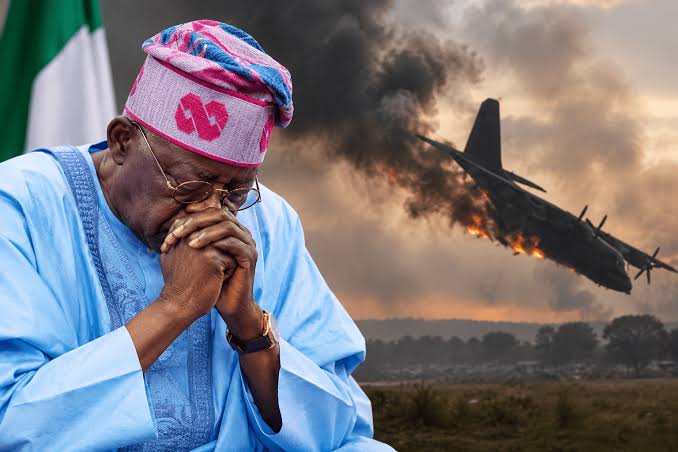
The latest incident occurred on Monday when a Nigerian Air Force ATR-42 aircraft, registration number NAF 931, crashed in the Igbokoda area of Ilaje Local Government Area, Ondo State.
The aircraft was on a routine mission from Benin City, Edo State, to Lagos when air traffic controllers lost contact with it at about 9:13am.
The Nigerian Air Force subsequently confirmed that all 25 people on board, comprising 20 passengers and five crew members, died in the crash.
The accident has renewed concerns over the safety of Nigeria’s military aviation fleet, coming after a series of aircraft losses involving the NAF in recent years.
The latest crash has also intensified calls by aviation stakeholders for a comprehensive review of military aviation safety systems, including aircraft maintenance, airworthiness standards, operational procedures, safety oversight and accident investigation.
Aviation analyst and member of the Aviation Round Table, Olumide Ohunayo, said the frequency of military aircraft accidents showed that the Air Force needed to urgently review its safety systems.
Ohunayo acknowledged that figures on the total number of military aviation accidents over a longer period varied, but argued that even the lower estimates pointed to a serious safety concern.
He said, “Well, I think the jury is out there to show whether it is 16 or 20 accidents in the last 10 years. But whatever, let’s take the least, which is 16 compared to commercial aviation. That shows there’s a problem that the Air Force needs to attend to.”
He argued that the continued loss of military personnel and public assets could no longer be treated as an exclusively military matter, stressing the need for greater cooperation between the military and civilian aviation safety institutions.
“You cannot be losing your men and assets, public assets, and continue to hold on to that position in the military. We can sort it out. No, we are all Nigerians,” he said.
Ohunayo specifically called for stronger collaboration between the Nigerian Air Force, the Nigerian Civil Aviation Authority and the Nigerian Safety Investigation Bureau.
“The NCAA is owned by the government. I think there’s a need for the Air Force to cooperate with this NCAA and NSIB,” he said.
According to him, the recurring accidents had implications for the lives of military personnel and public confidence in the country’s military aviation operations.
“We are losing assets, losing personnel, and we are also losing confidence in some of the operations of the Air Force. There’s a need for the Air Force to come together to accept that there’s a problem with safety and operational systems in place,” he further proposed.
He urged the Air Force to review its operational manuals, procedures and processes, insisting that safety concerns should not be dismissed on the basis that military aviation was different from civil aviation.
“There’s a need to rework, to rejig, and also to reassess both operational manuals and procedures and processes,” he said.
Ohunayo added, “We cannot keep saying, we cannot hold on to that bloody civilian mantra anymore when it comes to air safety. The statistics are there. You cannot argue with the data.”
He further urged the military to involve aviation regulators, accident investigators and other professionals in efforts to identify weaknesses in the system and prevent future crashes.
“You cannot argue with the victims that are Nigerians and we are seeing. I think the Air Force should need to agree, need to look at that option of involving the regulator, involving the investigator, and any other professional group that can restore and reduce the number of accidents and fatalities within the system,” he said.
2021 recorded several losses
The deadliest period within the five-year period under review was 2021, when several military aircraft were lost.
On February 21, 2021, a NAF Beechcraft King Air 350i crashed shortly after taking off from Abuja while heading towards Minna, Niger State. All seven military personnel on board were killed.
On March 31 of the same year, an Alpha Jet conducting operations in Borno State disappeared from radar. Its wreckage was later found in the Sambisa Forest, while its two pilots remained unaccounted for and were presumed dead.
Two months later, on May 21, a NAF King Air 350 crashed near Kaduna International Airport, killing all 11 people on board, including the then Chief of Army Staff, Lt. Gen. Ibrahim Attahiru.
The crash prompted a joint investigation by the Nigerian Air Force and the then Accident Investigation Bureau, which later submitted an interim report to the Chief of Air Staff.
In July 2021, another NAF Alpha Jet was lost after it was shot down in Zamfara State. Its pilot, Flight Lieutenant Abayomi Dairo, survived after ejecting from the aircraft.
The losses continued into 2022 and 2023.
In 2022, a NAF Super Mushshak trainer aircraft crashed in Kaduna, killing its two pilots.
In 2023, an NAF FT-7NI trainer aircraft crashed in Makurdi, Benue State, although both pilots survived.
A month later, an NAF Mi-171 helicopter carrying out a casualty evacuation mission crashed at Chukuba village in Shiroro Local Government Area of Niger State, killing 11 people.
In December 2023, a NAF Mi-35P helicopter crashed shortly after take-off from the NAF Base in Port Harcourt, Rivers State. The five crew members survived.
The Air Force also recorded non-fatal aircraft losses in subsequent years.
In 2025, an Alpha Jet suffered an in-flight emergency during a post-inspection functional check flight near Kainji in Niger State. Both pilots ejected safely.
In January 2026, a NAF CH-4B unmanned aircraft was lost during a surveillance operation in Niger State, although no human casualties were recorded.
The October 2026 ATR-42 crash has now added another fatal incident to the record.
The incidents have occurred in a variety of circumstances, including combat operations, training, routine missions, casualty evacuation and post-maintenance checks.
The pattern has consequently raised questions about aircraft maintenance, airworthiness, operational safety and the conditions under which military aircraft are deployed.
However, the available figures do not establish a single cause for the crashes. Individual investigations have pointed to different circumstances, meaning that the latest accident cannot be attributed to maintenance or mechanical failure until the investigation is concluded.
The Nigerian Safety Investigation Bureau has also indicated that military accident investigations are primarily the responsibility of the military authorities, although the bureau can provide technical assistance when formally invited.
Experts seek wider safety audit
Ohunayo said the proposed safety review should not be limited to the Nigerian Air Force but should cover other military and paramilitary aviation operations.
“This is not restricted to the Air Force alone. I’m looking at auditing all the military aviation sections and the paramilitary, I mean the immigration,” he said.
He called for urgent audits of organisations whose aviation operations are not currently subject to the regulatory framework of the NCAA.
“All this auditing should be for all the organisations that are not under the NCAA regulations now. These organisations should have this urgent auditing. This auditing should involve international support from auditors of such military and paramilitary operations,” he said.
He also advocated the involvement of the NSIB in reviewing past accidents and assisting with investigations of recent incidents.
“We should be involved in this auditing. And after this auditing, I’m also of the view that the NSIB should also be called in to look at some of the past accidents, investigate the recent ones, and help, knowing fully well that the result of NSIB is definitely to improve safety and to mitigate future recurrence,” he said.
Another aviation expert, Group Capt. John Ojikutu, argued that the wider security responsibilities assigned to the military should also be examined as part of efforts to improve aviation safety.
Ojikutu questioned the extent to which the military was being deployed for internal security operations, arguing that the country’s security architecture and division of responsibilities among the military and police required broader scrutiny.
He said the military had increasingly become involved in internal security operations, including counter-insurgency activities, which placed additional demands on its personnel and air assets.
The comments came as the military continued to rely heavily on air assets for counter-insurgency, surveillance, casualty evacuation, logistics and other internal security operations across the country.
The stakeholders argued that greater collaboration among the military, aviation regulator, accident investigator and other aviation professionals could help identify systemic weaknesses and reduce aircraft losses and fatalities.
ATR-42 history under scrutiny
Meanwhile, the latest crash has drawn attention to the history and maintenance record of the aircraft involved.
Open-source findings by our correspondent indicate that, before Monday’s crash, the Nigerian Air Force had two ATR-42-500MP aircraft in its fleet: NAF 930 and NAF 931.
The aircraft, operated by the NAF’s 81 Air Maritime Group in Benin City, Edo State, are primarily equipped for maritime patrol and Intelligence, Surveillance and Reconnaissance operations. Their capabilities also extend to search-and-rescue missions and limited transport operations. In addition to their maritime duties, the aircraft have been deployed in military operations in the North-east.
The two ATR-42s were acquired from Italian aerospace manufacturer Alenia Aeronautica under a contract signed in March 2007. The $73 million agreement covered the supply of two aircraft, as well as crew training and logistical support.
NAF 930, the first of the two aircraft, was delivered to Nigeria in December 2009. Its maritime patrol systems and other mission-specific equipment had been installed at Alenia’s facility in Caselle, Italy, before its delivery. NAF 931 followed about four months later, arriving in March 2010. The aircraft have consequently been in service for at least 16 years.
After recording 5,000 operational flight hours over a decade, including missions supporting military operations against Boko Haram, NAF 930 underwent major maintenance at the Rheinland Air Service facility in Germany. It was flown to the facility in September 2019 and returned to Nigeria in July 2020.
The aircraft involved in Monday’s crash was identified by the Minister of Aviation as NAF 931, the second ATR-42 acquired under the 2007 contract.
Checks further show that NAF 931 was also taken to the RAS facility in Germany for maintenance, with the work carried out in 2022. The aircraft subsequently returned to Nigeria in late 2024.
Difficult recovery operation
Meanwhile, the difficult terrain of the crash site has complicated recovery efforts.
The aircraft crashed into a swampy area near the Naval Base in Igbokoda, Ilaje Local Government Area, with the wreckage sinking deep into the difficult terrain.
The Ondo State Government subsequently deployed swamp buggies after conventional vehicles and boats proved unable to access the submerged wreckage.
The state Commissioner for Health, Banji Ajaka, said two swamp buggies had been deployed to reach the area where the aircraft had sunk.
“The latest is that the swamp buggy has been deployed; it has been ordered to go there because that’s what’s needed now. The swamp buggies, you can see two of them here now,” Ajaka said.
He explained that the equipment was required because of the difficult nature of the terrain.
“It’s not an easy thing. It’s not something that you can… It’s not just a vehicle that will go. Or a speedboat that will just go,” he said.
Ajaka added that the specialised equipment was designed to move through the swamp and reach the depth where the aircraft wreckage was located.
“You can see. And this one comes with a low bed. I brought it. This one, I have to bring all of this to float and swim down to the other side. So that they will get to the depth where the body of the aircraft is,” he said.
Following the crash, President Bola Tinubu directed the Nigerian Air Force to investigate the cause of the accident and declared three days of national mourning for the personnel who died.
The Defence Headquarters also directed that a probe be conducted to establish the circumstances surrounding the crash.
Source: punchng.com
FOLLOW US ON: