Connect with us

News

Dapo Abiodun reveals that Nigeria needs 554,353 personnel for state police, read details

Published

on

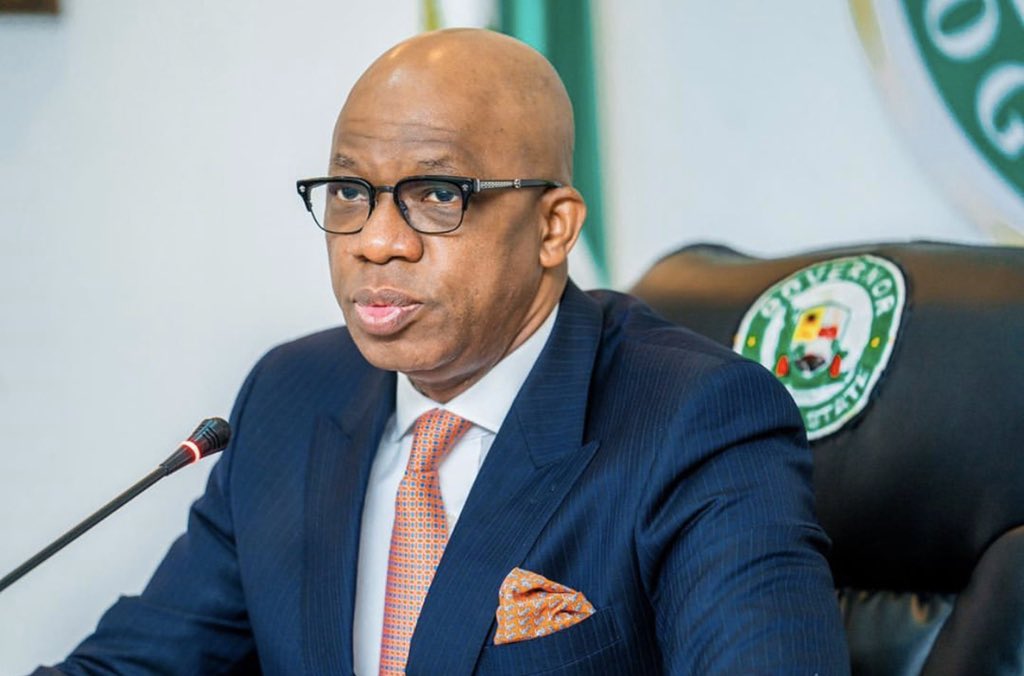
The Chairman of the Southern Governors’ Forum and Ogun State Governor, Dapo Abiodun, on Thursday, said Nigeria needed an additional 554,353 personnel to adequately staff the proposed state police system.

He disclosed this while delivering the keynote address at the posthumous 70th birthday colloquium of the late former Ondo State Governor, Oluwarotimi Akeredolu, held at the International Conference Centre, University of Ibadan, Ibadan, in Oyo State.

The governor explained that the state police had moved beyond advocacy to a national imperative, warning that the success of the reform would depend on a sustainable financing arrangement that would not leave poorer states behind.

The colloquium, organised in honour of Akeredolu under the theme, “Fundamentals and Governance of State Policing: Towards a New Architecture for National Security in Nigeria,” brought together governors, former governors, lawmakers, security chiefs, traditional rulers, academics, civil society actors, family members, friends and professional associates of the late governor.

Abiodun said empirical data from the Nigeria Governors’ Forum showed that, based on the United Nations ratio of one police officer to 414 citizens, the country would need 554,353 additional state police personnel, translating to about 184,784 recruits annually over three years.

He said, “The debate is no longer whether Nigeria needs state police, but how swiftly and sustainably we establish it,” insisting that the country could no longer sustain a security architecture in which every policing responsibility was effectively centralised in Abuja.

“Security is intrinsically local. You cannot police a community whose language you do not speak, whose terrain you do not know. State policing is not a threat to unity; it is the bedrock of stability and prosperity.

“Only five states, Lagos, Rivers, the Federal Capital Territory, Ogun and Enugu, accounted for 61.6 per cent of Internally Generated Revenue, while 76 per cent of the states generated below the national average of N13,600 per capita, with half earning less than N6,334 per capita,” he added.

See also  Marketers drop petrol prices below Dangote’s cost

The governor stressed that such disparities could undermine the proposed reform if the Federal Government and states failed to establish a financing mechanism that guaranteed minimum policing capacity across the federation.

“Insecurity in low-revenue states spills over nationally. Underfunding one state’s police becomes everyone’s crisis,” he said.

Abiodun, therefore, advocated for the establishment of a constitutional state police take-off fund, built around equal access grants, need-based top-ups and standards-linked disbursement.

He added that the Presidential Working Group was already developing operational blueprints, financial models, accountability mechanisms and legislative oversight arrangements for the proposed system, including frameworks for recruitment, training, governance and redress for abuses.

The governor said recruitment must be transparent, properly vetted and representative, while officers must be trained in investigation, evidence handling, lawful arrest, conflict management, proportionate use of force and protection of vulnerable persons.

He said political affiliation must never determine access to police protection, adding, “Political opponents, journalists, peaceful protesters and minority communities deserve equal protection.

“Disagreement with a government cannot diminish a citizen’s rights. We must earn public confidence through safeguards that work.

“Let me use this occasion to call for adequate welfare for personnel, including regular remuneration, proper equipment, medical care, insurance and dependable support for their families.

“Welfare, discipline and accountability should develop together,” he said, adding that funding arrangements must be transparent and sustainable enough to cover salaries, training, maintenance, communications, investigations and equipment replacement.

He also warned against allowing private interests to dictate police operations, adding that security trust funds could supplement public financing only under clear rules and public accountability.

“Private contributions must follow clear rules and public accountability; they must never purchase influence over investigations or preferential treatment.

“National security today is not just physical protection; it is economic security, food security, health security, financial security and freedom of worship. None survives in lawlessness.

“We cannot build a $1 trillion economy on fragile security. FDI will not flow where investors fear. Agriculture cannot thrive when farmers cannot access farms.

See also  Benue Assembly amends law, renames state varsity

“Infrastructure cannot yield returns when corridors are unsafe. Securing states through state police is not merely a security strategy; it is our primary economic strategy,” he declared.

Abiodun credited Akeredolu with helping to move the debate from theory to practical regional action, recalling that the late governor played a leading role in the establishment of the Western Nigeria Security Network, popularly known as Amotekun, on January 9, 2020.

In his remarks, the Ondo State Governor, Lucky Aiyedatiwa, said Akeredolu’s advocacy for state police had now moved from a regional campaign to the centre of Nigeria’s national policy and constitutional conversation.

Aiyedatiwa, who was Akeredolu’s deputy before succeeding him as governor, said the late governor had regarded public office as an instrument of service rather than an ornament of status.

“The theme of the colloquium was particularly fitting because Akeredolu had demonstrated through Amotekun that communities closest to security challenges must have a meaningful role in protecting themselves.

“The establishment of the Southwest Security Network, the Amotekun Corps, represented a bold assertion that those closest to the people must have a meaningful role in protecting them.

“What Akeredolu and other progressive voices once advanced as a necessary response to the realities of our federal structure has now entered the very centre of Nigeria’s national policy and constitutional conversation,” he said.

Aiyedatiwa said the challenge before the country was now to develop a state police system that would be responsive, professional and accountable while protecting citizens against abuse.

“The Nigerian federation must find the balance between national cohesion and local responsiveness; between federal authority and subnational capacity; between operational effectiveness and fundamental rights,” he said.

Also speaking in his goodwill message, former Ekiti State Governor, Dr Kayode Fayemi, paid tribute to Akeredolu, recalling the late governor’s courage, commitment to justice and advocacy for a more decentralised security architecture.

See also  No pact with Atiku, Obi, Jonathan in 2027 says ADC faction

Fayemi, who worked closely with Akeredolu during their years in the Southwest Governors’ Forum, described his late colleague as a leader whose convictions were stronger than political convenience and whose contribution to the debate on multi-level policing had outlived his tenure in office.

He said Akeredolu’s contribution to the Southwest went beyond the creation of a security outfit, stressing that the late governor demonstrated how regional cooperation could provide practical solutions to challenges confronting individual states.

Fayemi said Akeredolu’s legacy should therefore be measured not only by the offices he occupied but by the institutions and ideas he helped to establish and advance.

Also in another goodwill message, the Director-General of the DAWN Commission, Dr Seye Oyeleye, said the colloquium represented an opportunity to move the conversation on state police from commemoration to implementation.

He said the security debate was no longer about whether Nigeria should establish state police but about how such a system could be funded, trained, equipped, regulated and protected against political abuse.

“The debate on state policing is no longer about whether. It is about how. How do we fund it? How do we train and equip it? How do we guard against abuse? How do we keep it accountable to the people, not to politicians?” he said.

The DAWN Commission DG said the issue was not a regional or ethnic agenda but a national imperative arising from Nigeria’s federal structure and security realities.

“This is not a regional agenda. It is not a Yoruba agenda. It is a national agenda. State Policing goes to the heart of our nationhood,” he added.

Source: punchng.com

FOLLOW US ON:

FACEBOOK

TWITTER

PINTEREST

TIKTOK

YOUTUBE

LINKEDIN

INSTAGRAM

Continue Reading
Click to comment

Leave a Reply

Your email address will not be published. Required fields are marked *

News

Buni presents N532bn 2027 budget to Yobe assembly

Published

on

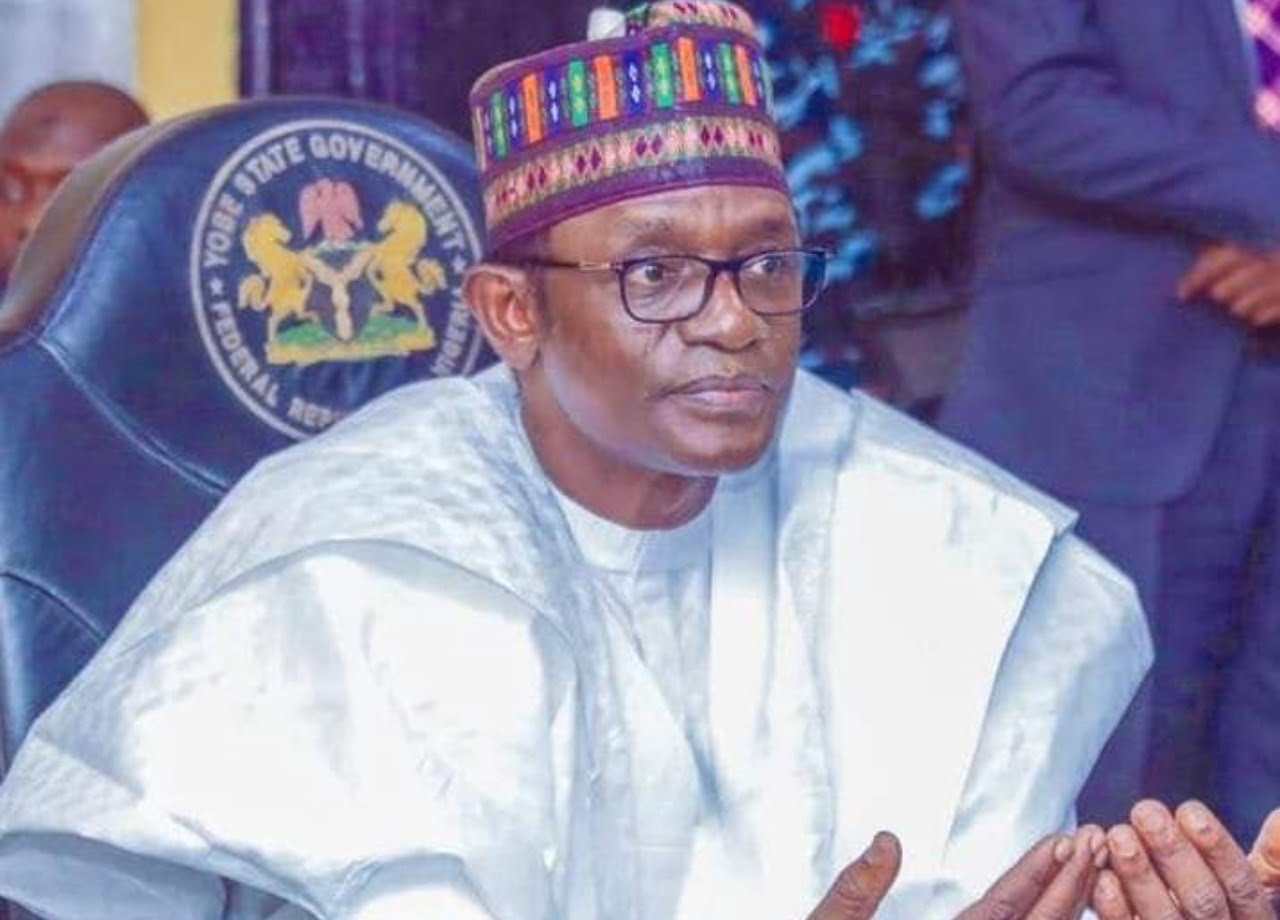
Yobe State Governor, Mai Mala Buni, has presented a proposed budget of N532.27bn for the 2027 fiscal year, with recurrent expenditure taking the largest share of the estimates.

Buni presented the 2027 Appropriation and Finance Bills before the Yobe State House of Assembly in Damaturu on Tuesday, describing the proposal as the final budget of his administration.

Tagged the Budget of Consolidation, Sustainability and Inclusive Growth, the proposed budget represents an increase of N16.739bn, or 3.2 per cent, over the N515.532bn approved for the 2026 fiscal year.

A breakdown of the estimates shows that N288.426bn, representing 54.2 per cent, is allocated to recurrent expenditure, while N243.845bn, representing 45.8 per cent, is earmarked for capital projects.

Presenting the budget, Buni said it was designed to consolidate the achievements of his administration, complete ongoing projects and ensure the sustainability of existing investments.

He said, “Today, with a sense of humility and fulfilment, and in accordance with Section 121(1) of the 1999 Constitution of the Federal Republic of Nigeria (as amended), I once again stand before this Honourable House of Assembly to present the Eighth and last Finance and Appropriation Bills by this administration for your kind consideration and approval for the 2027 fiscal year.”

The governor said the administration would prioritise project completion, improved service delivery and prudent management of public resources.

“The 2027 budget is therefore designed to balance immediate service delivery with the long-term development interest of the state,” he said.

Buni disclosed that the education sector would receive N99.792bn, while N80.543bn was allocated to healthcare.

See also  Marketers drop petrol prices below Dangote’s cost

He said the education allocation would support the completion of ongoing school construction and rehabilitation projects, the provision of teaching materials, assistance to tertiary institutions and scholarship programmes.

On healthcare, the governor said the government would sustain investments in hospital upgrades, maternity and emergency services, medical equipment and healthcare training institutions.

He also identified the establishment of a modern kidney centre in Gashua as one of the administration’s priority projects.

“We are equally committed to advancing the ongoing establishment of a modern Kidney Centre in Gashua, with emphasis on a safe, accessible, patient-centred treatment environment, appropriate dialysis equipment and the clinical and operational arrangements required for sustainable service delivery,” Buni said.

The governor said infrastructure development would remain a major priority, with emphasis on completing ongoing road, drainage, electricity and commercial infrastructure projects.

He specifically mentioned the Gashua-Masaba, Balanguwa-Kumagannam and Dumbulwa-Lailai roads among the projects requiring attention.

Other priority areas include agricultural development, livestock production, water supply, environmental protection, peacebuilding and the rehabilitation of communities affected by insurgency.

Reviewing the performance of the 2026 budget as of September 30, Buni said the state recorded revenue receipts of N347.078bn, representing 67.3 per cent of the annual projection.

He said the approved 2026 budget stood at N515.532bn, comprising N291.904bn for capital expenditure and N223.628bn for recurrent expenditure.

According to him, recurrent expenditure during the first nine months amounted to N139.346bn, while capital expenditure stood at N94.280bn.

The governor said the administration remained committed to the payment of salaries, pensions and gratuities despite prevailing economic challenges and the demands of post-insurgency recovery.

See also  No pact with Atiku, Obi, Jonathan in 2027 says ADC faction

Buni, who described the 2027 proposal as the final budget of his administration, said the government would ensure an orderly transition and preserve ongoing development projects.

“Development must not depend entirely on the presence of any individual in public office. It must be supported by strong institutions, competent public servants, credible planning frameworks and effective systems of accountability,” he said.

The governor assured residents that his administration would continue to discharge its responsibilities until the final day of its tenure.

“We shall continue to work, supervise, deliver and remain accountable until the final day of our mandate. There will be no abandonment of our responsibilities and projects,” he said.

He urged the House of Assembly to give the proposed budget timely consideration and passage.

In a political appeal towards the end of his address, Buni urged the people of Yobe to support President Bola Tinubu’s second-term ambition, arguing that the state’s membership of the ruling All Progressives Congress had created opportunities for it to benefit from the Federal Government.

He also commended Tinubu for approving the Federal Government’s takeover and reimbursement of the Muhammadu Buhari International Cargo Airport project in Damaturu, saying the intervention would free up resources for other development projects.

Source: punchng.com

FOLLOW US ON:

FACEBOOK

WHATSAPP CHANNEL

TWITTER

PINTEREST

TIKTOK

YOUTUBE

LINKEDIN

INSTAGRAM

Continue Reading

News

US military base shooter seeks halt to firing squad execution

Published

on

Nidal Hasan, who is set to be executed by firing squad next month for his 2009 massacre at a US military base, asked a court on Tuesday to halt his execution, according to documents obtained by AFP.

The former US Army major and military psychiatrist asked a federal court to delay his execution, which is set for December 3, while he prepares a case to challenge it on constitutional grounds.

If the execution goes ahead, Hasan will be the first person killed by a US military firing squad since 1945.

A furore over plans to livestream the killing erupted in early October.

US Defence Secretary Pete Hegseth initially said the execution would be “public” before a Pentagon spokesperson added it would be available online.

Concerns mounted far and wide about making the execution into a spectacle and turning Hasan into a martyr.

After days of debate and condemnation, US President Donald Trump cancelled the plans to broadcast the killing, while allowing some witnesses to observe it in person.

Hasan killed 13 people, including 12 soldiers, and wounded 30 others in his November 2009 rampage.

He was shot by a civilian police officer and is paralysed from the waist down.

During his trial, Hasan chose to conduct his own defence, and court-appointed attorneys raised concerns that he was seeking to be executed.

Ultimately, he was sentenced to death by a military jury in 2013.

AFP

Source: punchng.com

FOLLOW US ON:
FACEBOOK

WHATSAPP CHANNEL

TWITTER

PINTEREST

TIKTOK

YOUTUBE

LINKEDIN

INSTAGRAM

See also  Marketers drop petrol prices below Dangote’s cost
Continue Reading

News

Kwara unveils five-year strategy to tackle malnutrition, read full details

Published

on

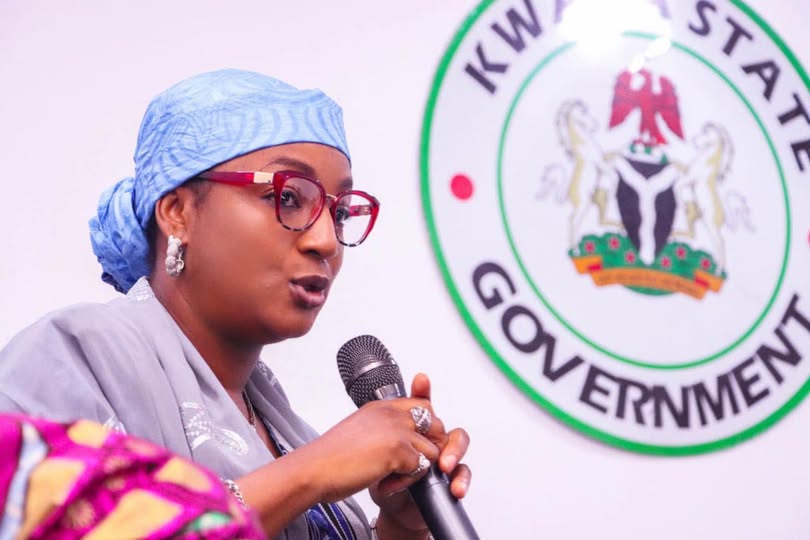
The Kwara State Government has unveiled a five-year nutrition strategy aimed at tackling the social, cultural and behavioural factors contributing to malnutrition, particularly among women and children.

The development was contained in a statement issued on Tuesday by the Assistant Press Secretary, Ministry of Health, Funke Olutemilehin, following the unveiling of the strategy by the Commissioner for Health, Amina El-Imam.

The State Social and Behavioural Change Strategy for Nutrition Across the Life Cycle was unveiled at a dissemination meeting held at the ministry’s headquarters on Monday, with representatives of the United Nations Children’s Fund, government ministries, departments and agencies, religious organisations and civil society groups in attendance.

Speaking at the meeting, El-Imam said addressing malnutrition required interventions beyond the provision of healthcare services and nutrition commodities.

“Poor nutritional knowledge, harmful traditional beliefs, inadequate dietary practices, gender norms, poor health-seeking behaviour and weak community engagement remain major contributors to malnutrition,” the commissioner said.

El-Imam explained that the ministry, with financial and technical support from UNICEF, had successfully domesticated, costed and validated the National Social and Behavioural Change Strategy for Nutrition Across the Life Cycle.

“The framework will promote positive nutrition practices through strategic communication, advocacy, community mobilisation, social norm transformation and stronger intersectoral collaboration,” she added.

Highlighting the state’s progress, the commissioner disclosed that findings from the Mini Nigeria Demographic and Health Survey 2025/26 showed that stunting prevalence in Kwara had declined from 40.8 per cent to 35.5 per cent.

“Stunting prevalence has reduced from 40.8 per cent to 35.5 per cent, wasting from 6.1 per cent to 3.5 per cent and underweight from 24.5 per cent to 14.8 per cent,” she said.

See also  Alleged fraud: Blessing CEO finally regains freedom after months in Kirikiri prison

El-Imam attributed the improvements to sustained government commitment and interventions, including Accelerating Nutrition Results in Nigeria 1.0, nutrition promotion campaigns, dietary diversification and micronutrient supplementation.

She also listed the distribution of oral rehydration salts and zinc at primary healthcare facilities and community levels among the interventions contributing to the progress recorded.

The commissioner called on ministries, departments and agencies, development partners, traditional and religious institutions, the media and community structures to support the transition to ANRiN 2.0.

She urged stakeholders to ensure effective implementation of the strategy, stressing the importance of collective action in addressing the factors responsible for malnutrition.

In his remarks, the Acting Chairman of the State Committee on Food and Nutrition, Mohammed Ibrahim, representing the Ministry of Planning and Economic Development, reaffirmed the state government’s commitment to improving nutrition outcomes.

Ibrahim disclosed that the government had contributed N100m to the Child Nutrition Fund, which UNICEF leveraged at a one-to-one ratio to procure 3,964 cartons of Ready-to-Use Therapeutic Food.

He also highlighted advocacy for six-month paid maternity leave and sustained investments in primary healthcare as part of the state’s efforts to improve maternal and child nutrition.

The acting chairman said, “We need adequate budgetary provisions and stronger multisectoral collaboration to further accelerate improvements in the nutrition indices of the state.”

Earlier, the Nutrition Focal Person in the Ministry of Health, Dr Habib Abayomi Lawal, commended members of the multisectoral committee for their contributions towards improving nutrition outcomes.

Lawal urged stakeholders to sustain their collaboration and demonstrate continued commitment to the successful implementation of the strategy.

See also  Benue Assembly amends law, renames state varsity

Source: punchng.com

FOLLOW US ON:

FACEBOOK

WHATSAPP CHANNEL

TWITTER

PINTEREST

TIKTOK

YOUTUBE

LINKEDIN

INSTAGRAM

Continue Reading

Trending